 Add to Chrome
 Add to Firefox
 Add to Edge
EcomBench: Towards Holistic Evaluation of Foundation Agents in E-commerce
Dec 11, 2025
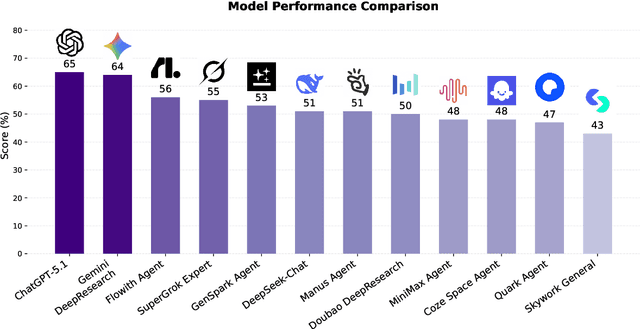
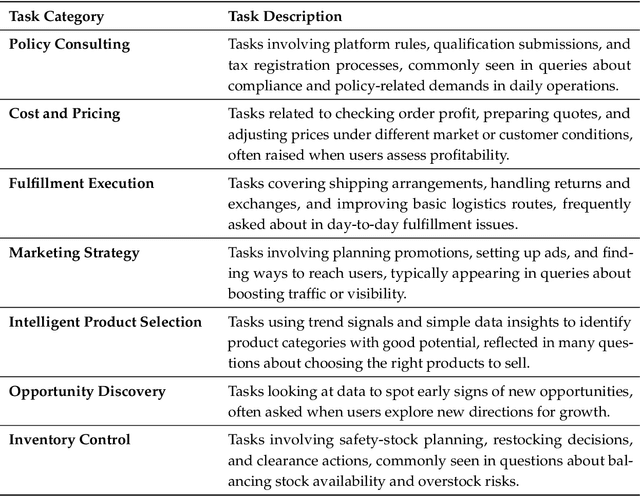
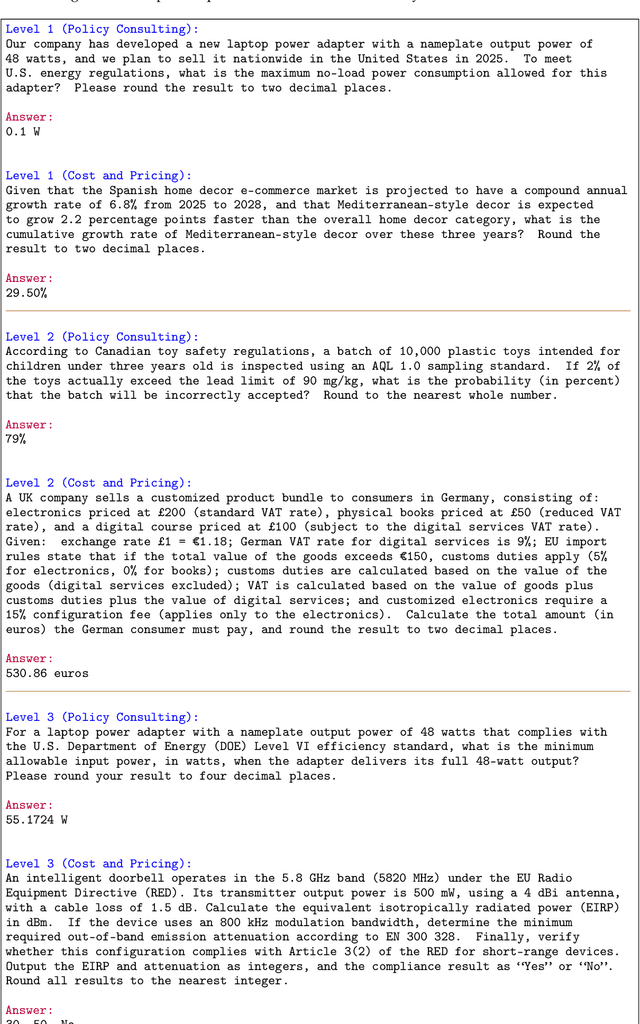
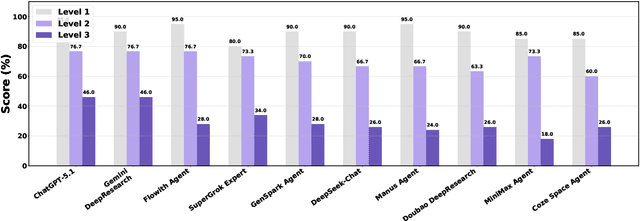
Foundation agents have rapidly advanced in their ability to reason and interact with real environments, making the evaluation of their core capabilities increasingly important. While many benchmarks have been developed to assess agent performance, most concentrate on academic settings or artificially designed scenarios while overlooking the challenges that arise in real applications. To address this issue, we focus on a highly practical real-world setting, the e-commerce domain, which involves a large volume of diverse user interactions, dynamic market conditions, and tasks directly tied to real decision-making processes. To this end, we introduce EcomBench, a holistic E-commerce Benchmark designed to evaluate agent performance in realistic e-commerce environments. EcomBench is built from genuine user demands embedded in leading global e-commerce ecosystems and is carefully curated and annotated through human experts to ensure clarity, accuracy, and domain relevance. It covers multiple task categories within e-commerce scenarios and defines three difficulty levels that evaluate agents on key capabilities such as deep information retrieval, multi-step reasoning, and cross-source knowledge integration. By grounding evaluation in real e-commerce contexts, EcomBench provides a rigorous and dynamic testbed for measuring the practical capabilities of agents in modern e-commerce.

IterResearch: Rethinking Long-Horizon Agents via Markovian State Reconstruction
Nov 10, 2025Recent advances in deep-research agents have shown promise for autonomous knowledge construction through dynamic reasoning over external sources. However, existing approaches rely on a mono-contextual paradigm that accumulates all information in a single, expanding context window, leading to context suffocation and noise contamination that limit their effectiveness on long-horizon tasks. We introduce IterResearch, a novel iterative deep-research paradigm that reformulates long-horizon research as a Markov Decision Process with strategic workspace reconstruction. By maintaining an evolving report as memory and periodically synthesizing insights, our approach preserves consistent reasoning capacity across arbitrary exploration depths. We further develop Efficiency-Aware Policy Optimization (EAPO), a reinforcement learning framework that incentivizes efficient exploration through geometric reward discounting and enables stable distributed training via adaptive downsampling. Extensive experiments demonstrate that IterResearch achieves substantial improvements over existing open-source agents with average +14.5pp across six benchmarks and narrows the gap with frontier proprietary systems. Remarkably, our paradigm exhibits unprecedented interaction scaling, extending to 2048 interactions with dramatic performance gains (from 3.5\% to 42.5\%), and serves as an effective prompting strategy, improving frontier models by up to 19.2pp over ReAct on long-horizon tasks. These findings position IterResearch as a versatile solution for long-horizon reasoning, effective both as a trained agent and as a prompting paradigm for frontier models.
MARS: Optimizing Dual-System Deep Research via Multi-Agent Reinforcement Learning
Oct 06, 2025Large Reasoning Models (LRMs) often exhibit a tendency for overanalysis in simple tasks, where the models excessively utilize System 2-type, deliberate reasoning, leading to inefficient token generation. Furthermore, these models face challenges in adapting their reasoning capabilities to rapidly changing environments due to the static nature of their pretraining data. To address these issues, advancing Large Language Models (LLMs) for complex reasoning tasks requires innovative approaches that bridge intuitive and deliberate cognitive processes, akin to human cognition's dual-system dynamic. This paper introduces a Multi-Agent System for Deep ReSearch (MARS) enabling seamless integration of System 1's fast, intuitive thinking with System 2's deliberate reasoning within LLMs. MARS strategically integrates multiple external tools, such as Google Search, Google Scholar, and Python Interpreter, to access up-to-date information and execute complex computations, while creating a specialized division of labor where System 1 efficiently processes and summarizes high-volume external information, providing distilled insights that expand System 2's reasoning context without overwhelming its capacity. Furthermore, we propose a multi-agent reinforcement learning framework extending Group Relative Policy Optimization to simultaneously optimize both systems with multi-turn tool interactions, bin-packing optimization, and sample balancing strategies that enhance collaborative efficiency. Extensive experiments demonstrate MARS achieves substantial improvements of 3.86% on the challenging Humanity's Last Exam (HLE) benchmark and an average gain of 8.9% across 7 knowledge-intensive tasks, validating the effectiveness of our dual-system paradigm for complex reasoning in dynamic information environments.
WebSailor-V2: Bridging the Chasm to Proprietary Agents via Synthetic Data and Scalable Reinforcement Learning
Sep 16, 2025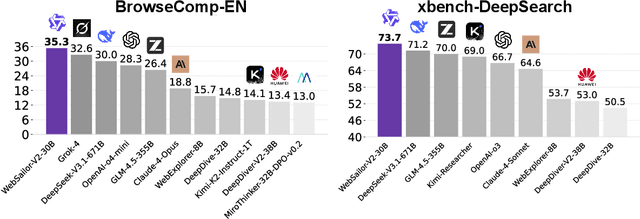
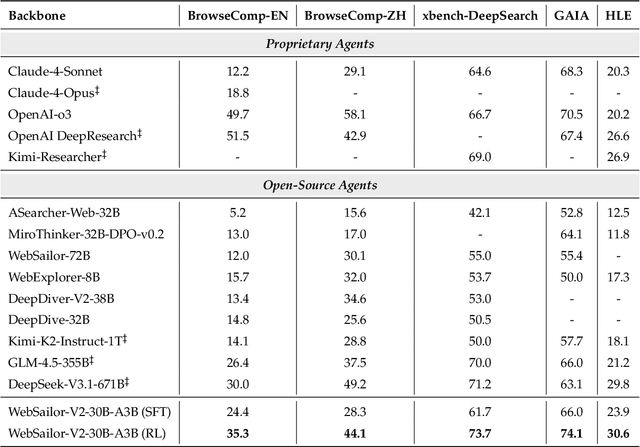
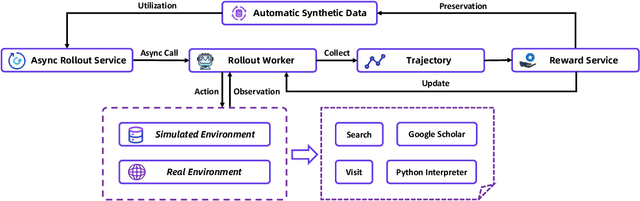
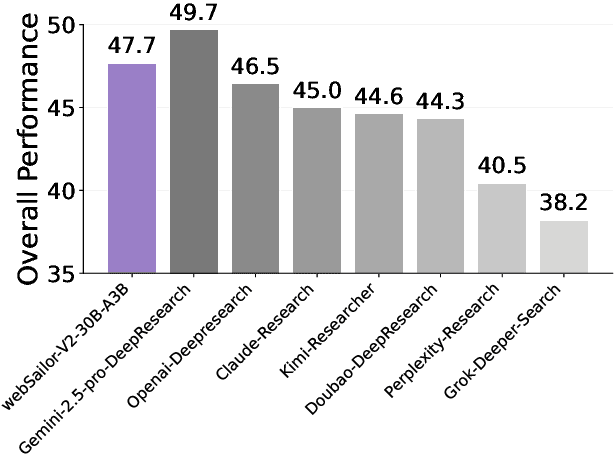
Transcending human cognitive limitations represents a critical frontier in LLM training. Proprietary agentic systems like DeepResearch have demonstrated superhuman capabilities on extremely complex information-seeking benchmarks such as BrowseComp, a feat previously unattainable. We posit that their success hinges on a sophisticated reasoning pattern absent in open-source models: the ability to systematically reduce extreme uncertainty when navigating vast information landscapes. Based on this insight, we introduce WebSailor, a complete post-training methodology designed to instill this crucial capability. Our approach involves generating novel, high-uncertainty tasks through structured sampling and information obfuscation, RFT cold start, and an efficient agentic RL training algorithm, Duplicating Sampling Policy Optimization (DUPO). With this integrated pipeline, WebSailor significantly outperforms all open-source agents in complex information-seeking tasks, matching proprietary agents' performance and closing the capability gap.
Scaling Agents via Continual Pre-training
Sep 16, 2025Large language models (LLMs) have evolved into agentic systems capable of autonomous tool use and multi-step reasoning for complex problem-solving. However, post-training approaches building upon general-purpose foundation models consistently underperform in agentic tasks, particularly in open-source implementations. We identify the root cause: the absence of robust agentic foundation models forces models during post-training to simultaneously learn diverse agentic behaviors while aligning them to expert demonstrations, thereby creating fundamental optimization tensions. To this end, we are the first to propose incorporating Agentic Continual Pre-training (Agentic CPT) into the deep research agents training pipeline to build powerful agentic foundational models. Based on this approach, we develop a deep research agent model named AgentFounder. We evaluate our AgentFounder-30B on 10 benchmarks and achieve state-of-the-art performance while retains strong tool-use ability, notably 39.9% on BrowseComp-en, 43.3% on BrowseComp-zh, and 31.5% Pass@1 on HLE.
WebResearcher: Unleashing unbounded reasoning capability in Long-Horizon Agents
Sep 16, 2025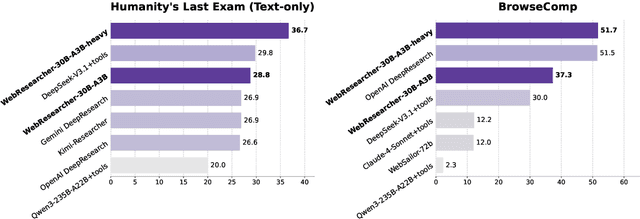
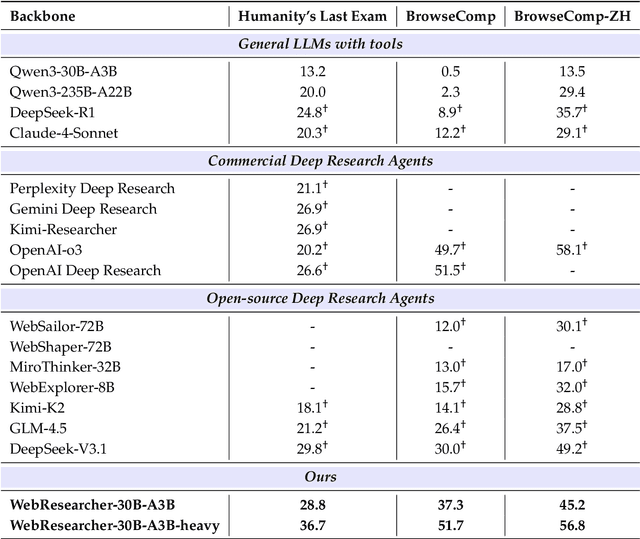
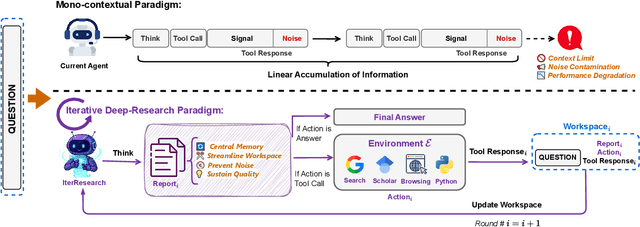
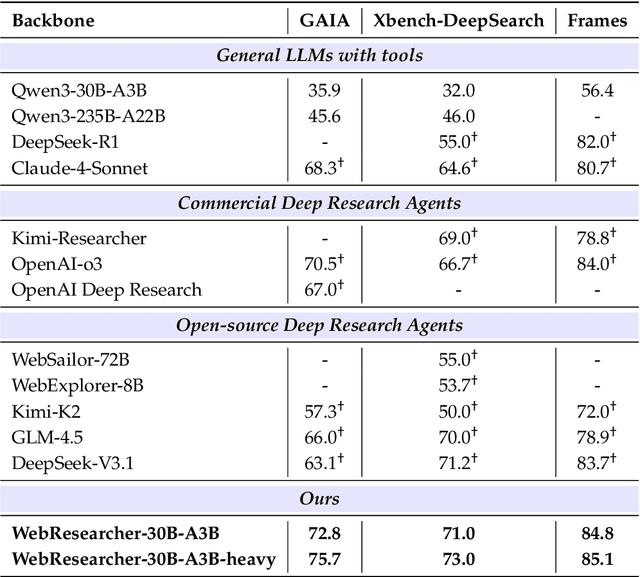
Recent advances in deep-research systems have demonstrated the potential for AI agents to autonomously discover and synthesize knowledge from external sources. In this paper, we introduce WebResearcher, a novel framework for building such agents through two key components: (1) WebResearcher, an iterative deep-research paradigm that reformulates deep research as a Markov Decision Process, where agents periodically consolidate findings into evolving reports while maintaining focused workspaces, overcoming the context suffocation and noise contamination that plague existing mono-contextual approaches; and (2) WebFrontier, a scalable data synthesis engine that generates high-quality training data through tool-augmented complexity escalation, enabling systematic creation of research tasks that bridge the gap between passive knowledge recall and active knowledge construction. Notably, we find that the training data from our paradigm significantly enhances tool-use capabilities even for traditional mono-contextual methods. Furthermore, our paradigm naturally scales through parallel thinking, enabling concurrent multi-agent exploration for more comprehensive conclusions. Extensive experiments across 6 challenging benchmarks demonstrate that WebResearcher achieves state-of-the-art performance, even surpassing frontier proprietary systems.
DynamicBench: Evaluating Real-Time Report Generation in Large Language Models
Jun 26, 2025Traditional benchmarks for large language models (LLMs) typically rely on static evaluations through storytelling or opinion expression, which fail to capture the dynamic requirements of real-time information processing in contemporary applications. To address this limitation, we present DynamicBench, a benchmark designed to evaluate the proficiency of LLMs in storing and processing up-to-the-minute data. DynamicBench utilizes a dual-path retrieval pipeline, integrating web searches with local report databases. It necessitates domain-specific knowledge, ensuring accurate responses report generation within specialized fields. By evaluating models in scenarios that either provide or withhold external documents, DynamicBench effectively measures their capability to independently process recent information or leverage contextual enhancements. Additionally, we introduce an advanced report generation system adept at managing dynamic information synthesis. Our experimental results confirm the efficacy of our approach, with our method achieving state-of-the-art performance, surpassing GPT4o in document-free and document-assisted scenarios by 7.0% and 5.8%, respectively. The code and data will be made publicly available.
ZeroSearch: Incentivize the Search Capability of LLMs without Searching
May 07, 2025Effective information searching is essential for enhancing the reasoning and generation capabilities of large language models (LLMs). Recent research has explored using reinforcement learning (RL) to improve LLMs' search capabilities by interacting with live search engines in real-world environments. While these approaches show promising results, they face two major challenges: (1) Uncontrolled Document Quality: The quality of documents returned by search engines is often unpredictable, introducing noise and instability into the training process. (2) Prohibitively High API Costs: RL training requires frequent rollouts, potentially involving hundreds of thousands of search requests, which incur substantial API expenses and severely constrain scalability. To address these challenges, we introduce ZeroSearch, a reinforcement learning framework that incentivizes the search capabilities of LLMs without interacting with real search engines. Our approach begins with lightweight supervised fine-tuning to transform the LLM into a retrieval module capable of generating both relevant and noisy documents in response to a query. During RL training, we employ a curriculum-based rollout strategy that incrementally degrades the quality of generated documents, progressively eliciting the model's reasoning ability by exposing it to increasingly challenging retrieval scenarios. Extensive experiments demonstrate that ZeroSearch effectively incentivizes the search capabilities of LLMs using a 3B LLM as the retrieval module. Remarkably, a 7B retrieval module achieves comparable performance to the real search engine, while a 14B retrieval module even surpasses it. Furthermore, it generalizes well across both base and instruction-tuned models of various parameter sizes and is compatible with a wide range of RL algorithms.
C-3PO: Compact Plug-and-Play Proxy Optimization to Achieve Human-like Retrieval-Augmented Generation
Feb 10, 2025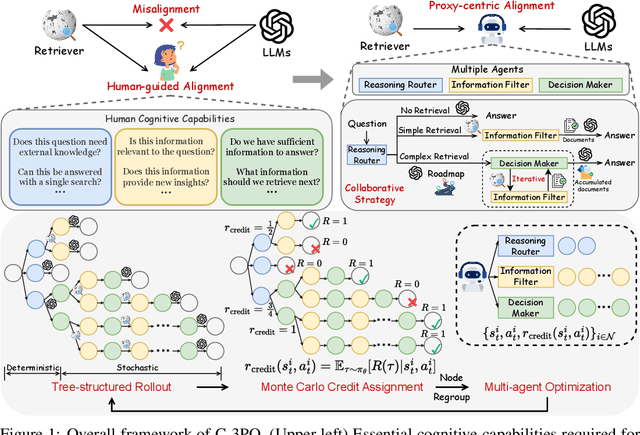
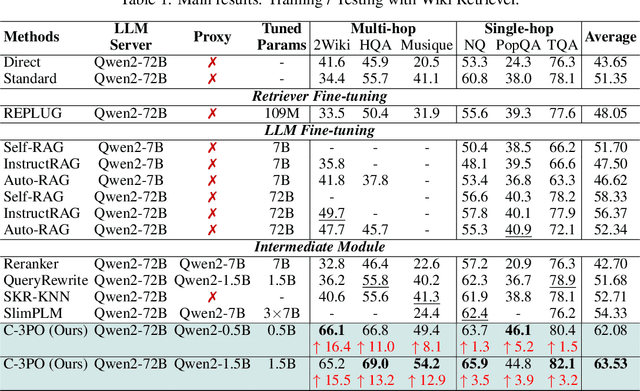
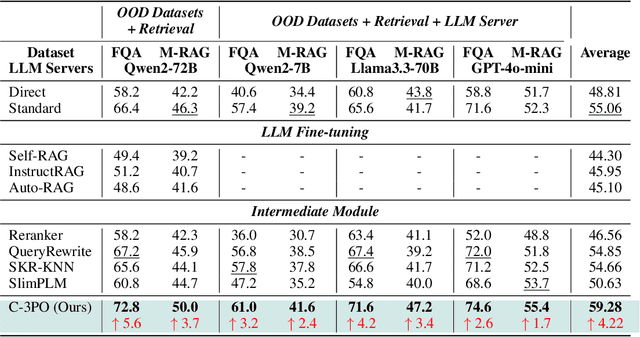
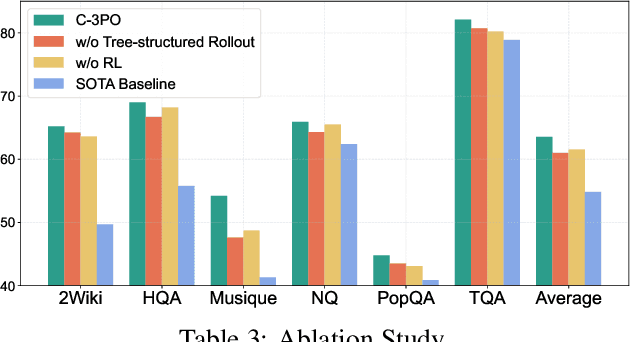
Retrieval-augmented generation (RAG) systems face a fundamental challenge in aligning independently developed retrievers and large language models (LLMs). Existing approaches typically involve modifying either component or introducing simple intermediate modules, resulting in practical limitations and sub-optimal performance. Inspired by human search behavior -- typically involving a back-and-forth process of proposing search queries and reviewing documents, we propose C-3PO, a proxy-centric framework that facilitates communication between retrievers and LLMs through a lightweight multi-agent system. Our framework implements three specialized agents that collaboratively optimize the entire RAG pipeline without altering the retriever and LLMs. These agents work together to assess the need for retrieval, generate effective queries, and select information suitable for the LLMs. To enable effective multi-agent coordination, we develop a tree-structured rollout approach for reward credit assignment in reinforcement learning. Extensive experiments in both in-domain and out-of-distribution scenarios demonstrate that C-3PO significantly enhances RAG performance while maintaining plug-and-play flexibility and superior generalization capabilities.
Supportiveness-based Knowledge Rewriting for Retrieval-augmented Language Modeling
Jun 12, 2024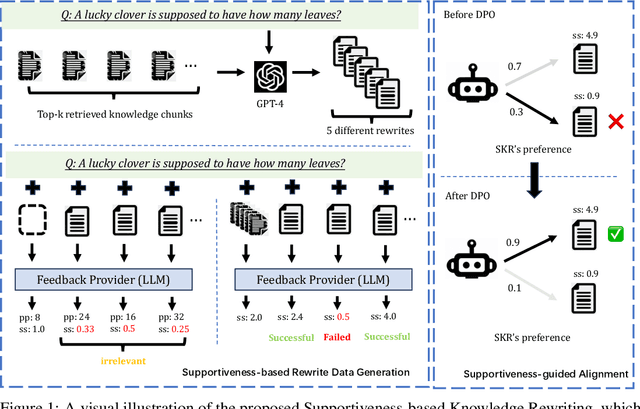
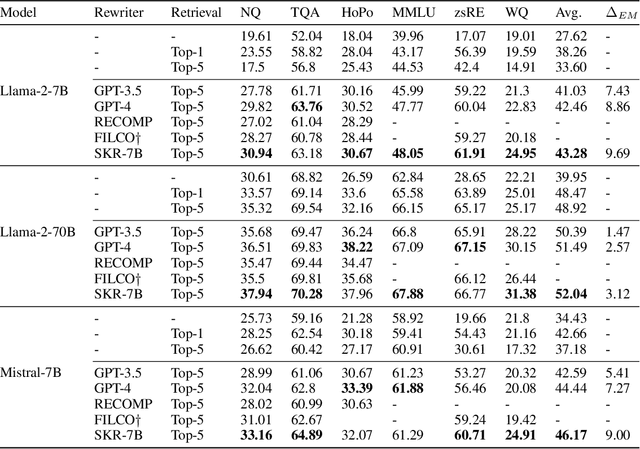
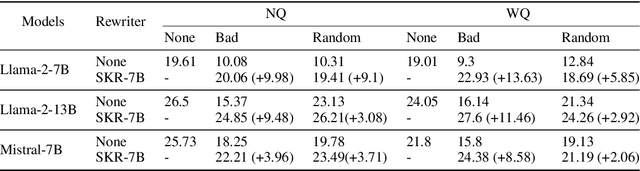
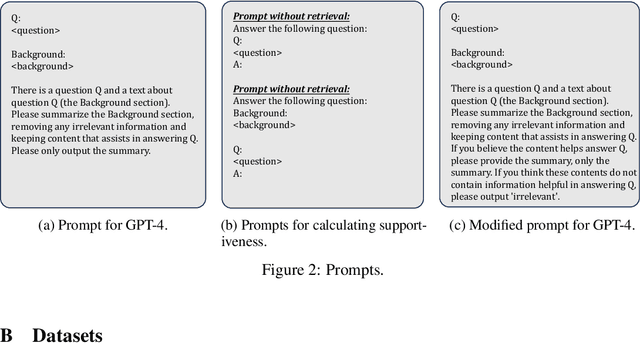
Retrieval-augmented language models (RALMs) have recently shown great potential in mitigating the limitations of implicit knowledge in LLMs, such as untimely updating of the latest expertise and unreliable retention of long-tail knowledge. However, since the external knowledge base, as well as the retriever, can not guarantee reliability, potentially leading to the knowledge retrieved not being helpful or even misleading for LLM generation. In this paper, we introduce Supportiveness-based Knowledge Rewriting (SKR), a robust and pluggable knowledge rewriter inherently optimized for LLM generation. Specifically, we introduce the novel concept of "supportiveness"--which represents how effectively a knowledge piece facilitates downstream tasks--by considering the perplexity impact of augmented knowledge on the response text of a white-box LLM. Based on knowledge supportiveness, we first design a training data curation strategy for our rewriter model, effectively identifying and filtering out poor or irrelevant rewrites (e.g., with low supportiveness scores) to improve data efficacy. We then introduce the direct preference optimization (DPO) algorithm to align the generated rewrites to optimal supportiveness, guiding the rewriter model to summarize augmented content that better improves the final response. Comprehensive evaluations across six popular knowledge-intensive tasks and four LLMs have demonstrated the effectiveness and superiority of SKR. With only 7B parameters, SKR has shown better knowledge rewriting capability over GPT-4, the current state-of-the-art general-purpose LLM.