 Add to Chrome
 Add to Firefox
 Add to Edge
OATS: Online Data Augmentation for Time Series Foundation Models
Jan 26, 2026
Time Series Foundation Models (TSFMs) are a powerful paradigm for time series analysis and are often enhanced by synthetic data augmentation to improve the training data quality. Existing augmentation methods, however, typically rely on heuristics and static paradigms. Motivated by dynamic data optimization, which shows that the contribution of samples varies across training stages, we propose OATS (Online Data Augmentation for Time Series Foundation Models), a principled strategy that generates synthetic data tailored to different training steps. OATS leverages valuable training samples as principled guiding signals and dynamically generates high-quality synthetic data conditioned on them. We further design a diffusion-based framework to produce realistic time series and introduce an explore-exploit mechanism to balance efficiency and effectiveness. Experiments on TSFMs demonstrate that OATS consistently outperforms regular training and yields substantial performance gains over static data augmentation baselines across six validation datasets and two TSFM architectures. The code is available at the link https://github.com/microsoft/TimeCraft.

Spoofing-Aware Speaker Verification via Wavelet Prompt Tuning and Multi-Model Ensembles
Jan 24, 2026This paper describes the UZH-CL system submitted to the SASV section of the WildSpoof 2026 challenge. The challenge focuses on the integrated defense against generative spoofing attacks by requiring the simultaneous verification of speaker identity and audio authenticity. We proposed a cascaded Spoofing-Aware Speaker Verification framework that integrates a Wavelet Prompt-Tuned XLSR-AASIST countermeasure with a multi-model ensemble. The ASV component utilizes the ResNet34, ResNet293, and WavLM-ECAPA-TDNN architectures, with Z-score normalization followed by score averaging. Trained on VoxCeleb2 and SpoofCeleb, the system obtained a Macro a-DCF of 0.2017 and a SASV EER of 2.08%. While the system achieved a 0.16% EER in spoof detection on the in-domain data, results on unseen datasets, such as the ASVspoof5, highlight the critical challenge of cross-domain generalization.
ChatAD: Reasoning-Enhanced Time-Series Anomaly Detection with Multi-Turn Instruction Evolution
Jan 20, 2026LLM-driven Anomaly Detection (AD) helps enhance the understanding and explanatory abilities of anomalous behaviors in Time Series (TS). Existing methods face challenges of inadequate reasoning ability, deficient multi-turn dialogue capability, and narrow generalization. To this end, we 1) propose a multi-agent-based TS Evolution algorithm named TSEvol. On top of it, we 2) introduce the AD reasoning and multi-turn dialogue Dataset TSEData-20K and contribute the Chatbot family for AD, including ChatAD-Llama3-8B, Qwen2.5-7B, and Mistral-7B. Furthermore, 3) we propose the TS Kahneman-Tversky Optimization (TKTO) to enhance ChatAD's cross-task generalization capability. Lastly, 4) we propose a LLM-driven Learning-based AD Benchmark LLADBench to evaluate the performance of ChatAD and nine baselines across seven datasets and tasks. Our three ChatAD models achieve substantial gains, up to 34.50% in accuracy, 34.71% in F1, and a 37.42% reduction in false positives. Besides, via KTKO, our optimized ChatAD achieves competitive performance in reasoning and cross-task generalization on classification, forecasting, and imputation.
Toward Adaptive Grid Resilience: A Gradient-Free Meta-RL Framework for Critical Load Restoration
Jan 16, 2026Restoring critical loads after extreme events demands adaptive control to maintain distribution-grid resilience, yet uncertainty in renewable generation, limited dispatchable resources, and nonlinear dynamics make effective restoration difficult. Reinforcement learning (RL) can optimize sequential decisions under uncertainty, but standard RL often generalizes poorly and requires extensive retraining for new outage configurations or generation patterns. We propose a meta-guided gradient-free RL (MGF-RL) framework that learns a transferable initialization from historical outage experiences and rapidly adapts to unseen scenarios with minimal task-specific tuning. MGF-RL couples first-order meta-learning with evolutionary strategies, enabling scalable policy search without gradient computation while accommodating nonlinear, constrained distribution-system dynamics. Experiments on IEEE 13-bus and IEEE 123-bus test systems show that MGF-RL outperforms standard RL, MAML-based meta-RL, and model predictive control across reliability, restoration speed, and adaptation efficiency under renewable forecast errors. MGF-RL generalizes to unseen outages and renewable patterns while requiring substantially fewer fine-tuning episodes than conventional RL. We also provide sublinear regret bounds that relate adaptation efficiency to task similarity and environmental variation, supporting the empirical gains and motivating MGF-RL for real-time load restoration in renewable-rich distribution grids.
FaST: Efficient and Effective Long-Horizon Forecasting for Large-Scale Spatial-Temporal Graphs via Mixture-of-Experts
Jan 08, 2026Spatial-Temporal Graph (STG) forecasting on large-scale networks has garnered significant attention. However, existing models predominantly focus on short-horizon predictions and suffer from notorious computational costs and memory consumption when scaling to long-horizon predictions and large graphs. Targeting the above challenges, we present FaST, an effective and efficient framework based on heterogeneity-aware Mixture-of-Experts (MoEs) for long-horizon and large-scale STG forecasting, which unlocks one-week-ahead (672 steps at a 15-minute granularity) prediction with thousands of nodes. FaST is underpinned by two key innovations. First, an adaptive graph agent attention mechanism is proposed to alleviate the computational burden inherent in conventional graph convolution and self-attention modules when applied to large-scale graphs. Second, we propose a new parallel MoE module that replaces traditional feed-forward networks with Gated Linear Units (GLUs), enabling an efficient and scalable parallel structure. Extensive experiments on real-world datasets demonstrate that FaST not only delivers superior long-horizon predictive accuracy but also achieves remarkable computational efficiency compared to state-of-the-art baselines. Our source code is available at: https://github.com/yijizhao/FaST.
STReasoner: Empowering LLMs for Spatio-Temporal Reasoning in Time Series via Spatial-Aware Reinforcement Learning
Jan 06, 2026Spatio-temporal reasoning in time series involves the explicit synthesis of temporal dynamics, spatial dependencies, and textual context. This capability is vital for high-stakes decision-making in systems such as traffic networks, power grids, and disease propagation. However, the field remains underdeveloped because most existing works prioritize predictive accuracy over reasoning. To address the gap, we introduce ST-Bench, a benchmark consisting of four core tasks, including etiological reasoning, entity identification, correlation reasoning, and in-context forecasting, developed via a network SDE-based multi-agent data synthesis pipeline. We then propose STReasoner, which empowers LLM to integrate time series, graph structure, and text for explicit reasoning. To promote spatially grounded logic, we introduce S-GRPO, a reinforcement learning algorithm that rewards performance gains specifically attributable to spatial information. Experiments show that STReasoner achieves average accuracy gains between 17% and 135% at only 0.004X the cost of proprietary models and generalizes robustly to real-world data.
The Procrustean Bed of Time Series: The Optimization Bias of Point-wise Loss
Dec 21, 2025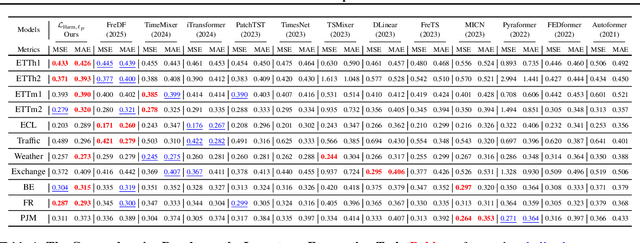
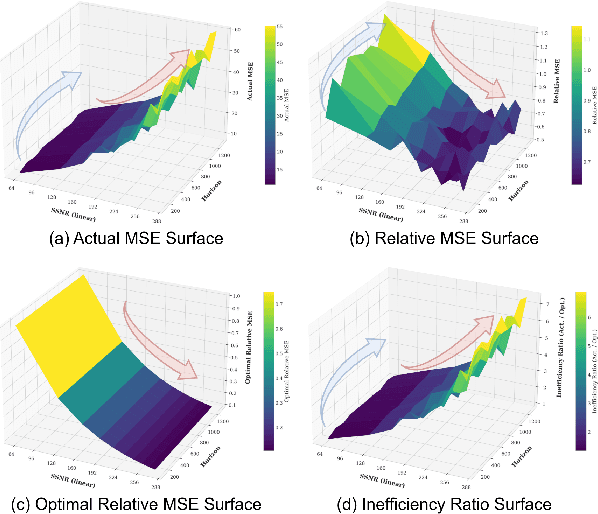
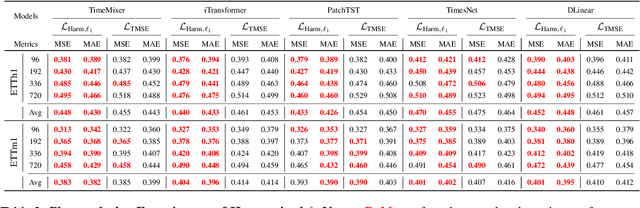
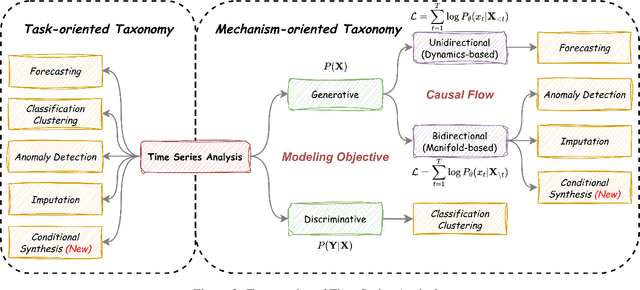
Optimizing time series models via point-wise loss functions (e.g., MSE) relying on a flawed point-wise independent and identically distributed (i.i.d.) assumption that disregards the causal temporal structure, an issue with growing awareness yet lacking formal theoretical grounding. Focusing on the core independence issue under covariance stationarity, this paper aims to provide a first-principles analysis of the Expectation of Optimization Bias (EOB), formalizing it information-theoretically as the discrepancy between the true joint distribution and its flawed i.i.d. counterpart. Our analysis reveals a fundamental paradigm paradox: the more deterministic and structured the time series, the more severe the bias by point-wise loss function. We derive the first closed-form quantification for the non-deterministic EOB across linear and non-linear systems, and prove EOB is an intrinsic data property, governed exclusively by sequence length and our proposed Structural Signal-to-Noise Ratio (SSNR). This theoretical diagnosis motivates our principled debiasing program that eliminates the bias through sequence length reduction and structural orthogonalization. We present a concrete solution that simultaneously achieves both principles via DFT or DWT. Furthermore, a novel harmonized $\ell_p$ norm framework is proposed to rectify gradient pathologies of high-variance series. Extensive experiments validate EOB Theory's generality and the superior performance of debiasing program.
AccidentBench: Benchmarking Multimodal Understanding and Reasoning in Vehicle Accidents and Beyond
Sep 30, 2025Rapid advances in multimodal models demand benchmarks that rigorously evaluate understanding and reasoning in safety-critical, dynamic real-world settings. We present AccidentBench, a large-scale benchmark that combines vehicle accident scenarios with Beyond domains, safety-critical settings in air and water that emphasize spatial and temporal reasoning (e.g., navigation, orientation, multi-vehicle motion). The benchmark contains approximately 2000 videos and over 19000 human-annotated question--answer pairs spanning multiple video lengths (short/medium/long) and difficulty levels (easy/medium/hard). Tasks systematically probe core capabilities: temporal, spatial, and intent understanding and reasoning. By unifying accident-centric traffic scenes with broader safety-critical scenarios in air and water, AccidentBench offers a comprehensive, physically grounded testbed for evaluating models under real-world variability. Evaluations of state-of-the-art models (e.g., Gemini-2.5 Pro and GPT-5) show that even the strongest models achieve only about 18% accuracy on the hardest tasks and longest videos, revealing substantial gaps in real-world temporal, spatial, and intent reasoning. AccidentBench is designed to expose these critical gaps and drive the development of multimodal models that are safer, more robust, and better aligned with real-world safety-critical challenges. The code and dataset are available at: https://github.com/SafeRL-Lab/AccidentBench
OASIS: Harnessing Diffusion Adversarial Network for Ocean Salinity Imputation using Sparse Drifter Trajectories
Aug 29, 2025Ocean salinity plays a vital role in circulation, climate, and marine ecosystems, yet its measurement is often sparse, irregular, and noisy, especially in drifter-based datasets. Traditional approaches, such as remote sensing and optimal interpolation, rely on linearity and stationarity, and are limited by cloud cover, sensor drift, and low satellite revisit rates. While machine learning models offer flexibility, they often fail under severe sparsity and lack principled ways to incorporate physical covariates without specialized sensors. In this paper, we introduce the OceAn Salinity Imputation System (OASIS), a novel diffusion adversarial framework designed to address these challenges.
From Entanglement to Alignment: Representation Space Decomposition for Unsupervised Time Series Domain Adaptation
Jul 28, 2025Domain shift poses a fundamental challenge in time series analysis, where models trained on source domain often fail dramatically when applied in target domain with different yet similar distributions. While current unsupervised domain adaptation (UDA) methods attempt to align cross-domain feature distributions, they typically treat features as indivisible entities, ignoring their intrinsic compositions that governs domain adaptation. We introduce DARSD, a novel UDA framework with theoretical explainability that explicitly realizes UDA tasks from the perspective of representation space decomposition. Our core insight is that effective domain adaptation requires not just alignment, but principled disentanglement of transferable knowledge from mixed representations. DARSD consists three synergistic components: (I) An adversarial learnable common invariant basis that projects original features into a domain-invariant subspace while preserving semantic content; (II) A prototypical pseudo-labeling mechanism that dynamically separates target features based on confidence, hindering error accumulation; (III) A hybrid contrastive optimization strategy that simultaneously enforces feature clustering and consistency while mitigating emerging distribution gaps. Comprehensive experiments conducted on four benchmark datasets (WISDM, HAR, HHAR, and MFD) demonstrate DARSD's superiority against 12 UDA algorithms, achieving optimal performance in 35 out of 53 cross-domain scenarios.