 Add to Chrome
 Add to Firefox
 Add to Edge
Looking Backward: Streaming Video-to-Video Translation with Feature Banks
May 24, 2024
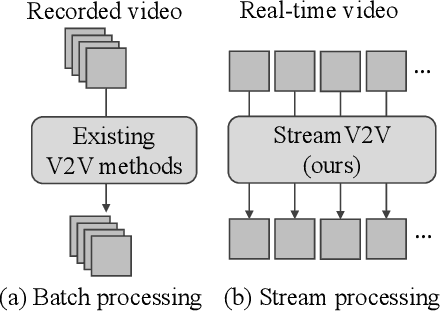
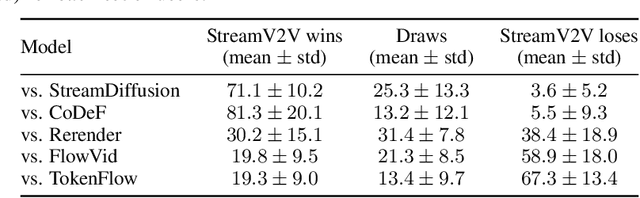
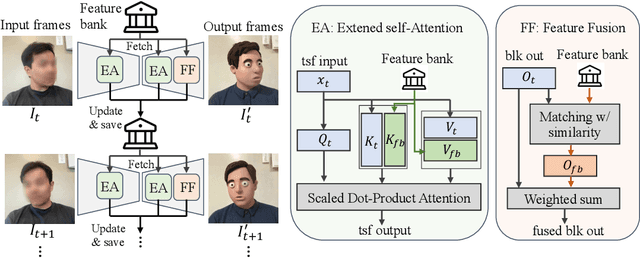
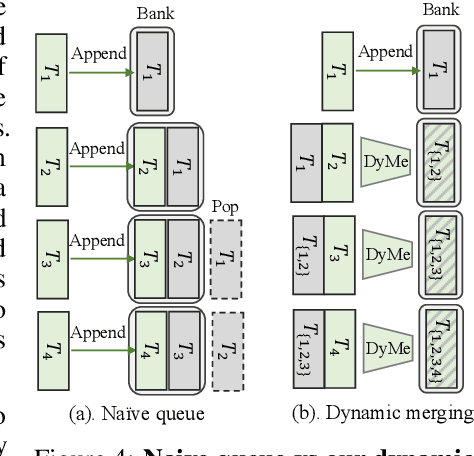
This paper introduces StreamV2V, a diffusion model that achieves real-time streaming video-to-video (V2V) translation with user prompts. Unlike prior V2V methods using batches to process limited frames, we opt to process frames in a streaming fashion, to support unlimited frames. At the heart of StreamV2V lies a backward-looking principle that relates the present to the past. This is realized by maintaining a feature bank, which archives information from past frames. For incoming frames, StreamV2V extends self-attention to include banked keys and values and directly fuses similar past features into the output. The feature bank is continually updated by merging stored and new features, making it compact but informative. StreamV2V stands out for its adaptability and efficiency, seamlessly integrating with image diffusion models without fine-tuning. It can run 20 FPS on one A100 GPU, being 15x, 46x, 108x, and 158x faster than FlowVid, CoDeF, Rerender, and TokenFlow, respectively. Quantitative metrics and user studies confirm StreamV2V's exceptional ability to maintain temporal consistency.

NeRF in Robotics: A Survey
May 02, 2024


Meticulous 3D environment representations have been a longstanding goal in computer vision and robotics fields. The recent emergence of neural implicit representations has introduced radical innovation to this field as implicit representations enable numerous capabilities. Among these, the Neural Radiance Field (NeRF) has sparked a trend because of the huge representational advantages, such as simplified mathematical models, compact environment storage, and continuous scene representations. Apart from computer vision, NeRF has also shown tremendous potential in the field of robotics. Thus, we create this survey to provide a comprehensive understanding of NeRF in the field of robotics. By exploring the advantages and limitations of NeRF, as well as its current applications and future potential, we hope to shed light on this promising area of research. Our survey is divided into two main sections: \textit{The Application of NeRF in Robotics} and \textit{The Advance of NeRF in Robotics}, from the perspective of how NeRF enters the field of robotics. In the first section, we introduce and analyze some works that have been or could be used in the field of robotics from the perception and interaction perspectives. In the second section, we show some works related to improving NeRF's own properties, which are essential for deploying NeRF in the field of robotics. In the discussion section of the review, we summarize the existing challenges and provide some valuable future research directions for reference.
RoadBEV: Road Surface Reconstruction in Bird's Eye View
Apr 09, 2024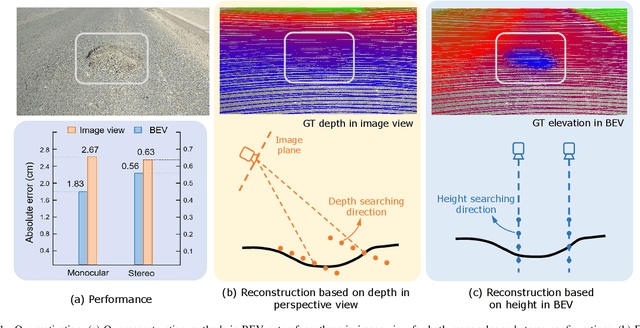
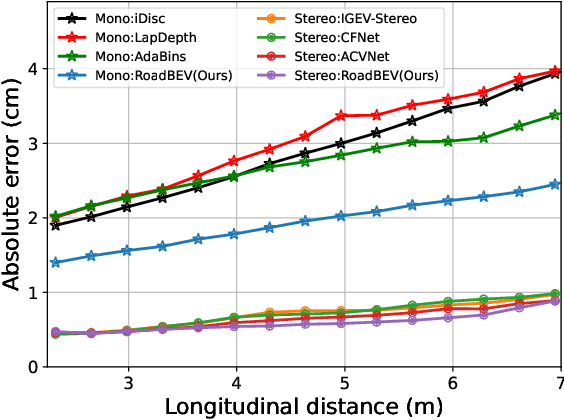
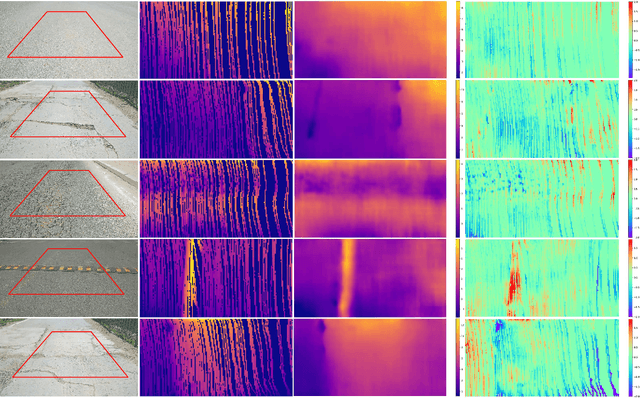
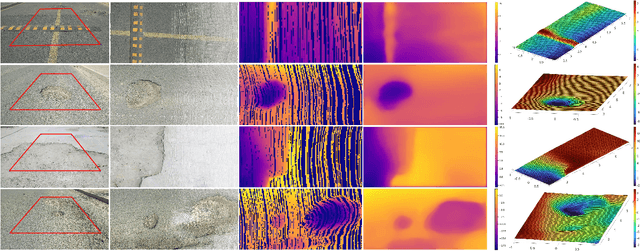
Road surface conditions, especially geometry profiles, enormously affect driving performance of autonomous vehicles. Vision-based online road reconstruction promisingly captures road information in advance. Existing solutions like monocular depth estimation and stereo matching suffer from modest performance. The recent technique of Bird's-Eye-View (BEV) perception provides immense potential to more reliable and accurate reconstruction. This paper uniformly proposes two simple yet effective models for road elevation reconstruction in BEV named RoadBEV-mono and RoadBEV-stereo, which estimate road elevation with monocular and stereo images, respectively. The former directly fits elevation values based on voxel features queried from image view, while the latter efficiently recognizes road elevation patterns based on BEV volume representing discrepancy between left and right voxel features. Insightful analyses reveal their consistence and difference with perspective view. Experiments on real-world dataset verify the models' effectiveness and superiority. Elevation errors of RoadBEV-mono and RoadBEV-stereo achieve 1.83cm and 0.56cm, respectively. The estimation performance improves by 50\% in BEV based on monocular image. Our models are promising for practical applications, providing valuable references for vision-based BEV perception in autonomous driving. The code is released at https://github.com/ztsrxh/RoadBEV.
Efficient Reinforcement Learning of Task Planners for Robotic Palletization through Iterative Action Masking Learning
Apr 07, 2024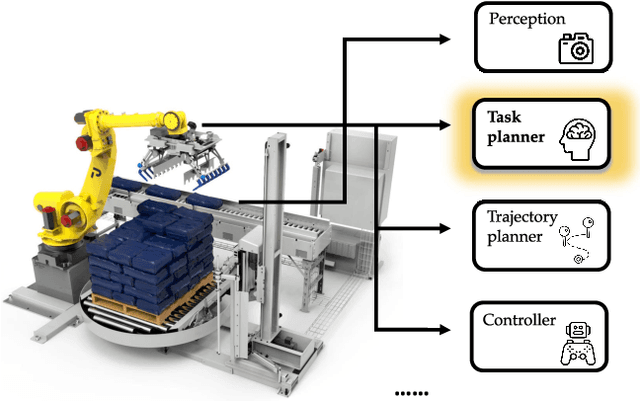
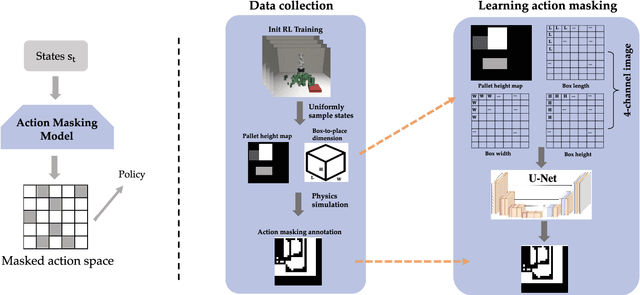
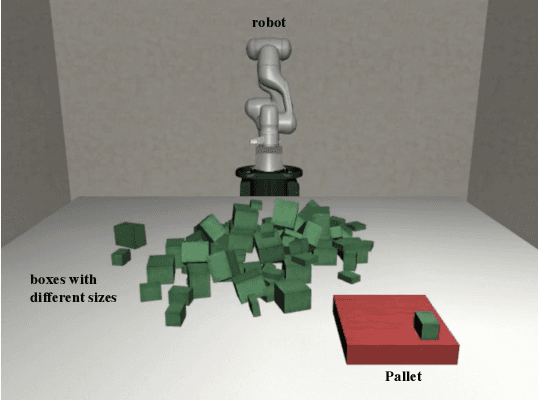
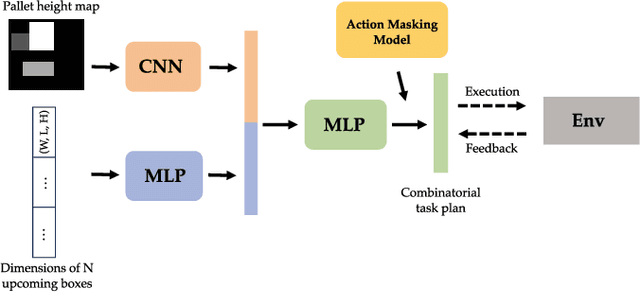
The development of robotic systems for palletization in logistics scenarios is of paramount importance, addressing critical efficiency and precision demands in supply chain management. This paper investigates the application of Reinforcement Learning (RL) in enhancing task planning for such robotic systems. Confronted with the substantial challenge of a vast action space, which is a significant impediment to efficiently apply out-of-the-shelf RL methods, our study introduces a novel method of utilizing supervised learning to iteratively prune and manage the action space effectively. By reducing the complexity of the action space, our approach not only accelerates the learning phase but also ensures the effectiveness and reliability of the task planning in robotic palletization. The experimental results underscore the efficacy of this method, highlighting its potential in improving the performance of RL applications in complex and high-dimensional environments like logistics palletization.
Joint Pedestrian Trajectory Prediction through Posterior Sampling
Mar 30, 2024Joint pedestrian trajectory prediction has long grappled with the inherent unpredictability of human behaviors. Recent investigations employing variants of conditional diffusion models in trajectory prediction have exhibited notable success. Nevertheless, the heavy dependence on accurate historical data results in their vulnerability to noise disturbances and data incompleteness. To improve the robustness and reliability, we introduce the Guided Full Trajectory Diffuser (GFTD), a novel diffusion model framework that captures the joint full (historical and future) trajectory distribution. By learning from the full trajectory, GFTD can recover the noisy and missing data, hence improving the robustness. In addition, GFTD can adapt to data imperfections without additional training requirements, leveraging posterior sampling for reliable prediction and controllable generation. Our approach not only simplifies the prediction process but also enhances generalizability in scenarios with noise and incomplete inputs. Through rigorous experimental evaluation, GFTD exhibits superior performance in both trajectory prediction and controllable generation.
Adaptive Energy Regularization for Autonomous Gait Transition and Energy-Efficient Quadruped Locomotion
Mar 29, 2024
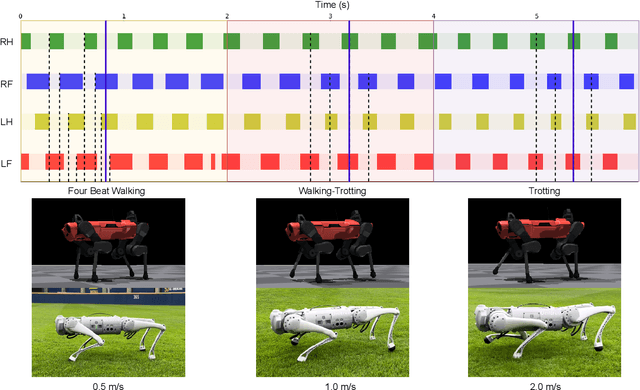
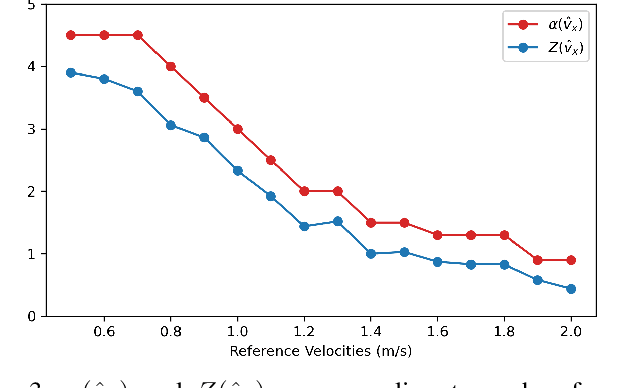

In reinforcement learning for legged robot locomotion, crafting effective reward strategies is crucial. Pre-defined gait patterns and complex reward systems are widely used to stabilize policy training. Drawing from the natural locomotion behaviors of humans and animals, which adapt their gaits to minimize energy consumption, we propose a simplified, energy-centric reward strategy to foster the development of energy-efficient locomotion across various speeds in quadruped robots. By implementing an adaptive energy reward function and adjusting the weights based on velocity, we demonstrate that our approach enables ANYmal-C and Unitree Go1 robots to autonomously select appropriate gaits, such as four-beat walking at lower speeds and trotting at higher speeds, resulting in improved energy efficiency and stable velocity tracking compared to previous methods using complex reward designs and prior gait knowledge. The effectiveness of our policy is validated through simulations in the IsaacGym simulation environment and on real robots, demonstrating its potential to facilitate stable and adaptive locomotion.
Robust In-Hand Manipulation with Extrinsic Contacts
Mar 27, 2024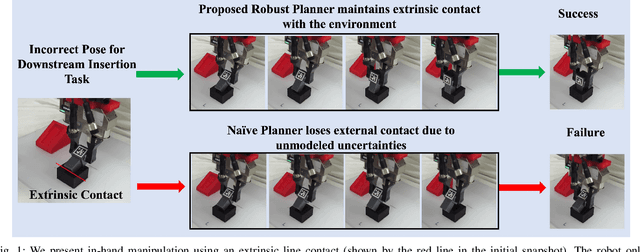
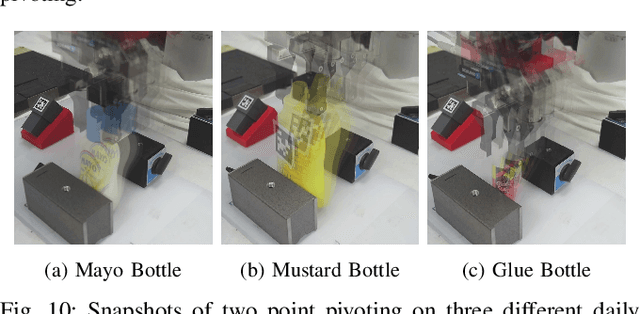
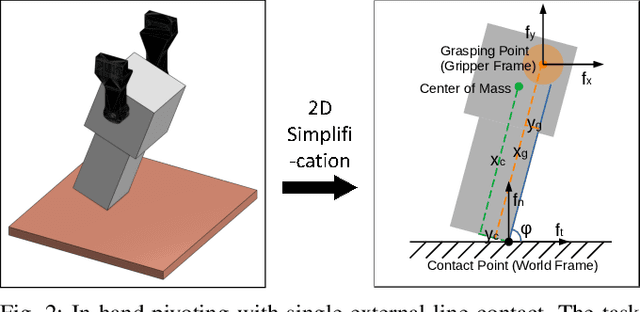
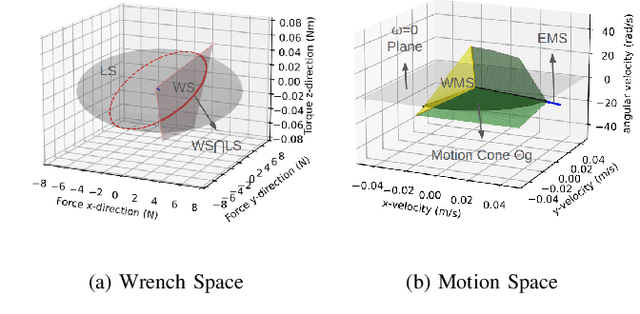
We present in-hand manipulation tasks where a robot moves an object in grasp, maintains its external contact mode with the environment, and adjusts its in-hand pose simultaneously. The proposed manipulation task leads to complex contact interactions which can be very susceptible to uncertainties in kinematic and physical parameters. Therefore, we propose a robust in-hand manipulation method, which consists of two parts. First, an in-gripper mechanics model that computes a na\"ive motion cone assuming all parameters are precise. Then, a robust planning method refines the motion cone to maintain desired contact mode regardless of parametric errors. Real-world experiments were conducted to illustrate the accuracy of the mechanics model and the effectiveness of the robust planning framework in the presence of kinematics parameter errors.
DBPF: A Framework for Efficient and Robust Dynamic Bin-Picking
Mar 25, 2024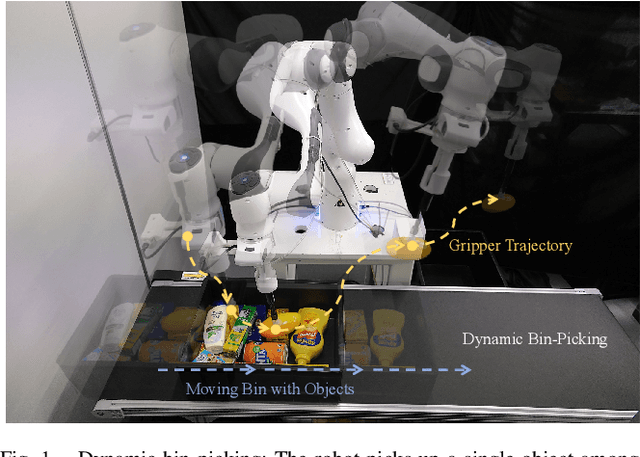
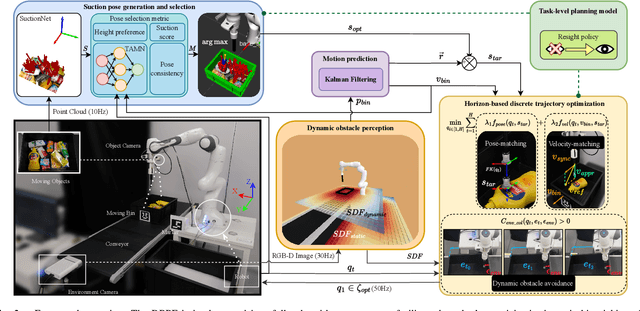
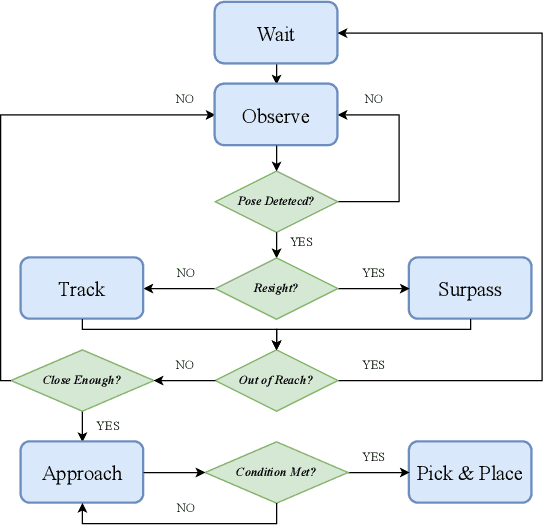
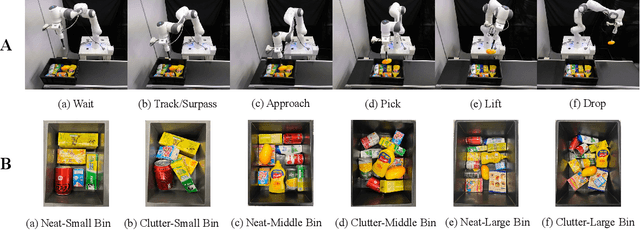
Efficiency and reliability are critical in robotic bin-picking as they directly impact the productivity of automated industrial processes. However, traditional approaches, demanding static objects and fixed collisions, lead to deployment limitations, operational inefficiencies, and process unreliability. This paper introduces a Dynamic Bin-Picking Framework (DBPF) that challenges traditional static assumptions. The DBPF endows the robot with the reactivity to pick multiple moving arbitrary objects while avoiding dynamic obstacles, such as the moving bin. Combined with scene-level pose generation, the proposed pose selection metric leverages the Tendency-Aware Manipulability Network optimizing suction pose determination. Heuristic task-specific designs like velocity-matching, dynamic obstacle avoidance, and the resight policy, enhance the picking success rate and reliability. Empirical experiments demonstrate the importance of these components. Our method achieves an average 84% success rate, surpassing the 60% of the most comparable baseline, crucially, with zero collisions. Further evaluations under diverse dynamic scenarios showcase DBPF's robust performance in dynamic bin-picking. Results suggest that our framework offers a promising solution for efficient and reliable robotic bin-picking under dynamics.
PNAS-MOT: Multi-Modal Object Tracking with Pareto Neural Architecture Search
Mar 23, 2024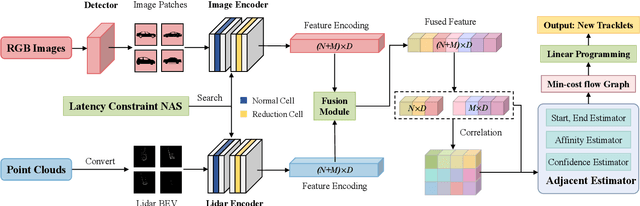
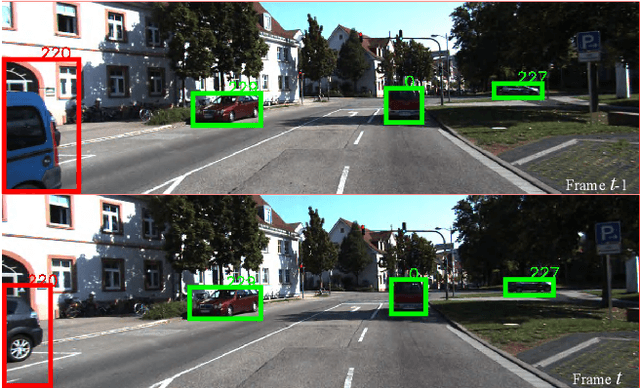
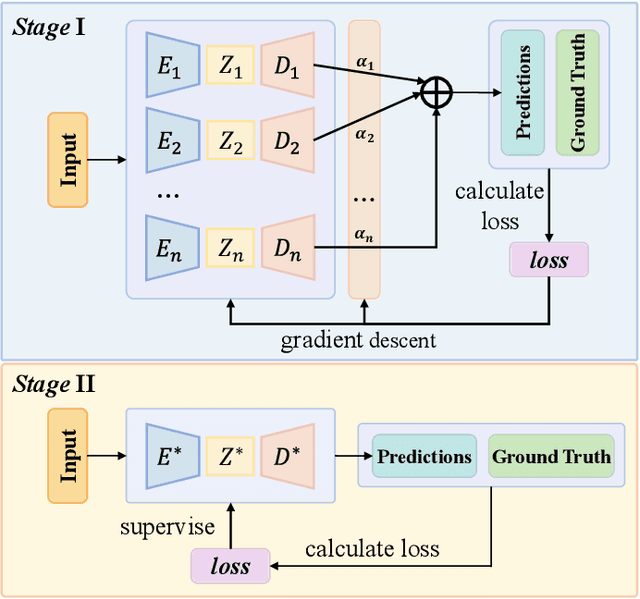
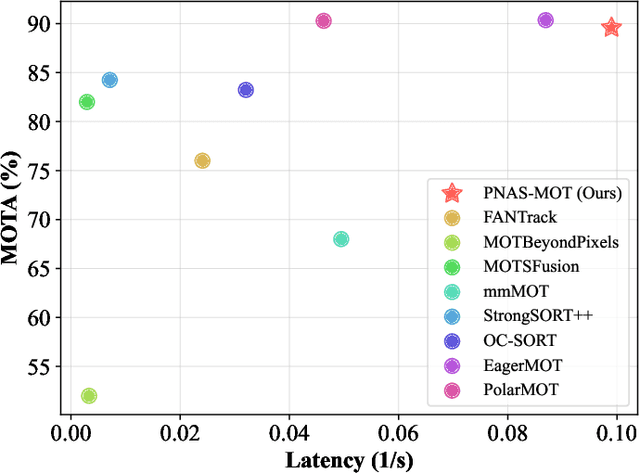
Multiple object tracking is a critical task in autonomous driving. Existing works primarily focus on the heuristic design of neural networks to obtain high accuracy. As tracking accuracy improves, however, neural networks become increasingly complex, posing challenges for their practical application in real driving scenarios due to the high level of latency. In this paper, we explore the use of the neural architecture search (NAS) methods to search for efficient architectures for tracking, aiming for low real-time latency while maintaining relatively high accuracy. Another challenge for object tracking is the unreliability of a single sensor, therefore, we propose a multi-modal framework to improve the robustness. Experiments demonstrate that our algorithm can run on edge devices within lower latency constraints, thus greatly reducing the computational requirements for multi-modal object tracking while keeping lower latency.
* IEEE Robotics and Automation Letters 2024. Code is available at https://github.com/PholyPeng/PNAS-MOT
In-Hand Following of Deformable Linear Objects Using Dexterous Fingers with Tactile Sensing
Mar 19, 2024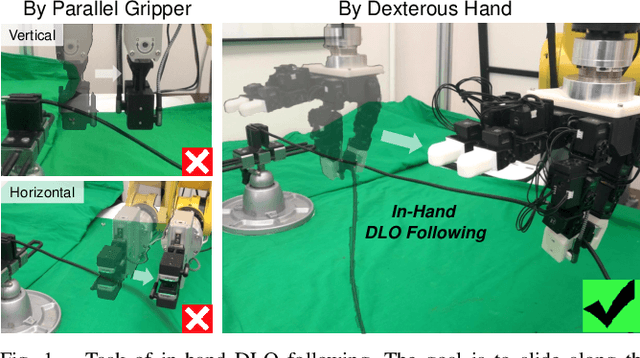

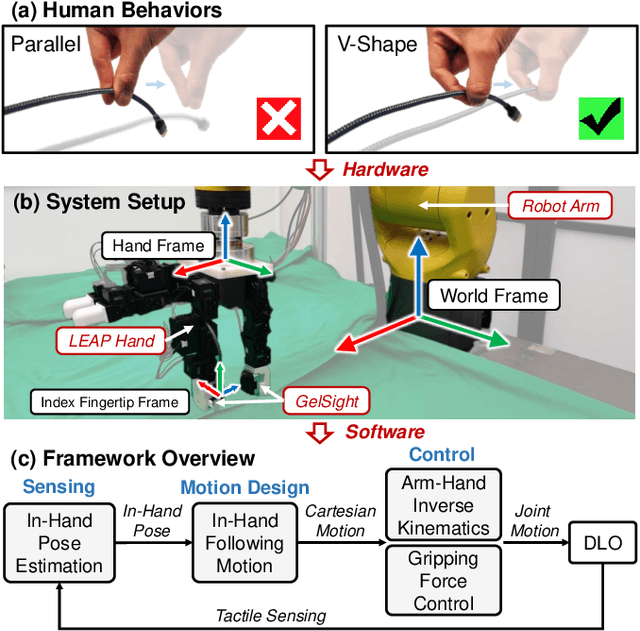
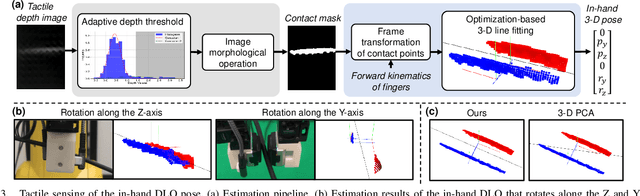
Most research on deformable linear object (DLO) manipulation assumes rigid grasping. However, beyond rigid grasping and re-grasping, in-hand following is also an essential skill that humans use to dexterously manipulate DLOs, which requires continuously changing the grasp point by in-hand sliding while holding the DLO to prevent it from falling. Achieving such a skill is very challenging for robots without using specially designed but not versatile end-effectors. Previous works have attempted using generic parallel grippers, but their robustness is unsatisfactory owing to the conflict between following and holding, which is hard to balance with a one-degree-of-freedom gripper. In this work, inspired by how humans use fingers to follow DLOs, we explore the usage of a generic dexterous hand with tactile sensing to imitate human skills and achieve robust in-hand DLO following. To enable the hardware system to function in the real world, we develop a framework that includes Cartesian-space arm-hand control, tactile-based in-hand 3-D DLO pose estimation, and task-specific motion design. Experimental results demonstrate the significant superiority of our method over using parallel grippers, as well as its great robustness, generalizability, and efficiency.