 Add to Chrome
 Add to Firefox
 Add to Edge
Weakly-Supervised 3D Visual Grounding based on Visual Linguistic Alignment
Dec 15, 2023
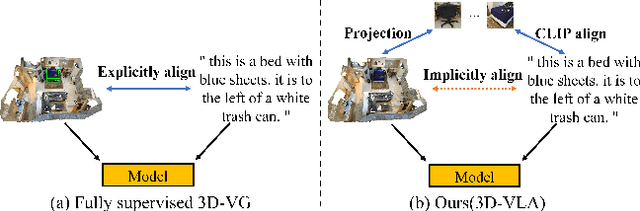
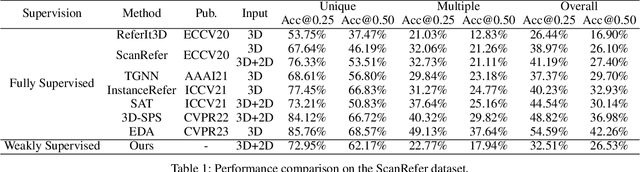
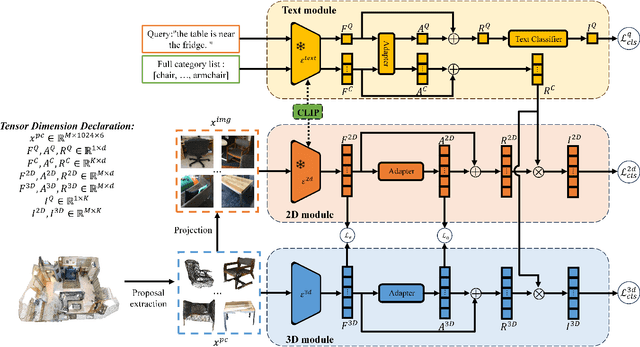
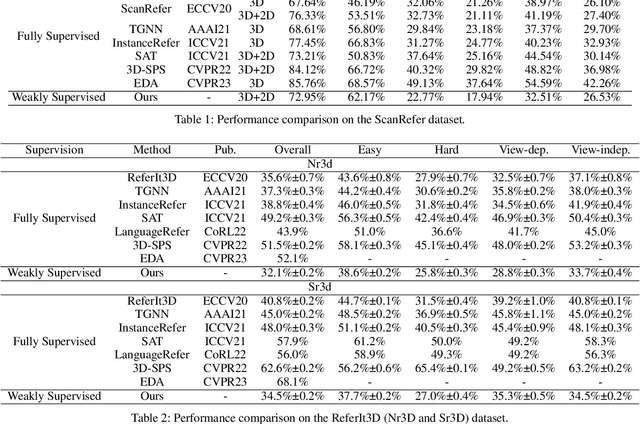
Learning to ground natural language queries to target objects or regions in 3D point clouds is quite essential for 3D scene understanding. Nevertheless, existing 3D visual grounding approaches require a substantial number of bounding box annotations for text queries, which is time-consuming and labor-intensive to obtain. In this paper, we propose \textbf{3D-VLA}, a weakly supervised approach for \textbf{3D} visual grounding based on \textbf{V}isual \textbf{L}inguistic \textbf{A}lignment. Our 3D-VLA exploits the superior ability of current large-scale vision-language models (VLMs) on aligning the semantics between texts and 2D images, as well as the naturally existing correspondences between 2D images and 3D point clouds, and thus implicitly constructs correspondences between texts and 3D point clouds with no need for fine-grained box annotations in the training procedure. During the inference stage, the learned text-3D correspondence will help us ground the text queries to the 3D target objects even without 2D images. To the best of our knowledge, this is the first work to investigate 3D visual grounding in a weakly supervised manner by involving large scale vision-language models, and extensive experiments on ReferIt3D and ScanRefer datasets demonstrate that our 3D-VLA achieves comparable and even superior results over the fully supervised methods.

Instance-aware Multi-Camera 3D Object Detection with Structural Priors Mining and Self-Boosting Learning
Dec 13, 2023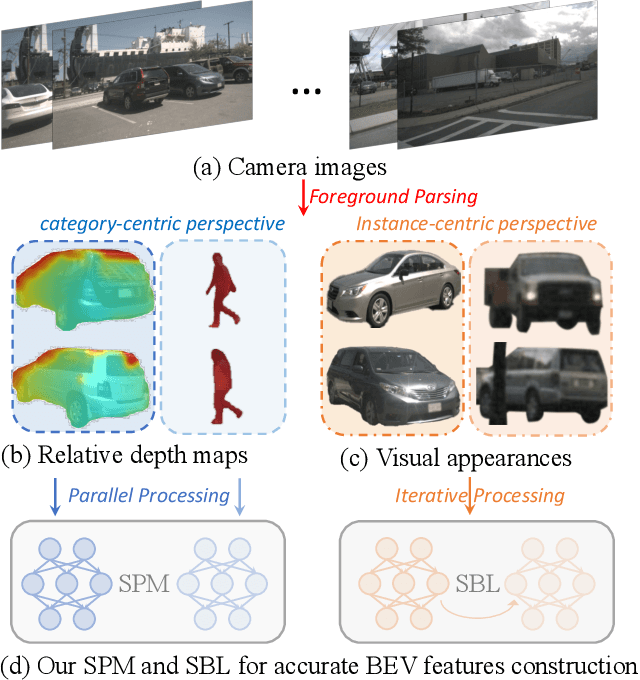
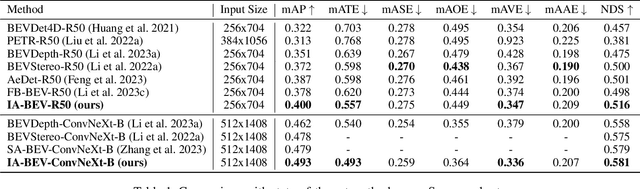
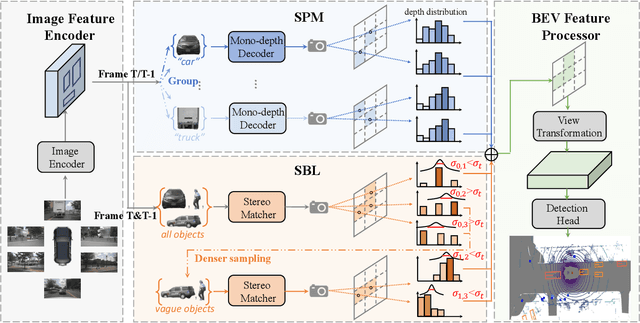
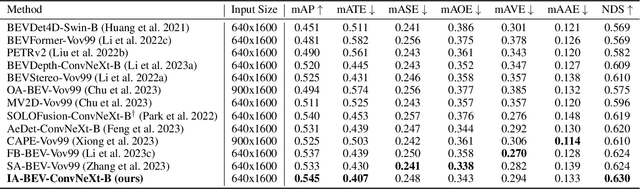
Camera-based bird-eye-view (BEV) perception paradigm has made significant progress in the autonomous driving field. Under such a paradigm, accurate BEV representation construction relies on reliable depth estimation for multi-camera images. However, existing approaches exhaustively predict depths for every pixel without prioritizing objects, which are precisely the entities requiring detection in the 3D space. To this end, we propose IA-BEV, which integrates image-plane instance awareness into the depth estimation process within a BEV-based detector. First, a category-specific structural priors mining approach is proposed for enhancing the efficacy of monocular depth generation. Besides, a self-boosting learning strategy is further proposed to encourage the model to place more emphasis on challenging objects in computation-expensive temporal stereo matching. Together they provide advanced depth estimation results for high-quality BEV features construction, benefiting the ultimate 3D detection. The proposed method achieves state-of-the-art performances on the challenging nuScenes benchmark, and extensive experimental results demonstrate the effectiveness of our designs.
EKGNet: A 10.96μW Fully Analog Neural Network for Intra-Patient Arrhythmia Classification
Oct 24, 2023


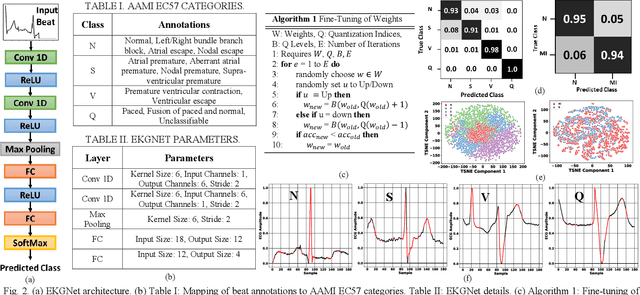
We present an integrated approach by combining analog computing and deep learning for electrocardiogram (ECG) arrhythmia classification. We propose EKGNet, a hardware-efficient and fully analog arrhythmia classification architecture that archives high accuracy with low power consumption. The proposed architecture leverages the energy efficiency of transistors operating in the subthreshold region, eliminating the need for analog-to-digital converters (ADC) and static random access memory (SRAM). The system design includes a novel analog sequential Multiply-Accumulate (MAC) circuit that mitigates process, supply voltage, and temperature variations. Experimental evaluations on PhysioNet's MIT-BIH and PTB Diagnostics datasets demonstrate the effectiveness of the proposed method, achieving average balanced accuracy of 95% and 94.25% for intra-patient arrhythmia classification and myocardial infarction (MI) classification, respectively. This innovative approach presents a promising avenue for developing low-power arrhythmia classification systems with enhanced accuracy and transferability in biomedical applications.
DreamSpace: Dreaming Your Room Space with Text-Driven Panoramic Texture Propagation
Oct 19, 2023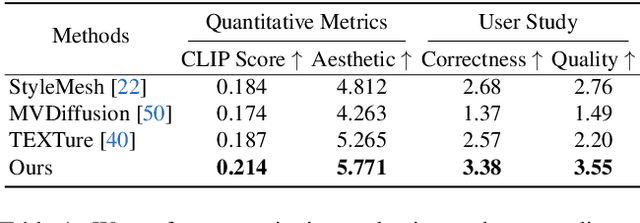
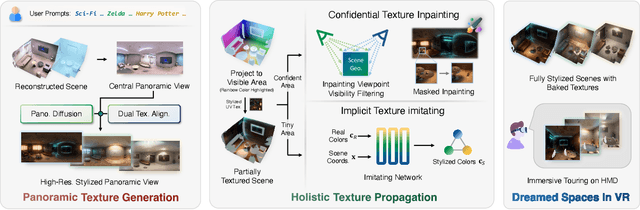
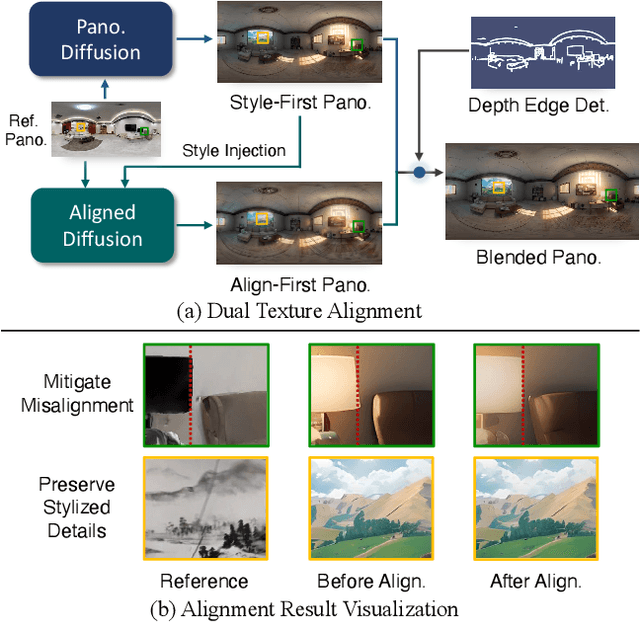
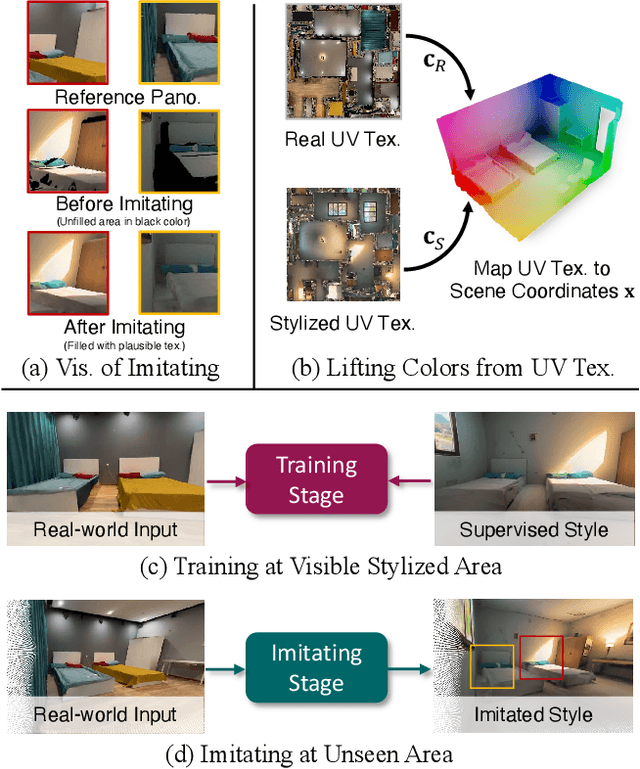
Diffusion-based methods have achieved prominent success in generating 2D media. However, accomplishing similar proficiencies for scene-level mesh texturing in 3D spatial applications, e.g., XR/VR, remains constrained, primarily due to the intricate nature of 3D geometry and the necessity for immersive free-viewpoint rendering. In this paper, we propose a novel indoor scene texturing framework, which delivers text-driven texture generation with enchanting details and authentic spatial coherence. The key insight is to first imagine a stylized 360{\deg} panoramic texture from the central viewpoint of the scene, and then propagate it to the rest areas with inpainting and imitating techniques. To ensure meaningful and aligned textures to the scene, we develop a novel coarse-to-fine panoramic texture generation approach with dual texture alignment, which both considers the geometry and texture cues of the captured scenes. To survive from cluttered geometries during texture propagation, we design a separated strategy, which conducts texture inpainting in confidential regions and then learns an implicit imitating network to synthesize textures in occluded and tiny structural areas. Extensive experiments and the immersive VR application on real-world indoor scenes demonstrate the high quality of the generated textures and the engaging experience on VR headsets. Project webpage: https://ybbbbt.com/publication/dreamspace
SoccerNet 2023 Challenges Results
Sep 12, 2023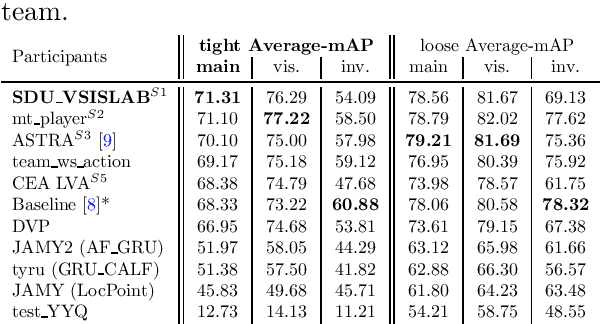
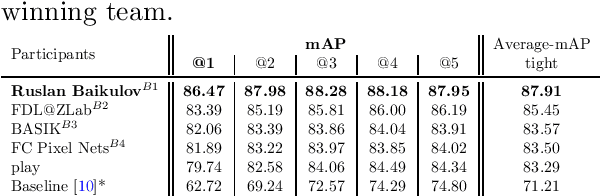
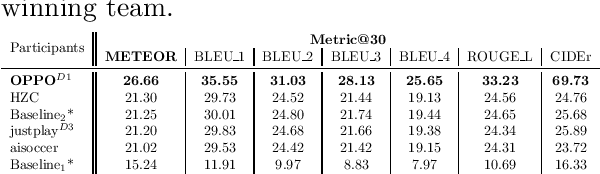
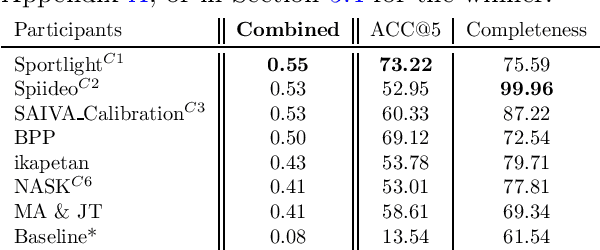
The SoccerNet 2023 challenges were the third annual video understanding challenges organized by the SoccerNet team. For this third edition, the challenges were composed of seven vision-based tasks split into three main themes. The first theme, broadcast video understanding, is composed of three high-level tasks related to describing events occurring in the video broadcasts: (1) action spotting, focusing on retrieving all timestamps related to global actions in soccer, (2) ball action spotting, focusing on retrieving all timestamps related to the soccer ball change of state, and (3) dense video captioning, focusing on describing the broadcast with natural language and anchored timestamps. The second theme, field understanding, relates to the single task of (4) camera calibration, focusing on retrieving the intrinsic and extrinsic camera parameters from images. The third and last theme, player understanding, is composed of three low-level tasks related to extracting information about the players: (5) re-identification, focusing on retrieving the same players across multiple views, (6) multiple object tracking, focusing on tracking players and the ball through unedited video streams, and (7) jersey number recognition, focusing on recognizing the jersey number of players from tracklets. Compared to the previous editions of the SoccerNet challenges, tasks (2-3-7) are novel, including new annotations and data, task (4) was enhanced with more data and annotations, and task (6) now focuses on end-to-end approaches. More information on the tasks, challenges, and leaderboards are available on https://www.soccer-net.org. Baselines and development kits can be found on https://github.com/SoccerNet.
Tri-MipRF: Tri-Mip Representation for Efficient Anti-Aliasing Neural Radiance Fields
Jul 21, 2023
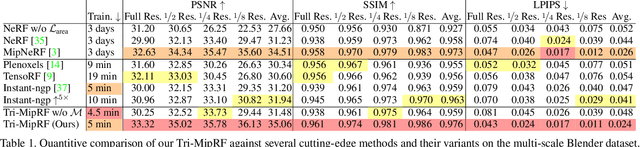

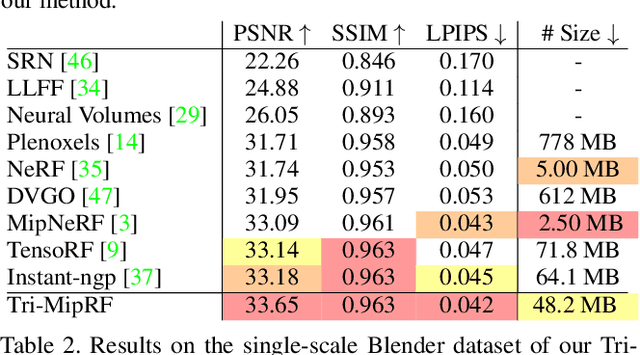
Despite the tremendous progress in neural radiance fields (NeRF), we still face a dilemma of the trade-off between quality and efficiency, e.g., MipNeRF presents fine-detailed and anti-aliased renderings but takes days for training, while Instant-ngp can accomplish the reconstruction in a few minutes but suffers from blurring or aliasing when rendering at various distances or resolutions due to ignoring the sampling area. To this end, we propose a novel Tri-Mip encoding that enables both instant reconstruction and anti-aliased high-fidelity rendering for neural radiance fields. The key is to factorize the pre-filtered 3D feature spaces in three orthogonal mipmaps. In this way, we can efficiently perform 3D area sampling by taking advantage of 2D pre-filtered feature maps, which significantly elevates the rendering quality without sacrificing efficiency. To cope with the novel Tri-Mip representation, we propose a cone-casting rendering technique to efficiently sample anti-aliased 3D features with the Tri-Mip encoding considering both pixel imaging and observing distance. Extensive experiments on both synthetic and real-world datasets demonstrate our method achieves state-of-the-art rendering quality and reconstruction speed while maintaining a compact representation that reduces 25% model size compared against Instant-ngp.
* Accepted to ICCV 2023 Project page: https://wbhu.github.io/projects/Tri-MipRF
PaVa: a novel Path-based Valley-seeking clustering algorithm
Jun 13, 2023Clustering methods are being applied to a wider range of scenarios involving more complex datasets, where the shapes of clusters tend to be arbitrary. In this paper, we propose a novel Path-based Valley-seeking clustering algorithm for arbitrarily shaped clusters. This work aims to seek the valleys among clusters and then individually extract clusters. Three vital techniques are used in this algorithm. First, path distance (minmax distance) is employed to transform the irregular boundaries among clusters, that is density valleys, into perfect spherical shells. Second, a suitable density measurement, $k$-distance, is employed to make adjustment on Minimum Spanning Tree, by which a robust minmax distance is calculated. Third, we seek the transformed density valleys by determining their centers and radius. First, the clusters are wrapped in spherical shells after the distance transformation, making the extraction process efficient even with clusters of arbitrary shape. Second, adjusted Minimum Spanning Tree enhances the robustness of minmax distance under different kinds of noise. Last, the number of clusters does not need to be inputted or decided manually due to the individual extraction process. After applying the proposed algorithm to several commonly used synthetic datasets, the results indicate that the Path-based Valley-seeking algorithm is accurate and efficient. The algorithm is based on the dissimilarity of objects, so it can be applied to a wide range of fields. Its performance on real-world datasets illustrates its versatility.
E2E-LOAD: End-to-End Long-form Online Action Detection
Jun 13, 2023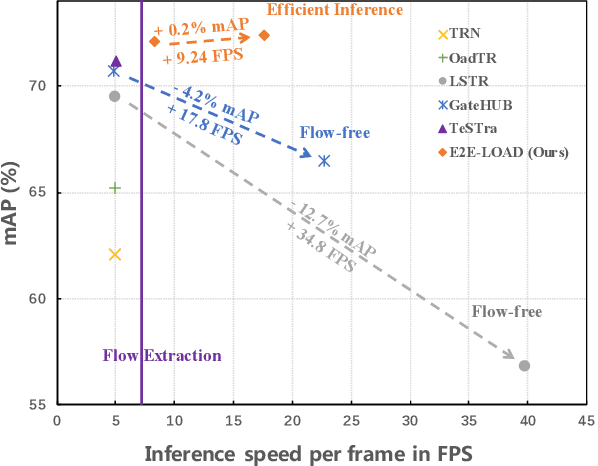
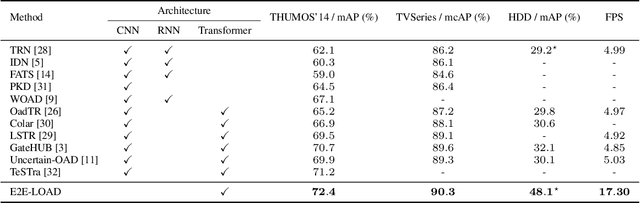
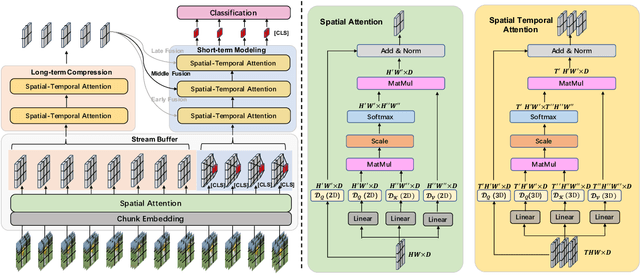

Recently, there has been a growing trend toward feature-based approaches for Online Action Detection (OAD). However, these approaches have limitations due to their fixed backbone design, which ignores the potential capability of a trainable backbone. In this paper, we propose the first end-to-end OAD model, termed E2E-LOAD, designed to address the major challenge of OAD, namely, long-term understanding and efficient online reasoning. Specifically, our proposed approach adopts an initial spatial model that is shared by all frames and maintains a long sequence cache for inference at a low computational cost. We also advocate an asymmetric spatial-temporal model for long-form and short-form modeling effectively. Furthermore, we propose a novel and efficient inference mechanism that accelerates heavy spatial-temporal exploration. Extensive ablation studies and experiments demonstrate the effectiveness and efficiency of our proposed method. Notably, we achieve 17.3 (+12.6) FPS for end-to-end OAD with 72.4%~(+1.2%), 90.3%~(+0.7%), and 48.1%~(+26.0%) mAP on THMOUS14, TVSeries, and HDD, respectively, which is 3x faster than previous approaches. The source code will be made publicly available.
Bridging the Gap Between End-to-end and Non-End-to-end Multi-Object Tracking
May 22, 2023


Existing end-to-end Multi-Object Tracking (e2e-MOT) methods have not surpassed non-end-to-end tracking-by-detection methods. One potential reason is its label assignment strategy during training that consistently binds the tracked objects with tracking queries and then assigns the few newborns to detection queries. With one-to-one bipartite matching, such an assignment will yield unbalanced training, i.e., scarce positive samples for detection queries, especially for an enclosed scene, as the majority of the newborns come on stage at the beginning of videos. Thus, e2e-MOT will be easier to yield a tracking terminal without renewal or re-initialization, compared to other tracking-by-detection methods. To alleviate this problem, we present Co-MOT, a simple and effective method to facilitate e2e-MOT by a novel coopetition label assignment with a shadow concept. Specifically, we add tracked objects to the matching targets for detection queries when performing the label assignment for training the intermediate decoders. For query initialization, we expand each query by a set of shadow counterparts with limited disturbance to itself. With extensive ablations, Co-MOT achieves superior performance without extra costs, e.g., 69.4% HOTA on DanceTrack and 52.8% TETA on BDD100K. Impressively, Co-MOT only requires 38\% FLOPs of MOTRv2 to attain a similar performance, resulting in the 1.4$\times$ faster inference speed.
A Multi-Modal Context Reasoning Approach for Conditional Inference on Joint Textual and Visual Clues
May 08, 2023Conditional inference on joint textual and visual clues is a multi-modal reasoning task that textual clues provide prior permutation or external knowledge, which are complementary with visual content and pivotal to deducing the correct option. Previous methods utilizing pretrained vision-language models (VLMs) have achieved impressive performances, yet they show a lack of multimodal context reasoning capability, especially for text-modal information. To address this issue, we propose a Multi-modal Context Reasoning approach, named ModCR. Compared to VLMs performing reasoning via cross modal semantic alignment, it regards the given textual abstract semantic and objective image information as the pre-context information and embeds them into the language model to perform context reasoning. Different from recent vision-aided language models used in natural language processing, ModCR incorporates the multi-view semantic alignment information between language and vision by introducing the learnable alignment prefix between image and text in the pretrained language model. This makes the language model well-suitable for such multi-modal reasoning scenario on joint textual and visual clues. We conduct extensive experiments on two corresponding data sets and experimental results show significantly improved performance (exact gain by 4.8% on PMR test set) compared to previous strong baselines. Code Link: \url{https://github.com/YunxinLi/Multimodal-Context-Reasoning}.