 Add to Chrome
 Add to Firefox
 Add to Edge
From Similarity to Structure: Training-free LLM Context Compression with Hybrid Graph Priors
Apr 25, 2026
Long-context large language models remain computationally expensive to run and often fail to reliably process very long inputs, which makes context compression an important component of many systems. Existing compression approaches typically rely on trained compressors, dense retrieval-style selection, or heuristic trimming, and they often struggle to jointly preserve task relevance, topic coverage, and cross-sentence coherence under a strict token budget. To address this, we propose a training-free and model-agnostic compression framework that selects a compact set of sentences guided by structural graph priors. Our method constructs a sparse hybrid sentence graph that combines mutual k-NN semantic edges with short-range sequential edges, extracts a topic skeleton via clustering, and ranks sentences using an interpretable score that integrates task relevance, cluster representativeness, bridge centrality, and a cycle coverage cue. A budgeted greedy selection with redundancy suppression then produces a readable compressed context in original order. Experimental results on four datasets show that our approach is competitive with strong extractive and abstractive baselines, demonstrating larger gains on long-document benchmarks.

DASH-KV: Accelerating Long-Context LLM Inference via Asymmetric KV Cache Hashing
Apr 22, 2026The quadratic computational complexity of the standard attention mechanism constitutes a fundamental bottleneck for large language models in long-context inference. While existing KV cache compression methods alleviate memory pressure, they often sacrifice generation quality and fail to address the high overhead of floating-point arithmetic. This paper introduces DASH-KV, an innovative acceleration framework that reformulates attention as approximate nearest-neighbor search via asymmetric deep hashing. Under this paradigm, we design an asymmetric encoding architecture that differentially maps queries and keys to account for their distinctions in precision and reuse characteristics. To balance efficiency and accuracy, we further introduce a dynamic mixed-precision mechanism that adaptively retains full-precision computation for critical tokens. Extensive experiments on LongBench demonstrate that DASH-KV significantly outperforms state-of-the-art baseline methods while matching the performance of full attention, all while reducing inference complexity from O(N^2) to linear O(N). The code is available at https://github.com/Zhihan-Zh/DASH-KV
Experience Transfer for Multimodal LLM Agents in Minecraft Game
Apr 07, 2026Multimodal LLM agents operating in complex game environments must continually reuse past experience to solve new tasks efficiently. In this work, we propose Echo, a transfer-oriented memory framework that enables agents to derive actionable knowledge from prior interactions rather than treating memory as a passive repository of static records. To make transfer explicit, Echo decomposes reusable knowledge into five dimensions: structure, attribute, process, function, and interaction. This formulation allows the agent to identify recurring patterns shared across different tasks and infer what prior experience remains applicable in new situations. Building on this formulation, Echo leverages In-Context Analogy Learning (ICAL) to retrieve relevant experiences and adapt them to unseen tasks through contextual examples. Experiments in Minecraft show that, under a from-scratch learning setting, Echo achieves a 1.3x to 1.7x speed-up on object-unlocking tasks. Moreover, Echo exhibits a burst-like chain-unlocking phenomenon, rapidly unlocking multiple similar items within a short time interval after acquiring transferable experience. These results suggest that experience transfer is a promising direction for improving the efficiency and adaptability of multimodal LLM agents in complex interactive environments.
GHS-TDA: A Synergistic Reasoning Framework Integrating Global Hypothesis Space with Topological Data Analysis
Feb 10, 2026Chain-of-Thought (CoT) has been shown to significantly improve the reasoning accuracy of large language models (LLMs) on complex tasks. However, due to the autoregressive, step-by-step generation paradigm, existing CoT methods suffer from two fundamental limitations. First, the reasoning process is highly sensitive to early decisions: once an initial error is introduced, it tends to propagate and amplify through subsequent steps, while the lack of a global coordination and revision mechanism makes such errors difficult to correct, ultimately leading to distorted reasoning chains. Second, current CoT approaches lack structured analysis techniques for filtering redundant reasoning and extracting key reasoning features, resulting in unstable reasoning processes and limited interpretability. To address these issues, we propose GHS-TDA. GHS-TDA first constructs a semantically enriched global hypothesis graph to aggregate, align, and coordinate multiple candidate reasoning paths, thereby providing alternative global correction routes when local reasoning fails. It then applies topological data analysis based on persistent homology to capture stable multi-scale structures, remove redundancy and inconsistencies, and extract a more reliable reasoning skeleton. By jointly leveraging reasoning diversity and topological stability, GHS-TDA achieves self-adaptive convergence, produces high-confidence and interpretable reasoning paths, and consistently outperforms strong baselines in terms of both accuracy and robustness across multiple reasoning benchmarks.
MetaCLBench: Meta Continual Learning Benchmark on Resource-Constrained Edge Devices
Mar 31, 2025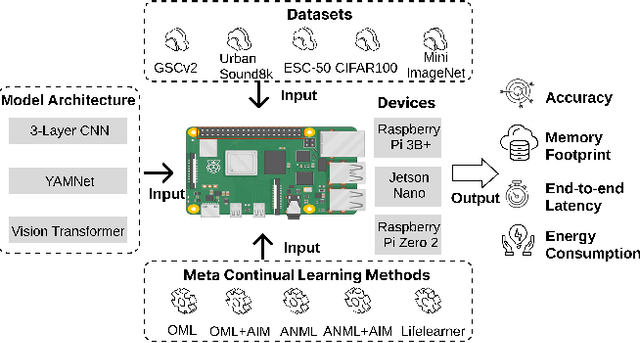
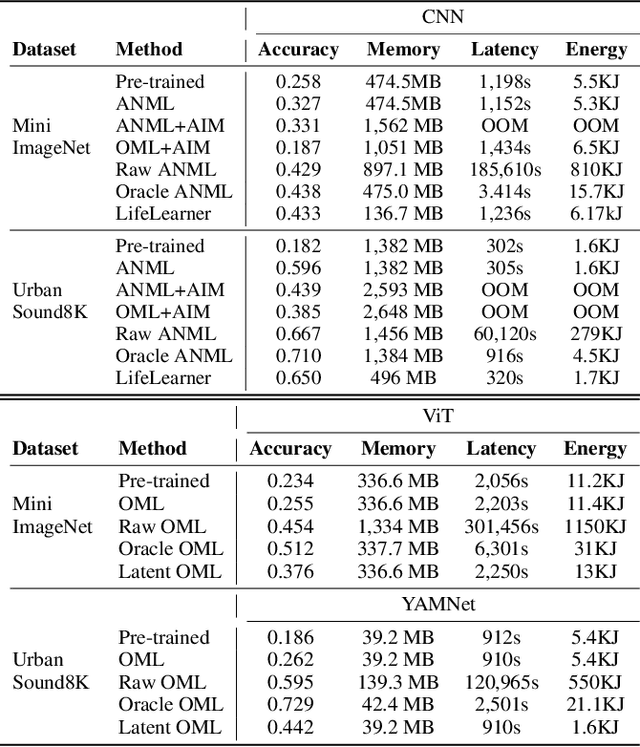
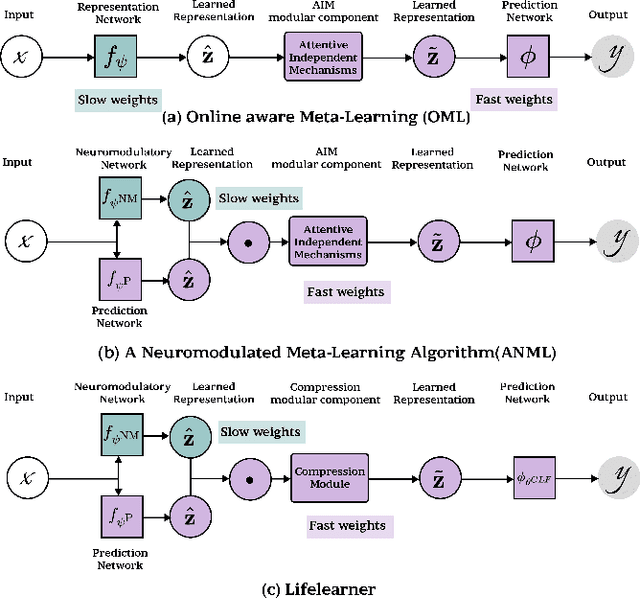
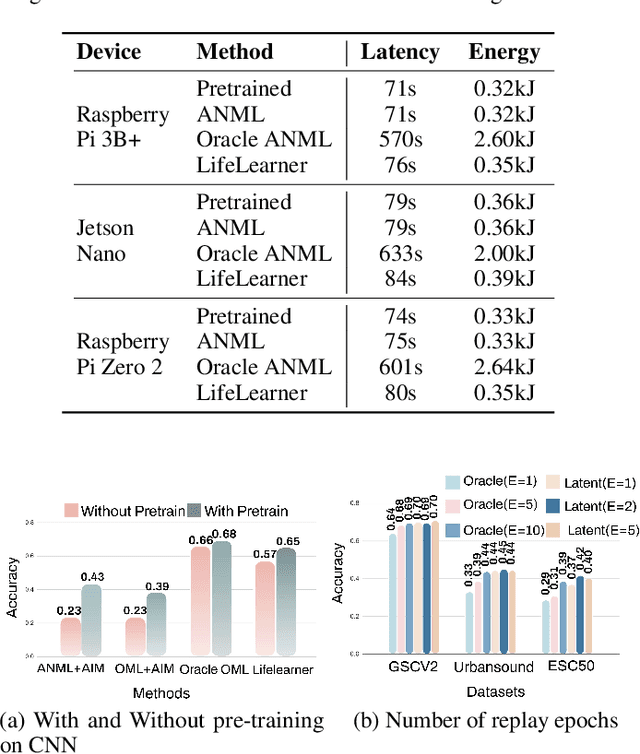
Meta-Continual Learning (Meta-CL) has emerged as a promising approach to minimize manual labeling efforts and system resource requirements by enabling Continual Learning (CL) with limited labeled samples. However, while existing methods have shown success in image-based tasks, their effectiveness remains unexplored for sequential time-series data from sensor systems, particularly audio inputs. To address this gap, we conduct a comprehensive benchmark study evaluating six representative Meta-CL approaches using three network architectures on five datasets from both image and audio modalities. We develop MetaCLBench, an end-to-end Meta-CL benchmark framework for edge devices to evaluate system overheads and investigate trade-offs among performance, computational costs, and memory requirements across various Meta-CL methods. Our results reveal that while many Meta-CL methods enable to learn new classes for both image and audio modalities, they impose significant computational and memory costs on edge devices. Also, we find that pre-training and meta-training procedures based on source data before deployment improve Meta-CL performance. Finally, to facilitate further research, we provide practical guidelines for researchers and machine learning practitioners implementing Meta-CL on resource-constrained environments and make our benchmark framework and tools publicly available, enabling fair evaluation across both accuracy and system-level metrics.
LMLPA: Language Model Linguistic Personality Assessment
Oct 23, 2024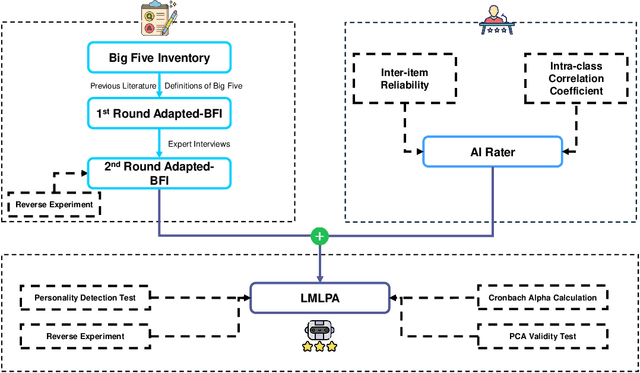


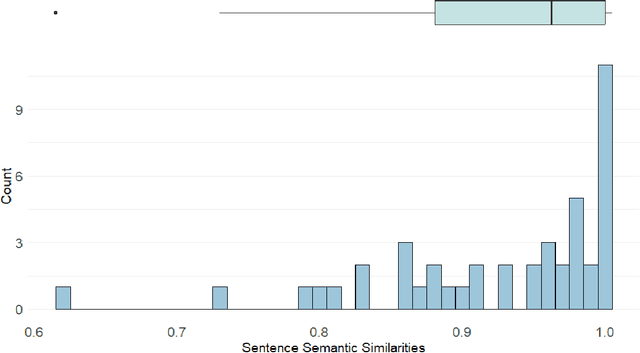
Large Language Models (LLMs) are increasingly used in everyday life and research. One of the most common use cases is conversational interactions, enabled by the language generation capabilities of LLMs. Just as between two humans, a conversation between an LLM-powered entity and a human depends on the personality of the conversants. However, measuring the personality of a given LLM is currently a challenge. This paper introduces the Language Model Linguistic Personality Assessment (LMLPA), a system designed to evaluate the linguistic personalities of LLMs. Our system helps to understand LLMs' language generation capabilities by quantitatively assessing the distinct personality traits reflected in their linguistic outputs. Unlike traditional human-centric psychometrics, the LMLPA adapts a personality assessment questionnaire, specifically the Big Five Inventory, to align with the operational capabilities of LLMs, and also incorporates the findings from previous language-based personality measurement literature. To mitigate sensitivity to the order of options, our questionnaire is designed to be open-ended, resulting in textual answers. Thus, the AI rater is needed to transform ambiguous personality information from text responses into clear numerical indicators of personality traits. Utilising Principal Component Analysis and reliability validations, our findings demonstrate that LLMs possess distinct personality traits that can be effectively quantified by the LMLPA. This research contributes to Human-Computer Interaction and Human-Centered AI, providing a robust framework for future studies to refine AI personality assessments and expand their applications in multiple areas, including education and manufacturing.
Towards Massive Interaction with Generalist Robotics: A Systematic Review of XR-enabled Remote Human-Robot Interaction Systems
Mar 26, 2024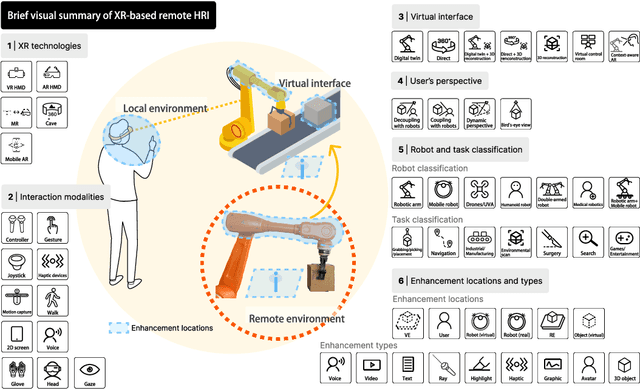
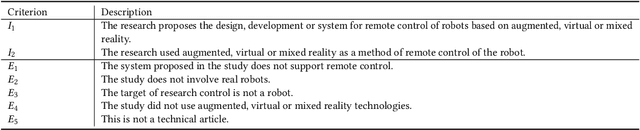


The rising interest of generalist robots seek to create robots with versatility to handle multiple tasks in a variety of environments, and human will interact with such robots through immersive interfaces. In the context of human-robot interaction (HRI), this survey provides an exhaustive review of the applications of extended reality (XR) technologies in the field of remote HRI. We developed a systematic search strategy based on the PRISMA methodology. From the initial 2,561 articles selected, 100 research papers that met our inclusion criteria were included. We categorized and summarized the domain in detail, delving into XR technologies, including augmented reality (AR), virtual reality (VR), and mixed reality (MR), and their applications in facilitating intuitive and effective remote control and interaction with robotic systems. The survey highlights existing articles on the application of XR technologies, user experience enhancement, and various interaction designs for XR in remote HRI, providing insights into current trends and future directions. We also identified potential gaps and opportunities for future research to improve remote HRI systems through XR technology to guide and inform future XR and robotics research.
Sora as an AGI World Model? A Complete Survey on Text-to-Video Generation
Mar 08, 2024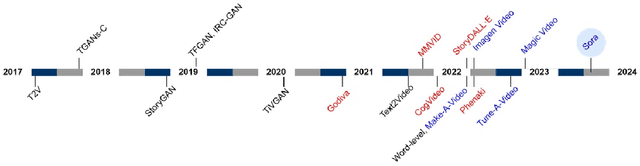
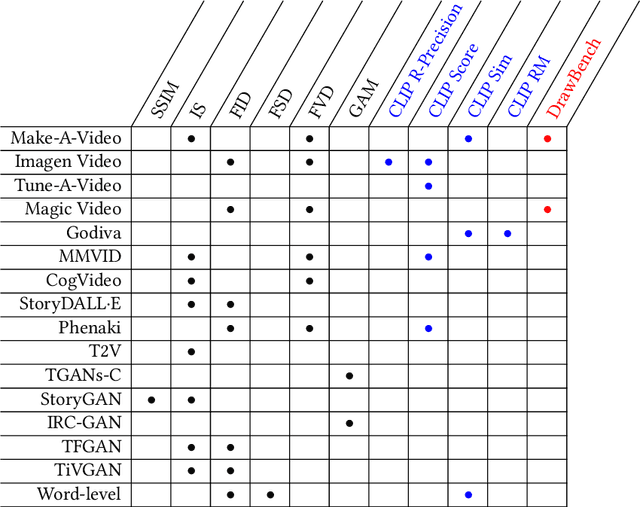
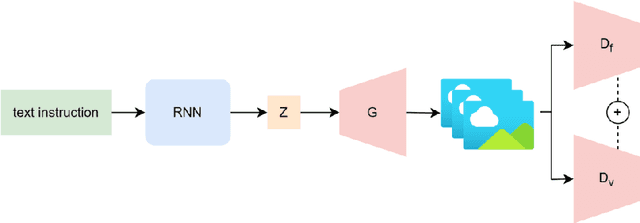
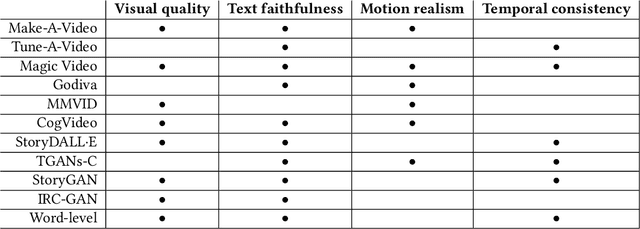
Text-to-video generation marks a significant frontier in the rapidly evolving domain of generative AI, integrating advancements in text-to-image synthesis, video captioning, and text-guided editing. This survey critically examines the progression of text-to-video technologies, focusing on the shift from traditional generative models to the cutting-edge Sora model, highlighting developments in scalability and generalizability. Distinguishing our analysis from prior works, we offer an in-depth exploration of the technological frameworks and evolutionary pathways of these models. Additionally, we delve into practical applications and address ethical and technological challenges such as the inability to perform multiple entity handling, comprehend causal-effect learning, understand physical interaction, perceive object scaling and proportioning, and combat object hallucination which is also a long-standing problem in generative models. Our comprehensive discussion covers the topic of enablement of text-to-video generation models as human-assistive tools and world models, as well as eliciting model's shortcomings and summarizing future improvement direction that mainly centers around training datasets and evaluation metrics (both automatic and human-centered). Aimed at both newcomers and seasoned researchers, this survey seeks to catalyze further innovation and discussion in the growing field of text-to-video generation, paving the way for more reliable and practical generative artificial intelligence technologies.
APT-Pipe: An Automatic Prompt-Tuning Tool for Social Computing Data Annotation
Feb 08, 2024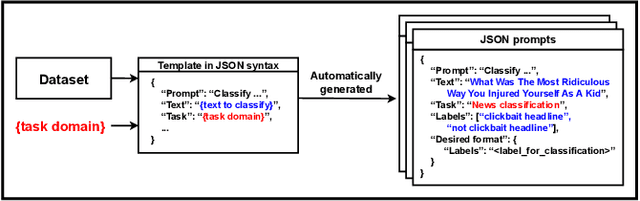
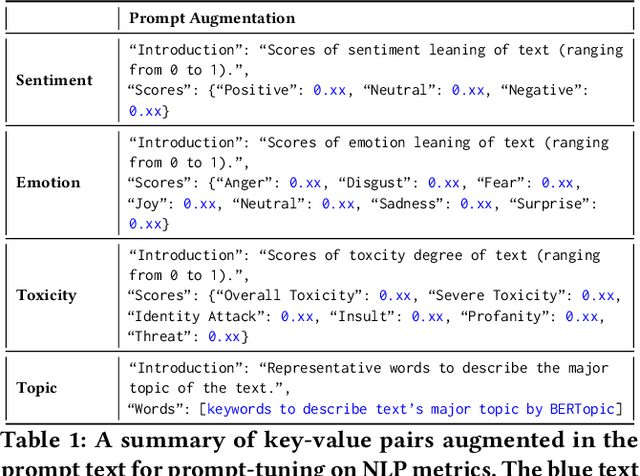
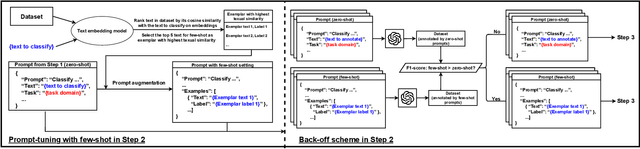
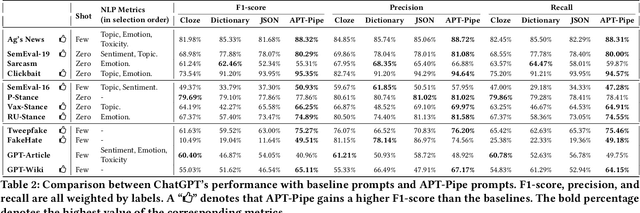
Recent research has highlighted the potential of LLM applications, like ChatGPT, for performing label annotation on social computing text. However, it is already well known that performance hinges on the quality of the input prompts. To address this, there has been a flurry of research into prompt tuning -- techniques and guidelines that attempt to improve the quality of prompts. Yet these largely rely on manual effort and prior knowledge of the dataset being annotated. To address this limitation, we propose APT-Pipe, an automated prompt-tuning pipeline. APT-Pipe aims to automatically tune prompts to enhance ChatGPT's text classification performance on any given dataset. We implement APT-Pipe and test it across twelve distinct text classification datasets. We find that prompts tuned by APT-Pipe help ChatGPT achieve higher weighted F1-score on nine out of twelve experimented datasets, with an improvement of 7.01% on average. We further highlight APT-Pipe's flexibility as a framework by showing how it can be extended to support additional tuning mechanisms.
Generative AI meets 3D: A Survey on Text-to-3D in AIGC Era
May 10, 2023

Generative AI (AIGC, a.k.a. AI generated content) has made remarkable progress in the past few years, among which text-guided content generation is the most practical one since it enables the interaction between human instruction and AIGC. Due to the development in text-to-image as well 3D modeling technologies (like NeRF), text-to-3D has become a newly emerging yet highly active research field. Our work conducts the first yet comprehensive survey on text-to-3D to help readers interested in this direction quickly catch up with its fast development. First, we introduce 3D data representations, including both Euclidean data and non-Euclidean data. On top of that, we introduce various foundation technologies as well as summarize how recent works combine those foundation technologies to realize satisfactory text-to-3D. Moreover, we summarize how text-to-3D technology is used in various applications, including avatar generation, texture generation, shape transformation, and scene generation.