 Add to Chrome
 Add to Firefox
 Add to Edge
Asynchronous Distributed Coordinated Hybrid Precoding in Multi-cell mmWave Wireless Networks
Feb 13, 2024
Asynchronous distributed hybrid beamformers (ADBF) are conceived for minimizing the total transmit power subject to signal-to-interference-plus-noise ratio (SINR) constraints at the users. Our design requires only limited information exchange between the base stations (BSs) of the mmWave multi-cell coordinated (MCC) networks considered. To begin with, a semidefinite relaxation (SDR)-based fully-digital (FD) beamformer is designed for a centralized MCC system. Subsequently, a Bayesian learning (BL) technique is harnessed for decomposing the FD beamformer into its analog and baseband components and construct a hybrid transmit precoder (TPC). However, the centralized TPC design requires global channel state information (CSI), hence it results in a high signaling overhead. An alternating direction based method of multipliers (ADMM) technique is developed for a synchronous distributed beamformer (SDBF) design, which relies only on limited information exchange among the BSs, thus reducing the signaling overheads required by the centralized TPC design procedure. However, the SDBF design is challenging, since it requires the updates from the BSs to be strictly synchronized. As a remedy, an ADBF framework is developed that mitigates the inter-cell interference (ICI) and also control the asynchrony in the system. Furthermore, the above ADBF framework is also extended to the robust ADBF (R-ADBF) algorithm that incorporates the CSI uncertainty into the design procedure for minimizing the the worst-case transmit power. Our simulation results illustrate both the enhanced performance and the improved convergence properties of the ADMM-based ADBF and R-ADBF schemes.

Two-Dimensional Direction-of-Arrival Estimation Using Stacked Intelligent Metasurfaces
Feb 13, 2024Stacked intelligent metasurfaces (SIM) are capable of emulating reconfigurable physical neural networks by relying on electromagnetic (EM) waves as carriers. They can also perform various complex computational and signal processing tasks. A SIM is fabricated by densely integrating multiple metasurface layers, each consisting of a large number of small meta-atoms that can control the EM waves passing through it. In this paper, we harness a SIM for two-dimensional (2D) direction-of-arrival (DOA) estimation. In contrast to the conventional designs, an advanced SIM in front of the receiver array automatically carries out the 2D discrete Fourier transform (DFT) as the incident waves propagate through it. As a result, the receiver array directly observes the angular spectrum of the incoming signal. In this context, the DOA estimates can be readily obtained by using probes to detect the energy distribution on the receiver array. This avoids the need for power-thirsty radio frequency (RF) chains. To enable SIM to perform the 2D DFT, we formulate the optimization problem of minimizing the fitting error between the SIM's EM response and the 2D DFT matrix. Furthermore, a gradient descent algorithm is customized for iteratively updating the phase shift of each meta-atom in SIM. To further improve the DOA estimation accuracy, we configure the phase shift pattern in the zeroth layer of the SIM to generate a set of 2D DFT matrices associated with orthogonal spatial frequency bins. Additionally, we analytically evaluate the performance of the proposed SIM-based DOA estimator by deriving a tight upper bound for the mean square error (MSE). Our numerical simulations verify the capability of a well-trained SIM to perform DOA estimation and corroborate our theoretical analysis. It is demonstrated that a SIM having an optical computational speed achieves an MSE of $10^{-4}$ for DOA estimation.
On the BER vs. Bandwidth-Efficiency Trade-offs in Windowed OTSM Dispensing with Zero-Padding
Feb 01, 2024An orthogonal time sequency multiplexing (OTSM) scheme using practical signaling functions is proposed under strong phase noise (PHN) scenarios. By utilizing the transform relationships between the delay-sequency (DS), time-frequency (TF) and time-domains, we first conceive the DS-domain input-output relationship of our OTSM system, where the conventional zero-padding is discarded to increase the spectral efficiency. Then, the unconditional pairwise error probability is derived, followed by deriving the bit error ratio (BER) upper bound in closed-form. Moreover, we compare the BER performance of our OTSM system based on several practical signaling functions. Our simulation results demonstrate that the upper bound derived accurately predicts the BER performance in the case of moderate to high signal-to-noise ratios (SNRs), while harnessing practical window functions is capable of attaining an attractive out-of-band emission (OOBE) vs. BER trade-off.
Electromagnetic Information Theory: Fundamentals and Applications for 6G Wireless Communication Systems
Jan 17, 2024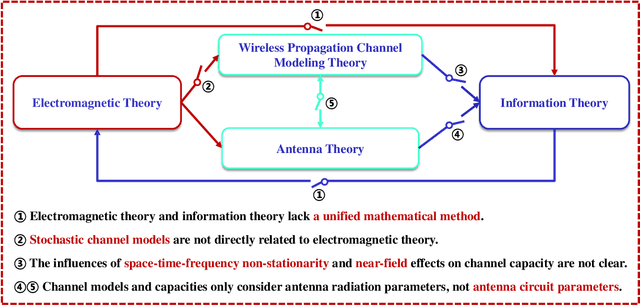
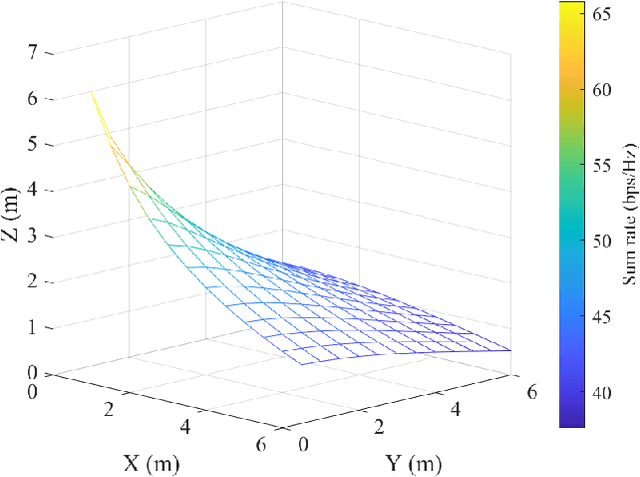
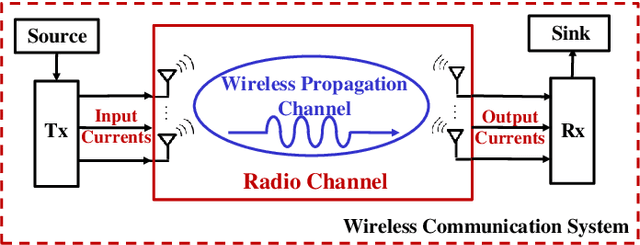
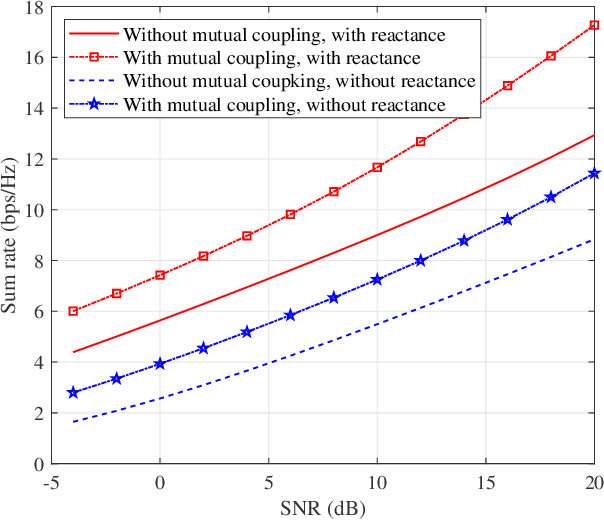
In wireless communications, electromagnetic theory and information theory constitute a pair of fundamental theories, bridged by antenna theory and wireless propagation channel modeling theory. Up to the fifth generation (5G) wireless communication networks, these four theories have been developing relatively independently. However, in sixth generation (6G) space-air-ground-sea wireless communication networks, seamless coverage is expected in the three-dimensional (3D) space, potentially necessitating the acquisition of channel state information (CSI) and channel capacity calculation at anywhere and any time. Additionally, the key 6G technologies such as ultra-massive multiple-input multiple-output (MIMO) and holographic MIMO achieves intricate interaction of the antennas and wireless propagation environments, which necessitates the joint modeling of antennas and wireless propagation channels. To address the challenges in 6G, the integration of the above four theories becomes inevitable, leading to the concept of the so-called electromagnetic information theory (EIT). In this article, a suite of 6G key technologies is highlighted. Then, the concepts and relationships of the four theories are unveiled. Finally, the necessity and benefits of integrating them into the EIT are revealed.
RIS-Aided Near-field Communications for 6G: Opportunities and Challenges
Dec 20, 2023Reconfigurable intelligent surface (RIS)-aided near-field communications is investigated. First, the necessity of investigating RIS-aided near-field communications and the advantages brought about by the unique spherical-wave-based near-field propagation are discussed. Then, the family of patch-array-based RISs and metasurface-based RISs are introduced along with their respective near-field channel models. A pair of fundamental performance limits of RIS-aided near-field communications, namely their power scaling law and effective degrees-of-freedom, are analyzed for both patch-array-based and metasurface-based RISs, which reveals the potential performance gains that can be achieved. Furthermore, the associated near-field beam training and beamforming design issues are studied, where a two-stage hierarchical beam training approach and a low-complexity element-wise beamforming design are proposed for RIS-aided near-field communications. Finally, a suite of open research problems is highlighted for motivating future research.
Stacked Intelligent Metasurface-Aided MIMO Transceiver Design
Nov 16, 2023Next-generation wireless networks are expected to utilize the limited radio frequency (RF) resources more efficiently with the aid of intelligent transceivers. To this end, we propose a promising transceiver architecture relying on stacked intelligent metasurfaces (SIM). An SIM is constructed by stacking an array of programmable metasurface layers, where each layer consists of a massive number of low-cost passive meta-atoms that individually manipulate the electromagnetic (EM) waves. By appropriately configuring the passive meta-atoms, an SIM is capable of accomplishing advanced computation and signal processing tasks, such as multiple-input multiple-output (MIMO) precoding/combining, multi-user interference mitigation, and radar sensing, as the EM wave propagates through the multiple layers of the metasurface, which effectively reduces both the RF-related energy consumption and processing delay. Inspired by this, we provide an overview of the SIM-aided MIMO transceiver design, which encompasses its hardware architecture and its potential benefits over state-of-the-art solutions. Furthermore, we discuss promising application scenarios and identify the open research challenges associated with the design of advanced SIM architectures for next-generation wireless networks. Finally, numerical results are provided for quantifying the benefits of wave-based signal processing in wireless systems.
Near-Field Sparse Channel Estimation for Extremely Large-Scale RIS-Aided Wireless Communications
Nov 13, 2023A significant increase in the number of reconfigurable intelligent surface (RIS) elements results in a spherical wavefront in the near field of extremely large-scale RIS (XL-RIS). Although the channel matrix of the cascaded two-hop link may become sparse in the polar-domain representation, their accurate estimation of these polar-domain parameters cannot be readily guaranteed. To tackle this challenge, we exploit the sparsity inherent in the cascaded channel. To elaborate, we first estimate the significant path-angles and distances corresponding to the common paths between the BS and the XL-RIS. Then, the individual path parameters associated with different users are recovered. This results in a two-stage channel estimation scheme, in which distinct learning-based networks are used for channel training at each stage. More explicitly, in stage I, a denoising convolutional neural network (DnCNN) is employed for treating the grid mismatches as noise to determine the true grid index of the angles and distances. By contrast, an iterative shrinkage thresholding algorithm (ISTA) based network is proposed for adaptively adjusting the column coherence of the dictionary matrix in stage II. Finally, our simulation results demonstrate that the proposed two-stage learning-based channel estimation outperforms the state-of-the-art benchmarks.
Interference Management by Harnessing Multi-Domain Resources in Spectrum-Sharing Aided Satellite-Ground Integrated Networks
Oct 23, 2023A spectrum-sharing satellite-ground integrated network is conceived, consisting of a pair of non-geostationary orbit (NGSO) constellations and multiple terrestrial base stations, which impose the co-frequency interference (CFI) on each other. The CFI may increase upon increasing the number of satellites. To manage the potentially severe interference, we propose to rely on joint multi-domain resource aided interference management (JMDR-IM). Specifically, the coverage overlap of the constellations considered is analyzed. Then, multi-domain resources - including both the beam-domain and power-domain - are jointly utilized for managing the CFI in an overlapping coverage region. This joint resource utilization is performed by relying on our specifically designed beam-shut-off and switching based beam scheduling, as well as on long short-term memory based joint autoregressive moving average assisted deep Q network aided power scheduling. Moreover, the outage probability (OP) of the proposed JMDR-IM scheme is derived, and the asymptotic analysis of the OP is also provided. Our performance evaluations demonstrate the superiority of the proposed JMDR-IM scheme in terms of its increased throughput and reduced OP.
Cell-Free Massive MIMO Surveillance Systems
Oct 15, 2023Wireless surveillance, in which untrusted communications links are proactively monitored by legitimate agencies, has started to garner a lot of interest for enhancing the national security. In this paper, we propose a new cell-free massive multiple-input multiple-output (CF-mMIMO) wireless surveillance system, where a large number of distributed multi-antenna aided legitimate monitoring nodes (MNs) embark on either observing or jamming untrusted communication links. To facilitate concurrent observing and jamming, a subset of the MNs is selected for monitoring the untrusted transmitters (UTs), while the remaining MNs are selected for jamming the untrusted receivers (URs). We analyze the performance of CF-mMIMO wireless surveillance and derive a closed-form expression for the monitoring success probability of MNs. We then propose a greedy algorithm for the observing vs, jamming mode assignment of MNs, followed by the conception of a jamming transmit power allocation algorithm for maximizing the minimum monitoring success probability concerning all the UT and UR pairs based on the associated long-term channel state information knowledge. In conclusion, our proposed CF-mMIMO system is capable of significantly improving the performance of the MNs compared to that of the state-of-the-art baseline. In scenarios of a mediocre number of MNs, our proposed scheme provides an 11-fold improvement in the minimum monitoring success probability compared to its co-located mMIMO benchmarker.
Stacked Intelligent Metasurface Performs a 2D DFT in the Wave Domain for DOA Estimation
Oct 15, 2023Staked intelligent metasurface (SIM) based techniques are developed to perform two-dimensional (2D) direction-of-arrival (DOA) estimation. In contrast to the conventional designs, an advanced SIM in front of the receiving array automatically performs the 2D discrete Fourier transform (DFT) as the incident waves propagate through it. To arrange for the SIM to carry out this task, we design a gradient descent algorithm for iteratively updating the phase shift of each meta-atom in the SIM to minimize the fitting error between the SIM's response and the 2D DFT matrix. To further improve the DOA estimation accuracy, we configure the phase shifts in the input layer of SIM to generate a set of 2D DFT matrices having orthogonal spatial frequency bins. Extensive numerical simulations verify the capability of a well-trained SIM to perform 2D DFT. Specifically, it is demonstrated that the SIM having an optical computational speed achieves an MSE of $10^{-4}$ in 2D DOA estimation.