 Add to Chrome
 Add to Firefox
 Add to Edge
Explainable AI-Generated Image Detection RewardBench
Nov 15, 2025
Conventional, classification-based AI-generated image detection methods cannot explain why an image is considered real or AI-generated in a way a human expert would, which reduces the trustworthiness and persuasiveness of these detection tools for real-world applications. Leveraging Multimodal Large Language Models (MLLMs) has recently become a trending solution to this issue. Further, to evaluate the quality of generated explanations, a common approach is to adopt an "MLLM as a judge" methodology to evaluate explanations generated by other MLLMs. However, how well those MLLMs perform when judging explanations for AI-generated image detection generated by themselves or other MLLMs has not been well studied. We therefore propose \textbf{XAIGID-RewardBench}, the first benchmark designed to evaluate the ability of current MLLMs to judge the quality of explanations about whether an image is real or AI-generated. The benchmark consists of approximately 3,000 annotated triplets sourced from various image generation models and MLLMs as policy models (detectors) to assess the capabilities of current MLLMs as reward models (judges). Our results show that the current best reward model scored 88.76\% on this benchmark (while human inter-annotator agreement reaches 98.30\%), demonstrating that a visible gap remains between the reasoning abilities of today's MLLMs and human-level performance. In addition, we provide an analysis of common pitfalls that these models frequently encounter. Code and benchmark are available at https://github.com/RewardBench/XAIGID-RewardBench.

Bridging Constraints and Stochasticity: A Fully First-Order Method for Stochastic Bilevel Optimization with Linear Constraints
Nov 15, 2025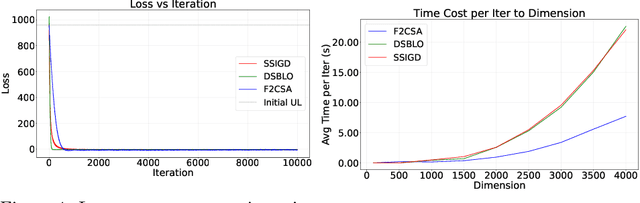
This work provides the first finite-time convergence guarantees for linearly constrained stochastic bilevel optimization using only first-order methods, requiring solely gradient information without any Hessian computations or second-order derivatives. We address the unprecedented challenge of simultaneously handling linear constraints, stochastic noise, and finite-time analysis in bilevel optimization, a combination that has remained theoretically intractable until now. While existing approaches either require second-order information, handle only unconstrained stochastic problems, or provide merely asymptotic convergence results, our method achieves finite-time guarantees using gradient-based techniques alone. We develop a novel framework that constructs hypergradient approximations via smoothed penalty functions, using approximate primal and dual solutions to overcome the fundamental challenges posed by the interaction between linear constraints and stochastic noise. Our theoretical analysis provides explicit finite-time bounds on the bias and variance of the hypergradient estimator, demonstrating how approximation errors interact with stochastic perturbations. We prove that our first-order algorithm converges to $(δ, ε)$-Goldstein stationary points using $Θ(δ^{-1}ε^{-5})$ stochastic gradient evaluations, establishing the first finite-time complexity result for this challenging problem class and representing a significant theoretical breakthrough in constrained stochastic bilevel optimization.
Rethinking Autoregressive Models for Lossless Image Compression via Hierarchical Parallelism and Progressive Adaptation
Nov 14, 2025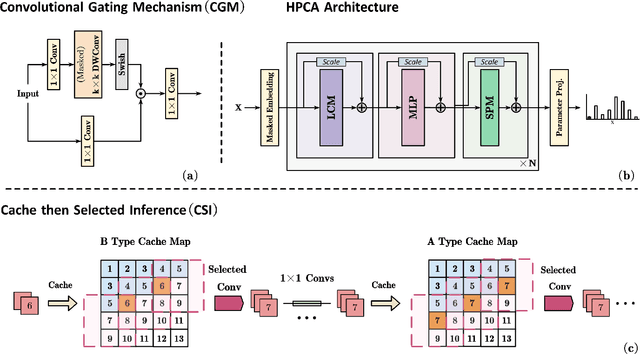
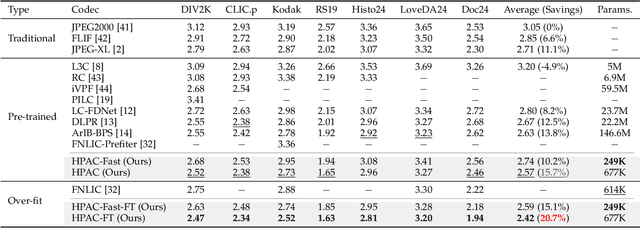
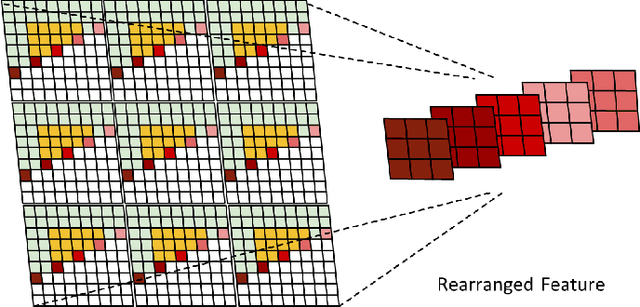
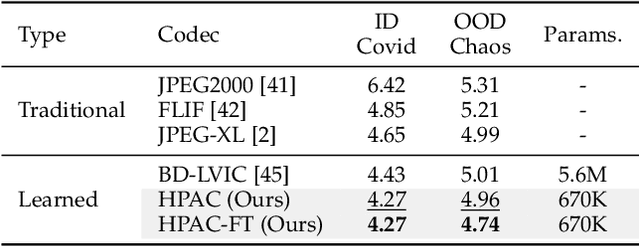
Autoregressive (AR) models, the theoretical performance benchmark for learned lossless image compression, are often dismissed as impractical due to prohibitive computational cost. This work re-thinks this paradigm, introducing a framework built on hierarchical parallelism and progressive adaptation that re-establishes pure autoregression as a top-performing and practical solution. Our approach is embodied in the Hierarchical Parallel Autoregressive ConvNet (HPAC), an ultra-lightweight pre-trained model using a hierarchical factorized structure and content-aware convolutional gating to efficiently capture spatial dependencies. We introduce two key optimizations for practicality: Cache-then-Select Inference (CSI), which accelerates coding by eliminating redundant computations, and Adaptive Focus Coding (AFC), which efficiently extends the framework to high bit-depth images. Building on this efficient foundation, our progressive adaptation strategy is realized by Spatially-Aware Rate-Guided Progressive Fine-tuning (SARP-FT). This instance-level strategy fine-tunes the model for each test image by optimizing low-rank adapters on progressively larger, spatially-continuous regions selected via estimated information density. Experiments on diverse datasets (natural, satellite, medical) validate that our method achieves new state-of-the-art compression. Notably, our approach sets a new benchmark in learned lossless compression, showing a carefully designed AR framework can offer significant gains over existing methods with a small parameter count and competitive coding speeds.
DI3CL: Contrastive Learning With Dynamic Instances and Contour Consistency for SAR Land-Cover Classification Foundation Model
Nov 12, 2025Although significant advances have been achieved in SAR land-cover classification, recent methods remain predominantly focused on supervised learning, which relies heavily on extensive labeled datasets. This dependency not only limits scalability and generalization but also restricts adaptability to diverse application scenarios. In this paper, a general-purpose foundation model for SAR land-cover classification is developed, serving as a robust cornerstone to accelerate the development and deployment of various downstream models. Specifically, a Dynamic Instance and Contour Consistency Contrastive Learning (DI3CL) pre-training framework is presented, which incorporates a Dynamic Instance (DI) module and a Contour Consistency (CC) module. DI module enhances global contextual awareness by enforcing local consistency across different views of the same region. CC module leverages shallow feature maps to guide the model to focus on the geometric contours of SAR land-cover objects, thereby improving structural discrimination. Additionally, to enhance robustness and generalization during pre-training, a large-scale and diverse dataset named SARSense, comprising 460,532 SAR images, is constructed to enable the model to capture comprehensive and representative features. To evaluate the generalization capability of our foundation model, we conducted extensive experiments across a variety of SAR land-cover classification tasks, including SAR land-cover mapping, water body detection, and road extraction. The results consistently demonstrate that the proposed DI3CL outperforms existing methods. Our code and pre-trained weights are publicly available at: https://github.com/SARpre-train/DI3CL.
EAGLE: Episodic Appearance- and Geometry-aware Memory for Unified 2D-3D Visual Query Localization in Egocentric Vision
Nov 12, 2025Egocentric visual query localization is vital for embodied AI and VR/AR, yet remains challenging due to camera motion, viewpoint changes, and appearance variations. We present EAGLE, a novel framework that leverages episodic appearance- and geometry-aware memory to achieve unified 2D-3D visual query localization in egocentric vision. Inspired by avian memory consolidation, EAGLE synergistically integrates segmentation guided by an appearance-aware meta-learning memory (AMM), with tracking driven by a geometry-aware localization memory (GLM). This memory consolidation mechanism, through structured appearance and geometry memory banks, stores high-confidence retrieval samples, effectively supporting both long- and short-term modeling of target appearance variations. This enables precise contour delineation with robust spatial discrimination, leading to significantly improved retrieval accuracy. Furthermore, by integrating the VQL-2D output with a visual geometry grounded Transformer (VGGT), we achieve a efficient unification of 2D and 3D tasks, enabling rapid and accurate back-projection into 3D space. Our method achieves state-ofthe-art performance on the Ego4D-VQ benchmark.
HiMo-CLIP: Modeling Semantic Hierarchy and Monotonicity in Vision-Language Alignment
Nov 10, 2025Contrastive vision-language models like CLIP have achieved impressive results in image-text retrieval by aligning image and text representations in a shared embedding space. However, these models often treat text as flat sequences, limiting their ability to handle complex, compositional, and long-form descriptions. In particular, they fail to capture two essential properties of language: semantic hierarchy, which reflects the multi-level compositional structure of text, and semantic monotonicity, where richer descriptions should result in stronger alignment with visual content.To address these limitations, we propose HiMo-CLIP, a representation-level framework that enhances CLIP-style models without modifying the encoder architecture. HiMo-CLIP introduces two key components: a hierarchical decomposition (HiDe) module that extracts latent semantic components from long-form text via in-batch PCA, enabling flexible, batch-aware alignment across different semantic granularities, and a monotonicity-aware contrastive loss (MoLo) that jointly aligns global and component-level representations, encouraging the model to internalize semantic ordering and alignment strength as a function of textual completeness.These components work in concert to produce structured, cognitively-aligned cross-modal representations. Experiments on multiple image-text retrieval benchmarks show that HiMo-CLIP consistently outperforms strong baselines, particularly under long or compositional descriptions. The code is available at https://github.com/UnicomAI/HiMo-CLIP.
* Accepted by AAAI 2026 as an Oral Presentation (13 pages, 7 figures, 7 tables)
GenColorBench: A Color Evaluation Benchmark for Text-to-Image Generation Models
Oct 23, 2025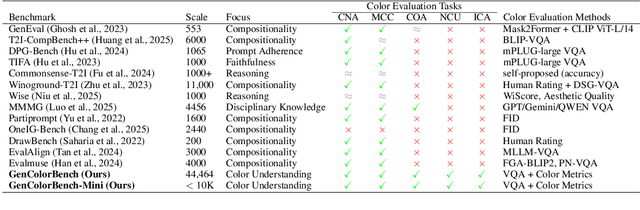
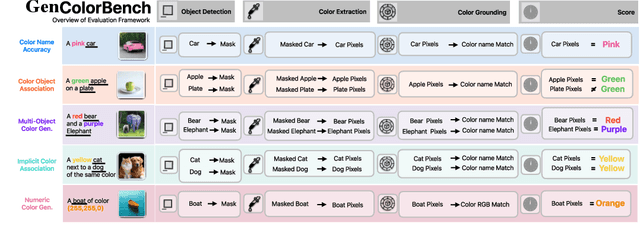
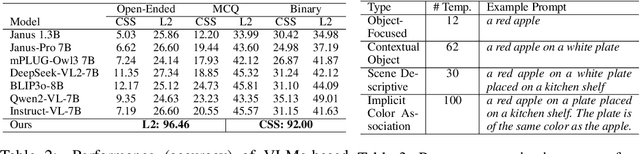
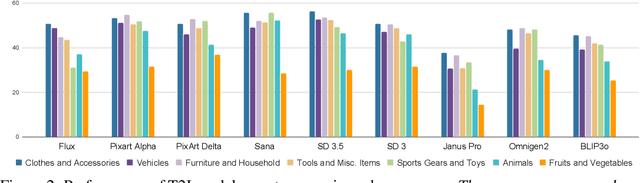
Recent years have seen impressive advances in text-to-image generation, with image generative or unified models producing high-quality images from text. Yet these models still struggle with fine-grained color controllability, often failing to accurately match colors specified in text prompts. While existing benchmarks evaluate compositional reasoning and prompt adherence, none systematically assess color precision. Color is fundamental to human visual perception and communication, critical for applications from art to design workflows requiring brand consistency. However, current benchmarks either neglect color or rely on coarse assessments, missing key capabilities such as interpreting RGB values or aligning with human expectations. To this end, we propose GenColorBench, the first comprehensive benchmark for text-to-image color generation, grounded in color systems like ISCC-NBS and CSS3/X11, including numerical colors which are absent elsewhere. With 44K color-focused prompts covering 400+ colors, it reveals models' true capabilities via perceptual and automated assessments. Evaluations of popular text-to-image models using GenColorBench show performance variations, highlighting which color conventions models understand best and identifying failure modes. Our GenColorBench assessments will guide improvements in precise color generation. The benchmark will be made public upon acceptance.
EchoDistill: Bidirectional Concept Distillation for One-Step Diffusion Personalization
Oct 23, 2025Recent advances in accelerating text-to-image (T2I) diffusion models have enabled the synthesis of high-fidelity images even in a single step. However, personalizing these models to incorporate novel concepts remains a challenge due to the limited capacity of one-step models to capture new concept distributions effectively. We propose a bidirectional concept distillation framework, EchoDistill, to enable one-step diffusion personalization (1-SDP). Our approach involves an end-to-end training process where a multi-step diffusion model (teacher) and a one-step diffusion model (student) are trained simultaneously. The concept is first distilled from the teacher model to the student, and then echoed back from the student to the teacher. During the EchoDistill, we share the text encoder between the two models to ensure consistent semantic understanding. Following this, the student model is optimized with adversarial losses to align with the real image distribution and with alignment losses to maintain consistency with the teacher's output. Furthermore, we introduce the bidirectional echoing refinement strategy, wherein the student model leverages its faster generation capability to feedback to the teacher model. This bidirectional concept distillation mechanism not only enhances the student ability to personalize novel concepts but also improves the generative quality of the teacher model. Our experiments demonstrate that this collaborative framework significantly outperforms existing personalization methods over the 1-SDP setup, establishing a novel paradigm for rapid and effective personalization in T2I diffusion models.
Data Efficient Any Transformer-to-Mamba Distillation via Attention Bridge
Oct 22, 2025State-space models (SSMs) have emerged as efficient alternatives to Transformers for sequence modeling, offering superior scalability through recurrent structures. However, their training remains costly and the ecosystem around them is far less mature than that of Transformers. Moreover, the structural heterogeneity between SSMs and Transformers makes it challenging to efficiently distill knowledge from pretrained attention models. In this work, we propose Cross-architecture distillation via Attention Bridge (CAB), a novel data-efficient distillation framework that efficiently transfers attention knowledge from Transformer teachers to state-space student models. Unlike conventional knowledge distillation that transfers knowledge only at the output level, CAB enables token-level supervision via a lightweight bridge and flexible layer-wise alignment, improving both efficiency and transferability. We further introduce flexible layer-wise alignment strategies to accommodate architectural discrepancies between teacher and student. Extensive experiments across vision and language domains demonstrate that our method consistently improves the performance of state-space models, even under limited training data, outperforming both standard and cross-architecture distillation methods. Our findings suggest that attention-based knowledge can be efficiently transferred to recurrent models, enabling rapid utilization of Transformer expertise for building a stronger SSM community.
Advances in 4D Representation: Geometry, Motion, and Interaction
Oct 22, 2025We present a survey on 4D generation and reconstruction, a fast-evolving subfield of computer graphics whose developments have been propelled by recent advances in neural fields, geometric and motion deep learning, as well 3D generative artificial intelligence (GenAI). While our survey is not the first of its kind, we build our coverage of the domain from a unique and distinctive perspective of 4D representations\/}, to model 3D geometry evolving over time while exhibiting motion and interaction. Specifically, instead of offering an exhaustive enumeration of many works, we take a more selective approach by focusing on representative works to highlight both the desirable properties and ensuing challenges of each representation under different computation, application, and data scenarios. The main take-away message we aim to convey to the readers is on how to select and then customize the appropriate 4D representations for their tasks. Organizationally, we separate the 4D representations based on three key pillars: geometry, motion, and interaction. Our discourse will not only encompass the most popular representations of today, such as neural radiance fields (NeRFs) and 3D Gaussian Splatting (3DGS), but also bring attention to relatively under-explored representations in the 4D context, such as structured models and long-range motions. Throughout our survey, we will reprise the role of large language models (LLMs) and video foundational models (VFMs) in a variety of 4D applications, while steering our discussion towards their current limitations and how they can be addressed. We also provide a dedicated coverage on what 4D datasets are currently available, as well as what is lacking, in driving the subfield forward. Project page:https://mingrui-zhao.github.io/4DRep-GMI/