 Add to Chrome
 Add to Firefox
 Add to Edge
Discrimination Is Generation: Unifying Ranking and Retrieval from a Tokenizer Perspective
May 14, 2026
Semantic IDs (SIDs) define the generation space of generative recommendation and directly determine its personalization ceiling. However, existing tokenizers are trained independently with retrieval objectives, leaving personalization signals fully decoupled from the SID construction process -- a fundamental gap that causes generative retrieval to persistently lag behind discriminative ranking. In this paper, we rethink the essence of SIDs: \emph{ranking seeks argmax in item space while retrieval seeks argmax in token space; both are the same problem solved at different granularities.} Based on this insight, we propose \DIG (\textbf{D}iscrimination \textbf{I}s \textbf{G}eneration), which embeds the tokenizer inside a discriminative ranking model for end-to-end training -- the ranker naturally becomes a retrieval model, yielding two models from a single training run. \DIG is organized around a \emph{feature assignment taxonomy}: item-intrinsic static features are encoded into SIDs, user-item cross features (u2i) implicitly drive codebook boundaries toward recommendation decision boundaries during training, and an MLP$_\mathrm{u2t}$ distillation module approximates u2i at the token level for inference. Experiments on three public benchmarks and two industrial datasets demonstrate that \DIG simultaneously improves ranking, retrieval, and unified retrieval-ranking quality.

Revisiting DAgger in the Era of LLM-Agents
May 13, 2026Long-horizon LM agents learn from multi-turn interaction, where a single early mistake can alter the subsequent state distribution and derail the whole trajectory. Existing recipes fall short in complementary ways: supervised fine-tuning provides dense teacher supervision but suffers from covariate shift because it is trained on off-policy teacher trajectories; while reinforcement learning with verifiable rewards avoids this off-policy mismatch by learning from on-policy rollouts but with only sparse outcome feedback. We address this dilemma by revisiting Dataset Aggregation (DAgger) for multi-turn LM agents: the algorithm collects trajectories through a turn-level interpolation of student and teacher policies, and the student is then trained on these trajectories using supervised labels provided by the teacher. By directly interacting with environments, we expose the model to realistic states likely to be encountered during deployment, thereby effectively mitigating covariate shift. Besides, since the student is learned by mimicking the teacher's behavior, it receives rich feedback during learning. To demonstrate DAgger enjoys the benefits of both worlds, we tested the algorithm to train a software-engineering agent with 4B- and 8B-scale student models. On SWE-bench Verified, our DAgger-style training improves over the strongest post-training baseline by +3.9 points at 4B and +3.6 points at 8B. The resulting 4B agent reaches 27.3%, outperforming representative published 8B SWE-agent systems, while the 8B agent achieves 29.8%, surpassing SWE-Gym-32B and coming within 5 points of stronger 32B-scale agents. Together with consistent gains on the held-out SWE-Gym split, these results suggest the effectiveness of DAgger for modern long-horizon LM agents.
Exploration-Driven Optimization for Test-Time Large Language Model Reasoning
May 11, 2026Post-training techniques combined with inference-time scaling significantly enhance the reasoning and alignment capabilities of large language models (LLMs). However, a fundamental tension arises: inference-time methods benefit from diverse sampling from a relatively flattened probability distribution, whereas reinforcement learning (RL)-based post-training inherently sharpens these distributions. To address this, we propose Exploration-Driven Optimization (EDO), which extends reward-biasing style exploration objectives to iterative post-training and integrates them into standard RL objectives, encouraging greater diversity in sampled solutions while facilitating more effective inference-time computation. We incorporate EDO into iterative Direct Preference Optimization (iDPO) and Group Relative Policy Optimization (GRPO), resulting in two variants: ED-iDPO and ED-GRPO. Extensive experiments demonstrate that both ED-iDPO and ED-GRPO exhibit greater solution diversity and improved reasoning abilities, particularly when combined with test-time computation techniques like self-consistency. Across three in-distribution reasoning benchmarks, EDO achieves a 1.0-1.3\% improvement over the strongest baselines, and delivers an additional 1.5\% average gain on five out-of-distribution tasks. Beyond accuracy, EDO preserves model entropy and stabilizes RL training dynamics, highlighting its effectiveness in preventing over-optimization collapse. Taken together, these results establish EDO as a practical framework for balancing exploration and exploitation in LLM reasoning, especially in settings that rely on test-time scaling.
Next-Scale Generative Reranking: A Tree-based Generative Rerank Method at Meituan
Apr 07, 2026In modern multi-stage recommendation systems, reranking plays a critical role by modeling contextual information. Due to inherent challenges such as the combinatorial space complexity, an increasing number of methods adopt the generative paradigm: the generator produces the optimal list during inference, while an evaluator guides the generator's optimization during the training phase. However, these methods still face two problems. Firstly, these generators fail to produce optimal generation results due to the lack of both local and global perspectives, regardless of whether the generation strategy is autoregressive or non-autoregressive. Secondly, the goal inconsistency problem between the generator and the evaluator during training complicates the guidance signal and leading to suboptimal performance. To address these issues, we propose the \textbf{N}ext-\textbf{S}cale \textbf{G}eneration \textbf{R}eranking (NSGR), a tree-based generative framework. Specifically, we introduce a next-scale generator (NSG) that progressively expands a recommendation list from user interests in a coarse-to-fine manner, balancing global and local perspectives. Furthermore, we design a multi-scale neighbor loss, which leverages a tree-based multi-scale evaluator (MSE) to provide scale-specific guidance to the NSG at each scale. Extensive experiments on public and industrial datasets validate the effectiveness of NSGR. And NSGR has been successfully deployed on the Meituan food delivery platform.
MBGR: Multi-Business Prediction for Generative Recommendation at Meituan
Apr 03, 2026Generative recommendation (GR) has recently emerged as a promising paradigm for industrial recommendations. GR leverages Semantic IDs (SIDs) to reduce the encoding-decoding space and employs the Next Token Prediction (NTP) framework to explore scaling laws. However, existing GR methods suffer from two critical issues: (1) a \textbf{seesaw phenomenon} in multi-business scenarios arises due to NTP's inability to capture complex cross-business behavioral patterns; and (2) a unified SID space causes \textbf{representation confusion} by failing to distinguish distinct semantic information across businesses. To address these issues, we propose Multi-Business Generative Recommendation (MBGR), the first GR framework tailored for multi-business scenarios. Our framework comprises three key components. First, we design a Business-aware semantic ID (BID) module that preserves semantic integrity via domain-aware tokenization. Then, we introduce a Multi-Business Prediction (MBP) structure to provide business-specific prediction capabilities. Furthermore, we develop a Label Dynamic Routing (LDR) module that transforms sparse multi-business labels into dense labels to further enhance the multi-business generation capability. Extensive offline and online experiments on Meituan's food delivery platform validate MBGR's effectiveness, and we have successfully deployed it in production.
DREAM: Deep Research Evaluation with Agentic Metrics
Feb 21, 2026Deep Research Agents generate analyst-grade reports, yet evaluating them remains challenging due to the absence of a single ground truth and the multidimensional nature of research quality. Recent benchmarks propose distinct methodologies, yet they suffer from the Mirage of Synthesis, where strong surface-level fluency and citation alignment can obscure underlying factual and reasoning defects. We characterize this gap by introducing a taxonomy across four verticals that exposes a critical capability mismatch: static evaluators inherently lack the tool-use capabilities required to assess temporal validity and factual correctness. To address this, we propose DREAM (Deep Research Evaluation with Agentic Metrics), a framework that instantiates the principle of capability parity by making evaluation itself agentic. DREAM structures assessment through an evaluation protocol combining query-agnostic metrics with adaptive metrics generated by a tool-calling agent, enabling temporally aware coverage, grounded verification, and systematic reasoning probes. Controlled evaluations demonstrate DREAM is significantly more sensitive to factual and temporal decay than existing benchmarks, offering a scalable, reference-free evaluation paradigm.
DOS: Dual-Flow Orthogonal Semantic IDs for Recommendation in Meituan
Feb 04, 2026Semantic IDs serve as a key component in generative recommendation systems. They not only incorporate open-world knowledge from large language models (LLMs) but also compress the semantic space to reduce generation difficulty. However, existing methods suffer from two major limitations: (1) the lack of contextual awareness in generation tasks leads to a gap between the Semantic ID codebook space and the generation space, resulting in suboptimal recommendations; and (2) suboptimal quantization methods exacerbate semantic loss in LLMs. To address these issues, we propose Dual-Flow Orthogonal Semantic IDs (DOS) method. Specifically, DOS employs a user-item dual flow-framework that leverages collaborative signals to align the Semantic ID codebook space with the generation space. Furthermore, we introduce an orthogonal residual quantization scheme that rotates the semantic space to an appropriate orientation, thereby maximizing semantic preservation. Extensive offline experiments and online A/B testing demonstrate the effectiveness of DOS. The proposed method has been successfully deployed in Meituan's mobile application, serving hundreds of millions of users.
You Only Evaluate Once: A Tree-based Rerank Method at Meituan
Aug 20, 2025

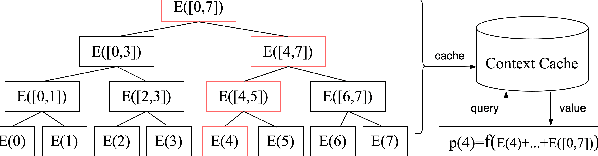
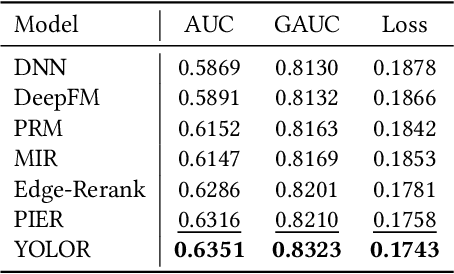
Reranking plays a crucial role in modern recommender systems by capturing the mutual influences within the list. Due to the inherent challenges of combinatorial search spaces, most methods adopt a two-stage search paradigm: a simple General Search Unit (GSU) efficiently reduces the candidate space, and an Exact Search Unit (ESU) effectively selects the optimal sequence. These methods essentially involve making trade-offs between effectiveness and efficiency, while suffering from a severe \textbf{inconsistency problem}, that is, the GSU often misses high-value lists from ESU. To address this problem, we propose YOLOR, a one-stage reranking method that removes the GSU while retaining only the ESU. Specifically, YOLOR includes: (1) a Tree-based Context Extraction Module (TCEM) that hierarchically aggregates multi-scale contextual features to achieve "list-level effectiveness", and (2) a Context Cache Module (CCM) that enables efficient feature reuse across candidate permutations to achieve "permutation-level efficiency". Extensive experiments across public and industry datasets validate YOLOR's performance, and we have successfully deployed YOLOR on the Meituan food delivery platform.
Task-Specific Zero-shot Quantization-Aware Training for Object Detection
Jul 22, 2025Quantization is a key technique to reduce network size and computational complexity by representing the network parameters with a lower precision. Traditional quantization methods rely on access to original training data, which is often restricted due to privacy concerns or security challenges. Zero-shot Quantization (ZSQ) addresses this by using synthetic data generated from pre-trained models, eliminating the need for real training data. Recently, ZSQ has been extended to object detection. However, existing methods use unlabeled task-agnostic synthetic images that lack the specific information required for object detection, leading to suboptimal performance. In this paper, we propose a novel task-specific ZSQ framework for object detection networks, which consists of two main stages. First, we introduce a bounding box and category sampling strategy to synthesize a task-specific calibration set from the pre-trained network, reconstructing object locations, sizes, and category distributions without any prior knowledge. Second, we integrate task-specific training into the knowledge distillation process to restore the performance of quantized detection networks. Extensive experiments conducted on the MS-COCO and Pascal VOC datasets demonstrate the efficiency and state-of-the-art performance of our method. Our code is publicly available at: https://github.com/DFQ-Dojo/dfq-toolkit .
MLE-Dojo: Interactive Environments for Empowering LLM Agents in Machine Learning Engineering
May 12, 2025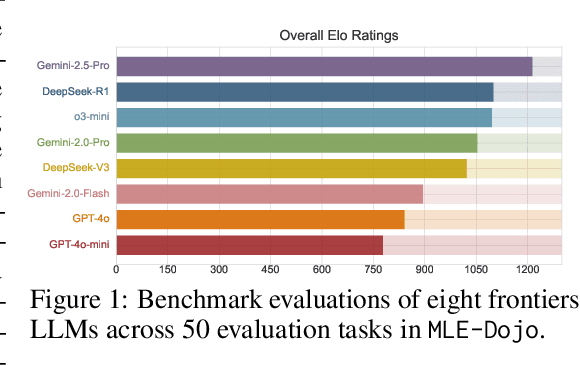
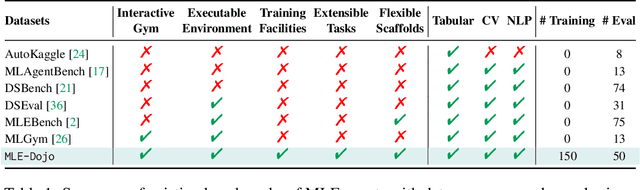
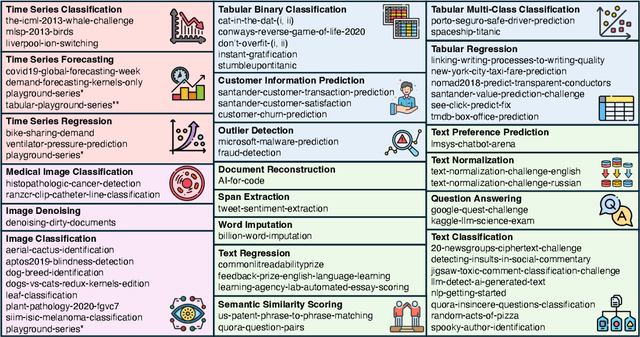
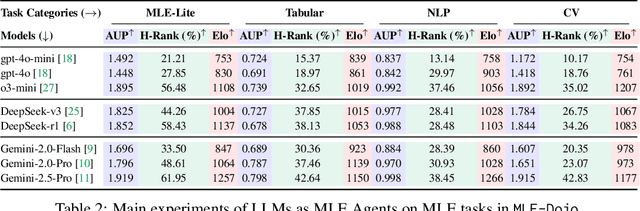
We introduce MLE-Dojo, a Gym-style framework for systematically reinforcement learning, evaluating, and improving autonomous large language model (LLM) agents in iterative machine learning engineering (MLE) workflows. Unlike existing benchmarks that primarily rely on static datasets or single-attempt evaluations, MLE-Dojo provides an interactive environment enabling agents to iteratively experiment, debug, and refine solutions through structured feedback loops. Built upon 200+ real-world Kaggle challenges, MLE-Dojo covers diverse, open-ended MLE tasks carefully curated to reflect realistic engineering scenarios such as data processing, architecture search, hyperparameter tuning, and code debugging. Its fully executable environment supports comprehensive agent training via both supervised fine-tuning and reinforcement learning, facilitating iterative experimentation, realistic data sampling, and real-time outcome verification. Extensive evaluations of eight frontier LLMs reveal that while current models achieve meaningful iterative improvements, they still exhibit significant limitations in autonomously generating long-horizon solutions and efficiently resolving complex errors. Furthermore, MLE-Dojo's flexible and extensible architecture seamlessly integrates diverse data sources, tools, and evaluation protocols, uniquely enabling model-based agent tuning and promoting interoperability, scalability, and reproducibility. We open-source our framework and benchmarks to foster community-driven innovation towards next-generation MLE agents.