 Add to Chrome
 Add to Firefox
 Add to Edge
CoDTS: Enhancing Sparsely Supervised Collaborative Perception with a Dual Teacher-Student Framework
Dec 12, 2024
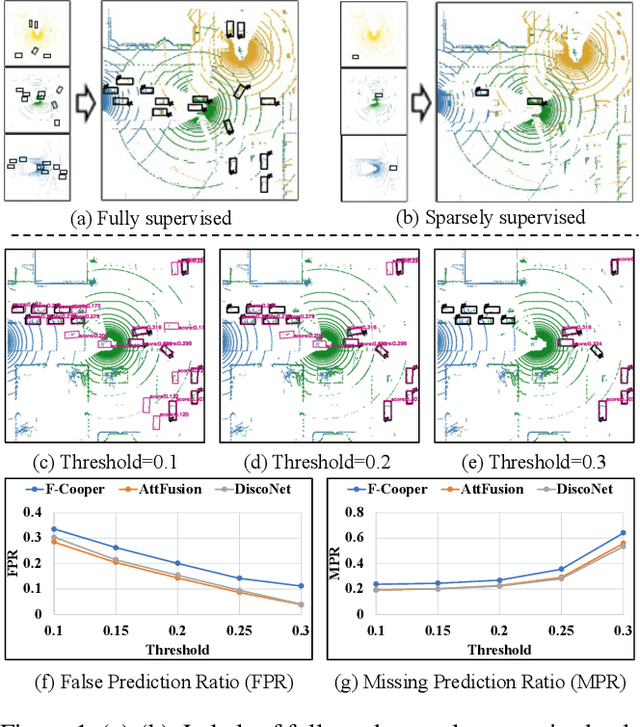
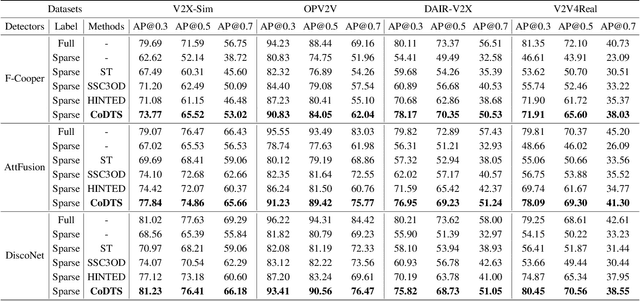
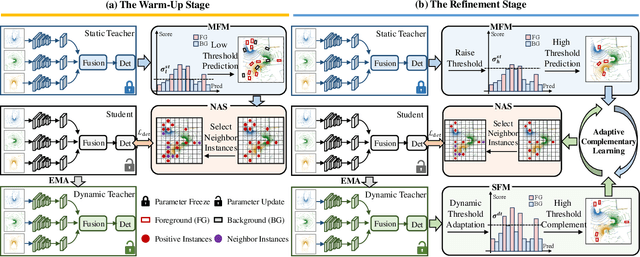
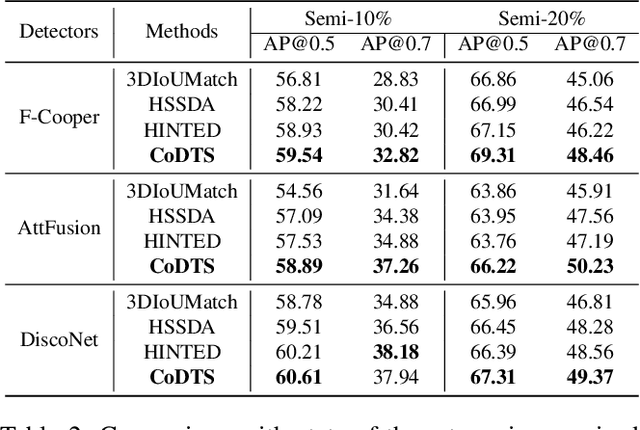
Current collaborative perception methods often rely on fully annotated datasets, which can be expensive to obtain in practical situations. To reduce annotation costs, some works adopt sparsely supervised learning techniques and generate pseudo labels for the missing instances. However, these methods fail to achieve an optimal confidence threshold that harmonizes the quality and quantity of pseudo labels. To address this issue, we propose an end-to-end Collaborative perception Dual Teacher-Student framework (CoDTS), which employs adaptive complementary learning to produce both high-quality and high-quantity pseudo labels. Specifically, the Main Foreground Mining (MFM) module generates high-quality pseudo labels based on the prediction of the static teacher. Subsequently, the Supplement Foreground Mining (SFM) module ensures a balance between the quality and quantity of pseudo labels by adaptively identifying missing instances based on the prediction of the dynamic teacher. Additionally, the Neighbor Anchor Sampling (NAS) module is incorporated to enhance the representation of pseudo labels. To promote the adaptive complementary learning, we implement a staged training strategy that trains the student and dynamic teacher in a mutually beneficial manner. Extensive experiments demonstrate that the CoDTS effectively ensures an optimal balance of pseudo labels in both quality and quantity, establishing a new state-of-the-art in sparsely supervised collaborative perception.

A multimodal ensemble approach for clear cell renal cell carcinoma treatment outcome prediction
Dec 10, 2024
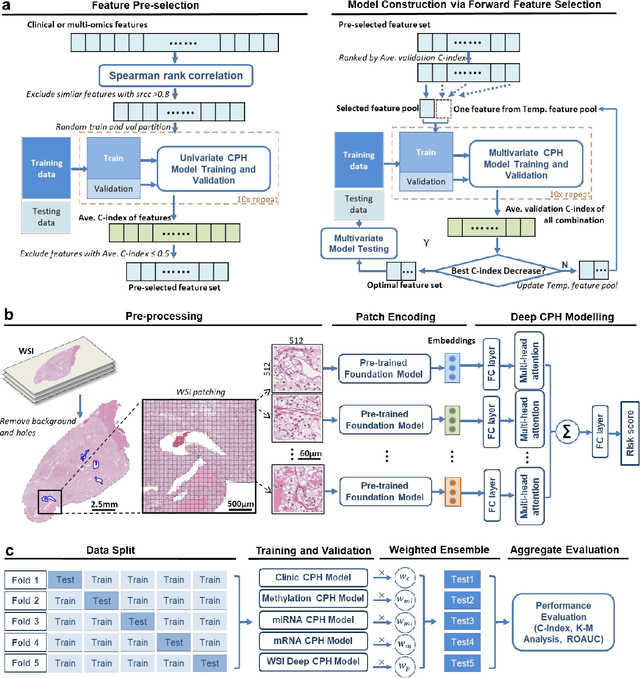
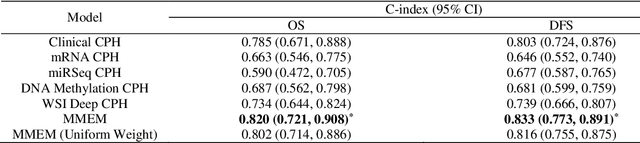
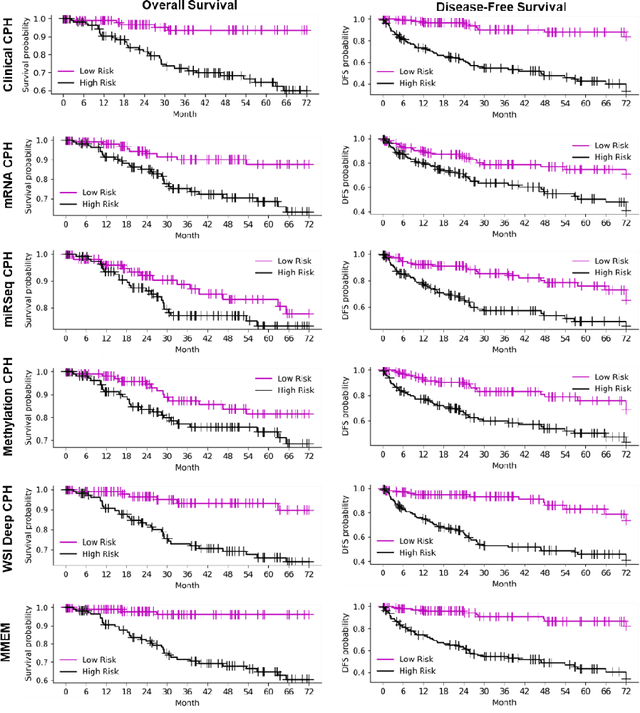
Purpose: A reliable cancer prognosis model for clear cell renal cell carcinoma (ccRCC) can enhance personalized treatment. We developed a multi-modal ensemble model (MMEM) that integrates pretreatment clinical data, multi-omics data, and histopathology whole slide image (WSI) data to predict overall survival (OS) and disease-free survival (DFS) for ccRCC patients. Methods: We analyzed 226 patients from The Cancer Genome Atlas Kidney Renal Clear Cell Carcinoma (TCGA-KIRC) dataset, which includes OS, DFS follow-up data, and five data modalities: clinical data, WSIs, and three multi-omics datasets (mRNA, miRNA, and DNA methylation). Separate survival models were built for OS and DFS. Cox-proportional hazards (CPH) model with forward feature selection is used for clinical and multi-omics data. Features from WSIs were extracted using ResNet and three general-purpose foundation models. A deep learning-based CPH model predicted survival using encoded WSI features. Risk scores from all models were combined based on training performance. Results: Performance was assessed using concordance index (C-index) and AUROC. The clinical feature-based CPH model received the highest weight for both OS and DFS tasks. Among WSI-based models, the general-purpose foundation model (UNI) achieved the best performance. The final MMEM model surpassed single-modality models, achieving C-indices of 0.820 (OS) and 0.833 (DFS), and AUROC values of 0.831 (3-year patient death) and 0.862 (cancer recurrence). Using predicted risk medians to stratify high- and low-risk groups, log-rank tests showed improved performance in both OS and DFS compared to single-modality models. Conclusion: MMEM is the first multi-modal model for ccRCC patients, integrating five data modalities. It outperformed single-modality models in prognostic ability and has the potential to assist in ccRCC patient management if independently validated.
HSLiNets: Hyperspectral Image and LiDAR Data Fusion Using Efficient Dual Non-Linear Feature Learning Networks
Dec 03, 2024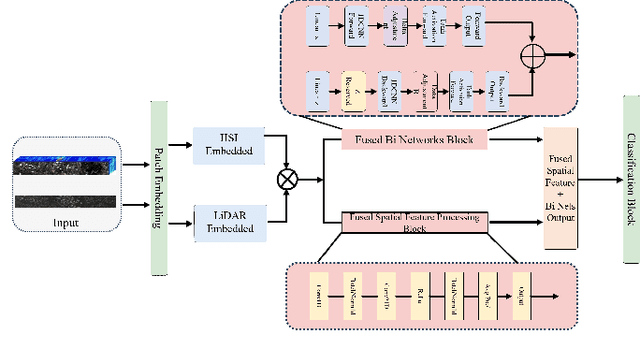
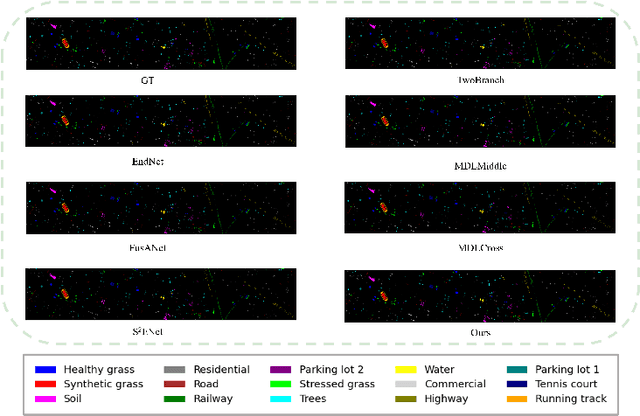
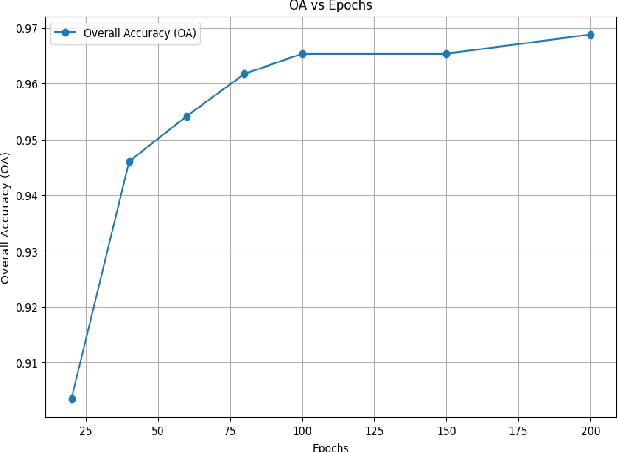
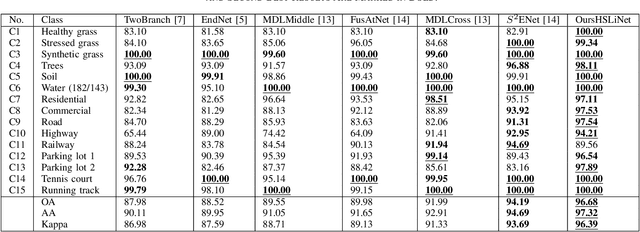
The integration of hyperspectral imaging (HSI) and LiDAR data within new linear feature spaces offers a promising solution to the challenges posed by the high-dimensionality and redundancy inherent in HSIs. This study introduces a dual linear fused space framework that capitalizes on bidirectional reversed convolutional neural network (CNN) pathways, coupled with a specialized spatial analysis block. This approach combines the computational efficiency of CNNs with the adaptability of attention mechanisms, facilitating the effective fusion of spectral and spatial information. The proposed method not only enhances data processing and classification accuracy, but also mitigates the computational burden typically associated with advanced models such as Transformers. Evaluations of the Houston 2013 dataset demonstrate that our approach surpasses existing state-of-the-art models. This advancement underscores the potential of the framework in resource-constrained environments and its significant contributions to the field of remote sensing.
Hyperspectral Images Efficient Spatial and Spectral non-Linear Model with Bidirectional Feature Learning
Dec 03, 2024
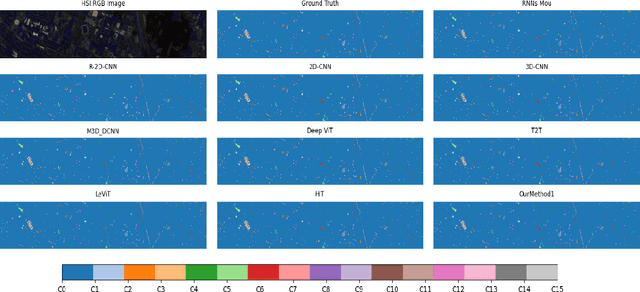
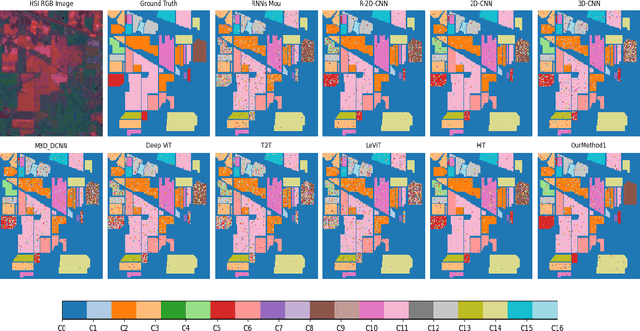

Classifying hyperspectral images (HSIs) is a complex task in remote sensing due to the high-dimensional nature and volume of data involved. To address these challenges, we propose the Spectral-Spatial non-Linear Model, a novel framework that significantly reduces data volume while enhancing classification accuracy. Our model employs a bidirectional reversed convolutional neural network (CNN) to efficiently extract spectral features, complemented by a specialized block for spatial feature analysis. This hybrid approach leverages the operational efficiency of CNNs and incorporates dynamic feature extraction inspired by attention mechanisms, optimizing performance without the high computational demands typically associated with transformer-based models. The SS non-Linear Model is designed to process hyperspectral data bidirectionally, achieving notable classification and efficiency improvements by fusing spectral and spatial features effectively. This approach yields superior classification accuracy compared to existing benchmarks while maintaining computational efficiency, making it suitable for resource-constrained environments. We validate the SS non-Linear Model on three widely recognized datasets, Houston 2013, Indian Pines, and Pavia University, demonstrating its ability to outperform current state-of-the-art models in HSI classification and efficiency. This work highlights the innovative methodology of the SS non-Linear Model and its practical benefits for remote sensing applications, where both data efficiency and classification accuracy are critical. For further details, please refer to our code repository on GitHub: HSILinearModel.
Vision-based Tactile Image Generation via Contact Condition-guided Diffusion Model
Dec 02, 2024


Vision-based tactile sensors, through high-resolution optical measurements, can effectively perceive the geometric shape of objects and the force information during the contact process, thus helping robots acquire higher-dimensional tactile data. Vision-based tactile sensor simulation supports the acquisition and understanding of tactile information without physical sensors by accurately capturing and analyzing contact behavior and physical properties. However, the complexity of contact dynamics and lighting modeling limits the accurate reproduction of real sensor responses in simulations, making it difficult to meet the needs of different sensor setups and affecting the reliability and effectiveness of strategy transfer to practical applications. In this letter, we propose a contact-condition guided diffusion model that maps RGB images of objects and contact force data to high-fidelity, detail-rich vision-based tactile sensor images. Evaluations show that the three-channel tactile images generated by this method achieve a 60.58% reduction in mean squared error and a 38.1% reduction in marker displacement error compared to existing approaches based on lighting model and mechanical model, validating the effectiveness of our approach. The method is successfully applied to various types of tactile vision sensors and can effectively generate corresponding tactile images under complex loads. Additionally, it demonstrates outstanding reconstruction of fine texture features of objects in a Montessori tactile board texture generation task.
Act Now: A Novel Online Forecasting Framework for Large-Scale Streaming Data
Nov 28, 2024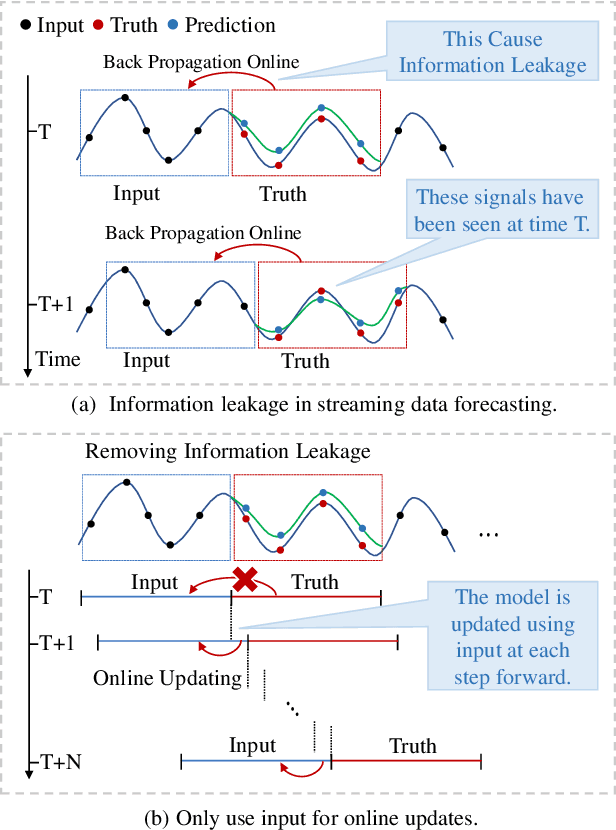
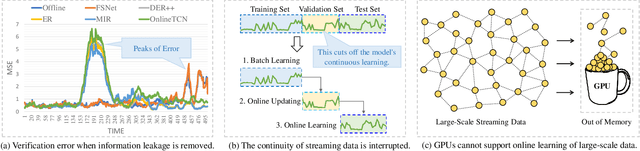

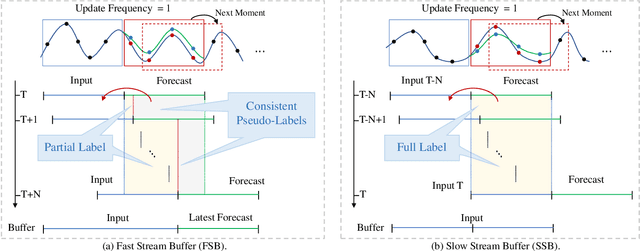
In this paper, we find that existing online forecasting methods have the following issues: 1) They do not consider the update frequency of streaming data and directly use labels (future signals) to update the model, leading to information leakage. 2) Eliminating information leakage can exacerbate concept drift and online parameter updates can damage prediction accuracy. 3) Leaving out a validation set cuts off the model's continued learning. 4) Existing GPU devices cannot support online learning of large-scale streaming data. To address the above issues, we propose a novel online learning framework, Act-Now, to improve the online prediction on large-scale streaming data. Firstly, we introduce a Random Subgraph Sampling (RSS) algorithm designed to enable efficient model training. Then, we design a Fast Stream Buffer (FSB) and a Slow Stream Buffer (SSB) to update the model online. FSB updates the model immediately with the consistent pseudo- and partial labels to avoid information leakage. SSB updates the model in parallel using complete labels from earlier times. Further, to address concept drift, we propose a Label Decomposition model (Lade) with statistical and normalization flows. Lade forecasts both the statistical variations and the normalized future values of the data, integrating them through a combiner to produce the final predictions. Finally, we propose to perform online updates on the validation set to ensure the consistency of model learning on streaming data. Extensive experiments demonstrate that the proposed Act-Now framework performs well on large-scale streaming data, with an average 28.4% and 19.5% performance improvement, respectively. Experiments can be reproduced via https://github.com/Anoise/Act-Now.
An End-to-End Robust Point Cloud Semantic Segmentation Network with Single-Step Conditional Diffusion Models
Nov 25, 2024
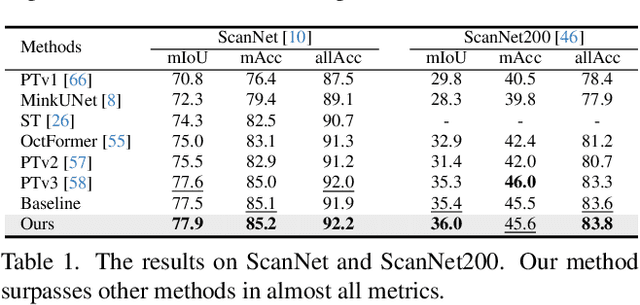
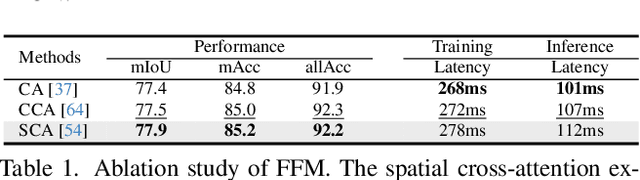

Existing conditional Denoising Diffusion Probabilistic Models (DDPMs) with a Noise-Conditional Framework (NCF) remain challenging for 3D scene understanding tasks, as the complex geometric details in scenes increase the difficulty of fitting the gradients of the data distribution (the scores) from semantic labels. This also results in longer training and inference time for DDPMs compared to non-DDPMs. From a different perspective, we delve deeply into the model paradigm dominated by the Conditional Network. In this paper, we propose an end-to-end robust semantic \textbf{Seg}mentation \textbf{Net}work based on a \textbf{C}onditional-Noise Framework (CNF) of D\textbf{D}PMs, named \textbf{CDSegNet}. Specifically, CDSegNet models the Noise Network (NN) as a learnable noise-feature generator. This enables the Conditional Network (CN) to understand 3D scene semantics under multi-level feature perturbations, enhancing the generalization in unseen scenes. Meanwhile, benefiting from the noise system of DDPMs, CDSegNet exhibits strong noise and sparsity robustness in experiments. Moreover, thanks to CNF, CDSegNet can generate the semantic labels in a single-step inference like non-DDPMs, due to avoiding directly fitting the scores from semantic labels in the dominant network of CDSegNet. On public indoor and outdoor benchmarks, CDSegNet significantly outperforms existing methods, achieving state-of-the-art performance.
Large-scale cross-modality pretrained model enhances cardiovascular state estimation and cardiomyopathy detection from electrocardiograms: An AI system development and multi-center validation study
Nov 19, 2024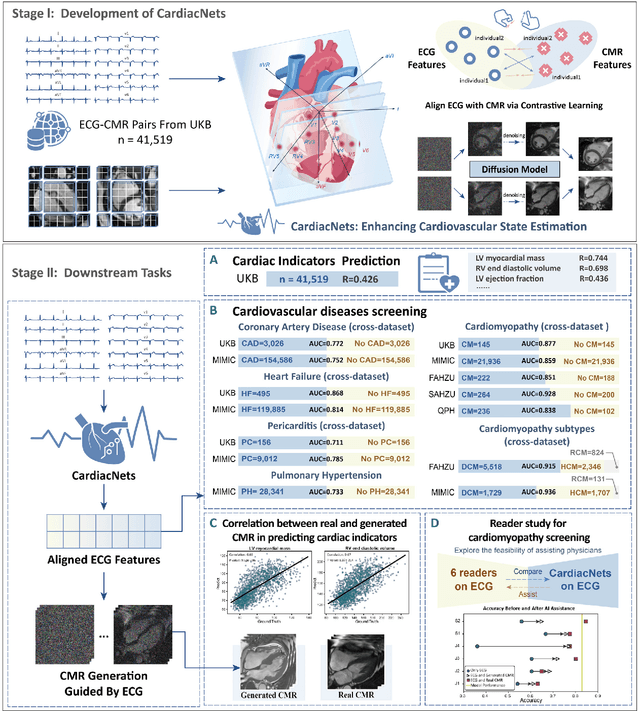

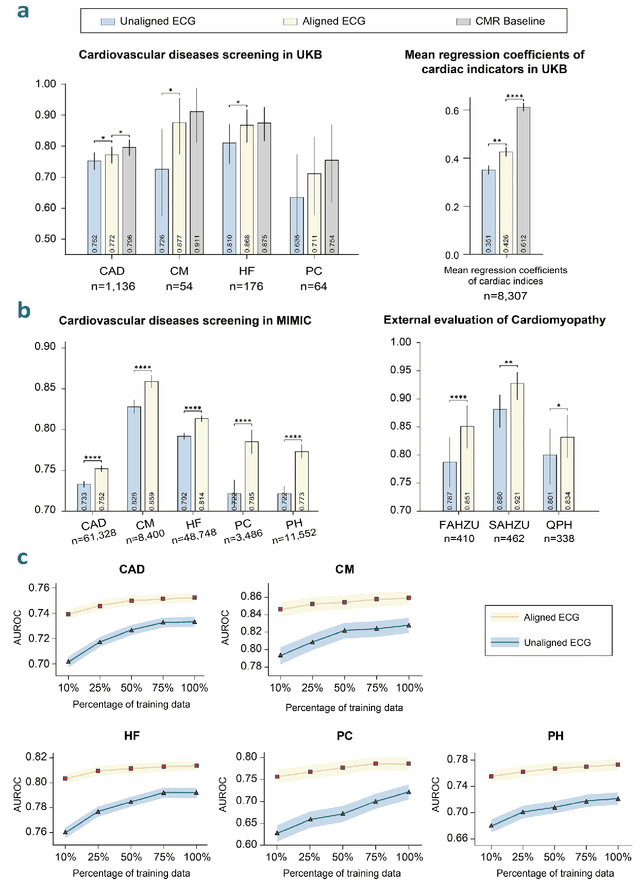

Cardiovascular diseases (CVDs) present significant challenges for early and accurate diagnosis. While cardiac magnetic resonance imaging (CMR) is the gold standard for assessing cardiac function and diagnosing CVDs, its high cost and technical complexity limit accessibility. In contrast, electrocardiography (ECG) offers promise for large-scale early screening. This study introduces CardiacNets, an innovative model that enhances ECG analysis by leveraging the diagnostic strengths of CMR through cross-modal contrastive learning and generative pretraining. CardiacNets serves two primary functions: (1) it evaluates detailed cardiac function indicators and screens for potential CVDs, including coronary artery disease, cardiomyopathy, pericarditis, heart failure and pulmonary hypertension, using ECG input; and (2) it enhances interpretability by generating high-quality CMR images from ECG data. We train and validate the proposed CardiacNets on two large-scale public datasets (the UK Biobank with 41,519 individuals and the MIMIC-IV-ECG comprising 501,172 samples) as well as three private datasets (FAHZU with 410 individuals, SAHZU with 464 individuals, and QPH with 338 individuals), and the findings demonstrate that CardiacNets consistently outperforms traditional ECG-only models, substantially improving screening accuracy. Furthermore, the generated CMR images provide valuable diagnostic support for physicians of all experience levels. This proof-of-concept study highlights how ECG can facilitate cross-modal insights into cardiac function assessment, paving the way for enhanced CVD screening and diagnosis at a population level.
Model Editing for LLMs4Code: How Far are We?
Nov 11, 2024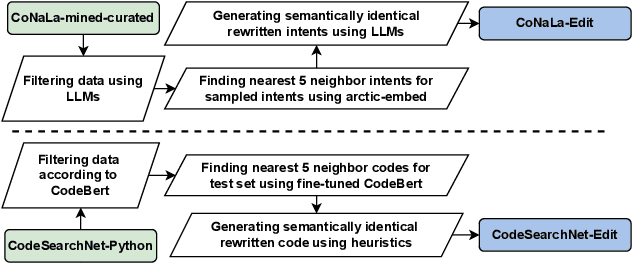
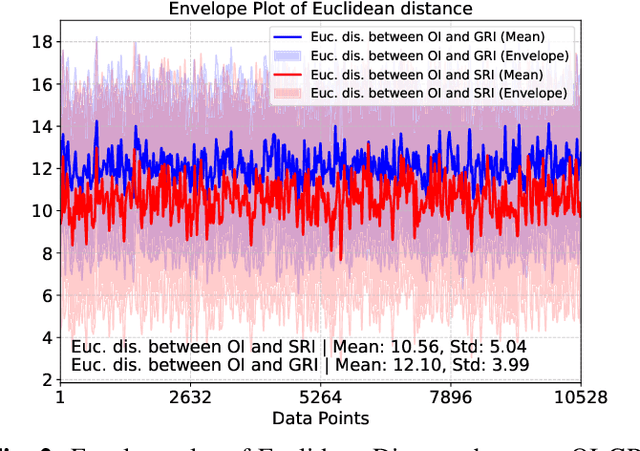


Large Language Models for Code (LLMs4Code) have been found to exhibit outstanding performance in the software engineering domain, especially the remarkable performance in coding tasks. However, even the most advanced LLMs4Code can inevitably contain incorrect or outdated code knowledge. Due to the high cost of training LLMs4Code, it is impractical to re-train the models for fixing these problematic code knowledge. Model editing is a new technical field for effectively and efficiently correcting erroneous knowledge in LLMs, where various model editing techniques and benchmarks have been proposed recently. Despite that, a comprehensive study that thoroughly compares and analyzes the performance of the state-of-the-art model editing techniques for adapting the knowledge within LLMs4Code across various code-related tasks is notably absent. To bridge this gap, we perform the first systematic study on applying state-of-the-art model editing approaches to repair the inaccuracy of LLMs4Code. To that end, we introduce a benchmark named CLMEEval, which consists of two datasets, i.e., CoNaLa-Edit (CNLE) with 21K+ code generation samples and CodeSearchNet-Edit (CSNE) with 16K+ code summarization samples. With the help of CLMEEval, we evaluate six advanced model editing techniques on three LLMs4Code: CodeLlama (7B), CodeQwen1.5 (7B), and Stable-Code (3B). Our findings include that the external memorization-based GRACE approach achieves the best knowledge editing effectiveness and specificity (the editing does not influence untargeted knowledge), while generalization (whether the editing can generalize to other semantically-identical inputs) is a universal challenge for existing techniques. Furthermore, building on in-depth case analysis, we introduce an enhanced version of GRACE called A-GRACE, which incorporates contrastive learning to better capture the semantics of the inputs.
HOBBIT: A Mixed Precision Expert Offloading System for Fast MoE Inference
Nov 03, 2024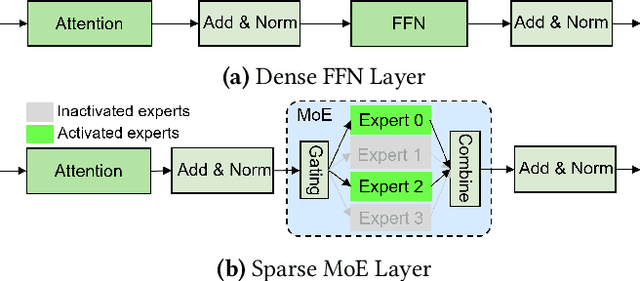
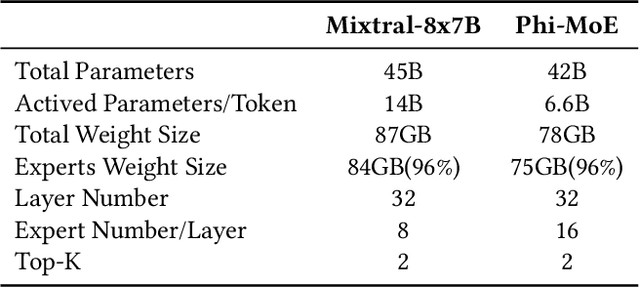
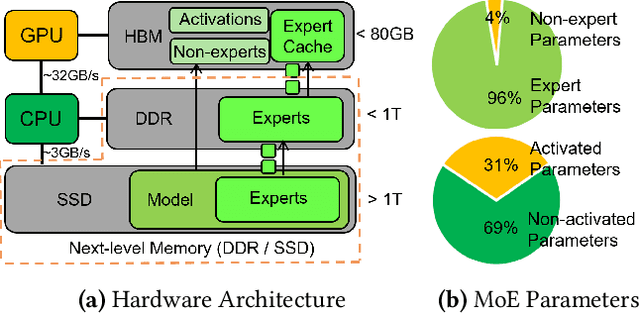
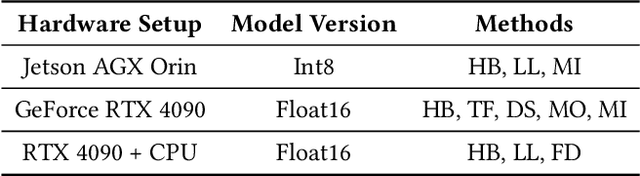
The Mixture-of-Experts (MoE) architecture has demonstrated significant advantages in the era of Large Language Models (LLMs), offering enhanced capabilities with reduced inference costs. However, deploying MoE-based LLMs on memoryconstrained edge devices remains challenging due to their substantial memory requirements. While existing expertoffloading methods alleviate the memory requirements, they often incur significant expert-loading costs or compromise model accuracy. We present HOBBIT, a mixed precision expert offloading system to enable flexible and efficient MoE inference. Our key insight is that dynamically replacing less critical cache-miss experts with low precision versions can substantially reduce expert-loading latency while preserving model accuracy. HOBBIT introduces three innovative techniques that map the natural hierarchy of MoE computation: (1) a token-level dynamic expert loading mechanism, (2) a layer-level adaptive expert prefetching technique, and (3) a sequence-level multidimensional expert caching policy. These innovations fully leverage the benefits of mixedprecision expert inference. By implementing HOBBIT on top of the renowned LLM inference framework Llama.cpp, we evaluate its performance across different edge devices with representative MoE models. The results demonstrate that HOBBIT achieves up to a 9.93x speedup in decoding compared to state-of-the-art MoE offloading systems.