 Add to Chrome
 Add to Firefox
 Add to Edge
DuCos: Duality Constrained Depth Super-Resolution via Foundation Model
Mar 06, 2025
We introduce DuCos, a novel depth super-resolution framework grounded in Lagrangian duality theory, offering a flexible integration of multiple constraints and reconstruction objectives to enhance accuracy and robustness. Our DuCos is the first to significantly improve generalization across diverse scenarios with foundation models as prompts. The prompt design consists of two key components: Correlative Fusion (CF) and Gradient Regulation (GR). CF facilitates precise geometric alignment and effective fusion between prompt and depth features, while GR refines depth predictions by enforcing consistency with sharp-edged depth maps derived from foundation models. Crucially, these prompts are seamlessly embedded into the Lagrangian constraint term, forming a synergistic and principled framework. Extensive experiments demonstrate that DuCos outperforms existing state-of-the-art methods, achieving superior accuracy, robustness, and generalization. The source codes and pre-trained models will be publicly available.

HybridNorm: Towards Stable and Efficient Transformer Training via Hybrid Normalization
Mar 06, 2025Transformers have become the de facto architecture for a wide range of machine learning tasks, particularly in large language models (LLMs). Despite their remarkable performance, challenges remain in training deep transformer networks, especially regarding the location of layer normalization. While Pre-Norm structures facilitate easier training due to their more prominent identity path, they often yield suboptimal performance compared to Post-Norm. In this paper, we propose $\textbf{HybridNorm}$, a straightforward yet effective hybrid normalization strategy that integrates the advantages of both Pre-Norm and Post-Norm approaches. Specifically, HybridNorm employs QKV normalization within the attention mechanism and Post-Norm in the feed-forward network (FFN) of each transformer block. This design not only stabilizes training but also enhances performance, particularly in the context of LLMs. Comprehensive experiments in both dense and sparse architectures show that HybridNorm consistently outperforms both Pre-Norm and Post-Norm approaches, achieving state-of-the-art results across various benchmarks. These findings highlight the potential of HybridNorm as a more stable and effective technique for improving the training and performance of deep transformer models. %Code will be made publicly available. Code is available at https://github.com/BryceZhuo/HybridNorm.
SampleMix: A Sample-wise Pre-training Data Mixing Strategey by Coordinating Data Quality and Diversity
Mar 03, 2025Existing pretraining data mixing methods for large language models (LLMs) typically follow a domain-wise methodology, a top-down process that first determines domain weights and then performs uniform data sampling across each domain. However, these approaches neglect significant inter-domain overlaps and commonalities, failing to control the global diversity of the constructed training dataset. Further, uniform sampling within domains ignores fine-grained sample-specific features, potentially leading to suboptimal data distribution. To address these shortcomings, we propose a novel sample-wise data mixture approach based on a bottom-up paradigm. This method performs global cross-domain sampling by systematically evaluating the quality and diversity of each sample, thereby dynamically determining the optimal domain distribution. Comprehensive experiments across multiple downstream tasks and perplexity assessments demonstrate that SampleMix surpasses existing domain-based methods. Meanwhile, SampleMix requires 1.4x to 2.1x training steps to achieves the baselines' performance, highlighting the substantial potential of SampleMix to optimize pre-training data.
Multi-level Attention-guided Graph Neural Network for Image Restoration
Feb 26, 2025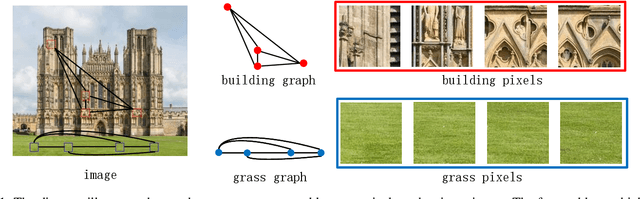
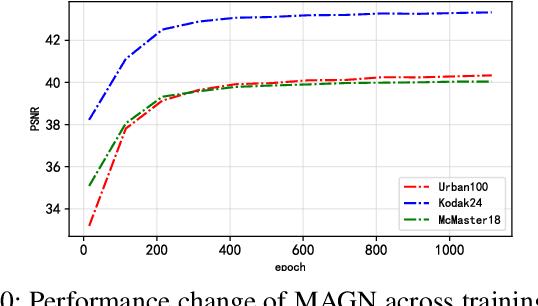
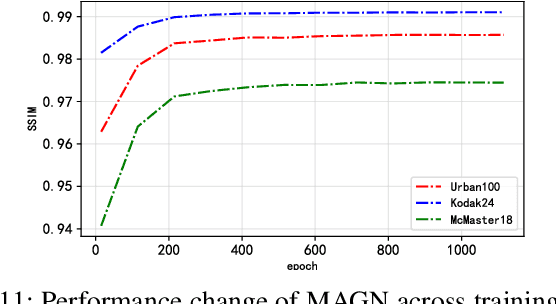
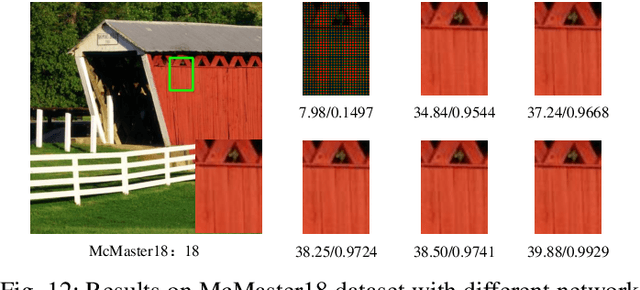
In recent years, deep learning has achieved remarkable success in the field of image restoration. However, most convolutional neural network-based methods typically focus on a single scale, neglecting the incorporation of multi-scale information. In image restoration tasks, local features of an image are often insufficient, necessitating the integration of global features to complement them. Although recent neural network algorithms have made significant strides in feature extraction, many models do not explicitly model global features or consider the relationship between global and local features. This paper proposes multi-level attention-guided graph neural network. The proposed network explicitly constructs element block graphs and element graphs within feature maps using multi-attention mechanisms to extract both local structural features and global representation information of the image. Since the network struggles to effectively extract global information during image degradation, the structural information of local feature blocks can be used to correct and supplement the global information. Similarly, when element block information in the feature map is missing, it can be refined using global element representation information. The graph within the network learns real-time dynamic connections through the multi-attention mechanism, and information is propagated and aggregated via graph convolution algorithms. By combining local element block information and global element representation information from the feature map, the algorithm can more effectively restore missing information in the image. Experimental results on several classic image restoration tasks demonstrate the effectiveness of the proposed method, achieving state-of-the-art performance.
CodeCriticBench: A Holistic Code Critique Benchmark for Large Language Models
Feb 23, 2025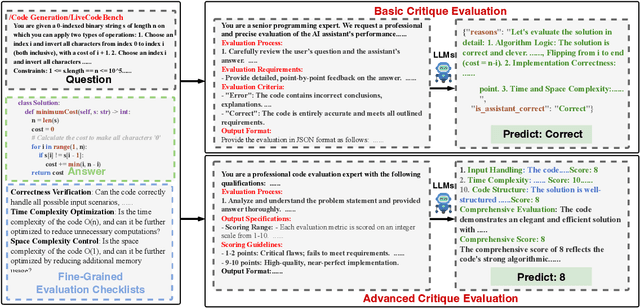
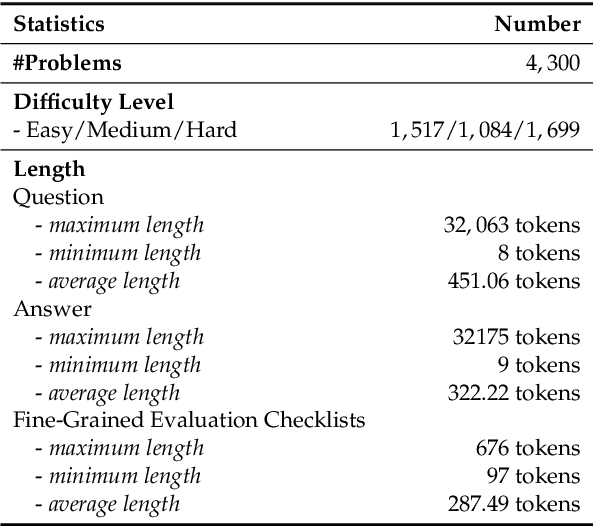
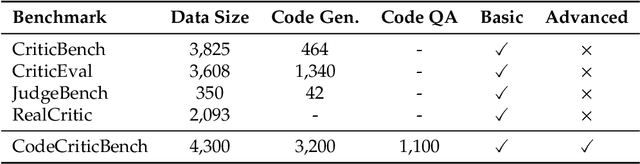
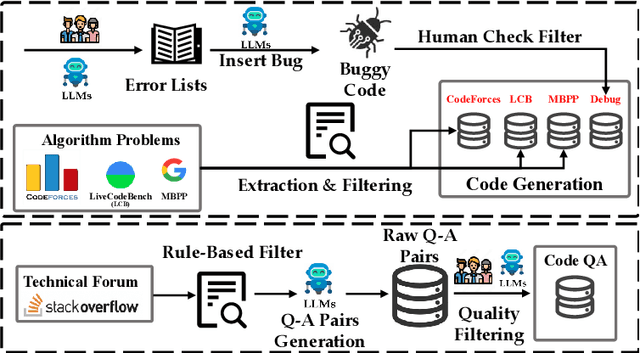
The critique capacity of Large Language Models (LLMs) is essential for reasoning abilities, which can provide necessary suggestions (e.g., detailed analysis and constructive feedback). Therefore, how to evaluate the critique capacity of LLMs has drawn great attention and several critique benchmarks have been proposed. However, existing critique benchmarks usually have the following limitations: (1). Focusing on diverse reasoning tasks in general domains and insufficient evaluation on code tasks (e.g., only covering code generation task), where the difficulty of queries is relatively easy (e.g., the code queries of CriticBench are from Humaneval and MBPP). (2). Lacking comprehensive evaluation from different dimensions. To address these limitations, we introduce a holistic code critique benchmark for LLMs called CodeCriticBench. Specifically, our CodeCriticBench includes two mainstream code tasks (i.e., code generation and code QA) with different difficulties. Besides, the evaluation protocols include basic critique evaluation and advanced critique evaluation for different characteristics, where fine-grained evaluation checklists are well-designed for advanced settings. Finally, we conduct extensive experimental results of existing LLMs, which show the effectiveness of CodeCriticBench.
Scale-Distribution Decoupling: Enabling Stable and Effective Training of Large Language Models
Feb 21, 2025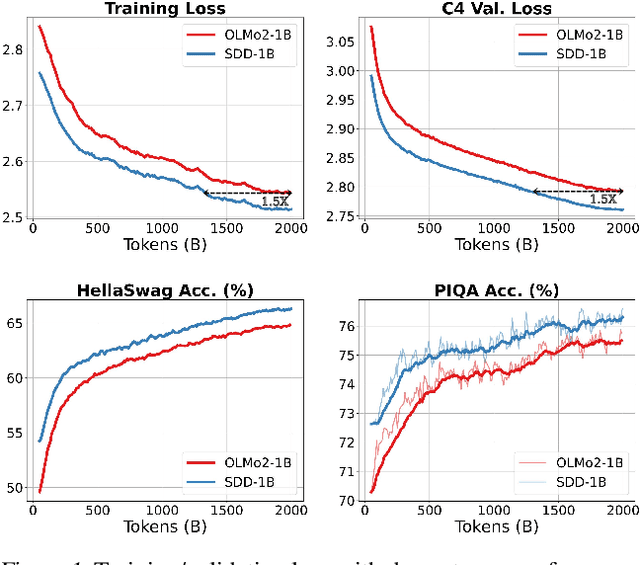
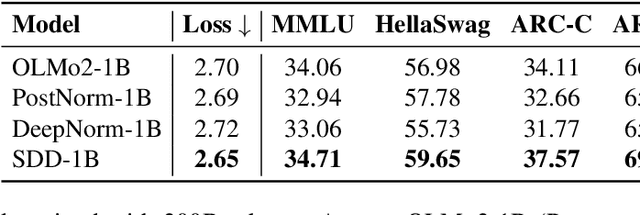
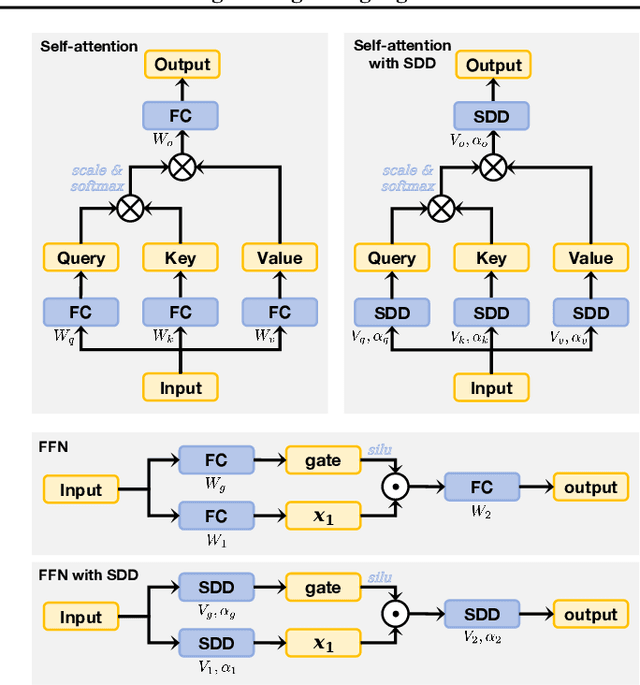
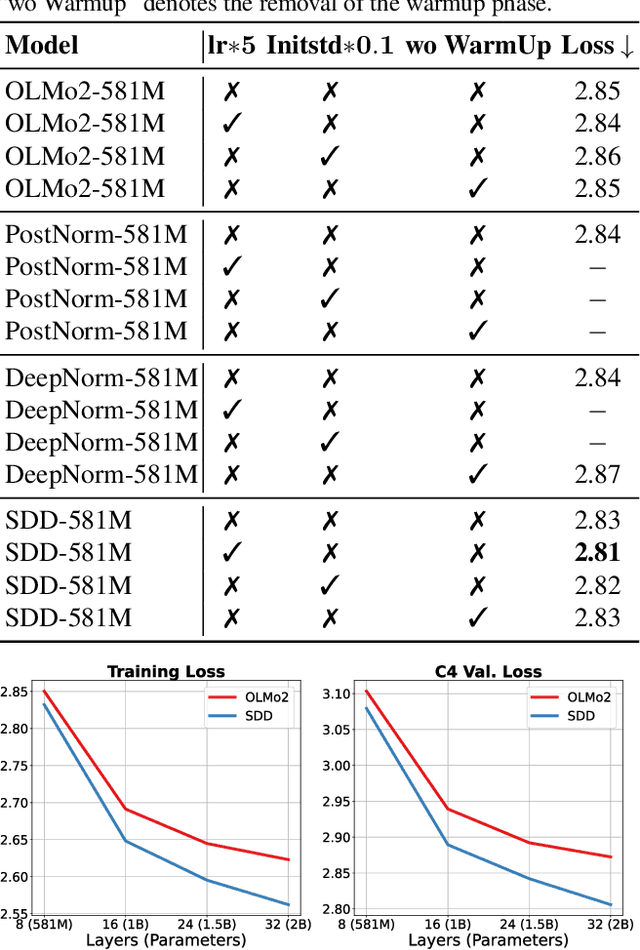
Training stability is a persistent challenge in the pre-training of large language models (LLMs), particularly for architectures such as Post-Norm Transformers, which are prone to gradient explosion and dissipation. In this paper, we propose Scale-Distribution Decoupling (SDD), a novel approach that stabilizes training by explicitly decoupling the scale and distribution of the weight matrix in fully-connected layers. SDD applies a normalization mechanism to regulate activations and a learnable scaling vector to maintain well-conditioned gradients, effectively preventing $\textbf{gradient explosion and dissipation}$. This separation improves optimization efficiency, particularly in deep networks, by ensuring stable gradient propagation. Experimental results demonstrate that our method stabilizes training across various LLM architectures and outperforms existing techniques in different normalization configurations. Furthermore, the proposed method is lightweight and compatible with existing frameworks, making it a practical solution for stabilizing LLM training. Code is available at https://github.com/kaihemo/SDD.
SuperGPQA: Scaling LLM Evaluation across 285 Graduate Disciplines
Feb 20, 2025Large language models (LLMs) have demonstrated remarkable proficiency in mainstream academic disciplines such as mathematics, physics, and computer science. However, human knowledge encompasses over 200 specialized disciplines, far exceeding the scope of existing benchmarks. The capabilities of LLMs in many of these specialized fields-particularly in light industry, agriculture, and service-oriented disciplines-remain inadequately evaluated. To address this gap, we present SuperGPQA, a comprehensive benchmark that evaluates graduate-level knowledge and reasoning capabilities across 285 disciplines. Our benchmark employs a novel Human-LLM collaborative filtering mechanism to eliminate trivial or ambiguous questions through iterative refinement based on both LLM responses and expert feedback. Our experimental results reveal significant room for improvement in the performance of current state-of-the-art LLMs across diverse knowledge domains (e.g., the reasoning-focused model DeepSeek-R1 achieved the highest accuracy of 61.82% on SuperGPQA), highlighting the considerable gap between current model capabilities and artificial general intelligence. Additionally, we present comprehensive insights from our management of a large-scale annotation process, involving over 80 expert annotators and an interactive Human-LLM collaborative system, offering valuable methodological guidance for future research initiatives of comparable scope.
SimpleVQA: Multimodal Factuality Evaluation for Multimodal Large Language Models
Feb 18, 2025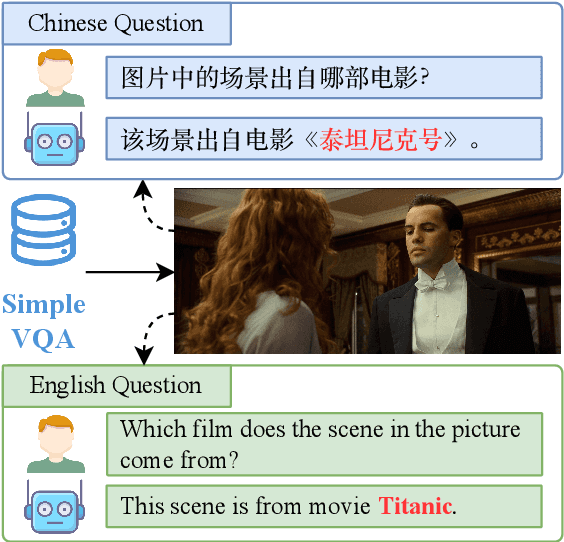
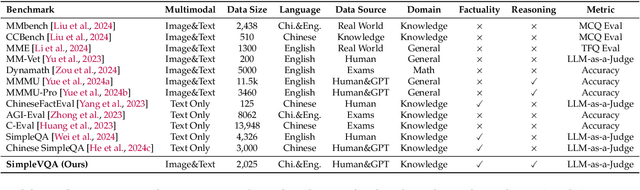
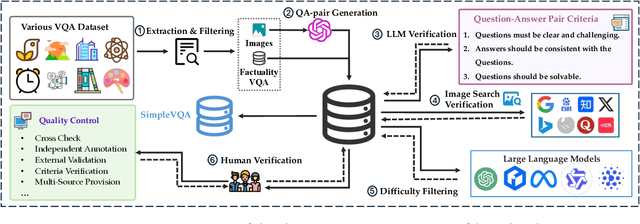
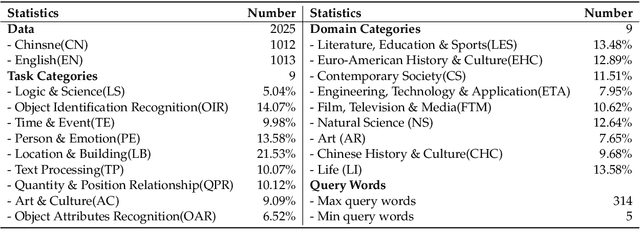
The increasing application of multi-modal large language models (MLLMs) across various sectors have spotlighted the essence of their output reliability and accuracy, particularly their ability to produce content grounded in factual information (e.g. common and domain-specific knowledge). In this work, we introduce SimpleVQA, the first comprehensive multi-modal benchmark to evaluate the factuality ability of MLLMs to answer natural language short questions. SimpleVQA is characterized by six key features: it covers multiple tasks and multiple scenarios, ensures high quality and challenging queries, maintains static and timeless reference answers, and is straightforward to evaluate. Our approach involves categorizing visual question-answering items into 9 different tasks around objective events or common knowledge and situating these within 9 topics. Rigorous quality control processes are implemented to guarantee high-quality, concise, and clear answers, facilitating evaluation with minimal variance via an LLM-as-a-judge scoring system. Using SimpleVQA, we perform a comprehensive assessment of leading 18 MLLMs and 8 text-only LLMs, delving into their image comprehension and text generation abilities by identifying and analyzing error cases.
SayAnything: Audio-Driven Lip Synchronization with Conditional Video Diffusion
Feb 17, 2025
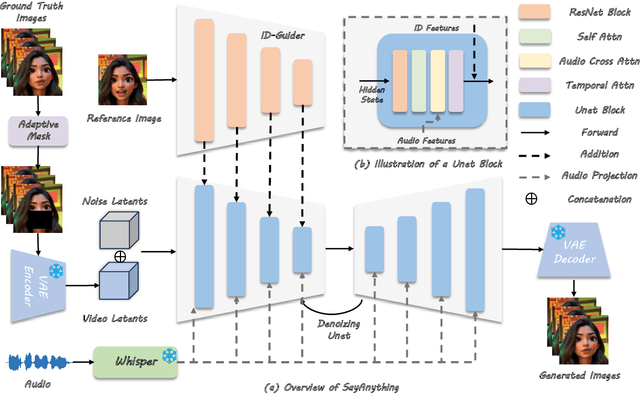
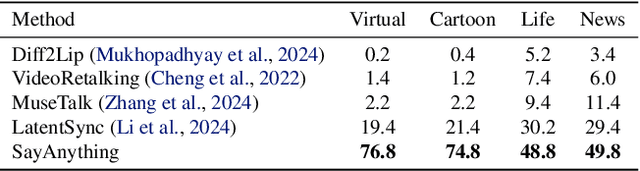
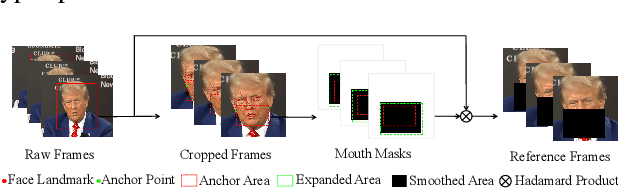
Recent advances in diffusion models have led to significant progress in audio-driven lip synchronization. However, existing methods typically rely on constrained audio-visual alignment priors or multi-stage learning of intermediate representations to force lip motion synthesis. This leads to complex training pipelines and limited motion naturalness. In this paper, we present SayAnything, a conditional video diffusion framework that directly synthesizes lip movements from audio input while preserving speaker identity. Specifically, we propose three specialized modules including identity preservation module, audio guidance module, and editing control module. Our novel design effectively balances different condition signals in the latent space, enabling precise control over appearance, motion, and region-specific generation without requiring additional supervision signals or intermediate representations. Extensive experiments demonstrate that SayAnything generates highly realistic videos with improved lip-teeth coherence, enabling unseen characters to say anything, while effectively generalizing to animated characters.
Robust 6DoF Pose Tracking Considering Contour and Interior Correspondence Uncertainty for AR Assembly Guidance
Feb 17, 2025Augmented reality assembly guidance is essential for intelligent manufacturing and medical applications, requiring continuous measurement of the 6DoF poses of manipulated objects. Although current tracking methods have made significant advancements in accuracy and efficiency, they still face challenges in robustness when dealing with cluttered backgrounds, rotationally symmetric objects, and noisy sequences. In this paper, we first propose a robust contour-based pose tracking method that addresses error-prone contour correspondences and improves noise tolerance. It utilizes a fan-shaped search strategy to refine correspondences and models local contour shape and noise uncertainty as mixed probability distribution, resulting in a highly robust contour energy function. Secondly, we introduce a CPU-only strategy to better track rotationally symmetric objects and assist the contour-based method in overcoming local minima by exploring sparse interior correspondences. This is achieved by pre-sampling interior points from sparse viewpoint templates offline and using the DIS optical flow algorithm to compute their correspondences during tracking. Finally, we formulate a unified energy function to fuse contour and interior information, which is solvable using a re-weighted least squares algorithm. Experiments on public datasets and real scenarios demonstrate that our method significantly outperforms state-of-the-art monocular tracking methods and can achieve more than 100 FPS using only a CPU.