 Add to Chrome
 Add to Firefox
 Add to Edge
Structure-Internalized Rule Language Model for Faithful Knowledge Graph Reasoning
Aug 18, 2026
Knowledge Graph Reasoning (KGR) aims to discover latent facts by leveraging the structural evidence available in KGs, posing a challenge to the structural semantic understanding capability of KGR models. Recent studies have demonstrated that Large Language Models (LLMs) can achieve remarkable progress on KGR tasks via flexible in-context learning. However, the inherent representation inconsistency between KG structural context and LLM parametric knowledge remains inadequately addressed. This limitation prevents LLMs from effectively perceiving reasoning evidence that aligns with KG constraints, which undermines both the effectiveness and faithfulness of reasoning. We refer to this problem as reasoning evidence perception drift of LLMs over KGs. To address this problem, we propose a Structure-Internalized Rule Language Model (SIRLM), which centers on structural rule generation to couple the parametric learning of structural knowledge with the faithfulness evaluation of reasoning logic, enabling LLMs to anchor tightly to KG-grounded evidence. Specifically, we first design a Structure-Internalized Rule Generator (SIRG), which incorporates an in-context learning block augmented with a structural relation memory to coordinate structural and parametric knowledge. Furthermore, we equip SIRG with a KG tokenizer based on structural invariance learning and a neuro-symbolic reasoner based on rule-constrained message propagation. These components provide SIRG with learnable structural representations and faithful rule-execution feedback, respectively. Our SIRLM can be seamlessly integrated into standard LLM training paradigms, such as SFT and GRPO. Extensive experiments against 17 state-of-the-art KGR methods on 36 datasets demonstrate the significant superiority of SIRLM.

Implicit Fine-tuning via Context Engineering: A Curriculum Learning Framework for Multimodal Entity Alignment
Jul 12, 2026Multimodal Entity Alignment (MMEA) aims to identify equivalent entities across different modalities. While existing methods enhance MMEA performance through black-box context engineering strategies, their reliance on LLM parameter capacity and lack of theoretical interpretability remain unresolved. To this end, we first theoretically validate the mathematical equivalence between context engineering and model fine-tuning in MMEA tasks, demonstrating that prompt components simulate contrastive learning-based sequential fine-tuning in MMEA. Building on this foundation, we then propose PTFEA, a curriculum-learning-inspired framework that translates fine-tuning strategies into interpretable context engineering. Specifically, adaptive difficulty modulation dynamically adjusts information injection stages using confidence thresholds, establishing mathematical equivalence between curriculum learning weights and context sample selection; and three-stage progressive inference incorporates entity information from simple to complex cases, mirroring the gradient descent process in fine-tuning. Experiments on five public datasets demonstrate that PTFEA consistently outperforms strong baselines. In particular, on the ICWIKI dataset, PTFEA narrows the H@1 gap between Qwen2.5-72B and 14B to 0.6%. Moreover, compared with the representative context-engineering-based MMEA method MM-ChatAlign, PTFEA reduces the runtime of Qwen2.5-72B from 21 hours to 1 hour and lowers token consumption from 2200-3000 to 200-400, achieving over 80% reduction on the ICWIKI dataset. This work provides the first theoretical framework unifying context engineering and fine-tuning in MMEA, paving the way for future research that seeks to translate additional fine-tuning strategies into context engineering paradigms. Our code is available at https://github.com/DMiC-Lab-HFUT/PTFEA.
* Accepted by KDD 2026
PSQE: A Theoretical-Practical Approach to Pseudo Seed Quality Enhancement for Unsupervised MMEA
Feb 26, 2026Multimodal Entity Alignment (MMEA) aims to identify equivalent entities across different data modalities, enabling structural data integration that in turn improves the performance of various large language model applications. To lift the requirement of labeled seed pairs that are difficult to obtain, recent methods shifted to an unsupervised paradigm using pseudo-alignment seeds. However, unsupervised entity alignment in multimodal settings remains underexplored, mainly because the incorporation of multimodal information often results in imbalanced coverage of pseudo-seeds within the knowledge graph. To overcome this, we propose PSQE (Pseudo-Seed Quality Enhancement) to improve the precision and graph coverage balance of pseudo seeds via multimodal information and clustering-resampling. Theoretical analysis reveals the impact of pseudo seeds on existing contrastive learning-based MMEA models. In particular, pseudo seeds can influence the attraction and the repulsion terms in contrastive learning at once, whereas imbalanced graph coverage causes models to prioritize high-density regions, thereby weakening their learning capability for entities in sparse regions. Experimental results validate our theoretical findings and show that PSQE as a plug-and-play module can improve the performance of baselines by considerable margins.
Relink: Constructing Query-Driven Evidence Graph On-the-Fly for GraphRAG
Jan 12, 2026Graph-based Retrieval-Augmented Generation (GraphRAG) mitigates hallucinations in Large Language Models (LLMs) by grounding them in structured knowledge. However, current GraphRAG methods are constrained by a prevailing \textit{build-then-reason} paradigm, which relies on a static, pre-constructed Knowledge Graph (KG). This paradigm faces two critical challenges. First, the KG's inherent incompleteness often breaks reasoning paths. Second, the graph's low signal-to-noise ratio introduces distractor facts, presenting query-relevant but misleading knowledge that disrupts the reasoning process. To address these challenges, we argue for a \textit{reason-and-construct} paradigm and propose Relink, a framework that dynamically builds a query-specific evidence graph. To tackle incompleteness, \textbf{Relink} instantiates required facts from a latent relation pool derived from the original text corpus, repairing broken paths on the fly. To handle misleading or distractor facts, Relink employs a unified, query-aware evaluation strategy that jointly considers candidates from both the KG and latent relations, selecting those most useful for answering the query rather than relying on their pre-existence. This empowers Relink to actively discard distractor facts and construct the most faithful and precise evidence path for each query. Extensive experiments on five Open-Domain Question Answering benchmarks show that Relink achieves significant average improvements of 5.4\% in EM and 5.2\% in F1 over leading GraphRAG baselines, demonstrating the superiority of our proposed framework.
Chinese Cyberbullying Detection: Dataset, Method, and Validation
May 27, 2025Existing cyberbullying detection benchmarks were organized by the polarity of speech, such as "offensive" and "non-offensive", which were essentially hate speech detection. However, in the real world, cyberbullying often attracted widespread social attention through incidents. To address this problem, we propose a novel annotation method to construct a cyberbullying dataset that organized by incidents. The constructed CHNCI is the first Chinese cyberbullying incident detection dataset, which consists of 220,676 comments in 91 incidents. Specifically, we first combine three cyberbullying detection methods based on explanations generation as an ensemble method to generate the pseudo labels, and then let human annotators judge these labels. Then we propose the evaluation criteria for validating whether it constitutes a cyberbullying incident. Experimental results demonstrate that the constructed dataset can be a benchmark for the tasks of cyberbullying detection and incident prediction. To the best of our knowledge, this is the first study for the Chinese cyberbullying incident detection task.
How to Mitigate Information Loss in Knowledge Graphs for GraphRAG: Leveraging Triple Context Restoration and Query-Driven Feedback
Jan 26, 2025Knowledge Graph (KG)-augmented Large Language Models (LLMs) have recently propelled significant advances in complex reasoning tasks, thanks to their broad domain knowledge and contextual awareness. Unfortunately, current methods often assume KGs to be complete, which is impractical given the inherent limitations of KG construction and the potential loss of contextual cues when converting unstructured text into entity-relation triples. In response, this paper proposes the Triple Context Restoration and Query-driven Feedback (TCR-QF) framework, which reconstructs the textual context underlying each triple to mitigate information loss, while dynamically refining the KG structure by iteratively incorporating query-relevant missing knowledge. Experiments on five benchmark question-answering datasets substantiate the effectiveness of TCR-QF in KG and LLM integration, where itachieves a 29.1% improvement in Exact Match and a 15.5% improvement in F1 over its state-of-the-art GraphRAG competitors.
Hybrid Local Causal Discovery
Dec 27, 2024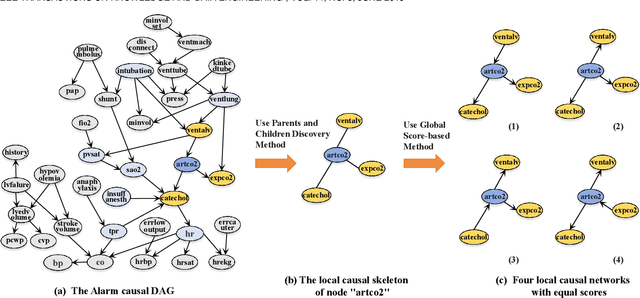
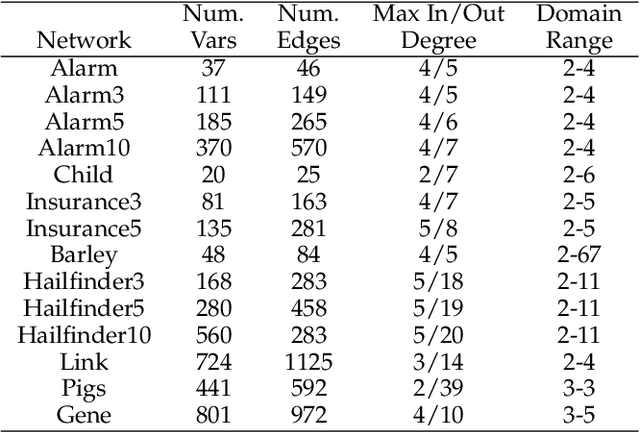
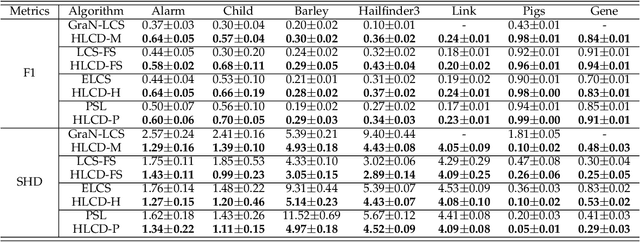
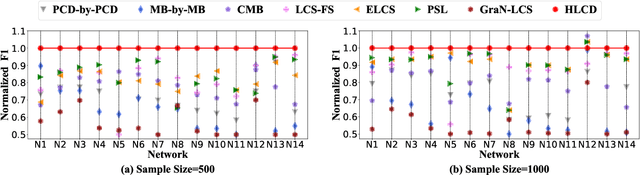
Local causal discovery aims to learn and distinguish the direct causes and effects of a target variable from observed data. Existing constraint-based local causal discovery methods use AND or OR rules in constructing the local causal skeleton, but using either rule alone is prone to produce cascading errors in the learned local causal skeleton, and thus impacting the inference of local causal relationships. On the other hand, directly applying score-based global causal discovery methods to local causal discovery may randomly return incorrect results due to the existence of local equivalence classes. To address the above issues, we propose a Hybrid Local Causal Discovery algorithm, called HLCD. Specifically, HLCD initially utilizes a constraint-based approach combined with the OR rule to obtain a candidate skeleton and then employs a score-based method to eliminate redundant portions in the candidate skeleton. Furthermore, during the local causal orientation phase, HLCD distinguishes between V-structures and equivalence classes by comparing the local structure scores between the two, thereby avoiding orientation interference caused by local equivalence classes. We conducted extensive experiments with seven state-of-the-art competitors on 14 benchmark Bayesian network datasets, and the experimental results demonstrate that HLCD significantly outperforms existing local causal discovery algorithms.
Feature Interaction Fusion Self-Distillation Network For CTR Prediction
Nov 13, 2024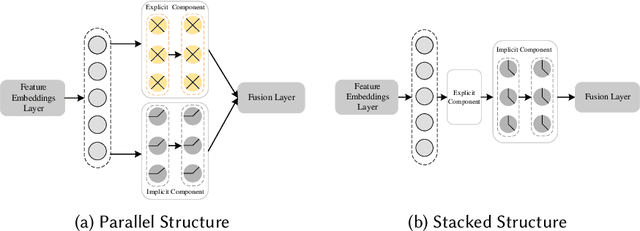

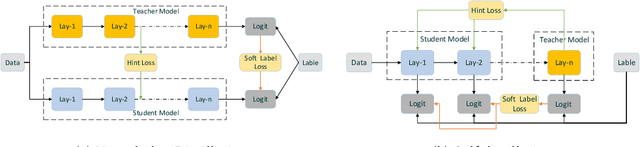

Click-Through Rate (CTR) prediction plays a vital role in recommender systems, online advertising, and search engines. Most of the current approaches model feature interactions through stacked or parallel structures, with some employing knowledge distillation for model compression. However, we observe some limitations with these approaches: (1) In parallel structure models, the explicit and implicit components are executed independently and simultaneously, which leads to insufficient information sharing within the feature set. (2) The introduction of knowledge distillation technology brings about the problems of complex teacher-student framework design and low knowledge transfer efficiency. (3) The dataset and the process of constructing high-order feature interactions contain significant noise, which limits the model's effectiveness. To address these limitations, we propose FSDNet, a CTR prediction framework incorporating a plug-and-play fusion self-distillation module. Specifically, FSDNet forms connections between explicit and implicit feature interactions at each layer, enhancing the sharing of information between different features. The deepest fusion layer is then used as the teacher model, utilizing self-distillation to guide the training of shallow layers. Empirical evaluation across four benchmark datasets validates the framework's efficacy and generalization capabilities. The code is available on https://anonymous.4open.science/r/FSDNet.
Effective Instruction Parsing Plugin for Complex Logical Query Answering on Knowledge Graphs
Oct 27, 2024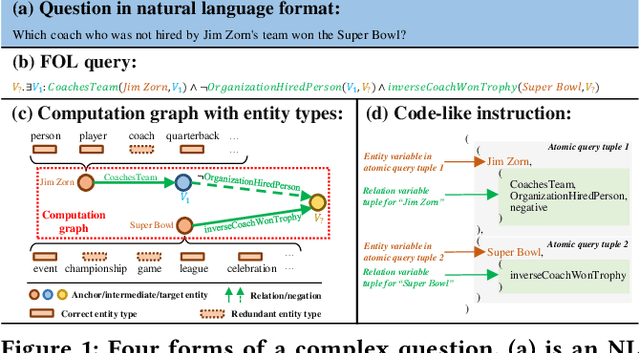
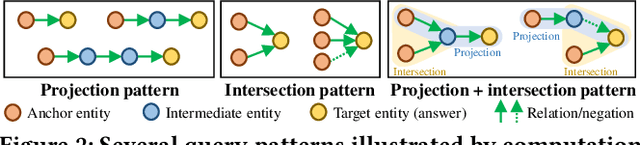
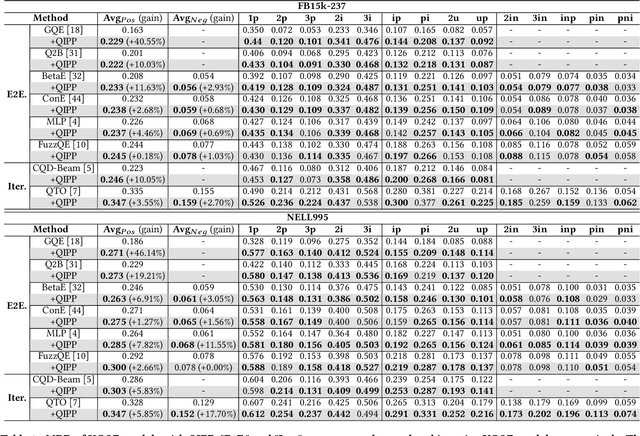
Knowledge Graph Query Embedding (KGQE) aims to embed First-Order Logic (FOL) queries in a low-dimensional KG space for complex reasoning over incomplete KGs. To enhance the generalization of KGQE models, recent studies integrate various external information (such as entity types and relation context) to better capture the logical semantics of FOL queries. The whole process is commonly referred to as Query Pattern Learning (QPL). However, current QPL methods typically suffer from the pattern-entity alignment bias problem, leading to the learned defective query patterns limiting KGQE models' performance. To address this problem, we propose an effective Query Instruction Parsing Plugin (QIPP) that leverages the context awareness of Pre-trained Language Models (PLMs) to capture latent query patterns from code-like query instructions. Unlike the external information introduced by previous QPL methods, we first propose code-like instructions to express FOL queries in an alternative format. This format utilizes textual variables and nested tuples to convey the logical semantics within FOL queries, serving as raw materials for a PLM-based instruction encoder to obtain complete query patterns. Building on this, we design a query-guided instruction decoder to adapt query patterns to KGQE models. To further enhance QIPP's effectiveness across various KGQE models, we propose a query pattern injection mechanism based on compressed optimization boundaries and an adaptive normalization component, allowing KGQE models to utilize query patterns more efficiently. Extensive experiments demonstrate that our plug-and-play method improves the performance of eight basic KGQE models and outperforms two state-of-the-art QPL methods.
Intent-guided Heterogeneous Graph Contrastive Learning for Recommendation
Jul 28, 2024
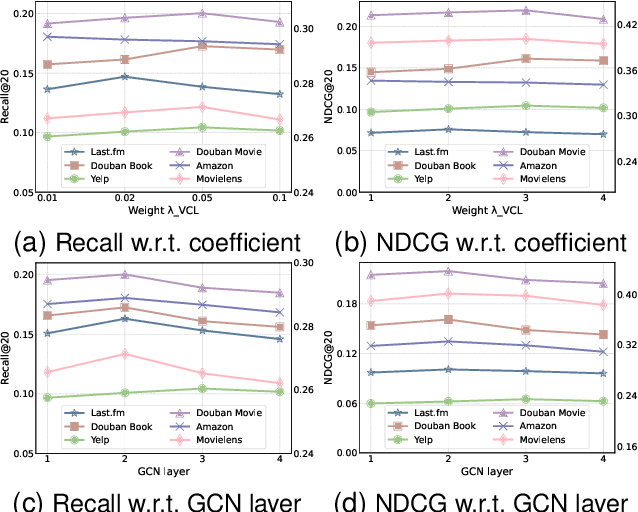

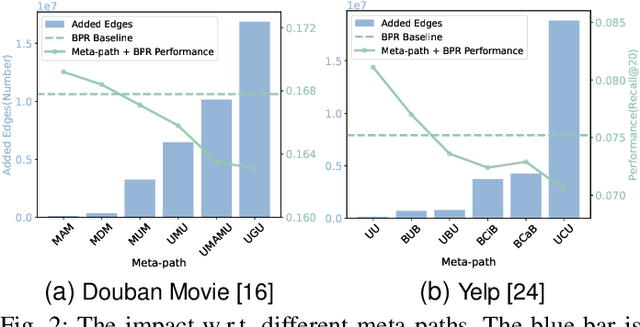
Contrastive Learning (CL)-based recommender systems have gained prominence in the context of Heterogeneous Graph (HG) due to their capacity to enhance the consistency of representations across different views. However, existing frameworks often neglect the fact that user-item interactions within HG are governed by diverse latent intents (e.g., brand preferences or demographic characteristics of item audiences), which are pivotal in capturing fine-grained relations. The exploration of these underlying intents, particularly through the lens of meta-paths in HGs, presents us with two principal challenges: i) How to integrate CL with intents; ii) How to mitigate noise from meta-path-driven intents. To address these challenges, we propose an innovative framework termed Intent-guided Heterogeneous Graph Contrastive Learning (IHGCL), which designed to enhance CL-based recommendation by capturing the intents contained within meta-paths. Specifically, the IHGCL framework includes: i) a meta-path-based Dual Contrastive Learning (DCL) approach to effectively integrate intents into the recommendation, constructing intent-intent contrast and intent-interaction contrast; ii) a Bottlenecked AutoEncoder (BAE) that combines mask propagation with the information bottleneck principle to significantly reduce noise perturbations introduced by meta-paths. Empirical evaluations conducted across six distinct datasets demonstrate the superior performance of our IHGCL framework relative to conventional baseline methods. Our model implementation is available at https://github.com/wangyu0627/IHGCL.