 Add to Chrome
 Add to Firefox
 Add to Edge
Split-Layer: Enhancing Implicit Neural Representation by Maximizing the Dimensionality of Feature Space
Nov 13, 2025
Implicit neural representation (INR) models signals as continuous functions using neural networks, offering efficient and differentiable optimization for inverse problems across diverse disciplines. However, the representational capacity of INR defined by the range of functions the neural network can characterize, is inherently limited by the low-dimensional feature space in conventional multilayer perceptron (MLP) architectures. While widening the MLP can linearly increase feature space dimensionality, it also leads to a quadratic growth in computational and memory costs. To address this limitation, we propose the split-layer, a novel reformulation of MLP construction. The split-layer divides each layer into multiple parallel branches and integrates their outputs via Hadamard product, effectively constructing a high-degree polynomial space. This approach significantly enhances INR's representational capacity by expanding the feature space dimensionality without incurring prohibitive computational overhead. Extensive experiments demonstrate that the split-layer substantially improves INR performance, surpassing existing methods across multiple tasks, including 2D image fitting, 2D CT reconstruction, 3D shape representation, and 5D novel view synthesis.

Hierarchical Direction Perception via Atomic Dot-Product Operators for Rotation-Invariant Point Clouds Learning
Nov 11, 2025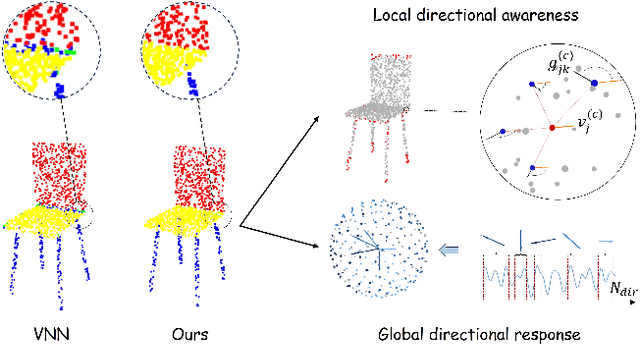
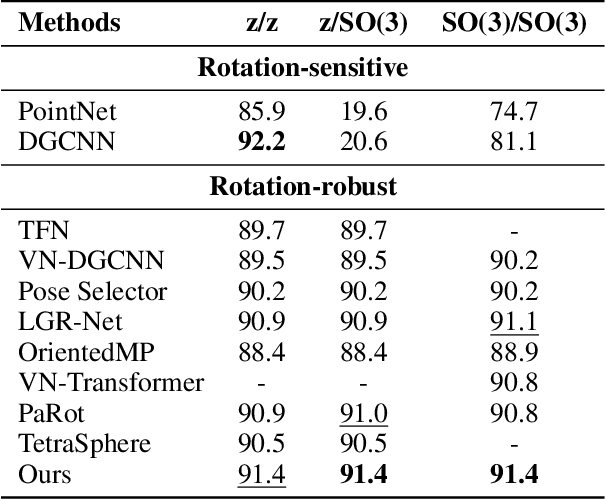
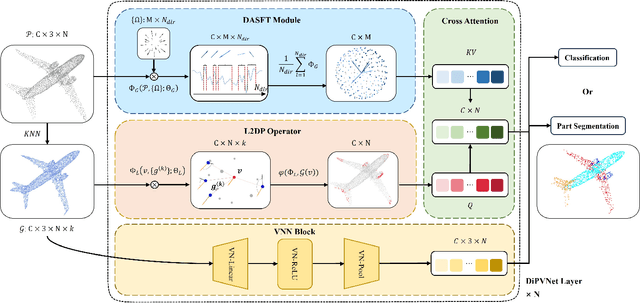
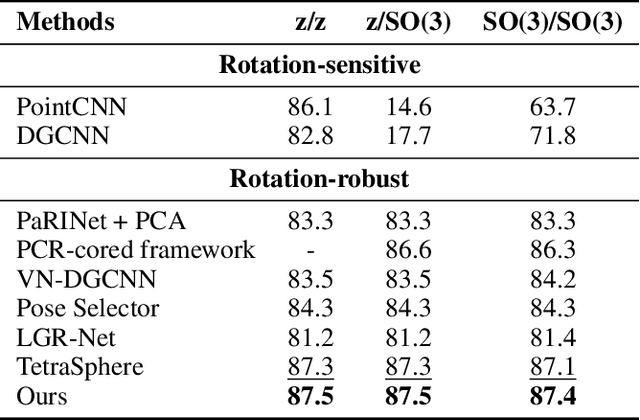
Point cloud processing has become a cornerstone technology in many 3D vision tasks. However, arbitrary rotations introduce variations in point cloud orientations, posing a long-standing challenge for effective representation learning. The core of this issue is the disruption of the point cloud's intrinsic directional characteristics caused by rotational perturbations. Recent methods attempt to implicitly model rotational equivariance and invariance, preserving directional information and propagating it into deep semantic spaces. Yet, they often fall short of fully exploiting the multiscale directional nature of point clouds to enhance feature representations. To address this, we propose the Direction-Perceptive Vector Network (DiPVNet). At its core is an atomic dot-product operator that simultaneously encodes directional selectivity and rotation invariance--endowing the network with both rotational symmetry modeling and adaptive directional perception. At the local level, we introduce a Learnable Local Dot-Product (L2DP) Operator, which enables interactions between a center point and its neighbors to adaptively capture the non-uniform local structures of point clouds. At the global level, we leverage generalized harmonic analysis to prove that the dot-product between point clouds and spherical sampling vectors is equivalent to a direction-aware spherical Fourier transform (DASFT). This leads to the construction of a global directional response spectrum for modeling holistic directional structures. We rigorously prove the rotation invariance of both operators. Extensive experiments on challenging scenarios involving noise and large-angle rotations demonstrate that DiPVNet achieves state-of-the-art performance on point cloud classification and segmentation tasks. Our code is available at https://github.com/wxszreal0/DiPVNet.
Pressure2Motion: Hierarchical Motion Synthesis from Ground Pressure with Text Guidance
Nov 07, 2025We present Pressure2Motion, a novel motion capture algorithm that synthesizes human motion from a ground pressure sequence and text prompt. It eliminates the need for specialized lighting setups, cameras, or wearable devices, making it suitable for privacy-preserving, low-light, and low-cost motion capture scenarios. Such a task is severely ill-posed due to the indeterminate nature of the pressure signals to full-body motion. To address this issue, we introduce Pressure2Motion, a generative model that leverages pressure features as input and utilizes a text prompt as a high-level guiding constraint. Specifically, our model utilizes a dual-level feature extractor that accurately interprets pressure data, followed by a hierarchical diffusion model that discerns broad-scale movement trajectories and subtle posture adjustments. Both the physical cues gained from the pressure sequence and the semantic guidance derived from descriptive texts are leveraged to guide the motion generation with precision. To the best of our knowledge, Pressure2Motion is a pioneering work in leveraging both pressure data and linguistic priors for motion generation, and the established MPL benchmark is the first benchmark for this task. Experiments show our method generates high-fidelity, physically plausible motions, establishing a new state-of-the-art for this task. The codes and benchmarks will be publicly released upon publication.
Real-Time Reasoning Agents in Evolving Environments
Nov 07, 2025Agents in the real world must make not only logical but also timely judgments. This requires continuous awareness of the dynamic environment: hazards emerge, opportunities arise, and other agents act, while the agent's reasoning is still unfolding. Despite advances in language model reasoning, existing approaches fail to account for this dynamic nature. We introduce real-time reasoning as a new problem formulation for agents in evolving environments and build Real-Time Reasoning Gym to demonstrate it. We study two paradigms for deploying language models in agents: (1) reactive agents, which employ language models with bounded reasoning computation for rapid responses, and (2) planning agents, which allow extended reasoning computation for complex problems. Our experiments show that even state-of-the-art models struggle with making logical and timely judgments in either paradigm. To address this limitation, we propose AgileThinker, which simultaneously engages both reasoning paradigms. AgileThinker consistently outperforms agents engaging only one reasoning paradigm as the task difficulty and time pressure rise, effectively balancing reasoning depth and response latency. Our work establishes real-time reasoning as a critical testbed for developing practical agents and provides a foundation for research in temporally constrained AI systems, highlighting a path toward real-time capable agents.
Fitting Reinforcement Learning Model to Behavioral Data under Bandits
Nov 06, 2025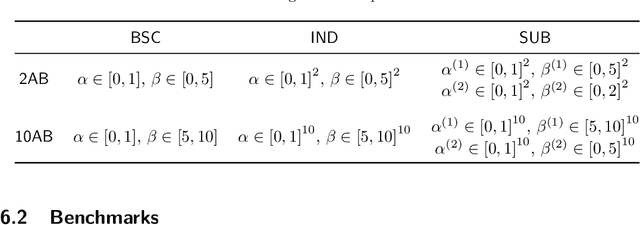
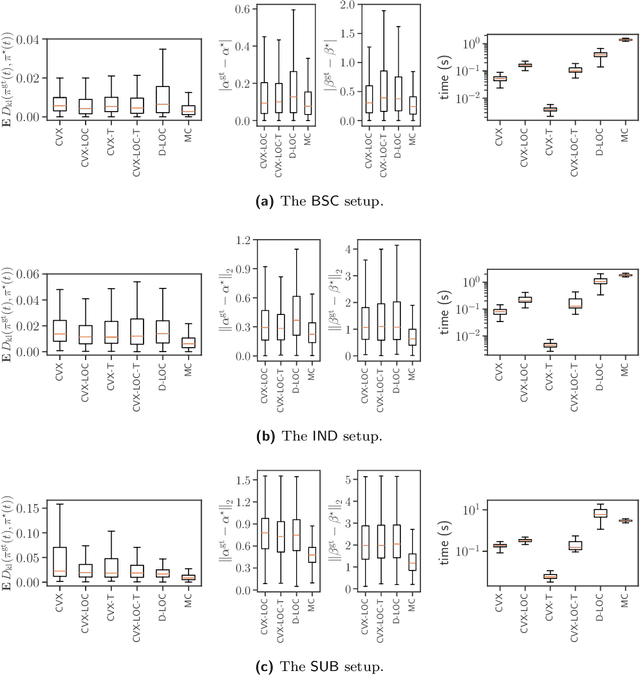
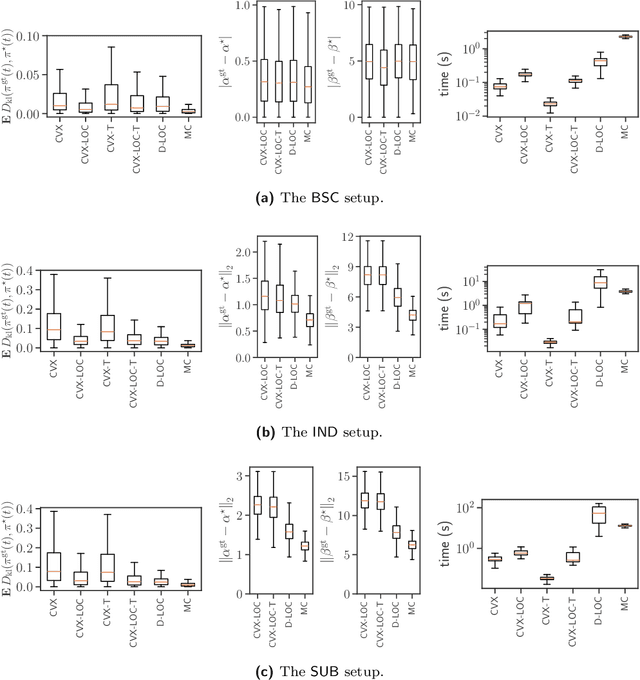
We consider the problem of fitting a reinforcement learning (RL) model to some given behavioral data under a multi-armed bandit environment. These models have received much attention in recent years for characterizing human and animal decision making behavior. We provide a generic mathematical optimization problem formulation for the fitting problem of a wide range of RL models that appear frequently in scientific research applications, followed by a detailed theoretical analysis of its convexity properties. Based on the theoretical results, we introduce a novel solution method for the fitting problem of RL models based on convex relaxation and optimization. Our method is then evaluated in several simulated bandit environments to compare with some benchmark methods that appear in the literature. Numerical results indicate that our method achieves comparable performance to the state-of-the-art, while significantly reducing computation time. We also provide an open-source Python package for our proposed method to empower researchers to apply it in the analysis of their datasets directly, without prior knowledge of convex optimization.
Sketch2PoseNet: Efficient and Generalized Sketch to 3D Human Pose Prediction
Oct 30, 20253D human pose estimation from sketches has broad applications in computer animation and film production. Unlike traditional human pose estimation, this task presents unique challenges due to the abstract and disproportionate nature of sketches. Previous sketch-to-pose methods, constrained by the lack of large-scale sketch-3D pose annotations, primarily relied on optimization with heuristic rules-an approach that is both time-consuming and limited in generalizability. To address these challenges, we propose a novel approach leveraging a "learn from synthesis" strategy. First, a diffusion model is trained to synthesize sketch images from 2D poses projected from 3D human poses, mimicking disproportionate human structures in sketches. This process enables the creation of a synthetic dataset, SKEP-120K, consisting of 120k accurate sketch-3D pose annotation pairs across various sketch styles. Building on this synthetic dataset, we introduce an end-to-end data-driven framework for estimating human poses and shapes from diverse sketch styles. Our framework combines existing 2D pose detectors and generative diffusion priors for sketch feature extraction with a feed-forward neural network for efficient 2D pose estimation. Multiple heuristic loss functions are incorporated to guarantee geometric coherence between the derived 3D poses and the detected 2D poses while preserving accurate self-contacts. Qualitative, quantitative, and subjective evaluations collectively show that our model substantially surpasses previous ones in both estimation accuracy and speed for sketch-to-pose tasks.
ComGS: Efficient 3D Object-Scene Composition via Surface Octahedral Probes
Oct 09, 2025Gaussian Splatting (GS) enables immersive rendering, but realistic 3D object-scene composition remains challenging. Baked appearance and shadow information in GS radiance fields cause inconsistencies when combining objects and scenes. Addressing this requires relightable object reconstruction and scene lighting estimation. For relightable object reconstruction, existing Gaussian-based inverse rendering methods often rely on ray tracing, leading to low efficiency. We introduce Surface Octahedral Probes (SOPs), which store lighting and occlusion information and allow efficient 3D querying via interpolation, avoiding expensive ray tracing. SOPs provide at least a 2x speedup in reconstruction and enable real-time shadow computation in Gaussian scenes. For lighting estimation, existing Gaussian-based inverse rendering methods struggle to model intricate light transport and often fail in complex scenes, while learning-based methods predict lighting from a single image and are viewpoint-sensitive. We observe that 3D object-scene composition primarily concerns the object's appearance and nearby shadows. Thus, we simplify the challenging task of full scene lighting estimation by focusing on the environment lighting at the object's placement. Specifically, we capture a 360 degrees reconstructed radiance field of the scene at the location and fine-tune a diffusion model to complete the lighting. Building on these advances, we propose ComGS, a novel 3D object-scene composition framework. Our method achieves high-quality, real-time rendering at around 28 FPS, produces visually harmonious results with vivid shadows, and requires only 36 seconds for editing. Code and dataset are available at https://nju-3dv.github.io/projects/ComGS/.
SpatialVID: A Large-Scale Video Dataset with Spatial Annotations
Sep 11, 2025Significant progress has been made in spatial intelligence, spanning both spatial reconstruction and world exploration. However, the scalability and real-world fidelity of current models remain severely constrained by the scarcity of large-scale, high-quality training data. While several datasets provide camera pose information, they are typically limited in scale, diversity, and annotation richness, particularly for real-world dynamic scenes with ground-truth camera motion. To this end, we collect \textbf{SpatialVID}, a dataset consists of a large corpus of in-the-wild videos with diverse scenes, camera movements and dense 3D annotations such as per-frame camera poses, depth, and motion instructions. Specifically, we collect more than 21,000 hours of raw video, and process them into 2.7 million clips through a hierarchical filtering pipeline, totaling 7,089 hours of dynamic content. A subsequent annotation pipeline enriches these clips with detailed spatial and semantic information, including camera poses, depth maps, dynamic masks, structured captions, and serialized motion instructions. Analysis of SpatialVID's data statistics reveals a richness and diversity that directly foster improved model generalization and performance, establishing it as a key asset for the video and 3D vision research community.
WIPES: Wavelet-based Visual Primitives
Aug 18, 2025Pursuing a continuous visual representation that offers flexible frequency modulation and fast rendering speed has recently garnered increasing attention in the fields of 3D vision and graphics. However, existing representations often rely on frequency guidance or complex neural network decoding, leading to spectrum loss or slow rendering. To address these limitations, we propose WIPES, a universal Wavelet-based vIsual PrimitivES for representing multi-dimensional visual signals. Building on the spatial-frequency localization advantages of wavelets, WIPES effectively captures both the low-frequency "forest" and the high-frequency "trees." Additionally, we develop a wavelet-based differentiable rasterizer to achieve fast visual rendering. Experimental results on various visual tasks, including 2D image representation, 5D static and 6D dynamic novel view synthesis, demonstrate that WIPES, as a visual primitive, offers higher rendering quality and faster inference than INR-based methods, and outperforms Gaussian-based representations in rendering quality.
Marine Chlorophyll Prediction and Driver Analysis based on LSTM-RF Hybrid Models
Aug 07, 2025Marine chlorophyll concentration is an important indicator of ecosystem health and carbon cycle strength, and its accurate prediction is crucial for red tide warning and ecological response. In this paper, we propose a LSTM-RF hybrid model that combines the advantages of LSTM and RF, which solves the deficiencies of a single model in time-series modelling and nonlinear feature portrayal. Trained with multi-source ocean data(temperature, salinity, dissolved oxygen, etc.), the experimental results show that the LSTM-RF model has an R^2 of 0.5386, an MSE of 0.005806, and an MAE of 0.057147 on the test set, which is significantly better than using LSTM (R^2 = 0.0208) and RF (R^2 =0.4934) alone , respectively. The standardised treatment and sliding window approach improved the prediction accuracy of the model and provided an innovative solution for high-frequency prediction of marine ecological variables.