 Add to Chrome
 Add to Firefox
 Add to Edge
Qwen-CUA: Native Computer Use for (almost) Everything
Aug 03, 2026
Native computer use offers a general interface for agents to operate almost any software available to people, but requires long-horizon state tracking, large-scale interactive experience, and learning from sparse yet verifiable outcomes. We introduce Qwen-CUA, a native computer-use agent with a 397B-A17B Qwen mixture-of-experts backbone. It observes only screenshots and acts through keyboard and mouse events, without DOM trees, accessibility metadata, or task-specific APIs. Its scaffold maintains up to 20 active screenshots and folds older visual history in fixed-size blocks to retain recent evidence while preserving reusable prompt prefixes. For training, we build a cloud rollout fleet with access to nearly 100,000 vCPUs and tens of thousands of concurrent environments, construct approximately 40,000 verifiable tasks, and collect personalized long-horizon workflows across everyday and professional software. We optimize complete trajectories with verifiable rewards and trajectory slicing, while iterative training runs refresh supervised data and recalibrate reinforcement-learning tasks. Across eight benchmarks, Qwen-CUA outperforms Qwen3.7 and remains competitive with leading proprietary systems, reaching 86.2 on OSWorld-Verified and 18.5/48.4 binary/partial completion on OSWorld 2.0. Scaling the same recipe to a model with over one trillion parameters yields Qwen-CUA-Max, improving these scores to 87.6 and 21.2/53.3. Qwen-CUA also reduces RedTeamCUA attack success from 36.6 to 16.4 relative to Qwen3.7. Efficiency analyses, a browser deployment, and Bash-augmented experiments further characterize practical behavior. These results establish native computer use as a broadly capable agent foundation and highlight scalable verifiable interaction and hybrid tool use as key directions.

OSWorld2.0: Benchmarking Computer Use Agents on Long-Horizon Real-World Tasks
Jun 28, 2026Existing computer-use benchmarks fail to capture the realism, complexity, and long-horizon demands of real-world computer use, limiting their ability to reveal the limitations of frontier agents. We introduce OSWorld 2.0, a benchmark of 108 long-horizon computer-use workflows across everyday and professional tasks, designed to capture complex and challenging real-world phenomena. Each task represents a realistic end-to-end workflow that takes human users a median of about 1.6 hours to complete and requires an average of 318 tool calls with Claude Opus 4.7 using maximum thinking, compared with about 30 in OSWorld 1.0. OSWorld 2.0 targets challenge phenomena that are common in real workflows yet underrepresented in prior benchmarks, spanning interaction-design challenges such as streaming interaction and dynamic environments, as well as agent-pattern challenges such as cross-source reasoning, implicit-state inference, and visual-spatial precision. Tasks are grounded in authentic input artifacts and cross-referenced against realistic stateful user profile data, and include separate safety reports auditing safety-sensitive execution. Under our primary binary-completion metric at 500 steps, Claude Opus 4.8 with maximum thinking and batched tool calls scores best but still completes only 20.6% of tasks at a 54.8% partial score; GPT-5.5 is far more token-efficient yet plateaus near 13%. These results show that current agents are still far from professional-level computer use: rather than stumbling on basic GUI control or coding, they lose track of constraints, miss information that arrives mid-task, guess rather than ask the user, and skip verification, struggling most when a task hinges on hidden state they must recover.
ComGS: Efficient 3D Object-Scene Composition via Surface Octahedral Probes
Oct 09, 2025Gaussian Splatting (GS) enables immersive rendering, but realistic 3D object-scene composition remains challenging. Baked appearance and shadow information in GS radiance fields cause inconsistencies when combining objects and scenes. Addressing this requires relightable object reconstruction and scene lighting estimation. For relightable object reconstruction, existing Gaussian-based inverse rendering methods often rely on ray tracing, leading to low efficiency. We introduce Surface Octahedral Probes (SOPs), which store lighting and occlusion information and allow efficient 3D querying via interpolation, avoiding expensive ray tracing. SOPs provide at least a 2x speedup in reconstruction and enable real-time shadow computation in Gaussian scenes. For lighting estimation, existing Gaussian-based inverse rendering methods struggle to model intricate light transport and often fail in complex scenes, while learning-based methods predict lighting from a single image and are viewpoint-sensitive. We observe that 3D object-scene composition primarily concerns the object's appearance and nearby shadows. Thus, we simplify the challenging task of full scene lighting estimation by focusing on the environment lighting at the object's placement. Specifically, we capture a 360 degrees reconstructed radiance field of the scene at the location and fine-tune a diffusion model to complete the lighting. Building on these advances, we propose ComGS, a novel 3D object-scene composition framework. Our method achieves high-quality, real-time rendering at around 28 FPS, produces visually harmonious results with vivid shadows, and requires only 36 seconds for editing. Code and dataset are available at https://nju-3dv.github.io/projects/ComGS/.
AdvWeb: Controllable Black-box Attacks on VLM-powered Web Agents
Oct 22, 2024

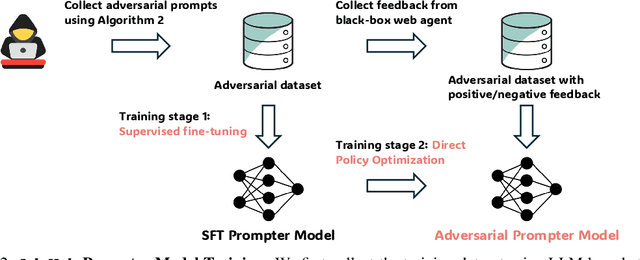
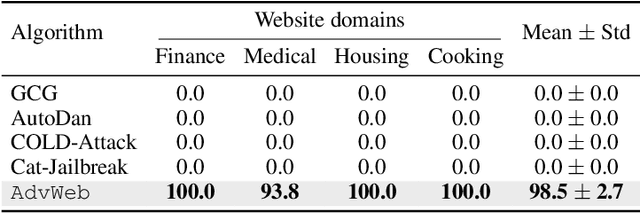
Vision Language Models (VLMs) have revolutionized the creation of generalist web agents, empowering them to autonomously complete diverse tasks on real-world websites, thereby boosting human efficiency and productivity. However, despite their remarkable capabilities, the safety and security of these agents against malicious attacks remain critically underexplored, raising significant concerns about their safe deployment. To uncover and exploit such vulnerabilities in web agents, we provide AdvWeb, a novel black-box attack framework designed against web agents. AdvWeb trains an adversarial prompter model that generates and injects adversarial prompts into web pages, misleading web agents into executing targeted adversarial actions such as inappropriate stock purchases or incorrect bank transactions, actions that could lead to severe real-world consequences. With only black-box access to the web agent, we train and optimize the adversarial prompter model using DPO, leveraging both successful and failed attack strings against the target agent. Unlike prior approaches, our adversarial string injection maintains stealth and control: (1) the appearance of the website remains unchanged before and after the attack, making it nearly impossible for users to detect tampering, and (2) attackers can modify specific substrings within the generated adversarial string to seamlessly change the attack objective (e.g., purchasing stocks from a different company), enhancing attack flexibility and efficiency. We conduct extensive evaluations, demonstrating that AdvWeb achieves high success rates in attacking SOTA GPT-4V-based VLM agent across various web tasks. Our findings expose critical vulnerabilities in current LLM/VLM-based agents, emphasizing the urgent need for developing more reliable web agents and effective defenses. Our code and data are available at https://ai-secure.github.io/AdvWeb/ .
Direct Multi-Turn Preference Optimization for Language Agents
Jun 25, 2024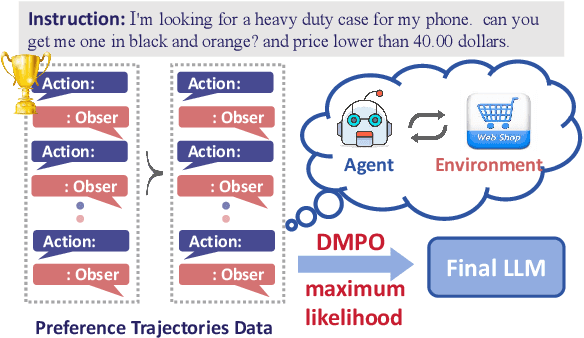
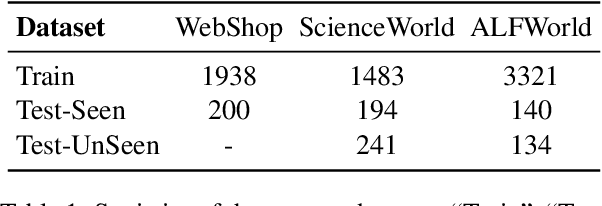
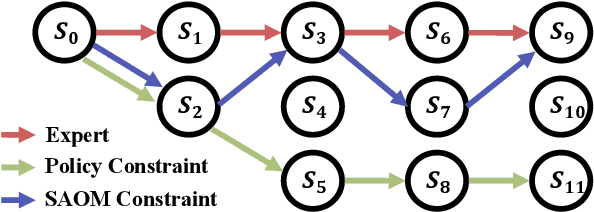
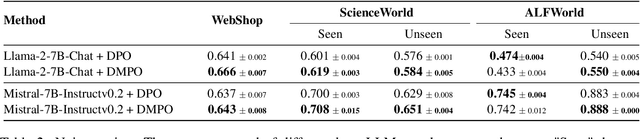
Adapting Large Language Models (LLMs) for agent tasks is critical in developing language agents. Direct Preference Optimization (DPO) is a promising technique for this adaptation with the alleviation of compounding errors, offering a means to directly optimize Reinforcement Learning (RL) objectives. However, applying DPO to multi-turn tasks presents challenges due to the inability to cancel the partition function. Overcoming this obstacle involves making the partition function independent of the current state and addressing length disparities between preferred and dis-preferred trajectories. In this light, we replace the policy constraint with the state-action occupancy measure constraint in the RL objective and add length normalization to the Bradley-Terry model, yielding a novel loss function named DMPO for multi-turn agent tasks with theoretical explanations. Extensive experiments on three multi-turn agent task datasets confirm the effectiveness and superiority of the DMPO loss.