 Add to Chrome
 Add to Firefox
 Add to Edge
An Attention-Assisted AI Model for Real-Time Underwater Sound Speed Estimation Leveraging Remote Sensing Sea Surface Temperature Data
Feb 19, 2025
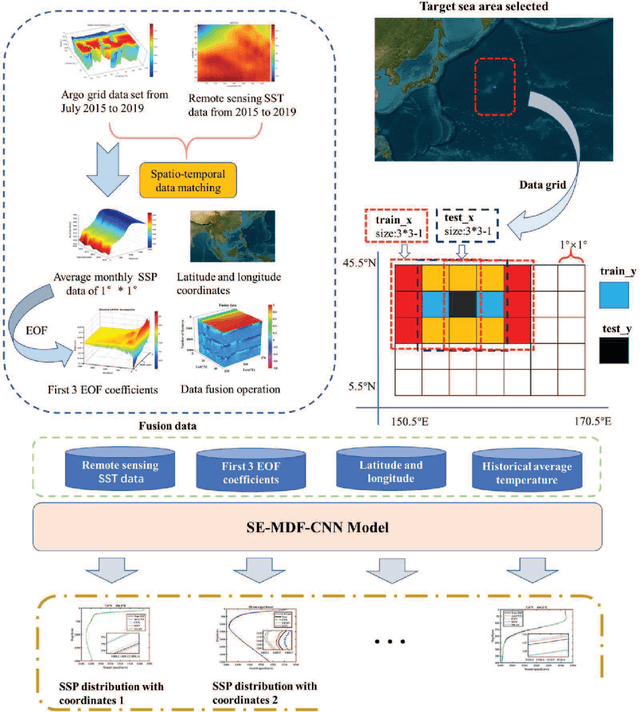
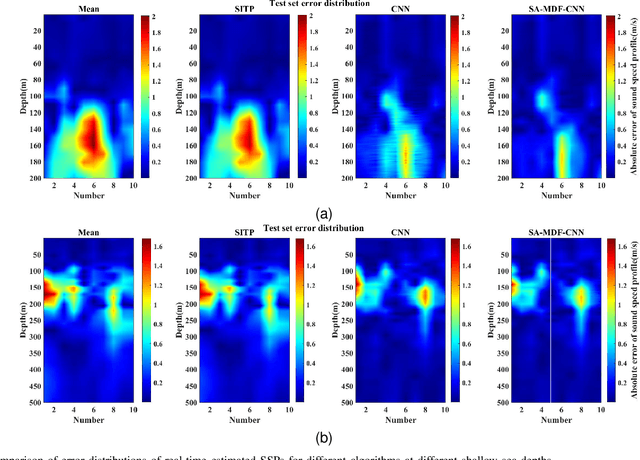
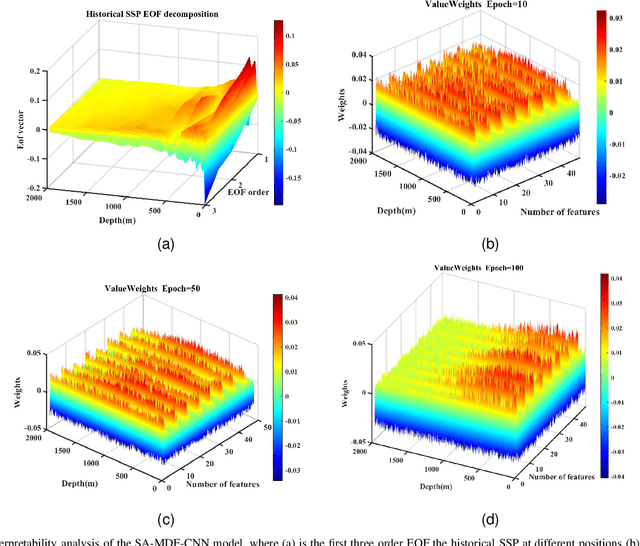
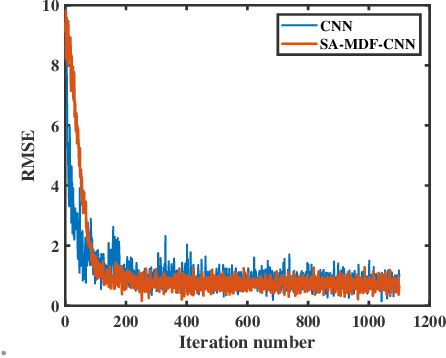
The estimation of underwater sound velocity distribution serves as a critical basis for facilitating effective underwater communication and precise positioning, given that variations in sound velocity influence the path of signal transmission. Conventional techniques for the direct measurement of sound velocity, as well as methods that involve the inversion of sound velocity utilizing acoustic field data, necessitate on--site data collection. This requirement not only places high demands on device deployment, but also presents challenges in achieving real-time estimation of sound velocity distribution. In order to construct a real-time sound velocity field and eliminate the need for underwater onsite data measurement operations, we propose a self-attention embedded multimodal data fusion convolutional neural network (SA-MDF-CNN) for real-time underwater sound speed profile (SSP) estimation. The proposed model seeks to elucidate the inherent relationship between remote sensing sea surface temperature (SST) data, the primary component characteristics of historical SSPs, and their spatial coordinates. This is achieved by employing CNNs and attention mechanisms to extract local and global correlations from the input data, respectively. The ultimate objective is to facilitate a rapid and precise estimation of sound velocity distribution within a specified task area. Experimental results show that the method proposed in this paper has lower root mean square error (RMSE) and stronger robustness than other state-of-the-art methods.

Adaptive Tool Use in Large Language Models with Meta-Cognition Trigger
Feb 18, 2025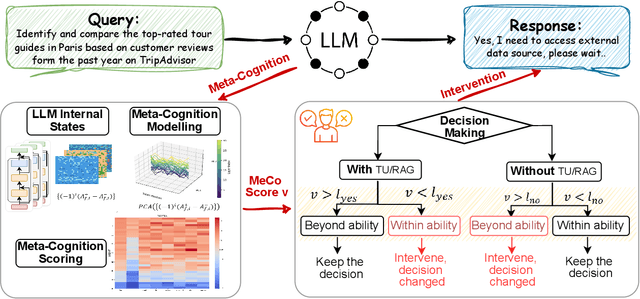
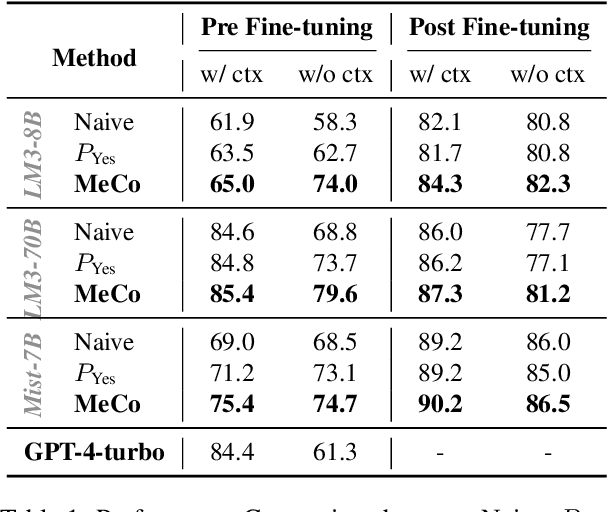
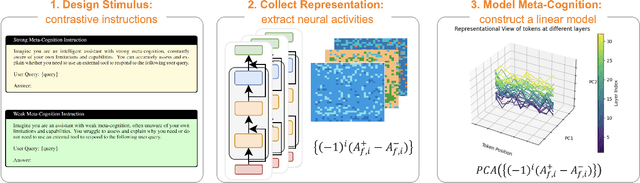

Large language models (LLMs) have shown remarkable emergent capabilities, transforming the execution of functional tasks by leveraging external tools for complex problems that require specialized processing or real-time data. While existing research expands LLMs access to diverse tools (e.g., program interpreters, search engines, weather/map apps), the necessity of using these tools is often overlooked, leading to indiscriminate tool invocation. This naive approach raises two key issues:(1) increased delays due to unnecessary tool calls, and (2) potential errors resulting from faulty interactions with external tools. In this paper, we introduce meta-cognition as a proxy for LLMs self-assessment of their capabilities, representing the model's awareness of its own limitations. Based on this, we propose MeCo, an adaptive decision-making strategy for external tool use. MeCo quantifies metacognitive scores by capturing high-level cognitive signals in the representation space, guiding when to invoke tools. Notably, MeCo is fine-tuning-free and incurs minimal cost. Our experiments show that MeCo accurately detects LLMs' internal cognitive signals and significantly improves tool-use decision-making across multiple base models and benchmarks.
Bandwidth-Adaptive Spatiotemporal Correspondence Identification for Collaborative Perception
Feb 17, 2025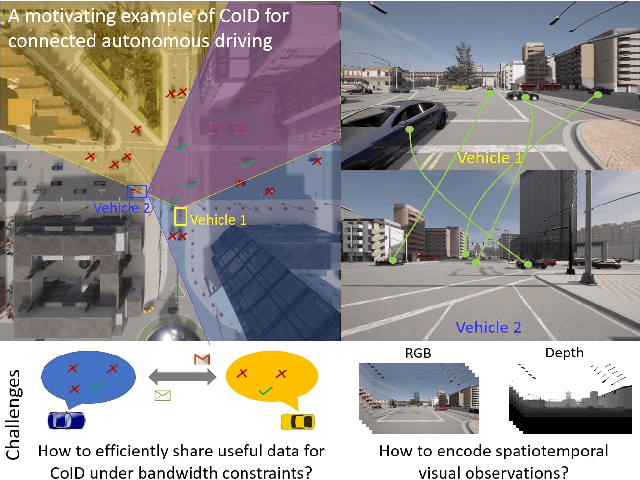
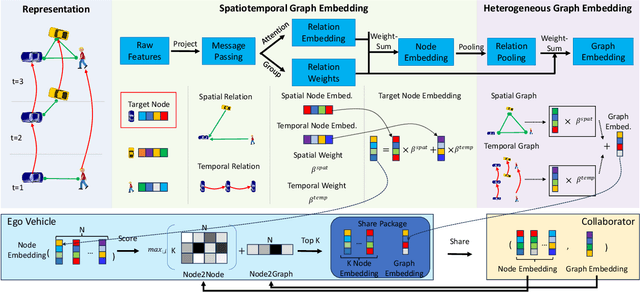
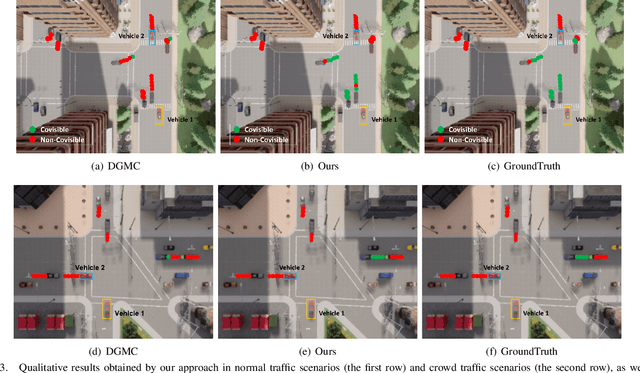
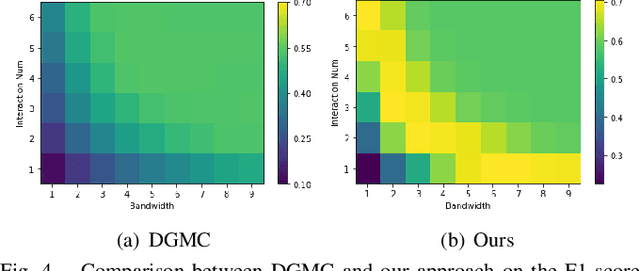
Correspondence identification (CoID) is an essential capability in multi-robot collaborative perception, which enables a group of robots to consistently refer to the same objects within their respective fields of view. In real-world applications, such as connected autonomous driving, vehicles face challenges in directly sharing raw observations due to limited communication bandwidth. In order to address this challenge, we propose a novel approach for bandwidth-adaptive spatiotemporal CoID in collaborative perception. This approach allows robots to progressively select partial spatiotemporal observations and share with others, while adapting to communication constraints that dynamically change over time. We evaluate our approach across various scenarios in connected autonomous driving simulations. Experimental results validate that our approach enables CoID and adapts to dynamic communication bandwidth changes. In addition, our approach achieves 8%-56% overall improvements in terms of covisible object retrieval for CoID and data sharing efficiency, which outperforms previous techniques and achieves the state-of-the-art performance. More information is available at: https://gaopeng5.github.io/acoid.
Articulate That Object Part (ATOP): 3D Part Articulation from Text and Motion Personalization
Feb 11, 2025
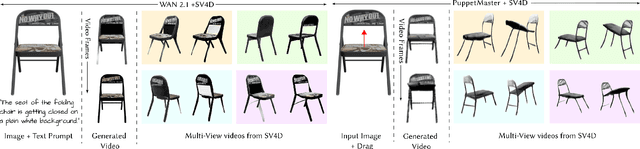


We present ATOP (Articulate That Object Part), a novel method based on motion personalization to articulate a 3D object with respect to a part and its motion as prescribed in a text prompt. Specifically, the text input allows us to tap into the power of modern-day video diffusion to generate plausible motion samples for the right object category and part. In turn, the input 3D object provides image prompting to personalize the generated video to that very object we wish to articulate. Our method starts with a few-shot finetuning for category-specific motion generation, a key first step to compensate for the lack of articulation awareness by current video diffusion models. For this, we finetune a pre-trained multi-view image generation model for controllable multi-view video generation, using a small collection of video samples obtained for the target object category. This is followed by motion video personalization that is realized by multi-view rendered images of the target 3D object. At last, we transfer the personalized video motion to the target 3D object via differentiable rendering to optimize part motion parameters by a score distillation sampling loss. We show that our method is capable of generating realistic motion videos and predict 3D motion parameters in a more accurate and generalizable way, compared to prior works.
Efficient-vDiT: Efficient Video Diffusion Transformers With Attention Tile
Feb 10, 2025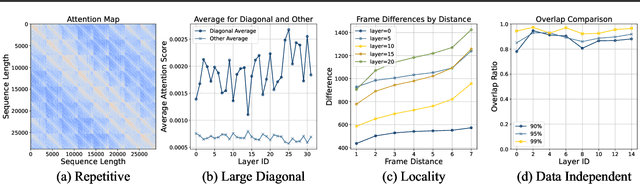
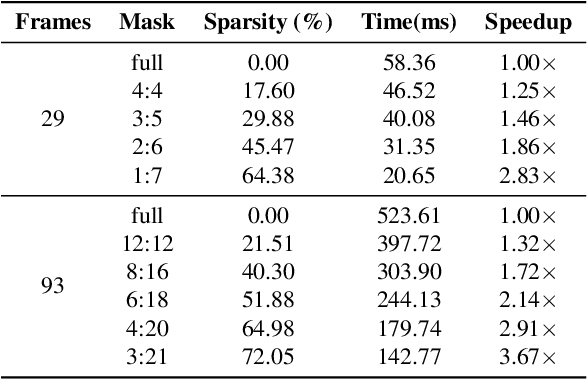
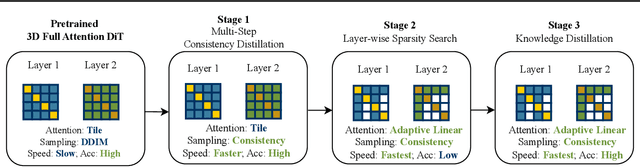

Despite the promise of synthesizing high-fidelity videos, Diffusion Transformers (DiTs) with 3D full attention suffer from expensive inference due to the complexity of attention computation and numerous sampling steps. For example, the popular Open-Sora-Plan model consumes more than 9 minutes for generating a single video of 29 frames. This paper addresses the inefficiency issue from two aspects: 1) Prune the 3D full attention based on the redundancy within video data; We identify a prevalent tile-style repetitive pattern in the 3D attention maps for video data, and advocate a new family of sparse 3D attention that holds a linear complexity w.r.t. the number of video frames. 2) Shorten the sampling process by adopting existing multi-step consistency distillation; We split the entire sampling trajectory into several segments and perform consistency distillation within each one to activate few-step generation capacities. We further devise a three-stage training pipeline to conjoin the low-complexity attention and few-step generation capacities. Notably, with 0.1% pretraining data, we turn the Open-Sora-Plan-1.2 model into an efficient one that is 7.4x -7.8x faster for 29 and 93 frames 720p video generation with a marginal performance trade-off in VBench. In addition, we demonstrate that our approach is amenable to distributed inference, achieving an additional 3.91x speedup when running on 4 GPUs with sequence parallelism.
LMS-Net: A Learned Mumford-Shah Network For Few-Shot Medical Image Segmentation
Feb 08, 2025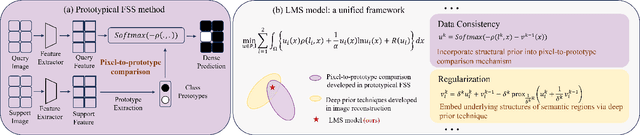
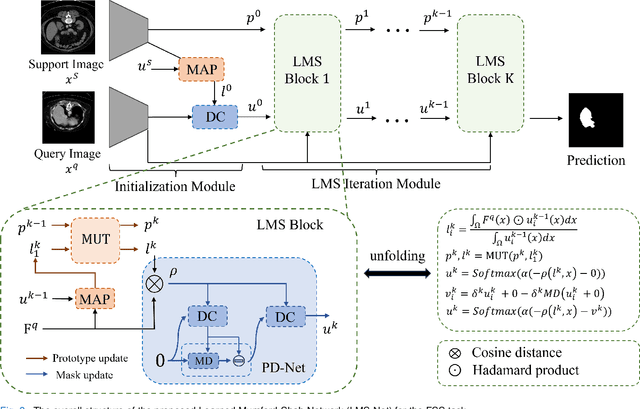
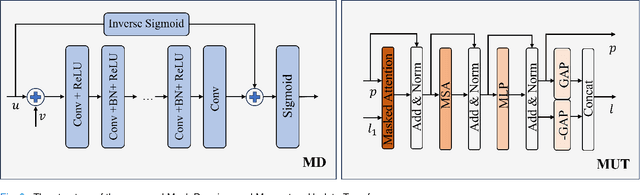
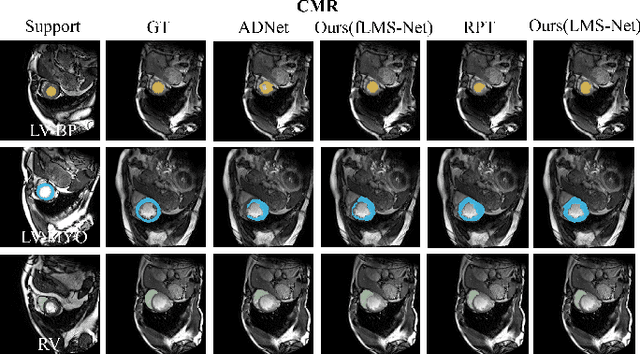
Few-shot semantic segmentation (FSS) methods have shown great promise in handling data-scarce scenarios, particularly in medical image segmentation tasks. However, most existing FSS architectures lack sufficient interpretability and fail to fully incorporate the underlying physical structures of semantic regions. To address these issues, in this paper, we propose a novel deep unfolding network, called the Learned Mumford-Shah Network (LMS-Net), for the FSS task. Specifically, motivated by the effectiveness of pixel-to-prototype comparison in prototypical FSS methods and the capability of deep priors to model complex spatial structures, we leverage our learned Mumford-Shah model (LMS model) as a mathematical foundation to integrate these insights into a unified framework. By reformulating the LMS model into prototype update and mask update tasks, we propose an alternating optimization algorithm to solve it efficiently. Further, the iterative steps of this algorithm are unfolded into corresponding network modules, resulting in LMS-Net with clear interpretability. Comprehensive experiments on three publicly available medical segmentation datasets verify the effectiveness of our method, demonstrating superior accuracy and robustness in handling complex structures and adapting to challenging segmentation scenarios. These results highlight the potential of LMS-Net to advance FSS in medical imaging applications. Our code will be available at: https://github.com/SDZhang01/LMSNet
3DMolFormer: A Dual-channel Framework for Structure-based Drug Discovery
Feb 07, 2025

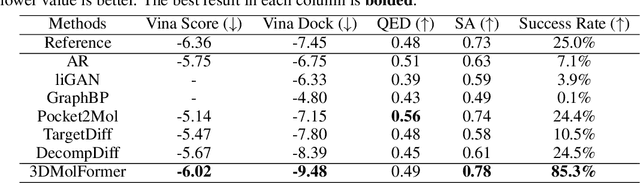

Structure-based drug discovery, encompassing the tasks of protein-ligand docking and pocket-aware 3D drug design, represents a core challenge in drug discovery. However, no existing work can deal with both tasks to effectively leverage the duality between them, and current methods for each task are hindered by challenges in modeling 3D information and the limitations of available data. To address these issues, we propose 3DMolFormer, a unified dual-channel transformer-based framework applicable to both docking and 3D drug design tasks, which exploits their duality by utilizing docking functionalities within the drug design process. Specifically, we represent 3D pocket-ligand complexes using parallel sequences of discrete tokens and continuous numbers, and we design a corresponding dual-channel transformer model to handle this format, thereby overcoming the challenges of 3D information modeling. Additionally, we alleviate data limitations through large-scale pre-training on a mixed dataset, followed by supervised and reinforcement learning fine-tuning techniques respectively tailored for the two tasks. Experimental results demonstrate that 3DMolFormer outperforms previous approaches in both protein-ligand docking and pocket-aware 3D drug design, highlighting its promising application in structure-based drug discovery. The code is available at: https://github.com/HXYfighter/3DMolFormer .
Fast Video Generation with Sliding Tile Attention
Feb 06, 2025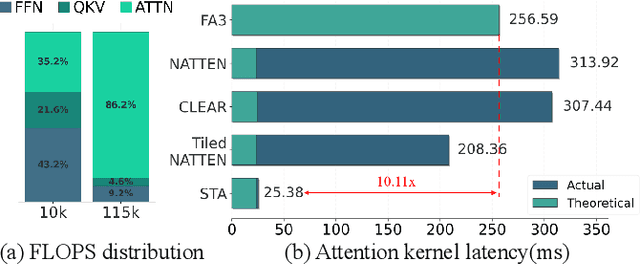
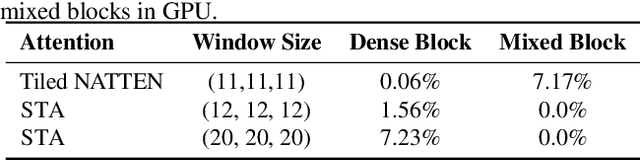
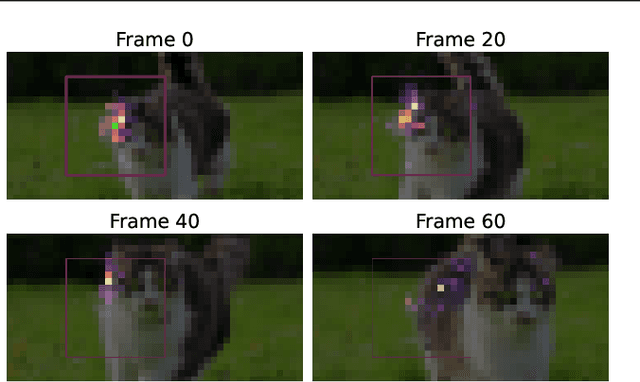
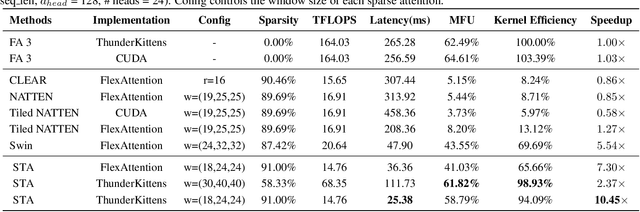
Diffusion Transformers (DiTs) with 3D full attention power state-of-the-art video generation, but suffer from prohibitive compute cost -- when generating just a 5-second 720P video, attention alone takes 800 out of 945 seconds of total inference time. This paper introduces sliding tile attention (STA) to address this challenge. STA leverages the observation that attention scores in pretrained video diffusion models predominantly concentrate within localized 3D windows. By sliding and attending over the local spatial-temporal region, STA eliminates redundancy from full attention. Unlike traditional token-wise sliding window attention (SWA), STA operates tile-by-tile with a novel hardware-aware sliding window design, preserving expressiveness while being hardware-efficient. With careful kernel-level optimizations, STA offers the first efficient 2D/3D sliding-window-like attention implementation, achieving 58.79% MFU. Precisely, STA accelerates attention by 2.8-17x over FlashAttention-2 (FA2) and 1.6-10x over FlashAttention-3 (FA3). On the leading video DiT, HunyuanVideo, STA reduces end-to-end latency from 945s (FA3) to 685s without quality degradation, requiring no training. Enabling finetuning further lowers latency to 268s with only a 0.09% drop on VBench.
Predicting Compact Phrasal Rewrites with Large Language Models for ASR Post Editing
Jan 23, 2025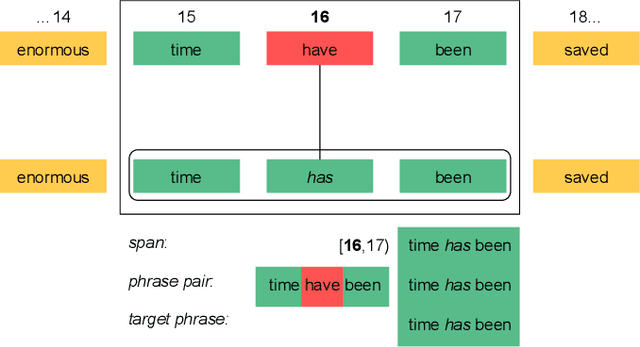
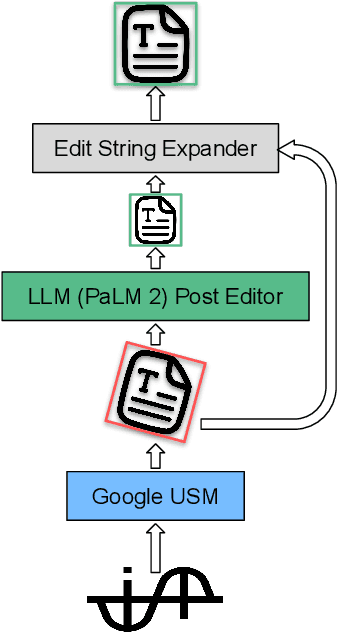
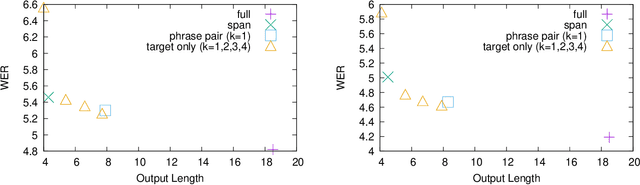

Large Language Models (LLMs) excel at rewriting tasks such as text style transfer and grammatical error correction. While there is considerable overlap between the inputs and outputs in these tasks, the decoding cost still increases with output length, regardless of the amount of overlap. By leveraging the overlap between the input and the output, Kaneko and Okazaki (2023) proposed model-agnostic edit span representations to compress the rewrites to save computation. They reported an output length reduction rate of nearly 80% with minimal accuracy impact in four rewriting tasks. In this paper, we propose alternative edit phrase representations inspired by phrase-based statistical machine translation. We systematically compare our phrasal representations with their span representations. We apply the LLM rewriting model to the task of Automatic Speech Recognition (ASR) post editing and show that our target-phrase-only edit representation has the best efficiency-accuracy trade-off. On the LibriSpeech test set, our method closes 50-60% of the WER gap between the edit span model and the full rewrite model while losing only 10-20% of the length reduction rate of the edit span model.
Hunyuan3D 2.0: Scaling Diffusion Models for High Resolution Textured 3D Assets Generation
Jan 21, 2025


We present Hunyuan3D 2.0, an advanced large-scale 3D synthesis system for generating high-resolution textured 3D assets. This system includes two foundation components: a large-scale shape generation model -- Hunyuan3D-DiT, and a large-scale texture synthesis model -- Hunyuan3D-Paint. The shape generative model, built on a scalable flow-based diffusion transformer, aims to create geometry that properly aligns with a given condition image, laying a solid foundation for downstream applications. The texture synthesis model, benefiting from strong geometric and diffusion priors, produces high-resolution and vibrant texture maps for either generated or hand-crafted meshes. Furthermore, we build Hunyuan3D-Studio -- a versatile, user-friendly production platform that simplifies the re-creation process of 3D assets. It allows both professional and amateur users to manipulate or even animate their meshes efficiently. We systematically evaluate our models, showing that Hunyuan3D 2.0 outperforms previous state-of-the-art models, including the open-source models and closed-source models in geometry details, condition alignment, texture quality, and etc. Hunyuan3D 2.0 is publicly released in order to fill the gaps in the open-source 3D community for large-scale foundation generative models. The code and pre-trained weights of our models are available at: https://github.com/Tencent/Hunyuan3D-2