 Add to Chrome
 Add to Firefox
 Add to Edge
Dual-Channel Latent Factor Analysis Enhanced Graph Contrastive Learning for Recommendation
Aug 09, 2024
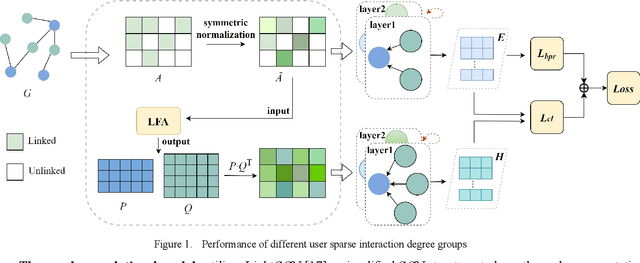
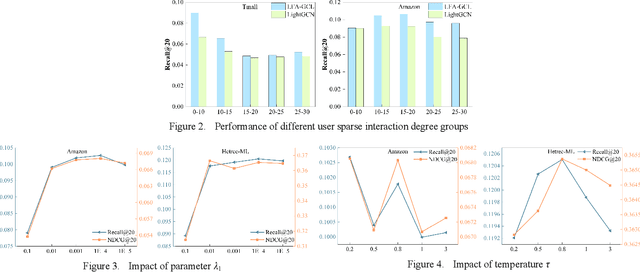
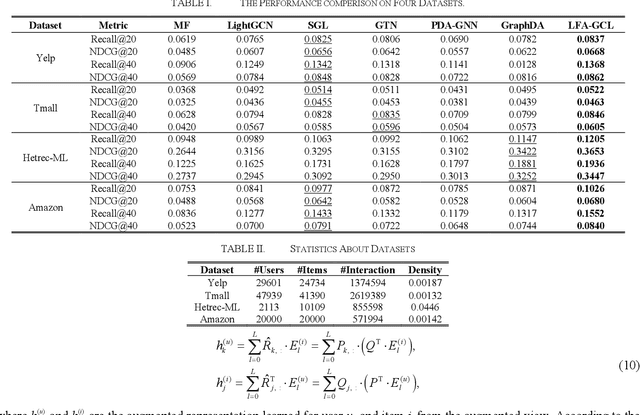
Graph Neural Networks (GNNs) are powerful learning methods for recommender systems owing to their robustness in handling complicated user-item interactions. Recently, the integration of contrastive learning with GNNs has demonstrated remarkable performance in recommender systems to handle the issue of highly sparse user-item interaction data. Yet, some available graph contrastive learning (GCL) techniques employ stochastic augmentation, i.e., nodes or edges are randomly perturbed on the user-item bipartite graph to construct contrastive views. Such a stochastic augmentation strategy not only brings noise perturbation but also cannot utilize global collaborative signals effectively. To address it, this study proposes a latent factor analysis (LFA) enhanced GCL approach, named LFA-GCL. Our model exclusively incorporates LFA to implement the unconstrained structural refinement, thereby obtaining an augmented global collaborative graph accurately without introducing noise signals. Experiments on four public datasets show that the proposed LFA-GCL outperforms the state-of-the-art models.

Real-time Event Recognition of Long-distance Distributed Vibration Sensing with Knowledge Distillation and Hardware Acceleration
Aug 07, 2024Distributed optical fiber vibration sensing (DVS) technology based on phase-sensitive optical time-domain reflectometry is widely used for safety monitoring and intrusion event surveillance in wide-ranging fields. Existing methods rely on deep learning models for event recognition but struggle with real-time processing of large data volumes in long-distance applications. To address these challenges, we use a four-layer convolutional neural network (CNN). The application of knowledge distillation with ResNet as the teacher model improves the generalization ability of the four-layer CNN, increasing the accuracy from 83.41% to 95.39% on data from untrained environments. The model is implemented on a field programmable gate array (FPGA) using a novel design that replaces multiplication with binary shift operations and quantizes model weights accordingly, allowing for high parallelism and low latency. An inference time of 0.083 ms is achieved for a spatial-temporal sample with a 12.5 m fiber length and 0.256 s time frame. This implies the system can process signals over a fiber length of approximately 38.55 km in real time, which is more than twice the capability of a GPU of Nvidia GTX 4090. The proposed method greatly improves the efficiency of vibration pattern recognition, thus promoting the application of DVS as smart sensing system in various areas. The data and code is available at https://github.com/HUST-IOF/Efficient-DVS
Large-vocabulary forensic pathological analyses via prototypical cross-modal contrastive learning
Jul 20, 2024Forensic pathology is critical in determining the cause and manner of death through post-mortem examinations, both macroscopic and microscopic. The field, however, grapples with issues such as outcome variability, laborious processes, and a scarcity of trained professionals. This paper presents SongCi, an innovative visual-language model (VLM) designed specifically for forensic pathology. SongCi utilizes advanced prototypical cross-modal self-supervised contrastive learning to enhance the accuracy, efficiency, and generalizability of forensic analyses. It was pre-trained and evaluated on a comprehensive multi-center dataset, which includes over 16 million high-resolution image patches, 2,228 vision-language pairs of post-mortem whole slide images (WSIs), and corresponding gross key findings, along with 471 distinct diagnostic outcomes. Our findings indicate that SongCi surpasses existing multi-modal AI models in many forensic pathology tasks, performs comparably to experienced forensic pathologists and significantly better than less experienced ones, and provides detailed multi-modal explainability, offering critical assistance in forensic investigations. To the best of our knowledge, SongCi is the first VLM specifically developed for forensic pathological analysis and the first large-vocabulary computational pathology (CPath) model that directly processes gigapixel WSIs in forensic science.
CLIP-Guided Networks for Transferable Targeted Attacks
Jul 14, 2024Transferable targeted adversarial attacks aim to mislead models into outputting adversary-specified predictions in black-box scenarios. Recent studies have introduced \textit{single-target} generative attacks that train a generator for each target class to generate highly transferable perturbations, resulting in substantial computational overhead when handling multiple classes. \textit{Multi-target} attacks address this by training only one class-conditional generator for multiple classes. However, the generator simply uses class labels as conditions, failing to leverage the rich semantic information of the target class. To this end, we design a \textbf{C}LIP-guided \textbf{G}enerative \textbf{N}etwork with \textbf{C}ross-attention modules (CGNC) to enhance multi-target attacks by incorporating textual knowledge of CLIP into the generator. Extensive experiments demonstrate that CGNC yields significant improvements over previous multi-target generative attacks, e.g., a 21.46\% improvement in success rate from ResNet-152 to DenseNet-121. Moreover, we propose a masked fine-tuning mechanism to further strengthen our method in attacking a single class, which surpasses existing single-target methods.
$\text{Memory}^3$: Language Modeling with Explicit Memory
Jul 01, 2024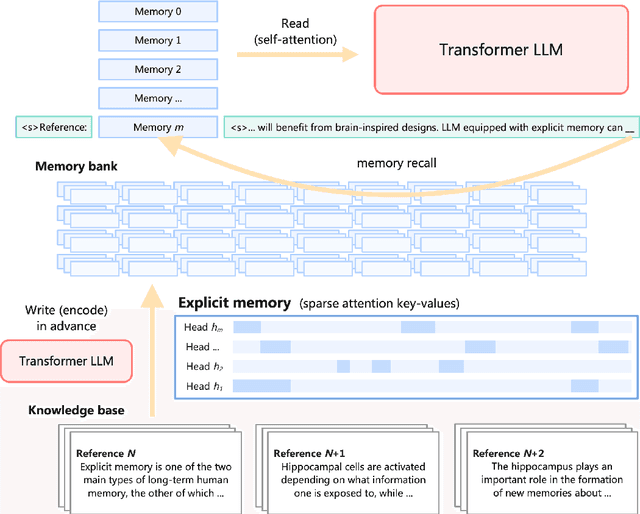


The training and inference of large language models (LLMs) are together a costly process that transports knowledge from raw data to meaningful computation. Inspired by the memory hierarchy of the human brain, we reduce this cost by equipping LLMs with explicit memory, a memory format cheaper than model parameters and text retrieval-augmented generation (RAG). Conceptually, with most of its knowledge externalized to explicit memories, the LLM can enjoy a smaller parameter size, training cost, and inference cost, all proportional to the amount of remaining "abstract knowledge". As a preliminary proof of concept, we train from scratch a 2.4B LLM, which achieves better performance than much larger LLMs as well as RAG models, and maintains higher decoding speed than RAG. The model is named $\text{Memory}^3$, since explicit memory is the third form of memory in LLMs after implicit memory (model parameters) and working memory (context key-values). We introduce a memory circuitry theory to support the externalization of knowledge, and present novel techniques including a memory sparsification mechanism that makes storage tractable and a two-stage pretraining scheme that facilitates memory formation.
A Unified Graph Selective Prompt Learning for Graph Neural Networks
Jun 15, 2024In recent years, graph prompt learning/tuning has garnered increasing attention in adapting pre-trained models for graph representation learning. As a kind of universal graph prompt learning method, Graph Prompt Feature (GPF) has achieved remarkable success in adapting pre-trained models for Graph Neural Networks (GNNs). By fixing the parameters of a pre-trained GNN model, the aim of GPF is to modify the input graph data by adding some (learnable) prompt vectors into graph node features to better align with the downstream tasks on the smaller dataset. However, existing GPFs generally suffer from two main limitations. First, GPFs generally focus on node prompt learning which ignore the prompting for graph edges. Second, existing GPFs generally conduct the prompt learning on all nodes equally which fails to capture the importances of different nodes and may perform sensitively w.r.t noisy nodes in aligning with the downstream tasks. To address these issues, in this paper, we propose a new unified Graph Selective Prompt Feature learning (GSPF) for GNN fine-tuning. The proposed GSPF integrates the prompt learning on both graph node and edge together, which thus provides a unified prompt model for the graph data. Moreover, it conducts prompt learning selectively on nodes and edges by concentrating on the important nodes and edges for prompting which thus make our model be more reliable and compact. Experimental results on many benchmark datasets demonstrate the effectiveness and advantages of the proposed GSPF method.
GLADformer: A Mixed Perspective for Graph-level Anomaly Detection
Jun 02, 2024Graph-Level Anomaly Detection (GLAD) aims to distinguish anomalous graphs within a graph dataset. However, current methods are constrained by their receptive fields, struggling to learn global features within the graphs. Moreover, most contemporary methods are based on spatial domain and lack exploration of spectral characteristics. In this paper, we propose a multi-perspective hybrid graph-level anomaly detector namely GLADformer, consisting of two key modules. Specifically, we first design a Graph Transformer module with global spectrum enhancement, which ensures balanced and resilient parameter distributions by fusing global features and spectral distribution characteristics. Furthermore, to uncover local anomalous attributes, we customize a band-pass spectral GNN message passing module that further enhances the model's generalization capability. Through comprehensive experiments on ten real-world datasets from multiple domains, we validate the effectiveness and robustness of GLADformer. This demonstrates that GLADformer outperforms current state-of-the-art models in graph-level anomaly detection, particularly in effectively capturing global anomaly representations and spectral characteristics.
GI-NAS: Boosting Gradient Inversion Attacks through Adaptive Neural Architecture Search
May 31, 2024Gradient Inversion Attacks invert the transmitted gradients in Federated Learning (FL) systems to reconstruct the sensitive data of local clients and have raised considerable privacy concerns. A majority of gradient inversion methods rely heavily on explicit prior knowledge (e.g., a well pre-trained generative model), which is often unavailable in realistic scenarios. To alleviate this issue, researchers have proposed to leverage the implicit prior knowledge of an over-parameterized network. However, they only utilize a fixed neural architecture for all the attack settings. This would hinder the adaptive use of implicit architectural priors and consequently limit the generalizability. In this paper, we further exploit such implicit prior knowledge by proposing Gradient Inversion via Neural Architecture Search (GI-NAS), which adaptively searches the network and captures the implicit priors behind neural architectures. Extensive experiments verify that our proposed GI-NAS can achieve superior attack performance compared to state-of-the-art gradient inversion methods, even under more practical settings with high-resolution images, large-sized batches, and advanced defense strategies.
ForecastGrapher: Redefining Multivariate Time Series Forecasting with Graph Neural Networks
May 28, 2024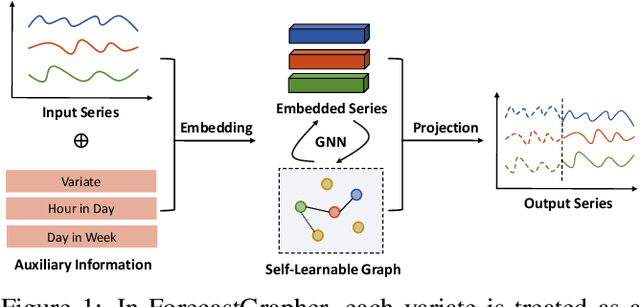
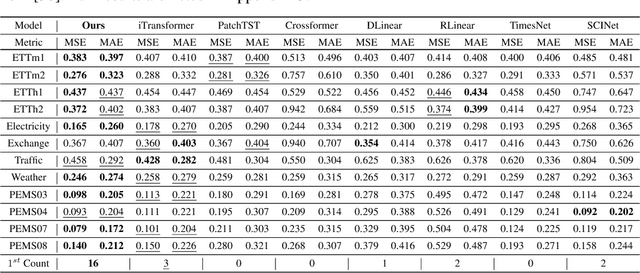

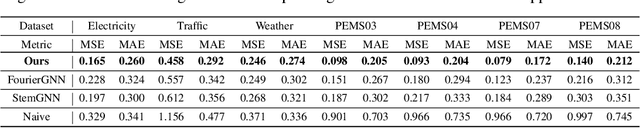
The challenge of effectively learning inter-series correlations for multivariate time series forecasting remains a substantial and unresolved problem. Traditional deep learning models, which are largely dependent on the Transformer paradigm for modeling long sequences, often fail to integrate information from multiple time series into a coherent and universally applicable model. To bridge this gap, our paper presents ForecastGrapher, a framework reconceptualizes multivariate time series forecasting as a node regression task, providing a unique avenue for capturing the intricate temporal dynamics and inter-series correlations. Our approach is underpinned by three pivotal steps: firstly, generating custom node embeddings to reflect the temporal variations within each series; secondly, constructing an adaptive adjacency matrix to encode the inter-series correlations; and thirdly, augmenting the GNNs' expressive power by diversifying the node feature distribution. To enhance this expressive power, we introduce the Group Feature Convolution GNN (GFC-GNN). This model employs a learnable scaler to segment node features into multiple groups and applies one-dimensional convolutions with different kernel lengths to each group prior to the aggregation phase. Consequently, the GFC-GNN method enriches the diversity of node feature distribution in a fully end-to-end fashion. Through extensive experiments and ablation studies, we show that ForecastGrapher surpasses strong baselines and leading published techniques in the domain of multivariate time series forecasting.
BeamVQ: Aligning Space-Time Forecasting Model via Self-training on Physics-aware Metrics
May 27, 2024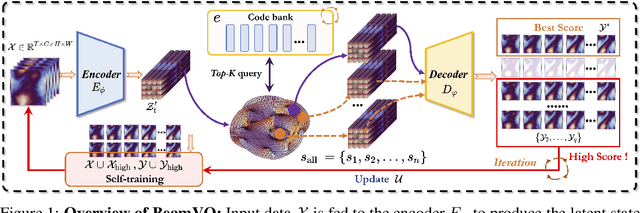
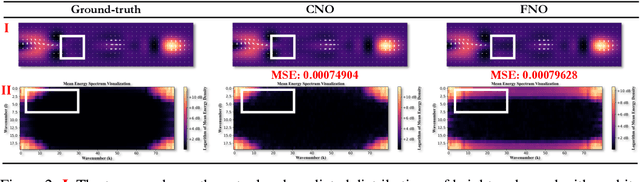
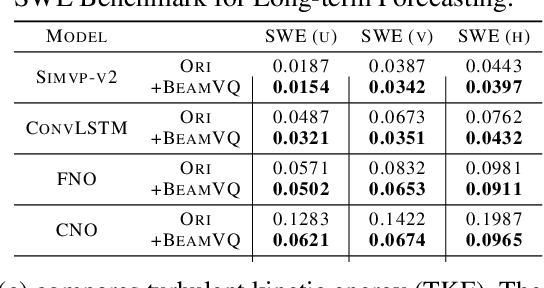
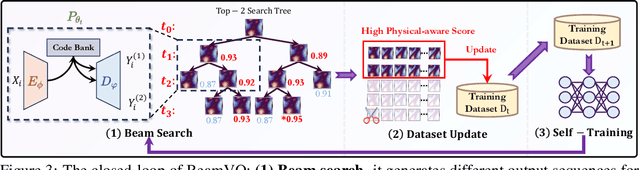
Data-driven deep learning has emerged as the new paradigm to model complex physical space-time systems. These data-driven methods learn patterns by optimizing statistical metrics and tend to overlook the adherence to physical laws, unlike traditional model-driven numerical methods. Thus, they often generate predictions that are not physically realistic. On the other hand, by sampling a large amount of high quality predictions from a data-driven model, some predictions will be more physically plausible than the others and closer to what will happen in the future. Based on this observation, we propose \emph{Beam search by Vector Quantization} (BeamVQ) to enhance the physical alignment of data-driven space-time forecasting models. The key of BeamVQ is to train model on self-generated samples filtered with physics-aware metrics. To be flexibly support different backbone architectures, BeamVQ leverages a code bank to transform any encoder-decoder model to the continuous state space into discrete codes. Afterwards, it iteratively employs beam search to sample high-quality sequences, retains those with the highest physics-aware scores, and trains model on the new dataset. Comprehensive experiments show that BeamVQ not only gave an average statistical skill score boost for more than 32% for ten backbones on five datasets, but also significantly enhances physics-aware metrics.