 Add to Chrome
 Add to Firefox
 Add to Edge
A Low-rank Matching Attention based Cross-modal Feature Fusion Method for Conversational Emotion Recognition
Jun 16, 2023
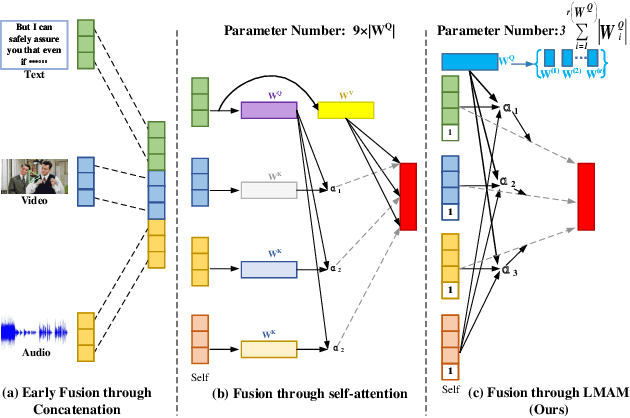
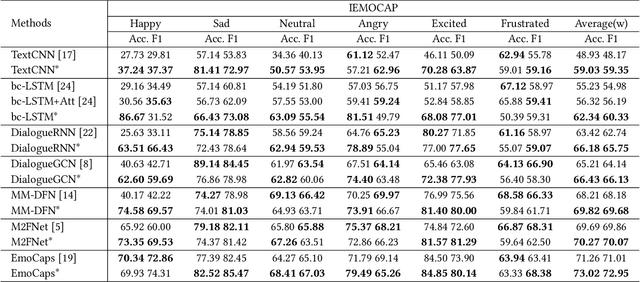
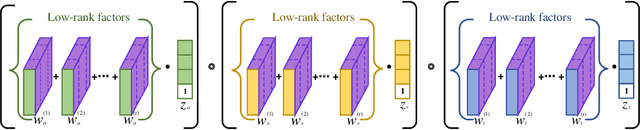
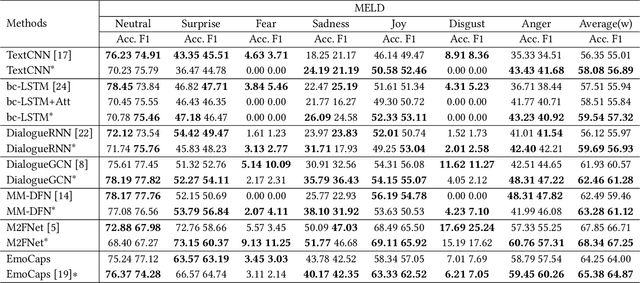
Conversational emotion recognition (CER) is an important research topic in human-computer interactions. Although deep learning (DL) based CER approaches have achieved excellent performance, existing cross-modal feature fusion methods used in these DL-based approaches either ignore the intra-modal and inter-modal emotional interaction or have high computational complexity. To address these issues, this paper develops a novel cross-modal feature fusion method for the CER task, i.e., the low-rank matching attention method (LMAM). By setting a matching weight and calculating attention scores between modal features row by row, LMAM contains fewer parameters than the self-attention method. We further utilize the low-rank decomposition method on the weight to make the parameter number of LMAM less than one-third of the self-attention. Therefore, LMAM can potentially alleviate the over-fitting issue caused by a large number of parameters. Additionally, by computing and fusing the similarity of intra-modal and inter-modal features, LMAM can also fully exploit the intra-modal contextual information within each modality and the complementary semantic information across modalities (i.e., text, video and audio) simultaneously. Experimental results on some benchmark datasets show that LMAM can be embedded into any existing state-of-the-art DL-based CER methods and help boost their performance in a plug-and-play manner. Also, experimental results verify the superiority of LMAM compared with other popular cross-modal fusion methods. Moreover, LMAM is a general cross-modal fusion method and can thus be applied to other multi-modal recognition tasks, e.g., session recommendation and humour detection.

Masked Contrastive Graph Representation Learning for Age Estimation
Jun 16, 2023Age estimation of face images is a crucial task with various practical applications in areas such as video surveillance and Internet access control. While deep learning-based age estimation frameworks, e.g., convolutional neural network (CNN), multi-layer perceptrons (MLP), and transformers have shown remarkable performance, they have limitations when modelling complex or irregular objects in an image that contains a large amount of redundant information. To address this issue, this paper utilizes the robustness property of graph representation learning in dealing with image redundancy information and proposes a novel Masked Contrastive Graph Representation Learning (MCGRL) method for age estimation. Specifically, our approach first leverages CNN to extract semantic features of the image, which are then partitioned into patches that serve as nodes in the graph. Then, we use a masked graph convolutional network (GCN) to derive image-based node representations that capture rich structural information. Finally, we incorporate multiple losses to explore the complementary relationship between structural information and semantic features, which improves the feature representation capability of GCN. Experimental results on real-world face image datasets demonstrate the superiority of our proposed method over other state-of-the-art age estimation approaches.
T-former: An Efficient Transformer for Image Inpainting
May 19, 2023
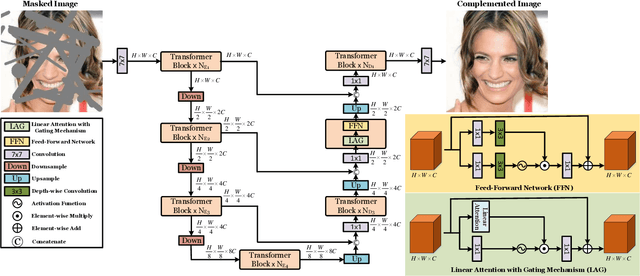

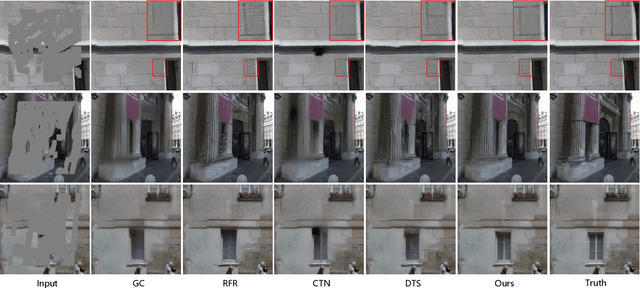
Benefiting from powerful convolutional neural networks (CNNs), learning-based image inpainting methods have made significant breakthroughs over the years. However, some nature of CNNs (e.g. local prior, spatially shared parameters) limit the performance in the face of broken images with diverse and complex forms. Recently, a class of attention-based network architectures, called transformer, has shown significant performance on natural language processing fields and high-level vision tasks. Compared with CNNs, attention operators are better at long-range modeling and have dynamic weights, but their computational complexity is quadratic in spatial resolution, and thus less suitable for applications involving higher resolution images, such as image inpainting. In this paper, we design a novel attention linearly related to the resolution according to Taylor expansion. And based on this attention, a network called $T$-former is designed for image inpainting. Experiments on several benchmark datasets demonstrate that our proposed method achieves state-of-the-art accuracy while maintaining a relatively low number of parameters and computational complexity. The code can be found at \href{https://github.com/dengyecode/T-former_image_inpainting}{github.com/dengyecode/T-former\_image\_inpainting}
Unsupervised Pansharpening via Low-rank Diffusion Model
May 18, 2023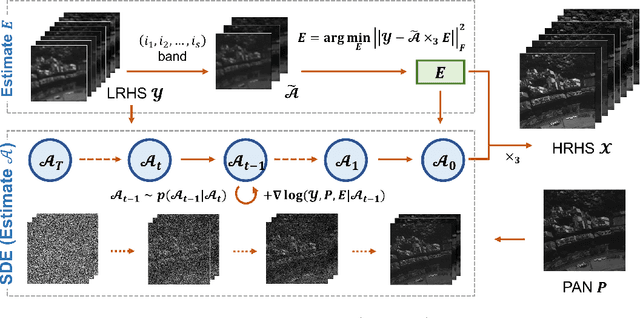
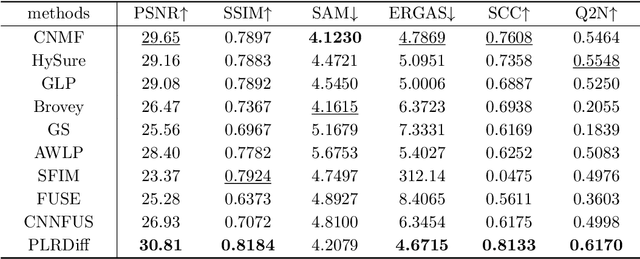
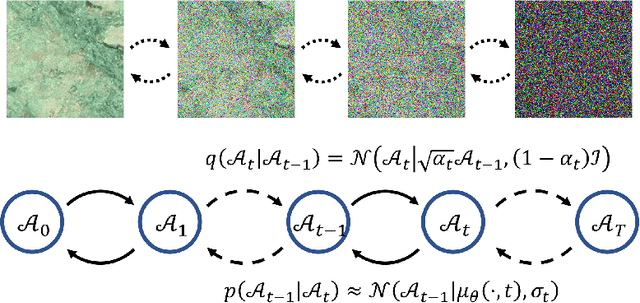
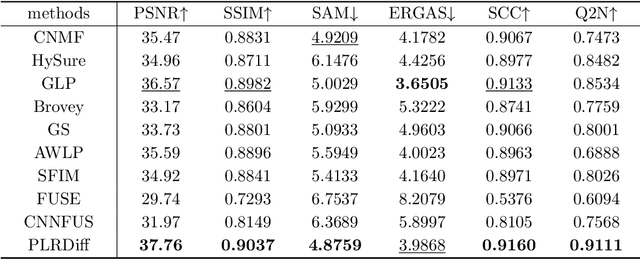
Pansharpening is a process of merging a highresolution panchromatic (PAN) image and a low-resolution multispectral (LRMS) image to create a single high-resolution multispectral (HRMS) image. Most of the existing deep learningbased pansharpening methods have poor generalization ability and the traditional model-based pansharpening methods need careful manual exploration for the image structure prior. To alleviate these issues, this paper proposes an unsupervised pansharpening method by combining the diffusion model with the low-rank matrix factorization technique. Specifically, we assume that the HRMS image is decomposed into the product of two low-rank tensors, i.e., the base tensor and the coefficient matrix. The base tensor lies on the image field and has low spectral dimension, we can thus conveniently utilize a pre-trained remote sensing diffusion model to capture its image structures. Additionally, we derive a simple yet quite effective way to preestimate the coefficient matrix from the observed LRMS image, which preserves the spectral information of the HRMS. Extensive experimental results on some benchmark datasets demonstrate that our proposed method performs better than traditional model-based approaches and has better generalization ability than deep learning-based techniques. The code is released in https://github.com/xyrui/PLRDiff.
PanFlowNet: A Flow-Based Deep Network for Pan-sharpening
May 16, 2023Pan-sharpening aims to generate a high-resolution multispectral (HRMS) image by integrating the spectral information of a low-resolution multispectral (LRMS) image with the texture details of a high-resolution panchromatic (PAN) image. It essentially inherits the ill-posed nature of the super-resolution (SR) task that diverse HRMS images can degrade into an LRMS image. However, existing deep learning-based methods recover only one HRMS image from the LRMS image and PAN image using a deterministic mapping, thus ignoring the diversity of the HRMS image. In this paper, to alleviate this ill-posed issue, we propose a flow-based pan-sharpening network (PanFlowNet) to directly learn the conditional distribution of HRMS image given LRMS image and PAN image instead of learning a deterministic mapping. Specifically, we first transform this unknown conditional distribution into a given Gaussian distribution by an invertible network, and the conditional distribution can thus be explicitly defined. Then, we design an invertible Conditional Affine Coupling Block (CACB) and further build the architecture of PanFlowNet by stacking a series of CACBs. Finally, the PanFlowNet is trained by maximizing the log-likelihood of the conditional distribution given a training set and can then be used to predict diverse HRMS images. The experimental results verify that the proposed PanFlowNet can generate various HRMS images given an LRMS image and a PAN image. Additionally, the experimental results on different kinds of satellite datasets also demonstrate the superiority of our PanFlowNet compared with other state-of-the-art methods both visually and quantitatively.
DAC-MR: Data Augmentation Consistency Based Meta-Regularization for Meta-Learning
May 13, 2023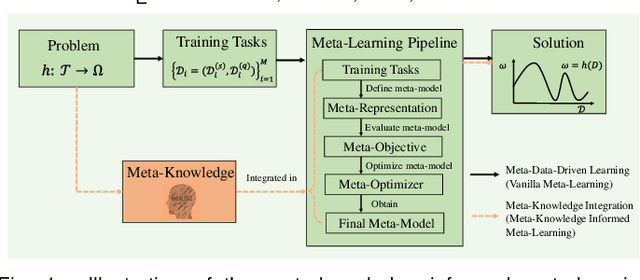
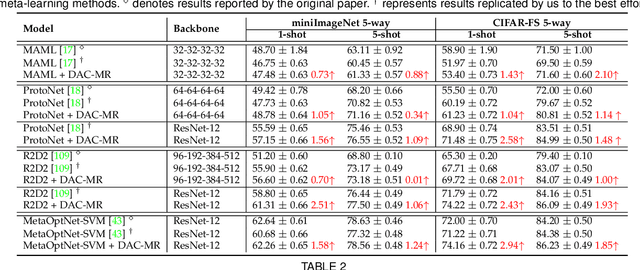
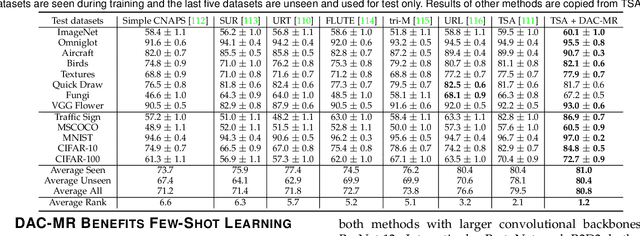
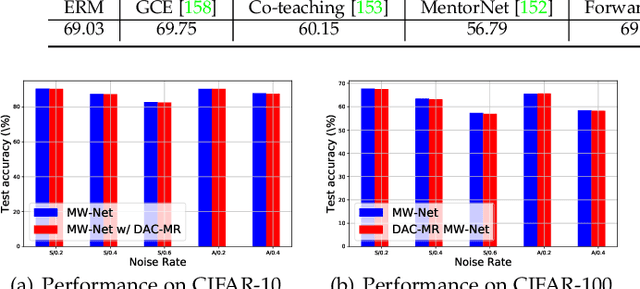
Meta learning recently has been heavily researched and helped advance the contemporary machine learning. However, achieving well-performing meta-learning model requires a large amount of training tasks with high-quality meta-data representing the underlying task generalization goal, which is sometimes difficult and expensive to obtain for real applications. Current meta-data-driven meta-learning approaches, however, are fairly hard to train satisfactory meta-models with imperfect training tasks. To address this issue, we suggest a meta-knowledge informed meta-learning (MKIML) framework to improve meta-learning by additionally integrating compensated meta-knowledge into meta-learning process. We preliminarily integrate meta-knowledge into meta-objective via using an appropriate meta-regularization (MR) objective to regularize capacity complexity of the meta-model function class to facilitate better generalization on unseen tasks. As a practical implementation, we introduce data augmentation consistency to encode invariance as meta-knowledge for instantiating MR objective, denoted by DAC-MR. The proposed DAC-MR is hopeful to learn well-performing meta-models from training tasks with noisy, sparse or unavailable meta-data. We theoretically demonstrate that DAC-MR can be treated as a proxy meta-objective used to evaluate meta-model without high-quality meta-data. Besides, meta-data-driven meta-loss objective combined with DAC-MR is capable of achieving better meta-level generalization. 10 meta-learning tasks with different network architectures and benchmarks substantiate the capability of our DAC-MR on aiding meta-model learning. Fine performance of DAC-MR are obtained across all settings, and are well-aligned with our theoretical insights. This implies that our DAC-MR is problem-agnostic, and hopeful to be readily applied to extensive meta-learning problems and tasks.
Hierarchical Supervision and Shuffle Data Augmentation for 3D Semi-Supervised Object Detection
Apr 04, 2023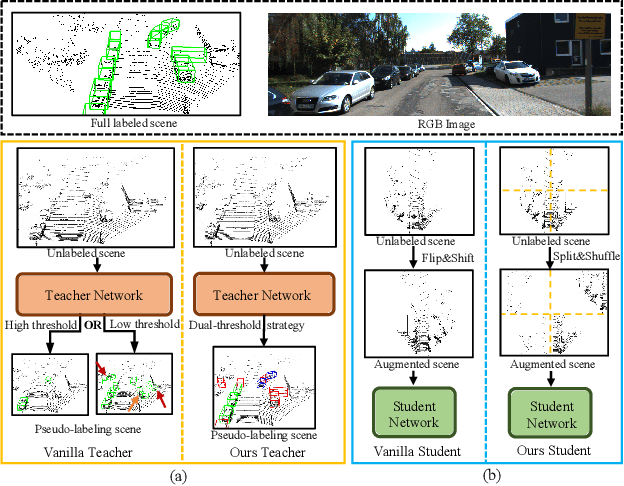

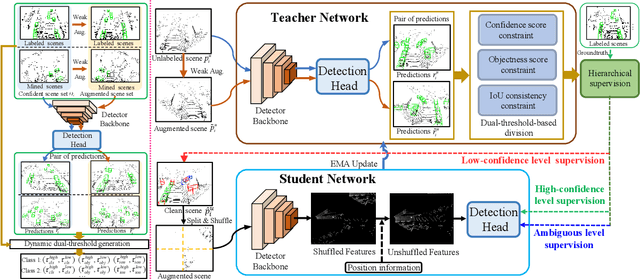

State-of-the-art 3D object detectors are usually trained on large-scale datasets with high-quality 3D annotations. However, such 3D annotations are often expensive and time-consuming, which may not be practical for real applications. A natural remedy is to adopt semi-supervised learning (SSL) by leveraging a limited amount of labeled samples and abundant unlabeled samples. Current pseudolabeling-based SSL object detection methods mainly adopt a teacher-student framework, with a single fixed threshold strategy to generate supervision signals, which inevitably brings confused supervision when guiding the student network training. Besides, the data augmentation of the point cloud in the typical teacher-student framework is too weak, and only contains basic down sampling and flip-and-shift (i.e., rotate and scaling), which hinders the effective learning of feature information. Hence, we address these issues by introducing a novel approach of Hierarchical Supervision and Shuffle Data Augmentation (HSSDA), which is a simple yet effective teacher-student framework. The teacher network generates more reasonable supervision for the student network by designing a dynamic dual-threshold strategy. Besides, the shuffle data augmentation strategy is designed to strengthen the feature representation ability of the student network. Extensive experiments show that HSSDA consistently outperforms the recent state-of-the-art methods on different datasets. The code will be released at https://github.com/azhuantou/HSSDA.
Random Weights Networks Work as Loss Prior Constraint for Image Restoration
Mar 29, 2023
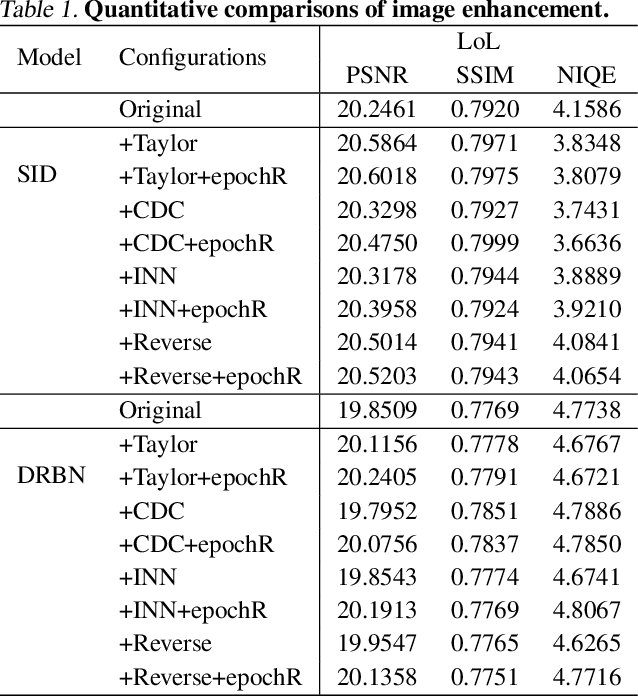
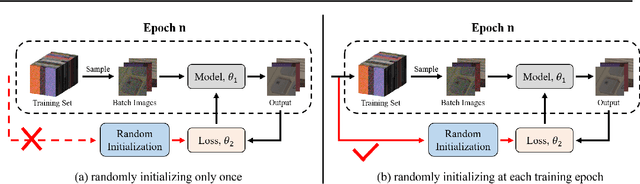

In this paper, orthogonal to the existing data and model studies, we instead resort our efforts to investigate the potential of loss function in a new perspective and present our belief ``Random Weights Networks can Be Acted as Loss Prior Constraint for Image Restoration''. Inspired by Functional theory, we provide several alternative solutions to implement our belief in the strict mathematical manifolds including Taylor's Unfolding Network, Invertible Neural Network, Central Difference Convolution and Zero-order Filtering as ``random weights network prototype'' with respect of the following four levels: 1) the different random weights strategies; 2) the different network architectures, \emph{eg,} pure convolution layer or transformer; 3) the different network architecture depths; 4) the different numbers of random weights network combination. Furthermore, to enlarge the capability of the randomly initialized manifolds, we devise the manner of random weights in the following two variants: 1) the weights are randomly initialized only once during the whole training procedure; 2) the weights are randomly initialized at each training iteration epoch. Our propose belief can be directly inserted into existing networks without any training and testing computational cost. Extensive experiments across multiple image restoration tasks, including image de-noising, low-light image enhancement, guided image super-resolution demonstrate the consistent performance gains obtained by introducing our belief. To emphasize, our main focus is to spark the realms of loss function and save their current neglected status. Code will be publicly available.
Regularize implicit neural representation by itself
Mar 27, 2023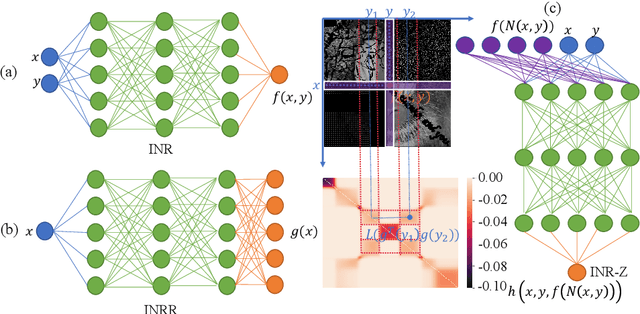
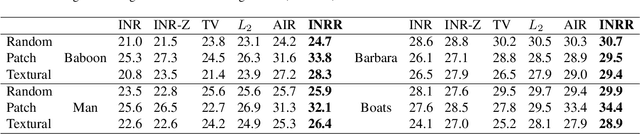
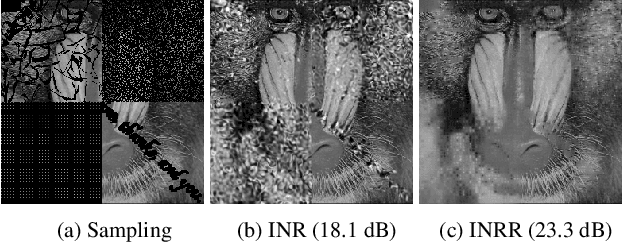

This paper proposes a regularizer called Implicit Neural Representation Regularizer (INRR) to improve the generalization ability of the Implicit Neural Representation (INR). The INR is a fully connected network that can represent signals with details not restricted by grid resolution. However, its generalization ability could be improved, especially with non-uniformly sampled data. The proposed INRR is based on learned Dirichlet Energy (DE) that measures similarities between rows/columns of the matrix. The smoothness of the Laplacian matrix is further integrated by parameterizing DE with a tiny INR. INRR improves the generalization of INR in signal representation by perfectly integrating the signal's self-similarity with the smoothness of the Laplacian matrix. Through well-designed numerical experiments, the paper also reveals a series of properties derived from INRR, including momentum methods like convergence trajectory and multi-scale similarity. Moreover, the proposed method could improve the performance of other signal representation methods.
DDFM: Denoising Diffusion Model for Multi-Modality Image Fusion
Mar 13, 2023Multi-modality image fusion aims to combine different modalities to produce fused images that retain the complementary features of each modality, such as functional highlights and texture details. To leverage strong generative priors and address challenges such as unstable training and lack of interpretability for GAN-based generative methods, we propose a novel fusion algorithm based on the denoising diffusion probabilistic model (DDPM). The fusion task is formulated as a conditional generation problem under the DDPM sampling framework, which is further divided into an unconditional generation subproblem and a maximum likelihood subproblem. The latter is modeled in a hierarchical Bayesian manner with latent variables and inferred by the expectation-maximization algorithm. By integrating the inference solution into the diffusion sampling iteration, our method can generate high-quality fused images with natural image generative priors and cross-modality information from source images. Note that all we required is an unconditional pre-trained generative model, and no fine-tuning is needed. Our extensive experiments indicate that our approach yields promising fusion results in infrared-visible image fusion and medical image fusion. The code will be released.