 Add to Chrome
 Add to Firefox
 Add to Edge
Contact-aware Human Motion Generation from Textual Descriptions
Mar 23, 2024
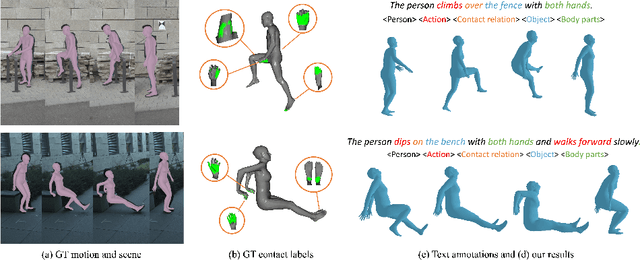
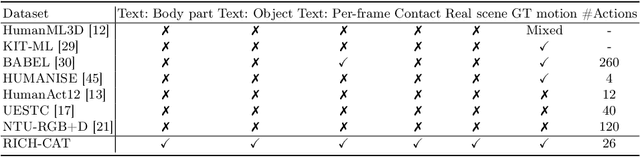
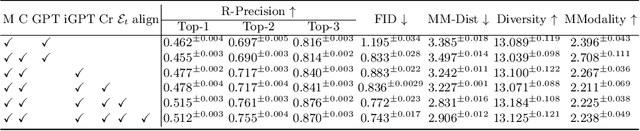
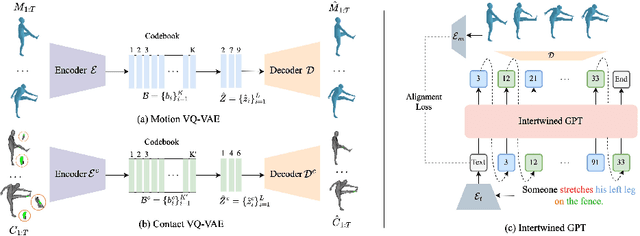
This paper addresses the problem of generating 3D interactive human motion from text. Given a textual description depicting the actions of different body parts in contact with objects, we synthesize sequences of 3D body poses that are visually natural and physically plausible. Yet, this task poses a significant challenge due to the inadequate consideration of interactions by physical contacts in both motion and textual descriptions, leading to unnatural and implausible sequences. To tackle this challenge, we create a novel dataset named RICH-CAT, representing ``Contact-Aware Texts'' constructed from the RICH dataset. RICH-CAT comprises high-quality motion, accurate human-object contact labels, and detailed textual descriptions, encompassing over 8,500 motion-text pairs across 26 indoor/outdoor actions. Leveraging RICH-CAT, we propose a novel approach named CATMO for text-driven interactive human motion synthesis that explicitly integrates human body contacts as evidence. We employ two VQ-VAE models to encode motion and body contact sequences into distinct yet complementary latent spaces and an intertwined GPT for generating human motions and contacts in a mutually conditioned manner. Additionally, we introduce a pre-trained text encoder to learn textual embeddings that better discriminate among various contact types, allowing for more precise control over synthesized motions and contacts. Our experiments demonstrate the superior performance of our approach compared to existing text-to-motion methods, producing stable, contact-aware motion sequences. Code and data will be available for research purposes.

GLC++: Source-Free Universal Domain Adaptation through Global-Local Clustering and Contrastive Affinity Learning
Mar 21, 2024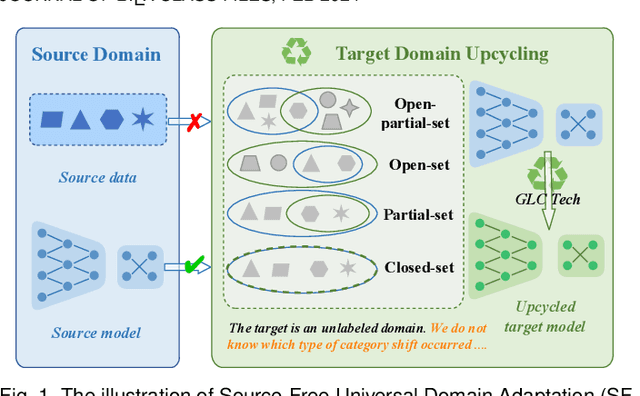
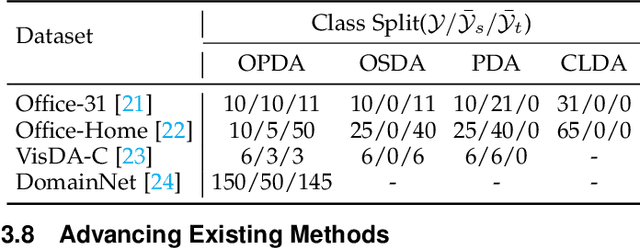
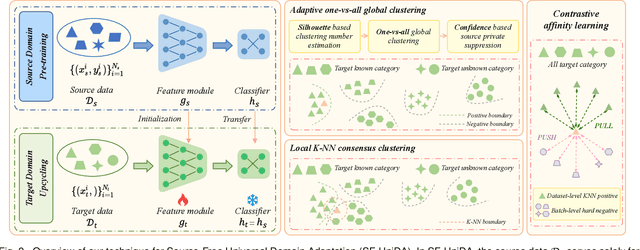
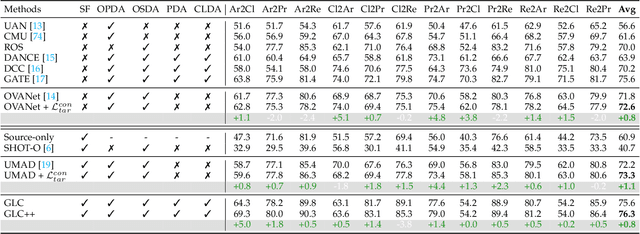
Deep neural networks often exhibit sub-optimal performance under covariate and category shifts. Source-Free Domain Adaptation (SFDA) presents a promising solution to this dilemma, yet most SFDA approaches are restricted to closed-set scenarios. In this paper, we explore Source-Free Universal Domain Adaptation (SF-UniDA) aiming to accurately classify "known" data belonging to common categories and segregate them from target-private "unknown" data. We propose a novel Global and Local Clustering (GLC) technique, which comprises an adaptive one-vs-all global clustering algorithm to discern between target classes, complemented by a local k-NN clustering strategy to mitigate negative transfer. Despite the effectiveness, the inherent closed-set source architecture leads to uniform treatment of "unknown" data, impeding the identification of distinct "unknown" categories. To address this, we evolve GLC to GLC++, integrating a contrastive affinity learning strategy. We examine the superiority of GLC and GLC++ across multiple benchmarks and category shift scenarios. Remarkably, in the most challenging open-partial-set scenarios, GLC and GLC++ surpass GATE by 16.7% and 18.6% in H-score on VisDA, respectively. GLC++ enhances the novel category clustering accuracy of GLC by 4.3% in open-set scenarios on Office-Home. Furthermore, the introduced contrastive learning strategy not only enhances GLC but also significantly facilitates existing methodologies.
Building Accurate Translation-Tailored LLMs with Language Aware Instruction Tuning
Mar 21, 2024Translation-tailored Large language models (LLMs) exhibit remarkable translation capabilities, even competing with supervised-trained commercial translation systems. However, off-target translation remains an unsolved problem, especially for low-resource languages, hindering us from developing accurate LLMs-based translation models. To mitigate the off-target translation problem and enhance the performance of LLMs on translation, recent works have either designed advanced prompting strategies to highlight the functionality of translation instructions or exploited the in-context learning ability of LLMs by feeding few-shot demonstrations. However, these methods essentially do not improve LLM's ability to follow translation instructions, especially the language direction information. In this work, we design a two-stage fine-tuning algorithm to improve the instruction-following ability (especially the translation direction) of LLMs. Specifically, we first tune LLMs with the maximum likelihood estimation loss on the translation dataset to elicit the basic translation capabilities. In the second stage, we construct instruction-conflicting samples by randomly replacing the translation directions with a wrong one within the instruction, and then introduce an extra unlikelihood loss to learn those samples. Experiments on IWSLT and WMT benchmarks upon the LLaMA model spanning 16 zero-shot directions show that, compared to the competitive baseline -- translation-finetuned LLama, our method could effectively reduce the off-target translation ratio (averagely -53.3\%), thus improving translation quality with average +5.7 SacreBLEU and +16.4 BLEURT. Analysis shows that our method could preserve the model's general task performance on AlpacaEval. Code and models will be released at \url{https://github.com/alphadl/LanguageAware_Tuning}.
MTP: Advancing Remote Sensing Foundation Model via Multi-Task Pretraining
Mar 20, 2024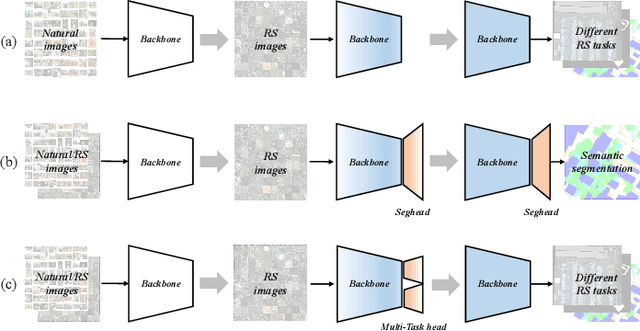
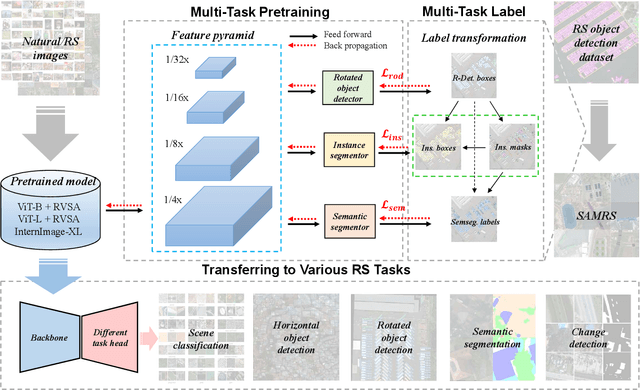
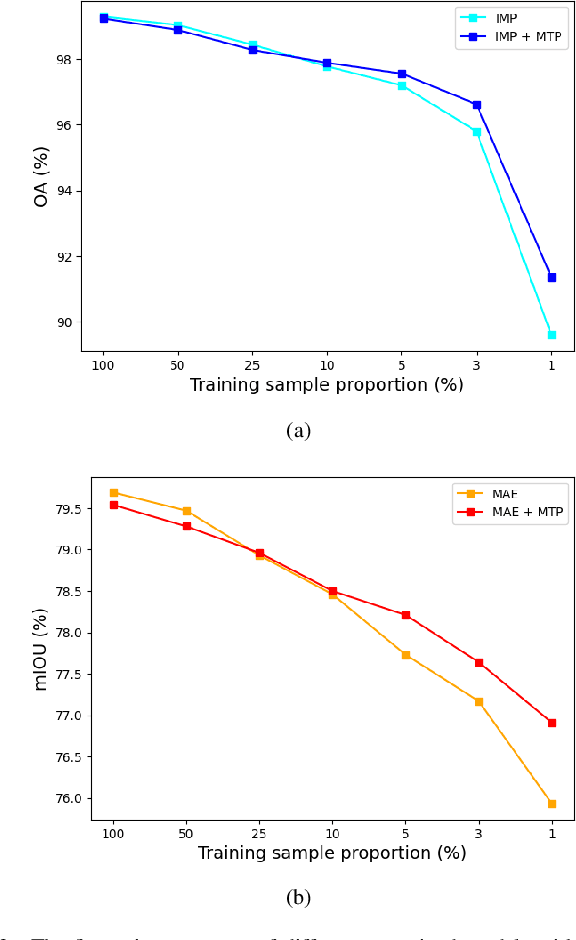
Foundation models have reshaped the landscape of Remote Sensing (RS) by enhancing various image interpretation tasks. Pretraining is an active research topic, encompassing supervised and self-supervised learning methods to initialize model weights effectively. However, transferring the pretrained models to downstream tasks may encounter task discrepancy due to their formulation of pretraining as image classification or object discrimination tasks. In this study, we explore the Multi-Task Pretraining (MTP) paradigm for RS foundation models to address this issue. Using a shared encoder and task-specific decoder architecture, we conduct multi-task supervised pretraining on the SAMRS dataset, encompassing semantic segmentation, instance segmentation, and rotated object detection. MTP supports both convolutional neural networks and vision transformer foundation models with over 300 million parameters. The pretrained models are finetuned on various RS downstream tasks, such as scene classification, horizontal and rotated object detection, semantic segmentation, and change detection. Extensive experiments across 14 datasets demonstrate the superiority of our models over existing ones of similar size and their competitive performance compared to larger state-of-the-art models, thus validating the effectiveness of MTP.
Local-consistent Transformation Learning for Rotation-invariant Point Cloud Analysis
Mar 17, 2024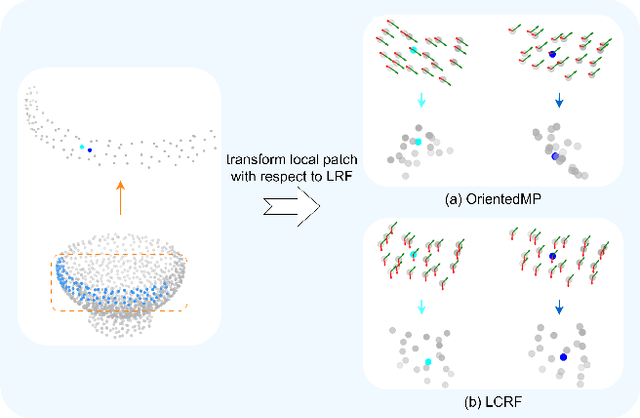
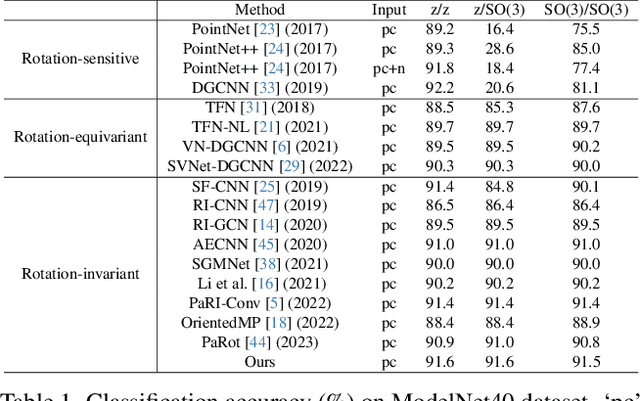
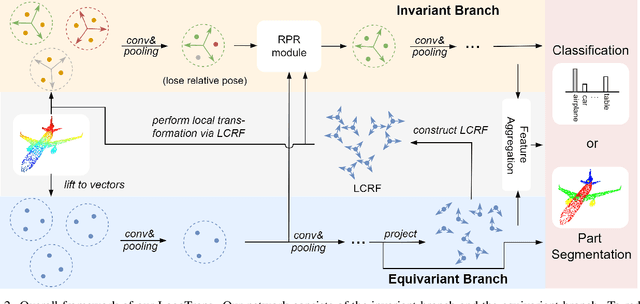
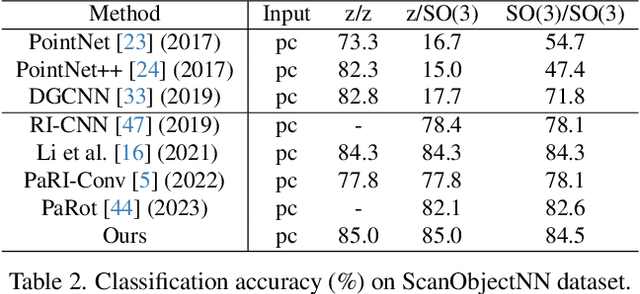
Rotation invariance is an important requirement for point shape analysis. To achieve this, current state-of-the-art methods attempt to construct the local rotation-invariant representation through learning or defining the local reference frame (LRF). Although efficient, these LRF-based methods suffer from perturbation of local geometric relations, resulting in suboptimal local rotation invariance. To alleviate this issue, we propose a Local-consistent Transformation (LocoTrans) learning strategy. Specifically, we first construct the local-consistent reference frame (LCRF) by considering the symmetry of the two axes in LRF. In comparison with previous LRFs, our LCRF is able to preserve local geometric relationships better through performing local-consistent transformation. However, as the consistency only exists in local regions, the relative pose information is still lost in the intermediate layers of the network. We mitigate such a relative pose issue by developing a relative pose recovery (RPR) module. RPR aims to restore the relative pose between adjacent transformed patches. Equipped with LCRF and RPR, our LocoTrans is capable of learning local-consistent transformation and preserving local geometry, which benefits rotation invariance learning. Competitive performance under arbitrary rotations on both shape classification and part segmentation tasks and ablations can demonstrate the effectiveness of our method. Code will be available publicly at https://github.com/wdttt/LocoTrans.
When ControlNet Meets Inexplicit Masks: A Case Study of ControlNet on its Contour-following Ability
Mar 01, 2024
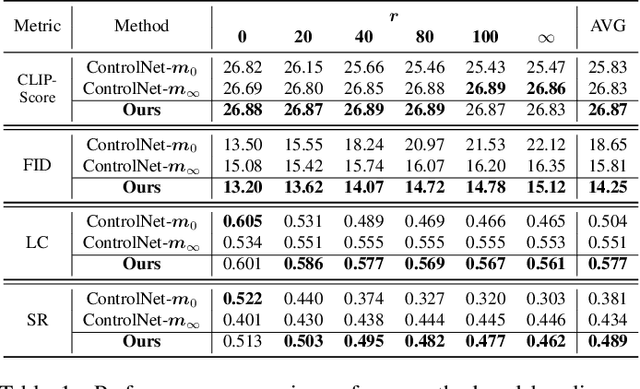

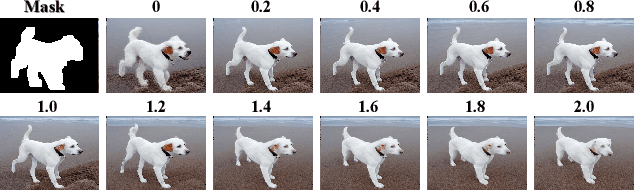
ControlNet excels at creating content that closely matches precise contours in user-provided masks. However, when these masks contain noise, as a frequent occurrence with non-expert users, the output would include unwanted artifacts. This paper first highlights the crucial role of controlling the impact of these inexplicit masks with diverse deterioration levels through in-depth analysis. Subsequently, to enhance controllability with inexplicit masks, an advanced Shape-aware ControlNet consisting of a deterioration estimator and a shape-prior modulation block is devised. The deterioration estimator assesses the deterioration factor of the provided masks. Then this factor is utilized in the modulation block to adaptively modulate the model's contour-following ability, which helps it dismiss the noise part in the inexplicit masks. Extensive experiments prove its effectiveness in encouraging ControlNet to interpret inaccurate spatial conditions robustly rather than blindly following the given contours. We showcase application scenarios like modifying shape priors and composable shape-controllable generation. Codes are soon available.
Trajectory Consistency Distillation
Feb 29, 2024


Latent Consistency Model (LCM) extends the Consistency Model to the latent space and leverages the guided consistency distillation technique to achieve impressive performance in accelerating text-to-image synthesis. However, we observed that LCM struggles to generate images with both clarity and detailed intricacy. To address this limitation, we initially delve into and elucidate the underlying causes. Our investigation identifies that the primary issue stems from errors in three distinct areas. Consequently, we introduce Trajectory Consistency Distillation (TCD), which encompasses trajectory consistency function and strategic stochastic sampling. The trajectory consistency function diminishes the distillation errors by broadening the scope of the self-consistency boundary condition and endowing the TCD with the ability to accurately trace the entire trajectory of the Probability Flow ODE. Additionally, strategic stochastic sampling is specifically designed to circumvent the accumulated errors inherent in multi-step consistency sampling, which is meticulously tailored to complement the TCD model. Experiments demonstrate that TCD not only significantly enhances image quality at low NFEs but also yields more detailed results compared to the teacher model at high NFEs.
A Survey on Knowledge Distillation of Large Language Models
Feb 23, 2024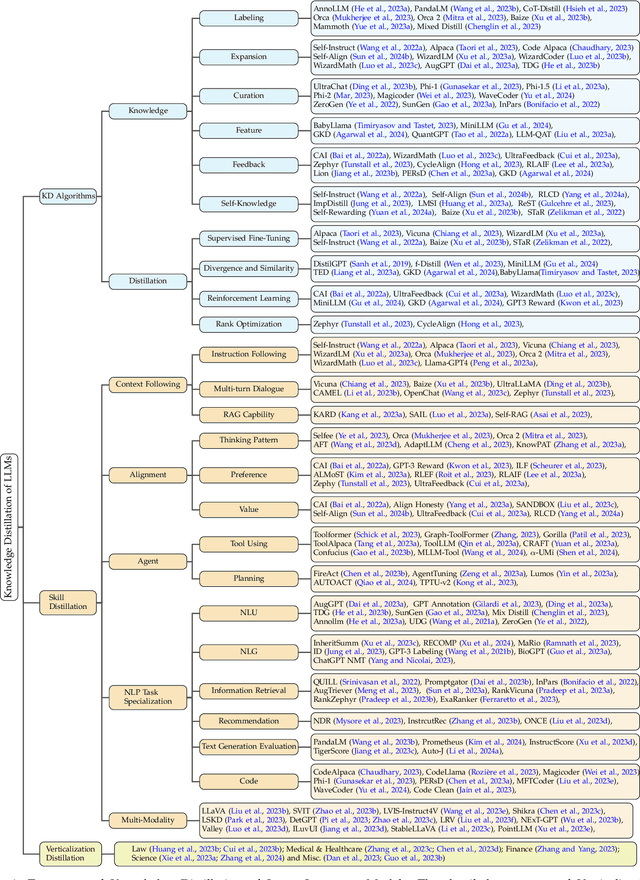
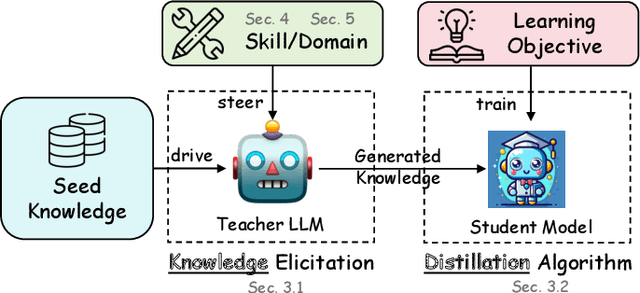
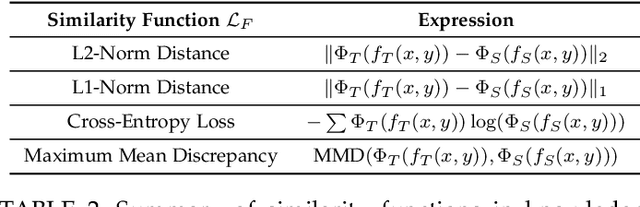
In the era of Large Language Models (LLMs), Knowledge Distillation (KD) emerges as a pivotal methodology for transferring advanced capabilities from leading proprietary LLMs, such as GPT-4, to their open-source counterparts like LLaMA and Mistral. Additionally, as open-source LLMs flourish, KD plays a crucial role in both compressing these models, and facilitating their self-improvement by employing themselves as teachers. This paper presents a comprehensive survey of KD's role within the realm of LLM, highlighting its critical function in imparting advanced knowledge to smaller models and its utility in model compression and self-improvement. Our survey is meticulously structured around three foundational pillars: \textit{algorithm}, \textit{skill}, and \textit{verticalization} -- providing a comprehensive examination of KD mechanisms, the enhancement of specific cognitive abilities, and their practical implications across diverse fields. Crucially, the survey navigates the intricate interplay between data augmentation (DA) and KD, illustrating how DA emerges as a powerful paradigm within the KD framework to bolster LLMs' performance. By leveraging DA to generate context-rich, skill-specific training data, KD transcends traditional boundaries, enabling open-source models to approximate the contextual adeptness, ethical alignment, and deep semantic insights characteristic of their proprietary counterparts. This work aims to provide an insightful guide for researchers and practitioners, offering a detailed overview of current methodologies in KD and proposing future research directions. Importantly, we firmly advocate for compliance with the legal terms that regulate the use of LLMs, ensuring ethical and lawful application of KD of LLMs. An associated Github repository is available at https://github.com/Tebmer/Awesome-Knowledge-Distillation-of-LLMs.
Healthcare Copilot: Eliciting the Power of General LLMs for Medical Consultation
Feb 20, 2024The copilot framework, which aims to enhance and tailor large language models (LLMs) for specific complex tasks without requiring fine-tuning, is gaining increasing attention from the community. In this paper, we introduce the construction of a Healthcare Copilot designed for medical consultation. The proposed Healthcare Copilot comprises three main components: 1) the Dialogue component, responsible for effective and safe patient interactions; 2) the Memory component, storing both current conversation data and historical patient information; and 3) the Processing component, summarizing the entire dialogue and generating reports. To evaluate the proposed Healthcare Copilot, we implement an auto-evaluation scheme using ChatGPT for two roles: as a virtual patient engaging in dialogue with the copilot, and as an evaluator to assess the quality of the dialogue. Extensive results demonstrate that the proposed Healthcare Copilot significantly enhances the capabilities of general LLMs for medical consultations in terms of inquiry capability, conversational fluency, response accuracy, and safety. Furthermore, we conduct ablation studies to highlight the contribution of each individual module in the Healthcare Copilot. Code will be made publicly available on GitHub.
Communication-Efficient Distributed Learning with Local Immediate Error Compensation
Feb 19, 2024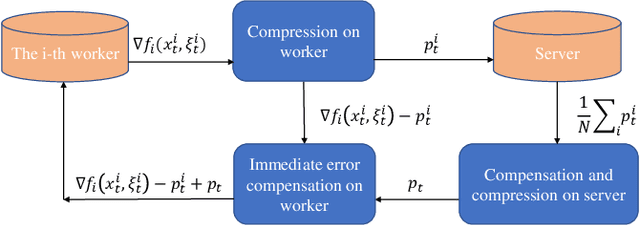
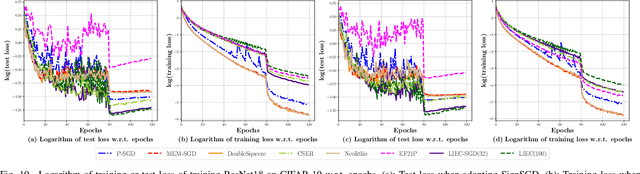
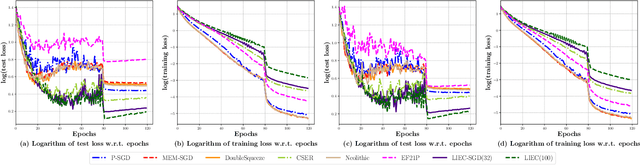
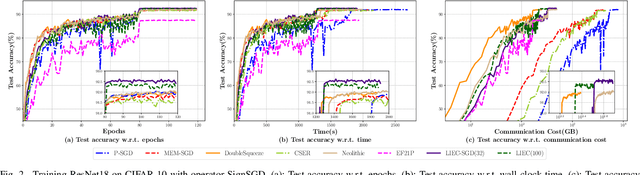
Gradient compression with error compensation has attracted significant attention with the target of reducing the heavy communication overhead in distributed learning. However, existing compression methods either perform only unidirectional compression in one iteration with higher communication cost, or bidirectional compression with slower convergence rate. In this work, we propose the Local Immediate Error Compensated SGD (LIEC-SGD) optimization algorithm to break the above bottlenecks based on bidirectional compression and carefully designed compensation approaches. Specifically, the bidirectional compression technique is to reduce the communication cost, and the compensation technique compensates the local compression error to the model update immediately while only maintaining the global error variable on the server throughout the iterations to boost its efficacy. Theoretically, we prove that LIEC-SGD is superior to previous works in either the convergence rate or the communication cost, which indicates that LIEC-SGD could inherit the dual advantages from unidirectional compression and bidirectional compression. Finally, experiments of training deep neural networks validate the effectiveness of the proposed LIEC-SGD algorithm.