 Add to Chrome
 Add to Firefox
 Add to Edge
FAS-Driven Spectrum Sensing for Cognitive Radio Networks
Nov 13, 2024
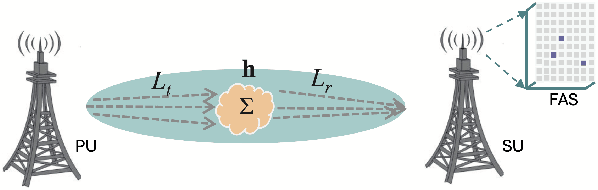

Cognitive radio (CR) networks face significant challenges in spectrum sensing, especially under spectrum scarcity. Fluid antenna systems (FAS) can offer an unorthodox solution due to their ability to dynamically adjust antenna positions for improved channel gain. In this letter, we study a FAS-driven CR setup where a secondary user (SU) adjusts the positions of fluid antennas to detect signals from the primary user (PU). We aim to maximize the detection probability under the constraints of the false alarm probability and the received beamforming of the SU. To address this problem, we first derive a closed-form expression for the optimal detection threshold and reformulate the problem to find its solution. Then an alternating optimization (AO) scheme is proposed to decompose the problem into several sub-problems, addressing both the received beamforming and the antenna positions at the SU. The beamforming subproblem is addressed using a closed-form solution, while the fluid antenna positions are solved by successive convex approximation (SCA). Simulation results reveal that the proposed algorithm provides significant improvements over traditional fixed-position antenna (FPA) schemes in terms of spectrum sensing performance.

Large Language Models and Artificial Intelligence Generated Content Technologies Meet Communication Networks
Nov 12, 2024


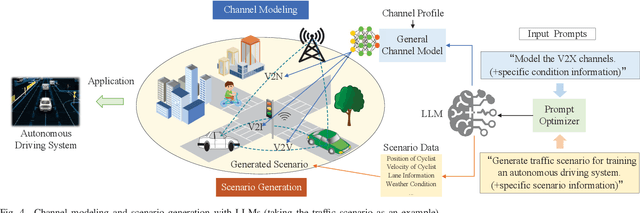
Artificial intelligence generated content (AIGC) technologies, with a predominance of large language models (LLMs), have demonstrated remarkable performance improvements in various applications, which have attracted great interests from both academia and industry. Although some noteworthy advancements have been made in this area, a comprehensive exploration of the intricate relationship between AIGC and communication networks remains relatively limited. To address this issue, this paper conducts an exhaustive survey from dual standpoints: firstly, it scrutinizes the integration of LLMs and AIGC technologies within the domain of communication networks; secondly, it investigates how the communication networks can further bolster the capabilities of LLMs and AIGC. Additionally, this research explores the promising applications along with the challenges encountered during the incorporation of these AI technologies into communication networks. Through these detailed analyses, our work aims to deepen the understanding of how LLMs and AIGC can synergize with and enhance the development of advanced intelligent communication networks, contributing to a more profound comprehension of next-generation intelligent communication networks.
Diffusion Models as Network Optimizers: Explorations and Analysis
Nov 04, 2024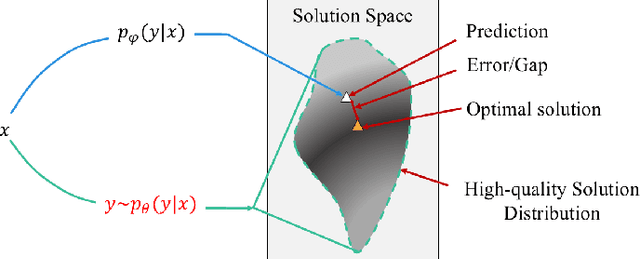
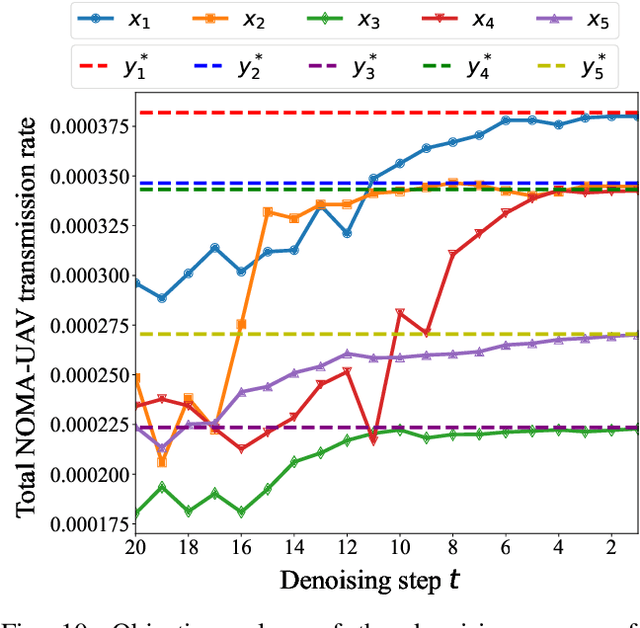
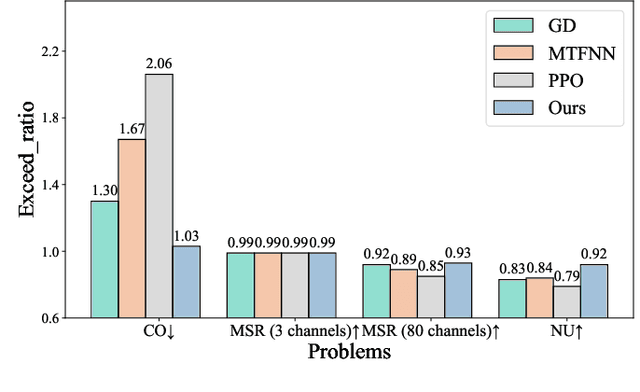

Network optimization is a fundamental challenge in the Internet of Things (IoT) network, often characterized by complex features that make it difficult to solve these problems. Recently, generative diffusion models (GDMs) have emerged as a promising new approach to network optimization, with the potential to directly address these optimization problems. However, the application of GDMs in this field is still in its early stages, and there is a noticeable lack of theoretical research and empirical findings. In this study, we first explore the intrinsic characteristics of generative models. Next, we provide a concise theoretical proof and intuitive demonstration of the advantages of generative models over discriminative models in network optimization. Based on this exploration, we implement GDMs as optimizers aimed at learning high-quality solution distributions for given inputs, sampling from these distributions during inference to approximate or achieve optimal solutions. Specifically, we utilize denoising diffusion probabilistic models (DDPMs) and employ a classifier-free guidance mechanism to manage conditional guidance based on input parameters. We conduct extensive experiments across three challenging network optimization problems. By investigating various model configurations and the principles of GDMs as optimizers, we demonstrate the ability to overcome prediction errors and validate the convergence of generated solutions to optimal solutions.We provide code and data at https://github.com/qiyu3816/DiffSG.
Unlocking FAS-RIS Security Analysis with Block-Correlation Model
Nov 03, 2024
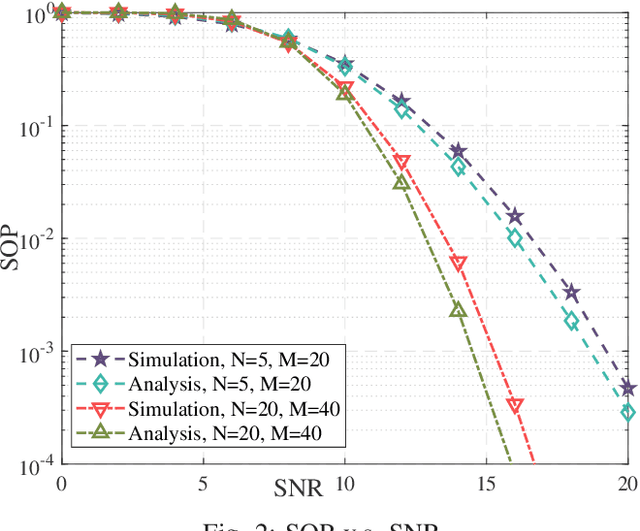
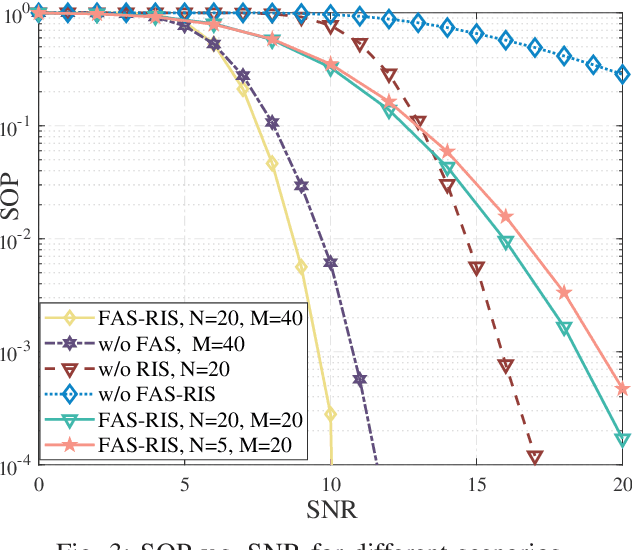

In this letter, we investigate the security of fluid antenna system (FAS)-reconfigurable intelligent surfaces (RIS) communication systems. The base station (BS) employs a single fixed-position antenna, while both the legitimate receiver and the eavesdropper are equipped with fluid antennas. By utilizing the block-correlation model and the central limit theorem (CLT), we derive approximate expressions for the average secrecy capacity and secrecy outage probability (SOP). Our analysis, validated by simulation results, demonstrates the effectiveness of the block-correlation model in accurately assessing the security performance. Moreover, simulation results reveal that FAS-RIS system significantly outperforms other systems in terms of security, further underscoring its potential in secure communication applications.
Paving the Way to 6G: Outage Probability Analysis for FAS-ARIS Systems
Nov 03, 2024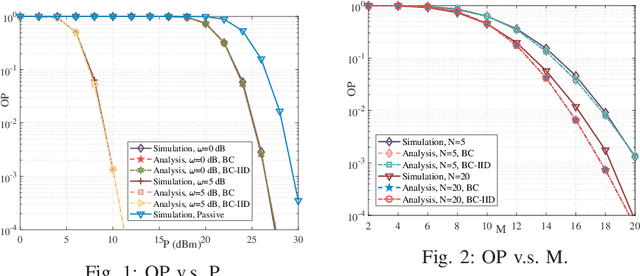

In this paper, we pave the way to six-generation (6G) by investigating the outage probability (OP) of fluid antenna system (FAS)-active reconfigurable intelligent surface (ARIS) communication systems. We consider a FAS-ARIS setup consisting of a base station (BS) with a single fixed-position antenna and a receiver equipped with a fluid antenna (FA). Utilizing the block-correlation model, we derive a closed-form expression for the OP. Our analysis, supported by numerical results, confirms the accuracy and effectiveness of the derivation. Furthermore, the results demonstrate that the FAS-ARIS system significantly outperforms other configurations in terms of OP, highlighting its potential to enhance communication performance and reliability in future 6G networks.
Exploring the Impact of RIS on Cooperative NOMA URLLC Systems: A Theoretical Perspective
Oct 23, 2024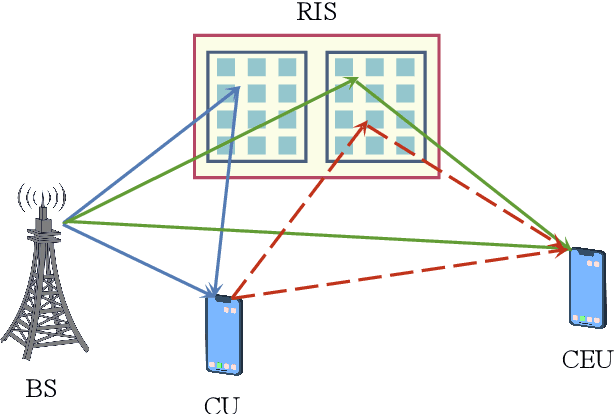
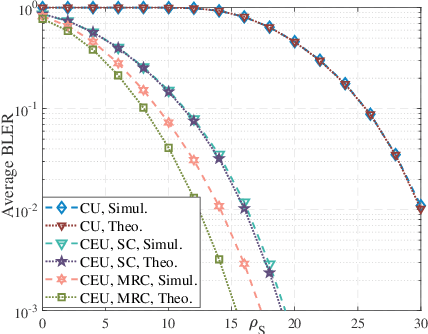
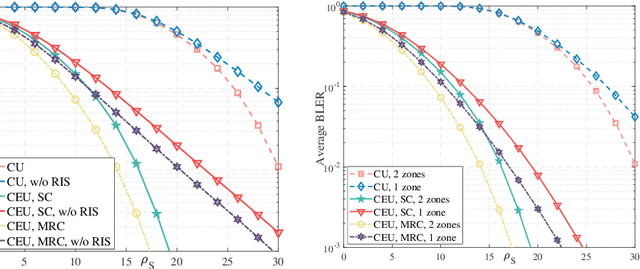
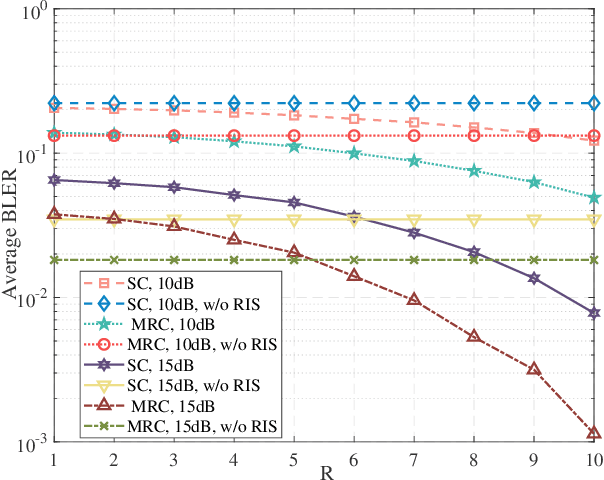
In this paper, we conduct a theoretical analysis of how to integrate reconfigurable intelligent surfaces (RIS) with cooperative non-orthogonal multiple access (NOMA), considering URLLC. We consider a downlink two-user cooperative NOMA system employing short-packet communications, where the two users are denoted by the central user (CU) and the cell-edge user (CEU), respectively, and an RIS is deployed to enhance signal quality. Specifically, compared to CEU, CU lies nearer from BS and enjoys the higher channel gains. Closed-form expressions for the CU's average block error rate (BLER) are derived. Furthermore, we evaluate the CEU's BLER performance utilizing selective combining (SC) and derive a tight lower bound under maximum ratio combining (MRC). Simulation results are provided to our analyses and demonstrate that the RIS-assisted system significantly outperforms its counterpart without RIS in terms of BLER. Notably, MRC achieves a squared multiple of the diversity gain of the SC, leading to more reliable performance, especially for the CEU. Furthermore, by dividing the RIS into two zones, each dedicated to a specific user, the average BLER can be further reduced, particularly for the CEU.
Exploring Dual-Sniffer Passive Localization: Algorithm Design and Experimental Results
Oct 16, 2024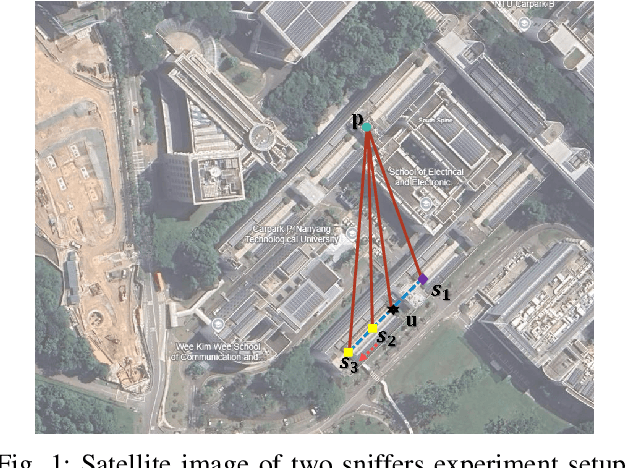
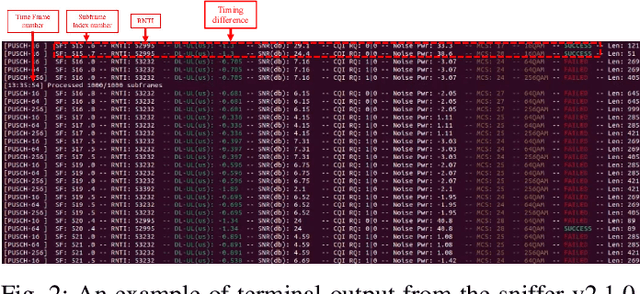
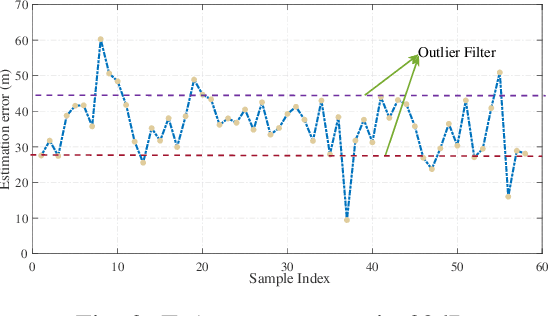
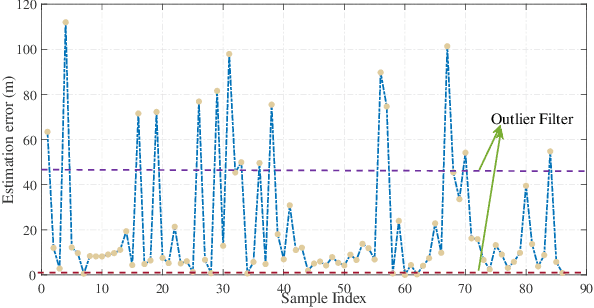
In this paper, we explore a dual-sniffer passive localization system that detects the timing difference of signals from both commercial base station (eNb) and user equipment (UE) to the sniffers. We design two localization schemes for UE localization: a time of arrival (ToA) based scheme and a time difference of arrival (TDoA) based scheme. In the ToA-based scheme, we derive two ellipse equations from measured arrival times at two sniffers, enabling direct numerical computation of the estimated position. For the TDoA-based scheme, we relocate one sniffer to a different position to obtain two sets of TDoA measurements, resulting in hyperbola equations. We then apply a least squares (LS) algorithm to analytically estimate the UE's position. Simulation results validate the effectiveness of the proposed TDoA-based scheme, demonstrating improved accuracy in UE positioning.We build a platform based on the considered localization system and conduct real-world experiments. The experimental results confirm the accuracy and practicality of the TDoA-based dual-sniffer localization scheme, demonstrating improved precision in passive localization.
FSOS-AMC: Few-Shot Open-Set Learning for Automatic Modulation Classification
Oct 14, 2024
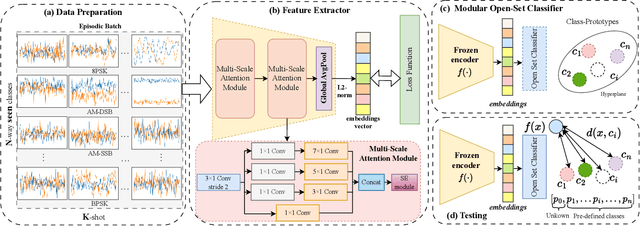
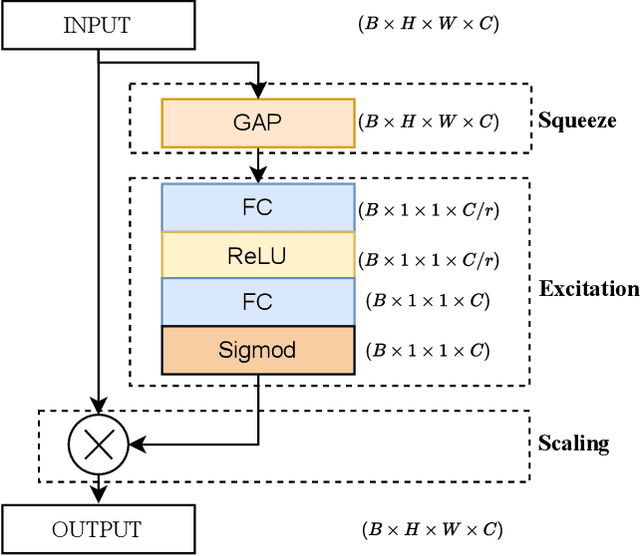
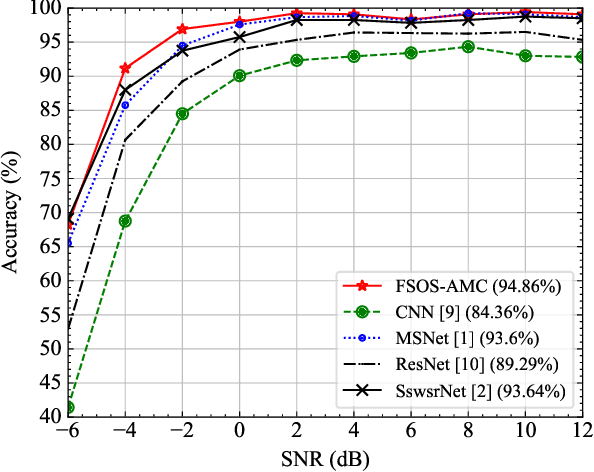
Automatic modulation classification (AMC) is essential for the advancement and efficiency of future wireless communication networks. Deep learning (DL)-based AMC frameworks have garnered extensive attention for their impressive classification performance. However, existing DL-based AMC frameworks rely on two assumptions, large-scale training data and the same class pool between the training and testing data, which are not suitable for \emph{few-shot and open-set} scenarios. To address this issue, a novel few-shot open-set automatic modulation classification (FSOS-AMC) framework is proposed by exploiting a multi-scale attention network, meta-prototype training, and a modular open-set classifier. The multi-scale attention network is used to extract the features from the input signal, the meta-prototype training is adopted to train the feature extractor and the modular open-set classifier can be utilized to classify the testing data into one of the known modulations or potential unknown modulations. Extensive simulation results demonstrate that the proposed FSOS-AMC framework can achieve higher classification accuracy than the state-of-the-art methods for known modulations and unknown modulations in terms of accuracy and area under the receiver operating characteristic curve (AUROC). Moreover, the performance of the proposed FSOS-AMC framework under low signal-to-noise ratio (SNR) conditions is much better than the compared schemes.
A Novel Framework of Horizontal-Vertical Hybrid Federated Learning for EdgeIoT
Oct 02, 2024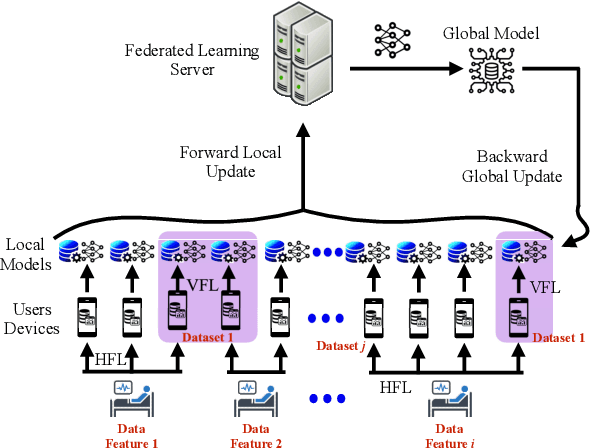
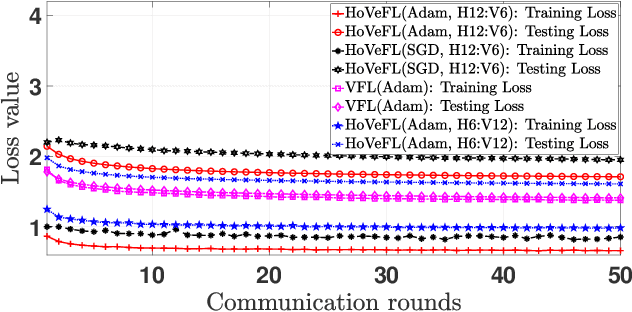
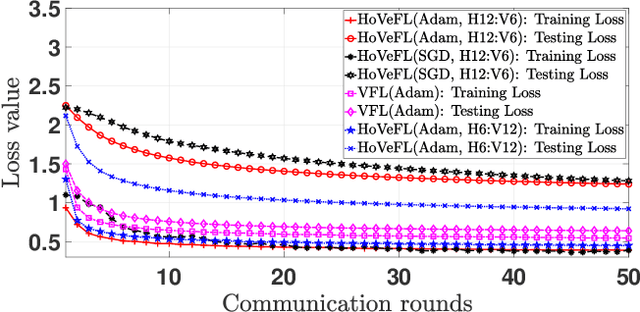
This letter puts forth a new hybrid horizontal-vertical federated learning (HoVeFL) for mobile edge computing-enabled Internet of Things (EdgeIoT). In this framework, certain EdgeIoT devices train local models using the same data samples but analyze disparate data features, while the others focus on the same features using non-independent and identically distributed (non-IID) data samples. Thus, even though the data features are consistent, the data samples vary across devices. The proposed HoVeFL formulates the training of local and global models to minimize the global loss function. Performance evaluations on CIFAR-10 and SVHN datasets reveal that the testing loss of HoVeFL with 12 horizontal FL devices and six vertical FL devices is 5.5% and 25.2% higher, respectively, compared to a setup with six horizontal FL devices and 12 vertical FL devices.
Robust Gaussian Splatting SLAM by Leveraging Loop Closure
Sep 30, 20243D Gaussian Splatting algorithms excel in novel view rendering applications and have been adapted to extend the capabilities of traditional SLAM systems. However, current Gaussian Splatting SLAM methods, designed mainly for hand-held RGB or RGB-D sensors, struggle with tracking drifts when used with rotating RGB-D camera setups. In this paper, we propose a robust Gaussian Splatting SLAM architecture that utilizes inputs from rotating multiple RGB-D cameras to achieve accurate localization and photorealistic rendering performance. The carefully designed Gaussian Splatting Loop Closure module effectively addresses the issue of accumulated tracking and mapping errors found in conventional Gaussian Splatting SLAM systems. First, each Gaussian is associated with an anchor frame and categorized as historical or novel based on its timestamp. By rendering different types of Gaussians at the same viewpoint, the proposed loop detection strategy considers both co-visibility relationships and distinct rendering outcomes. Furthermore, a loop closure optimization approach is proposed to remove camera pose drift and maintain the high quality of 3D Gaussian models. The approach uses a lightweight pose graph optimization algorithm to correct pose drift and updates Gaussians based on the optimized poses. Additionally, a bundle adjustment scheme further refines camera poses using photometric and geometric constraints, ultimately enhancing the global consistency of scenarios. Quantitative and qualitative evaluations on both synthetic and real-world datasets demonstrate that our method outperforms state-of-the-art methods in camera pose estimation and novel view rendering tasks. The code will be open-sourced for the community.