 Add to Chrome
 Add to Firefox
 Add to Edge
Pareto Set Prediction Assisted Bilevel Multi-objective Optimization
Sep 05, 2024
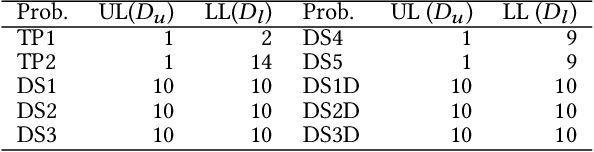
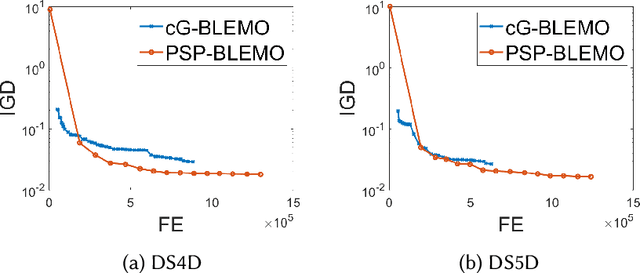
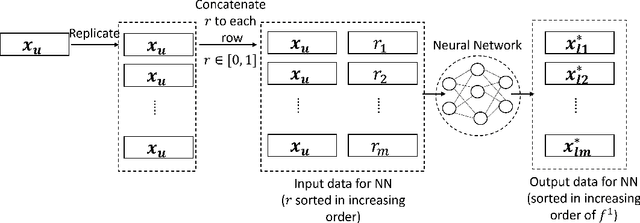

Bilevel optimization problems comprise an upper level optimization task that contains a lower level optimization task as a constraint. While there is a significant and growing literature devoted to solving bilevel problems with single objective at both levels using evolutionary computation, there is relatively scarce work done to address problems with multiple objectives (BLMOP) at both levels. For black-box BLMOPs, the existing evolutionary techniques typically utilize nested search, which in its native form consumes large number of function evaluations. In this work, we propose to reduce this expense by predicting the lower level Pareto set for a candidate upper level solution directly, instead of conducting an optimization from scratch. Such a prediction is significantly challenging for BLMOPs as it involves one-to-many mapping scenario. We resolve this bottleneck by supplementing the dataset using a helper variable and construct a neural network, which can then be trained to map the variables in a meaningful manner. Then, we embed this initialization within a bilevel optimization framework, termed Pareto set prediction assisted evolutionary bilevel multi-objective optimization (PSP-BLEMO). Systematic experiments with existing state-of-the-art methods are presented to demonstrate its benefit. The experiments show that the proposed approach is competitive across a range of problems, including both deceptive and non-deceptive problems

FAGStyle: Feature Augmentation on Geodesic Surface for Zero-shot Text-guided Diffusion Image Style Transfer
Aug 21, 2024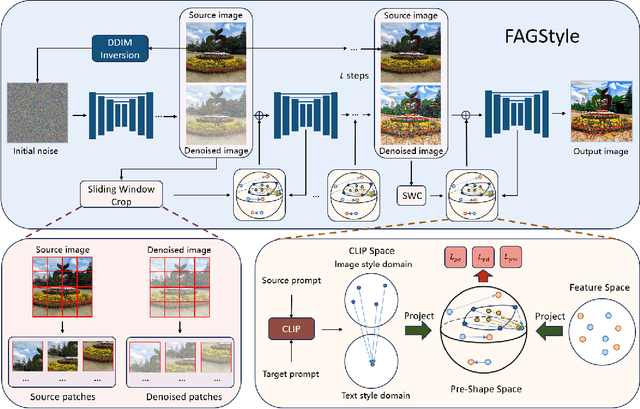
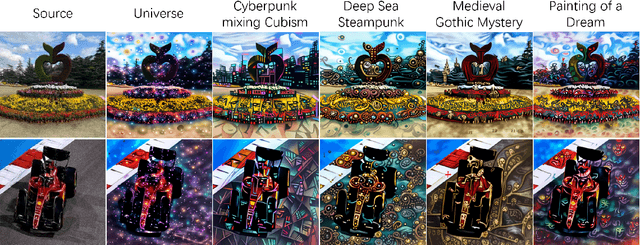
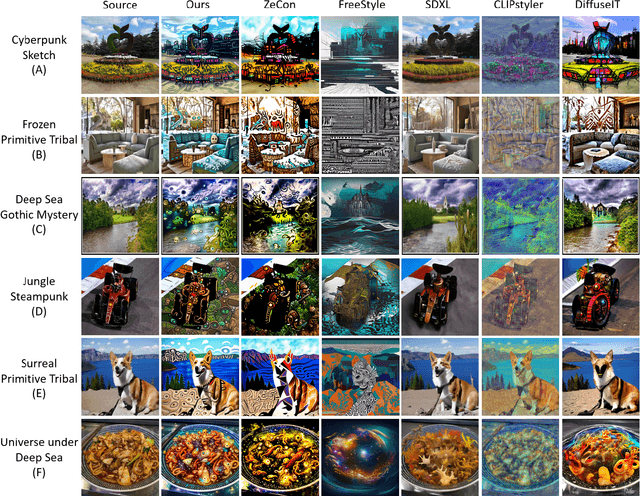

The goal of image style transfer is to render an image guided by a style reference while maintaining the original content. Existing image-guided methods rely on specific style reference images, restricting their wider application and potentially compromising result quality. As a flexible alternative, text-guided methods allow users to describe the desired style using text prompts. Despite their versatility, these methods often struggle with maintaining style consistency, reflecting the described style accurately, and preserving the content of the target image. To address these challenges, we introduce FAGStyle, a zero-shot text-guided diffusion image style transfer method. Our approach enhances inter-patch information interaction by incorporating the Sliding Window Crop technique and Feature Augmentation on Geodesic Surface into our style control loss. Furthermore, we integrate a Pre-Shape self-correlation consistency loss to ensure content consistency. FAGStyle demonstrates superior performance over existing methods, consistently achieving stylization that retains the semantic content of the source image. Experimental results confirms the efficacy of FAGStyle across a diverse range of source contents and styles, both imagined and common.
Why Misinformation is Created? Detecting them by Integrating Intent Features
Jul 27, 2024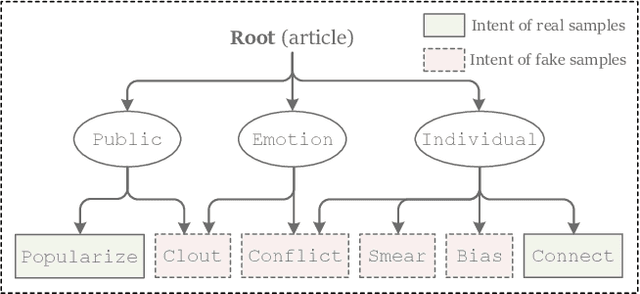

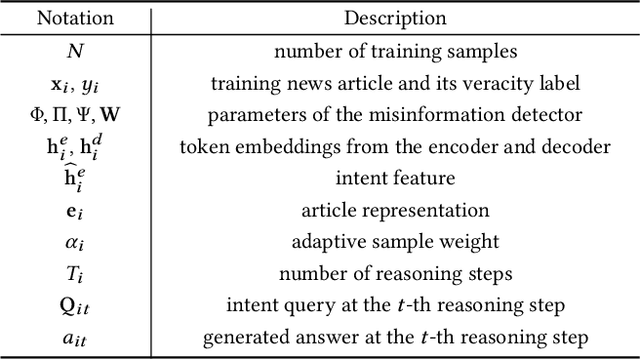
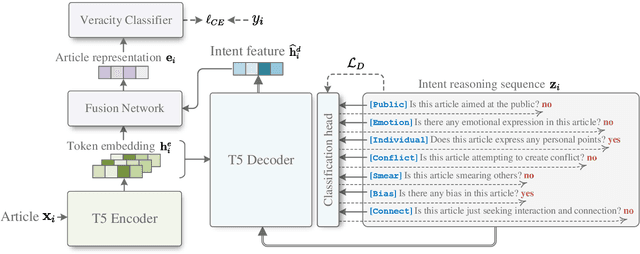
Various social media platforms, e.g., Twitter and Reddit, allow people to disseminate a plethora of information more efficiently and conveniently. However, they are inevitably full of misinformation, causing damage to diverse aspects of our daily lives. To reduce the negative impact, timely identification of misinformation, namely Misinformation Detection (MD), has become an active research topic receiving widespread attention. As a complex phenomenon, the veracity of an article is influenced by various aspects. In this paper, we are inspired by the opposition of intents between misinformation and real information. Accordingly, we propose to reason the intent of articles and form the corresponding intent features to promote the veracity discrimination of article features. To achieve this, we build a hierarchy of a set of intents for both misinformation and real information by referring to the existing psychological theories, and we apply it to reason the intent of articles by progressively generating binary answers with an encoder-decoder structure. We form the corresponding intent features and integrate it with the token features to achieve more discriminative article features for MD. Upon these ideas, we suggest a novel MD method, namely Detecting Misinformation by Integrating Intent featuRes (DM-INTER). To evaluate the performance of DM-INTER, we conduct extensive experiments on benchmark MD datasets. The experimental results validate that DM-INTER can outperform the existing baseline MD methods.
Harmfully Manipulated Images Matter in Multimodal Misinformation Detection
Jul 27, 2024Nowadays, misinformation is widely spreading over various social media platforms and causes extremely negative impacts on society. To combat this issue, automatically identifying misinformation, especially those containing multimodal content, has attracted growing attention from the academic and industrial communities, and induced an active research topic named Multimodal Misinformation Detection (MMD). Typically, existing MMD methods capture the semantic correlation and inconsistency between multiple modalities, but neglect some potential clues in multimodal content. Recent studies suggest that manipulated traces of the images in articles are non-trivial clues for detecting misinformation. Meanwhile, we find that the underlying intentions behind the manipulation, e.g., harmful and harmless, also matter in MMD. Accordingly, in this work, we propose to detect misinformation by learning manipulation features that indicate whether the image has been manipulated, as well as intention features regarding the harmful and harmless intentions of the manipulation. Unfortunately, the manipulation and intention labels that make these features discriminative are unknown. To overcome the problem, we propose two weakly supervised signals as alternatives by introducing additional datasets on image manipulation detection and formulating two classification tasks as positive and unlabeled learning problems. Based on these ideas, we propose a novel MMD method, namely Harmfully Manipulated Images Matter in MMD (HAMI-M3D). Extensive experiments across three benchmark datasets can demonstrate that HAMI-M3D can consistently improve the performance of any MMD baselines.
STS MICCAI 2023 Challenge: Grand challenge on 2D and 3D semi-supervised tooth segmentation
Jul 18, 2024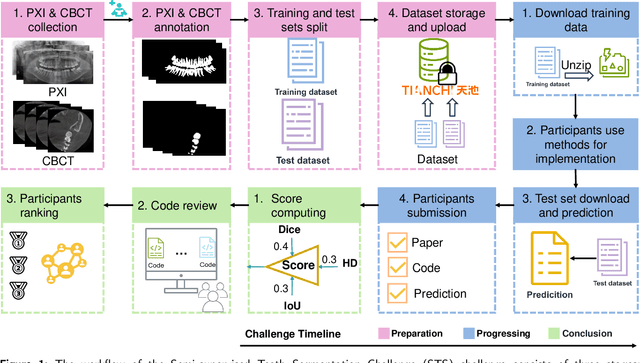



Computer-aided design (CAD) tools are increasingly popular in modern dental practice, particularly for treatment planning or comprehensive prognosis evaluation. In particular, the 2D panoramic X-ray image efficiently detects invisible caries, impacted teeth and supernumerary teeth in children, while the 3D dental cone beam computed tomography (CBCT) is widely used in orthodontics and endodontics due to its low radiation dose. However, there is no open-access 2D public dataset for children's teeth and no open 3D dental CBCT dataset, which limits the development of automatic algorithms for segmenting teeth and analyzing diseases. The Semi-supervised Teeth Segmentation (STS) Challenge, a pioneering event in tooth segmentation, was held as a part of the MICCAI 2023 ToothFairy Workshop on the Alibaba Tianchi platform. This challenge aims to investigate effective semi-supervised tooth segmentation algorithms to advance the field of dentistry. In this challenge, we provide two modalities including the 2D panoramic X-ray images and the 3D CBCT tooth volumes. In Task 1, the goal was to segment tooth regions in panoramic X-ray images of both adult and pediatric teeth. Task 2 involved segmenting tooth sections using CBCT volumes. Limited labelled images with mostly unlabelled ones were provided in this challenge prompt using semi-supervised algorithms for training. In the preliminary round, the challenge received registration and result submission by 434 teams, with 64 advancing to the final round. This paper summarizes the diverse methods employed by the top-ranking teams in the STS MICCAI 2023 Challenge.
UniCoder: Scaling Code Large Language Model via Universal Code
Jun 24, 2024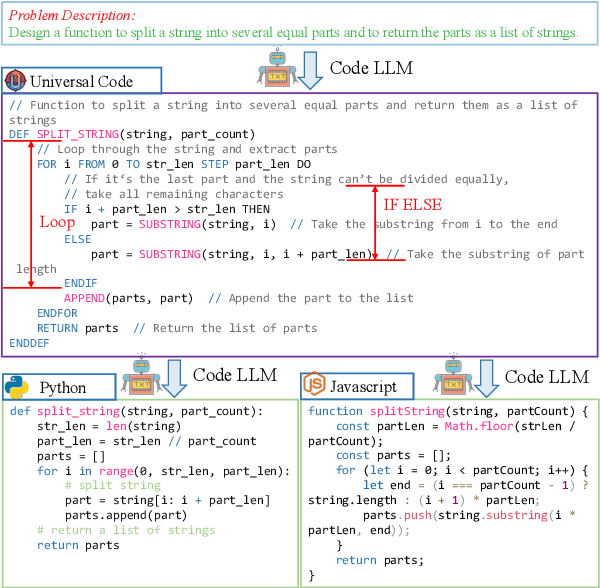
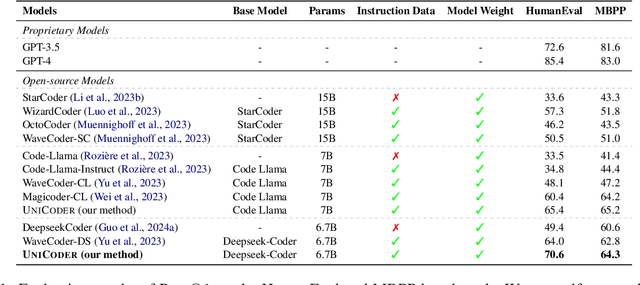
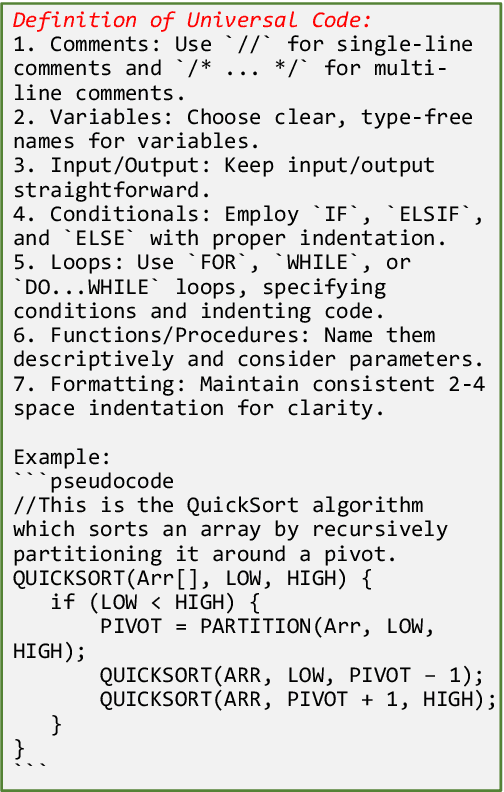
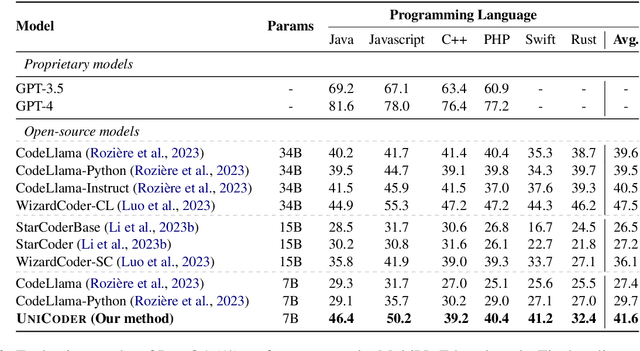
Intermediate reasoning or acting steps have successfully improved large language models (LLMs) for handling various downstream natural language processing (NLP) tasks. When applying LLMs for code generation, recent works mainly focus on directing the models to articulate intermediate natural-language reasoning steps, as in chain-of-thought (CoT) prompting, and then output code with the natural language or other structured intermediate steps. However, such output is not suitable for code translation or generation tasks since the standard CoT has different logical structures and forms of expression with the code. In this work, we introduce the universal code (UniCode) as the intermediate representation. It is a description of algorithm steps using a mix of conventions of programming languages, such as assignment operator, conditional operator, and loop. Hence, we collect an instruction dataset UniCoder-Instruct to train our model UniCoder on multi-task learning objectives. UniCoder-Instruct comprises natural-language questions, code solutions, and the corresponding universal code. The alignment between the intermediate universal code representation and the final code solution significantly improves the quality of the generated code. The experimental results demonstrate that UniCoder with the universal code significantly outperforms the previous prompting methods by a large margin, showcasing the effectiveness of the structural clues in pseudo-code.
Matching Query Image Against Selected NeRF Feature for Efficient and Scalable Localization
Jun 17, 2024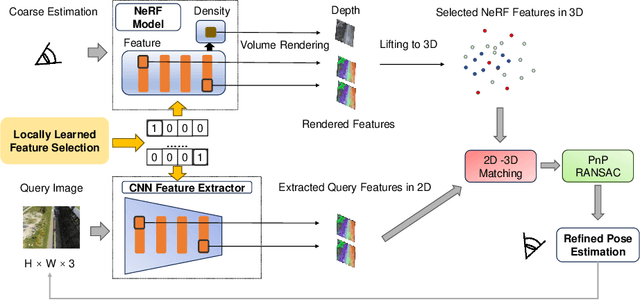
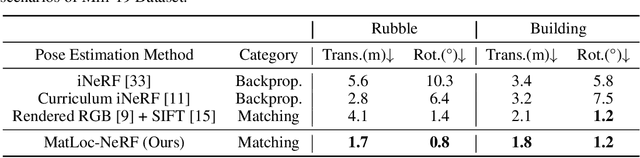
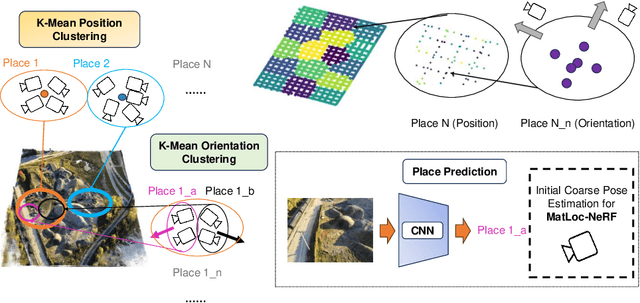

Neural implicit representations such as NeRF have revolutionized 3D scene representation with photo-realistic quality. However, existing methods for visual localization within NeRF representations suffer from inefficiency and scalability issues, particularly in large-scale environments. This work proposes MatLoc-NeRF, a novel matching-based localization framework using selected NeRF features. It addresses efficiency by employing a learnable feature selection mechanism that identifies informative NeRF features for matching with query images. This eliminates the need for all NeRF features or additional descriptors, leading to faster and more accurate pose estimation. To tackle large-scale scenes, MatLoc-NeRF utilizes a pose-aware scene partitioning strategy. It ensures that only the most relevant NeRF sub-block generates key features for a specific pose. Additionally, scene segmentation and a place predictor provide fast coarse initial pose estimation. Evaluations on public large-scale datasets demonstrate that MatLoc-NeRF achieves superior efficiency and accuracy compared to existing NeRF-based localization methods.
Revealing the structure-property relationships of copper alloys with FAGC
Apr 19, 2024Understanding how the structure of materials affects their properties is a cornerstone of materials science and engineering. However, traditional methods have struggled to accurately describe the quantitative structure-property relationships for complex structures. In our study, we bridge this gap by leveraging machine learning to analyze images of materials' microstructures, thus offering a novel way to understand and predict the properties of materials based on their microstructures. We introduce a method known as FAGC (Feature Augmentation on Geodesic Curves), specifically demonstrated for Cu-Cr-Zr alloys. This approach utilizes machine learning to examine the shapes within images of the alloys' microstructures and predict their mechanical and electronic properties. This generative FAGC approach can effectively expand the relatively small training datasets due to the limited availability of materials images labeled with quantitative properties. The process begins with extracting features from the images using neural networks. These features are then mapped onto the Pre-shape space to construct the Geodesic curves. Along these curves, new features are generated, effectively increasing the dataset. Moreover, we design a pseudo-labeling mechanism for these newly generated features to further enhance the training dataset. Our FAGC method has shown remarkable results, significantly improving the accuracy of predicting the electronic conductivity and hardness of Cu-Cr-Zr alloys, with R-squared values of 0.978 and 0.998, respectively. These outcomes underscore the potential of FAGC to address the challenge of limited image data in materials science, providing a powerful tool for establishing detailed and quantitative relationships between complex microstructures and material properties.
m3P: Towards Multimodal Multilingual Translation with Multimodal Prompt
Mar 26, 2024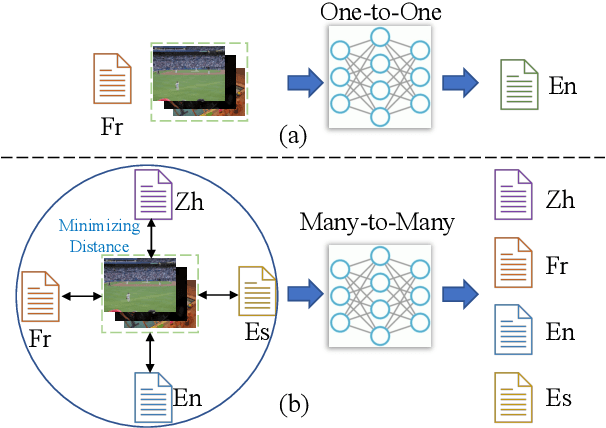
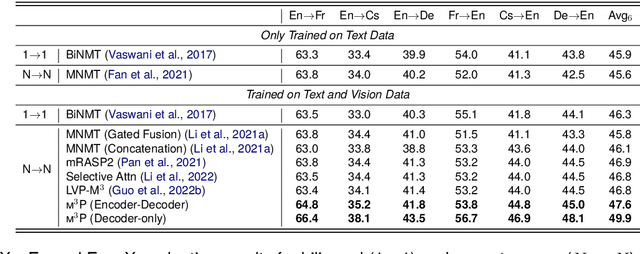
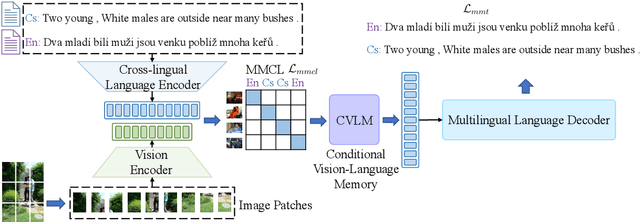
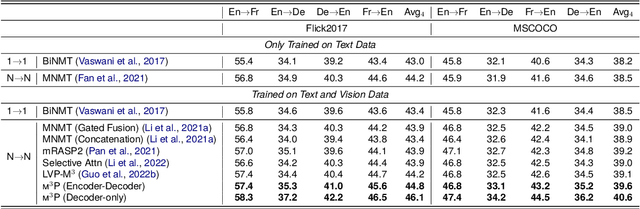
Multilingual translation supports multiple translation directions by projecting all languages in a shared space, but the translation quality is undermined by the difference between languages in the text-only modality, especially when the number of languages is large. To bridge this gap, we introduce visual context as the universal language-independent representation to facilitate multilingual translation. In this paper, we propose a framework to leverage the multimodal prompt to guide the Multimodal Multilingual neural Machine Translation (m3P), which aligns the representations of different languages with the same meaning and generates the conditional vision-language memory for translation. We construct a multilingual multimodal instruction dataset (InstrMulti102) to support 102 languages. Our method aims to minimize the representation distance of different languages by regarding the image as a central language. Experimental results show that m3P outperforms previous text-only baselines and multilingual multimodal methods by a large margin. Furthermore, the probing experiments validate the effectiveness of our method in enhancing translation under the low-resource and massively multilingual scenario.
Self-Supervised Multi-Frame Neural Scene Flow
Mar 24, 2024
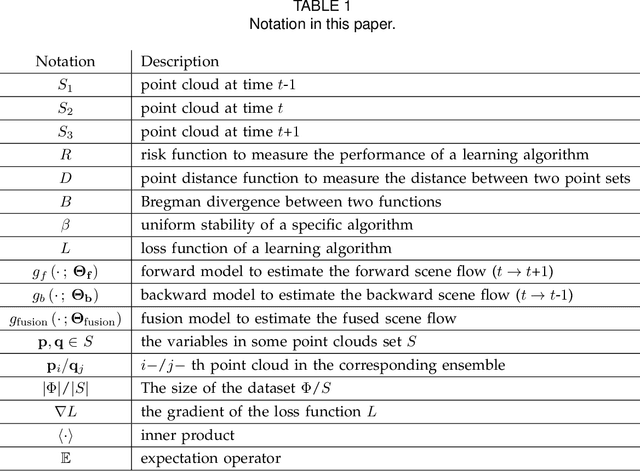
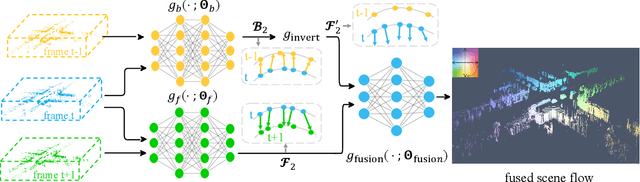

Neural Scene Flow Prior (NSFP) and Fast Neural Scene Flow (FNSF) have shown remarkable adaptability in the context of large out-of-distribution autonomous driving. Despite their success, the underlying reasons for their astonishing generalization capabilities remain unclear. Our research addresses this gap by examining the generalization capabilities of NSFP through the lens of uniform stability, revealing that its performance is inversely proportional to the number of input point clouds. This finding sheds light on NSFP's effectiveness in handling large-scale point cloud scene flow estimation tasks. Motivated by such theoretical insights, we further explore the improvement of scene flow estimation by leveraging historical point clouds across multiple frames, which inherently increases the number of point clouds. Consequently, we propose a simple and effective method for multi-frame point cloud scene flow estimation, along with a theoretical evaluation of its generalization abilities. Our analysis confirms that the proposed method maintains a limited generalization error, suggesting that adding multiple frames to the scene flow optimization process does not detract from its generalizability. Extensive experimental results on large-scale autonomous driving Waymo Open and Argoverse lidar datasets demonstrate that the proposed method achieves state-of-the-art performance.