 Add to Chrome
 Add to Firefox
 Add to Edge
magic
Papers and Code
Notes on Sampled Gaussian Mechanism
Sep 06, 2024
In these notes, we prove a recent conjecture posed in the paper by R\"ais\"a, O. et al. [Subsampling is not Magic: Why Large Batch Sizes Work for Differentially Private Stochastic Optimization (2024)]. Theorem 6.2 of the paper asserts that for the Sampled Gaussian Mechanism - a composition of subsampling and additive Gaussian noise, the effective noise level, $\sigma_{\text{eff}} = \frac{\sigma(q)}{q}$, decreases as a function of the subsampling rate $q$. Consequently, larger subsampling rates are preferred for better privacy-utility trade-offs. Our notes provide a rigorous proof of Conjecture 6.3, which was left unresolved in the original paper, thereby completing the proof of Theorem 6.2.

RoboTwin: Dual-Arm Robot Benchmark with Generative Digital Twins (early version)
Sep 04, 2024


Effective collaboration of dual-arm robots and their tool use capabilities are increasingly important areas in the advancement of robotics. These skills play a significant role in expanding robots' ability to operate in diverse real-world environments. However, progress is impeded by the scarcity of specialized training data. This paper introduces RoboTwin, a novel benchmark dataset combining real-world teleoperated data with synthetic data from digital twins, designed for dual-arm robotic scenarios. Using the COBOT Magic platform, we have collected diverse data on tool usage and human-robot interaction. We present a innovative approach to creating digital twins using AI-generated content, transforming 2D images into detailed 3D models. Furthermore, we utilize large language models to generate expert-level training data and task-specific pose sequences oriented toward functionality. Our key contributions are: 1) the RoboTwin benchmark dataset, 2) an efficient real-to-simulation pipeline, and 3) the use of language models for automatic expert-level data generation. These advancements are designed to address the shortage of robotic training data, potentially accelerating the development of more capable and versatile robotic systems for a wide range of real-world applications. The project page is available at https://robotwin-benchmark.github.io/early-version/
A Mean Field Ansatz for Zero-Shot Weight Transfer
Aug 16, 2024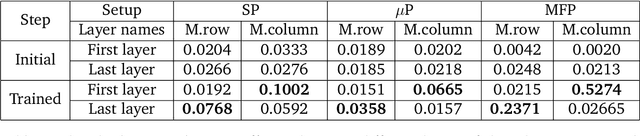
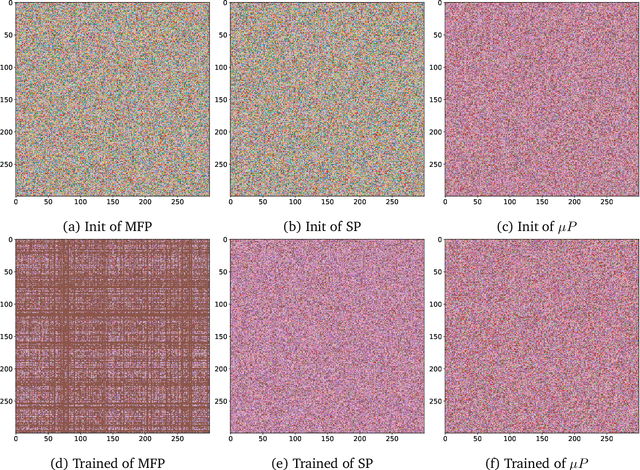


The pre-training cost of large language models (LLMs) is prohibitive. One cutting-edge approach to reduce the cost is zero-shot weight transfer, also known as model growth for some cases, which magically transfers the weights trained in a small model to a large model. However, there are still some theoretical mysteries behind the weight transfer. In this paper, inspired by prior applications of mean field theory to neural network dynamics, we introduce a mean field ansatz to provide a theoretical explanation for weight transfer. Specifically, we propose the row-column (RC) ansatz under the mean field point of view, which describes the measure structure of the weights in the neural network (NN) and admits a close measure dynamic. Thus, the weights of different sizes NN admit a common distribution under proper assumptions, and weight transfer methods can be viewed as sampling methods. We empirically validate the RC ansatz by exploring simple MLP examples and LLMs such as GPT-3 and Llama-3.1. We show the mean-field point of view is adequate under suitable assumptions which can provide theoretical support for zero-shot weight transfer.
Hierarchical Working Memory and a New Magic Number
Aug 14, 2024The extremely limited working memory span, typically around four items, contrasts sharply with our everyday experience of processing much larger streams of sensory information concurrently. This disparity suggests that working memory can organize information into compact representations such as chunks, yet the underlying neural mechanisms remain largely unknown. Here, we propose a recurrent neural network model for chunking within the framework of the synaptic theory of working memory. We showed that by selectively suppressing groups of stimuli, the network can maintain and retrieve the stimuli in chunks, hence exceeding the basic capacity. Moreover, we show that our model can dynamically construct hierarchical representations within working memory through hierarchical chunking. A consequence of this proposed mechanism is a new limit on the number of items that can be stored and subsequently retrieved from working memory, depending only on the basic working memory capacity when chunking is not invoked. Predictions from our model were confirmed by analyzing single-unit responses in epileptic patients and memory experiments with verbal material. Our work provides a novel conceptual and analytical framework for understanding the on-the-fly organization of information in the brain that is crucial for cognition.
AI Research is not Magic, it has to be Reproducible and Responsible: Challenges in the AI field from the Perspective of its PhD Students
Aug 13, 2024With the goal of uncovering the challenges faced by European AI students during their research endeavors, we surveyed 28 AI doctoral candidates from 13 European countries. The outcomes underscore challenges in three key areas: (1) the findability and quality of AI resources such as datasets, models, and experiments; (2) the difficulties in replicating the experiments in AI papers; (3) and the lack of trustworthiness and interdisciplinarity. From our findings, it appears that although early stage AI researchers generally tend to share their AI resources, they lack motivation or knowledge to engage more in dataset and code preparation and curation, and ethical assessments, and are not used to cooperate with well-versed experts in application domains. Furthermore, we examine existing practices in data governance and reproducibility both in computer science and in artificial intelligence. For instance, only a minority of venues actively promote reproducibility initiatives such as reproducibility evaluations. Critically, there is need for immediate adoption of responsible and reproducible AI research practices, crucial for society at large, and essential for the AI research community in particular. This paper proposes a combination of social and technical recommendations to overcome the identified challenges. Socially, we propose the general adoption of reproducibility initiatives in AI conferences and journals, as well as improved interdisciplinary collaboration, especially in data governance practices. On the technical front, we call for enhanced tools to better support versioning control of datasets and code, and a computing infrastructure that facilitates the sharing and discovery of AI resources, as well as the sharing, execution, and verification of experiments.
Stabilizer bootstrapping: A recipe for efficient agnostic tomography and magic estimation
Aug 13, 2024We study the task of agnostic tomography: given copies of an unknown $n$-qubit state $\rho$ which has fidelity $\tau$ with some state in a given class $C$, find a state which has fidelity $\ge \tau - \epsilon$ with $\rho$. We give a new framework, stabilizer bootstrapping, for designing computationally efficient protocols for this task, and use this to get new agnostic tomography protocols for the following classes: Stabilizer states: We give a protocol that runs in time $\mathrm{poly}(n,1/\epsilon)\cdot (1/\tau)^{O(\log(1/\tau))}$, answering an open question posed by Grewal, Iyer, Kretschmer, Liang [40] and Anshu and Arunachalam [6]. Previous protocols ran in time $\mathrm{exp}(\Theta(n))$ or required $\tau>\cos^2(\pi/8)$. States with stabilizer dimension $n - t$: We give a protocol that runs in time $n^3\cdot(2^t/\tau)^{O(\log(1/\epsilon))}$, extending recent work on learning quantum states prepared by circuits with few non-Clifford gates, which only applied in the realizable setting where $\tau = 1$ [30, 37, 46, 61]. Discrete product states: If $C = K^{\otimes n}$ for some $\mu$-separated discrete set $K$ of single-qubit states, we give a protocol that runs in time $(n/\mu)^{O((1 + \log (1/\tau))/\mu)}/\epsilon^2$. This strictly generalizes a prior guarantee which applied to stabilizer product states [39]. For stabilizer product states, we give a further improved protocol that runs in time $(n^2/\epsilon^2)\cdot (1/\tau)^{O(\log(1/\tau))}$. As a corollary, we give the first protocol for estimating stabilizer fidelity, a standard measure of magic for quantum states, to error $\epsilon$ in $n^3 \mathrm{quasipoly}(1/\epsilon)$ time.
fastkqr: A Fast Algorithm for Kernel Quantile Regression
Aug 10, 2024Quantile regression is a powerful tool for robust and heterogeneous learning that has seen applications in a diverse range of applied areas. However, its broader application is often hindered by the substantial computational demands arising from the non-smooth quantile loss function. In this paper, we introduce a novel algorithm named fastkqr, which significantly advances the computation of quantile regression in reproducing kernel Hilbert spaces. The core of fastkqr is a finite smoothing algorithm that magically produces exact regression quantiles, rather than approximations. To further accelerate the algorithm, we equip fastkqr with a novel spectral technique that carefully reutilizes matrix computations. In addition, we extend fastkqr to accommodate a flexible kernel quantile regression with a data-driven crossing penalty, addressing the interpretability challenges of crossing quantile curves at multiple levels. We have implemented fastkqr in a publicly available R package. Extensive simulations and real applications show that fastkqr matches the accuracy of state-of-the-art algorithms but can operate up to an order of magnitude faster.
Pose Magic: Efficient and Temporally Consistent Human Pose Estimation with a Hybrid Mamba-GCN Network
Aug 07, 2024
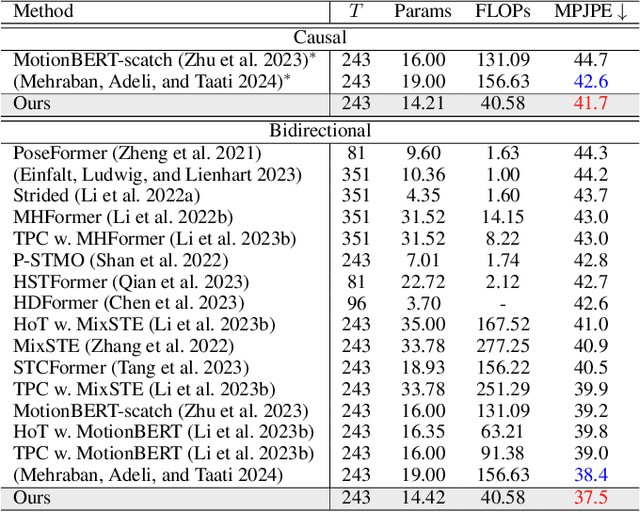
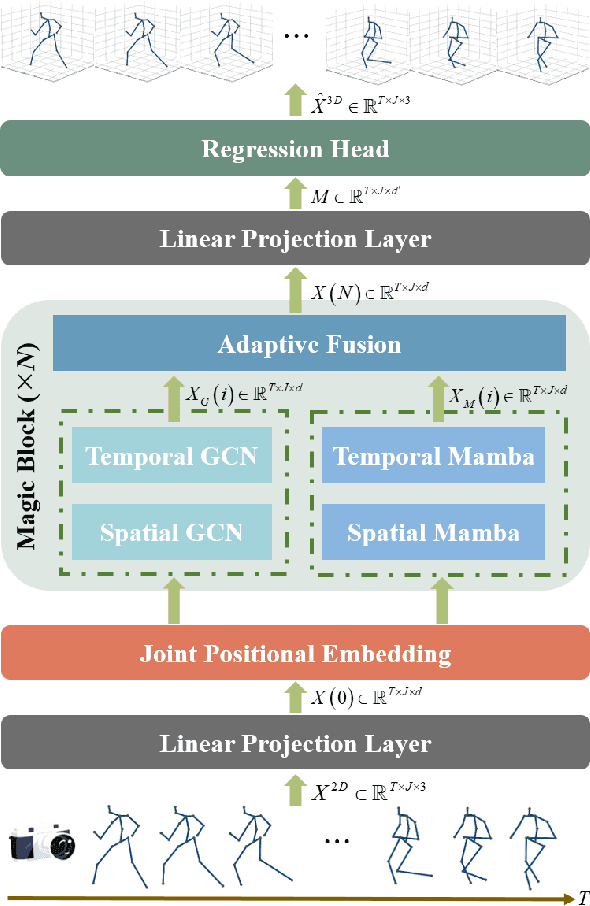
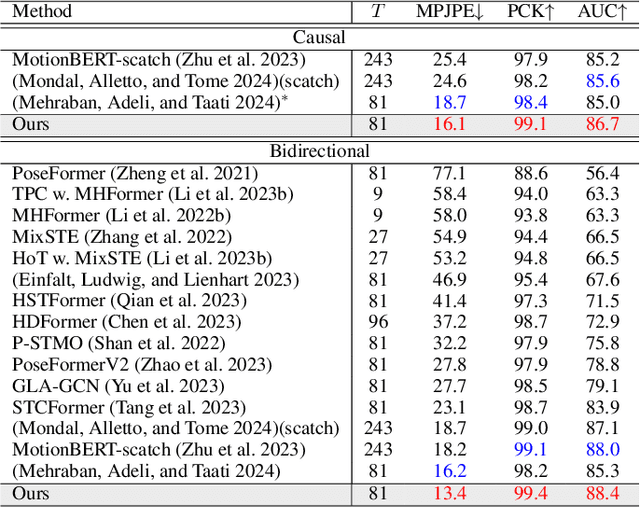
Current state-of-the-art (SOTA) methods in 3D Human Pose Estimation (HPE) are primarily based on Transformers. However, existing Transformer-based 3D HPE backbones often encounter a trade-off between accuracy and computational efficiency. To resolve the above dilemma, in this work, we leverage recent advances in state space models and utilize Mamba for high-quality and efficient long-range modeling. Nonetheless, Mamba still faces challenges in precisely exploiting local dependencies between joints. To address these issues, we propose a new attention-free hybrid spatiotemporal architecture named Hybrid Mamba-GCN (Pose Magic). This architecture introduces local enhancement with GCN by capturing relationships between neighboring joints, thus producing new representations to complement Mamba's outputs. By adaptively fusing representations from Mamba and GCN, Pose Magic demonstrates superior capability in learning the underlying 3D structure. To meet the requirements of real-time inference, we also provide a fully causal version. Extensive experiments show that Pose Magic achieves new SOTA results ($\downarrow 0.9 mm$) while saving $74.1\%$ FLOPs. In addition, Pose Magic exhibits optimal motion consistency and the ability to generalize to unseen sequence lengths.
LLM Stability: A detailed analysis with some surprises
Aug 06, 2024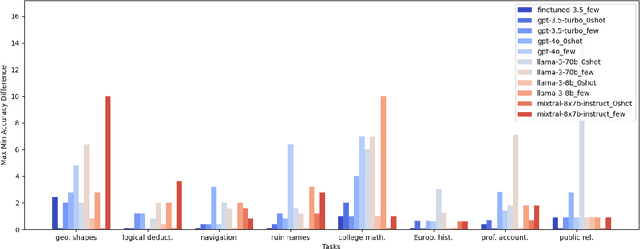
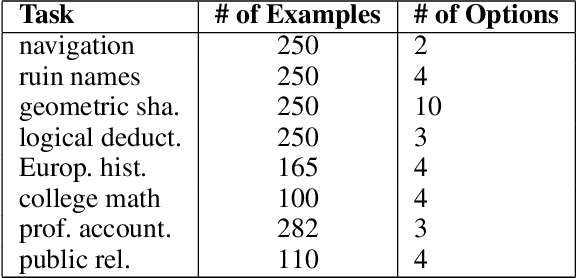
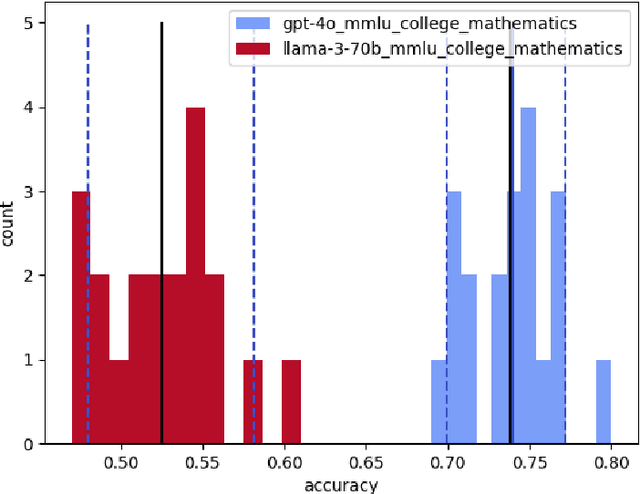

A concerning property of our nearly magical LLMs involves the variation of results given the exact same input and deterministic hyper-parameters. While AI has always had a certain level of noisiness from inputs outside of training data, we have generally had deterministic results for any particular input; that is no longer true. While most LLM practitioners are "in the know", we are unaware of any work that attempts to quantify current LLM stability. We suspect no one has taken the trouble because it is just too boring a paper to execute and write. But we have done it and there are some surprises. What kinds of surprises? The evaluated LLMs are rarely deterministic at the raw output level; they are much more deterministic at the parsed output/answer level but still rarely 100% stable across 5 re-runs with same data input. LLM accuracy variation is not normally distributed. Stability varies based on task.
MAGIC-VFM: Meta-learning Adaptation for Ground Interaction Control with Visual Foundation Models
Jul 17, 2024Control of off-road vehicles is challenging due to the complex dynamic interactions with the terrain. Accurate modeling of these interactions is important to optimize driving performance, but the relevant physical phenomena are too complex to model from first principles. Therefore, we present an offline meta-learning algorithm to construct a rapidly-tunable model of residual dynamics and disturbances. Our model processes terrain images into features using a visual foundation model (VFM), then maps these features and the vehicle state to an estimate of the current actuation matrix using a deep neural network (DNN). We then combine this model with composite adaptive control to modify the last layer of the DNN in real time, accounting for the remaining terrain interactions not captured during offline training. We provide mathematical guarantees of stability and robustness for our controller and demonstrate the effectiveness of our method through simulations and hardware experiments with a tracked vehicle and a car-like robot. We evaluate our method outdoors on different slopes with varying slippage and actuator degradation disturbances, and compare against an adaptive controller that does not use the VFM terrain features. We show significant improvement over the baseline in both hardware experimentation and simulation.