 Add to Chrome
 Add to Firefox
 Add to Edge
autonomous cars
Autonomous cars are self-driving vehicles that use artificial intelligence (AI) and sensors to navigate and operate without human intervention, using high-resolution cameras and lidars that detect what happens in the car's immediate surroundings. They have the potential to revolutionize transportation by improving safety, efficiency, and accessibility.
Papers and Code
Open-World Panoptic Segmentation
Dec 17, 2024
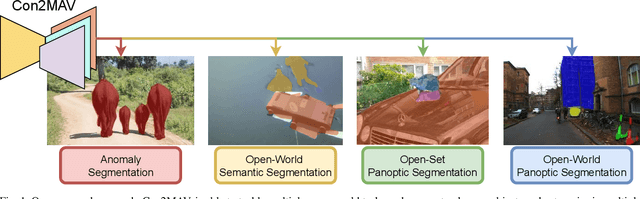

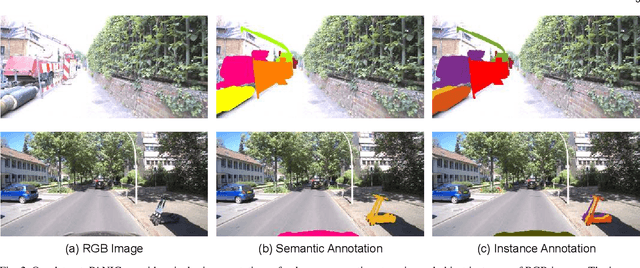

Perception is a key building block of autonomously acting vision systems such as autonomous vehicles. It is crucial that these systems are able to understand their surroundings in order to operate safely and robustly. Additionally, autonomous systems deployed in unconstrained real-world scenarios must be able of dealing with novel situations and object that have never been seen before. In this article, we tackle the problem of open-world panoptic segmentation, i.e., the task of discovering new semantic categories and new object instances at test time, while enforcing consistency among the categories that we incrementally discover. We propose Con2MAV, an approach for open-world panoptic segmentation that extends our previous work, ContMAV, which was developed for open-world semantic segmentation. Through extensive experiments across multiple datasets, we show that our model achieves state-of-the-art results on open-world segmentation tasks, while still performing competitively on the known categories. We will open-source our implementation upon acceptance. Additionally, we propose PANIC (Panoptic ANomalies In Context), a benchmark for evaluating open-world panoptic segmentation in autonomous driving scenarios. This dataset, recorded with a multi-modal sensor suite mounted on a car, provides high-quality, pixel-wise annotations of anomalous objects at both semantic and instance level. Our dataset contains 800 images, with more than 50 unknown classes, i.e., classes that do not appear in the training set, and 4000 object instances, making it an extremely challenging dataset for open-world segmentation tasks in the autonomous driving scenario. We provide competitions for multiple open-world tasks on a hidden test set. Our dataset and competitions are available at https://www.ipb.uni-bonn.de/data/panic.

UniDrive: Towards Universal Driving Perception Across Camera Configurations
Oct 17, 2024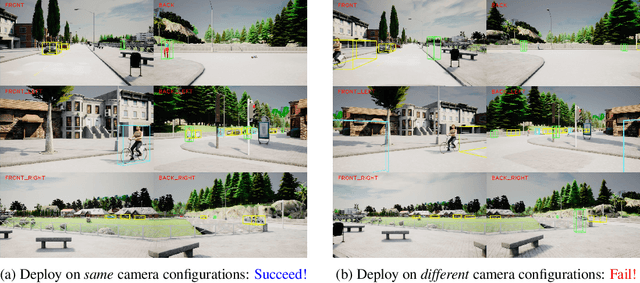
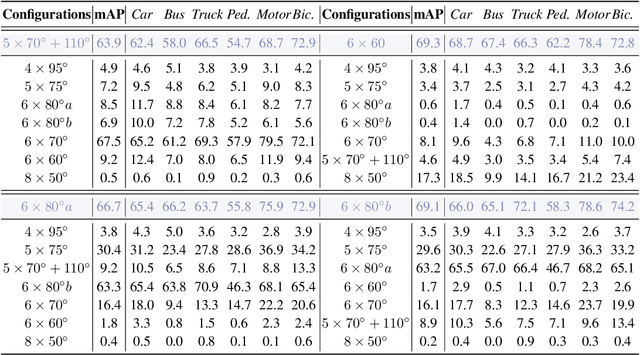
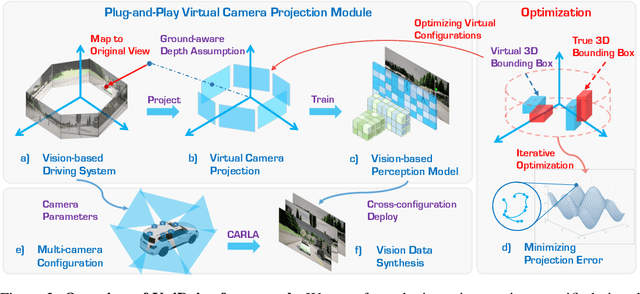
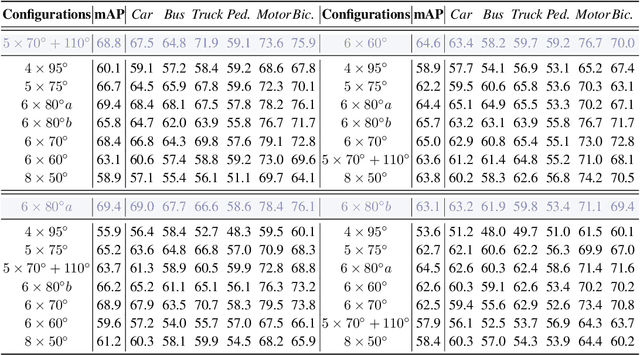
Vision-centric autonomous driving has demonstrated excellent performance with economical sensors. As the fundamental step, 3D perception aims to infer 3D information from 2D images based on 3D-2D projection. This makes driving perception models susceptible to sensor configuration (e.g., camera intrinsics and extrinsics) variations. However, generalizing across camera configurations is important for deploying autonomous driving models on different car models. In this paper, we present UniDrive, a novel framework for vision-centric autonomous driving to achieve universal perception across camera configurations. We deploy a set of unified virtual cameras and propose a ground-aware projection method to effectively transform the original images into these unified virtual views. We further propose a virtual configuration optimization method by minimizing the expected projection error between original cameras and virtual cameras. The proposed virtual camera projection can be applied to existing 3D perception methods as a plug-and-play module to mitigate the challenges posed by camera parameter variability, resulting in more adaptable and reliable driving perception models. To evaluate the effectiveness of our framework, we collect a dataset on Carla by driving the same routes while only modifying the camera configurations. Experimental results demonstrate that our method trained on one specific camera configuration can generalize to varying configurations with minor performance degradation.
COOOL: Challenge Of Out-Of-Label A Novel Benchmark for Autonomous Driving
Dec 06, 2024As the Computer Vision community rapidly develops and advances algorithms for autonomous driving systems, the goal of safer and more efficient autonomous transportation is becoming increasingly achievable. However, it is 2024, and we still do not have fully self-driving cars. One of the remaining core challenges lies in addressing the novelty problem, where self-driving systems still struggle to handle previously unseen situations on the open road. With our Challenge of Out-Of-Label (COOOL) benchmark, we introduce a novel dataset for hazard detection, offering versatile evaluation metrics applicable across various tasks, including novelty-adjacent domains such as Anomaly Detection, Open-Set Recognition, Open Vocabulary, and Domain Adaptation. COOOL comprises over 200 collections of dashcam-oriented videos, annotated by human labelers to identify objects of interest and potential driving hazards. It includes a diverse range of hazards and nuisance objects. Due to the dataset's size and data complexity, COOOL serves exclusively as an evaluation benchmark.
SoftCTRL: Soft conservative KL-control of Transformer Reinforcement Learning for Autonomous Driving
Oct 30, 2024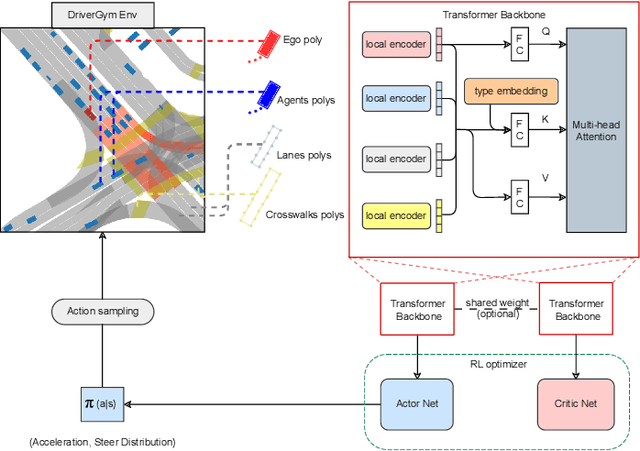
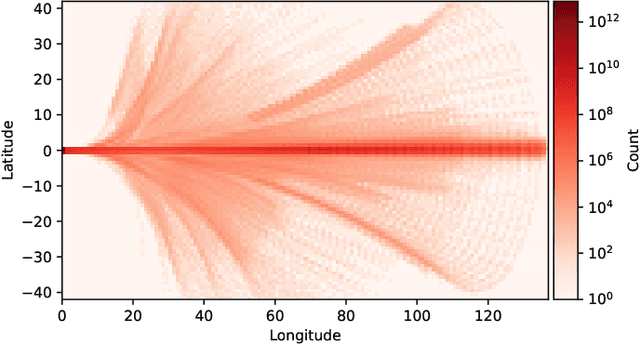
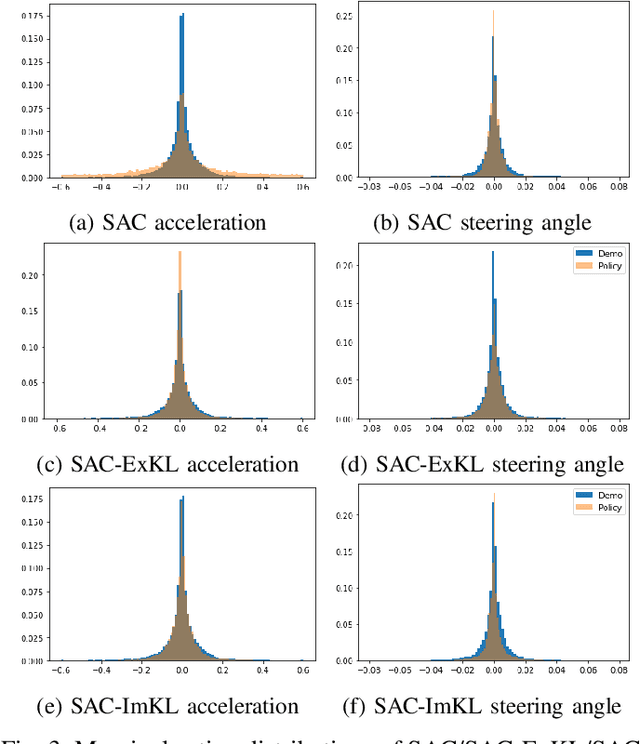
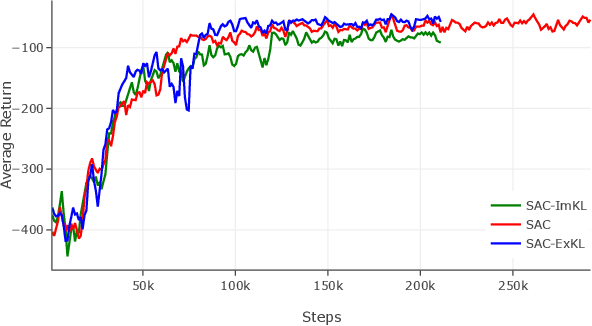
In recent years, motion planning for urban self-driving cars (SDV) has become a popular problem due to its complex interaction of road components. To tackle this, many methods have relied on large-scale, human-sampled data processed through Imitation learning (IL). Although effective, IL alone cannot adequately handle safety and reliability concerns. Combining IL with Reinforcement learning (RL) by adding KL divergence between RL and IL policy to the RL loss can alleviate IL's weakness but suffer from over-conservation caused by covariate shift of IL. To address this limitation, we introduce a method that combines IL with RL using an implicit entropy-KL control that offers a simple way to reduce the over-conservation characteristic. In particular, we validate different challenging simulated urban scenarios from the unseen dataset, indicating that although IL can perform well in imitation tasks, our proposed method significantly improves robustness (over 17\% reduction in failures) and generates human-like driving behavior.
VAP: The Vulnerability-Adaptive Protection Paradigm Toward Reliable Autonomous Machines
Sep 30, 2024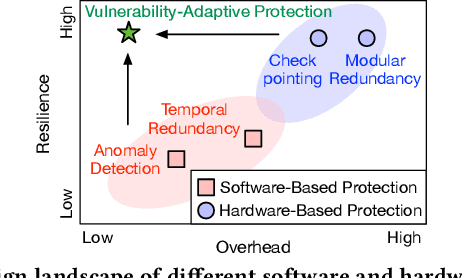
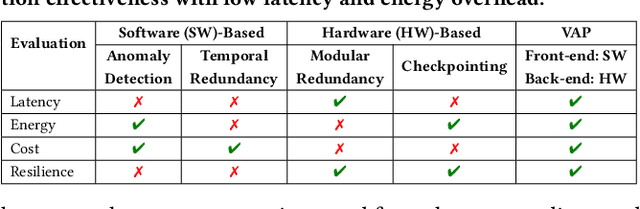
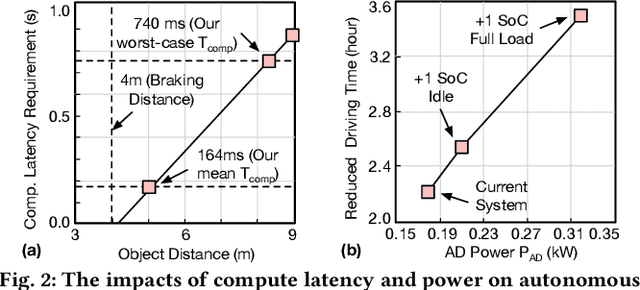
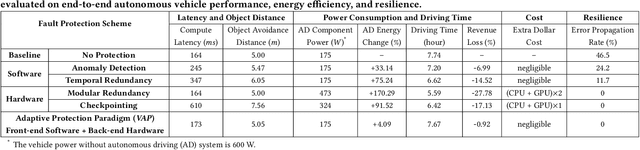
The next ubiquitous computing platform, following personal computers and smartphones, is poised to be inherently autonomous, encompassing technologies like drones, robots, and self-driving cars. Ensuring reliability for these autonomous machines is critical. However, current resiliency solutions make fundamental trade-offs between reliability and cost, resulting in significant overhead in performance, energy consumption, and chip area. This is due to the "one-size-fits-all" approach commonly used, where the same protection scheme is applied throughout the entire software computing stack. This paper presents the key insight that to achieve high protection coverage with minimal cost, we must leverage the inherent variations in robustness across different layers of the autonomous machine software stack. Specifically, we demonstrate that various nodes in this complex stack exhibit different levels of robustness against hardware faults. Our findings reveal that the front-end of an autonomous machine's software stack tends to be more robust, whereas the back-end is generally more vulnerable. Building on these inherent robustness differences, we propose a Vulnerability-Adaptive Protection (VAP) design paradigm. In this paradigm, the allocation of protection resources - whether spatially (e.g., through modular redundancy) or temporally (e.g., via re-execution) - is made inversely proportional to the inherent robustness of tasks or algorithms within the autonomous machine system. Experimental results show that VAP provides high protection coverage while maintaining low overhead in both autonomous vehicle and drone systems.
Managing Bandwidth: The Key to Cloud-Assisted Autonomous Driving
Oct 21, 2024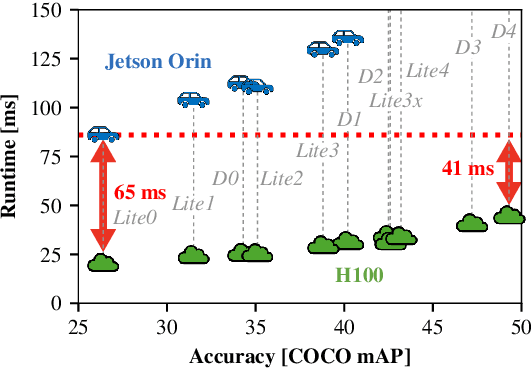
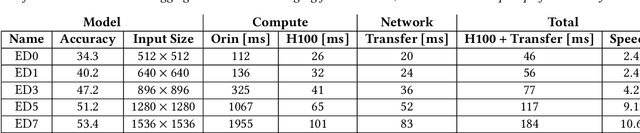

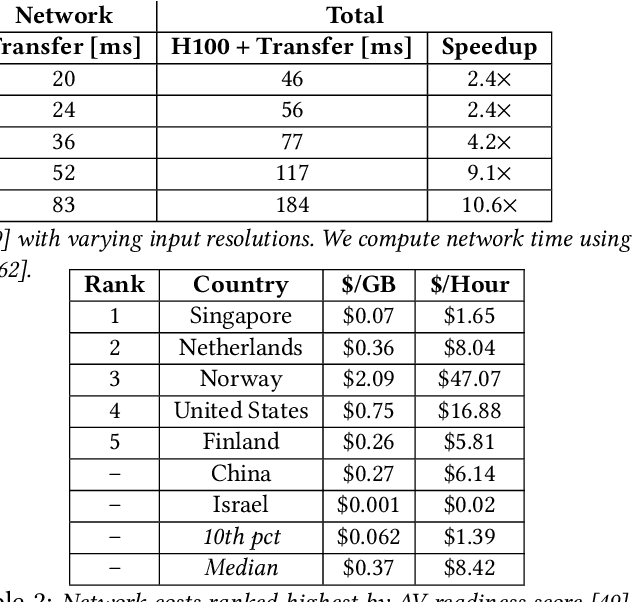
Prevailing wisdom asserts that one cannot rely on the cloud for critical real-time control systems like self-driving cars. We argue that we can, and must. Following the trends of increasing model sizes, improvements in hardware, and evolving mobile networks, we identify an opportunity to offload parts of time-sensitive and latency-critical compute to the cloud. Doing so requires carefully allocating bandwidth to meet strict latency SLOs, while maximizing benefit to the car.
eCARLA-scenes: A synthetically generated dataset for event-based optical flow prediction
Dec 12, 2024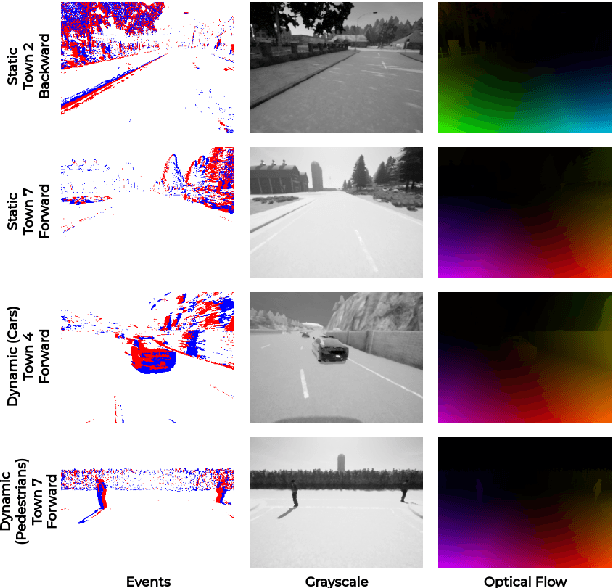
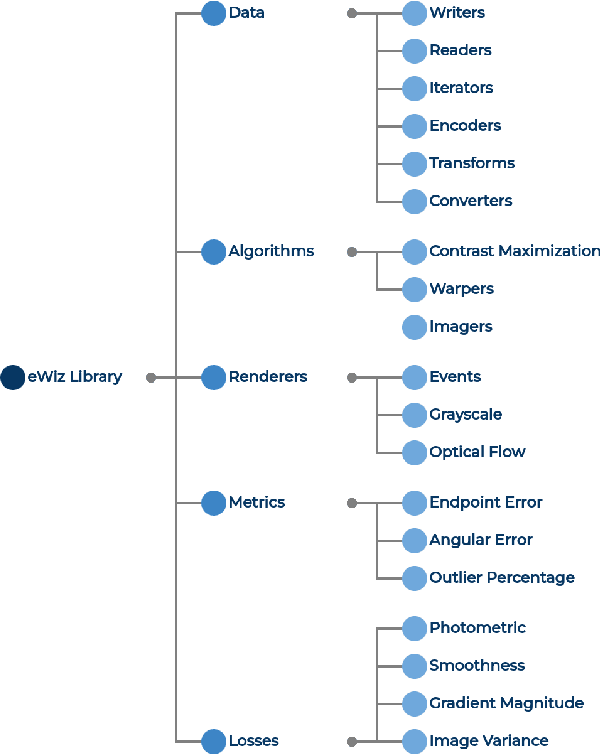
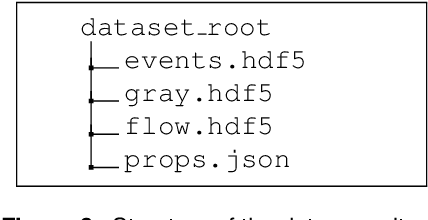
The joint use of event-based vision and Spiking Neural Networks (SNNs) is expected to have a large impact in robotics in the near future, in tasks such as, visual odometry and obstacle avoidance. While researchers have used real-world event datasets for optical flow prediction (mostly captured with Unmanned Aerial Vehicles (UAVs)), these datasets are limited in diversity, scalability, and are challenging to collect. Thus, synthetic datasets offer a scalable alternative by bridging the gap between reality and simulation. In this work, we address the lack of datasets by introducing eWiz, a comprehensive library for processing event-based data. It includes tools for data loading, augmentation, visualization, encoding, and generation of training data, along with loss functions and performance metrics. We further present a synthetic event-based datasets and data generation pipelines for optical flow prediction tasks. Built on top of eWiz, eCARLA-scenes makes use of the CARLA simulator to simulate self-driving car scenarios. The ultimate goal of this dataset is the depiction of diverse environments while laying a foundation for advancing event-based camera applications in autonomous field vehicle navigation, paving the way for using SNNs on neuromorphic hardware such as the Intel Loihi.
Enhancing Safety and Robustness of Vision-Based Controllers via Reachability Analysis
Oct 29, 2024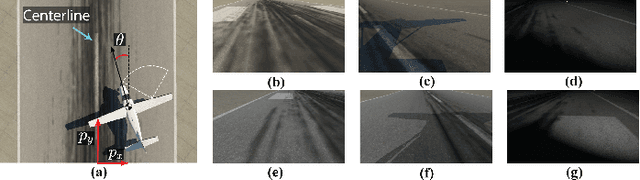
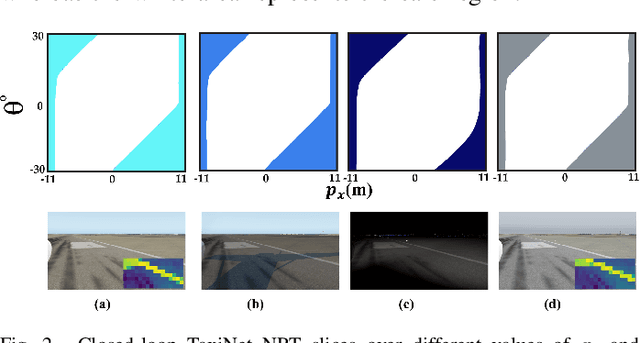
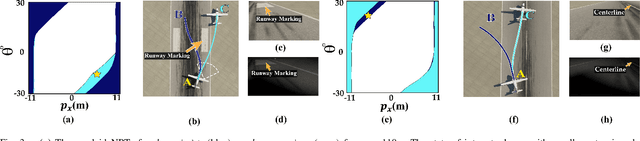
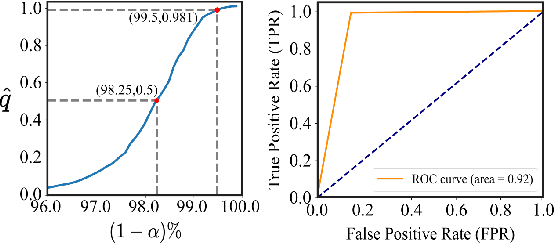
Autonomous systems, such as self-driving cars and drones, have made significant strides in recent years by leveraging visual inputs and machine learning for decision-making and control. Despite their impressive performance, these vision-based controllers can make erroneous predictions when faced with novel or out-of-distribution inputs. Such errors can cascade into catastrophic system failures and compromise system safety. In this work, we compute Neural Reachable Tubes, which act as parameterized approximations of Backward Reachable Tubes to stress-test the vision-based controllers and mine their failure modes. The identified failures are then used to enhance the system safety through both offline and online methods. The online approach involves training a classifier as a run-time failure monitor to detect closed-loop, system-level failures, subsequently triggering a fallback controller that robustly handles these detected failures to preserve system safety. For the offline approach, we improve the original controller via incremental training using a carefully augmented failure dataset, resulting in a more robust controller that is resistant to the known failure modes. In either approach, the system is safeguarded against shortcomings that transcend the vision-based controller and pertain to the closed-loop safety of the overall system. We validate the proposed approaches on an autonomous aircraft taxiing task that involves using a vision-based controller to guide the aircraft towards the centerline of the runway. Our results show the efficacy of the proposed algorithms in identifying and handling system-level failures, outperforming methods that rely on controller prediction error or uncertainty quantification for identifying system failures.
Three-Dimensional Vehicle Dynamics State Estimation for High-Speed Race Cars under varying Signal Quality
Aug 27, 2024


This work aims to present a three-dimensional vehicle dynamics state estimation under varying signal quality. Few researchers have investigated the impact of three-dimensional road geometries on the state estimation and, thus, neglect road inclination and banking. Especially considering high velocities and accelerations, the literature does not address these effects. Therefore, we compare two- and three-dimensional state estimation schemes to outline the impact of road geometries. We use an Extended Kalman Filter with a point-mass motion model and extend it by an additional formulation of reference angles. Furthermore, virtual velocity measurements significantly improve the estimation of road angles and the vehicle's side slip angle. We highlight the importance of steady estimations for vehicle motion control algorithms and demonstrate the challenges of degraded signal quality and Global Navigation Satellite System dropouts. The proposed adaptive covariance facilitates a smooth estimation and enables stable controller behavior. The developed state estimation has been deployed on a high-speed autonomous race car at various racetracks. Our findings indicate that our approach outperforms state-of-the-art vehicle dynamics state estimators and an industry-grade Inertial Navigation System. Further studies are needed to investigate the performance under varying track conditions and on other vehicle types.
Results of the 2023 CommonRoad Motion Planning Competition for Autonomous Vehicles
Nov 10, 2024
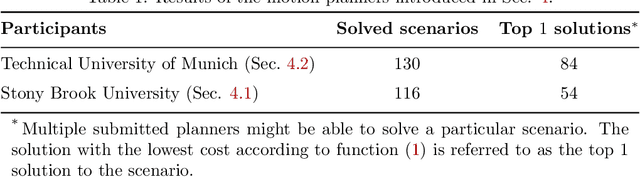


In recent years, different approaches for motion planning of autonomous vehicles have been proposed that can handle complex traffic situations. However, these approaches are rarely compared on the same set of benchmarks. To address this issue, we present the results of a large-scale motion planning competition for autonomous vehicles based on the CommonRoad benchmark suite. The benchmark scenarios contain highway and urban environments featuring various types of traffic participants, such as passengers, cars, buses, etc. The solutions are evaluated considering efficiency, safety, comfort, and compliance with a selection of traffic rules. This report summarizes the main results of the competition.