 Add to Chrome
 Add to Firefox
 Add to Edge
Liver
Papers and Code
Evaluating the Impact of Lab Test Results on Large Language Models Generated Differential Diagnoses from Clinical Case Vignettes
Nov 01, 2024
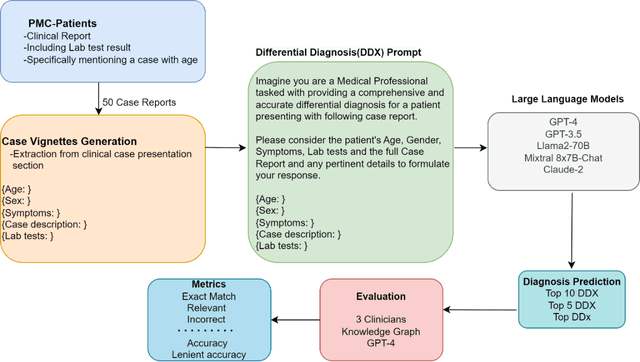
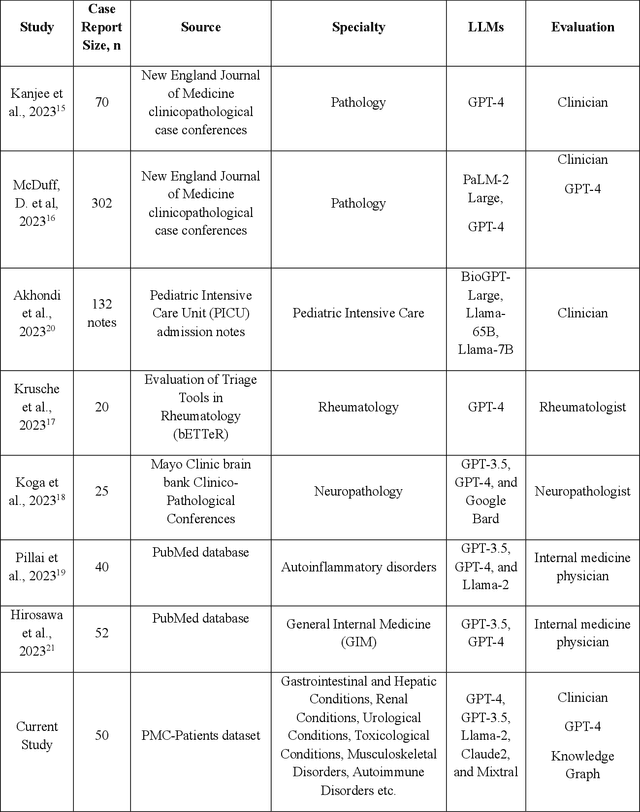
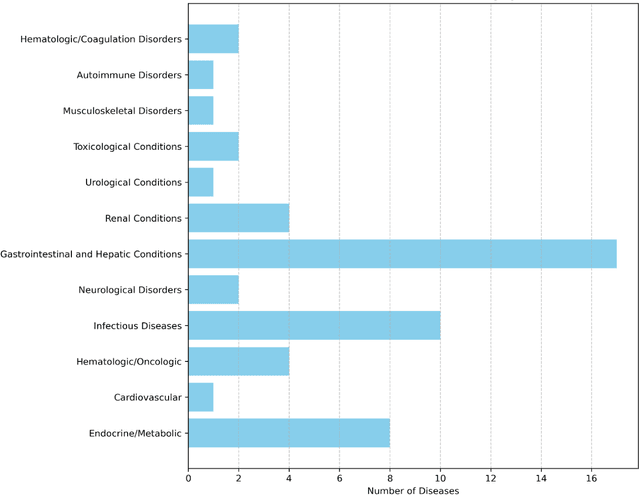
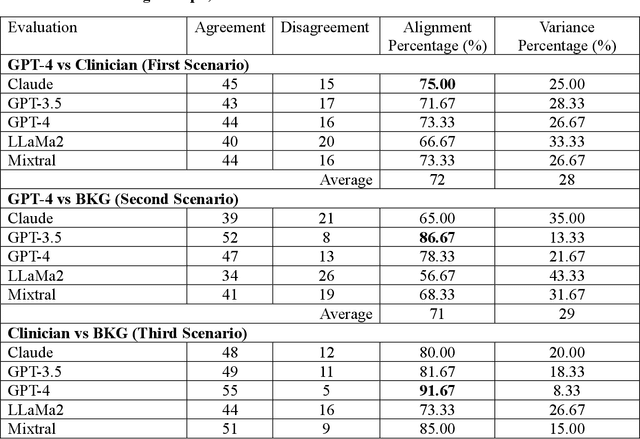
Differential diagnosis is crucial for medicine as it helps healthcare providers systematically distinguish between conditions that share similar symptoms. This study assesses the impact of lab test results on differential diagnoses (DDx) made by large language models (LLMs). Clinical vignettes from 50 case reports from PubMed Central were created incorporating patient demographics, symptoms, and lab results. Five LLMs GPT-4, GPT-3.5, Llama-2-70b, Claude-2, and Mixtral-8x7B were tested to generate Top 10, Top 5, and Top 1 DDx with and without lab data. A comprehensive evaluation involving GPT-4, a knowledge graph, and clinicians was conducted. GPT-4 performed best, achieving 55% accuracy for Top 1 diagnoses and 60% for Top 10 with lab data, with lenient accuracy up to 80%. Lab results significantly improved accuracy, with GPT-4 and Mixtral excelling, though exact match rates were low. Lab tests, including liver function, metabolic/toxicology panels, and serology/immune tests, were generally interpreted correctly by LLMs for differential diagnosis.

Improving 3D Medical Image Segmentation at Boundary Regions using Local Self-attention and Global Volume Mixing
Oct 20, 2024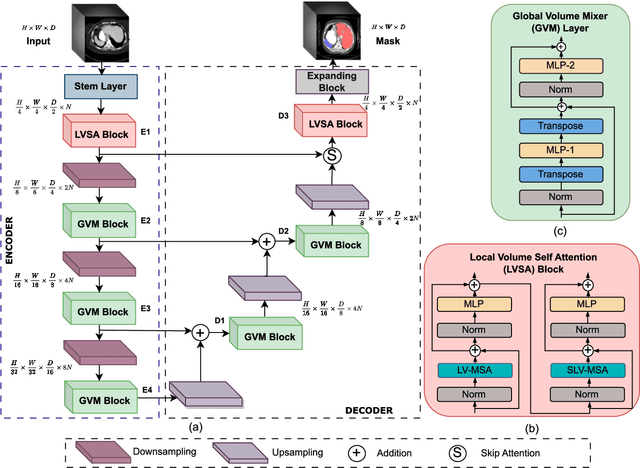
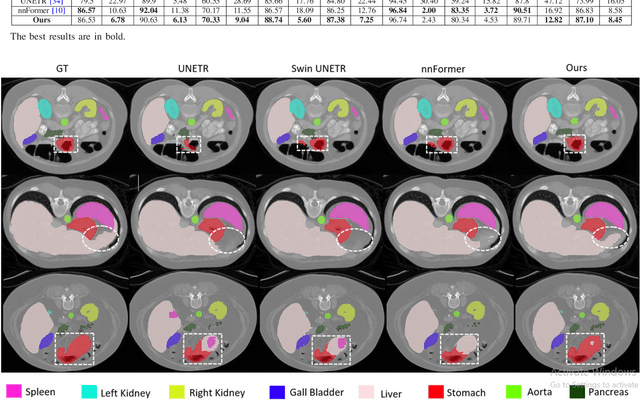

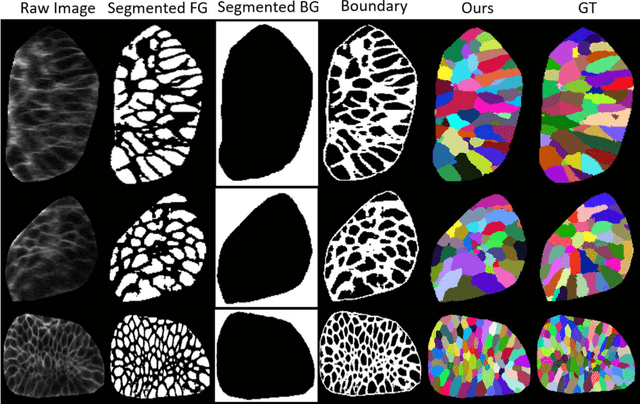
Volumetric medical image segmentation is a fundamental problem in medical image analysis where the objective is to accurately classify a given 3D volumetric medical image with voxel-level precision. In this work, we propose a novel hierarchical encoder-decoder-based framework that strives to explicitly capture the local and global dependencies for volumetric 3D medical image segmentation. The proposed framework exploits local volume-based self-attention to encode the local dependencies at high resolution and introduces a novel volumetric MLP-mixer to capture the global dependencies at low-resolution feature representations, respectively. The proposed volumetric MLP-mixer learns better associations among volumetric feature representations. These explicit local and global feature representations contribute to better learning of the shape-boundary characteristics of the organs. Extensive experiments on three different datasets reveal that the proposed method achieves favorable performance compared to state-of-the-art approaches. On the challenging Synapse Multi-organ dataset, the proposed method achieves an absolute 3.82\% gain over the state-of-the-art approaches in terms of HD95 evaluation metrics {while a similar improvement pattern is exhibited in MSD Liver and Pancreas tumor datasets}. We also provide a detailed comparison between recent architectural design choices in the 2D computer vision literature by adapting them for the problem of 3D medical image segmentation. Finally, our experiments on the ZebraFish 3D cell membrane dataset having limited training data demonstrate the superior transfer learning capabilities of the proposed vMixer model on the challenging 3D cell instance segmentation task, where accurate boundary prediction plays a vital role in distinguishing individual cell instances.
Implicit neural representation for free-breathing MR fingerprinting (INR-MRF): co-registered 3D whole-liver water T1, water T2, proton density fat fraction, and R2* mapping
Oct 19, 2024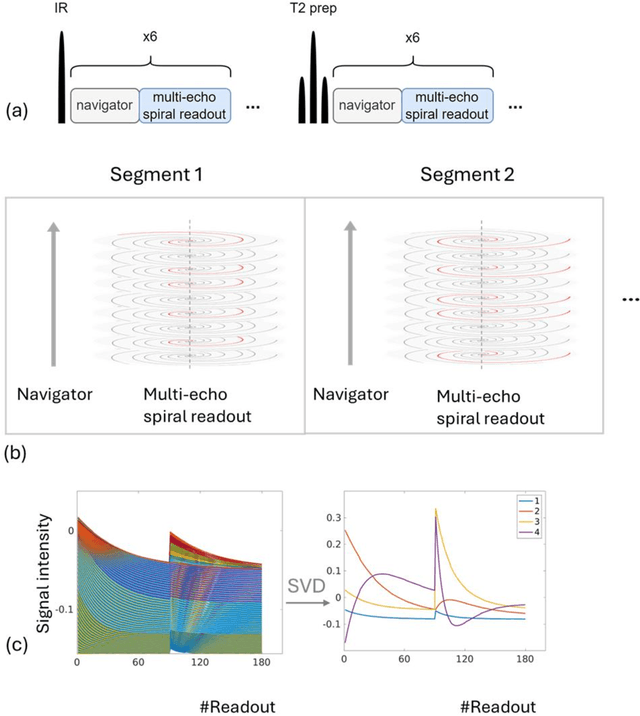
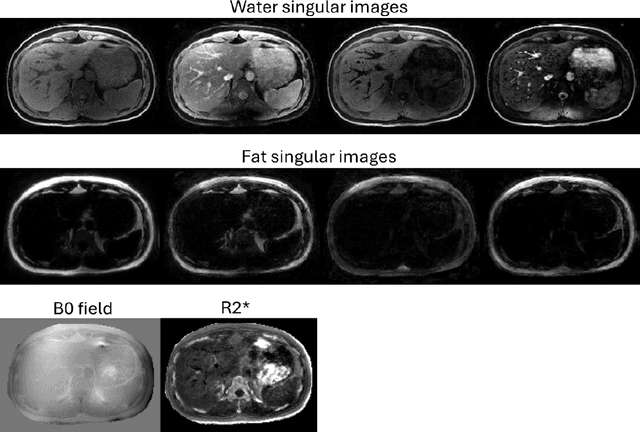
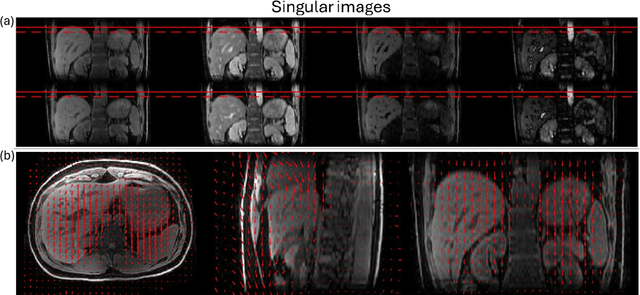
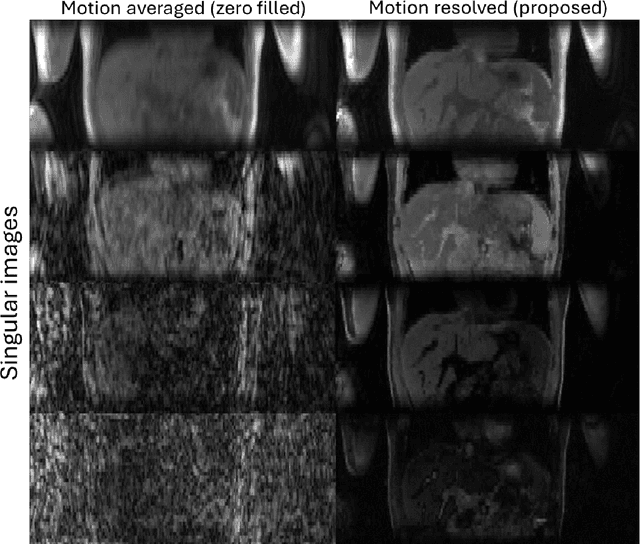
Purpose: To develop an MRI technique for free-breathing 3D whole-liver quantification of water T1, water T2, proton density fat fraction (PDFF), R2*. Methods: An Eight-echo spoiled gradient echo pulse sequence with spiral readout was developed by interleaving inversion recovery and T2 magnetization preparation. We propose a neural network based on a 4D and a 3D implicit neural representation (INR) which simultaneously learns the motion deformation fields and the static reference frame MRI subspace images respectively. Water and fat singular images were separated during network training, with no need of performing retrospective water-fat separation. T1, T2, R2* and proton density fat fraction (PDFF) produced by the proposed method were validated in vivo on 10 healthy subjects, using quantitative maps generated from conventional scans as reference. Results: Our results showed minimal bias and narrow 95% limits of agreement on T1, T2, R2* and PDFF values in the liver compared to conventional breath-holding scans. Conclusions: INR-MRF enabled co-registered 3D whole liver T1, T2, R2* and PDFF mapping in a single free-breathing scan.
Synthesizing Proton-Density Fat Fraction and $R_2^*$ from 2-point Dixon MRI with Generative Machine Learning
Oct 15, 2024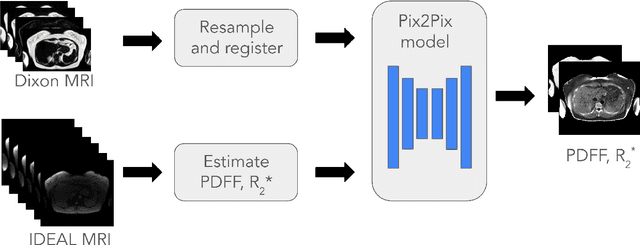
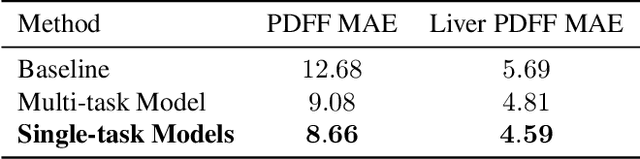
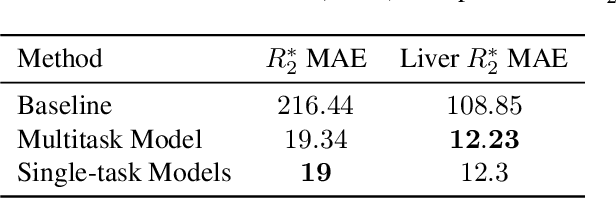
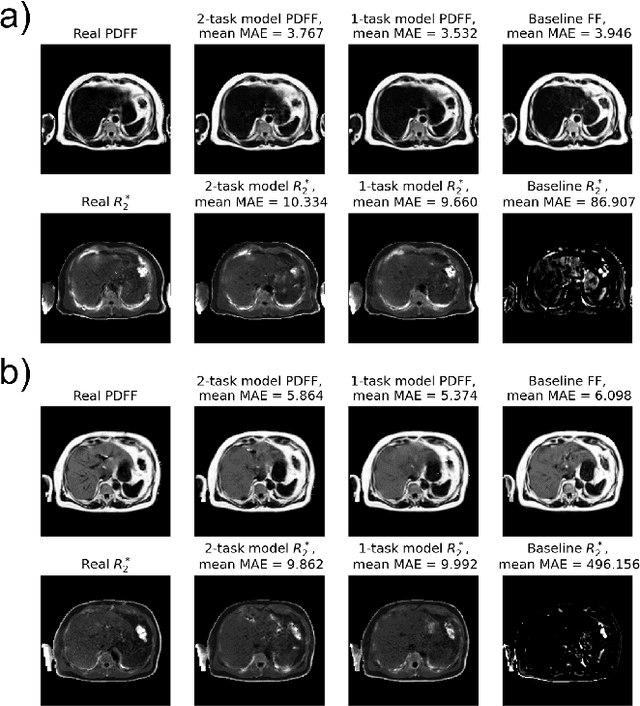
Magnetic Resonance Imaging (MRI) is the gold standard for measuring fat and iron content non-invasively in the body via measures known as Proton Density Fat Fraction (PDFF) and $R_2^*$, respectively. However, conventional PDFF and $R_2^*$ quantification methods operate on MR images voxel-wise and require at least three measurements to estimate three quantities: water, fat, and $R_2^*$. Alternatively, the two-point Dixon MRI protocol is widely used and fast because it acquires only two measurements; however, these cannot be used to estimate three quantities voxel-wise. Leveraging the fact that neighboring voxels have similar values, we propose using a generative machine learning approach to learn PDFF and $R_2^*$ from Dixon MRI. We use paired Dixon-IDEAL data from UK Biobank in the liver and a Pix2Pix conditional GAN to demonstrate the first large-scale $R_2^*$ imputation from two-point Dixon MRIs. Using our proposed approach, we synthesize PDFF and $R_2^*$ maps that show significantly greater correlation with ground-truth than conventional voxel-wise baselines.
Preliminary Evaluation of an Ultrasound-Guided Robotic System for Autonomous Percutaneous Intervention
Oct 14, 2024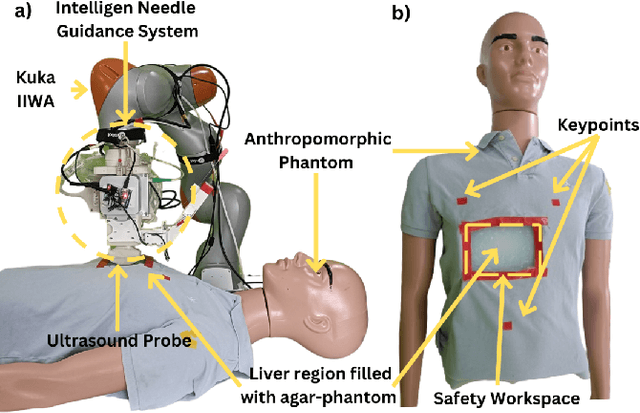
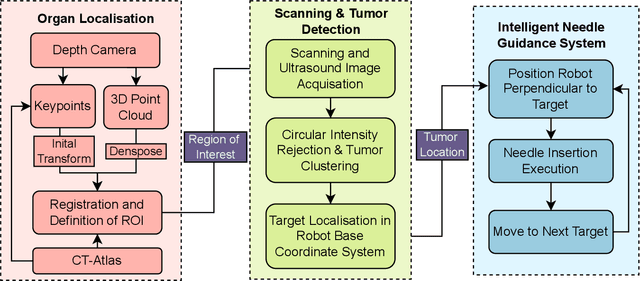
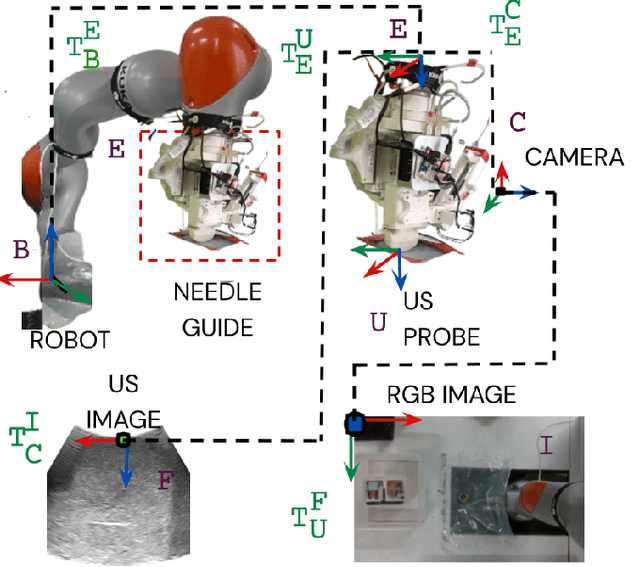
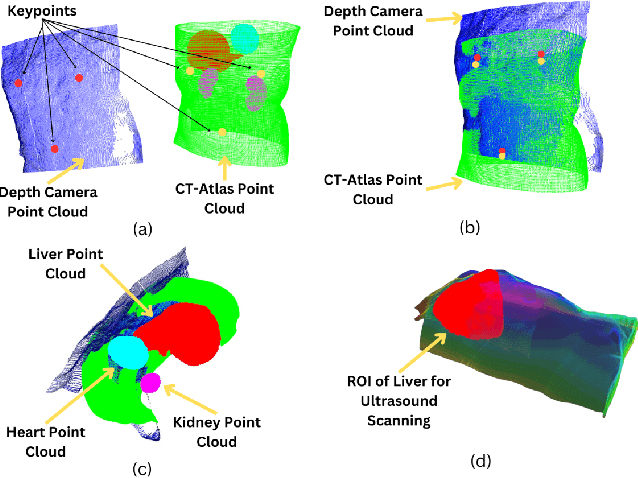
Cancer cases have been rising globally, resulting in nearly 10 million deaths in 2023. Biopsy, crucial for diagnosis, is often performed under ultrasound (US) guidance, demanding precise hand coordination and cognitive decision-making. Robot-assisted interventions have shown improved accuracy in lesion targeting by addressing challenges such as noisy 2D images and maintaining consistent probe-to-surface contact. Recent research has focused on fully autonomous robotic US systems to enable standardized diagnostic procedures and reproducible US-guided therapy. This study presents a fully autonomous system for US-guided needle placement capable of performing end-to-end clinical workflow. The system autonomously: 1) identifies the liver region on the patient's abdomen surface, 2) plans and executes the US scanning path using impedance control, 3) localizes lesions from the US images in real-time, and 4) targets the identified lesions, all without human intervention. This study evaluates both position and impedance-controlled systems. Validation on agar phantoms demonstrated a targeting error of 5.74 +- 2.70 mm, highlighting its potential for accurately targeting tumors larger than 5 mm. Achieved results show its potential for a fully autonomous system for US-guided biopsies.
A Holistic Weakly Supervised Approach for Liver Tumor Segmentation with Clinical Knowledge-Informed Label Smoothing
Oct 13, 2024
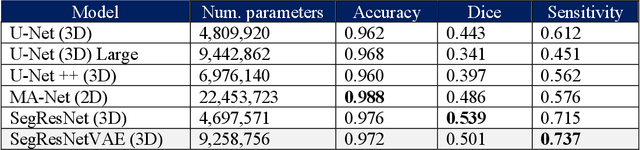
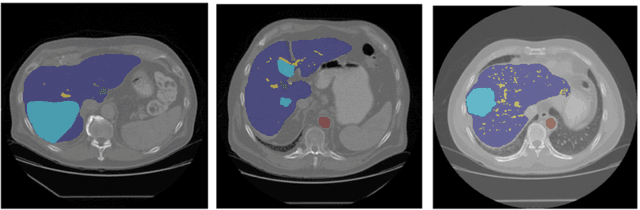
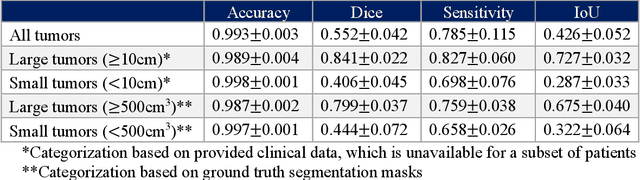
Liver cancer is a leading cause of mortality worldwide, and accurate CT-based tumor segmentation is essential for diagnosis and treatment. Manual delineation is time-intensive, prone to variability, and highlights the need for reliable automation. While deep learning has shown promise for automated liver segmentation, precise liver tumor segmentation remains challenging due to the heterogeneous nature of tumors, imprecise tumor margins, and limited labeled data. We present a novel holistic weakly supervised framework that integrates clinical knowledge to address these challenges with (1) A knowledge-informed label smoothing technique that leverages clinical data to generate smooth labels, which regularizes model training reducing the risk of overfitting and enhancing model performance; (2) A global and local-view segmentation framework, breaking down the task into two simpler sub-tasks, allowing optimized preprocessing and training for each; and (3) Pre- and post-processing pipelines customized to the challenges of each subtask, which enhances tumor visibility and refines tumor boundaries. We evaluated the proposed method on the HCC-TACE-Seg dataset and showed that these three key components complementarily contribute to the improved performance. Lastly, we prototyped a tool for automated liver tumor segmentation and diagnosis summary generation called MedAssistLiver. The app and code are published at https://github.com/lingchm/medassist-liver-cancer.
Towards Real-time Intrahepatic Vessel Identification in Intraoperative Ultrasound-Guided Liver Surgery
Oct 04, 2024While laparoscopic liver resection is less prone to complications and maintains patient outcomes compared to traditional open surgery, its complexity hinders widespread adoption due to challenges in representing the liver's internal structure. Laparoscopic intraoperative ultrasound offers efficient, cost-effective and radiation-free guidance. Our objective is to aid physicians in identifying internal liver structures using laparoscopic intraoperative ultrasound. We propose a patient-specific approach using preoperative 3D ultrasound liver volume to train a deep learning model for real-time identification of portal tree and branch structures. Our personalized AI model, validated on ex vivo swine livers, achieved superior precision (0.95) and recall (0.93) compared to surgeons, laying groundwork for precise vessel identification in ultrasound-based liver resection. Its adaptability and potential clinical impact promise to advance surgical interventions and improve patient care.
MRI quantification of liver fibrosis using diamagnetic susceptibility: An ex-vivo feasibility study
Oct 04, 2024



In chronic liver disease, liver fibrosis develops as excessive deposition of extracellular matrix macromolecules, predominantly collagens, progressively form fibrous scars that disrupt the hepatic architecture, and fibrosis, iron, and fat are interrelated. Fibrosis is the best predictor of morbidity and mortality in chronic liver disease but liver biopsy, the reference method for diagnosis and staging, is invasive and limited by sampling and interobserver variability and risks of complications. The overall objective of this study was to develop a new non-invasive method to quantify fibrosis using diamagnetic susceptibility sources with histology validation in ex vivo liver explants.
Deep Regression 2D-3D Ultrasound Registration for Liver Motion Correction in Focal Tumor Thermal Ablation
Oct 03, 2024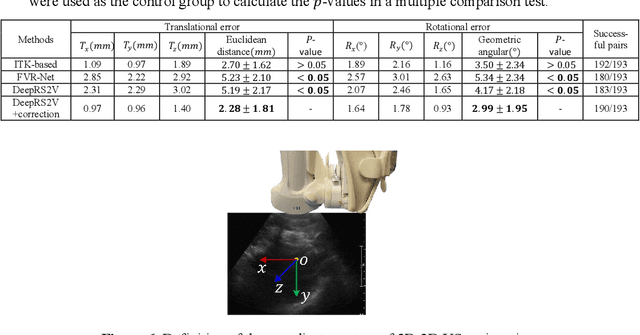
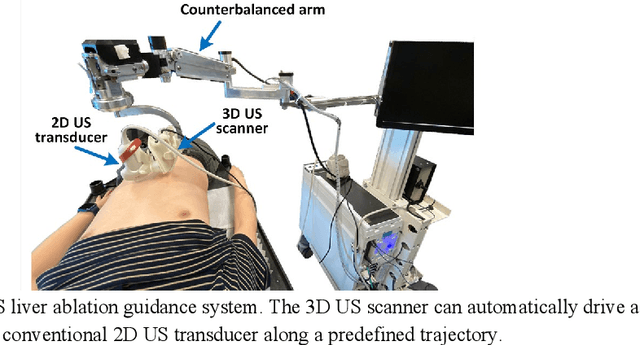

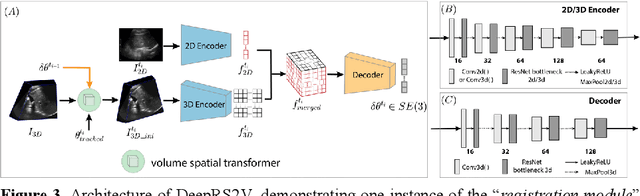
Liver tumor ablation procedures require accurate placement of the needle applicator at the tumor centroid. The lower-cost and real-time nature of ultrasound (US) has advantages over computed tomography (CT) for applicator guidance, however, in some patients, liver tumors may be occult on US and tumor mimics can make lesion identification challenging. Image registration techniques can aid in interpreting anatomical details and identifying tumors, but their clinical application has been hindered by the tradeoff between alignment accuracy and runtime performance, particularly when compensating for liver motion due to patient breathing or movement. Therefore, we propose a 2D-3D US registration approach to enable intra-procedural alignment that mitigates errors caused by liver motion. Specifically, our approach can correlate imbalanced 2D and 3D US image features and use continuous 6D rotation representations to enhance the model's training stability. The dataset was divided into 2388, 196 and 193 image pairs for training, validation and testing, respectively. Our approach achieved a mean Euclidean distance error of 2.28 mm $\pm$ 1.81 mm and a mean geodesic angular error of 2.99$^{\circ}$ $\pm$ 1.95$^{\circ}$, with a runtime of 0.22 seconds per 2D-3D US image pair. These results demonstrate that our approach can achieve accurate alignment and clinically acceptable runtime, indicating potential for clinical translation.
AI generated annotations for Breast, Brain, Liver, Lungs and Prostate cancer collections in National Cancer Institute Imaging Data Commons
Sep 30, 2024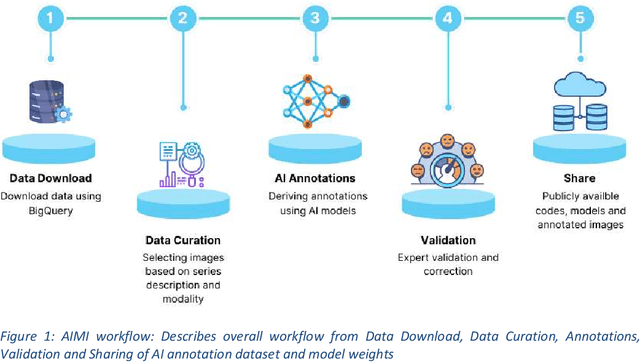
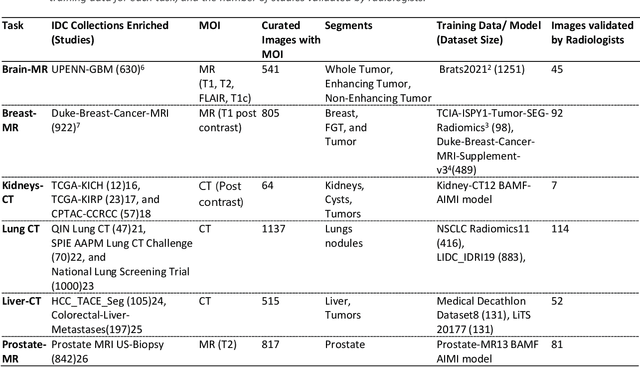
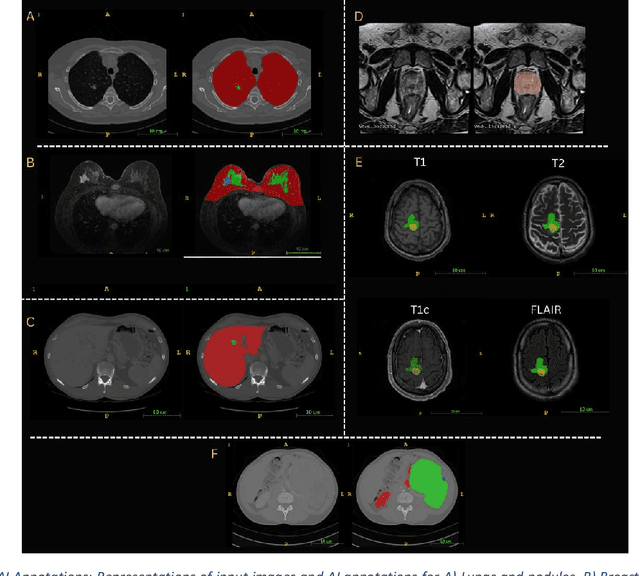
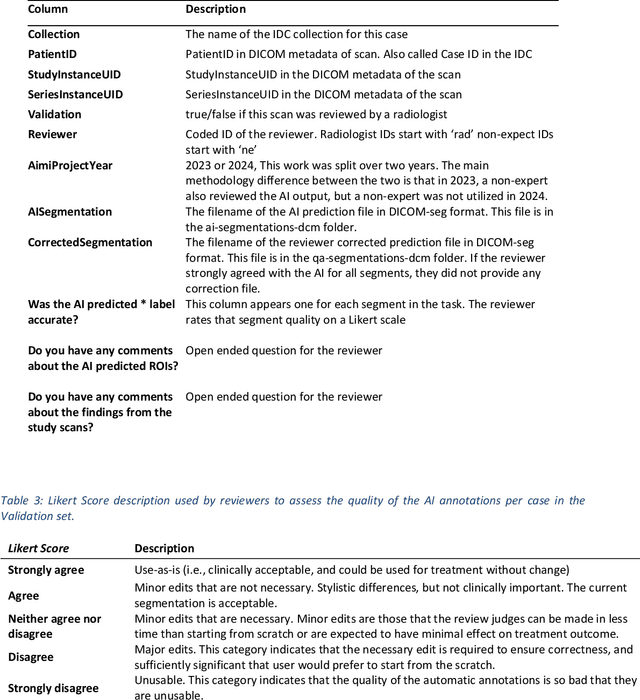
AI in Medical Imaging project aims to enhance the National Cancer Institute's (NCI) Image Data Commons (IDC) by developing nnU-Net models and providing AI-assisted segmentations for cancer radiology images. We created high-quality, AI-annotated imaging datasets for 11 IDC collections. These datasets include images from various modalities, such as computed tomography (CT) and magnetic resonance imaging (MRI), covering the lungs, breast, brain, kidneys, prostate, and liver. The nnU-Net models were trained using open-source datasets. A portion of the AI-generated annotations was reviewed and corrected by radiologists. Both the AI and radiologist annotations were encoded in compliance with the the Digital Imaging and Communications in Medicine (DICOM) standard, ensuring seamless integration into the IDC collections. All models, images, and annotations are publicly accessible, facilitating further research and development in cancer imaging. This work supports the advancement of imaging tools and algorithms by providing comprehensive and accurate annotated datasets.