 Add to Chrome
 Add to Firefox
 Add to Edge
Vid Dataset
Papers and Code
E.M.Ground: A Temporal Grounding Vid-LLM with Holistic Event Perception and Matching
Feb 05, 2026
Despite recent advances in Video Large Language Models (Vid-LLMs), Temporal Video Grounding (TVG), which aims to precisely localize time segments corresponding to query events, remains a significant challenge. Existing methods often match start and end frames by comparing frame features with two separate tokens, relying heavily on exact timestamps. However, this approach fails to capture the event's semantic continuity and integrity, leading to ambiguities. To address this, we propose E.M.Ground, a novel Vid-LLM for TVG that focuses on holistic and coherent event perception. E.M.Ground introduces three key innovations: (i) a special <event> token that aggregates information from all frames of a query event, preserving semantic continuity for accurate event matching; (ii) Savitzky-Golay smoothing to reduce noise in token-to-frame similarities across timestamps, improving prediction accuracy; (iii) multi-grained frame feature aggregation to enhance matching reliability and temporal understanding, compensating for compression-induced information loss. Extensive experiments on benchmark datasets show that E.M.Ground consistently outperforms state-of-the-art Vid-LLMs by significant margins.

PointSt3R: Point Tracking through 3D Grounded Correspondence
Oct 30, 2025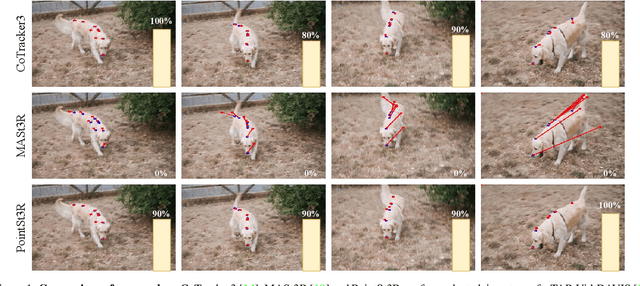
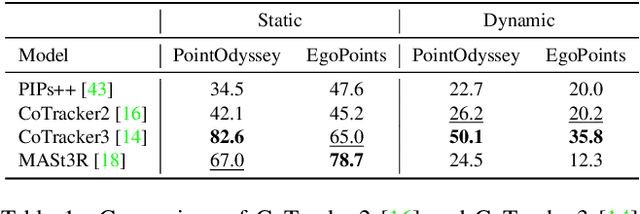
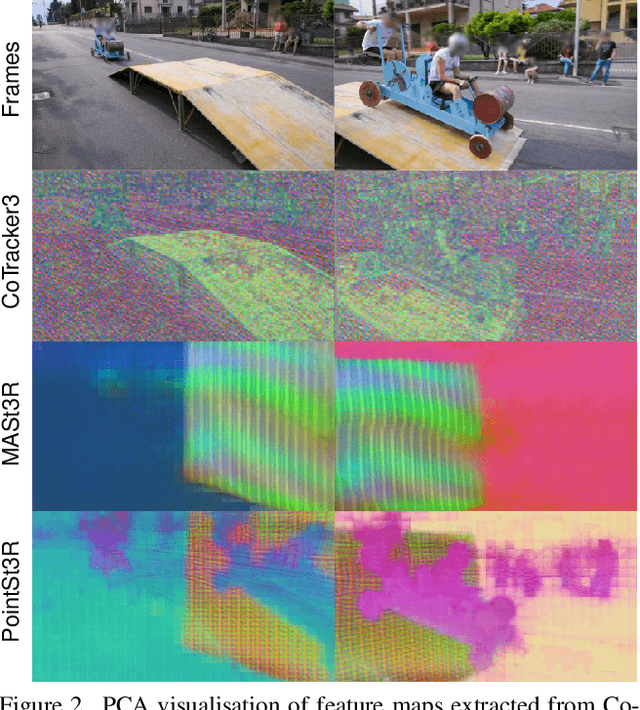
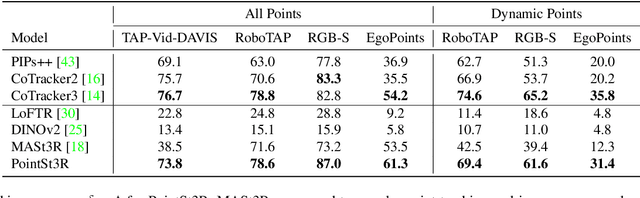
Recent advances in foundational 3D reconstruction models, such as DUSt3R and MASt3R, have shown great potential in 2D and 3D correspondence in static scenes. In this paper, we propose to adapt them for the task of point tracking through 3D grounded correspondence. We first demonstrate that these models are competitive point trackers when focusing on static points, present in current point tracking benchmarks ($+33.5\%$ on EgoPoints vs. CoTracker2). We propose to combine the reconstruction loss with training for dynamic correspondence along with a visibility head, and fine-tuning MASt3R for point tracking using a relatively small amount of synthetic data. Importantly, we only train and evaluate on pairs of frames where one contains the query point, effectively removing any temporal context. Using a mix of dynamic and static point correspondences, we achieve competitive or superior point tracking results on four datasets (e.g. competitive on TAP-Vid-DAVIS 73.8 $\delta_{avg}$ / 85.8\% occlusion acc. for PointSt3R compared to 75.7 / 88.3\% for CoTracker2; and significantly outperform CoTracker3 on EgoPoints 61.3 vs 54.2 and RGB-S 87.0 vs 82.8). We also present results on 3D point tracking along with several ablations on training datasets and percentage of dynamic correspondences.
Detecting and Mitigating Insertion Hallucination in Video-to-Audio Generation
Oct 09, 2025Video-to-Audio generation has made remarkable strides in automatically synthesizing sound for video. However, existing evaluation metrics, which focus on semantic and temporal alignment, overlook a critical failure mode: models often generate acoustic events, particularly speech and music, that have no corresponding visual source. We term this phenomenon Insertion Hallucination and identify it as a systemic risk driven by dataset biases, such as the prevalence of off-screen sounds, that remains completely undetected by current metrics. To address this challenge, we first develop a systematic evaluation framework that employs a majority-voting ensemble of multiple audio event detectors. We also introduce two novel metrics to quantify the prevalence and severity of this issue: IH@vid (the fraction of videos with hallucinations) and IH@dur (the fraction of hallucinated duration). Building on this, we propose Posterior Feature Correction, a novel training-free inference-time method that mitigates IH. PFC operates in a two-pass process: it first generates an initial audio output to detect hallucinated segments, and then regenerates the audio after masking the corresponding video features at those timestamps. Experiments on several mainstream V2A benchmarks first reveal that state-of-the-art models suffer from severe IH. In contrast, our PFC method reduces both the prevalence and duration of hallucinations by over 50\% on average, without degrading, and in some cases even improving, conventional metrics for audio quality and temporal synchronization. Our work is the first to formally define, systematically measure, and effectively mitigate Insertion Hallucination, paving the way for more reliable and faithful V2A models.
CI-VID: A Coherent Interleaved Text-Video Dataset
Jul 02, 2025Text-to-video (T2V) generation has recently attracted considerable attention, resulting in the development of numerous high-quality datasets that have propelled progress in this area. However, existing public datasets are primarily composed of isolated text-video (T-V) pairs and thus fail to support the modeling of coherent multi-clip video sequences. To address this limitation, we introduce CI-VID, a dataset that moves beyond isolated text-to-video (T2V) generation toward text-and-video-to-video (TV2V) generation, enabling models to produce coherent, multi-scene video sequences. CI-VID contains over 340,000 samples, each featuring a coherent sequence of video clips with text captions that capture both the individual content of each clip and the transitions between them, enabling visually and textually grounded generation. To further validate the effectiveness of CI-VID, we design a comprehensive, multi-dimensional benchmark incorporating human evaluation, VLM-based assessment, and similarity-based metrics. Experimental results demonstrate that models trained on CI-VID exhibit significant improvements in both accuracy and content consistency when generating video sequences. This facilitates the creation of story-driven content with smooth visual transitions and strong temporal coherence, underscoring the quality and practical utility of the CI-VID dataset We release the CI-VID dataset and the accompanying code for data construction and evaluation at: https://github.com/ymju-BAAI/CI-VID
Leveraging Pre-Trained Visual Models for AI-Generated Video Detection
Jul 17, 2025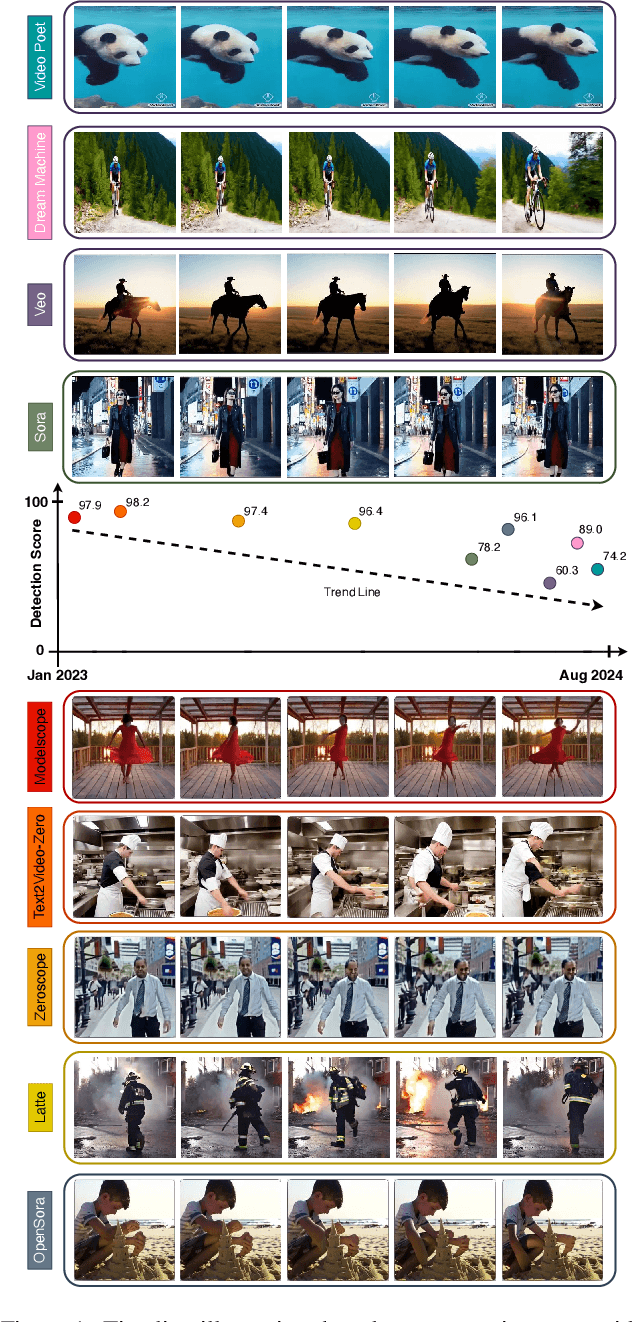
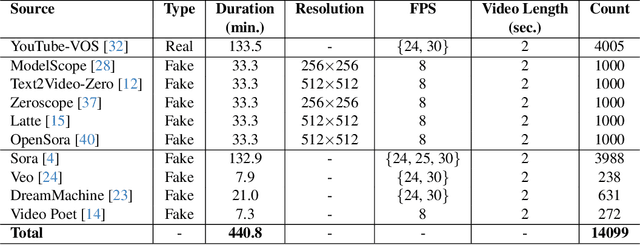
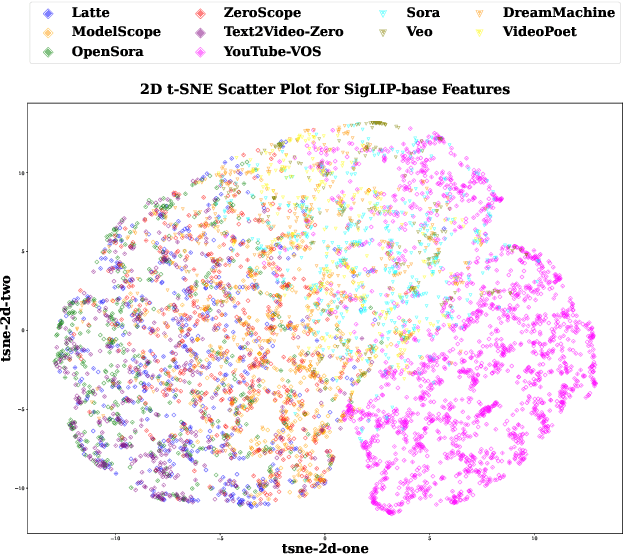
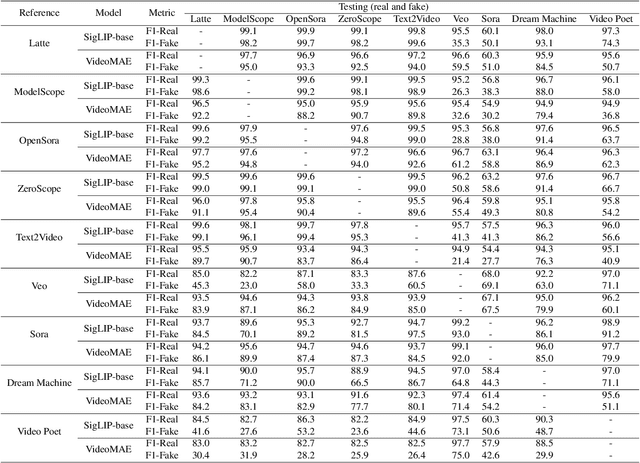
Recent advances in Generative AI (GenAI) have led to significant improvements in the quality of generated visual content. As AI-generated visual content becomes increasingly indistinguishable from real content, the challenge of detecting the generated content becomes critical in combating misinformation, ensuring privacy, and preventing security threats. Although there has been substantial progress in detecting AI-generated images, current methods for video detection are largely focused on deepfakes, which primarily involve human faces. However, the field of video generation has advanced beyond DeepFakes, creating an urgent need for methods capable of detecting AI-generated videos with generic content. To address this gap, we propose a novel approach that leverages pre-trained visual models to distinguish between real and generated videos. The features extracted from these pre-trained models, which have been trained on extensive real visual content, contain inherent signals that can help distinguish real from generated videos. Using these extracted features, we achieve high detection performance without requiring additional model training, and we further improve performance by training a simple linear classification layer on top of the extracted features. We validated our method on a dataset we compiled (VID-AID), which includes around 10,000 AI-generated videos produced by 9 different text-to-video models, along with 4,000 real videos, totaling over 7 hours of video content. Our evaluation shows that our approach achieves high detection accuracy, above 90% on average, underscoring its effectiveness. Upon acceptance, we plan to publicly release the code, the pre-trained models, and our dataset to support ongoing research in this critical area.
Learning to Track Any Points from Human Motion
Jul 08, 2025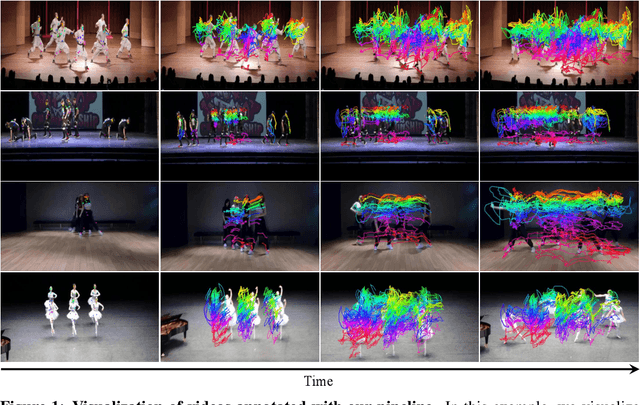
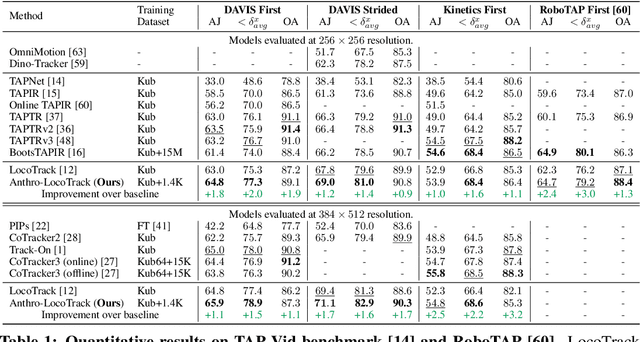
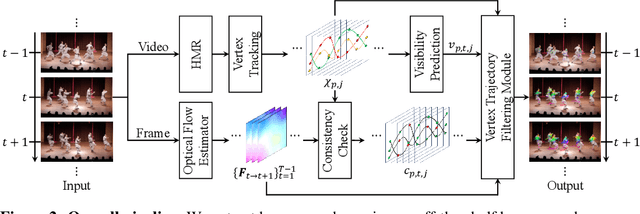
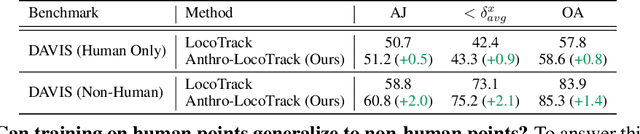
Human motion, with its inherent complexities, such as non-rigid deformations, articulated movements, clothing distortions, and frequent occlusions caused by limbs or other individuals, provides a rich and challenging source of supervision that is crucial for training robust and generalizable point trackers. Despite the suitability of human motion, acquiring extensive training data for point tracking remains difficult due to laborious manual annotation. Our proposed pipeline, AnthroTAP, addresses this by proposing an automated pipeline to generate pseudo-labeled training data, leveraging the Skinned Multi-Person Linear (SMPL) model. We first fit the SMPL model to detected humans in video frames, project the resulting 3D mesh vertices onto 2D image planes to generate pseudo-trajectories, handle occlusions using ray-casting, and filter out unreliable tracks based on optical flow consistency. A point tracking model trained on AnthroTAP annotated dataset achieves state-of-the-art performance on the TAP-Vid benchmark, surpassing other models trained on real videos while using 10,000 times less data and only 1 day in 4 GPUs, compared to 256 GPUs used in recent state-of-the-art.
RealCam-Vid: High-resolution Video Dataset with Dynamic Scenes and Metric-scale Camera Movements
Apr 11, 2025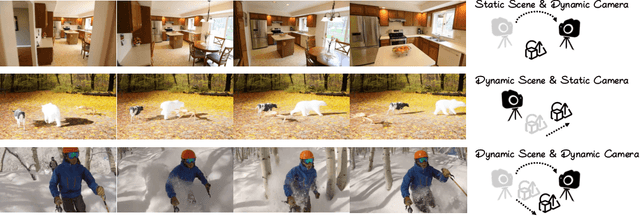
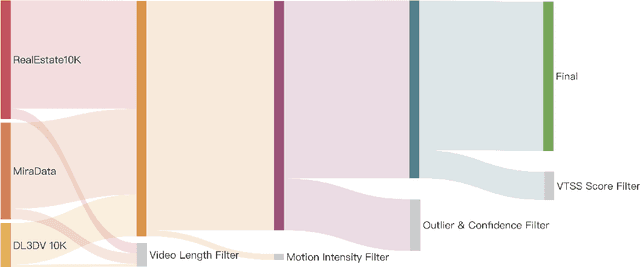
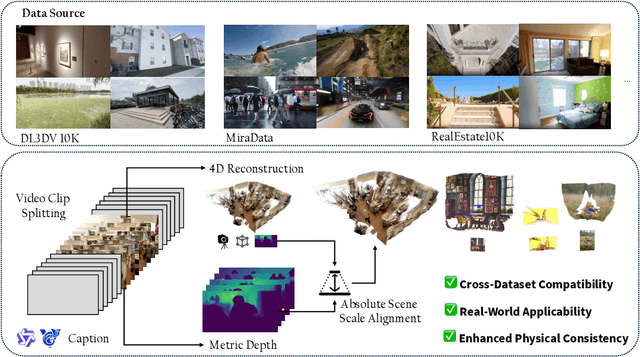
Recent advances in camera-controllable video generation have been constrained by the reliance on static-scene datasets with relative-scale camera annotations, such as RealEstate10K. While these datasets enable basic viewpoint control, they fail to capture dynamic scene interactions and lack metric-scale geometric consistency-critical for synthesizing realistic object motions and precise camera trajectories in complex environments. To bridge this gap, we introduce the first fully open-source, high-resolution dynamic-scene dataset with metric-scale camera annotations in https://github.com/ZGCTroy/RealCam-Vid.
CogStream: Context-guided Streaming Video Question Answering
Jun 12, 2025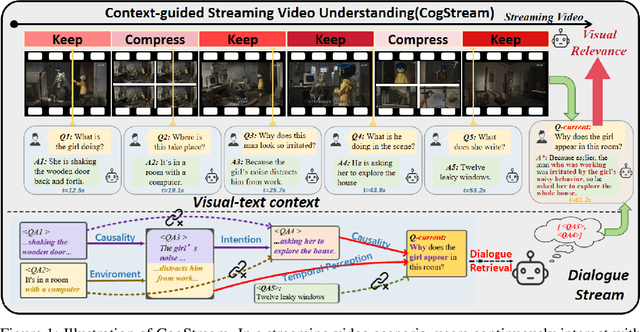
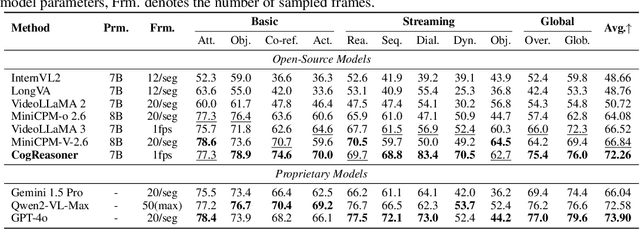
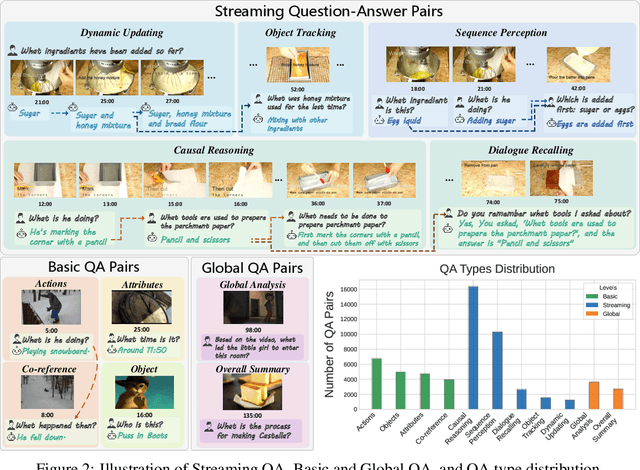
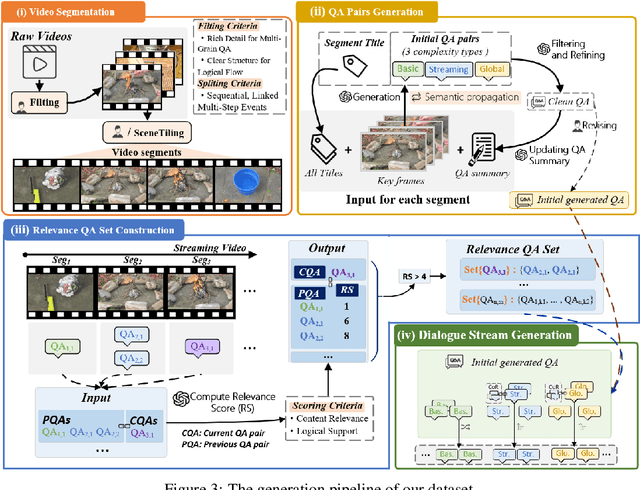
Despite advancements in Video Large Language Models (Vid-LLMs) improving multimodal understanding, challenges persist in streaming video reasoning due to its reliance on contextual information. Existing paradigms feed all available historical contextual information into Vid-LLMs, resulting in a significant computational burden for visual data processing. Furthermore, the inclusion of irrelevant context distracts models from key details. This paper introduces a challenging task called Context-guided Streaming Video Reasoning (CogStream), which simulates real-world streaming video scenarios, requiring models to identify the most relevant historical contextual information to deduce answers for questions about the current stream. To support CogStream, we present a densely annotated dataset featuring extensive and hierarchical question-answer pairs, generated by a semi-automatic pipeline. Additionally, we present CogReasoner as a baseline model. It efficiently tackles this task by leveraging visual stream compression and historical dialogue retrieval. Extensive experiments prove the effectiveness of this method. Code will be released soon.
TGBFormer: Transformer-GraphFormer Blender Network for Video Object Detection
Mar 18, 2025Video object detection has made significant progress in recent years thanks to convolutional neural networks (CNNs) and vision transformers (ViTs). Typically, CNNs excel at capturing local features but struggle to model global representations. Conversely, ViTs are adept at capturing long-range global features but face challenges in representing local feature details. Off-the-shelf video object detection methods solely rely on CNNs or ViTs to conduct feature aggregation, which hampers their capability to simultaneously leverage global and local information, thereby resulting in limited detection performance. In this paper, we propose a Transformer-GraphFormer Blender Network (TGBFormer) for video object detection, with three key technical improvements to fully exploit the advantages of transformers and graph convolutional networks while compensating for their limitations. First, we develop a spatial-temporal transformer module to aggregate global contextual information, constituting global representations with long-range feature dependencies. Second, we introduce a spatial-temporal GraphFormer module that utilizes local spatial and temporal relationships to aggregate features, generating new local representations that are complementary to the transformer outputs. Third, we design a global-local feature blender module to adaptively couple transformer-based global representations and GraphFormer-based local representations. Extensive experiments demonstrate that our TGBFormer establishes new state-of-the-art results on the ImageNet VID dataset. Particularly, our TGBFormer achieves 86.5% mAP while running at around 41.0 FPS on a single Tesla A100 GPU.
VEU-Bench: Towards Comprehensive Understanding of Video Editing
Apr 24, 2025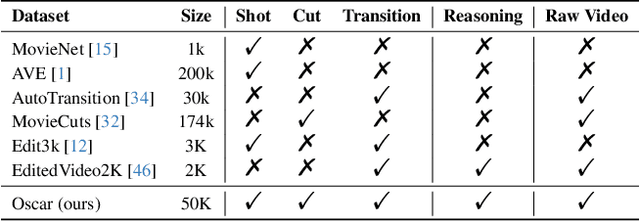
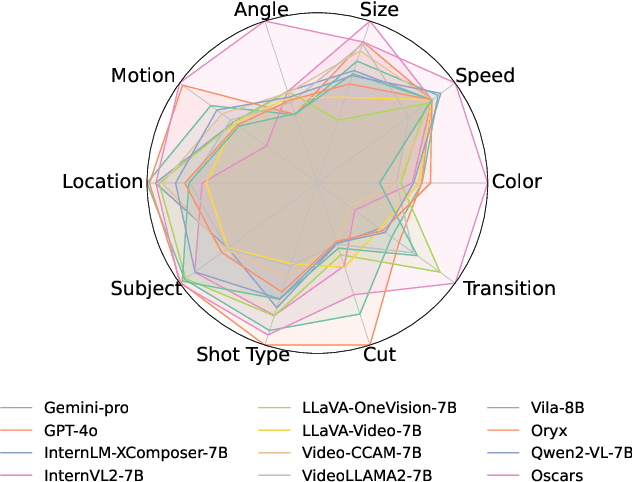
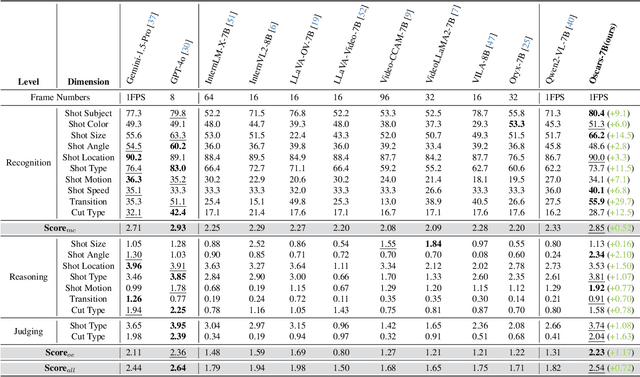
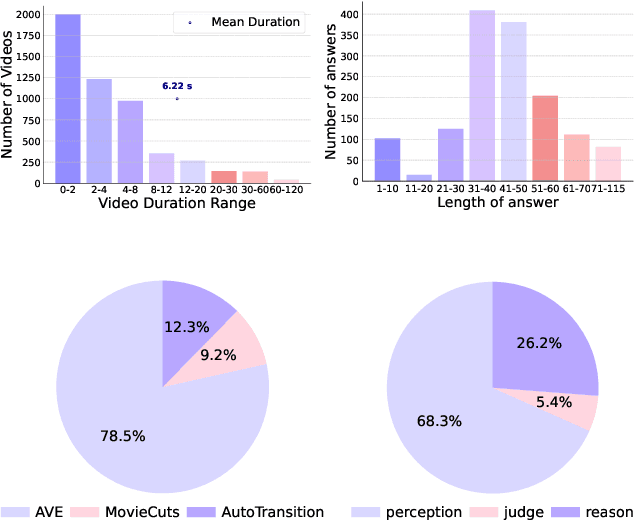
Widely shared videos on the internet are often edited. Recently, although Video Large Language Models (Vid-LLMs) have made great progress in general video understanding tasks, their capabilities in video editing understanding (VEU) tasks remain unexplored. To address this gap, in this paper, we introduce VEU-Bench (Video Editing Understanding Benchmark), a comprehensive benchmark that categorizes video editing components across various dimensions, from intra-frame features like shot size to inter-shot attributes such as cut types and transitions. Unlike previous video editing understanding benchmarks that focus mainly on editing element classification, VEU-Bench encompasses 19 fine-grained tasks across three stages: recognition, reasoning, and judging. To enhance the annotation of VEU automatically, we built an annotation pipeline integrated with an ontology-based knowledge base. Through extensive experiments with 11 state-of-the-art Vid-LLMs, our findings reveal that current Vid-LLMs face significant challenges in VEU tasks, with some performing worse than random choice. To alleviate this issue, we develop Oscars, a VEU expert model fine-tuned on the curated VEU-Bench dataset. It outperforms existing open-source Vid-LLMs on VEU-Bench by over 28.3% in accuracy and achieves performance comparable to commercial models like GPT-4o. We also demonstrate that incorporating VEU data significantly enhances the performance of Vid-LLMs on general video understanding benchmarks, with an average improvement of 8.3% across nine reasoning tasks.