 Add to Chrome
 Add to Firefox
 Add to Edge
Temporal Evidence Routing with Structured Visual Evidence for TimeLogicQA
May 31, 2026
TimeLogicQA evaluates whether video question answering systems can reason over temporal relations such as event existence, ordering, persistence, boundary conditions, and overlap. We address this task with a visual evidence routing pipeline that separates perception from symbolic temporal reasoning. The system first parses each question into event targets, answer mode, candidate options, and temporal operators. It then routes videos according to duration and operator difficulty, using ordered full-frame evidence for short clips and event-focused candidate windows for long videos. A multimodal large language model produces structured visual evidence for the relevant events, while programmatic verifiers recover dense action intervals and a deterministic reducer applies operator-specific temporal rules to produce the final answer. Conservative fusion accepts an answer only when the visual evidence, temporal program, and confidence checks agree, reducing noisy answer flips. On the official test evaluation, our final system achieves an AvgAcc of 81.8.

Adaptive Dense Evidence Refinement for Video Relational Reasoning for VRR-QA Challenge
May 31, 2026VRR-QA evaluates whether video-language systems can infer spatial, temporal, viewpoint, depth, and visibility relations that are not always resolved by a single frame. We present an inference-only system built around adaptive test-time computation. The system first answers each question with a direct video-language model pass, then uses multiple lightweight views to find unstable questions. Only these difficult questions are routed to a high-budget dense evidence module that constructs timestamped frame observations, relation-specific probes, candidate verification, and conservative temporal aggregation. This design separates two problems that are often confused in video question answering: finding plausible alternative answers and deciding when a current answer should actually be changed. On the test split, the final system obtains 90.07 average accuracy and 87.81 macro average accuracy. The report focuses on the final test system and the implementation settings required to reproduce the adaptive dense verifier.
Dual-Route Top-K Retrieval with 1v1 VLM Reranking for the CoVR-R
May 31, 2026We describe \emph{Dual-Route Top-K Retrieval with 1v1 VLM Reranking} for the CoVR-R challenge. The method treats composed video retrieval as two coupled problems: finding a sufficiently complete top-k candidate set, and then safely deciding whether any candidate should replace a strong current top-1. We first improve the reasoning/text seed with a VLM slot selector over existing candidates, without introducing DFN visual retrieval. We then add a visual route from contact-sheet embeddings using DFN-H/DFN-L. The routes are merged into a top-10 candidate set, after which a VLM final reranker performs conservative 1v1 comparisons between the current top-1 and each challenger. On the hidden test split, the final system reaches 95.28 R@1, 97.47 R@5, 98.48 R@10, and 99.66 R@50. The main lesson is that CoVR-R benefits more from recall-selection decoupling than from broad text reranking or direct multi-candidate VLM classification.
SoccerNet 2025 Challenges Results
Aug 26, 2025The SoccerNet 2025 Challenges mark the fifth annual edition of the SoccerNet open benchmarking effort, dedicated to advancing computer vision research in football video understanding. This year's challenges span four vision-based tasks: (1) Team Ball Action Spotting, focused on detecting ball-related actions in football broadcasts and assigning actions to teams; (2) Monocular Depth Estimation, targeting the recovery of scene geometry from single-camera broadcast clips through relative depth estimation for each pixel; (3) Multi-View Foul Recognition, requiring the analysis of multiple synchronized camera views to classify fouls and their severity; and (4) Game State Reconstruction, aimed at localizing and identifying all players from a broadcast video to reconstruct the game state on a 2D top-view of the field. Across all tasks, participants were provided with large-scale annotated datasets, unified evaluation protocols, and strong baselines as starting points. This report presents the results of each challenge, highlights the top-performing solutions, and provides insights into the progress made by the community. The SoccerNet Challenges continue to serve as a driving force for reproducible, open research at the intersection of computer vision, artificial intelligence, and sports. Detailed information about the tasks, challenges, and leaderboards can be found at https://www.soccer-net.org, with baselines and development kits available at https://github.com/SoccerNet.
VEU-Bench: Towards Comprehensive Understanding of Video Editing
Apr 24, 2025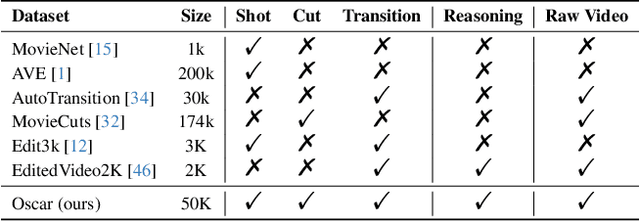
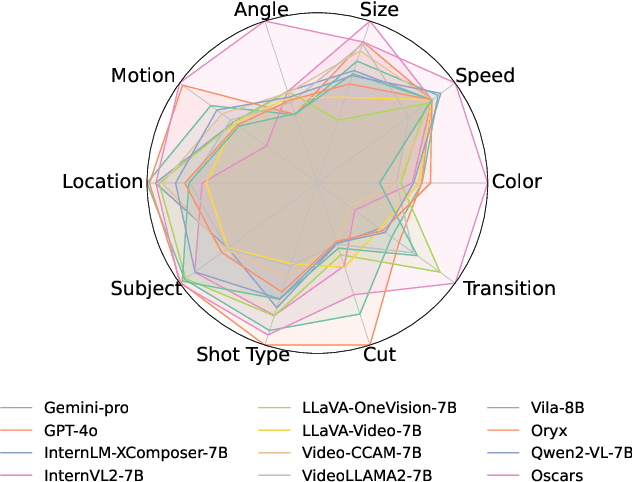
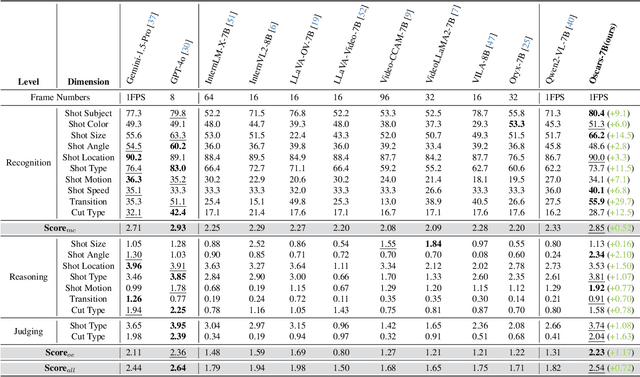
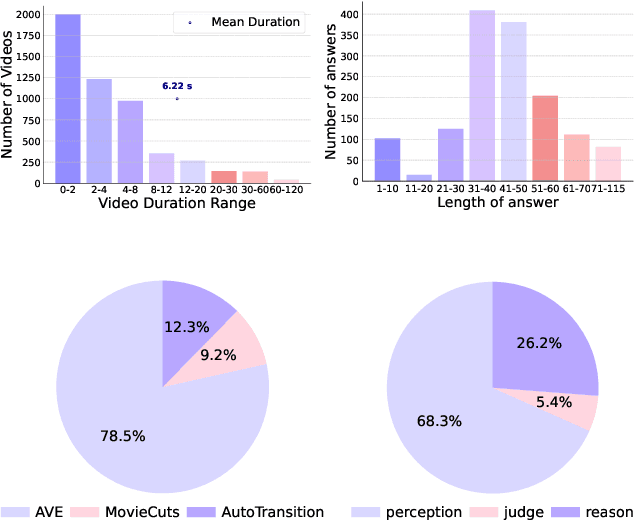
Widely shared videos on the internet are often edited. Recently, although Video Large Language Models (Vid-LLMs) have made great progress in general video understanding tasks, their capabilities in video editing understanding (VEU) tasks remain unexplored. To address this gap, in this paper, we introduce VEU-Bench (Video Editing Understanding Benchmark), a comprehensive benchmark that categorizes video editing components across various dimensions, from intra-frame features like shot size to inter-shot attributes such as cut types and transitions. Unlike previous video editing understanding benchmarks that focus mainly on editing element classification, VEU-Bench encompasses 19 fine-grained tasks across three stages: recognition, reasoning, and judging. To enhance the annotation of VEU automatically, we built an annotation pipeline integrated with an ontology-based knowledge base. Through extensive experiments with 11 state-of-the-art Vid-LLMs, our findings reveal that current Vid-LLMs face significant challenges in VEU tasks, with some performing worse than random choice. To alleviate this issue, we develop Oscars, a VEU expert model fine-tuned on the curated VEU-Bench dataset. It outperforms existing open-source Vid-LLMs on VEU-Bench by over 28.3% in accuracy and achieves performance comparable to commercial models like GPT-4o. We also demonstrate that incorporating VEU data significantly enhances the performance of Vid-LLMs on general video understanding benchmarks, with an average improvement of 8.3% across nine reasoning tasks.
AnimeDL-2M: Million-Scale AI-Generated Anime Image Detection and Localization in Diffusion Era
Apr 15, 2025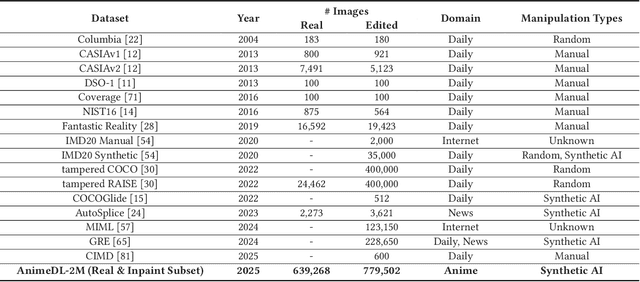
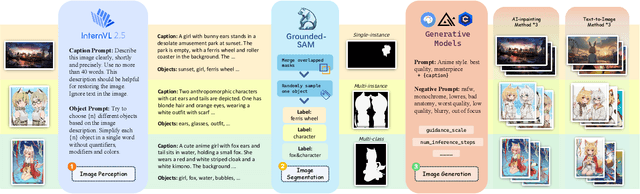
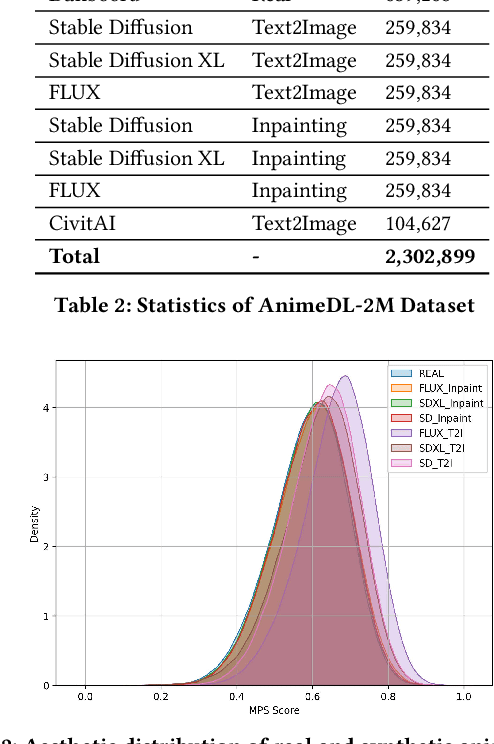
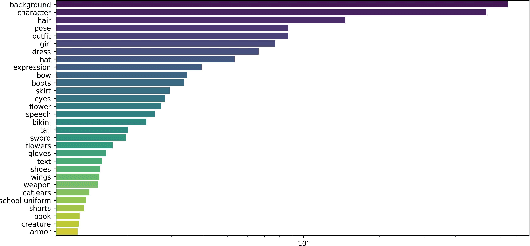
Recent advances in image generation, particularly diffusion models, have significantly lowered the barrier for creating sophisticated forgeries, making image manipulation detection and localization (IMDL) increasingly challenging. While prior work in IMDL has focused largely on natural images, the anime domain remains underexplored-despite its growing vulnerability to AI-generated forgeries. Misrepresentations of AI-generated images as hand-drawn artwork, copyright violations, and inappropriate content modifications pose serious threats to the anime community and industry. To address this gap, we propose AnimeDL-2M, the first large-scale benchmark for anime IMDL with comprehensive annotations. It comprises over two million images including real, partially manipulated, and fully AI-generated samples. Experiments indicate that models trained on existing IMDL datasets of natural images perform poorly when applied to anime images, highlighting a clear domain gap between anime and natural images. To better handle IMDL tasks in anime domain, we further propose AniXplore, a novel model tailored to the visual characteristics of anime imagery. Extensive evaluations demonstrate that AniXplore achieves superior performance compared to existing methods. Dataset and code can be found in https://flytweety.github.io/AnimeDL2M/.
ACORD: An Expert-Annotated Retrieval Dataset for Legal Contract Drafting
Jan 11, 2025Information retrieval, specifically contract clause retrieval, is foundational to contract drafting because lawyers rarely draft contracts from scratch; instead, they locate and revise the most relevant precedent. We introduce the Atticus Clause Retrieval Dataset (ACORD), the first retrieval benchmark for contract drafting fully annotated by experts. ACORD focuses on complex contract clauses such as Limitation of Liability, Indemnification, Change of Control, and Most Favored Nation. It includes 114 queries and over 126,000 query-clause pairs, each ranked on a scale from 1 to 5 stars. The task is to find the most relevant precedent clauses to a query. The bi-encoder retriever paired with pointwise LLMs re-rankers shows promising results. However, substantial improvements are still needed to effectively manage the complex legal work typically undertaken by lawyers. As the first retrieval benchmark for contract drafting annotated by experts, ACORD can serve as a valuable IR benchmark for the NLP community.
CorrDiff: Adaptive Delay-aware Detector with Temporal Cue Inputs for Real-time Object Detection
Jan 09, 2025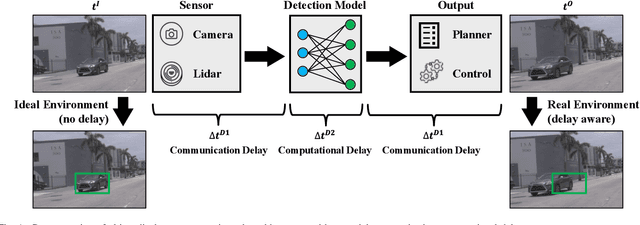
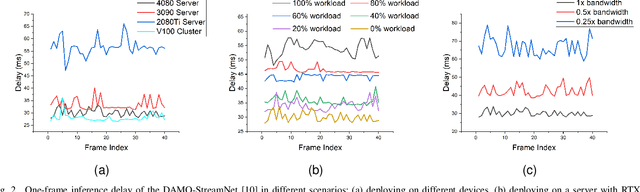
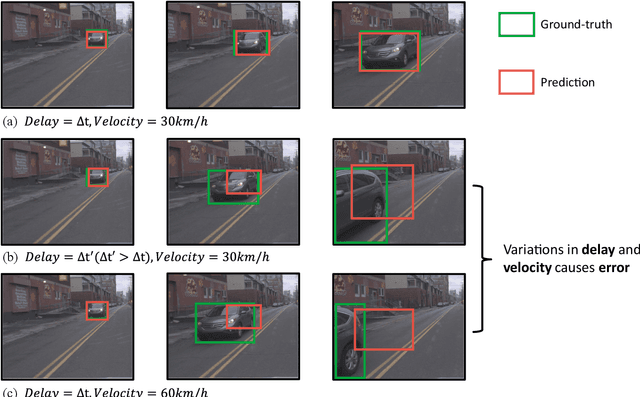

Real-time object detection takes an essential part in the decision-making process of numerous real-world applications, including collision avoidance and path planning in autonomous driving systems. This paper presents a novel real-time streaming perception method named CorrDiff, designed to tackle the challenge of delays in real-time detection systems. The main contribution of CorrDiff lies in its adaptive delay-aware detector, which is able to utilize runtime-estimated temporal cues to predict objects' locations for multiple future frames, and selectively produce predictions that matches real-world time, effectively compensating for any communication and computational delays. The proposed model outperforms current state-of-the-art methods by leveraging motion estimation and feature enhancement, both for 1) single-frame detection for the current frame or the next frame, in terms of the metric mAP, and 2) the prediction for (multiple) future frame(s), in terms of the metric sAP (The sAP metric is to evaluate object detection algorithms in streaming scenarios, factoring in both latency and accuracy). It demonstrates robust performance across a range of devices, from powerful Tesla V100 to modest RTX 2080Ti, achieving the highest level of perceptual accuracy on all platforms. Unlike most state-of-the-art methods that struggle to complete computation within a single frame on less powerful devices, CorrDiff meets the stringent real-time processing requirements on all kinds of devices. The experimental results emphasize the system's adaptability and its potential to significantly improve the safety and reliability for many real-world systems, such as autonomous driving. Our code is completely open-sourced and is available at https://anonymous.4open.science/r/CorrDiff.
Number it: Temporal Grounding Videos like Flipping Manga
Nov 15, 2024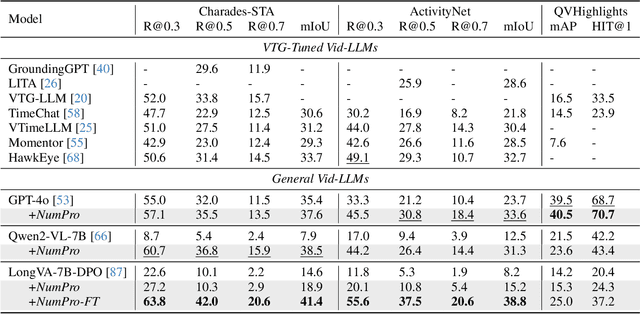
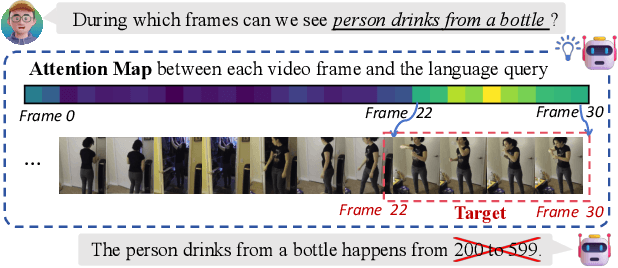
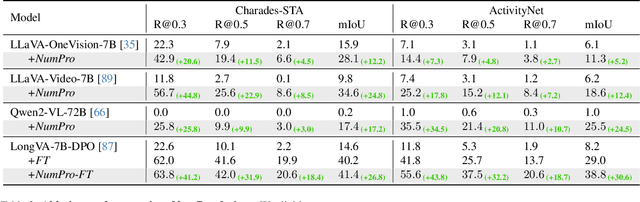
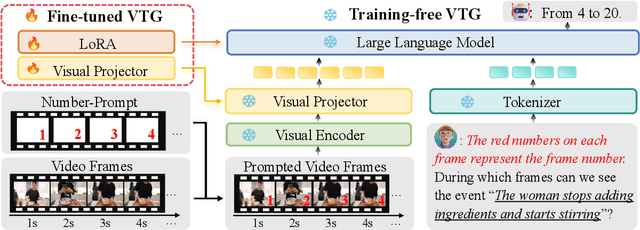
Video Large Language Models (Vid-LLMs) have made remarkable advancements in comprehending video content for QA dialogue. However, they struggle to extend this visual understanding to tasks requiring precise temporal localization, known as Video Temporal Grounding (VTG). To address this gap, we introduce Number-Prompt (NumPro), a novel method that empowers Vid-LLMs to bridge visual comprehension with temporal grounding by adding unique numerical identifiers to each video frame. Treating a video as a sequence of numbered frame images, NumPro transforms VTG into an intuitive process: flipping through manga panels in sequence. This allows Vid-LLMs to "read" event timelines, accurately linking visual content with corresponding temporal information. Our experiments demonstrate that NumPro significantly boosts VTG performance of top-tier Vid-LLMs without additional computational cost. Furthermore, fine-tuning on a NumPro-enhanced dataset defines a new state-of-the-art for VTG, surpassing previous top-performing methods by up to 6.9\% in mIoU for moment retrieval and 8.5\% in mAP for highlight detection. The code will be available at https://github.com/yongliang-wu/NumPro.
Non-Invasive Glucose Prediction System Enhanced by Mixed Linear Models and Meta-Forests for Domain Generalization
Sep 11, 2024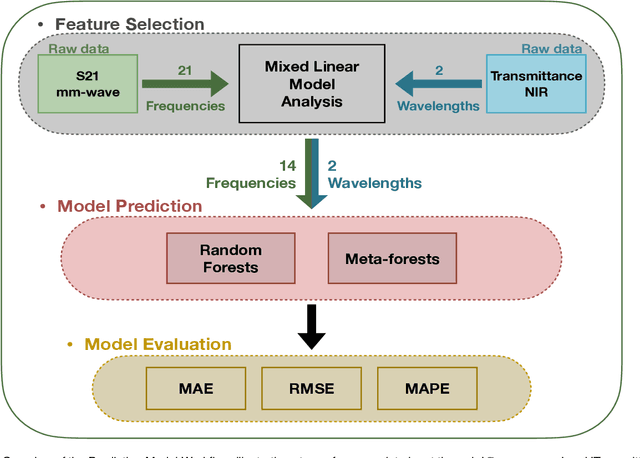
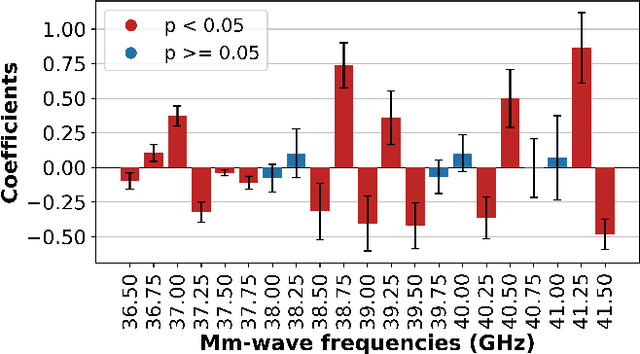
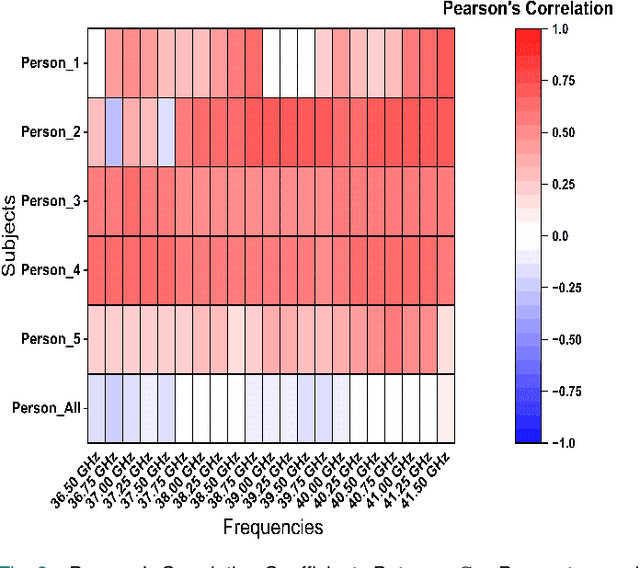
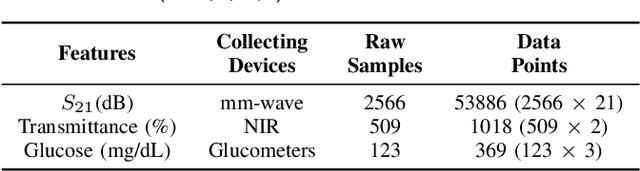
In this study, we present a non-invasive glucose prediction system that integrates Near-Infrared (NIR) spectroscopy and millimeter-wave (mm-wave) sensing. We employ a Mixed Linear Model (MixedLM) to analyze the association between mm-wave frequency S_21 parameters and blood glucose levels within a heterogeneous dataset. The MixedLM method considers inter-subject variability and integrates multiple predictors, offering a more comprehensive analysis than traditional correlation analysis. Additionally, we incorporate a Domain Generalization (DG) model, Meta-forests, to effectively handle domain variance in the dataset, enhancing the model's adaptability to individual differences. Our results demonstrate promising accuracy in glucose prediction for unseen subjects, with a mean absolute error (MAE) of 17.47 mg/dL, a root mean square error (RMSE) of 31.83 mg/dL, and a mean absolute percentage error (MAPE) of 10.88%, highlighting its potential for clinical application. This study marks a significant step towards developing accurate, personalized, and non-invasive glucose monitoring systems, contributing to improved diabetes management.