 Add to Chrome
 Add to Firefox
 Add to Edge
Dexycb
Papers and Code
AGILE: Hand-Object Interaction Reconstruction from Video via Agentic Generation
Feb 04, 2026
Reconstructing dynamic hand-object interactions from monocular videos is critical for dexterous manipulation data collection and creating realistic digital twins for robotics and VR. However, current methods face two prohibitive barriers: (1) reliance on neural rendering often yields fragmented, non-simulation-ready geometries under heavy occlusion, and (2) dependence on brittle Structure-from-Motion (SfM) initialization leads to frequent failures on in-the-wild footage. To overcome these limitations, we introduce AGILE, a robust framework that shifts the paradigm from reconstruction to agentic generation for interaction learning. First, we employ an agentic pipeline where a Vision-Language Model (VLM) guides a generative model to synthesize a complete, watertight object mesh with high-fidelity texture, independent of video occlusions. Second, bypassing fragile SfM entirely, we propose a robust anchor-and-track strategy. We initialize the object pose at a single interaction onset frame using a foundation model and propagate it temporally by leveraging the strong visual similarity between our generated asset and video observations. Finally, a contact-aware optimization integrates semantic, geometric, and interaction stability constraints to enforce physical plausibility. Extensive experiments on HO3D, DexYCB, and in-the-wild videos reveal that AGILE outperforms baselines in global geometric accuracy while demonstrating exceptional robustness on challenging sequences where prior art frequently collapses. By prioritizing physical validity, our method produces simulation-ready assets validated via real-to-sim retargeting for robotic applications.

Grasp-and-Lift: Executable 3D Hand-Object Interaction Reconstruction via Physics-in-the-Loop Optimization
Jan 26, 2026Dexterous hand manipulation increasingly relies on large-scale motion datasets with precise hand-object trajectory data. However, existing resources such as DexYCB and HO3D are primarily optimized for visual alignment but often yield physically implausible interactions when replayed in physics simulators, including penetration, missed contact, and unstable grasps. We propose a simulation-in-the-loop refinement framework that converts these visually aligned trajectories into physically executable ones. Our core contribution is to formulate this as a tractable black-box optimization problem. We parameterize the hand's motion using a low-dimensional, spline-based representation built on sparse temporal keyframes. This allows us to use a powerful gradient-free optimizer, CMA-ES, to treat the high-fidelity physics engine as a black-box objective function. Our method finds motions that simultaneously maximize physical success (e.g., stable grasp and lift) while minimizing deviation from the original human demonstration. Compared to MANIPTRANS-recent transfer pipelines, our approach achieves lower hand and object pose errors during replay and more accurately recovers hand-object physical interactions. Our approach provides a general and scalable method for converting visual demonstrations into physically valid trajectories, enabling the generation of high-fidelity data crucial for robust policy learning.
Multi-View 3D Point Tracking
Aug 28, 2025We introduce the first data-driven multi-view 3D point tracker, designed to track arbitrary points in dynamic scenes using multiple camera views. Unlike existing monocular trackers, which struggle with depth ambiguities and occlusion, or prior multi-camera methods that require over 20 cameras and tedious per-sequence optimization, our feed-forward model directly predicts 3D correspondences using a practical number of cameras (e.g., four), enabling robust and accurate online tracking. Given known camera poses and either sensor-based or estimated multi-view depth, our tracker fuses multi-view features into a unified point cloud and applies k-nearest-neighbors correlation alongside a transformer-based update to reliably estimate long-range 3D correspondences, even under occlusion. We train on 5K synthetic multi-view Kubric sequences and evaluate on two real-world benchmarks: Panoptic Studio and DexYCB, achieving median trajectory errors of 3.1 cm and 2.0 cm, respectively. Our method generalizes well to diverse camera setups of 1-8 views with varying vantage points and video lengths of 24-150 frames. By releasing our tracker alongside training and evaluation datasets, we aim to set a new standard for multi-view 3D tracking research and provide a practical tool for real-world applications. Project page available at https://ethz-vlg.github.io/mvtracker.
Occlusion-Aware 3D Hand-Object Pose Estimation with Masked AutoEncoders
Jun 12, 2025Hand-object pose estimation from monocular RGB images remains a significant challenge mainly due to the severe occlusions inherent in hand-object interactions. Existing methods do not sufficiently explore global structural perception and reasoning, which limits their effectiveness in handling occluded hand-object interactions. To address this challenge, we propose an occlusion-aware hand-object pose estimation method based on masked autoencoders, termed as HOMAE. Specifically, we propose a target-focused masking strategy that imposes structured occlusion on regions of hand-object interaction, encouraging the model to learn context-aware features and reason about the occluded structures. We further integrate multi-scale features extracted from the decoder to predict a signed distance field (SDF), capturing both global context and fine-grained geometry. To enhance geometric perception, we combine the implicit SDF with an explicit point cloud derived from the SDF, leveraging the complementary strengths of both representations. This fusion enables more robust handling of occluded regions by combining the global context from the SDF with the precise local geometry provided by the point cloud. Extensive experiments on challenging DexYCB and HO3Dv2 benchmarks demonstrate that HOMAE achieves state-of-the-art performance in hand-object pose estimation. We will release our code and model.
SiMHand: Mining Similar Hands for Large-Scale 3D Hand Pose Pre-training
Feb 21, 2025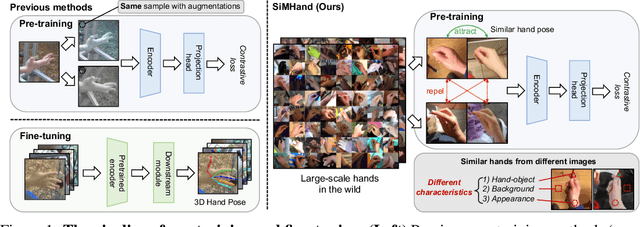


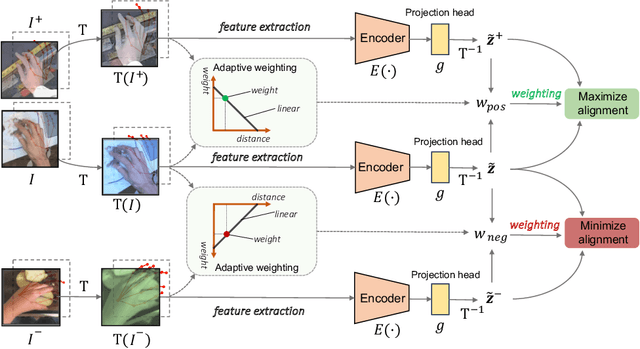
We present a framework for pre-training of 3D hand pose estimation from in-the-wild hand images sharing with similar hand characteristics, dubbed SimHand. Pre-training with large-scale images achieves promising results in various tasks, but prior methods for 3D hand pose pre-training have not fully utilized the potential of diverse hand images accessible from in-the-wild videos. To facilitate scalable pre-training, we first prepare an extensive pool of hand images from in-the-wild videos and design our pre-training method with contrastive learning. Specifically, we collect over 2.0M hand images from recent human-centric videos, such as 100DOH and Ego4D. To extract discriminative information from these images, we focus on the similarity of hands: pairs of non-identical samples with similar hand poses. We then propose a novel contrastive learning method that embeds similar hand pairs closer in the feature space. Our method not only learns from similar samples but also adaptively weights the contrastive learning loss based on inter-sample distance, leading to additional performance gains. Our experiments demonstrate that our method outperforms conventional contrastive learning approaches that produce positive pairs sorely from a single image with data augmentation. We achieve significant improvements over the state-of-the-art method (PeCLR) in various datasets, with gains of 15% on FreiHand, 10% on DexYCB, and 4% on AssemblyHands. Our code is available at https://github.com/ut-vision/SiMHand.
Learning Transformation-Isomorphic Latent Space for Accurate Hand Pose Estimation
Feb 18, 2025Vision-based regression tasks, such as hand pose estimation, have achieved higher accuracy and faster convergence through representation learning. However, existing representation learning methods often encounter the following issues: the high semantic level of features extracted from images is inadequate for regressing low-level information, and the extracted features include task-irrelevant information, reducing their compactness and interfering with regression tasks. To address these challenges, we propose TI-Net, a highly versatile visual Network backbone designed to construct a Transformation Isomorphic latent space. Specifically, we employ linear transformations to model geometric transformations in the latent space and ensure that {\rm TI-Net} aligns them with those in the image space. This ensures that the latent features capture compact, low-level information beneficial for pose estimation tasks. We evaluated TI-Net on the hand pose estimation task to demonstrate the network's superiority. On the DexYCB dataset, TI-Net achieved a 10% improvement in the PA-MPJPE metric compared to specialized state-of-the-art (SOTA) hand pose estimation methods. Our code will be released in the future.
Hand-Object Contact Detection using Grasp Quality Metrics
Jan 13, 2025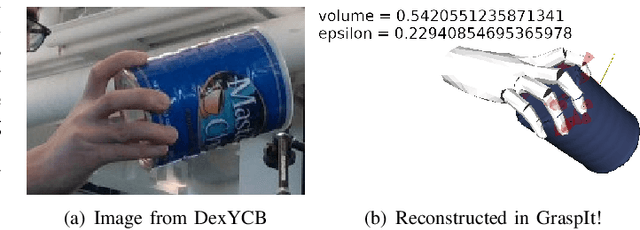
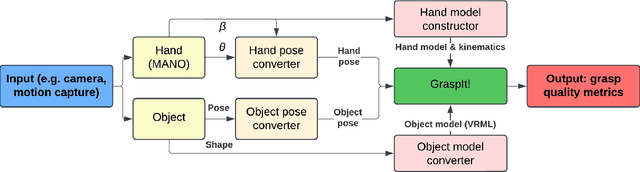
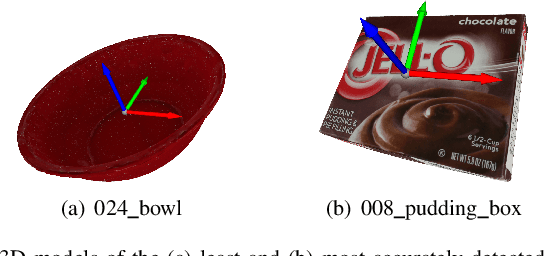
We propose a novel hand-object contact detection system based on grasp quality metrics extracted from object and hand poses, and evaluated its performance using the DexYCB dataset. Our evaluation demonstrated the system's high accuracy (approaching 90%). Future work will focus on a real-time implementation using vision-based estimation, and integrating it to a robot-to-human handover system.
Dynamic Reconstruction of Hand-Object Interaction with Distributed Force-aware Contact Representation
Nov 14, 2024


We present ViTaM-D, a novel visual-tactile framework for dynamic hand-object interaction reconstruction, integrating distributed tactile sensing for more accurate contact modeling. While existing methods focus primarily on visual inputs, they struggle with capturing detailed contact interactions such as object deformation. Our approach leverages distributed tactile sensors to address this limitation by introducing DF-Field. This distributed force-aware contact representation models both kinetic and potential energy in hand-object interaction. ViTaM-D first reconstructs hand-object interactions using a visual-only network, VDT-Net, and then refines contact details through a force-aware optimization (FO) process, enhancing object deformation modeling. To benchmark our approach, we introduce the HOT dataset, which features 600 sequences of hand-object interactions, including deformable objects, built in a high-precision simulation environment. Extensive experiments on both the DexYCB and HOT datasets demonstrate significant improvements in accuracy over previous state-of-the-art methods such as gSDF and HOTrack. Our results highlight the superior performance of ViTaM-D in both rigid and deformable object reconstruction, as well as the effectiveness of DF-Field in refining hand poses. This work offers a comprehensive solution to dynamic hand-object interaction reconstruction by seamlessly integrating visual and tactile data. Codes, models, and datasets will be available.
Pre-Training for 3D Hand Pose Estimation with Contrastive Learning on Large-Scale Hand Images in the Wild
Sep 15, 2024


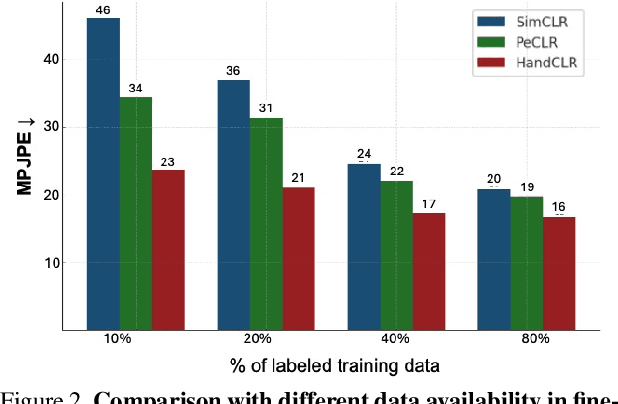
We present a contrastive learning framework based on in-the-wild hand images tailored for pre-training 3D hand pose estimators, dubbed HandCLR. Pre-training on large-scale images achieves promising results in various tasks, but prior 3D hand pose pre-training methods have not fully utilized the potential of diverse hand images accessible from in-the-wild videos. To facilitate scalable pre-training, we first prepare an extensive pool of hand images from in-the-wild videos and design our method with contrastive learning. Specifically, we collected over 2.0M hand images from recent human-centric videos, such as 100DOH and Ego4D. To extract discriminative information from these images, we focus on the similarity of hands; pairs of similar hand poses originating from different samples, and propose a novel contrastive learning method that embeds similar hand pairs closer in the latent space. Our experiments demonstrate that our method outperforms conventional contrastive learning approaches that produce positive pairs sorely from a single image with data augmentation. We achieve significant improvements over the state-of-the-art method in various datasets, with gains of 15% on FreiHand, 10% on DexYCB, and 4% on AssemblyHands.
HandS3C: 3D Hand Mesh Reconstruction with State Space Spatial Channel Attention from RGB images
May 14, 2024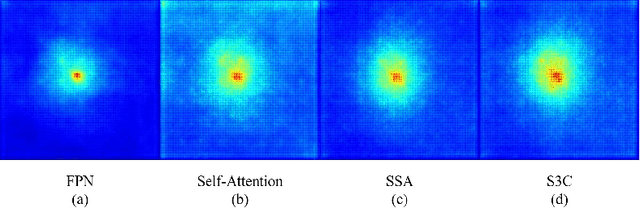
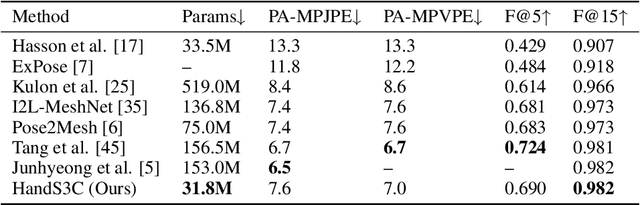

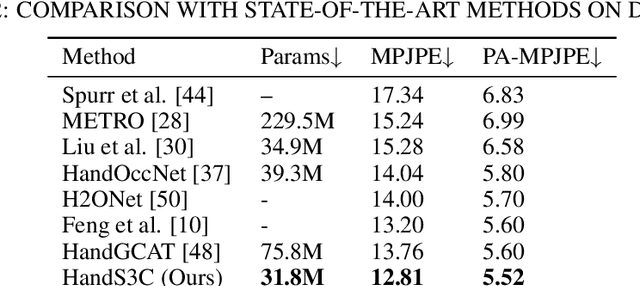
Reconstructing the hand mesh from one single RGB image is a challenging task because hands are often occluded by other objects. Most previous works attempt to explore more additional information and adopt attention mechanisms for improving 3D reconstruction performance, while it would increase computational complexity simultaneously. To achieve a performance-reserving architecture with high computational efficiency, in this work, we propose a simple but effective 3D hand mesh reconstruction network (i.e., HandS3C), which is the first time to incorporate state space model into the task of hand mesh reconstruction. In the network, we design a novel state-space spatial-channel attention module that extends the effective receptive field, extracts hand features in the spatial dimension, and enhances regional features of hands in the channel dimension. This helps to reconstruct a complete and detailed hand mesh. Extensive experiments conducted on well-known datasets facing heavy occlusions (such as FREIHAND, DEXYCB, and HO3D) demonstrate that our proposed HandS3C achieves state-of-the-art performance while maintaining a minimal parameters.