 Add to Chrome
 Add to Firefox
 Add to Edge
Botnet
Papers and Code
AEGIS: Adversarial Entropy-Guided Immune System -- Thermodynamic State Space Models for Zero-Day Network Evasion Detection
Apr 02, 2026
As TLS 1.3 encryption limits traditional Deep Packet Inspection (DPI), the security community has pivoted to Euclidean Transformer-based classifiers (e.g., ET-BERT) for encrypted traffic analysis. However, these models remain vulnerable to byte-level adversarial morphing -- recent pre-padding attacks reduced ET-BERT accuracy to 25.68%, while VLESS Reality bypasses certificate-based detection entirely. We introduce AEGIS: an Adversarial Entropy-Guided Immune System powered by a Thermodynamic Variance-Guided Hyperbolic Liquid State Space Model (TVD-HL-SSM). Rather than competing in the Euclidean payload-reading domain, AEGIS discards payload bytes in favor of 6-dimensional continuous-time flow physics projected into a non-Euclidean Poincare manifold. Liquid Time-Constants measure microsecond IAT decay, and a Thermodynamic Variance Detector computes sequence-wide Shannon Entropy to expose automated C2 tunnel anomalies. A pure C++ eBPF Harvester with zero-copy IPC bypasses the Python GIL, enabling a linear-time O(N) Mamba-3 core to process 64,000-packet swarms at line-rate. Evaluated on a 400GB, 4-tier adversarial corpus spanning backbone traffic, IoT botnets, zero-days, and proprietary VLESS Reality tunnels, AEGIS achieves an F1-score of 0.9952 and 99.50% True Positive Rate at 262 us inference latency on an RTX 4090, establishing a new state-of-the-art for physics-based adversarial network defense.

DNS-GT: A Graph-based Transformer Approach to Learn Embeddings of Domain Names from DNS Queries
Mar 11, 2026Network intrusion detection systems play a crucial role in the security strategy employed by organisations to detect and prevent cyberattacks. Such systems usually combine pattern detection signatures with anomaly detection techniques powered by machine learning methods. However, the commonly proposed machine learning methods present drawbacks such as over-reliance on labeled data and limited generalization capabilities. To address these issues, embedding-based methods have been introduced to learn representations from network data, such as DNS traffic, mainly due to its large availability, that generalise effectively to many downstream tasks. However, current approaches do not properly consider contextual information among DNS queries. In this paper, we tackle this issue by proposing DNS-GT, a novel Transformer-based model that learns embeddings for domain names from sequences of DNS queries. The model is first pre-trained in a self-supervised fashion in order to learn the general behavior of DNS activity. Then, it can be finetuned on specific downstream tasks, exploiting interactions with other relevant queries in a given sequence. Our experiments with real-world DNS data showcase the ability of our method to learn effective domain name representations. A quantitative evaluation on domain name classification and botnet detection tasks shows that our approach achieves better results compared to relevant baselines, creating opportunities for further exploration of large-scale language models for intrusion detection systems. Our code is available at: https://github.com/m-altieri/DNS-GT.
Exploring Robust Intrusion Detection: A Benchmark Study of Feature Transferability in IoT Botnet Attack Detection
Feb 27, 2026Cross-domain intrusion detection remains a critical challenge due to significant variability in network traffic characteristics and feature distributions across environments. This study evaluates the transferability of three widely used flow-based feature sets (Argus, Zeek and CICFlowMeter) across four widely used datasets representing heterogeneous IoT and Industrial IoT network conditions. Through extensive experiments, we evaluate in- and cross-domain performance across multiple classification models and analyze feature importance using SHapley Additive exPlanations (SHAP). Our results show that models trained on one domain suffer significant performance degradation when applied to a different target domain, reflecting the sensitivity of IoT intrusion detection systems to distribution shifts. Furthermore, the results evidence that the choice of classification algorithm and feature representations significantly impact transferability. Beyond reporting performance differences and thorough analysis of the transferability of features and feature spaces, we provide practical guidelines for feature engineering to improve robustness under domain variability. Our findings suggest that effective intrusion detection requires both high in-domain performance and resilience to cross-domain variability, achievable through careful feature space design, appropriate algorithm selection and adaptive strategies.
* Accepted for publication in the Proceedings of the 2026 International Conference on Information Systems Security and Privacy (ICISSP)
How cyborg propaganda reshapes collective action
Feb 13, 2026The distinction between genuine grassroots activism and automated influence operations is collapsing. While policy debates focus on bot farms, a distinct threat to democracy is emerging via partisan coordination apps and artificial intelligence-what we term 'cyborg propaganda.' This architecture combines large numbers of verified humans with adaptive algorithmic automation, enabling a closed-loop system. AI tools monitor online sentiment to optimize directives and generate personalized content for users to post online. Cyborg propaganda thereby exploits a critical legal shield: by relying on verified citizens to ratify and disseminate messages, these campaigns operate in a regulatory gray zone, evading liability frameworks designed for automated botnets. We explore the collective action paradox of this technology: does it democratize power by 'unionizing' influence (pooling the reach of dispersed citizens to overcome the algorithmic invisibility of isolated voices), or does it reduce citizens to 'cognitive proxies' of a central directive? We argue that cyborg propaganda fundamentally alters the digital public square, shifting political discourse from a democratic contest of individual ideas to a battle of algorithmic campaigns. We outline a research agenda to distinguish organic from coordinated information diffusion and propose governance frameworks to address the regulatory challenges of AI-assisted collective expression.
Evasion of IoT Malware Detection via Dummy Code Injection
Feb 09, 2026The Internet of Things (IoT) has revolutionized connectivity by linking billions of devices worldwide. However, this rapid expansion has also introduced severe security vulnerabilities, making IoT devices attractive targets for malware such as the Mirai botnet. Power side-channel analysis has recently emerged as a promising technique for detecting malware activity based on device power consumption patterns. However, the resilience of such detection systems under adversarial manipulation remains underexplored. This work presents a novel adversarial strategy against power side-channel-based malware detection. By injecting structured dummy code into the scanning phase of the Mirai botnet, we dynamically perturb power signatures to evade AI/ML-based anomaly detection without disrupting core functionality. Our approach systematically analyzes the trade-offs between stealthiness, execution overhead, and evasion effectiveness across multiple state-of-the-art models for side-channel analysis, using a custom dataset collected from smartphones of diverse manufacturers. Experimental results show that our adversarial modifications achieve an average attack success rate of 75.2\%, revealing practical vulnerabilities in power-based intrusion detection frameworks.
Non-Intrusive Graph-Based Bot Detection for E-Commerce Using Inductive Graph Neural Networks
Jan 30, 2026Malicious bots pose a growing threat to e-commerce platforms by scraping data, hoarding inventory, and perpetrating fraud. Traditional bot mitigation techniques, including IP blacklists and CAPTCHA-based challenges, are increasingly ineffective or intrusive, as modern bots leverage proxies, botnets, and AI-assisted evasion strategies. This work proposes a non-intrusive graph-based bot detection framework for e-commerce that models user session behavior through a graph representation and applies an inductive graph neural network for classification. The approach captures both relational structure and behavioral semantics, enabling accurate identification of subtle automated activity that evades feature-based methods. Experiments on real-world e-commerce traffic demonstrate that the proposed inductive graph model outperforms a strong session-level multilayer perceptron baseline in terms of AUC and F1 score. Additional adversarial perturbation and cold-start simulations show that the model remains robust under moderate graph modifications and generalizes effectively to previously unseen sessions and URLs. The proposed framework is deployment-friendly, integrates with existing systems without client-side instrumentation, and supports real-time inference and incremental updates, making it suitable for practical e-commerce security deployments.
Toward Real-World IoT Security: Concept Drift-Resilient IoT Botnet Detection via Latent Space Representation Learning and Alignment
Dec 27, 2025Although AI-based models have achieved high accuracy in IoT threat detection, their deployment in enterprise environments is constrained by reliance on stationary datasets that fail to reflect the dynamic nature of real-world IoT NetFlow traffic, which is frequently affected by concept drift. Existing solutions typically rely on periodic classifier retraining, resulting in high computational overhead and the risk of catastrophic forgetting. To address these challenges, this paper proposes a scalable framework for adaptive IoT threat detection that eliminates the need for continuous classifier retraining. The proposed approach trains a classifier once on latent-space representations of historical traffic, while an alignment model maps incoming traffic to the learned historical latent space prior to classification, thereby preserving knowledge of previously observed attacks. To capture inter-instance relationships among attack samples, the low-dimensional latent representations are further transformed into a graph-structured format and classified using a graph neural network. Experimental evaluations on real-world heterogeneous IoT traffic datasets demonstrate that the proposed framework maintains robust detection performance under concept drift. These results highlight the framework's potential for practical deployment in dynamic and large-scale IoT environments.
Quantum Machine Learning for Cybersecurity: A Taxonomy and Future Directions
Dec 17, 2025The increasing number of cyber threats and rapidly evolving tactics, as well as the high volume of data in recent years, have caused classical machine learning, rules, and signature-based defence strategies to fail, rendering them unable to keep up. An alternative, Quantum Machine Learning (QML), has recently emerged, making use of computations based on quantum mechanics. It offers better encoding and processing of high-dimensional structures for certain problems. This survey provides a comprehensive overview of QML techniques relevant to the domain of security, such as Quantum Neural Networks (QNNs), Quantum Support Vector Machines (QSVMs), Variational Quantum Circuits (VQCs), and Quantum Generative Adversarial Networks (QGANs), and discusses the contributions of this paper in relation to existing research in the field and how it improves over them. It also maps these methods across supervised, unsupervised, and generative learning paradigms, and to core cybersecurity tasks, including intrusion and anomaly detection, malware and botnet classification, and encrypted-traffic analytics. It also discusses their application in the domain of cloud computing security, where QML can enhance secure and scalable operations. Many limitations of QML in the domain of cybersecurity have also been discussed, along with the directions for addressing them.
Respond to Change with Constancy: Instruction-tuning with LLM for Non-I.I.D. Network Traffic Classification
May 27, 2025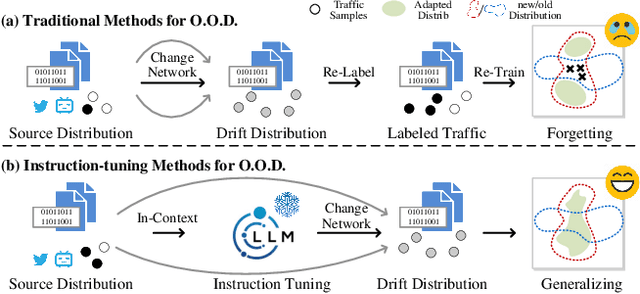
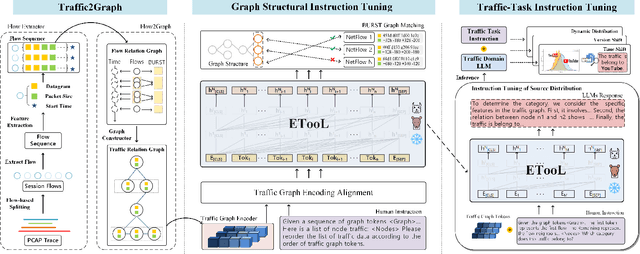
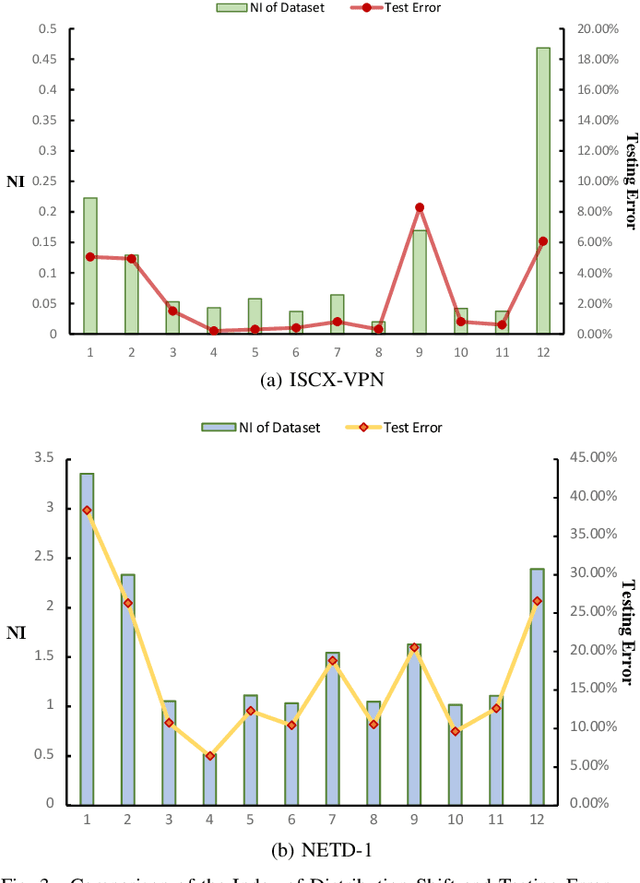
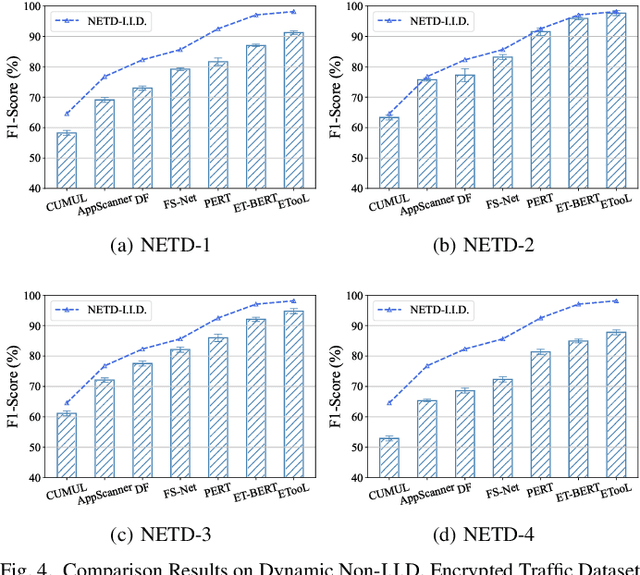
Encrypted traffic classification is highly challenging in network security due to the need for extracting robust features from content-agnostic traffic data. Existing approaches face critical issues: (i) Distribution drift, caused by reliance on the closedworld assumption, limits adaptability to realworld, shifting patterns; (ii) Dependence on labeled data restricts applicability where such data is scarce or unavailable. Large language models (LLMs) have demonstrated remarkable potential in offering generalizable solutions across a wide range of tasks, achieving notable success in various specialized fields. However, their effectiveness in traffic analysis remains constrained by challenges in adapting to the unique requirements of the traffic domain. In this paper, we introduce a novel traffic representation model named Encrypted Traffic Out-of-Distribution Instruction Tuning with LLM (ETooL), which integrates LLMs with knowledge of traffic structures through a self-supervised instruction tuning paradigm. This framework establishes connections between textual information and traffic interactions. ETooL demonstrates more robust classification performance and superior generalization in both supervised and zero-shot traffic classification tasks. Notably, it achieves significant improvements in F1 scores: APP53 (I.I.D.) to 93.19%(6.62%) and 92.11%(4.19%), APP53 (O.O.D.) to 74.88%(18.17%) and 72.13%(15.15%), and ISCX-Botnet (O.O.D.) to 95.03%(9.16%) and 81.95%(12.08%). Additionally, we construct NETD, a traffic dataset designed to support dynamic distributional shifts, and use it to validate ETooL's effectiveness under varying distributional conditions. Furthermore, we evaluate the efficiency gains achieved through ETooL's instruction tuning approach.
Are GNNs Worth the Effort for IoT Botnet Detection? A Comparative Study of VAE-GNN vs. ViT-MLP and VAE-MLP Approaches
May 23, 2025Due to the exponential rise in IoT-based botnet attacks, researchers have explored various advanced techniques for both dimensionality reduction and attack detection to enhance IoT security. Among these, Variational Autoencoders (VAE), Vision Transformers (ViT), and Graph Neural Networks (GNN), including Graph Convolutional Networks (GCN) and Graph Attention Networks (GAT), have garnered significant research attention in the domain of attack detection. This study evaluates the effectiveness of four state-of-the-art deep learning architectures for IoT botnet detection: a VAE encoder with a Multi-Layer Perceptron (MLP), a VAE encoder with a GCN, a VAE encoder with a GAT, and a ViT encoder with an MLP. The evaluation is conducted on a widely studied IoT benchmark dataset--the N-BaIoT dataset for both binary and multiclass tasks. For the binary classification task, all models achieved over 99.93% in accuracy, recall, precision, and F1-score, with no notable differences in performance. In contrast, for the multiclass classification task, GNN-based models showed significantly lower performance compared to VAE-MLP and ViT-MLP, with accuracies of 86.42%, 89.46%, 99.72%, and 98.38% for VAE-GCN, VAE-GAT, VAE-MLP, and ViT-MLP, respectively.