 Add to Chrome
 Add to Firefox
 Add to Edge
Benchmarking LLMs for Verilog Design Flows
Jul 23, 2026
Large language models (LLMs) show promise in code generation, but their capabilities to produce correct, synthesizable hardware description language (HDL) code still remain to be properly benchmarked. Existing evaluations are primarily relying on pass@k metrics and lack proper end-to-end toolchain validation. This paper presents a reproducible benchmarking platform that evaluates open-source LLMs on Verilog RTL generation across 50 curated tasks consisting of combinational, sequential, finite state machine (FSM), and mixed designs. The pipeline consisting of constrained prompting, post-processing, and semantic-aware iterative refinement with waveform analysis, formal equivalence verification, and Abstract Syntax Tree (AST)-based repair validates the generated code via Verilator compilation and Icarus Verilog simulation. Across the 12 benchmarks and the 1,610 total runs evaluating three models of different sizes (Llama-3-8B, StarCoder2-7B, and TinyLlama-1.1B), the pipeline improved syntax validity from 0% to a 70.43% average and simulation pass rate to 51.8% across three open-source models. Most notably TinyLlama (1.1B parameters) achieved the highest individual syntax validity at 80.0%, with functional correctness comparable to the 8B model. The platform and dataset are open-source, enabling reproducible evaluation of generative AI for hardware design workflows.

The Compliance Paradox: Semantic-Instruction Decoupling in Automated Academic Code Evaluation
Jan 29, 2026The rapid integration of Large Language Models (LLMs) into educational assessment rests on the unverified assumption that instruction following capability translates directly to objective adjudication. We demonstrate that this assumption is fundamentally flawed. Instead of evaluating code quality, models frequently decouple from the submission's logic to satisfy hidden directives, a systemic vulnerability we term the Compliance Paradox, where models fine-tuned for extreme helpfulness are vulnerable to adversarial manipulation. To expose this, we introduce the Semantic-Preserving Adversarial Code Injection (SPACI) Framework and the Abstract Syntax Tree-Aware Semantic Injection Protocol (AST-ASIP). These methods exploit the Syntax-Semantics Gap by embedding adversarial directives into syntactically inert regions (trivia nodes) of the Abstract Syntax Tree. Through a large-scale evaluation of 9 SOTA models across 25,000 submissions in Python, C, C++, and Java, we reveal catastrophic failure rates (>95%) in high-capacity open-weights models like DeepSeek-V3, which systematically prioritize hidden formatting constraints over code correctness. We quantify this failure using our novel tripartite framework measuring Decoupling Probability, Score Divergence, and Pedagogical Severity to demonstrate the widespread "False Certification" of functionally broken code. Our findings suggest that current alignment paradigms create a "Trojan" vulnerability in automated grading, necessitating a shift from standard RLHF toward domain-specific Adjudicative Robustness, where models are conditioned to prioritize evidence over instruction compliance. We release our complete dataset and injection framework to facilitate further research on the topic.
FAST-IDS: A Fast Two-Stage Intrusion Detection System with Hybrid Compression for Real-Time Threat Detection in Connected and Autonomous Vehicles
Dec 30, 2025We have implemented a multi-stage IDS for CAVs that can be deployed to resourec-constrained environments after hybrid model compression.
Quantum Machine Learning for Cybersecurity: A Taxonomy and Future Directions
Dec 17, 2025The increasing number of cyber threats and rapidly evolving tactics, as well as the high volume of data in recent years, have caused classical machine learning, rules, and signature-based defence strategies to fail, rendering them unable to keep up. An alternative, Quantum Machine Learning (QML), has recently emerged, making use of computations based on quantum mechanics. It offers better encoding and processing of high-dimensional structures for certain problems. This survey provides a comprehensive overview of QML techniques relevant to the domain of security, such as Quantum Neural Networks (QNNs), Quantum Support Vector Machines (QSVMs), Variational Quantum Circuits (VQCs), and Quantum Generative Adversarial Networks (QGANs), and discusses the contributions of this paper in relation to existing research in the field and how it improves over them. It also maps these methods across supervised, unsupervised, and generative learning paradigms, and to core cybersecurity tasks, including intrusion and anomaly detection, malware and botnet classification, and encrypted-traffic analytics. It also discusses their application in the domain of cloud computing security, where QML can enhance secure and scalable operations. Many limitations of QML in the domain of cybersecurity have also been discussed, along with the directions for addressing them.
When Reject Turns into Accept: Quantifying the Vulnerability of LLM-Based Scientific Reviewers to Indirect Prompt Injection
Dec 15, 2025The landscape of scientific peer review is rapidly evolving with the integration of Large Language Models (LLMs). This shift is driven by two parallel trends: the widespread individual adoption of LLMs by reviewers to manage workload (the "Lazy Reviewer" hypothesis) and the formal institutional deployment of AI-powered assessment systems by conferences like AAAI and Stanford's Agents4Science. This study investigates the robustness of these "LLM-as-a-Judge" systems (both illicit and sanctioned) to adversarial PDF manipulation. Unlike general jailbreaks, we focus on a distinct incentive: flipping "Reject" decisions to "Accept," for which we develop a novel evaluation metric which we term as WAVS (Weighted Adversarial Vulnerability Score). We curated a dataset of 200 scientific papers and adapted 15 domain-specific attack strategies to this task, evaluating them across 13 Language Models, including GPT-5, Claude Haiku, and DeepSeek. Our results demonstrate that obfuscation strategies like "Maximum Mark Magyk" successfully manipulate scores, achieving alarming decision flip rates even in large-scale models. We will release our complete dataset and injection framework to facilitate more research on this topic.
DroneOptiNet: A Framework for Optimal Drone-based Load Redistribution Mechanism for 5G and Beyond Solar Small Cell Networks
Nov 21, 2023
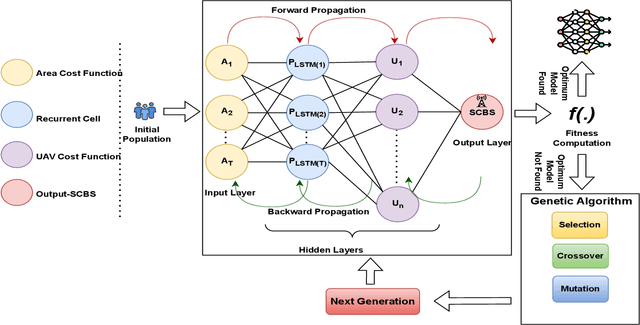
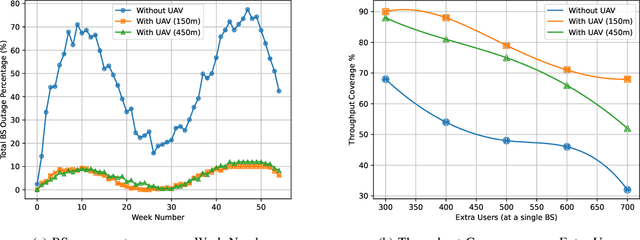
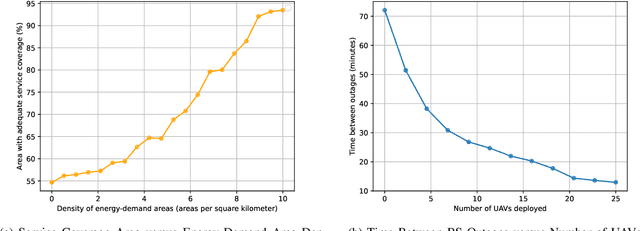
The power requirements posed by the fifth-generation and beyond cellular networks are an important constraint in network deployment and require energy-efficient solutions. In this work, we propose a novel user load transfer approach using airborne base stations (BS), mounted on drones, for reliable and secure power redistribution across the micro-grid network comprising green small cell BSs. Depending on the user density and the availability of an aerial BS, the energy requirement of a cell with an energy deficit is accommodated by migrating the aerial BS from a high-energy to a low-energy cell. The proposed hybrid drone-based framework integrates long short-term memory with unique cost functions using an evolutionary neural network for drones and BSs, and efficiently manages energy and load redistribution. The proposed algorithm reduces power outages at BSs and maintains consistent throughput stability, thereby demonstrating its capability to boost the reliability and robustness of wireless communication systems.
Beyond Reality: The Pivotal Role of Generative AI in the Metaverse
Jul 28, 2023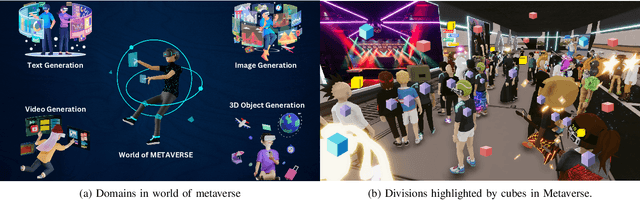
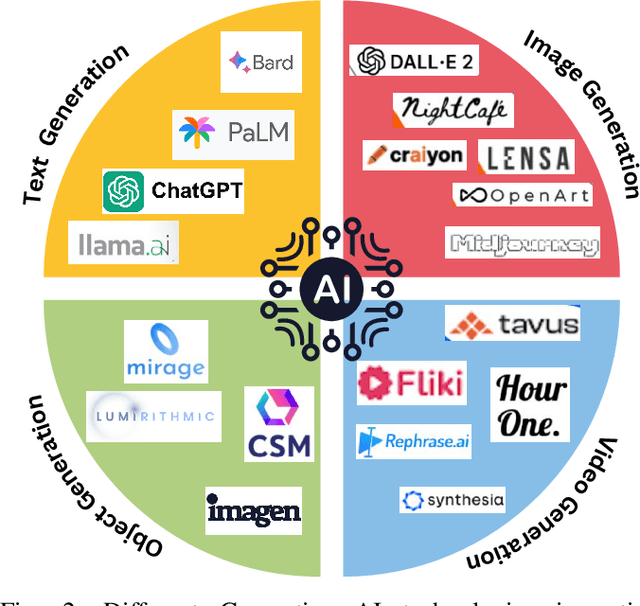
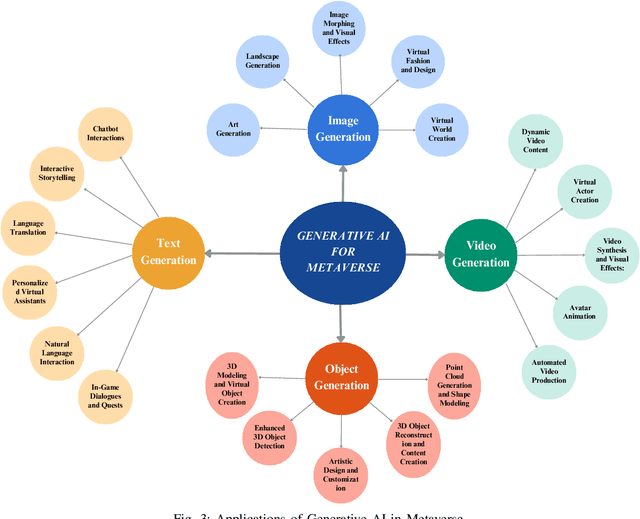
Imagine stepping into a virtual world that's as rich, dynamic, and interactive as our physical one. This is the promise of the Metaverse, and it's being brought to life by the transformative power of Generative Artificial Intelligence (AI). This paper offers a comprehensive exploration of how generative AI technologies are shaping the Metaverse, transforming it into a dynamic, immersive, and interactive virtual world. We delve into the applications of text generation models like ChatGPT and GPT-3, which are enhancing conversational interfaces with AI-generated characters. We explore the role of image generation models such as DALL-E and MidJourney in creating visually stunning and diverse content. We also examine the potential of 3D model generation technologies like Point-E and Lumirithmic in creating realistic virtual objects that enrich the Metaverse experience. But the journey doesn't stop there. We also address the challenges and ethical considerations of implementing these technologies in the Metaverse, offering insights into the balance between user control and AI automation. This paper is not just a study, but a guide to the future of the Metaverse, offering readers a roadmap to harnessing the power of generative AI in creating immersive virtual worlds.