 Add to Chrome
 Add to Firefox
 Add to Edge
PRISM: Powerful Time Series to Image (TS2I) Representations for Multivariate Anomaly Detection
Aug 04, 2026
Time series anomaly detection (TSAD) underpins applications in predictive maintenance, finance, and cloud computing, however performance remains sensitive to representation choices, especially in multivariate settings. While transforming time series into images has shown success in forecasting and classification, it remains unclear how multivariate, high-dimensional series should be mapped to multi-channel images and whether vision backbones can match time-domain baselines in TSAD. We introduce PRISM, a plug-and-play meta-workflow enabling systematic construction and evaluation of image-based representations for multivariate TSAD. Our evaluation spanning over 7,000 experiments shows that well-designed PRISM configurations are competitive with 24 time-domain baselines, achieving the best VUS-PR on 10 of 14 datasets, with an average improvement of 41% over the best competing method on those datasets. Further, we identify channelization - how the channel dimension of multi-channel images is constructed - as a critical and previously understudied design dimension, and introduce MSM, a novel statistics-based scheme achieving 11-27% gains over PCA-based alternatives. Finally, ImageNet-pretrained encoders transfer effectively to TSAD, with frozen encoders retaining 92% of fine-tuned performance while training 1.8 times faster. Our code is available at: https://github.com/Smendowski/PRISM.

TSN-Affinity: Similarity-Driven Parameter Reuse for Continual Offline Reinforcement Learning
Apr 28, 2026Continual offline reinforcement learning (CORL) aims to learn a sequence of tasks from datasets collected over time while preserving performance on previously learned tasks. This setting corresponds to domains where new tasks arise over time, but adapting the model in live environment interactions is expensive, risky, or impossible. However, CORL inherits the dual difficulty of offline reinforcement learning and adapting while preventing catastrophic forgetting. Replay-based continual learning approaches remain a strong baseline but incur memory overhead and suffer from a distribution mismatch between replayed samples and newly learned policies. At the same time, architectural continual learning methods have shown strong potential in supervised learning but remain underexplored in CORL. In this work, we propose TSN-Affinity, a novel CORL method based on TinySubNetworks and Decision Transformer. The method enables task-specific parameterization and controlled knowledge sharing through a RL-aware reuse strategy that routes tasks according to action compatibility and latent similarity. We evaluate the approach on benchmarks based on Atari games and simulations of manipulation tasks with the Franka Emika Panda robotic arm, covering both discrete and continuous control. Results show strong retention from sparse SubNetworks, with routing further improving multi-task performance. Our findings suggest that similarity-guided architectural reuse is a strong and viable alternative to replay-based strategies in a CORL setting. Our code is available at: https://github.com/anonymized-for-submission123/tsn-affinity.
Rethinking the Harmonic Loss via Non-Euclidean Distance Layers
Mar 12, 2026Cross-entropy loss has long been the standard choice for training deep neural networks, yet it suffers from interpretability limitations, unbounded weight growth, and inefficiencies that can contribute to costly training dynamics. The harmonic loss is a distance-based alternative grounded in Euclidean geometry that improves interpretability and mitigates phenomena such as grokking, or delayed generalization on the test set. However, the study of harmonic loss remains narrow: only Euclidean distance is explored, and no systematic evaluation of computational efficiency or sustainability was conducted. We extend harmonic loss by systematically investigating a broad spectrum of distance metrics as replacements for the Euclidean distance. We comprehensively evaluate distance-tailored harmonic losses on both vision backbones and large language models. Our analysis is framed around a three-way evaluation of model performance, interpretability, and sustainability. On vision tasks, cosine distances provide the most favorable trade-off, consistently improving accuracy while lowering carbon emissions, whereas Bray-Curtis and Mahalanobis further enhance interpretability at varying efficiency costs. On language models, cosine-based harmonic losses improve gradient and learning stability, strengthen representation structure, and reduce emissions relative to cross-entropy and Euclidean heads. Our code is available at: https://anonymous.4open.science/r/rethinking-harmonic-loss-5BAB/.
DNS-GT: A Graph-based Transformer Approach to Learn Embeddings of Domain Names from DNS Queries
Mar 11, 2026Network intrusion detection systems play a crucial role in the security strategy employed by organisations to detect and prevent cyberattacks. Such systems usually combine pattern detection signatures with anomaly detection techniques powered by machine learning methods. However, the commonly proposed machine learning methods present drawbacks such as over-reliance on labeled data and limited generalization capabilities. To address these issues, embedding-based methods have been introduced to learn representations from network data, such as DNS traffic, mainly due to its large availability, that generalise effectively to many downstream tasks. However, current approaches do not properly consider contextual information among DNS queries. In this paper, we tackle this issue by proposing DNS-GT, a novel Transformer-based model that learns embeddings for domain names from sequences of DNS queries. The model is first pre-trained in a self-supervised fashion in order to learn the general behavior of DNS activity. Then, it can be finetuned on specific downstream tasks, exploiting interactions with other relevant queries in a given sequence. Our experiments with real-world DNS data showcase the ability of our method to learn effective domain name representations. A quantitative evaluation on domain name classification and botnet detection tasks shows that our approach achieves better results compared to relevant baselines, creating opportunities for further exploration of large-scale language models for intrusion detection systems. Our code is available at: https://github.com/m-altieri/DNS-GT.
TinySubNets: An efficient and low capacity continual learning strategy
Dec 14, 2024
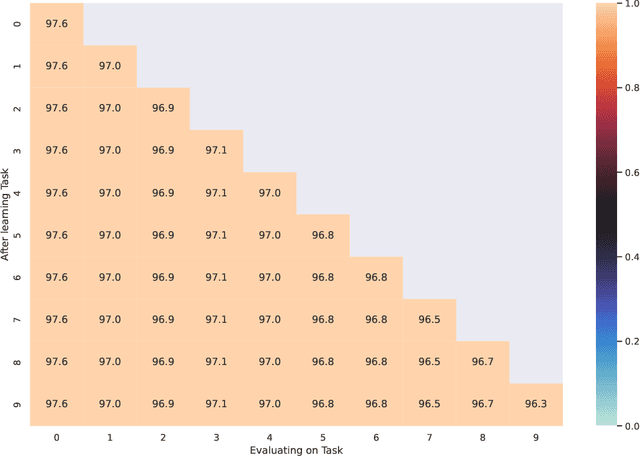
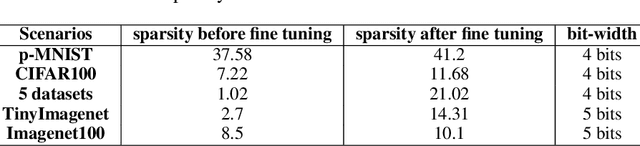
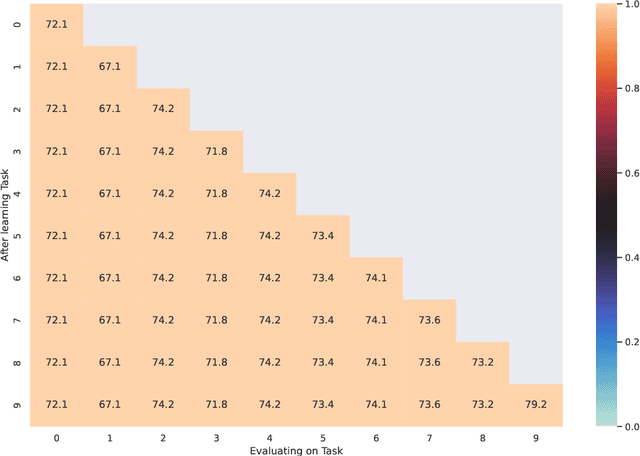
Continual Learning (CL) is a highly relevant setting gaining traction in recent machine learning research. Among CL works, architectural and hybrid strategies are particularly effective due to their potential to adapt the model architecture as new tasks are presented. However, many existing solutions do not efficiently exploit model sparsity, and are prone to capacity saturation due to their inefficient use of available weights, which limits the number of learnable tasks. In this paper, we propose TinySubNets (TSN), a novel architectural CL strategy that addresses the issues through the unique combination of pruning with different sparsity levels, adaptive quantization, and weight sharing. Pruning identifies a subset of weights that preserve model performance, making less relevant weights available for future tasks. Adaptive quantization allows a single weight to be separated into multiple parts which can be assigned to different tasks. Weight sharing between tasks boosts the exploitation of capacity and task similarity, allowing for the identification of a better trade-off between model accuracy and capacity. These features allow TSN to efficiently leverage the available capacity, enhance knowledge transfer, and reduce computational resource consumption. Experimental results involving common benchmark CL datasets and scenarios show that our proposed strategy achieves better results in terms of accuracy than existing state-of-the-art CL strategies. Moreover, our strategy is shown to provide a significantly improved model capacity exploitation. Code released at: https://github.com/lifelonglab/tinysubnets.
Towards efficient deep autoencoders for multivariate time series anomaly detection
Mar 04, 2024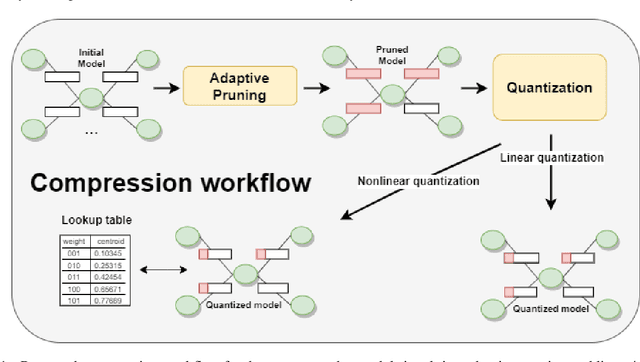
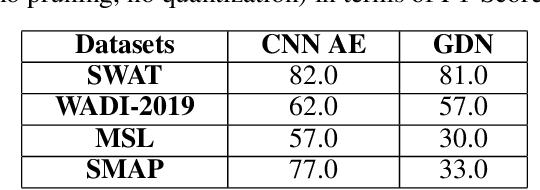

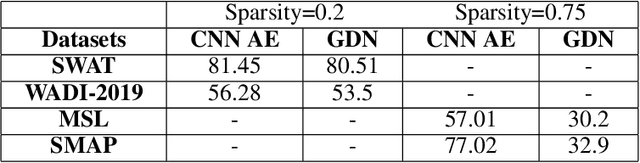
Multivariate time series anomaly detection is a crucial problem in many industrial and research applications. Timely detection of anomalies allows, for instance, to prevent defects in manufacturing processes and failures in cyberphysical systems. Deep learning methods are preferred among others for their accuracy and robustness for the analysis of complex multivariate data. However, a key aspect is being able to extract predictions in a timely manner, to accommodate real-time requirements in different applications. In the case of deep learning models, model reduction is extremely important to achieve optimal results in real-time systems with limited time and memory constraints. In this paper, we address this issue by proposing a novel compression method for deep autoencoders that involves three key factors. First, pruning reduces the number of weights, while preventing catastrophic drops in accuracy by means of a fast search process that identifies high sparsity levels. Second, linear and non-linear quantization reduces model complexity by reducing the number of bits for every single weight. The combined contribution of these three aspects allow the model size to be reduced, by removing a subset of the weights (pruning), and decreasing their bit-width (quantization). As a result, the compressed model is faster and easier to adopt in highly constrained hardware environments. Experiments performed on popular multivariate anomaly detection benchmarks, show that our method is capable of achieving significant model compression ratio (between 80% and 95%) without a significant reduction in the anomaly detection performance.
Using LLMs to discover emerging coded antisemitic hate-speech in extremist social media
Jan 23, 2024Online hate speech proliferation has created a difficult problem for social media platforms. A particular challenge relates to the use of coded language by groups interested in both creating a sense of belonging for its users and evading detection. Coded language evolves quickly and its use varies over time. This paper proposes a methodology for detecting emerging coded hate-laden terminology. The methodology is tested in the context of online antisemitic discourse. The approach considers posts scraped from social media platforms, often used by extremist users. The posts are scraped using seed expressions related to previously known discourse of hatred towards Jews. The method begins by identifying the expressions most representative of each post and calculating their frequency in the whole corpus. It filters out grammatically incoherent expressions as well as previously encountered ones so as to focus on emergent well-formed terminology. This is followed by an assessment of semantic similarity to known antisemitic terminology using a fine-tuned large language model, and subsequent filtering out of the expressions that are too distant from known expressions of hatred. Emergent antisemitic expressions containing terms clearly relating to Jewish topics are then removed to return only coded expressions of hatred.
Ada-QPacknet -- adaptive pruning with bit width reduction as an efficient continual learning method without forgetting
Aug 14, 2023
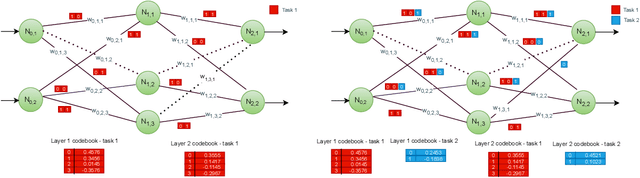
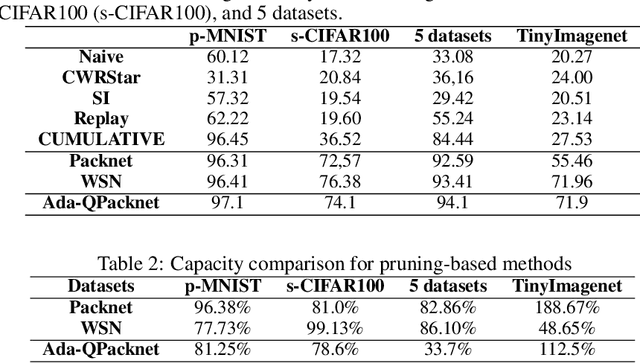
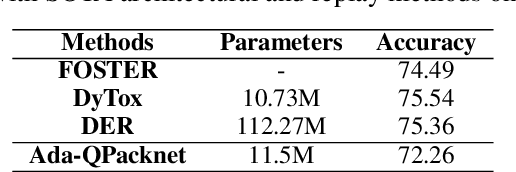
Continual Learning (CL) is a process in which there is still huge gap between human and deep learning model efficiency. Recently, many CL algorithms were designed. Most of them have many problems with learning in dynamic and complex environments. In this work new architecture based approach Ada-QPacknet is described. It incorporates the pruning for extracting the sub-network for each task. The crucial aspect in architecture based CL methods is theirs capacity. In presented method the size of the model is reduced by efficient linear and nonlinear quantisation approach. The method reduces the bit-width of the weights format. The presented results shows that hybrid 8 and 4-bit quantisation achieves similar accuracy as floating-point sub-network on a well-know CL scenarios. To our knowledge it is the first CL strategy which incorporates both compression techniques pruning and quantisation for generating task sub-networks. The presented algorithm was tested on well-known episode combinations and compared with most popular algorithms. Results show that proposed approach outperforms most of the CL strategies in task and class incremental scenarios.
AD-NEV: A Scalable Multi-level Neuroevolution Framework for Multivariate Anomaly Detection
May 25, 2023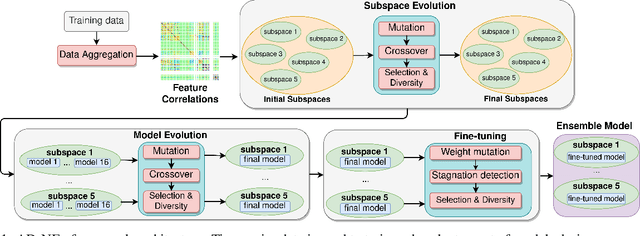
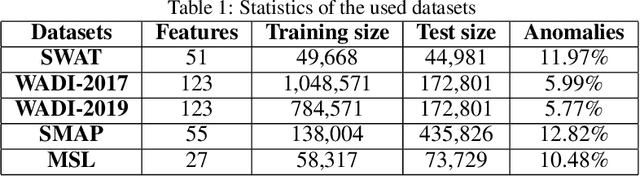
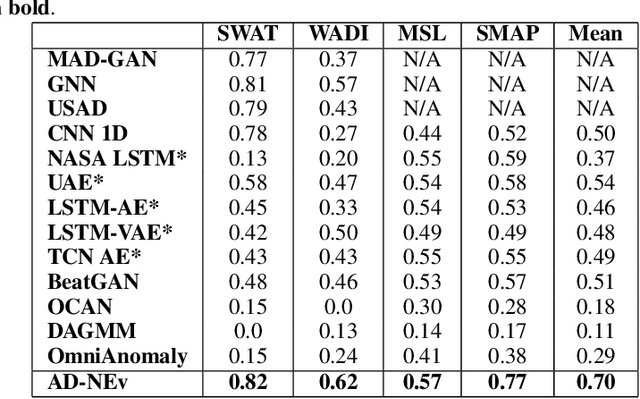
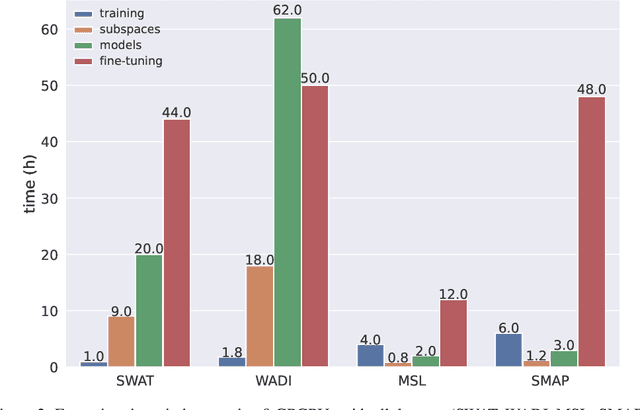
Anomaly detection tools and methods present a key capability in modern cyberphysical and failure prediction systems. Despite the fast-paced development in deep learning architectures for anomaly detection, model optimization for a given dataset is a cumbersome and time consuming process. Neuroevolution could be an effective and efficient solution to this problem, as a fully automated search method for learning optimal neural networks, supporting both gradient and non-gradient fine tuning. However, existing methods mostly focus on optimizing model architectures without taking into account feature subspaces and model weights. In this work, we propose Anomaly Detection Neuroevolution (AD-NEv) - a scalable multi-level optimized neuroevolution framework for multivariate time series anomaly detection. The method represents a novel approach to synergically: i) optimize feature subspaces for an ensemble model based on the bagging technique; ii) optimize the model architecture of single anomaly detection models; iii) perform non-gradient fine-tuning of network weights. An extensive experimental evaluation on widely adopted multivariate anomaly detection benchmark datasets shows that the models extracted by AD-NEv outperform well-known deep learning architectures for anomaly detection. Moreover, results show that AD-NEv can perform the whole process efficiently, presenting high scalability when multiple GPUs are available.
From MNIST to ImageNet and Back: Benchmarking Continual Curriculum Learning
Mar 16, 2023Continual learning (CL) is one of the most promising trends in recent machine learning research. Its goal is to go beyond classical assumptions in machine learning and develop models and learning strategies that present high robustness in dynamic environments. The landscape of CL research is fragmented into several learning evaluation protocols, comprising different learning tasks, datasets, and evaluation metrics. Additionally, the benchmarks adopted so far are still distant from the complexity of real-world scenarios, and are usually tailored to highlight capabilities specific to certain strategies. In such a landscape, it is hard to objectively assess strategies. In this work, we fill this gap for CL on image data by introducing two novel CL benchmarks that involve multiple heterogeneous tasks from six image datasets, with varying levels of complexity and quality. Our aim is to fairly evaluate current state-of-the-art CL strategies on a common ground that is closer to complex real-world scenarios. We additionally structure our benchmarks so that tasks are presented in increasing and decreasing order of complexity -- according to a curriculum -- in order to evaluate if current CL models are able to exploit structure across tasks. We devote particular emphasis to providing the CL community with a rigorous and reproducible evaluation protocol for measuring the ability of a model to generalize and not to forget while learning. Furthermore, we provide an extensive experimental evaluation showing that popular CL strategies, when challenged with our benchmarks, yield sub-par performance, high levels of forgetting, and present a limited ability to effectively leverage curriculum task ordering. We believe that these results highlight the need for rigorous comparisons in future CL works as well as pave the way to design new CL strategies that are able to deal with more complex scenarios.