 Add to Chrome
 Add to Firefox
 Add to Edge
Maximizing Human Efficiency in Large-Scale Robot Post-Training via VLAC-Cut Guided Pipeline
Jul 08, 2026
When adapting Vision Language Action (VLA) models to downstream tasks, multiple rounds of post training are required because a single round of data cannot resolve all issues, making continuous iterations necessary to progressively address the weaknesses exposed in previous rounds. In this report, we aim to maximize human efficiency during post-training, defined as the policy improvement and task throughput achieved per unit of human labor and time. We propose a human-efficient post-training pipeline that enables a small number of human operators to supervise multiple robots. The pipeline is built around a specialized division of labor: a trained Teleoperator focuses on high-value remote interventions and recovery demonstrations, while a Floor Operator monitors multiple robots, triggers takeovers, and performs physical resets. This role specialization reduces task switching, lowers operator training costs, and allows limited human labor to supervise more robot interaction across a larger fleet. To improve data utilization efficiency, we introduce VLAC-CUT as an automatic rollout curation tool. It segments autonomous robot trajectories into progress-making, idle, failure-inducing, and recovery portions, preserving useful segments while filtering harmful or uninformative ones. The curated rollout data are combined with Human-in-the-Loop data for the next post-training round. We validate the proposed pipeline on four real-world manipulation tasks. Across iterative post-training rounds, the final policies achieve 80\%--95\% success rates and improve task throughput by 1.7$\times$--4.2$\times$ over the base model. Under the same human-intervention budget, VLAC-CUT guided rollout reuse outperforms HITL-only training in both success rate and throughput.

Rhythm: Learning Interactive Whole-Body Control for Dual Humanoids
Mar 03, 2026Realizing interactive whole-body control for multi-humanoid systems is critical for unlocking complex collaborative capabilities in shared environments. Although recent advancements have significantly enhanced the agility of individual robots, bridging the gap to physically coupled multi-humanoid interaction remains challenging, primarily due to severe kinematic mismatches and complex contact dynamics. To address this, we introduce Rhythm, the first unified framework enabling real-world deployment of dual-humanoid systems for complex, physically plausible interactions. Our framework integrates three core components: (1) an Interaction-Aware Motion Retargeting (IAMR) module that generates feasible humanoid interaction references from human data; (2) an Interaction-Guided Reinforcement Learning (IGRL) policy that masters coupled dynamics via graph-based rewards; and (3) a real-world deployment system that enables robust transfer of dual-humanoid interaction. Extensive experiments on physical Unitree G1 robots demonstrate that our framework achieves robust interactive whole-body control, successfully transferring diverse behaviors such as hugging and dancing from simulation to reality.
CMoE: Contrastive Mixture of Experts for Motion Control and Terrain Adaptation of Humanoid Robots
Mar 03, 2026For effective deployment in real-world environments, humanoid robots must autonomously navigate a diverse range of complex terrains with abrupt transitions. While the Vanilla mixture of experts (MoE) framework is theoretically capable of modeling diverse terrain features, in practice, the gating network exhibits nearly uniform expert activations across different terrains, weakening the expert specialization and limiting the model's expressive power. To address this limitation, we introduce CMoE, a novel single-stage reinforcement learning framework that integrates contrastive learning to refine expert activation distributions. By imposing contrastive constraints, CMoE maximizes the consistency of expert activations within the same terrain while minimizing their similarity across different terrains, thereby encouraging experts to specialize in distinct terrain types. We validated our approach on the Unitree G1 humanoid robot through a series of challenging experiments. Results demonstrate that CMoE enables the robot to traverse continuous steps up to 20 cm high and gaps up to 80 cm wide, while achieving robust and natural gait across diverse mixed terrains, surpassing the limits of existing methods. To support further research and foster community development, we release our code publicly.
Resolving State Ambiguity in Robot Manipulation via Adaptive Working Memory Recoding
Dec 31, 2025State ambiguity is common in robotic manipulation. Identical observations may correspond to multiple valid behavior trajectories. The visuomotor policy must correctly extract the appropriate types and levels of information from the history to identify the current task phase. However, naively extending the history window is computationally expensive and may cause severe overfitting. Inspired by the continuous nature of human reasoning and the recoding of working memory, we introduce PAM, a novel visuomotor Policy equipped with Adaptive working Memory. With minimal additional training cost in a two-stage manner, PAM supports a 300-frame history window while maintaining high inference speed. Specifically, a hierarchical frame feature extractor yields two distinct representations for motion primitives and temporal disambiguation. For compact representation, a context router with range-specific queries is employed to produce compact context features across multiple history lengths. And an auxiliary objective of reconstructing historical information is introduced to ensure that the context router acts as an effective bottleneck. We meticulously design 7 tasks and verify that PAM can handle multiple scenarios of state ambiguity simultaneously. With a history window of approximately 10 seconds, PAM still supports stable training and maintains inference speeds above 20Hz. Project website: https://tinda24.github.io/pam/
Drive in Corridors: Enhancing the Safety of End-to-end Autonomous Driving via Corridor Learning and Planning
Apr 10, 2025Safety remains one of the most critical challenges in autonomous driving systems. In recent years, the end-to-end driving has shown great promise in advancing vehicle autonomy in a scalable manner. However, existing approaches often face safety risks due to the lack of explicit behavior constraints. To address this issue, we uncover a new paradigm by introducing the corridor as the intermediate representation. Widely adopted in robotics planning, the corridors represents spatio-temporal obstacle-free zones for the vehicle to traverse. To ensure accurate corridor prediction in diverse traffic scenarios, we develop a comprehensive learning pipeline including data annotation, architecture refinement and loss formulation. The predicted corridor is further integrated as the constraint in a trajectory optimization process. By extending the differentiability of the optimization, we enable the optimized trajectory to be seamlessly trained within the end-to-end learning framework, improving both safety and interpretability. Experimental results on the nuScenes dataset demonstrate state-of-the-art performance of our approach, showing a 66.7% reduction in collisions with agents and a 46.5% reduction with curbs, significantly enhancing the safety of end-to-end driving. Additionally, incorporating the corridor contributes to higher success rates in closed-loop evaluations.
FriendsQA: A New Large-Scale Deep Video Understanding Dataset with Fine-grained Topic Categorization for Story Videos
Dec 22, 2024Video question answering (VideoQA) aims to answer natural language questions according to the given videos. Although existing models perform well in the factoid VideoQA task, they still face challenges in deep video understanding (DVU) task, which focuses on story videos. Compared to factoid videos, the most significant feature of story videos is storylines, which are composed of complex interactions and long-range evolvement of core story topics including characters, actions and locations. Understanding these topics requires models to possess DVU capability. However, existing DVU datasets rarely organize questions according to these story topics, making them difficult to comprehensively assess VideoQA models' DVU capability of complex storylines. Additionally, the question quantity and video length of these dataset are limited by high labor costs of handcrafted dataset building method. In this paper, we devise a large language model based multi-agent collaboration framework, StoryMind, to automatically generate a new large-scale DVU dataset. The dataset, FriendsQA, derived from the renowned sitcom Friends with an average episode length of 1,358 seconds, contains 44.6K questions evenly distributed across 14 fine-grained topics. Finally, We conduct comprehensive experiments on 10 state-of-the-art VideoQA models using the FriendsQA dataset.
Hybrid Gaussian Process Regression with Temporal Feature Extraction for Partially Interpretable Remaining Useful Life Interval Prediction in Aeroengine Prognostics
Nov 19, 2024The estimation of Remaining Useful Life (RUL) plays a pivotal role in intelligent manufacturing systems and Industry 4.0 technologies. While recent advancements have improved RUL prediction, many models still face interpretability and compelling uncertainty modeling challenges. This paper introduces a modified Gaussian Process Regression (GPR) model for RUL interval prediction, tailored for the complexities of manufacturing process development. The modified GPR predicts confidence intervals by learning from historical data and addresses uncertainty modeling in a more structured way. The approach effectively captures intricate time-series patterns and dynamic behaviors inherent in modern manufacturing systems by coupling GPR with deep adaptive learning-enhanced AI process models. Moreover, the model evaluates feature significance to ensure more transparent decision-making, which is crucial for optimizing manufacturing processes. This comprehensive approach supports more accurate RUL predictions and provides transparent, interpretable insights into uncertainty, contributing to robust process development and management.
HGS-Planner: Hierarchical Planning Framework for Active Scene Reconstruction Using 3D Gaussian Splatting
Sep 26, 2024
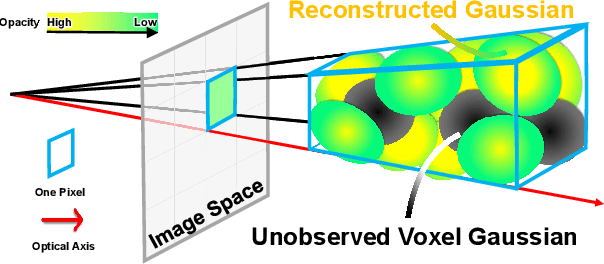
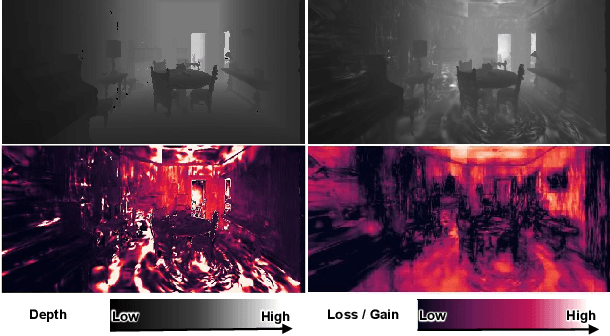
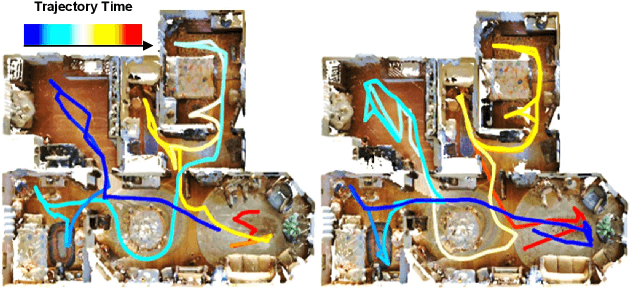
In complex missions such as search and rescue,robots must make intelligent decisions in unknown environments, relying on their ability to perceive and understand their surroundings. High-quality and real-time reconstruction enhances situational awareness and is crucial for intelligent robotics. Traditional methods often struggle with poor scene representation or are too slow for real-time use. Inspired by the efficacy of 3D Gaussian Splatting (3DGS), we propose a hierarchical planning framework for fast and high-fidelity active reconstruction. Our method evaluates completion and quality gain to adaptively guide reconstruction, integrating global and local planning for efficiency. Experiments in simulated and real-world environments show our approach outperforms existing real-time methods.
ROSfs: A User-Level File System for ROS
Jun 15, 2024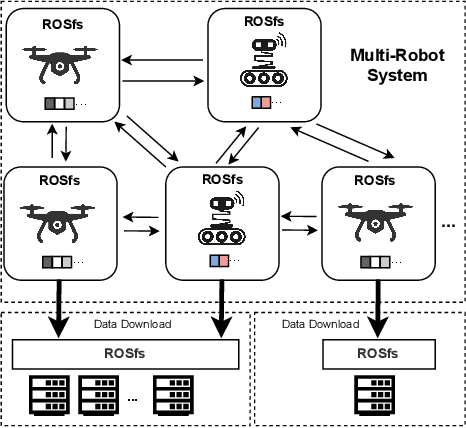

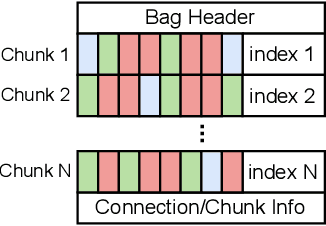
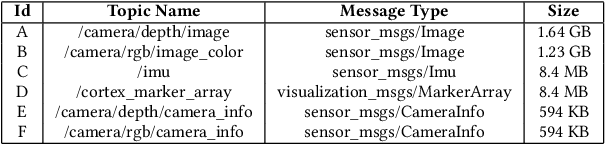
We present ROSfs, a novel user-level file system for the Robot Operating System (ROS). ROSfs interprets a robot file as a group of sub-files, with each having a distinct label. ROSfs applies a time index structure to enhance the flexible data query while the data file is under modification. It provides multi-robot systems (MRS) with prompt cross-robot data acquisition and collaboration. We implemented a ROSfs prototype and integrated it into a mainstream ROS platform. We then applied and evaluated ROSfs on real-world UAVs and data servers. Evaluation results show that compared with traditional ROS storage methods, ROSfs improves the offline query performance by up to 129x and reduces inter-robot online data query latency under a wireless network by up to 7x.
HGS-Mapping: Online Dense Mapping Using Hybrid Gaussian Representation in Urban Scenes
Mar 29, 2024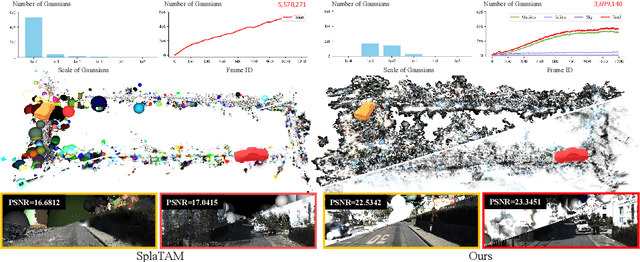
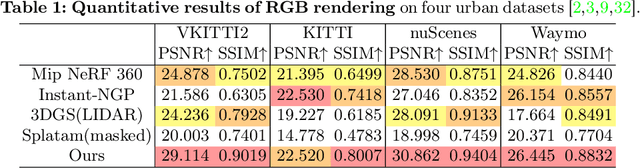
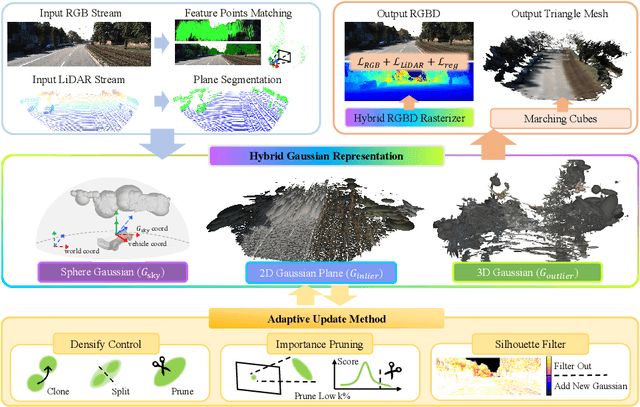
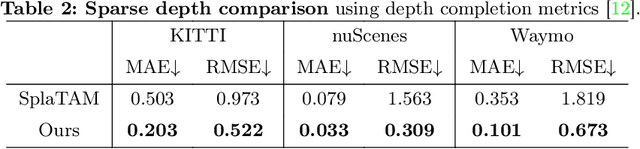
Online dense mapping of urban scenes forms a fundamental cornerstone for scene understanding and navigation of autonomous vehicles. Recent advancements in mapping methods are mainly based on NeRF, whose rendering speed is too slow to meet online requirements. 3D Gaussian Splatting (3DGS), with its rendering speed hundreds of times faster than NeRF, holds greater potential in online dense mapping. However, integrating 3DGS into a street-view dense mapping framework still faces two challenges, including incomplete reconstruction due to the absence of geometric information beyond the LiDAR coverage area and extensive computation for reconstruction in large urban scenes. To this end, we propose HGS-Mapping, an online dense mapping framework in unbounded large-scale scenes. To attain complete construction, our framework introduces Hybrid Gaussian Representation, which models different parts of the entire scene using Gaussians with distinct properties. Furthermore, we employ a hybrid Gaussian initialization mechanism and an adaptive update method to achieve high-fidelity and rapid reconstruction. To the best of our knowledge, we are the first to integrate Gaussian representation into online dense mapping of urban scenes. Our approach achieves SOTA reconstruction accuracy while only employing 66% number of Gaussians, leading to 20% faster reconstruction speed.