 Add to Chrome
 Add to Firefox
 Add to Edge
AgentDebugX: An Open-Source Toolkit for Failure Observability, Attribution, and Recovery in LLM Agents
Jul 21, 2026
LLM agent failures are difficult to debug because the step where an error surfaces is often not the one that caused it. Existing observability tools replay execution traces but provide little support for identifying the root cause or translating diagnosis into recovery. We present AgentDebugX, an open-source debugging framework that organizes debugging as a closed loop of Detect, Attribute, Recover, and Rerun. At its core, DeepDebug performs multi-turn root-cause diagnosis through global trajectory understanding, structure-guided investigation, and cross-examination. On the Who and When benchmark, DeepDebug achieves the best strict attribution accuracy among the evaluated methods on both tested open-weight backbones, reaching 28.8 percent exact agent-and-step accuracy on qwen3.5-9b versus 21.7 percent for the strongest single-pass baseline. On GAIA, DeepDebug repairs 13 of 73 failed tasks in a single rerun, compared with 4 to 6 for three decoupled self-correction baselines, improving overall accuracy from 55.8 percent to 63.6 percent. AgentDebugX exposes this workflow through a Python library, CLI, web console, and installable agentic skill, and provides an opt-in Error Hub for sharing scrubbed failure-diagnosis-repair bundles and reusing them as debugging memory.

Harnessing Agentic Evolution
May 13, 2026Agentic evolution has emerged as a powerful paradigm for improving programs, workflows, and scientific solutions by iteratively generating candidates, evaluating them, and using feedback to guide future search. However, existing methods are typically instantiated either as fixed hand-designed procedures that are modular but rigid, or as general-purpose agents that flexibly integrate feedback but can drift in long-horizon evolution. Both forms accumulate rich evidence over time, including candidates, feedback, traces, and failures, yet lack a stable interface for organizing this evidence and revising the mechanism that drives future evolution. We address this limitation by formulating agentic evolution as an interactive environment, where the accumulated evolution context serves as a process-level state. We introduce AEvo, a harnessed meta-editing framework in which a meta-agent observes this state and acts not by directly proposing the next candidate, but by editing the procedure or agent context that controls future evolution. This unified interface enables AEvo to steer both procedure-based and agent-based evolution, making accumulated evidence actionable for long-horizon search. Empirical evaluations on agentic and reasoning benchmarks show that AEvo outperforms five evolution baselines, achieving a 26 relative improvement over the strongest baseline. Across three open-ended optimization tasks, AEvo further outperforms four evolution baselines and achieves state-of-the-art performance under the same iteration budget.
ToolACE-MCP: Generalizing History-Aware Routing from MCP Tools to the Agent Web
Jan 13, 2026With the rise of the Agent Web and Model Context Protocol (MCP), the agent ecosystem is evolving into an open collaborative network, exponentially increasing accessible tools. However, current architectures face severe scalability and generality bottlenecks. To address this, we propose ToolACE-MCP, a pipeline for training history-aware routers to empower precise navigation in large-scale ecosystems. By leveraging a dependency-rich candidate Graph to synthesize multi-turn trajectories, we effectively train routers with dynamic context understanding to create the plug-and-play Light Routing Agent. Experiments on the real-world benchmarks MCP-Universe and MCP-Mark demonstrate superior performance. Notably, ToolACE-MCP exhibits critical properties for the future Agent Web: it not only generalizes to multi-agent collaboration with minimal adaptation but also maintains exceptional robustness against noise and scales effectively to massive candidate spaces. These findings provide a strong empirical foundation for universal orchestration in open-ended ecosystems.
MultiJustice: A Chinese Dataset for Multi-Party, Multi-Charge Legal Prediction
Jul 09, 2025Legal judgment prediction offers a compelling method to aid legal practitioners and researchers. However, the research question remains relatively under-explored: Should multiple defendants and charges be treated separately in LJP? To address this, we introduce a new dataset namely multi-person multi-charge prediction (MPMCP), and seek the answer by evaluating the performance of several prevailing legal large language models (LLMs) on four practical legal judgment scenarios: (S1) single defendant with a single charge, (S2) single defendant with multiple charges, (S3) multiple defendants with a single charge, and (S4) multiple defendants with multiple charges. We evaluate the dataset across two LJP tasks, i.e., charge prediction and penalty term prediction. We have conducted extensive experiments and found that the scenario involving multiple defendants and multiple charges (S4) poses the greatest challenges, followed by S2, S3, and S1. The impact varies significantly depending on the model. For example, in S4 compared to S1, InternLM2 achieves approximately 4.5% lower F1-score and 2.8% higher LogD, while Lawformer demonstrates around 19.7% lower F1-score and 19.0% higher LogD. Our dataset and code are available at https://github.com/lololo-xiao/MultiJustice-MPMCP.
Which Agent Causes Task Failures and When? On Automated Failure Attribution of LLM Multi-Agent Systems
Apr 30, 2025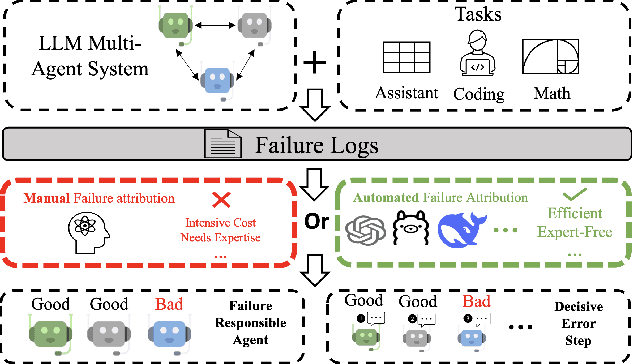
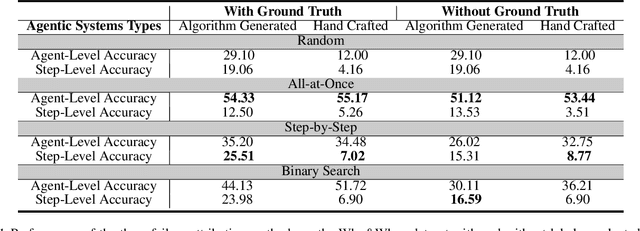
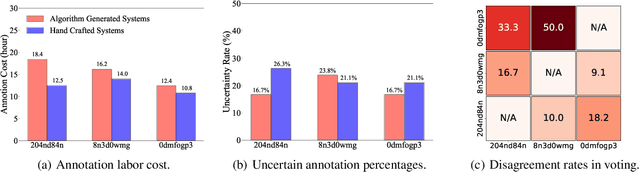
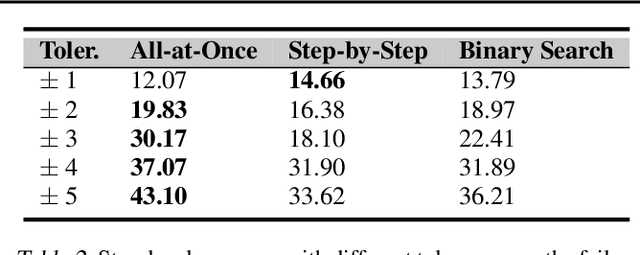
Failure attribution in LLM multi-agent systems-identifying the agent and step responsible for task failures-provides crucial clues for systems debugging but remains underexplored and labor-intensive. In this paper, we propose and formulate a new research area: automated failure attribution for LLM multi-agent systems. To support this initiative, we introduce the Who&When dataset, comprising extensive failure logs from 127 LLM multi-agent systems with fine-grained annotations linking failures to specific agents and decisive error steps. Using the Who&When, we develop and evaluate three automated failure attribution methods, summarizing their corresponding pros and cons. The best method achieves 53.5% accuracy in identifying failure-responsible agents but only 14.2% in pinpointing failure steps, with some methods performing below random. Even SOTA reasoning models, such as OpenAI o1 and DeepSeek R1, fail to achieve practical usability. These results highlight the task's complexity and the need for further research in this area. Code and dataset are available at https://github.com/mingyin1/Agents_Failure_Attribution