 Add to Chrome
 Add to Firefox
 Add to Edge
InstructMol: Multi-Modal Integration for Building a Versatile and Reliable Molecular Assistant in Drug Discovery
Nov 27, 2023
The rapid evolution of artificial intelligence in drug discovery encounters challenges with generalization and extensive training, yet Large Language Models (LLMs) offer promise in reshaping interactions with complex molecular data. Our novel contribution, InstructMol, a multi-modal LLM, effectively aligns molecular structures with natural language via an instruction-tuning approach, utilizing a two-stage training strategy that adeptly combines limited domain-specific data with molecular and textual information. InstructMol showcases substantial performance improvements in drug discovery-related molecular tasks, surpassing leading LLMs and significantly reducing the gap with specialized models, thereby establishing a robust foundation for a versatile and dependable drug discovery assistant.

Advancing Transformer Architecture in Long-Context Large Language Models: A Comprehensive Survey
Nov 21, 2023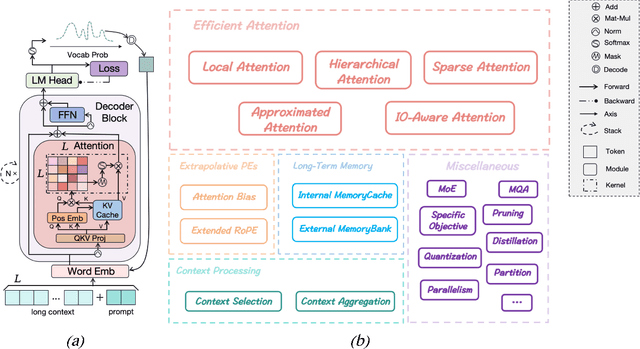
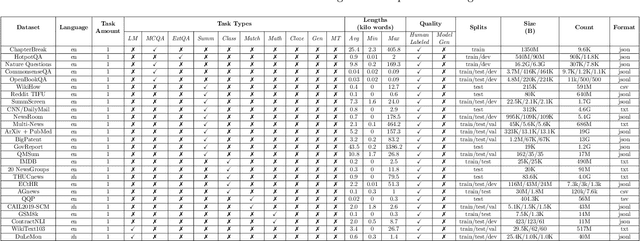
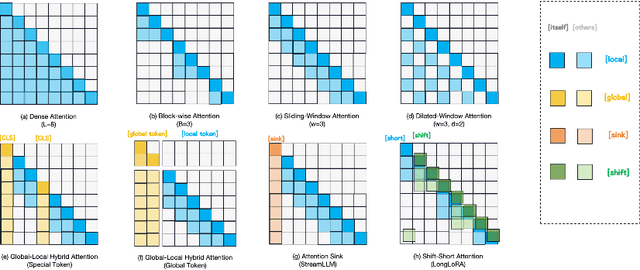
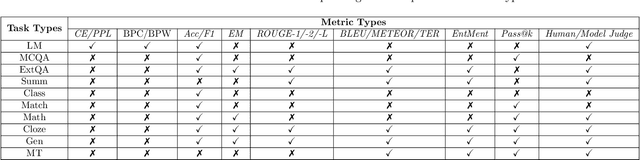
With the bomb ignited by ChatGPT, Transformer-based Large Language Models (LLMs) have paved a revolutionary path toward Artificial General Intelligence (AGI) and have been applied in diverse areas as knowledge bases, human interfaces, and dynamic agents. However, a prevailing limitation exists: many current LLMs, constrained by resources, are primarily pre-trained on shorter texts, rendering them less effective for longer-context prompts, commonly encountered in real-world settings. In this paper, we present a comprehensive survey focusing on the advancement of model architecture in Transformer-based LLMs to optimize long-context capabilities across all stages from pre-training to inference. We firstly delineate and analyze the problems of handling long-context input and output with the current Transformer-based models. Then, we mainly offer a holistic taxonomy to navigate the landscape of Transformer upgrades on architecture to solve these problems. Afterward, we provide the investigation on wildly used evaluation necessities tailored for long-context LLMs, including datasets, metrics, and baseline models, as well as some amazing optimization toolkits like libraries, systems, and compilers to augment LLMs' efficiency and efficacy across different stages. Finally, we further discuss the predominant challenges and potential avenues for future research in this domain. Additionally, we have established a repository where we curate relevant literature with real-time updates at https://github.com/Strivin0311/long-llms-learning.
Thoroughly Modeling Multi-domain Pre-trained Recommendation as Language
Oct 20, 2023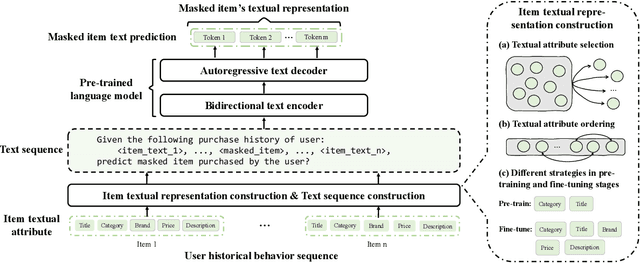

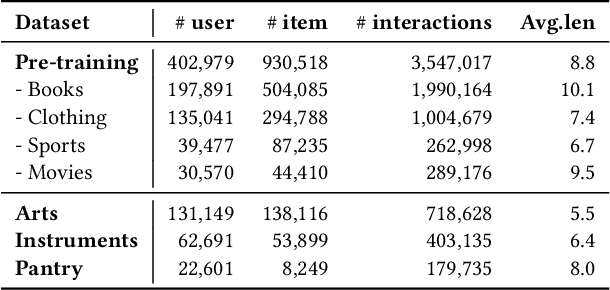
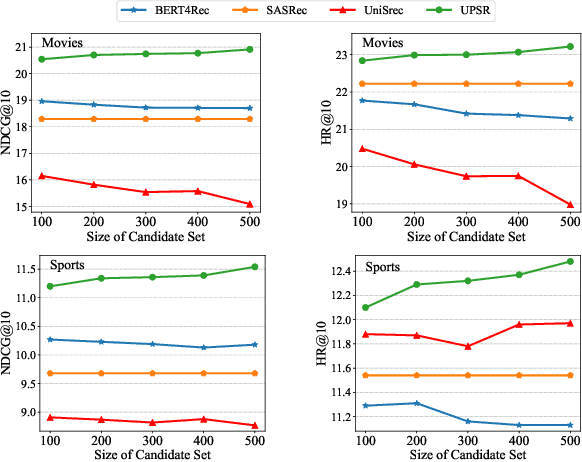
With the thriving of pre-trained language model (PLM) widely verified in various of NLP tasks, pioneer efforts attempt to explore the possible cooperation of the general textual information in PLM with the personalized behavioral information in user historical behavior sequences to enhance sequential recommendation (SR). However, despite the commonalities of input format and task goal, there are huge gaps between the behavioral and textual information, which obstruct thoroughly modeling SR as language modeling via PLM. To bridge the gap, we propose a novel Unified pre-trained language model enhanced sequential recommendation (UPSR), aiming to build a unified pre-trained recommendation model for multi-domain recommendation tasks. We formally design five key indicators, namely naturalness, domain consistency, informativeness, noise & ambiguity, and text length, to guide the text->item adaptation and behavior sequence->text sequence adaptation differently for pre-training and fine-tuning stages, which are essential but under-explored by previous works. In experiments, we conduct extensive evaluations on seven datasets with both tuning and zero-shot settings and achieve the overall best performance. Comprehensive model analyses also provide valuable insights for behavior modeling via PLM, shedding light on large pre-trained recommendation models. The source codes will be released in the future.
Reformulating Vision-Language Foundation Models and Datasets Towards Universal Multimodal Assistants
Oct 01, 2023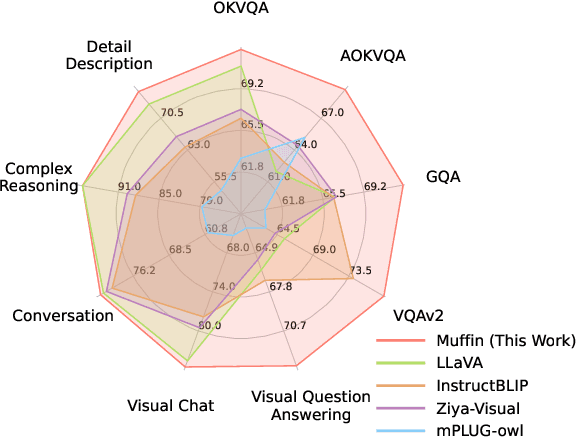
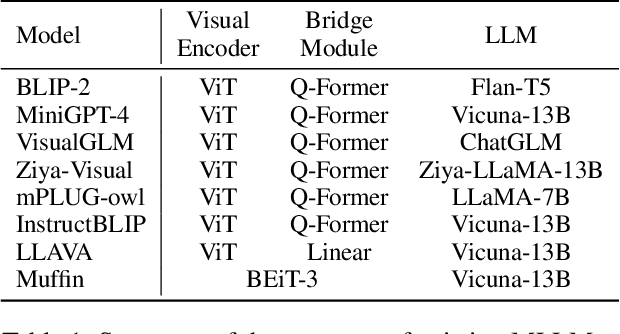
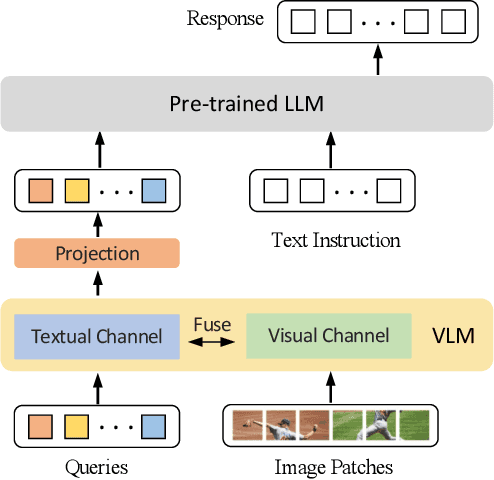
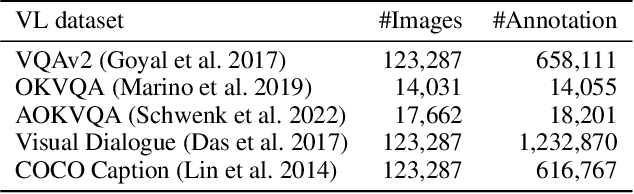
Recent Multimodal Large Language Models (MLLMs) exhibit impressive abilities to perceive images and follow open-ended instructions. The capabilities of MLLMs depend on two crucial factors: the model architecture to facilitate the feature alignment of visual modules and large language models; the multimodal instruction tuning datasets for human instruction following. (i) For the model architecture, most existing models introduce an external bridge module to connect vision encoders with language models, which needs an additional feature-alignment pre-training. In this work, we discover that compact pre-trained vision language models can inherently serve as ``out-of-the-box'' bridges between vision and language. Based on this, we propose Muffin framework, which directly employs pre-trained vision-language models to act as providers of visual signals. (ii) For the multimodal instruction tuning datasets, existing methods omit the complementary relationship between different datasets and simply mix datasets from different tasks. Instead, we propose UniMM-Chat dataset which explores the complementarities of datasets to generate 1.1M high-quality and diverse multimodal instructions. We merge information describing the same image from diverse datasets and transforms it into more knowledge-intensive conversation data. Experimental results demonstrate the effectiveness of the Muffin framework and UniMM-Chat dataset. Muffin achieves state-of-the-art performance on a wide range of vision-language tasks, significantly surpassing state-of-the-art models like LLaVA and InstructBLIP. Our model and dataset are all accessible at https://github.com/thunlp/muffin.
On the Sweet Spot of Contrastive Views for Knowledge-enhanced Recommendation
Sep 23, 2023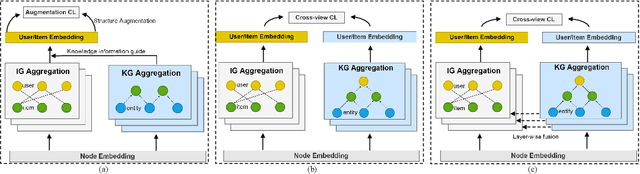
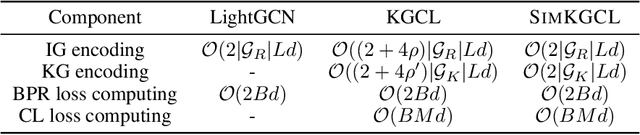
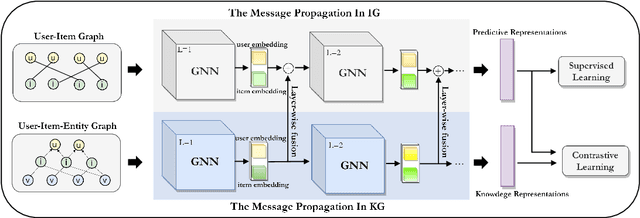

In recommender systems, knowledge graph (KG) can offer critical information that is lacking in the original user-item interaction graph (IG). Recent process has explored this direction and shows that contrastive learning is a promising way to integrate both. However, we observe that existing KG-enhanced recommenders struggle in balancing between the two contrastive views of IG and KG, making them sometimes even less effective than simply applying contrastive learning on IG without using KG. In this paper, we propose a new contrastive learning framework for KG-enhanced recommendation. Specifically, to make full use of the knowledge, we construct two separate contrastive views for KG and IG, and maximize their mutual information; to ease the contrastive learning on the two views, we further fuse KG information into IG in a one-direction manner.Extensive experimental results on three real-world datasets demonstrate the effectiveness and efficiency of our method, compared to the state-of-the-art. Our code is available through the anonymous link:https://figshare.com/articles/conference_contribution/SimKGCL/22783382
Speciality vs Generality: An Empirical Study on Catastrophic Forgetting in Fine-tuning Foundation Models
Sep 12, 2023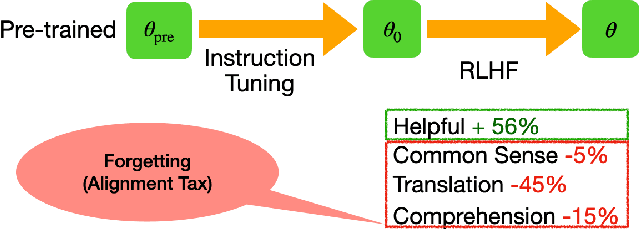
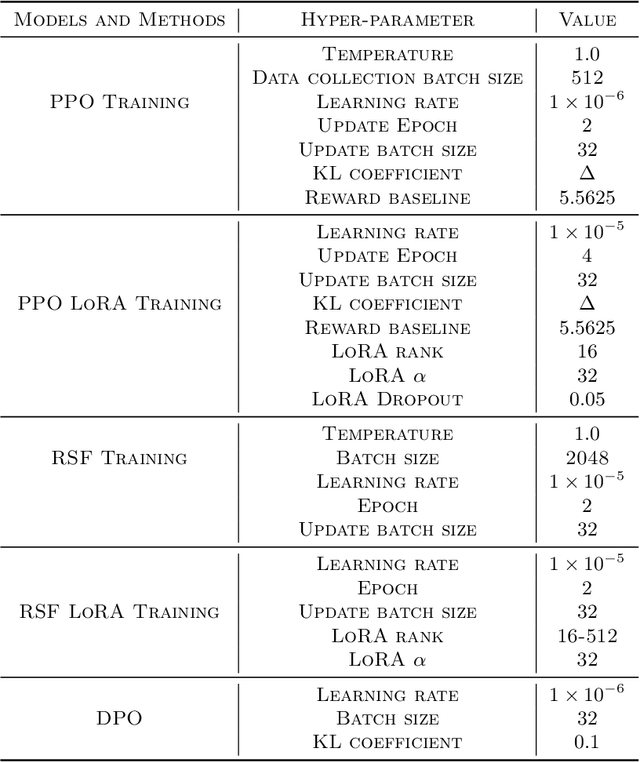
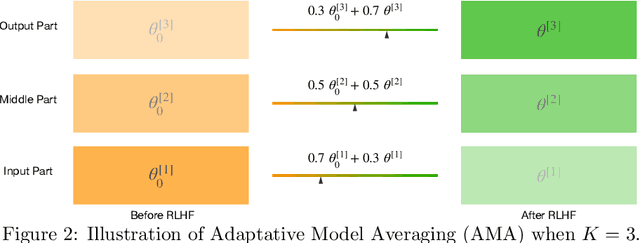
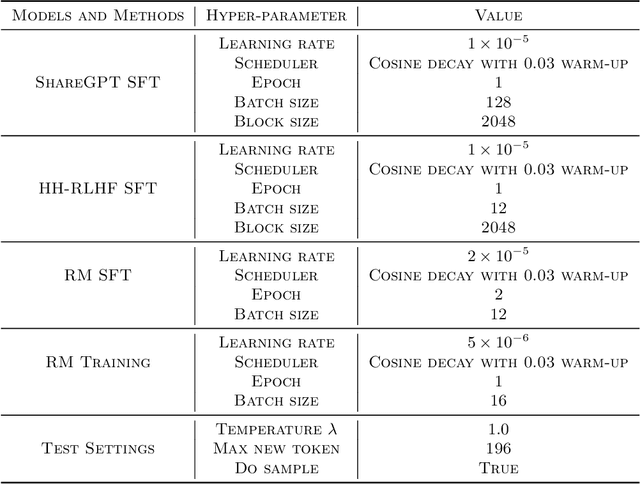
Foundation models, including Vision Language Models (VLMs) and Large Language Models (LLMs), possess the $generality$ to handle diverse distributions and tasks, which stems from their extensive pre-training datasets. The fine-tuning of foundation models is a common practice to enhance task performance or align the model's behavior with human expectations, allowing them to gain $speciality$. However, the small datasets used for fine-tuning may not adequately cover the diverse distributions and tasks encountered during pre-training. Consequently, the pursuit of speciality during fine-tuning can lead to a loss of {generality} in the model, which is related to catastrophic forgetting (CF) in deep learning. In this study, we demonstrate this phenomenon in both VLMs and LLMs. For instance, fine-tuning VLMs like CLIP on ImageNet results in a loss of generality in handling diverse distributions, and fine-tuning LLMs like Galactica in the medical domain leads to a loss in following instructions and common sense. To address the trade-off between the speciality and generality, we investigate multiple regularization methods from continual learning, the weight averaging method (Wise-FT) from out-of-distributional (OOD) generalization, which interpolates parameters between pre-trained and fine-tuned models, and parameter-efficient fine-tuning methods like Low-Rank Adaptation (LoRA). Our findings show that both continual learning and Wise-ft methods effectively mitigate the loss of generality, with Wise-FT exhibiting the strongest performance in balancing speciality and generality.
Optimal Sample Selection Through Uncertainty Estimation and Its Application in Deep Learning
Sep 05, 2023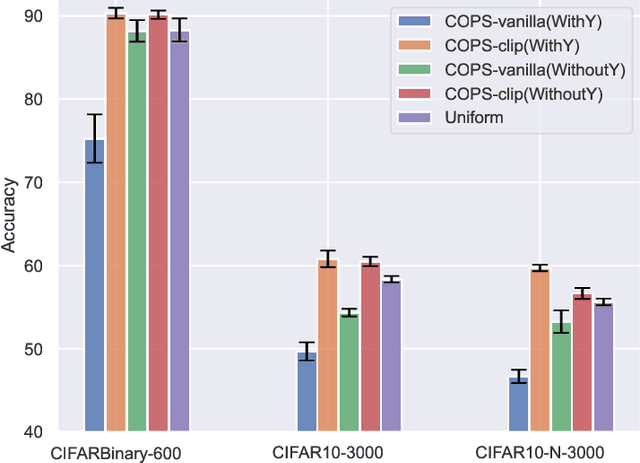

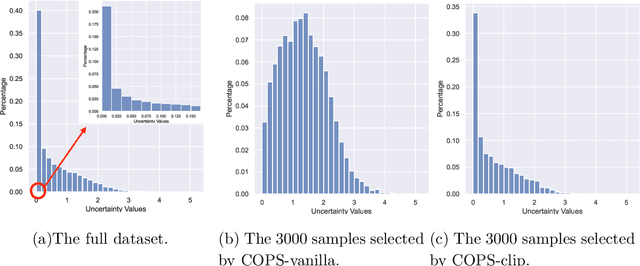
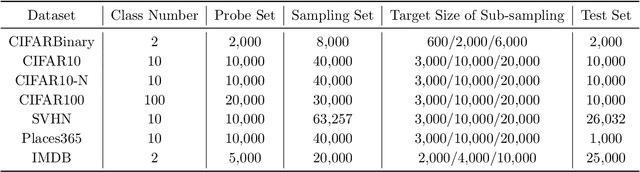
Modern deep learning heavily relies on large labeled datasets, which often comse with high costs in terms of both manual labeling and computational resources. To mitigate these challenges, researchers have explored the use of informative subset selection techniques, including coreset selection and active learning. Specifically, coreset selection involves sampling data with both input ($\bx$) and output ($\by$), active learning focuses solely on the input data ($\bx$). In this study, we present a theoretically optimal solution for addressing both coreset selection and active learning within the context of linear softmax regression. Our proposed method, COPS (unCertainty based OPtimal Sub-sampling), is designed to minimize the expected loss of a model trained on subsampled data. Unlike existing approaches that rely on explicit calculations of the inverse covariance matrix, which are not easily applicable to deep learning scenarios, COPS leverages the model's logits to estimate the sampling ratio. This sampling ratio is closely associated with model uncertainty and can be effectively applied to deep learning tasks. Furthermore, we address the challenge of model sensitivity to misspecification by incorporating a down-weighting approach for low-density samples, drawing inspiration from previous works. To assess the effectiveness of our proposed method, we conducted extensive empirical experiments using deep neural networks on benchmark datasets. The results consistently showcase the superior performance of COPS compared to baseline methods, reaffirming its efficacy.
FaceChain: A Playground for Identity-Preserving Portrait Generation
Aug 28, 2023


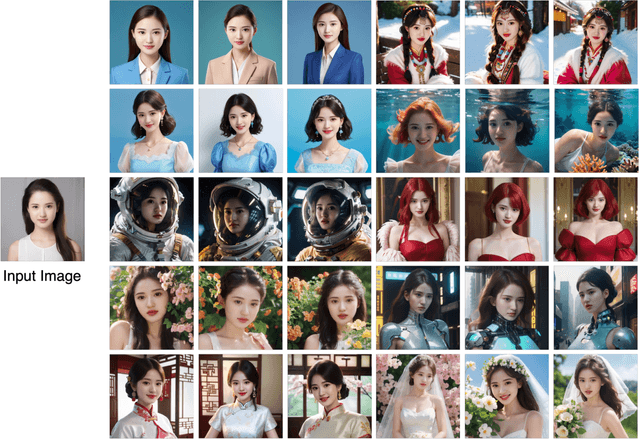
Recent advancement in personalized image generation have unveiled the intriguing capability of pre-trained text-to-image models on learning identity information from a collection of portrait images. However, existing solutions can be vulnerable in producing truthful details, and usually suffer from several defects such as (i) The generated face exhibit its own unique characteristics, \ie facial shape and facial feature positioning may not resemble key characteristics of the input, and (ii) The synthesized face may contain warped, blurred or corrupted regions. In this paper, we present FaceChain, a personalized portrait generation framework that combines a series of customized image-generation model and a rich set of face-related perceptual understanding models (\eg, face detection, deep face embedding extraction, and facial attribute recognition), to tackle aforementioned challenges and to generate truthful personalized portraits, with only a handful of portrait images as input. Concretely, we inject several SOTA face models into the generation procedure, achieving a more efficient label-tagging, data-processing, and model post-processing compared to previous solutions, such as DreamBooth ~\cite{ruiz2023dreambooth} , InstantBooth ~\cite{shi2023instantbooth} , or other LoRA-only approaches ~\cite{hu2021lora} . Through the development of FaceChain, we have identified several potential directions to accelerate development of Face/Human-Centric AIGC research and application. We have designed FaceChain as a framework comprised of pluggable components that can be easily adjusted to accommodate different styles and personalized needs. We hope it can grow to serve the burgeoning needs from the communities. FaceChain is open-sourced under Apache-2.0 license at \url{https://github.com/modelscope/facechain}.
Large Multilingual Models Pivot Zero-Shot Multimodal Learning across Languages
Aug 23, 2023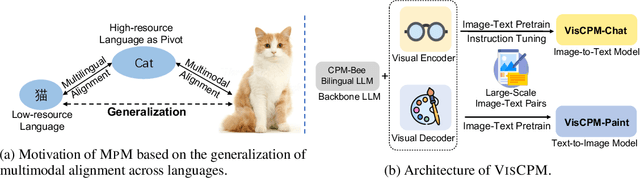
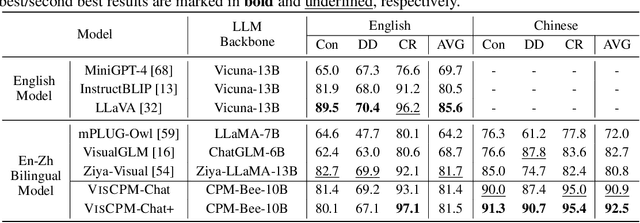
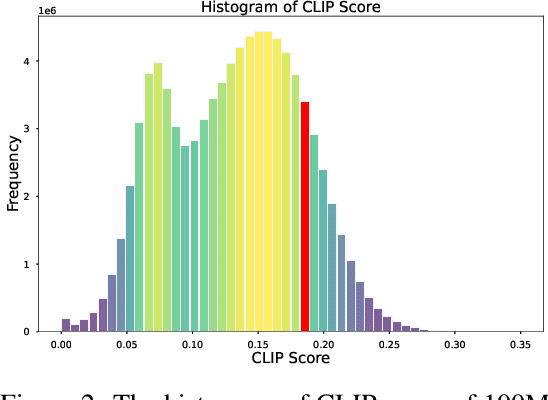
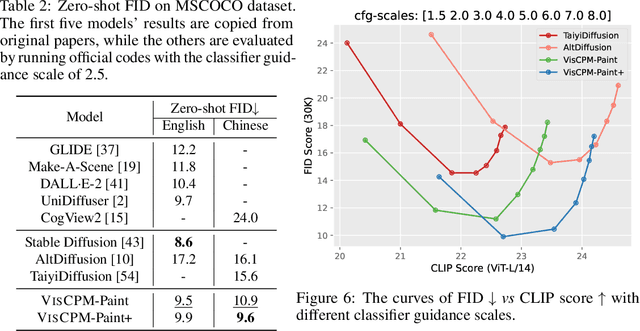
Recently there has been a significant surge in multimodal learning in terms of both image-to-text and text-to-image generation. However, the success is typically limited to English, leaving other languages largely behind. Building a competitive counterpart in other languages is highly challenging due to the low-resource nature of non-English multimodal data (i.e., lack of large-scale, high-quality image-text data). In this work, we propose MPM, an effective training paradigm for training large multimodal models in low-resource languages. MPM demonstrates that Multilingual language models can Pivot zero-shot Multimodal learning across languages. Specifically, based on a strong multilingual large language model, multimodal models pretrained on English-only image-text data can well generalize to other languages in a zero-shot manner for both image-to-text and text-to-image generation, even surpassing models trained on image-text data in native languages. Taking Chinese as a practice of MPM, we build large multimodal models VisCPM in image-to-text and text-to-image generation, which achieve state-of-the-art (open-source) performance in Chinese. To facilitate future research, we open-source codes and model weights at https://github.com/OpenBMB/VisCPM.git.
Dynamic Size Message Scheduling for Multi-Agent Communication under Limited Bandwidth
Jun 16, 2023
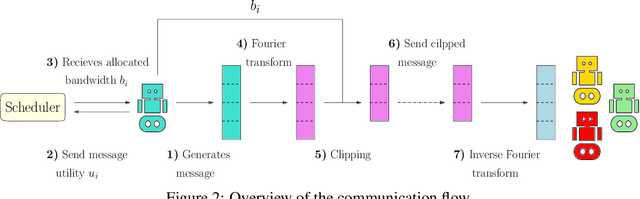
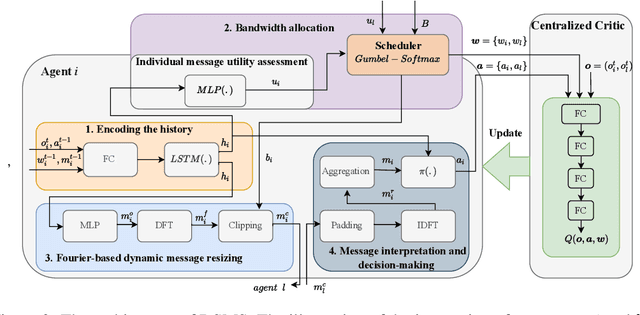
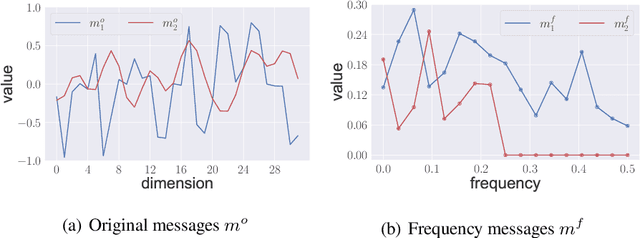
Communication plays a vital role in multi-agent systems, fostering collaboration and coordination. However, in real-world scenarios where communication is bandwidth-limited, existing multi-agent reinforcement learning (MARL) algorithms often provide agents with a binary choice: either transmitting a fixed number of bytes or no information at all. This limitation hinders the ability to effectively utilize the available bandwidth. To overcome this challenge, we present the Dynamic Size Message Scheduling (DSMS) method, which introduces a finer-grained approach to scheduling by considering the actual size of the information to be exchanged. Our contribution lies in adaptively adjusting message sizes using Fourier transform-based compression techniques, enabling agents to tailor their messages to match the allocated bandwidth while striking a balance between information loss and transmission efficiency. Receiving agents can reliably decompress the messages using the inverse Fourier transform. Experimental results demonstrate that DSMS significantly improves performance in multi-agent cooperative tasks by optimizing the utilization of bandwidth and effectively balancing information value.