 Add to Chrome
 Add to Firefox
 Add to Edge
Self-Updatable Large Language Models with Parameter Integration
Oct 01, 2024
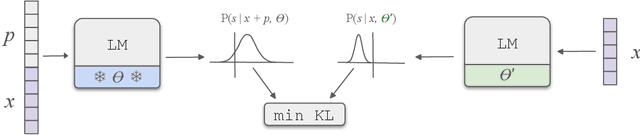

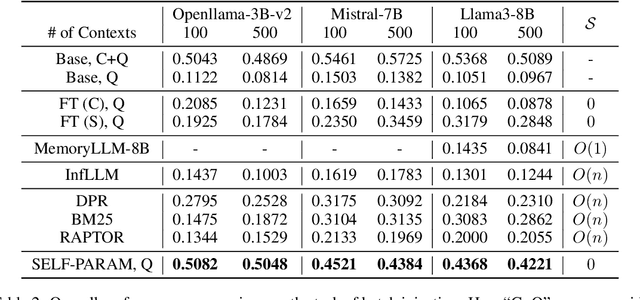
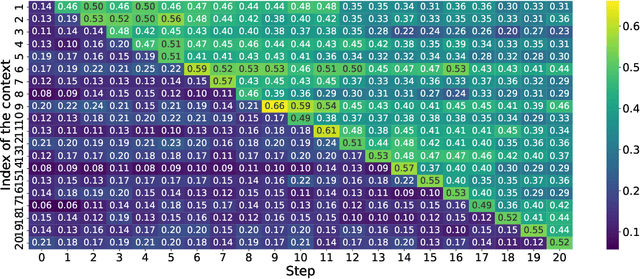
Despite significant advancements in large language models (LLMs), the rapid and frequent integration of small-scale experiences, such as interactions with surrounding objects, remains a substantial challenge. Two critical factors in assimilating these experiences are (1) Efficacy: the ability to accurately remember recent events; (2) Retention: the capacity to recall long-past experiences. Current methods either embed experiences within model parameters using continual learning, model editing, or knowledge distillation techniques, which often struggle with rapid updates and complex interactions, or rely on external storage to achieve long-term retention, thereby increasing storage requirements. In this paper, we propose SELF-PARAM (Self-Updatable Large Language Models with Parameter Integration). SELF-PARAM requires no extra parameters while ensuring near-optimal efficacy and long-term retention. Our method employs a training objective that minimizes the Kullback-Leibler (KL) divergence between the predictions of an original model (with access to contextual information) and a target model (without such access). By generating diverse question-answer pairs related to the knowledge and minimizing the KL divergence across this dataset, we update the target model to internalize the knowledge seamlessly within its parameters. Evaluations on question-answering and conversational recommendation tasks demonstrate that SELF-PARAM significantly outperforms existing methods, even when accounting for non-zero storage requirements. This advancement paves the way for more efficient and scalable integration of experiences in large language models by embedding knowledge directly into model parameters.

Multi-Designated Detector Watermarking for Language Models
Sep 26, 2024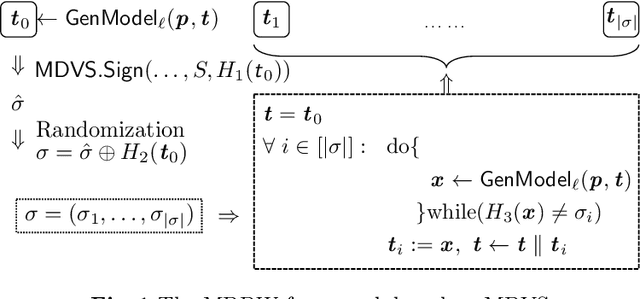
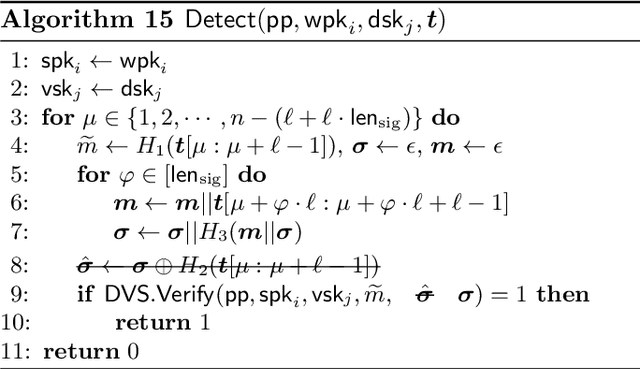
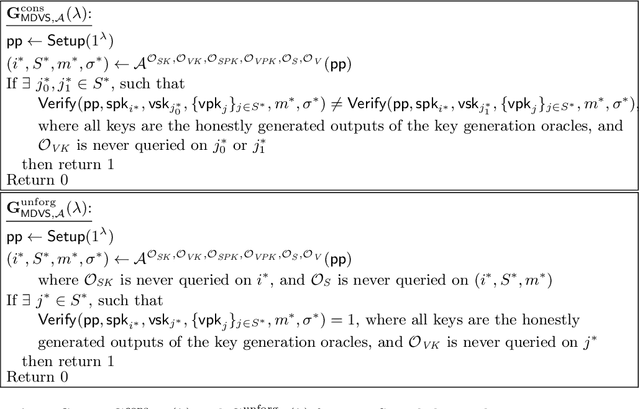
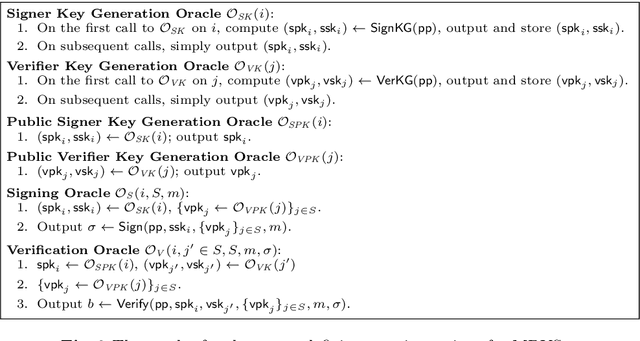
In this paper, we initiate the study of \emph{multi-designated detector watermarking (MDDW)} for large language models (LLMs). This technique allows model providers to generate watermarked outputs from LLMs with two key properties: (i) only specific, possibly multiple, designated detectors can identify the watermarks, and (ii) there is no perceptible degradation in the output quality for ordinary users. We formalize the security definitions for MDDW and present a framework for constructing MDDW for any LLM using multi-designated verifier signatures (MDVS). Recognizing the significant economic value of LLM outputs, we introduce claimability as an optional security feature for MDDW, enabling model providers to assert ownership of LLM outputs within designated-detector settings. To support claimable MDDW, we propose a generic transformation converting any MDVS to a claimable MDVS. Our implementation of the MDDW scheme highlights its advanced functionalities and flexibility over existing methods, with satisfactory performance metrics.
Towards the Mitigation of Confirmation Bias in Semi-supervised Learning: a Debiased Training Perspective
Sep 26, 2024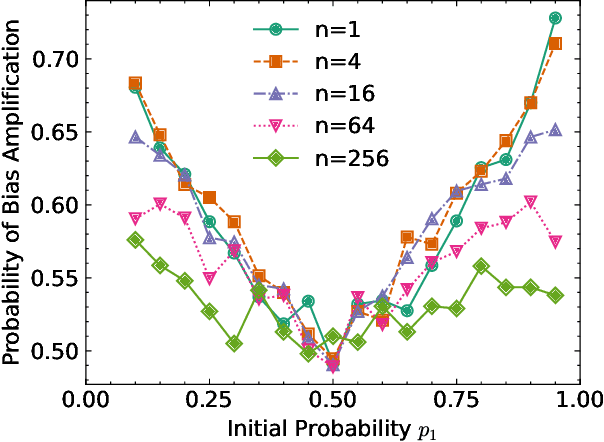
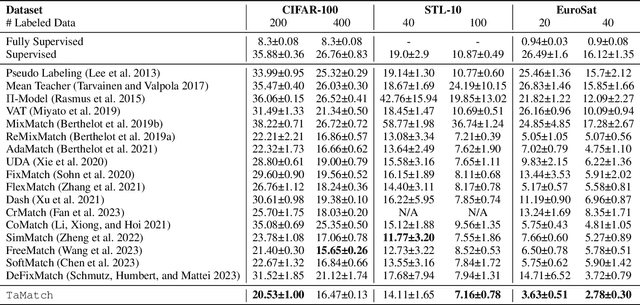
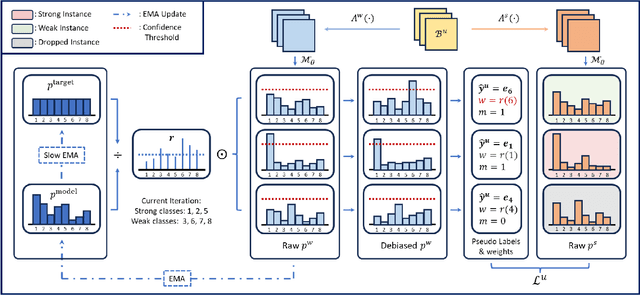
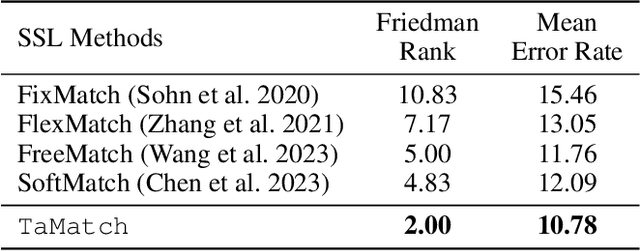
Semi-supervised learning (SSL) commonly exhibits confirmation bias, where models disproportionately favor certain classes, leading to errors in predicted pseudo labels that accumulate under a self-training paradigm. Unlike supervised settings, which benefit from a rich, static data distribution, SSL inherently lacks mechanisms to correct this self-reinforced bias, necessitating debiased interventions at each training step. Although the generation of debiased pseudo labels has been extensively studied, their effective utilization remains underexplored. Our analysis indicates that data from biased classes should have a reduced influence on parameter updates, while more attention should be given to underrepresented classes. To address these challenges, we introduce TaMatch, a unified framework for debiased training in SSL. TaMatch employs a scaling ratio derived from both a prior target distribution and the model's learning status to estimate and correct bias at each training step. This ratio adjusts the raw predictions on unlabeled data to produce debiased pseudo labels. In the utilization phase, these labels are differently weighted according to their predicted class, enhancing training equity and minimizing class bias. Additionally, TaMatch dynamically adjust the target distribution in response to the model's learning progress, facilitating robust handling of practical scenarios where the prior distribution is unknown. Empirical evaluations show that TaMatch significantly outperforms existing state-of-the-art methods across a range of challenging image classification tasks, highlighting the critical importance of both the debiased generation and utilization of pseudo labels in SSL.
Multi-UAV Pursuit-Evasion with Online Planning in Unknown Environments by Deep Reinforcement Learning
Sep 25, 2024

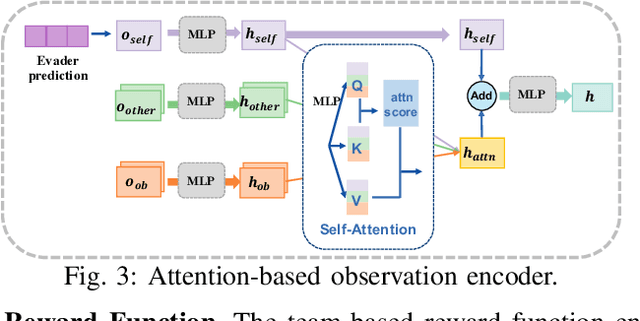

Multi-UAV pursuit-evasion, where pursuers aim to capture evaders, poses a key challenge for UAV swarm intelligence. Multi-agent reinforcement learning (MARL) has demonstrated potential in modeling cooperative behaviors, but most RL-based approaches remain constrained to simplified simulations with limited dynamics or fixed scenarios. Previous attempts to deploy RL policy to real-world pursuit-evasion are largely restricted to two-dimensional scenarios, such as ground vehicles or UAVs at fixed altitudes. In this paper, we address multi-UAV pursuit-evasion by considering UAV dynamics and physical constraints. We introduce an evader prediction-enhanced network to tackle partial observability in cooperative strategy learning. Additionally, we propose an adaptive environment generator within MARL training, enabling higher exploration efficiency and better policy generalization across diverse scenarios. Simulations show our method significantly outperforms all baselines in challenging scenarios, generalizing to unseen scenarios with a 100% capture rate. Finally, we derive a feasible policy via a two-stage reward refinement and deploy the policy on real quadrotors in a zero-shot manner. To our knowledge, this is the first work to derive and deploy an RL-based policy using collective thrust and body rates control commands for multi-UAV pursuit-evasion in unknown environments. The open-source code and videos are available at https://sites.google.com/view/pursuit-evasion-rl.
Behavior evolution-inspired approach to walking gait reinforcement training for quadruped robots
Sep 25, 2024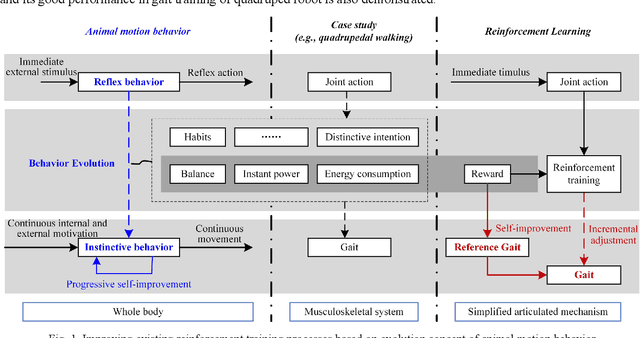
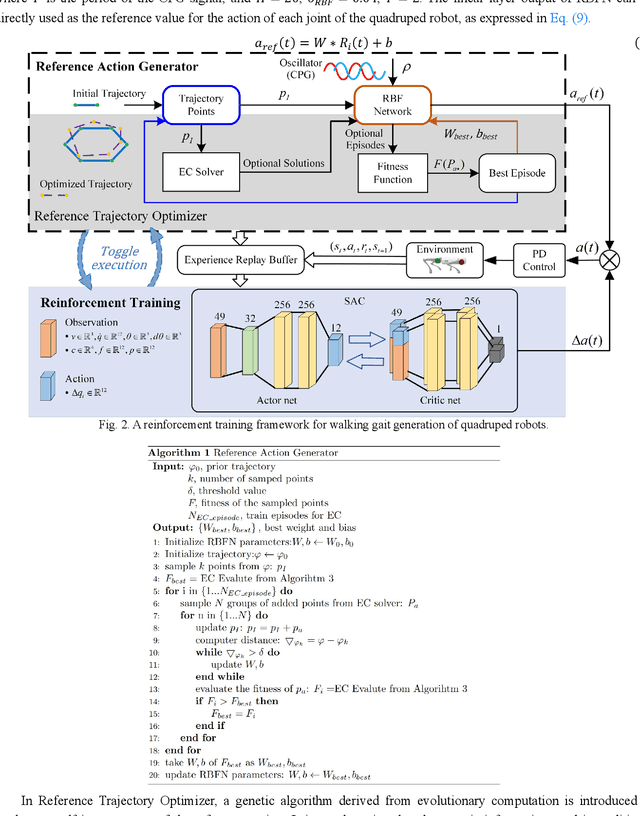
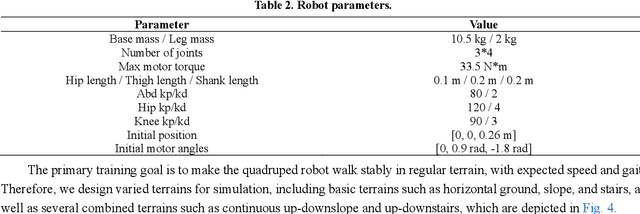
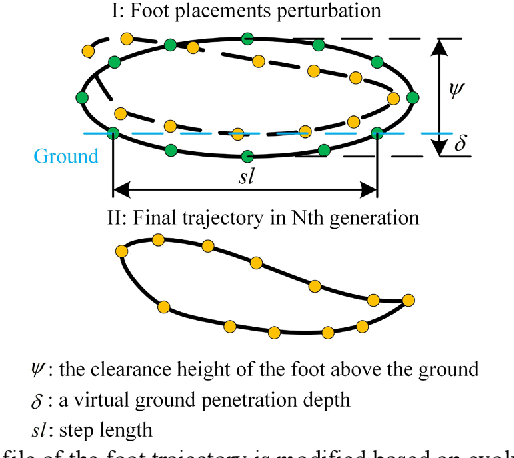
Reinforcement learning method is extremely competitive in gait generation techniques for quadrupedal robot, which is mainly due to the fact that stochastic exploration in reinforcement training is beneficial to achieve an autonomous gait. Nevertheless, although incremental reinforcement learning is employed to improve training success and movement smoothness by relying on the continuity inherent during limb movements, challenges remain in adapting gait policy to diverse terrain and external disturbance. Inspired by the association between reinforcement learning and the evolution of animal motion behavior, a self-improvement mechanism for reference gait is introduced in this paper to enable incremental learning of action and self-improvement of reference action together to imitate the evolution of animal motion behavior. Further, a new framework for reinforcement training of quadruped gait is proposed. In this framework, genetic algorithm is specifically adopted to perform global probabilistic search for the initial value of the arbitrary foot trajectory to update the reference trajectory with better fitness. Subsequently, the improved reference gait is used for incremental reinforcement learning of gait. The above process is repeatedly and alternatively executed to finally train the gait policy. The analysis considering terrain, model dimensions, and locomotion condition is presented in detail based on simulation, and the results show that the framework is significantly more adaptive to terrain compared to regular incremental reinforcement learning.
Anisotropic Diffusion Probabilistic Model for Imbalanced Image Classification
Sep 22, 2024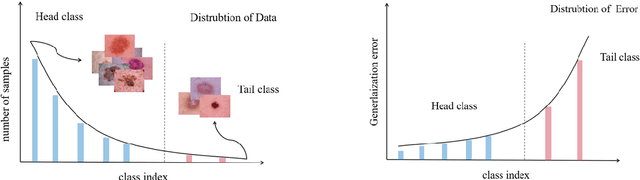


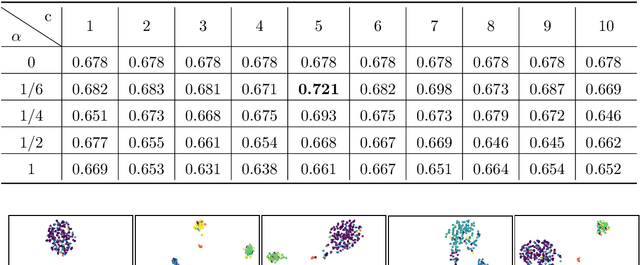
Real-world data often has a long-tailed distribution, where the scarcity of tail samples significantly limits the model's generalization ability. Denoising Diffusion Probabilistic Models (DDPM) are generative models based on stochastic differential equation theory and have demonstrated impressive performance in image classification tasks. However, existing diffusion probabilistic models do not perform satisfactorily in classifying tail classes. In this work, we propose the Anisotropic Diffusion Probabilistic Model (ADPM) for imbalanced image classification problems. We utilize the data distribution to control the diffusion speed of different class samples during the forward process, effectively improving the classification accuracy of the denoiser in the reverse process. Specifically, we provide a theoretical strategy for selecting noise levels for different categories in the diffusion process based on error analysis theory to address the imbalanced classification problem. Furthermore, we integrate global and local image prior in the forward process to enhance the model's discriminative ability in the spatial dimension, while incorporate semantic-level contextual information in the reverse process to boost the model's discriminative power and robustness. Through comparisons with state-of-the-art methods on four medical benchmark datasets, we validate the effectiveness of the proposed method in handling long-tail data. Our results confirm that the anisotropic diffusion model significantly improves the classification accuracy of rare classes while maintaining the accuracy of head classes. On the skin lesion datasets, PAD-UFES and HAM10000, the F1-scores of our method improved by 4% and 3%, respectively compared to the original diffusion probabilistic model.
CSKV: Training-Efficient Channel Shrinking for KV Cache in Long-Context Scenarios
Sep 16, 2024


Large Language Models (LLMs) have been widely adopted to process long-context tasks. However, the large memory overhead of the key-value (KV) cache poses significant challenges in long-context scenarios. Existing training-free KV cache compression methods typically focus on quantization and token pruning, which have compression limits, and excessive sparsity can lead to severe performance degradation. Other methods design new architectures with less KV overhead but require significant training overhead. To address the above two drawbacks, we further explore the redundancy in the channel dimension and apply an architecture-level design with minor training costs. Therefore, we introduce CSKV, a training-efficient Channel Shrinking technique for KV cache compression: (1) We first analyze the singular value distribution of the KV cache, revealing significant redundancy and compression potential along the channel dimension. Based on this observation, we propose using low-rank decomposition for key and value layers and storing the low-dimension features. (2) To preserve model performance, we introduce a bi-branch KV cache, including a window-based full-precision KV cache and a low-precision compressed KV cache. (3) To reduce the training costs, we minimize the layer-wise reconstruction loss for the compressed KV cache instead of retraining the entire LLMs. Extensive experiments show that CSKV can reduce the memory overhead of the KV cache by 80% while maintaining the model's long-context capability. Moreover, we show that our method can be seamlessly combined with quantization to further reduce the memory overhead, achieving a compression ratio of up to 95%.
PIP: Detecting Adversarial Examples in Large Vision-Language Models via Attention Patterns of Irrelevant Probe Questions
Sep 08, 2024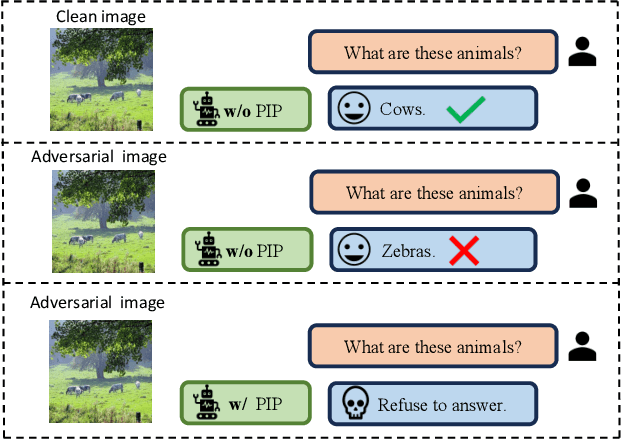
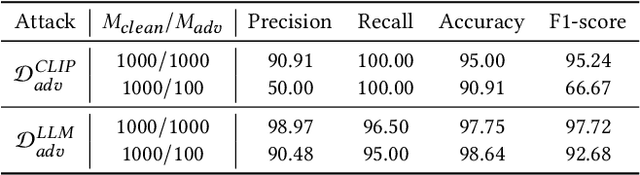
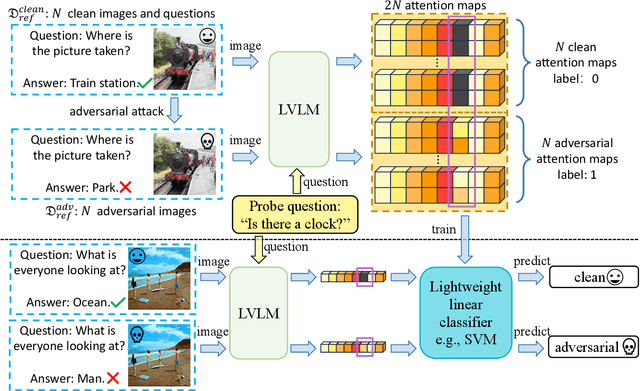

Large Vision-Language Models (LVLMs) have demonstrated their powerful multimodal capabilities. However, they also face serious safety problems, as adversaries can induce robustness issues in LVLMs through the use of well-designed adversarial examples. Therefore, LVLMs are in urgent need of detection tools for adversarial examples to prevent incorrect responses. In this work, we first discover that LVLMs exhibit regular attention patterns for clean images when presented with probe questions. We propose an unconventional method named PIP, which utilizes the attention patterns of one randomly selected irrelevant probe question (e.g., "Is there a clock?") to distinguish adversarial examples from clean examples. Regardless of the image to be tested and its corresponding question, PIP only needs to perform one additional inference of the image to be tested and the probe question, and then achieves successful detection of adversarial examples. Even under black-box attacks and open dataset scenarios, our PIP, coupled with a simple SVM, still achieves more than 98% recall and a precision of over 90%. Our PIP is the first attempt to detect adversarial attacks on LVLMs via simple irrelevant probe questions, shedding light on deeper understanding and introspection within LVLMs. The code is available at https://github.com/btzyd/pip.
Strategic Chain-of-Thought: Guiding Accurate Reasoning in LLMs through Strategy Elicitation
Sep 05, 2024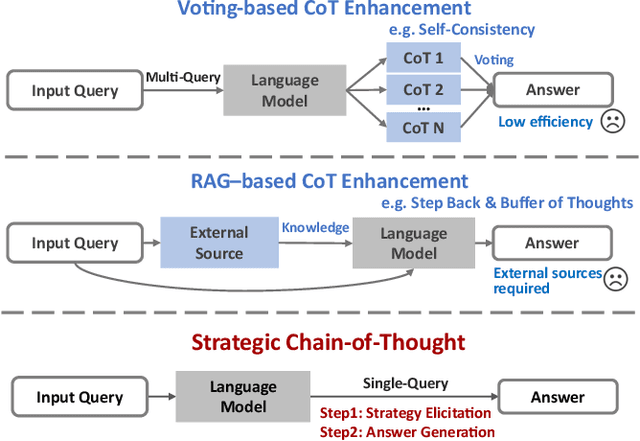
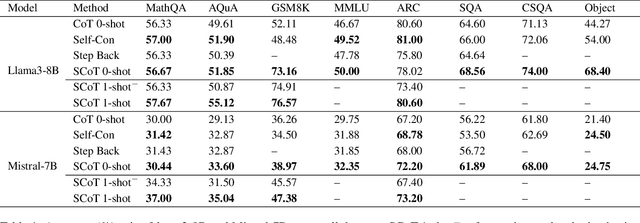
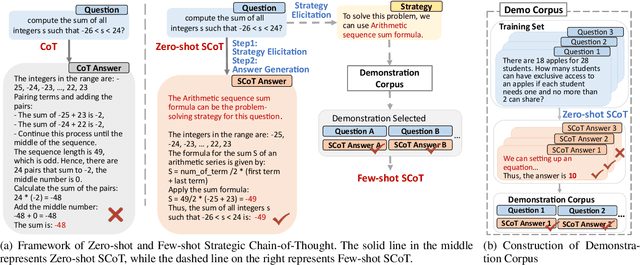
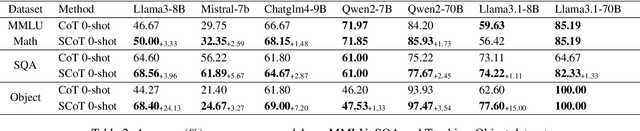
The Chain-of-Thought (CoT) paradigm has emerged as a critical approach for enhancing the reasoning capabilities of large language models (LLMs). However, despite their widespread adoption and success, CoT methods often exhibit instability due to their inability to consistently ensure the quality of generated reasoning paths, leading to sub-optimal reasoning performance. To address this challenge, we propose the \textbf{Strategic Chain-of-Thought} (SCoT), a novel methodology designed to refine LLM performance by integrating strategic knowledge prior to generating intermediate reasoning steps. SCoT employs a two-stage approach within a single prompt: first eliciting an effective problem-solving strategy, which is then used to guide the generation of high-quality CoT paths and final answers. Our experiments across eight challenging reasoning datasets demonstrate significant improvements, including a 21.05\% increase on the GSM8K dataset and 24.13\% on the Tracking\_Objects dataset, respectively, using the Llama3-8b model. Additionally, we extend the SCoT framework to develop a few-shot method with automatically matched demonstrations, yielding even stronger results. These findings underscore the efficacy of SCoT, highlighting its potential to substantially enhance LLM performance in complex reasoning tasks.
A Fashion Item Recommendation Model in Hyperbolic Space
Sep 04, 2024In this work, we propose a fashion item recommendation model that incorporates hyperbolic geometry into user and item representations. Using hyperbolic space, our model aims to capture implicit hierarchies among items based on their visual data and users' purchase history. During training, we apply a multi-task learning framework that considers both hyperbolic and Euclidean distances in the loss function. Our experiments on three data sets show that our model performs better than previous models trained in Euclidean space only, confirming the effectiveness of our model. Our ablation studies show that multi-task learning plays a key role, and removing the Euclidean loss substantially deteriorates the model performance.