 Add to Chrome
 Add to Firefox
 Add to Edge
InversionGNN: A Dual Path Network for Multi-Property Molecular Optimization
Mar 03, 2025
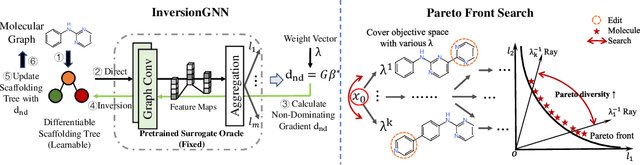
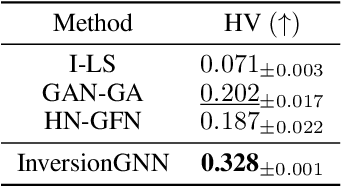
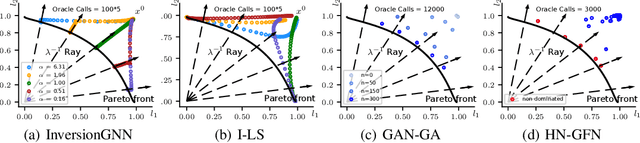
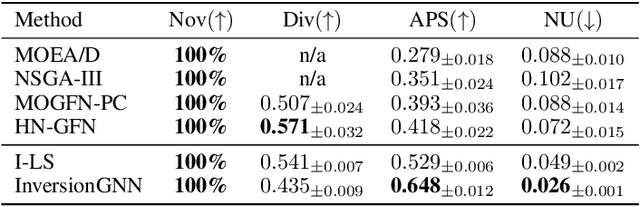
Exploring chemical space to find novel molecules that simultaneously satisfy multiple properties is crucial in drug discovery. However, existing methods often struggle with trading off multiple properties due to the conflicting or correlated nature of chemical properties. To tackle this issue, we introduce InversionGNN framework, an effective yet sample-efficient dual-path graph neural network (GNN) for multi-objective drug discovery. In the direct prediction path of InversionGNN, we train the model for multi-property prediction to acquire knowledge of the optimal combination of functional groups. Then the learned chemical knowledge helps the inversion generation path to generate molecules with required properties. In order to decode the complex knowledge of multiple properties in the inversion path, we propose a gradient-based Pareto search method to balance conflicting properties and generate Pareto optimal molecules. Additionally, InversionGNN is able to search the full Pareto front approximately in discrete chemical space. Comprehensive experimental evaluations show that InversionGNN is both effective and sample-efficient in various discrete multi-objective settings including drug discovery.

FINEREASON: Evaluating and Improving LLMs' Deliberate Reasoning through Reflective Puzzle Solving
Feb 27, 2025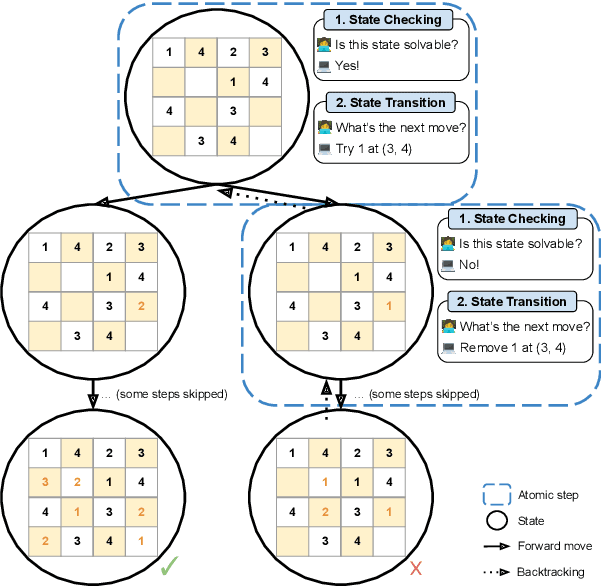

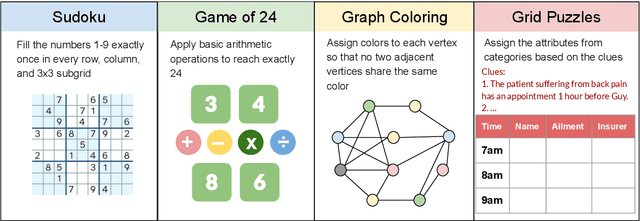
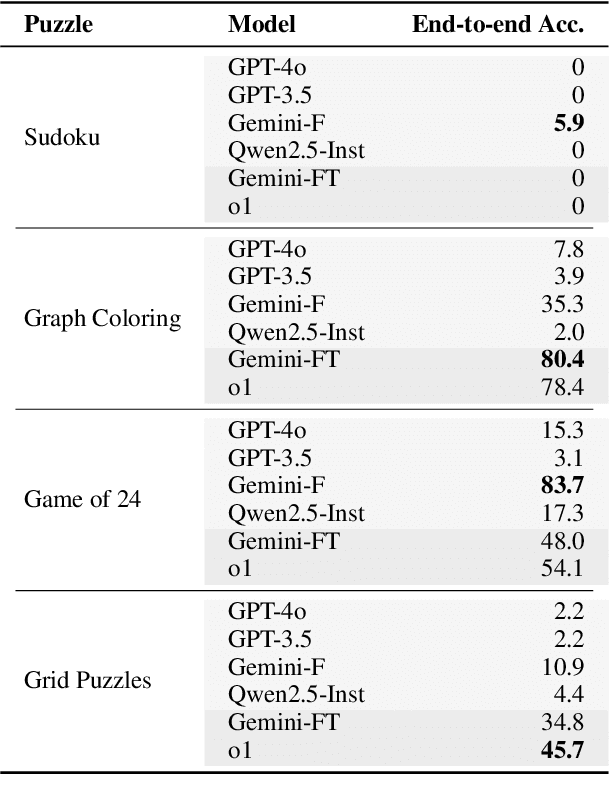
Many challenging reasoning tasks require not just rapid, intuitive responses, but a more deliberate, multi-step approach. Recent progress in large language models (LLMs) highlights an important shift from the "System 1" way of quick reactions to the "System 2" style of reflection-and-correction problem solving. However, current benchmarks heavily rely on the final-answer accuracy, leaving much of a model's intermediate reasoning steps unexamined. This fails to assess the model's ability to reflect and rectify mistakes within the reasoning process. To bridge this gap, we introduce FINEREASON, a logic-puzzle benchmark for fine-grained evaluation of LLMs' reasoning capabilities. Each puzzle can be decomposed into atomic steps, making it ideal for rigorous validation of intermediate correctness. Building on this, we introduce two tasks: state checking, and state transition, for a comprehensive evaluation of how models assess the current situation and plan the next move. To support broader research, we also provide a puzzle training set aimed at enhancing performance on general mathematical tasks. We show that models trained on our state checking and transition data demonstrate gains in math reasoning by up to 5.1% on GSM8K.
CirT: Global Subseasonal-to-Seasonal Forecasting with Geometry-inspired Transformer
Feb 27, 2025Accurate Subseasonal-to-Seasonal (S2S) climate forecasting is pivotal for decision-making including agriculture planning and disaster preparedness but is known to be challenging due to its chaotic nature. Although recent data-driven models have shown promising results, their performance is limited by inadequate consideration of geometric inductive biases. Usually, they treat the spherical weather data as planar images, resulting in an inaccurate representation of locations and spatial relations. In this work, we propose the geometric-inspired Circular Transformer (CirT) to model the cyclic characteristic of the graticule, consisting of two key designs: (1) Decomposing the weather data by latitude into circular patches that serve as input tokens to the Transformer; (2) Leveraging Fourier transform in self-attention to capture the global information and model the spatial periodicity. Extensive experiments on the Earth Reanalysis 5 (ERA5) reanalysis dataset demonstrate our model yields a significant improvement over the advanced data-driven models, including PanguWeather and GraphCast, as well as skillful ECMWF systems. Additionally, we empirically show the effectiveness of our model designs and high-quality prediction over spatial and temporal dimensions.
LUCAS: Layered Universal Codec Avatars
Feb 27, 2025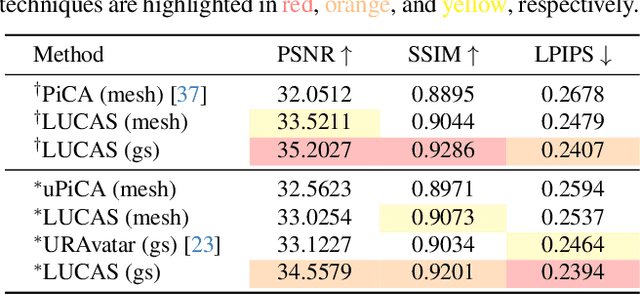
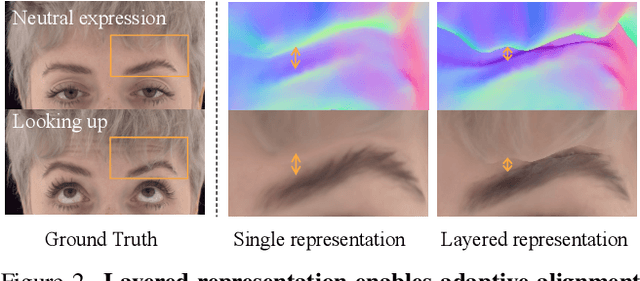
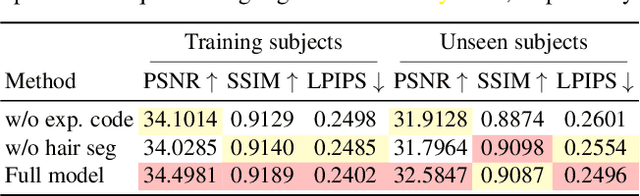
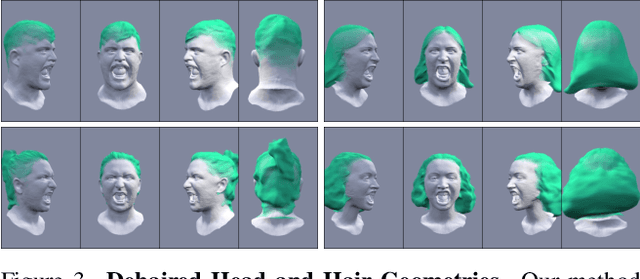
Photorealistic 3D head avatar reconstruction faces critical challenges in modeling dynamic face-hair interactions and achieving cross-identity generalization, particularly during expressions and head movements. We present LUCAS, a novel Universal Prior Model (UPM) for codec avatar modeling that disentangles face and hair through a layered representation. Unlike previous UPMs that treat hair as an integral part of the head, our approach separates the modeling of the hairless head and hair into distinct branches. LUCAS is the first to introduce a mesh-based UPM, facilitating real-time rendering on devices. Our layered representation also improves the anchor geometry for precise and visually appealing Gaussian renderings. Experimental results indicate that LUCAS outperforms existing single-mesh and Gaussian-based avatar models in both quantitative and qualitative assessments, including evaluations on held-out subjects in zero-shot driving scenarios. LUCAS demonstrates superior dynamic performance in managing head pose changes, expression transfer, and hairstyle variations, thereby advancing the state-of-the-art in 3D head avatar reconstruction.
A Survey of Graph Transformers: Architectures, Theories and Applications
Feb 23, 2025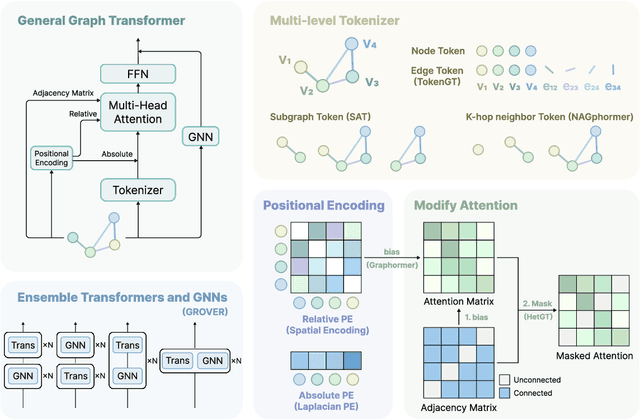


Graph Transformers (GTs) have demonstrated a strong capability in modeling graph structures by addressing the intrinsic limitations of graph neural networks (GNNs), such as over-smoothing and over-squashing. Recent studies have proposed diverse architectures, enhanced explainability, and practical applications for Graph Transformers. In light of these rapid developments, we conduct a comprehensive review of Graph Transformers, covering aspects such as their architectures, theoretical foundations, and applications within this survey. We categorize the architecture of Graph Transformers according to their strategies for processing structural information, including graph tokenization, positional encoding, structure-aware attention and model ensemble. Furthermore, from the theoretical perspective, we examine the expressivity of Graph Transformers in various discussed architectures and contrast them with other advanced graph learning algorithms to discover the connections. Furthermore, we provide a summary of the practical applications where Graph Transformers have been utilized, such as molecule, protein, language, vision traffic, brain and material data. At the end of this survey, we will discuss the current challenges and prospective directions in Graph Transformers for potential future research.
MolSpectra: Pre-training 3D Molecular Representation with Multi-modal Energy Spectra
Feb 22, 2025Establishing the relationship between 3D structures and the energy states of molecular systems has proven to be a promising approach for learning 3D molecular representations. However, existing methods are limited to modeling the molecular energy states from classical mechanics. This limitation results in a significant oversight of quantum mechanical effects, such as quantized (discrete) energy level structures, which offer a more accurate estimation of molecular energy and can be experimentally measured through energy spectra. In this paper, we propose to utilize the energy spectra to enhance the pre-training of 3D molecular representations (MolSpectra), thereby infusing the knowledge of quantum mechanics into the molecular representations. Specifically, we propose SpecFormer, a multi-spectrum encoder for encoding molecular spectra via masked patch reconstruction. By further aligning outputs from the 3D encoder and spectrum encoder using a contrastive objective, we enhance the 3D encoder's understanding of molecules. Evaluations on public benchmarks reveal that our pre-trained representations surpass existing methods in predicting molecular properties and modeling dynamics.
Diffusion Models for Molecules: A Survey of Methods and Tasks
Feb 13, 2025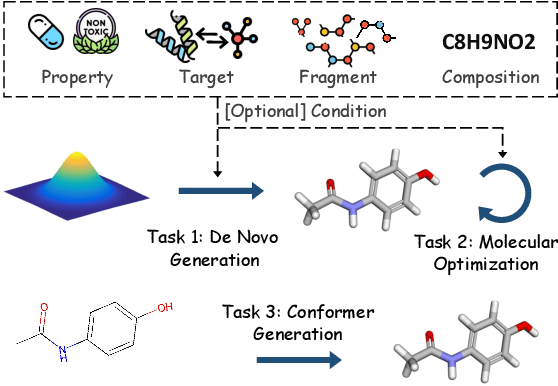
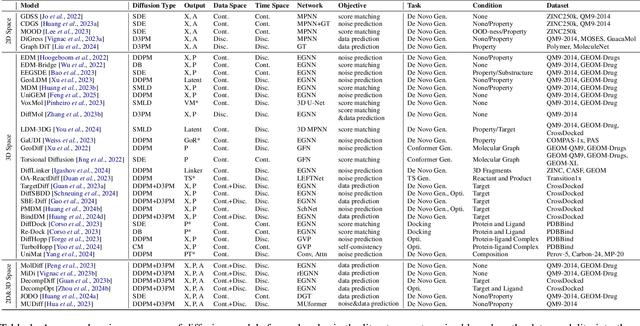
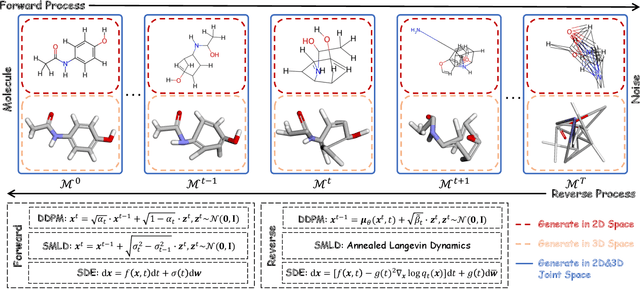
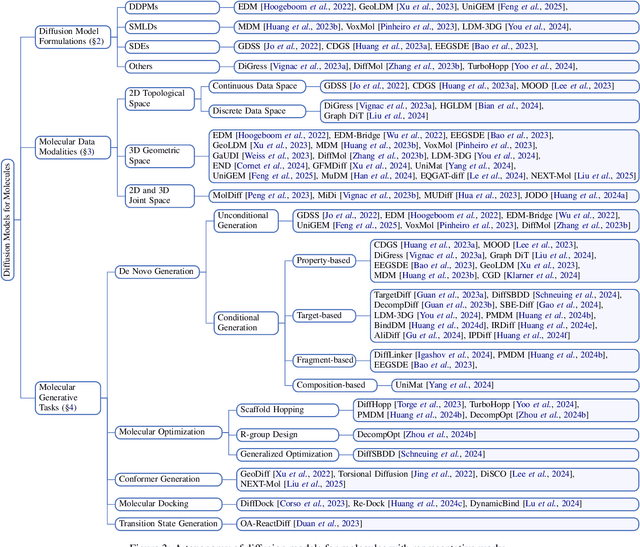
Generative tasks about molecules, including but not limited to molecule generation, are crucial for drug discovery and material design, and have consistently attracted significant attention. In recent years, diffusion models have emerged as an impressive class of deep generative models, sparking extensive research and leading to numerous studies on their application to molecular generative tasks. Despite the proliferation of related work, there remains a notable lack of up-to-date and systematic surveys in this area. Particularly, due to the diversity of diffusion model formulations, molecular data modalities, and generative task types, the research landscape is challenging to navigate, hindering understanding and limiting the area's growth. To address this, this paper conducts a comprehensive survey of diffusion model-based molecular generative methods. We systematically review the research from the perspectives of methodological formulations, data modalities, and task types, offering a novel taxonomy. This survey aims to facilitate understanding and further flourishing development in this area. The relevant papers are summarized at: https://github.com/AzureLeon1/awesome-molecular-diffusion-models.
Natural Language-Assisted Multi-modal Medication Recommendation
Jan 13, 2025Combinatorial medication recommendation(CMR) is a fundamental task of healthcare, which offers opportunities for clinical physicians to provide more precise prescriptions for patients with intricate health conditions, particularly in the scenarios of long-term medical care. Previous research efforts have sought to extract meaningful information from electronic health records (EHRs) to facilitate combinatorial medication recommendations. Existing learning-based approaches further consider the chemical structures of medications, but ignore the textual medication descriptions in which the functionalities are clearly described. Furthermore, the textual knowledge derived from the EHRs of patients remains largely underutilized. To address these issues, we introduce the Natural Language-Assisted Multi-modal Medication Recommendation(NLA-MMR), a multi-modal alignment framework designed to learn knowledge from the patient view and medication view jointly. Specifically, NLA-MMR formulates CMR as an alignment problem from patient and medication modalities. In this vein, we employ pretrained language models(PLMs) to extract in-domain knowledge regarding patients and medications, serving as the foundational representation for both modalities. In the medication modality, we exploit both chemical structures and textual descriptions to create medication representations. In the patient modality, we generate the patient representations based on textual descriptions of diagnosis, procedure, and symptom. Extensive experiments conducted on three publicly accessible datasets demonstrate that NLA-MMR achieves new state-of-the-art performance, with a notable average improvement of 4.72% in Jaccard score. Our source code is publicly available on https://github.com/jtan1102/NLA-MMR_CIKM_2024.
* 10 pages
ACQ: A Unified Framework for Automated Programmatic Creativity in Online Advertising
Dec 09, 2024In online advertising, the demand-side platform (a.k.a. DSP) enables advertisers to create different ad creatives for real-time bidding. Intuitively, advertisers tend to create more ad creatives for a single photo to increase the probability of participating in bidding, further enhancing their ad cost. From the perspective of DSP, the following are two overlooked issues. On the one hand, the number of ad creatives cannot grow indefinitely. On the other hand, the marginal effects of ad cost diminish as the number of ad creatives increases. To this end, this paper proposes a two-stage framework named Automated Creatives Quota (ACQ) to achieve the automatic creation and deactivation of ad creatives. ACQ dynamically allocates the creative quota across multiple advertisers to maximize the revenue of the ad platform. ACQ comprises two components: a prediction module to estimate the cost of a photo under different numbers of ad creatives, and an allocation module to decide the quota for photos considering their estimated costs in the prediction module. Specifically, in the prediction module, we develop a multi-task learning model based on an unbalanced binary tree to effectively mitigate the target variable imbalance problem. In the allocation module, we formulate the quota allocation problem as a multiple-choice knapsack problem (MCKP) and develop an efficient solver to solve such large-scale problems involving tens of millions of ads. We performed extensive offline and online experiments to validate the superiority of our proposed framework, which increased cost by 9.34%.
Chain of Ideas: Revolutionizing Research Via Novel Idea Development with LLM Agents
Oct 25, 2024


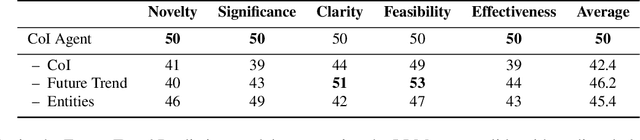
Effective research ideation is a critical step for scientific research. However, the exponential increase in scientific literature makes it challenging for researchers to stay current with recent advances and identify meaningful research directions. Recent developments in large language models~(LLMs) suggest a promising avenue for automating the generation of novel research ideas. However, existing methods for idea generation either trivially prompt LLMs or directly expose LLMs to extensive literature without indicating useful information. Inspired by the research process of human researchers, we propose a Chain-of-Ideas~(CoI) agent, an LLM-based agent that organizes relevant literature in a chain structure to effectively mirror the progressive development in a research domain. This organization facilitates LLMs to capture the current advancements in research, thereby enhancing their ideation capabilities. Furthermore, we propose Idea Arena, an evaluation protocol that can comprehensively evaluate idea generation methods from different perspectives, aligning closely with the preferences of human researchers. Experimental results indicate that the CoI agent consistently outperforms other methods and shows comparable quality as humans in research idea generation. Moreover, our CoI agent is budget-friendly, with a minimum cost of \$0.50 to generate a candidate idea and its corresponding experimental design.