 Add to Chrome
 Add to Firefox
 Add to Edge
Active-Passive Federated Learning for Vertically Partitioned Multi-view Data
Sep 06, 2024
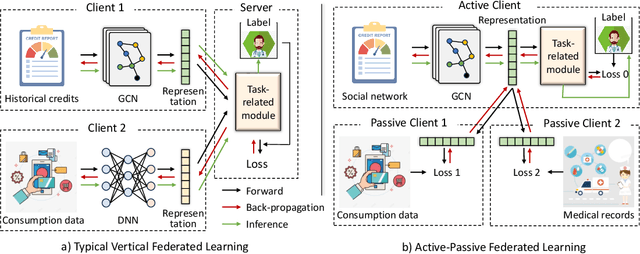


Vertical federated learning is a natural and elegant approach to integrate multi-view data vertically partitioned across devices (clients) while preserving their privacies. Apart from the model training, existing methods requires the collaboration of all clients in the model inference. However, the model inference is probably maintained for service in a long time, while the collaboration, especially when the clients belong to different organizations, is unpredictable in real-world scenarios, such as concellation of contract, network unavailablity, etc., resulting in the failure of them. To address this issue, we, at the first attempt, propose a flexible Active-Passive Federated learning (APFed) framework. Specifically, the active client is the initiator of a learning task and responsible to build the complete model, while the passive clients only serve as assistants. Once the model built, the active client can make inference independently. In addition, we instance the APFed framework into two classification methods with employing the reconstruction loss and the contrastive loss on passive clients, respectively. Meanwhile, the two methods are tested in a set of experiments and achieves desired results, validating their effectiveness.

CMM-Math: A Chinese Multimodal Math Dataset To Evaluate and Enhance the Mathematics Reasoning of Large Multimodal Models
Sep 04, 2024

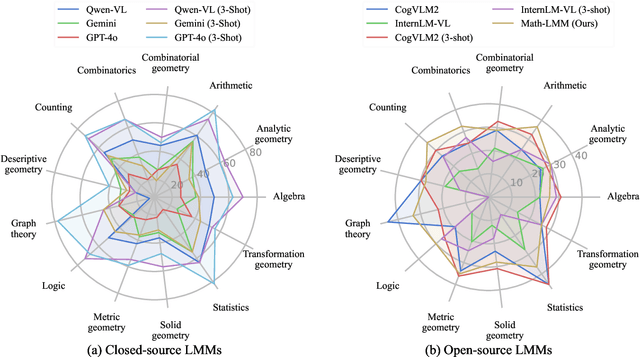

Large language models (LLMs) have obtained promising results in mathematical reasoning, which is a foundational skill for human intelligence. Most previous studies focus on improving and measuring the performance of LLMs based on textual math reasoning datasets (e.g., MATH, GSM8K). Recently, a few researchers have released English multimodal math datasets (e.g., MATHVISTA and MATH-V) to evaluate the effectiveness of large multimodal models (LMMs). In this paper, we release a Chinese multimodal math (CMM-Math) dataset, including benchmark and training parts, to evaluate and enhance the mathematical reasoning of LMMs. CMM-Math contains over 28,000 high-quality samples, featuring a variety of problem types (e.g., multiple-choice, fill-in-the-blank, and so on) with detailed solutions across 12 grade levels from elementary to high school in China. Specifically, the visual context may be present in the questions or opinions, which makes this dataset more challenging. Through comprehensive analysis, we discover that state-of-the-art LMMs on the CMM-Math dataset face challenges, emphasizing the necessity for further improvements in LMM development. We also propose a Multimodal Mathematical LMM (Math-LMM) to handle the problems with mixed input of multiple images and text segments. We train our model using three stages, including foundational pre-training, foundational fine-tuning, and mathematical fine-tuning. The extensive experiments indicate that our model effectively improves math reasoning performance by comparing it with the SOTA LMMs over three multimodal mathematical datasets.
BEAVER: An Enterprise Benchmark for Text-to-SQL
Sep 03, 2024Existing text-to-SQL benchmarks have largely been constructed using publicly available tables from the web with human-generated tests containing question and SQL statement pairs. They typically show very good results and lead people to think that LLMs are effective at text-to-SQL tasks. In this paper, we apply off-the-shelf LLMs to a benchmark containing enterprise data warehouse data. In this environment, LLMs perform poorly, even when standard prompt engineering and RAG techniques are utilized. As we will show, the reasons for poor performance are largely due to three characteristics: (1) public LLMs cannot train on enterprise data warehouses because they are largely in the "dark web", (2) schemas of enterprise tables are more complex than the schemas in public data, which leads the SQL-generation task innately harder, and (3) business-oriented questions are often more complex, requiring joins over multiple tables and aggregations. As a result, we propose a new dataset BEAVER, sourced from real enterprise data warehouses together with natural language queries and their correct SQL statements which we collected from actual user history. We evaluated this dataset using recent LLMs and demonstrated their poor performance on this task. We hope this dataset will facilitate future researchers building more sophisticated text-to-SQL systems which can do better on this important class of data.
MedSAM-U: Uncertainty-Guided Auto Multi-Prompt Adaptation for Reliable MedSAM
Sep 02, 2024

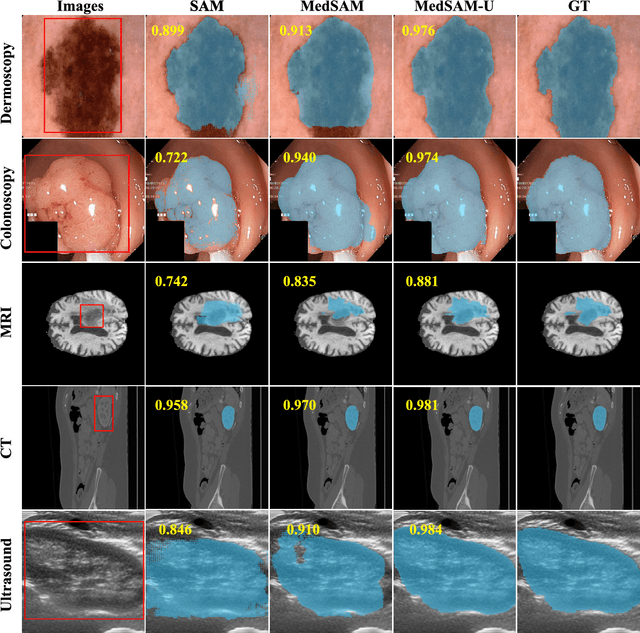

The Medical Segment Anything Model (MedSAM) has shown remarkable performance in medical image segmentation, drawing significant attention in the field. However, its sensitivity to varying prompt types and locations poses challenges. This paper addresses these challenges by focusing on the development of reliable prompts that enhance MedSAM's accuracy. We introduce MedSAM-U, an uncertainty-guided framework designed to automatically refine multi-prompt inputs for more reliable and precise medical image segmentation. Specifically, we first train a Multi-Prompt Adapter integrated with MedSAM, creating MPA-MedSAM, to adapt to diverse multi-prompt inputs. We then employ uncertainty-guided multi-prompt to effectively estimate the uncertainties associated with the prompts and their initial segmentation results. In particular, a novel uncertainty-guided prompts adaptation technique is then applied automatically to derive reliable prompts and their corresponding segmentation outcomes. We validate MedSAM-U using datasets from multiple modalities to train a universal image segmentation model. Compared to MedSAM, experimental results on five distinct modal datasets demonstrate that the proposed MedSAM-U achieves an average performance improvement of 1.7\% to 20.5\% across uncertainty-guided prompts.
A Survey of Embodied Learning for Object-Centric Robotic Manipulation
Aug 21, 2024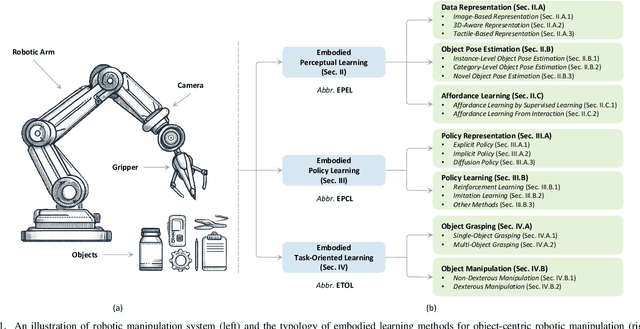
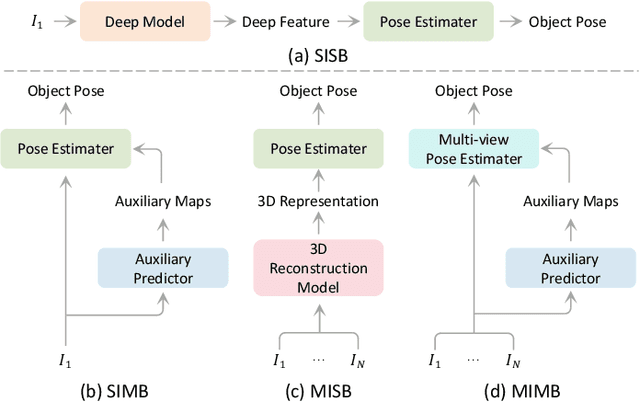
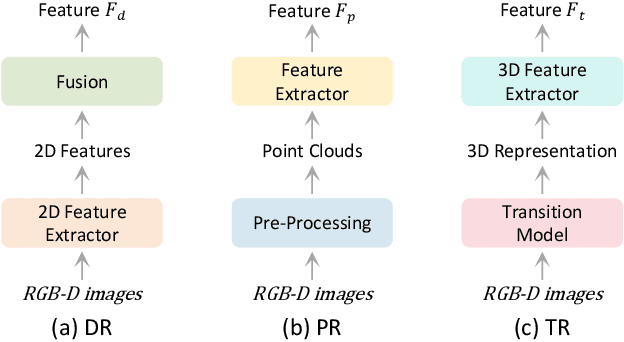
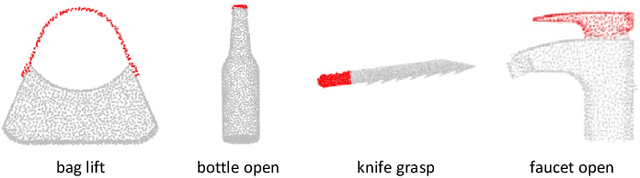
Embodied learning for object-centric robotic manipulation is a rapidly developing and challenging area in embodied AI. It is crucial for advancing next-generation intelligent robots and has garnered significant interest recently. Unlike data-driven machine learning methods, embodied learning focuses on robot learning through physical interaction with the environment and perceptual feedback, making it especially suitable for robotic manipulation. In this paper, we provide a comprehensive survey of the latest advancements in this field and categorize the existing work into three main branches: 1) Embodied perceptual learning, which aims to predict object pose and affordance through various data representations; 2) Embodied policy learning, which focuses on generating optimal robotic decisions using methods such as reinforcement learning and imitation learning; 3) Embodied task-oriented learning, designed to optimize the robot's performance based on the characteristics of different tasks in object grasping and manipulation. In addition, we offer an overview and discussion of public datasets, evaluation metrics, representative applications, current challenges, and potential future research directions. A project associated with this survey has been established at https://github.com/RayYoh/OCRM_survey.
Parameters Inference for Nonlinear Wave Equations with Markovian Switching
Aug 12, 2024Traditional partial differential equations with constant coefficients often struggle to capture abrupt changes in real-world phenomena, leading to the development of variable coefficient PDEs and Markovian switching models. Recently, research has introduced the concept of PDEs with Markov switching models, established their well-posedness and presented numerical methods. However, there has been limited discussion on parameter estimation for the jump coefficients in these models. This paper addresses this gap by focusing on parameter inference for the wave equation with Markovian switching. We propose a Bayesian statistical framework using discrete sparse Bayesian learning to establish its convergence and a uniform error bound. Our method requires fewer assumptions and enables independent parameter inference for each segment by allowing different underlying structures for the parameter estimation problem within each segmented time interval. The effectiveness of our approach is demonstrated through three numerical cases, which involve noisy spatiotemporal data from different wave equations with Markovian switching. The results show strong performance in parameter estimation for variable coefficient PDEs.
High-Order Fusion Graph Contrastive Learning for Recommendation
Jul 29, 2024Self-supervised learning (SSL) has recently attracted significant attention in the field of recommender systems. Contrastive learning (CL) stands out as a major SSL paradigm due to its robust ability to generate self-supervised signals. Mainstream graph contrastive learning (GCL)-based methods typically implement CL by creating contrastive views through various data augmentation techniques. Despite these methods are effective, we argue that there still exist several challenges: i) Data augmentation (e.g., discarding edges or adding noise) necessitates additional graph convolution (GCN) or modeling operations, which are highly time-consuming and potentially harm the embedding quality. ii) Existing CL-based methods use traditional CL objectives to capture self-supervised signals. However, few studies have explored obtaining CL objectives from more perspectives and have attempted to fuse the varying signals from these CL objectives to enhance recommendation performance. To overcome these challenges, we propose a High-Order Fusion Graph Contrastive Learning (HFGCL) framework for recommendation. Specifically, we discards the data augmentations and instead high-order information from GCN process to create contrastive views. Additionally, to integrate self-supervised signals from various CL objectives, we propose an advanced CL objective. By ensuring that positive pairs are distanced from negative samples derived from both contrastive views, we effectively fuse self-supervised signals from distinct CL objectives, thereby enhancing the mutual information between positive pairs. Experimental results on three public datasets demonstrate the superior effectiveness of HFGCL compared to the state-of-the-art baselines.
Intent-guided Heterogeneous Graph Contrastive Learning for Recommendation
Jul 28, 2024
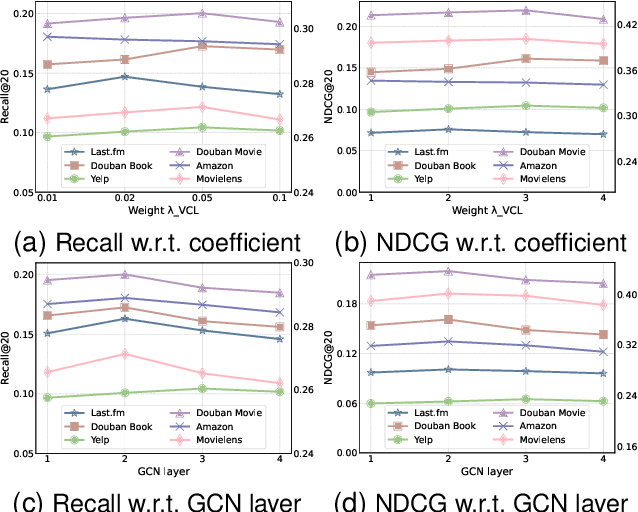

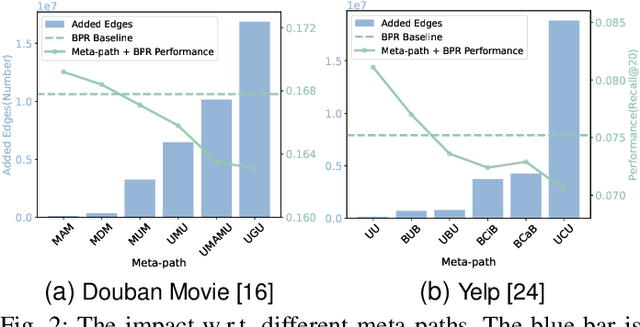
Contrastive Learning (CL)-based recommender systems have gained prominence in the context of Heterogeneous Graph (HG) due to their capacity to enhance the consistency of representations across different views. However, existing frameworks often neglect the fact that user-item interactions within HG are governed by diverse latent intents (e.g., brand preferences or demographic characteristics of item audiences), which are pivotal in capturing fine-grained relations. The exploration of these underlying intents, particularly through the lens of meta-paths in HGs, presents us with two principal challenges: i) How to integrate CL with intents; ii) How to mitigate noise from meta-path-driven intents. To address these challenges, we propose an innovative framework termed Intent-guided Heterogeneous Graph Contrastive Learning (IHGCL), which designed to enhance CL-based recommendation by capturing the intents contained within meta-paths. Specifically, the IHGCL framework includes: i) a meta-path-based Dual Contrastive Learning (DCL) approach to effectively integrate intents into the recommendation, constructing intent-intent contrast and intent-interaction contrast; ii) a Bottlenecked AutoEncoder (BAE) that combines mask propagation with the information bottleneck principle to significantly reduce noise perturbations introduced by meta-paths. Empirical evaluations conducted across six distinct datasets demonstrate the superior performance of our IHGCL framework relative to conventional baseline methods. Our model implementation is available at https://github.com/wangyu0627/IHGCL.
Doubly Robust Conditional Independence Testing with Generative Neural Networks
Jul 25, 2024


This article addresses the problem of testing the conditional independence of two generic random vectors $X$ and $Y$ given a third random vector $Z$, which plays an important role in statistical and machine learning applications. We propose a new non-parametric testing procedure that avoids explicitly estimating any conditional distributions but instead requires sampling from the two marginal conditional distributions of $X$ given $Z$ and $Y$ given $Z$. We further propose using a generative neural network (GNN) framework to sample from these approximated marginal conditional distributions, which tends to mitigate the curse of dimensionality due to its adaptivity to any low-dimensional structures and smoothness underlying the data. Theoretically, our test statistic is shown to enjoy a doubly robust property against GNN approximation errors, meaning that the test statistic retains all desirable properties of the oracle test statistic utilizing the true marginal conditional distributions, as long as the product of the two approximation errors decays to zero faster than the parametric rate. Asymptotic properties of our statistic and the consistency of a bootstrap procedure are derived under both null and local alternatives. Extensive numerical experiments and real data analysis illustrate the effectiveness and broad applicability of our proposed test.
DCNv3: Towards Next Generation Deep Cross Network for CTR Prediction
Jul 19, 2024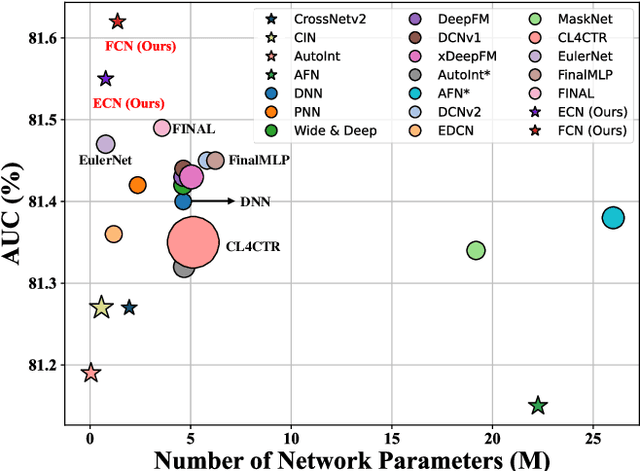
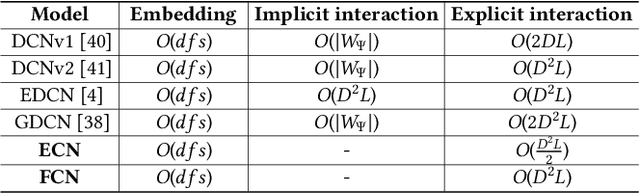
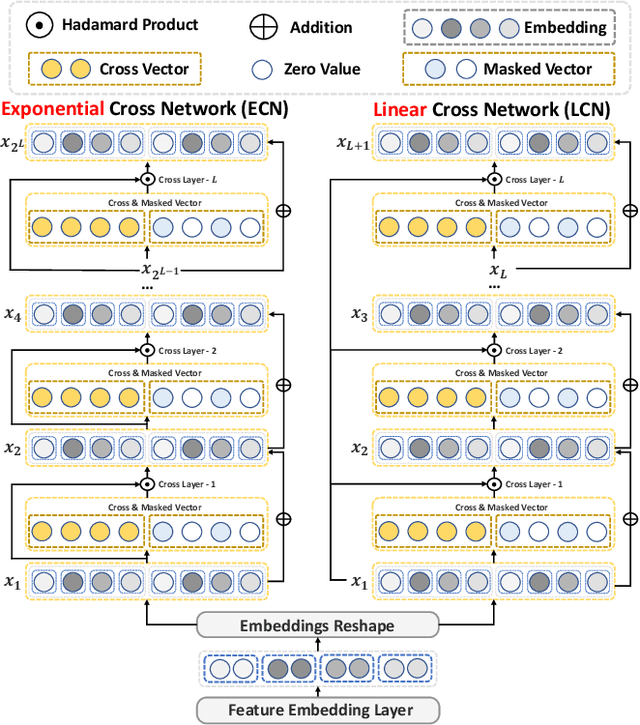
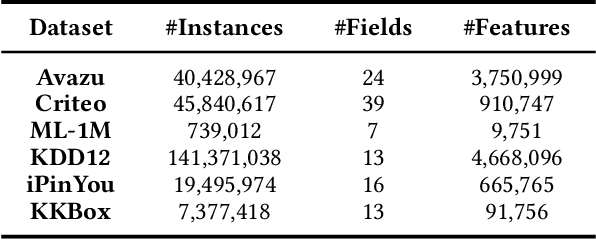
Deep & Cross Network and its derivative models have become an important paradigm in click-through rate (CTR) prediction due to their effective balance between computational cost and performance. However, these models face four major limitations: (1) while most models claim to capture high-order feature interactions, they often do so implicitly and non-interpretably through deep neural networks (DNN), which limits the trustworthiness of the model's predictions; (2) the performance of existing explicit feature interaction methods is often weaker than that of implicit DNN, undermining their necessity; (3) many models fail to adaptively filter noise while enhancing the order of feature interactions; (4) the fusion methods of most models cannot provide suitable supervision signals for their different interaction methods. To address the identified limitations, this paper proposes the next generation Deep Cross Network (DCNv3) and Shallow & Deep Cross Network (SDCNv3). These models ensure interpretability in feature interaction modeling while exponentially increasing the order of feature interactions to achieve genuine Deep Crossing rather than just Deep & Cross. Additionally, we employ a Self-Mask operation to filter noise and reduce the number of parameters in the cross network by half. In the fusion layer, we use a simple yet effective loss weight calculation method called Tri-BCE to provide appropriate supervision signals. Comprehensive experiments on six datasets demonstrate the effectiveness, efficiency, and interpretability of DCNv3 and SDCNv3. The code, running logs, and detailed hyperparameter configurations are available at: https://anonymous.4open.science/r/DCNv3-E352.