 Add to Chrome
 Add to Firefox
 Add to Edge
AI Governance InternationaL Evaluation Index (AGILE Index)
Feb 26, 2025
The rapid advancement of Artificial Intelligence (AI) technology is profoundly transforming human society and concurrently presenting a series of ethical, legal, and social issues. The effective governance of AI has become a crucial global concern. Since 2022, the extensive deployment of generative AI, particularly large language models, marked a new phase in AI governance. Continuous efforts are being made by the international community in actively addressing the novel challenges posed by these AI developments. As consensus on international governance continues to be established and put into action, the practical importance of conducting a global assessment of the state of AI governance is progressively coming to light. In this context, we initiated the development of the AI Governance InternationaL Evaluation Index (AGILE Index). Adhering to the design principle, "the level of governance should match the level of development," the inaugural evaluation of the AGILE Index commences with an exploration of four foundational pillars: the development level of AI, the AI governance environment, the AI governance instruments, and the AI governance effectiveness. It covers 39 indicators across 18 dimensions to comprehensively assess the AI governance level of 14 representative countries globally. The index is utilized to delve into the status of AI governance to date in 14 countries for the first batch of evaluation. The aim is to depict the current state of AI governance in these countries through data scoring, assist them in identifying their governance stage and uncovering governance issues, and ultimately offer insights for the enhancement of their AI governance systems.

Enhancing Audio-Visual Spiking Neural Networks through Semantic-Alignment and Cross-Modal Residual Learning
Feb 18, 2025Humans interpret and perceive the world by integrating sensory information from multiple modalities, such as vision and hearing. Spiking Neural Networks (SNNs), as brain-inspired computational models, exhibit unique advantages in emulating the brain's information processing mechanisms. However, existing SNN models primarily focus on unimodal processing and lack efficient cross-modal information fusion, thereby limiting their effectiveness in real-world multimodal scenarios. To address this challenge, we propose a semantic-alignment cross-modal residual learning (S-CMRL) framework, a Transformer-based multimodal SNN architecture designed for effective audio-visual integration. S-CMRL leverages a spatiotemporal spiking attention mechanism to extract complementary features across modalities, and incorporates a cross-modal residual learning strategy to enhance feature integration. Additionally, a semantic alignment optimization mechanism is introduced to align cross-modal features within a shared semantic space, improving their consistency and complementarity. Extensive experiments on three benchmark datasets CREMA-D, UrbanSound8K-AV, and MNISTDVS-NTIDIGITS demonstrate that S-CMRL significantly outperforms existing multimodal SNN methods, achieving the state-of-the-art performance. The code is publicly available at https://github.com/Brain-Cog-Lab/S-CMRL.
MTDP: Modulated Transformer Diffusion Policy Model
Feb 13, 2025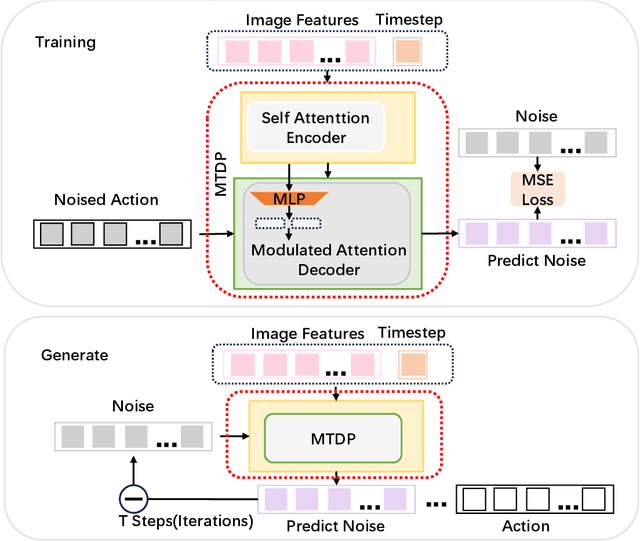
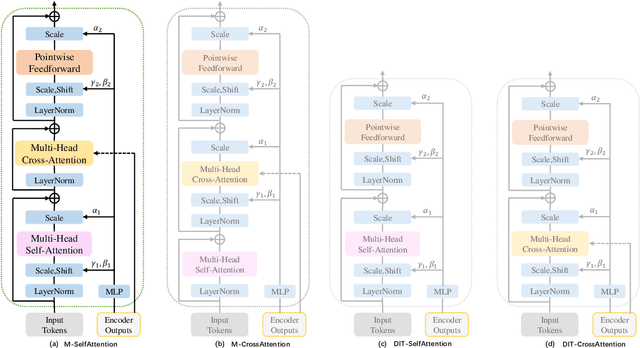

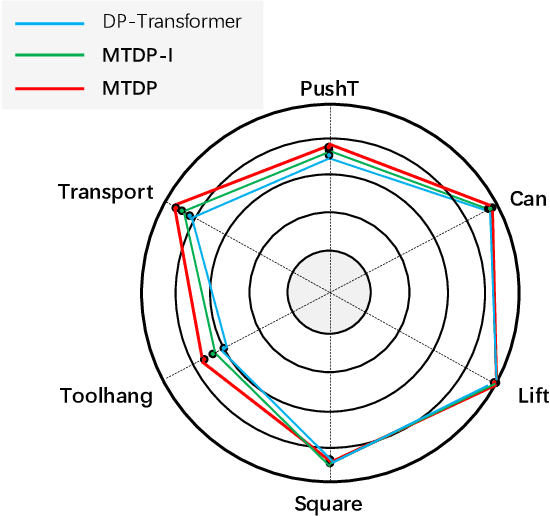
Recent research on robot manipulation based on Behavior Cloning (BC) has made significant progress. By combining diffusion models with BC, diffusion policiy has been proposed, enabling robots to quickly learn manipulation tasks with high success rates. However, integrating diffusion policy with high-capacity Transformer presents challenges, traditional Transformer architectures struggle to effectively integrate guiding conditions, resulting in poor performance in manipulation tasks when using Transformer-based models. In this paper, we investigate key architectural designs of Transformers and improve the traditional Transformer architecture by proposing the Modulated Transformer Diffusion Policy (MTDP) model for diffusion policy. The core of this model is the Modulated Attention module we proposed, which more effectively integrates the guiding conditions with the main input, improving the generative model's output quality and, consequently, increasing the robot's task success rate. In six experimental tasks, MTDP outperformed existing Transformer model architectures, particularly in the Toolhang experiment, where the success rate increased by 12\%. To verify the generality of Modulated Attention, we applied it to the UNet architecture to construct Modulated UNet Diffusion Policy model (MUDP), which also achieved higher success rates than existing UNet architectures across all six experiments. The Diffusion Policy uses Denoising Diffusion Probabilistic Models (DDPM) as the diffusion model. Building on this, we also explored Denoising Diffusion Implicit Models (DDIM) as the diffusion model, constructing the MTDP-I and MUDP-I model, which nearly doubled the generation speed while maintaining performance.
International AI Safety Report
Jan 29, 2025
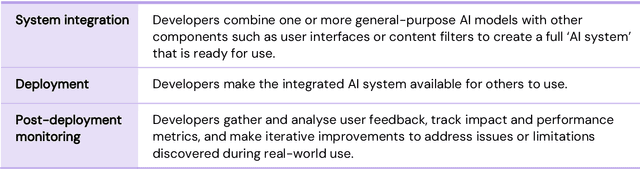

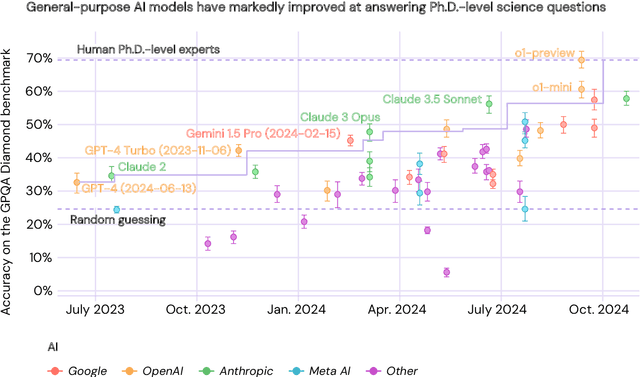
The first International AI Safety Report comprehensively synthesizes the current evidence on the capabilities, risks, and safety of advanced AI systems. The report was mandated by the nations attending the AI Safety Summit in Bletchley, UK. Thirty nations, the UN, the OECD, and the EU each nominated a representative to the report's Expert Advisory Panel. A total of 100 AI experts contributed, representing diverse perspectives and disciplines. Led by the report's Chair, these independent experts collectively had full discretion over the report's content.
$SpikePack$: Enhanced Information Flow in Spiking Neural Networks with High Hardware Compatibility
Jan 24, 2025
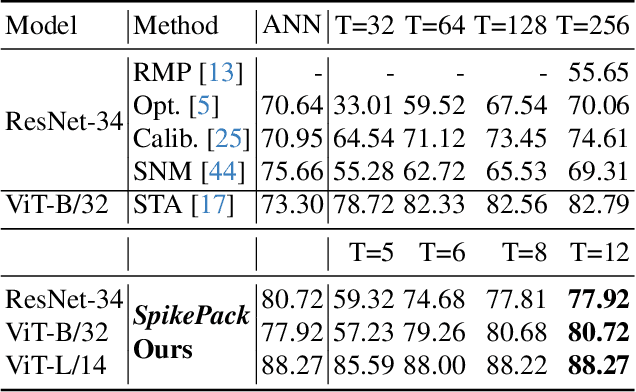
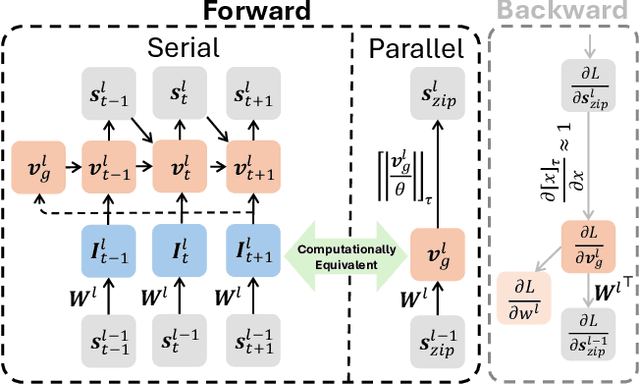
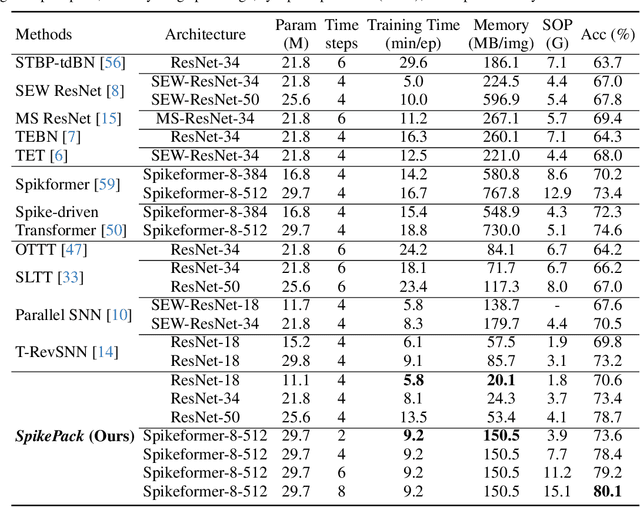
Spiking Neural Networks (SNNs) hold promise for energy-efficient, biologically inspired computing. We identify substantial informatio loss during spike transmission, linked to temporal dependencies in traditional Leaky Integrate-and-Fire (LIF) neuron-a key factor potentially limiting SNN performance. Existing SNN architectures also underutilize modern GPUs, constrained by single-bit spike storage and isolated weight-spike operations that restrict computational efficiency. We introduce ${SpikePack}$, a neuron model designed to reduce transmission loss while preserving essential features like membrane potential reset and leaky integration. ${SpikePack}$ achieves constant $\mathcal{O}(1)$ time and space complexity, enabling efficient parallel processing on GPUs and also supporting serial inference on existing SNN hardware accelerators. Compatible with standard Artificial Neural Network (ANN) architectures, ${SpikePack}$ facilitates near-lossless ANN-to-SNN conversion across various networks. Experimental results on tasks such as image classification, detection, and segmentation show ${SpikePack}$ achieves significant gains in accuracy and efficiency for both directly trained and converted SNNs over state-of-the-art models. Tests on FPGA-based platforms further confirm cross-platform flexibility, delivering high performance and enhanced sparsity. By enhancing information flow and rethinking SNN-ANN integration, ${SpikePack}$ advances efficient SNN deployment across diverse hardware platforms.
TriAdaptLoRA: Brain-Inspired Triangular Adaptive Low-Rank Adaptation for Parameter-Efficient Fine-Tuning
Jan 14, 2025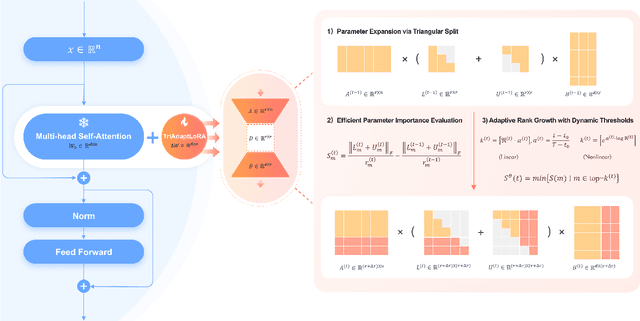
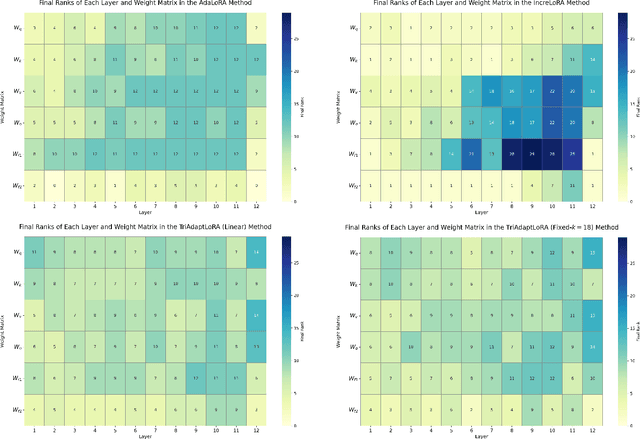
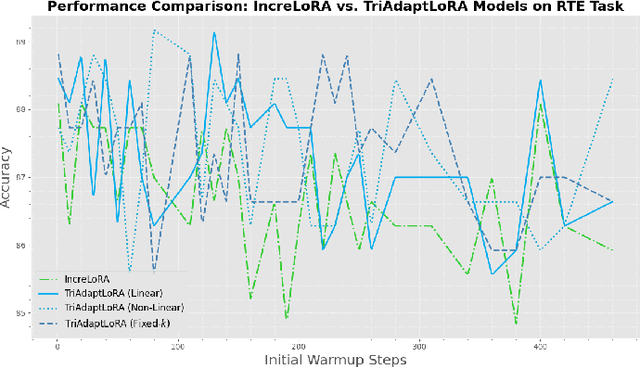
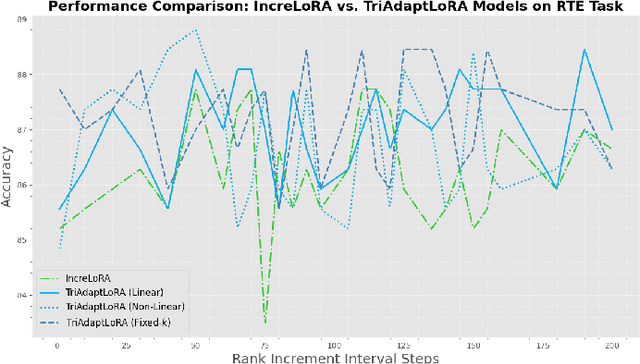
The fine-tuning of Large Language Models (LLMs) is pivotal for achieving optimal performance across diverse downstream tasks. However, while full fine-tuning delivers superior results, it entails significant computational and resource costs. Parameter-Efficient Fine-Tuning (PEFT) methods, such as LoRA, address these challenges by reducing the number of trainable parameters, but they often struggle with rank adjustment efficiency and task-specific adaptability. We propose Triangular Adaptive Low-Rank Adaptation (TriAdaptLoRA), a novel PEFT framework inspired by neuroscience principles, which dynamically optimizes the allocation of trainable parameters. TriAdaptLoRA introduces three key innovations: 1) a triangular split of transformation matrices into lower and upper triangular components to maximize parameter utilization, 2) a parameter importance metric based on normalized Frobenius norms for efficient adaptation, and 3) an adaptive rank-growth strategy governed by dynamic thresholds, allowing flexible parameter allocation across training steps. Experiments conducted on a variety of natural language understanding and generation tasks demonstrate that TriAdaptLoRA consistently outperforms existing PEFT methods. It achieves superior performance, enhanced stability, and reduced computational overhead, particularly under linear threshold-driven rank growth. These results highlight its efficacy as a scalable and resource-efficient solution for fine-tuning LLMs.
Autonomous Alignment with Human Value on Altruism through Considerate Self-imagination and Theory of Mind
Jan 07, 2025With the widespread application of Artificial Intelligence (AI) in human society, enabling AI to autonomously align with human values has become a pressing issue to ensure its sustainable development and benefit to humanity. One of the most important aspects of aligning with human values is the necessity for agents to autonomously make altruistic, safe, and ethical decisions, considering and caring for human well-being. Current AI extremely pursues absolute superiority in certain tasks, remaining indifferent to the surrounding environment and other agents, which has led to numerous safety risks. Altruistic behavior in human society originates from humans' capacity for empathizing others, known as Theory of Mind (ToM), combined with predictive imaginative interactions before taking action to produce thoughtful and altruistic behaviors. Inspired by this, we are committed to endow agents with considerate self-imagination and ToM capabilities, driving them through implicit intrinsic motivations to autonomously align with human altruistic values. By integrating ToM within the imaginative space, agents keep an eye on the well-being of other agents in real time, proactively anticipate potential risks to themselves and others, and make thoughtful altruistic decisions that balance negative effects on the environment. The ancient Chinese story of Sima Guang Smashes the Vat illustrates the moral behavior of the young Sima Guang smashed a vat to save a child who had accidentally fallen into it, which is an excellent reference scenario for this paper. We design an experimental scenario similar to Sima Guang Smashes the Vat and its variants with different complexities, which reflects the trade-offs and comprehensive considerations between self-goals, altruistic rescue, and avoiding negative side effects.
Switchable deep beamformer for high-quality and real-time passive acoustic mapping
Dec 03, 2024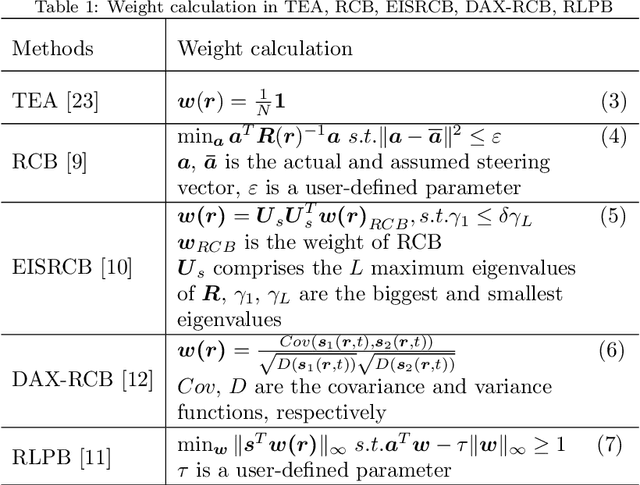
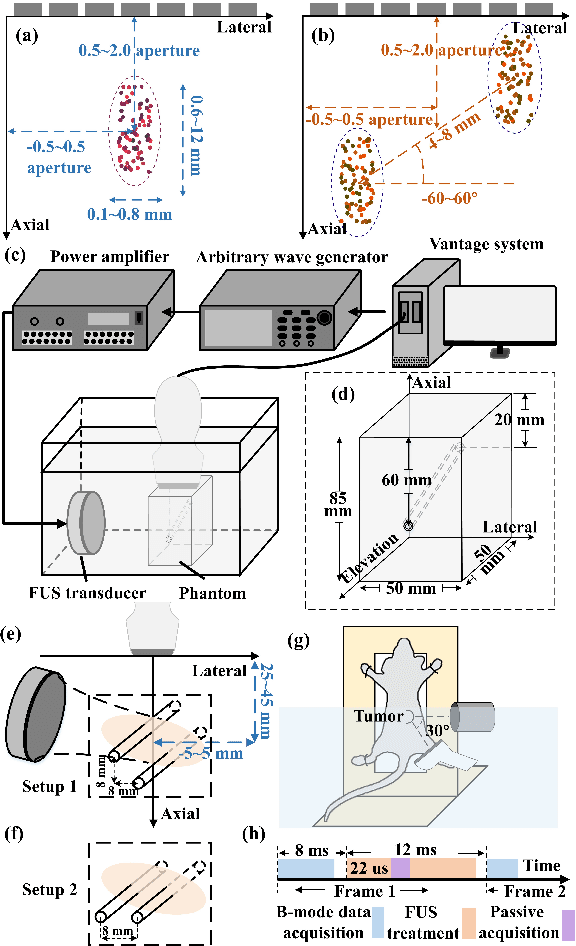
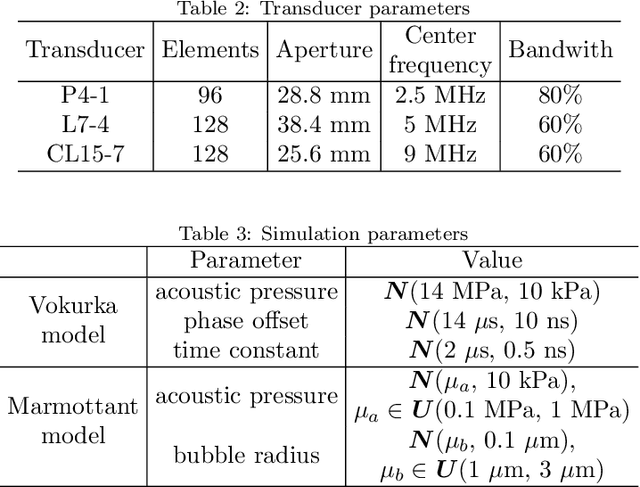
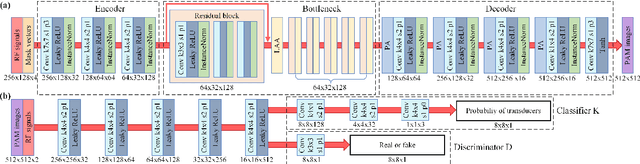
Passive acoustic mapping (PAM) is a promising tool for monitoring acoustic cavitation activities in the applications of ultrasound therapy. Data-adaptive beamformers for PAM have better image quality compared to the time exposure acoustics (TEA) algorithms. However, the computational cost of data-adaptive beamformers is considerably expensive. In this work, we develop a deep beamformer based on a generative adversarial network, which can switch between different transducer arrays and reconstruct high-quality PAM images directly from radio frequency ultrasound signals with low computational cost. The deep beamformer was trained on the dataset consisting of simulated and experimental cavitation signals of single and multiple microbubble clouds measured by different (linear and phased) arrays covering 1-15 MHz. We compared the performance of the deep beamformer to TEA and three different data-adaptive beamformers using the simulated and experimental test dataset. Compared with TEA, the deep beamformer reduced the energy spread area by 18.9%-65.0% and improved the image signal-to-noise ratio by 9.3-22.9 dB in average for the different arrays in our data. Compared to the data-adaptive beamformers, the deep beamformer reduced the computational cost by three orders of magnitude achieving 10.5 ms image reconstruction speed in our data, while the image quality was as good as that of the data-adaptive beamformers. These results demonstrated the potential of the deep beamformer for high-resolution monitoring of microbubble cavitation activities for ultrasound therapy.
Mode-conditioned music learning and composition: a spiking neural network inspired by neuroscience and psychology
Nov 22, 2024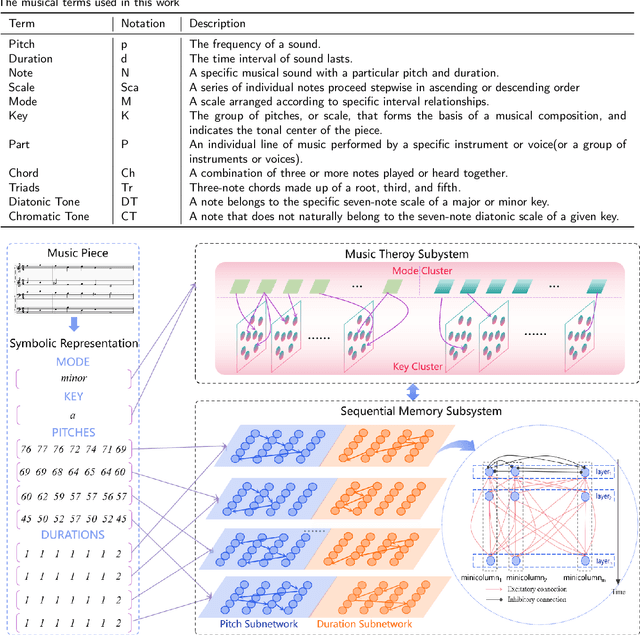
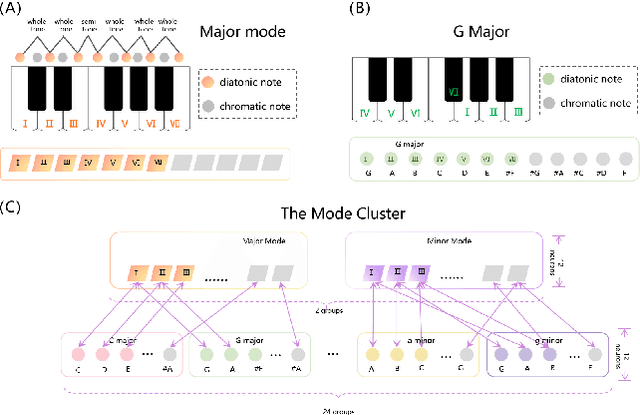

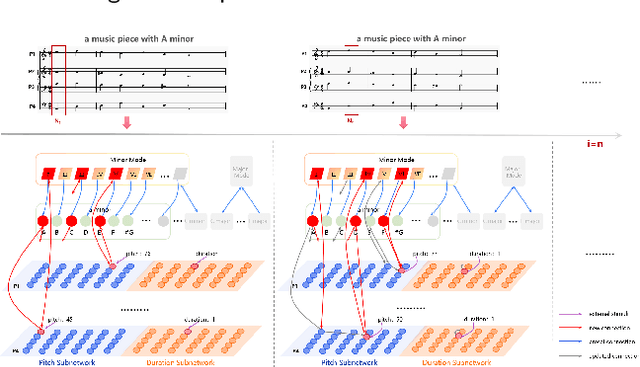
Musical mode is one of the most critical element that establishes the framework of pitch organization and determines the harmonic relationships. Previous works often use the simplistic and rigid alignment method, and overlook the diversity of modes. However, in contrast to AI models, humans possess cognitive mechanisms for perceiving the various modes and keys. In this paper, we propose a spiking neural network inspired by brain mechanisms and psychological theories to represent musical modes and keys, ultimately generating musical pieces that incorporate tonality features. Specifically, the contributions are detailed as follows: 1) The model is designed with multiple collaborated subsystems inspired by the structures and functions of corresponding brain regions; 2)We incorporate mechanisms for neural circuit evolutionary learning that enable the network to learn and generate mode-related features in music, reflecting the cognitive processes involved in human music perception. 3)The results demonstrate that the proposed model shows a connection framework closely similar to the Krumhansl-Schmuckler model, which is one of the most significant key perception models in the music psychology domain. 4) Experiments show that the model can generate music pieces with characteristics of the given modes and keys. Additionally, the quantitative assessments of generated pieces reveals that the generating music pieces have both tonality characteristics and the melodic adaptability needed to generate diverse and musical content. By combining insights from neuroscience, psychology, and music theory with advanced neural network architectures, our research aims to create a system that not only learns and generates music but also bridges the gap between human cognition and artificial intelligence.
BlueLM-V-3B: Algorithm and System Co-Design for Multimodal Large Language Models on Mobile Devices
Nov 16, 2024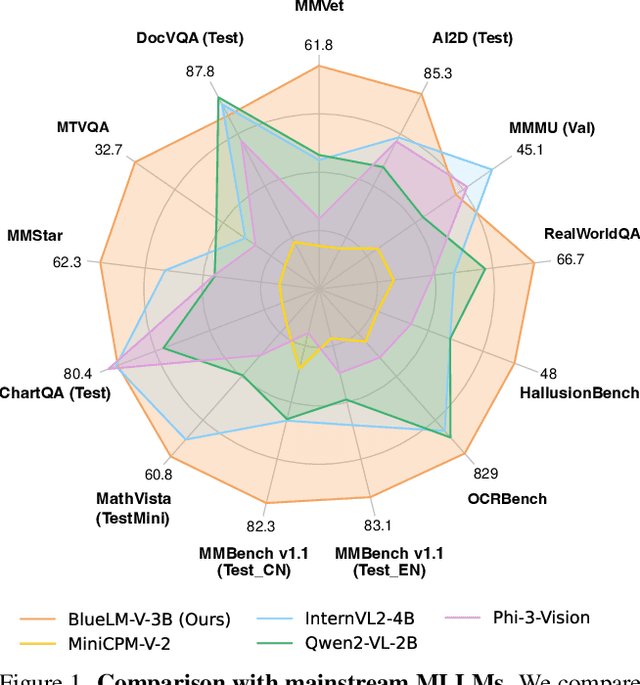
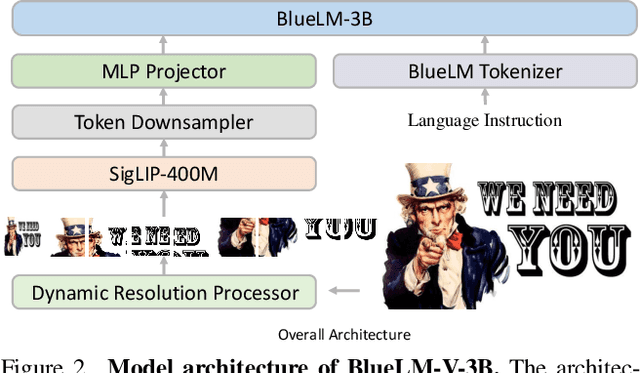

The emergence and growing popularity of multimodal large language models (MLLMs) have significant potential to enhance various aspects of daily life, from improving communication to facilitating learning and problem-solving. Mobile phones, as essential daily companions, represent the most effective and accessible deployment platform for MLLMs, enabling seamless integration into everyday tasks. However, deploying MLLMs on mobile phones presents challenges due to limitations in memory size and computational capability, making it difficult to achieve smooth and real-time processing without extensive optimization. In this paper, we present BlueLM-V-3B, an algorithm and system co-design approach specifically tailored for the efficient deployment of MLLMs on mobile platforms. To be specific, we redesign the dynamic resolution scheme adopted by mainstream MLLMs and implement system optimization for hardware-aware deployment to optimize model inference on mobile phones. BlueLM-V-3B boasts the following key highlights: (1) Small Size: BlueLM-V-3B features a language model with 2.7B parameters and a vision encoder with 400M parameters. (2) Fast Speed: BlueLM-V-3B achieves a generation speed of 24.4 token/s on the MediaTek Dimensity 9300 processor with 4-bit LLM weight quantization. (3) Strong Performance: BlueLM-V-3B has attained the highest average score of 66.1 on the OpenCompass benchmark among models with $\leq$ 4B parameters and surpassed a series of models with much larger parameter sizes (e.g., MiniCPM-V-2.6, InternVL2-8B).