 Add to Chrome
 Add to Firefox
 Add to Edge
DART: Dual-Axis Airborne Reachability-Gated Torque-Reaction for Off-Road Vehicle Jumps
Jul 31, 2026
Traversing crests, ledges, and ditches at high speed often launches vehicles into the air, and a mishandled landing presents a substantial crash hazard. We show that the airborne phase is barely controllable: on a 1383 kg platform the wheel angular-momentum budget caps the recoverable pitch-rate change at roughly $9$-$13^\circ$/s in the tighter nose-up direction under drive at typical takeoff wheel speeds, and at about twice that in the reverse-inclusive braking direction; driving the wheels to their drivetrain hard limit raises the measured nose-up ceiling to only $16$-$18^\circ$/s. Takeoff pitch-rate disturbances beyond this directional budget are physically unrecoverable in flight, so the decisive leverage lies before takeoff. DART (Dual-Axis Airborne Reachability-Gated Torque-Reaction) back-propagates the landing constraint into a closed-form certified feasible-takeoff set, which supplies a conservative go/no-go condition and a pre-takeoff speed-shaping law. In flight, DART regulates pitch and roll via steer-resolved wheel-reaction torque, governed by a per-flight roll latch derived from the yaw-coupling analysis. In deterministic full-scale simulation in BeamNG.tech, a calibrated pre-takeoff speed regulator reduces touchdown speed by 36% and raises on-target landings from 0/30 to 30/30. Under the same steep-lip approach the airborne law completes 29/30 safe landings under crash-avoidance bounds versus 0/30 for reaction-wheel-style PD (RW-PD) and time-optimal bang-bang (TOBB). On banked run-ups DART holds the median pitch error at or below $2^\circ$ at every cross-slope, with the largest baseline separation at $γ=12^\circ$. Across disturbance regimes, the latch preserves pitch-only allocation on low-disturbance entries and enables dual-axis control when roll becomes binding. All results are from simulation; hardware validation remains open.

RISE: Self-Improving Robot Policy with Compositional World Model
Feb 11, 2026Despite the sustained scaling on model capacity and data acquisition, Vision-Language-Action (VLA) models remain brittle in contact-rich and dynamic manipulation tasks, where minor execution deviations can compound into failures. While reinforcement learning (RL) offers a principled path to robustness, on-policy RL in the physical world is constrained by safety risk, hardware cost, and environment reset. To bridge this gap, we present RISE, a scalable framework of robotic reinforcement learning via imagination. At its core is a Compositional World Model that (i) predicts multi-view future via a controllable dynamics model, and (ii) evaluates imagined outcomes with a progress value model, producing informative advantages for the policy improvement. Such compositional design allows state and value to be tailored by best-suited yet distinct architectures and objectives. These components are integrated into a closed-loop self-improving pipeline that continuously generates imaginary rollouts, estimates advantages, and updates the policy in imaginary space without costly physical interaction. Across three challenging real-world tasks, RISE yields significant improvement over prior art, with more than +35% absolute performance increase in dynamic brick sorting, +45% for backpack packing, and +35% for box closing, respectively.
Impromptu VLA: Open Weights and Open Data for Driving Vision-Language-Action Models
May 29, 2025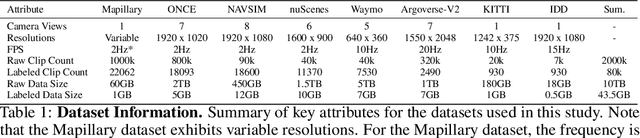
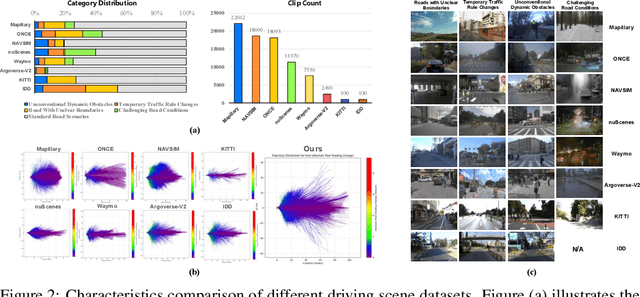
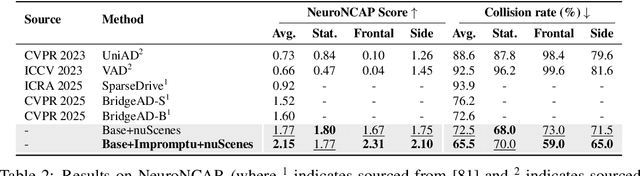
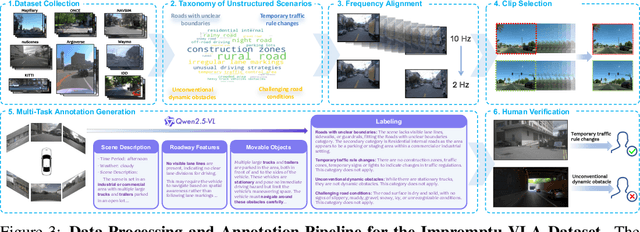
Vision-Language-Action (VLA) models for autonomous driving show promise but falter in unstructured corner case scenarios, largely due to a scarcity of targeted benchmarks. To address this, we introduce Impromptu VLA. Our core contribution is the Impromptu VLA Dataset: over 80,000 meticulously curated video clips, distilled from over 2M source clips sourced from 8 open-source large-scale datasets. This dataset is built upon our novel taxonomy of four challenging unstructured categories and features rich, planning-oriented question-answering annotations and action trajectories. Crucially, experiments demonstrate that VLAs trained with our dataset achieve substantial performance gains on established benchmarks--improving closed-loop NeuroNCAP scores and collision rates, and reaching near state-of-the-art L2 accuracy in open-loop nuScenes trajectory prediction. Furthermore, our Q&A suite serves as an effective diagnostic, revealing clear VLM improvements in perception, prediction, and planning. Our code, data and models are available at https://github.com/ahydchh/Impromptu-VLA.
FB-4D: Spatial-Temporal Coherent Dynamic 3D Content Generation with Feature Banks
Mar 26, 2025With the rapid advancements in diffusion models and 3D generation techniques, dynamic 3D content generation has become a crucial research area. However, achieving high-fidelity 4D (dynamic 3D) generation with strong spatial-temporal consistency remains a challenging task. Inspired by recent findings that pretrained diffusion features capture rich correspondences, we propose FB-4D, a novel 4D generation framework that integrates a Feature Bank mechanism to enhance both spatial and temporal consistency in generated frames. In FB-4D, we store features extracted from previous frames and fuse them into the process of generating subsequent frames, ensuring consistent characteristics across both time and multiple views. To ensure a compact representation, the Feature Bank is updated by a proposed dynamic merging mechanism. Leveraging this Feature Bank, we demonstrate for the first time that generating additional reference sequences through multiple autoregressive iterations can continuously improve generation performance. Experimental results show that FB-4D significantly outperforms existing methods in terms of rendering quality, spatial-temporal consistency, and robustness. It surpasses all multi-view generation tuning-free approaches by a large margin and achieves performance on par with training-based methods.
Switchable deep beamformer for high-quality and real-time passive acoustic mapping
Dec 03, 2024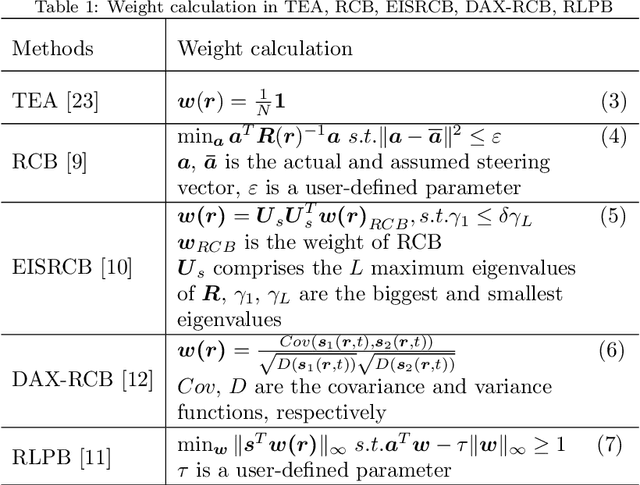
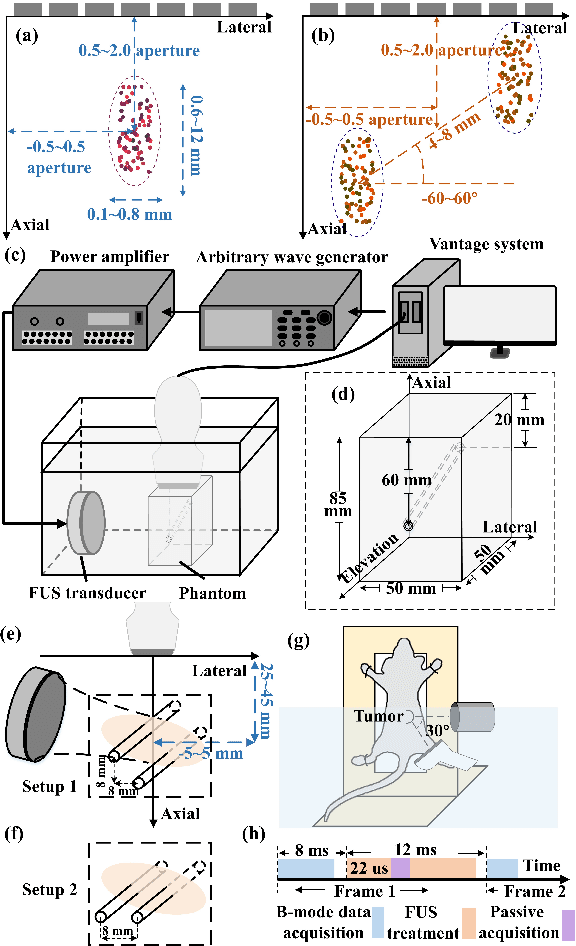
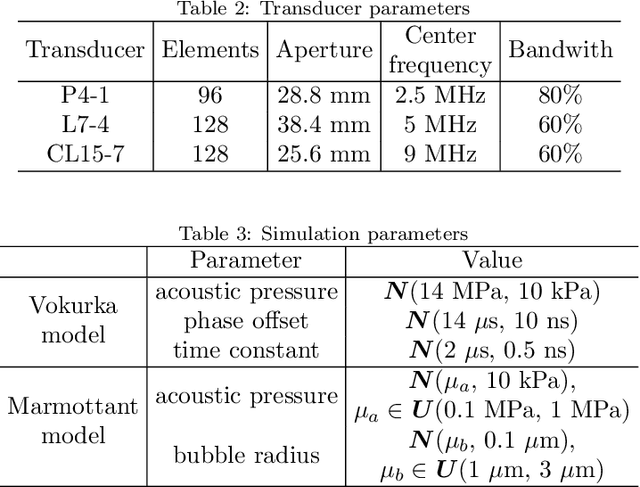
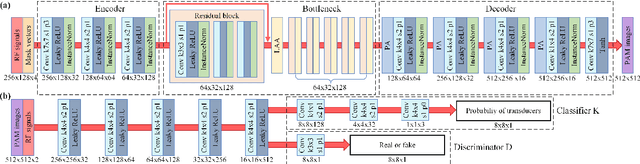
Passive acoustic mapping (PAM) is a promising tool for monitoring acoustic cavitation activities in the applications of ultrasound therapy. Data-adaptive beamformers for PAM have better image quality compared to the time exposure acoustics (TEA) algorithms. However, the computational cost of data-adaptive beamformers is considerably expensive. In this work, we develop a deep beamformer based on a generative adversarial network, which can switch between different transducer arrays and reconstruct high-quality PAM images directly from radio frequency ultrasound signals with low computational cost. The deep beamformer was trained on the dataset consisting of simulated and experimental cavitation signals of single and multiple microbubble clouds measured by different (linear and phased) arrays covering 1-15 MHz. We compared the performance of the deep beamformer to TEA and three different data-adaptive beamformers using the simulated and experimental test dataset. Compared with TEA, the deep beamformer reduced the energy spread area by 18.9%-65.0% and improved the image signal-to-noise ratio by 9.3-22.9 dB in average for the different arrays in our data. Compared to the data-adaptive beamformers, the deep beamformer reduced the computational cost by three orders of magnitude achieving 10.5 ms image reconstruction speed in our data, while the image quality was as good as that of the data-adaptive beamformers. These results demonstrated the potential of the deep beamformer for high-resolution monitoring of microbubble cavitation activities for ultrasound therapy.
A Review on InSAR Phase Denoising
Jan 03, 2020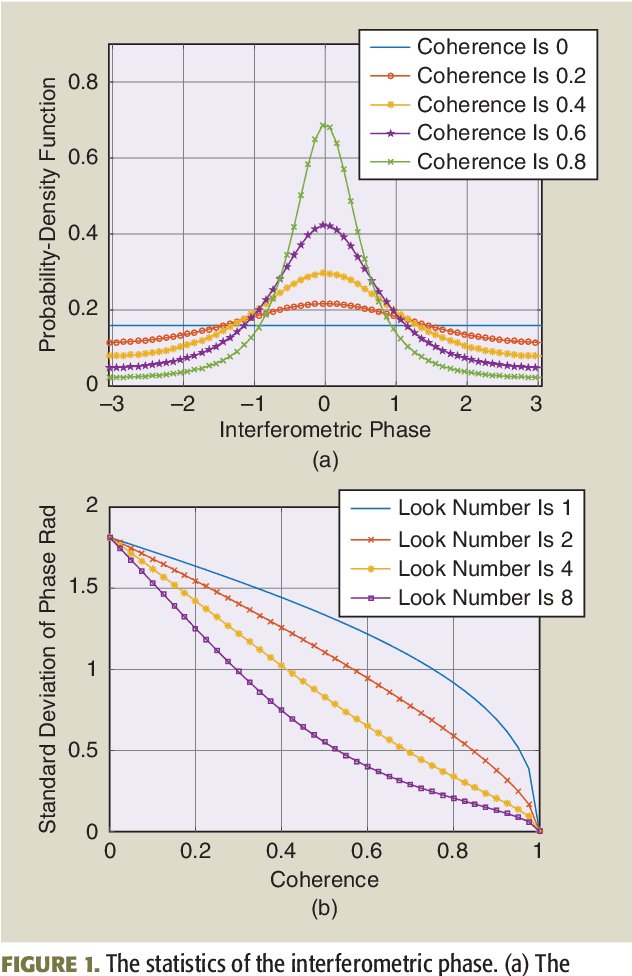
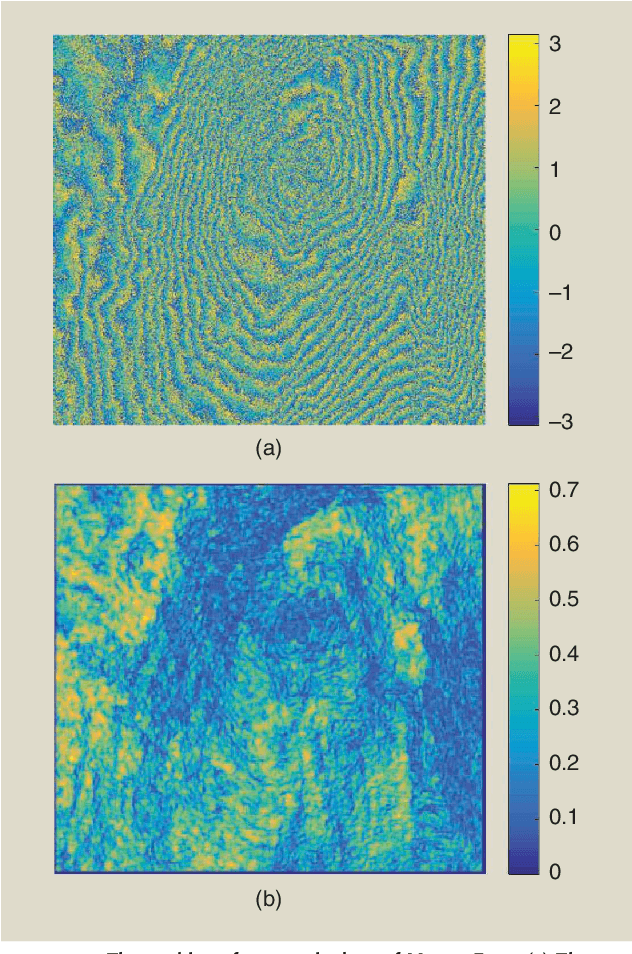
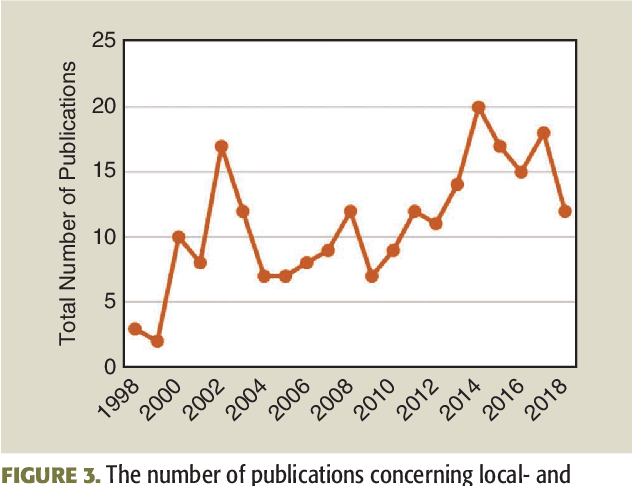
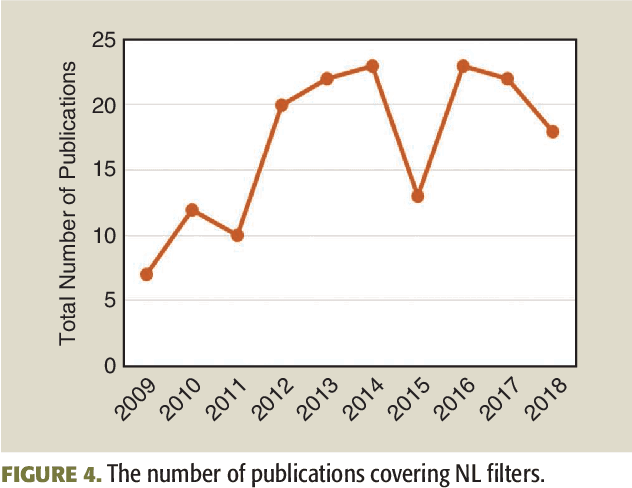
Nowadays, interferometric synthetic aperture radar (InSAR) has been a powerful tool in remote sensing by enhancing the information acquisition. During the InSAR processing, phase denoising of interferogram is a mandatory step for topography mapping and deformation monitoring. Over the last three decades, a large number of effective algorithms have been developed to do efforts on this topic. In this paper, we give a comprehensive overview of InSAR phase denoising methods, classifying the established and emerging algorithms into four main categories. The first two parts refer to the categories of traditional local filters and transformed-domain filters, respectively. The third part focuses on the category of nonlocal (NL) filters, considering their outstanding performances. Latter, some advanced methods based on new concept of signal processing are also introduced to show their potentials in this field. Moreover, several popular phase denoising methods are illustrated and compared by performing the numerical experiments using both simulated and measured data. The purpose of this paper is intended to provide necessary guideline and inspiration to related researchers by promoting the architecture development of InSAR signal processing.