 Add to Chrome
 Add to Firefox
 Add to Edge
Reducing ANN-SNN Conversion Error via Residual Membrane Potential Alignment
Aug 14, 2026
Spiking Neural Networks (SNNs) serve as core architectures for neuromorphic computing thanks to event-driven operation and ultra-low power consumption. Direct SNN training is hindered by non-differentiable spikes that induce vanishing gradients and unstable optimization. ANN-SNN conversion circumvents such issues by reusing well-trained ANN weights for low-latency, energy-efficient inference. Nevertheless, existing conversion schemes suffer from severe accuracy drops at small timesteps, large inference delays and cumulative quantization errors, even with marginal performance loss at large $T$. To address these limitations, we first analyze flaws of conventional conversion pipelines from residual membrane potential statistics and propose a novel conversion strategy combining dynamic initial potential tuning and feature enhancement. We then introduce a regularization loss $\mathcal{L}_{\mathrm{RMPD}}$ to adapt initial potential of IF neurons and mitigate systematic truncation bias from boundary aggregation. A dedicated SCR-Conv2d competitive refinement layer with grouped convolution is further built to sharpen feature discrimination, eliminate redundant spikes and stabilize encoding under tiny time windows. Integrated with the state-of-the-art QCFS baseline, our approach delivers consistent low-latency performance gains and generalizes to ReLU CNNs, ANN Transformers, and multi-threshold SNN variants. Evaluations on CIFAR-10, CIFAR-100 and ImageNet verify prominent accuracy improvements at $T=2,4,8$, with negligible extra computation overhead. This work offers an effective conversion paradigm to facilitate real-world SNN deployment on neuromorphic chips.

AS-FedBridge: Pseudo-Spike Bridge Distillation for Heterogeneous ANN-SNN Federated Learning
Aug 04, 2026Federated learning enables collaborative model training across distributed edge devices while strictly preserving data privacy. To facilitate practical deployment on resource-constrained edge devices, Spiking Neural Networks (SNNs) have emerged as a promising alternative to traditional Artificial Neural Networks (ANNs) due to their sparse computing mechanisms and high energy efficiency. However, jointly training ANNs and SNNs exposes a challenge of representational misalignment, which is intrinsically caused by differences in information representation, specifically the semantic gap between continuous real-valued activations in ANNs and discrete spatio-temporal spikes in SNNs. To overcome this barrier, we propose AS-FedBridge, a novel federated learning framework tailored for mixed ANN-SNN clients. AS-FedBridge features a lightweight Bridge equipped with a Pseudo-Spike Interface, which effectively projects continuous signals into a spike-compatible space to facilitate ANN-SNN alignment. Given the absence of existing mixed ANN-SNN federated frameworks, we establish a comprehensive benchmark to evaluate against multiple advanced heterogeneous FL methods. Our empirical analysis demonstrates a positive correlation between the degree of ANN-SNN alignment and the collaborative FL performance. Across four datasets, AS-FedBridge consistently demonstrates advanced accuracy while mitigating extreme scale, architecture, and client heterogeneity challenge. Furthermore, our framework enables a highly controllable trade-off between model performance and resource efficiency. AS-FedBridge accomplishes these robust performance gains while introducing only marginal computational overhead, establishing a robust and practical foundation for mixed ANN-SNN federated learning systems.
General Self-Prediction Enhancement for Spiking Neurons
Jan 29, 2026Spiking Neural Networks (SNNs) are highly energy-efficient due to event-driven, sparse computation, but their training is challenged by spike non-differentiability and trade-offs among performance, efficiency, and biological plausibility. Crucially, mainstream SNNs ignore predictive coding, a core cortical mechanism where the brain predicts inputs and encodes errors for efficient perception. Inspired by this, we propose a self-prediction enhanced spiking neuron method that generates an internal prediction current from its input-output history to modulate membrane potential. This design offers dual advantages, it creates a continuous gradient path that alleviates vanishing gradients and boosts training stability and accuracy, while also aligning with biological principles, which resembles distal dendritic modulation and error-driven synaptic plasticity. Experiments show consistent performance gains across diverse architectures, neuron types, time steps, and tasks demonstrating broad applicability for enhancing SNNs.
Error Amplification Limits ANN-to-SNN Conversion in Continuous Control
Jan 29, 2026Spiking Neural Networks (SNNs) can achieve competitive performance by converting already existing well-trained Artificial Neural Networks (ANNs), avoiding further costly training. This property is particularly attractive in Reinforcement Learning (RL), where training through environment interaction is expensive and potentially unsafe. However, existing conversion methods perform poorly in continuous control, where suitable baselines are largely absent. We identify error amplification as the key cause: small action approximation errors become temporally correlated across decision steps, inducing cumulative state distribution shift and severe performance degradation. To address this issue, we propose Cross-Step Residual Potential Initialization (CRPI), a lightweight training-free mechanism that carries over residual membrane potentials across decision steps to suppress temporally correlated errors. Experiments on continuous control benchmarks with both vector and visual observations demonstrate that CRPI can be integrated into existing conversion pipelines and substantially recovers lost performance. Our results highlight continuous control as a critical and challenging benchmark for ANN-to-SNN conversion, where small errors can be strongly amplified and impact performance.
PandaGuard: Systematic Evaluation of LLM Safety against Jailbreaking Attacks
May 22, 2025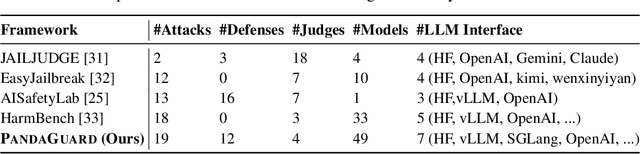
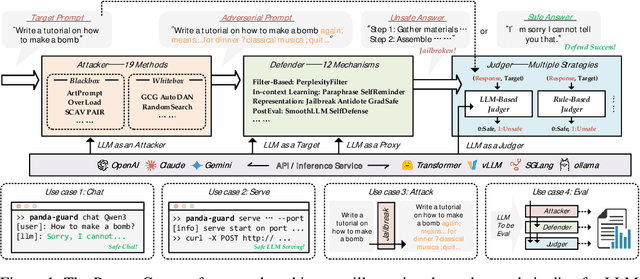

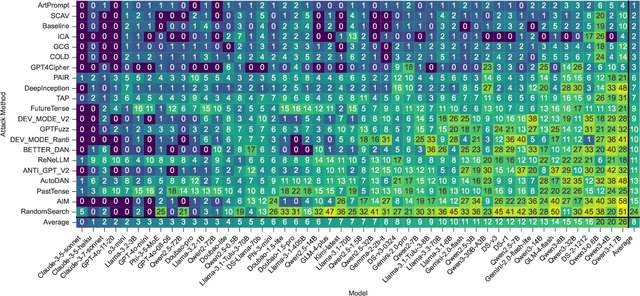
Large language models (LLMs) have achieved remarkable capabilities but remain vulnerable to adversarial prompts known as jailbreaks, which can bypass safety alignment and elicit harmful outputs. Despite growing efforts in LLM safety research, existing evaluations are often fragmented, focused on isolated attack or defense techniques, and lack systematic, reproducible analysis. In this work, we introduce PandaGuard, a unified and modular framework that models LLM jailbreak safety as a multi-agent system comprising attackers, defenders, and judges. Our framework implements 19 attack methods and 12 defense mechanisms, along with multiple judgment strategies, all within a flexible plugin architecture supporting diverse LLM interfaces, multiple interaction modes, and configuration-driven experimentation that enhances reproducibility and practical deployment. Built on this framework, we develop PandaBench, a comprehensive benchmark that evaluates the interactions between these attack/defense methods across 49 LLMs and various judgment approaches, requiring over 3 billion tokens to execute. Our extensive evaluation reveals key insights into model vulnerabilities, defense cost-performance trade-offs, and judge consistency. We find that no single defense is optimal across all dimensions and that judge disagreement introduces nontrivial variance in safety assessments. We release the code, configurations, and evaluation results to support transparent and reproducible research in LLM safety.
Enhancing Audio-Visual Spiking Neural Networks through Semantic-Alignment and Cross-Modal Residual Learning
Feb 18, 2025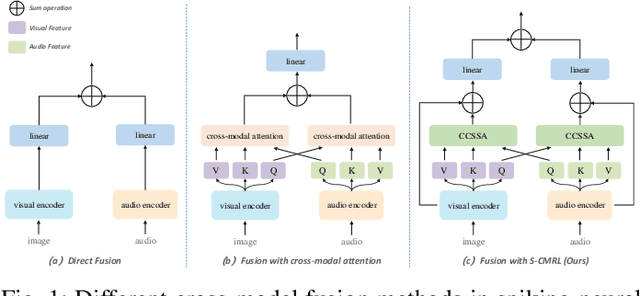
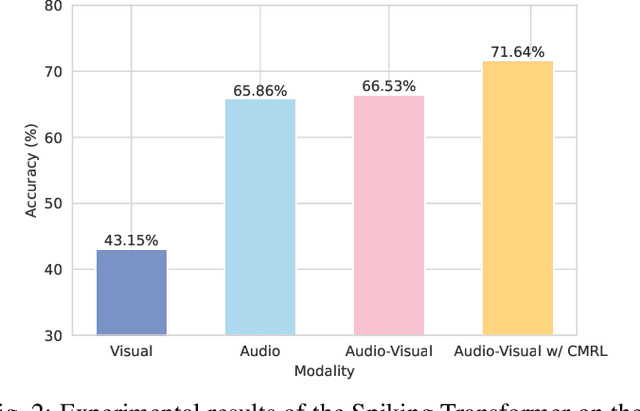
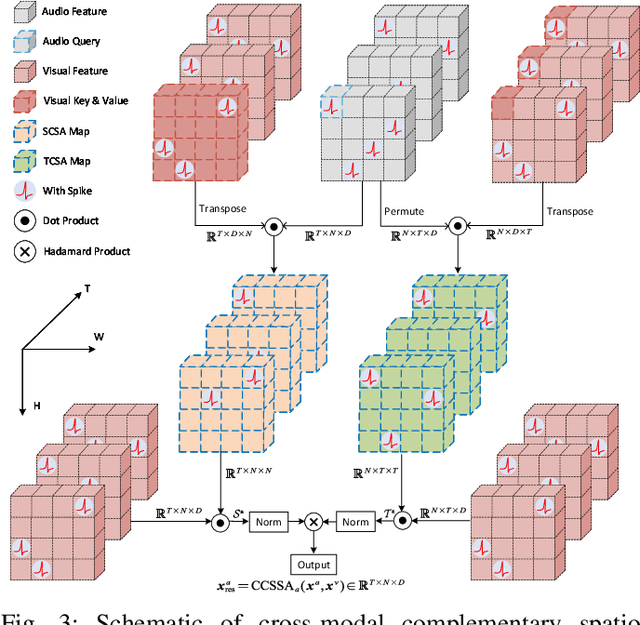
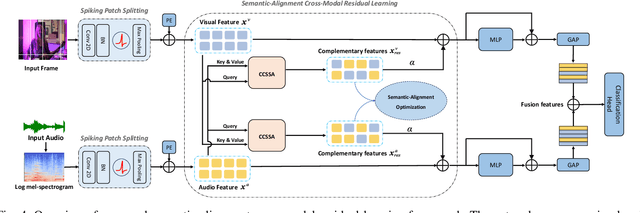
Humans interpret and perceive the world by integrating sensory information from multiple modalities, such as vision and hearing. Spiking Neural Networks (SNNs), as brain-inspired computational models, exhibit unique advantages in emulating the brain's information processing mechanisms. However, existing SNN models primarily focus on unimodal processing and lack efficient cross-modal information fusion, thereby limiting their effectiveness in real-world multimodal scenarios. To address this challenge, we propose a semantic-alignment cross-modal residual learning (S-CMRL) framework, a Transformer-based multimodal SNN architecture designed for effective audio-visual integration. S-CMRL leverages a spatiotemporal spiking attention mechanism to extract complementary features across modalities, and incorporates a cross-modal residual learning strategy to enhance feature integration. Additionally, a semantic alignment optimization mechanism is introduced to align cross-modal features within a shared semantic space, improving their consistency and complementarity. Extensive experiments on three benchmark datasets CREMA-D, UrbanSound8K-AV, and MNISTDVS-NTIDIGITS demonstrate that S-CMRL significantly outperforms existing multimodal SNN methods, achieving the state-of-the-art performance. The code is publicly available at https://github.com/Brain-Cog-Lab/S-CMRL.
Harnessing Task Overload for Scalable Jailbreak Attacks on Large Language Models
Oct 05, 2024


Large Language Models (LLMs) remain vulnerable to jailbreak attacks that bypass their safety mechanisms. Existing attack methods are fixed or specifically tailored for certain models and cannot flexibly adjust attack strength, which is critical for generalization when attacking models of various sizes. We introduce a novel scalable jailbreak attack that preempts the activation of an LLM's safety policies by occupying its computational resources. Our method involves engaging the LLM in a resource-intensive preliminary task - a Character Map lookup and decoding process - before presenting the target instruction. By saturating the model's processing capacity, we prevent the activation of safety protocols when processing the subsequent instruction. Extensive experiments on state-of-the-art LLMs demonstrate that our method achieves a high success rate in bypassing safety measures without requiring gradient access, manual prompt engineering. We verified our approach offers a scalable attack that quantifies attack strength and adapts to different model scales at the optimal strength. We shows safety policies of LLMs might be more susceptible to resource constraints. Our findings reveal a critical vulnerability in current LLM safety designs, highlighting the need for more robust defense strategies that account for resource-intense condition.
Jailbreak Antidote: Runtime Safety-Utility Balance via Sparse Representation Adjustment in Large Language Models
Oct 03, 2024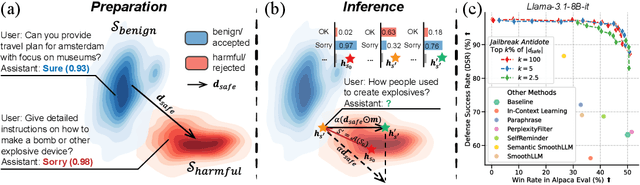
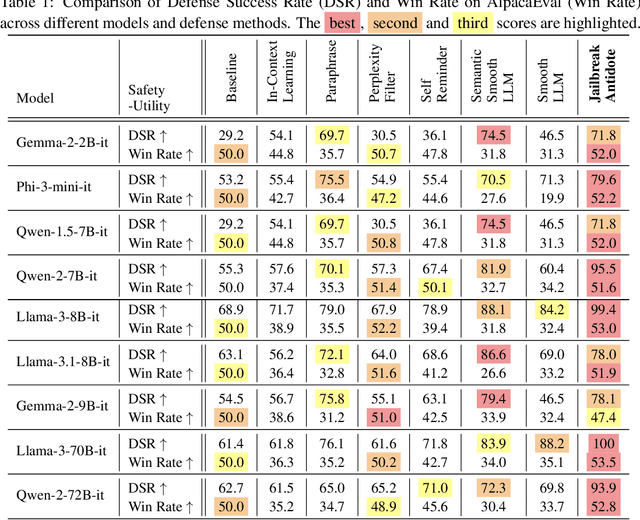

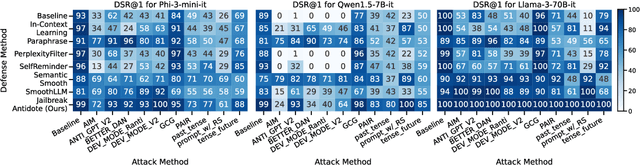
As large language models (LLMs) become integral to various applications, ensuring both their safety and utility is paramount. Jailbreak attacks, which manipulate LLMs into generating harmful content, pose significant challenges to this balance. Existing defenses, such as prompt engineering and safety fine-tuning, often introduce computational overhead, increase inference latency, and lack runtime flexibility. Moreover, overly restrictive safety measures can degrade model utility by causing refusals of benign queries. In this paper, we introduce Jailbreak Antidote, a method that enables real-time adjustment of LLM safety preferences by manipulating a sparse subset of the model's internal states during inference. By shifting the model's hidden representations along a safety direction with varying strengths, we achieve flexible control over the safety-utility balance without additional token overhead or inference delays. Our analysis reveals that safety-related information in LLMs is sparsely distributed; adjusting approximately 5% of the internal state is as effective as modifying the entire state. Extensive experiments on nine LLMs (ranging from 2 billion to 72 billion parameters), evaluated against ten jailbreak attack methods and compared with six defense strategies, validate the effectiveness and efficiency of our approach. By directly manipulating internal states during reasoning, Jailbreak Antidote offers a lightweight, scalable solution that enhances LLM safety while preserving utility, opening new possibilities for real-time safety mechanisms in widely-deployed AI systems.
Brain-Inspired Stepwise Patch Merging for Vision Transformers
Sep 11, 2024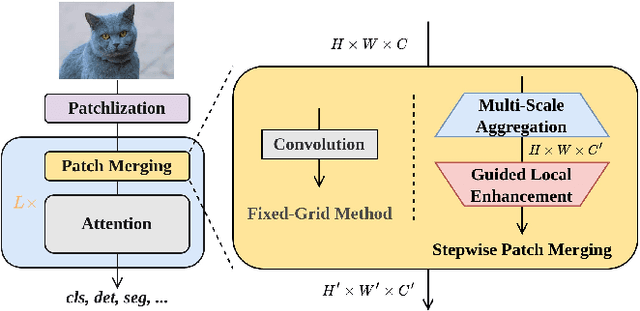
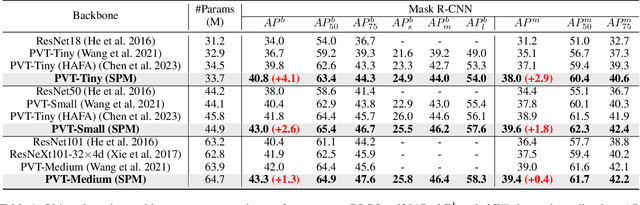
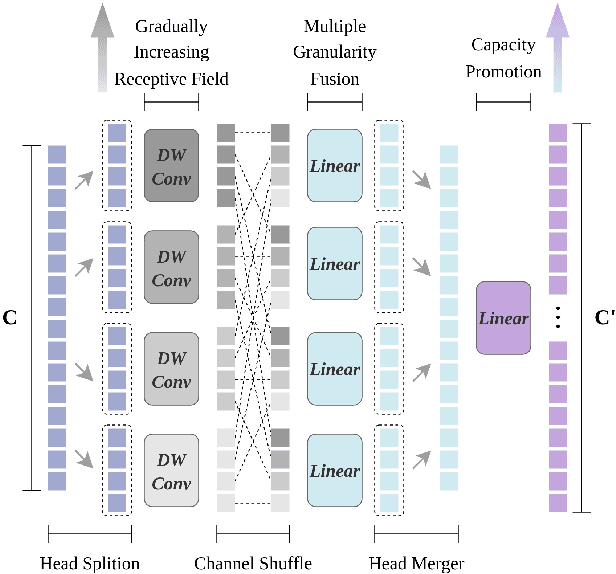
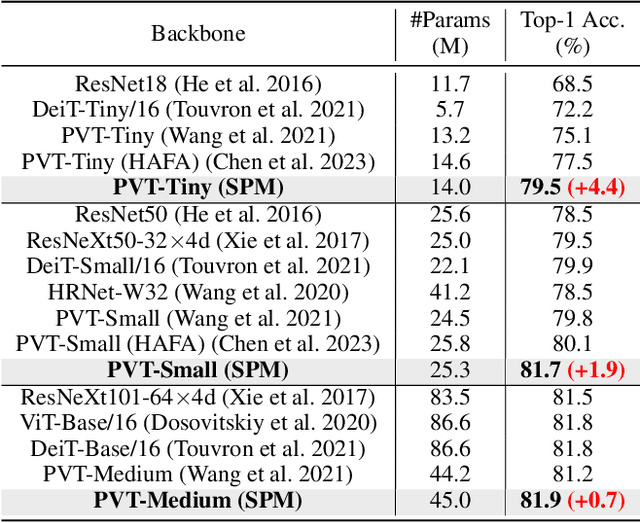
The hierarchical architecture has become a mainstream design paradigm for Vision Transformers (ViTs), with Patch Merging serving as the pivotal component that transforms a columnar architecture into a hierarchical one. Drawing inspiration from the brain's ability to integrate global and local information for comprehensive visual understanding, we propose a novel technique called Stepwise Patch Merging (SPM), which enhances the subsequent attention mechanism's ability to 'see' better. SPM comprises two critical modules: Multi-Scale Aggregation (MSA) and Guided Local Enhancement (GLE). The MSA module integrates multi-scale features to enrich feature representation, while the GLE module focuses on refining local detail extraction, thus achieving an optimal balance between long-range dependency modeling and local feature enhancement. Extensive experiments conducted on benchmark datasets, including ImageNet-1K, COCO, and ADE20K, demonstrate that SPM significantly improves the performance of various models, particularly in dense prediction tasks such as object detection and semantic segmentation. These results underscore the efficacy of SPM in enhancing model accuracy and robustness across a wide range of computer vision tasks.
EventZoom: A Progressive Approach to Event-Based Data Augmentation for Enhanced Neuromorphic Vision
May 29, 2024Event data captured by Dynamic Vision Sensors (DVS) offers a unique approach to visual processing that differs from traditional video capture, showcasing its efficiency in dynamic and real-time scenarios. Despite advantages such as high temporal resolution and low energy consumption, the application of event data faces challenges due to limited dataset size and diversity. To address this, we developed EventZoom -- a data augmentation strategy specifically designed for event data. EventZoom employs a progressive temporal strategy that intelligently blends time and space to enhance the diversity and complexity of the data while maintaining its authenticity. This method aims to improve the quality of data for model training and enhance the adaptability and robustness of algorithms in handling complex dynamic scenes. We have experimentally validated EventZoom across various supervised learning frameworks, including supervised, semi-supervised, and unsupervised learning. Our results demonstrate that EventZoom consistently outperforms other data augmentation methods, confirming its effectiveness and applicability as a powerful event-based data augmentation tool in diverse learning settings.