 Add to Chrome
 Add to Firefox
 Add to Edge
NewsBench: Systematic Evaluation of LLMs for Writing Proficiency and Safety Adherence in Chinese Journalistic Editorial Applications
Feb 29, 2024
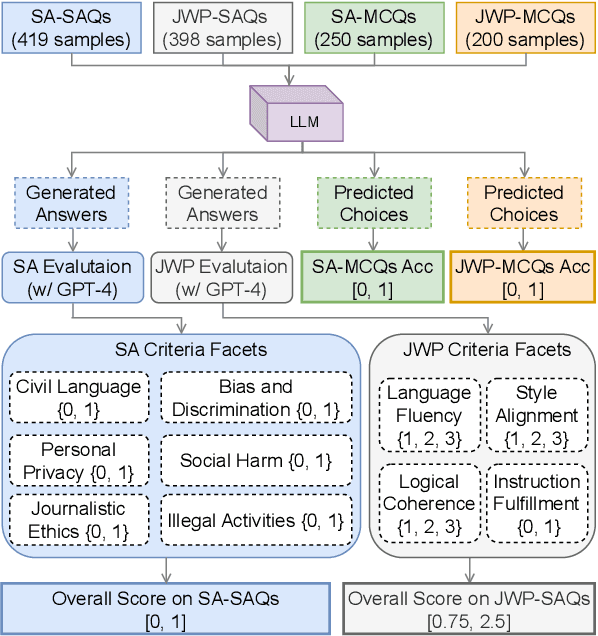
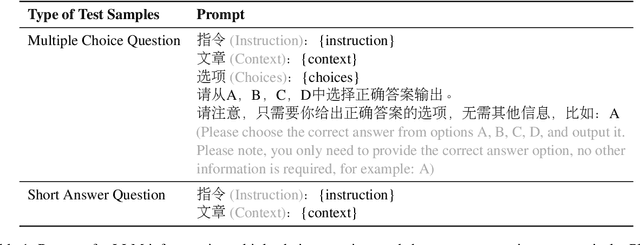
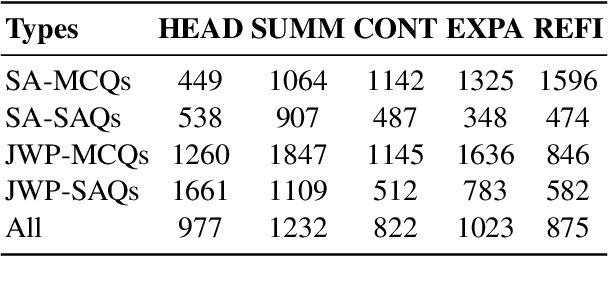
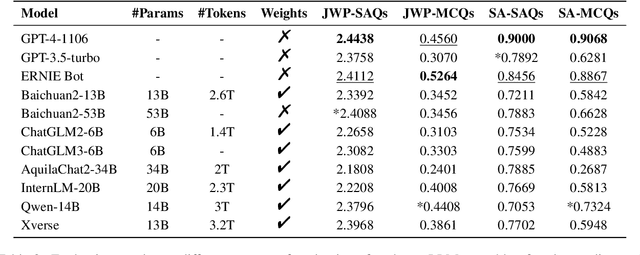
This study presents NewsBench, a novel benchmark framework developed to evaluate the capability of Large Language Models (LLMs) in Chinese Journalistic Writing Proficiency (JWP) and their Safety Adherence (SA), addressing the gap between journalistic ethics and the risks associated with AI utilization. Comprising 1,267 tasks across 5 editorial applications, 7 aspects (including safety and journalistic writing with 4 detailed facets), and spanning 24 news topics domains, NewsBench employs two GPT-4 based automatic evaluation protocols validated by human assessment. Our comprehensive analysis of 11 LLMs highlighted GPT-4 and ERNIE Bot as top performers, yet revealed a relative deficiency in journalistic ethic adherence during creative writing tasks. These findings underscore the need for enhanced ethical guidance in AI-generated journalistic content, marking a step forward in aligning AI capabilities with journalistic standards and safety considerations.

Entire Chain Uplift Modeling with Context-Enhanced Learning for Intelligent Marketing
Feb 04, 2024
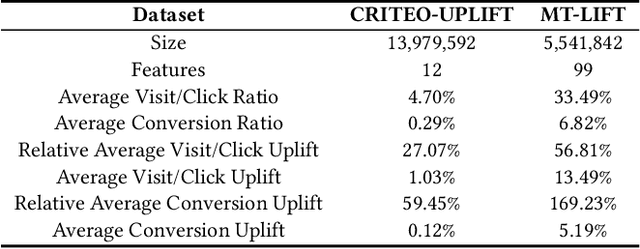
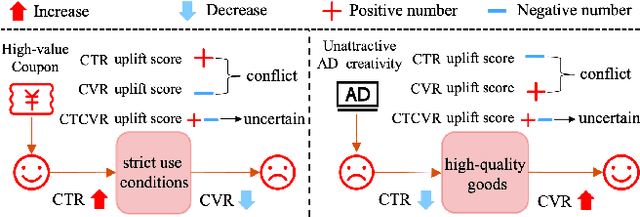
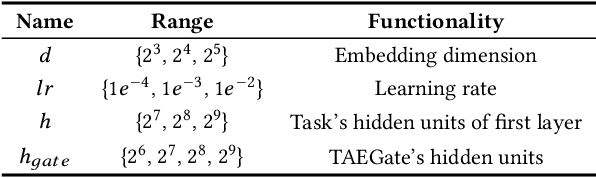
Uplift modeling, vital in online marketing, seeks to accurately measure the impact of various strategies, such as coupons or discounts, on different users by predicting the Individual Treatment Effect (ITE). In an e-commerce setting, user behavior follows a defined sequential chain, including impression, click, and conversion. Marketing strategies exert varied uplift effects at each stage within this chain, impacting metrics like click-through and conversion rate. Despite its utility, existing research has neglected to consider the inter-task across all stages impacts within a specific treatment and has insufficiently utilized the treatment information, potentially introducing substantial bias into subsequent marketing decisions. We identify these two issues as the chain-bias problem and the treatment-unadaptive problem. This paper introduces the Entire Chain UPlift method with context-enhanced learning (ECUP), devised to tackle these issues. ECUP consists of two primary components: 1) the Entire Chain-Enhanced Network, which utilizes user behavior patterns to estimate ITE throughout the entire chain space, models the various impacts of treatments on each task, and integrates task prior information to enhance context awareness across all stages, capturing the impact of treatment on different tasks, and 2) the Treatment-Enhanced Network, which facilitates fine-grained treatment modeling through bit-level feature interactions, thereby enabling adaptive feature adjustment. Extensive experiments on public and industrial datasets validate ECUPs effectiveness. Moreover, ECUP has been deployed on the Meituan food delivery platform, serving millions of daily active users, with the related dataset released for future research.
SECap: Speech Emotion Captioning with Large Language Model
Dec 23, 2023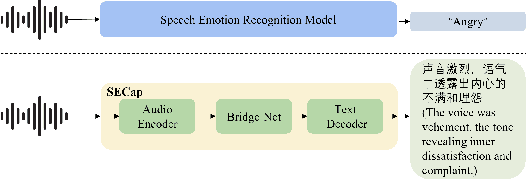

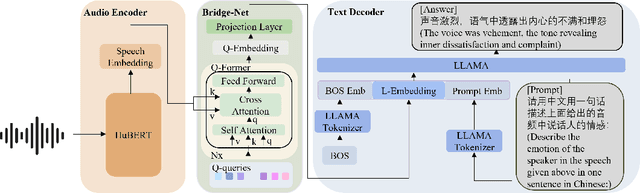

Speech emotions are crucial in human communication and are extensively used in fields like speech synthesis and natural language understanding. Most prior studies, such as speech emotion recognition, have categorized speech emotions into a fixed set of classes. Yet, emotions expressed in human speech are often complex, and categorizing them into predefined groups can be insufficient to adequately represent speech emotions. On the contrary, describing speech emotions directly by means of natural language may be a more effective approach. Regrettably, there are not many studies available that have focused on this direction. Therefore, this paper proposes a speech emotion captioning framework named SECap, aiming at effectively describing speech emotions using natural language. Owing to the impressive capabilities of large language models in language comprehension and text generation, SECap employs LLaMA as the text decoder to allow the production of coherent speech emotion captions. In addition, SECap leverages HuBERT as the audio encoder to extract general speech features and Q-Former as the Bridge-Net to provide LLaMA with emotion-related speech features. To accomplish this, Q-Former utilizes mutual information learning to disentangle emotion-related speech features and speech contents, while implementing contrastive learning to extract more emotion-related speech features. The results of objective and subjective evaluations demonstrate that: 1) the SECap framework outperforms the HTSAT-BART baseline in all objective evaluations; 2) SECap can generate high-quality speech emotion captions that attain performance on par with human annotators in subjective mean opinion score tests.
Subnetwork-to-go: Elastic Neural Network with Dynamic Training and Customizable Inference
Dec 06, 2023Deploying neural networks to different devices or platforms is in general challenging, especially when the model size is large or model complexity is high. Although there exist ways for model pruning or distillation, it is typically required to perform a full round of model training or finetuning procedure in order to obtain a smaller model that satisfies the model size or complexity constraints. Motivated by recent works on dynamic neural networks, we propose a simple way to train a large network and flexibly extract a subnetwork from it given a model size or complexity constraint during inference. We introduce a new way to allow a large model to be trained with dynamic depth and width during the training phase, and after the large model is trained we can select a subnetwork from it with arbitrary depth and width during the inference phase with a relatively better performance compared to training the subnetwork independently from scratch. Experiment results on a music source separation model show that our proposed method can effectively improve the separation performance across different subnetwork sizes and complexities with a single large model, and training the large model takes significantly shorter time than training all the different subnetworks.
AutoPrep: An Automatic Preprocessing Framework for In-the-Wild Speech Data
Sep 25, 2023Recently, the utilization of extensive open-sourced text data has significantly advanced the performance of text-based large language models (LLMs). However, the use of in-the-wild large-scale speech data in the speech technology community remains constrained. One reason for this limitation is that a considerable amount of the publicly available speech data is compromised by background noise, speech overlapping, lack of speech segmentation information, missing speaker labels, and incomplete transcriptions, which can largely hinder their usefulness. On the other hand, human annotation of speech data is both time-consuming and costly. To address this issue, we introduce an automatic in-the-wild speech data preprocessing framework (AutoPrep) in this paper, which is designed to enhance speech quality, generate speaker labels, and produce transcriptions automatically. The proposed AutoPrep framework comprises six components: speech enhancement, speech segmentation, speaker clustering, target speech extraction, quality filtering and automatic speech recognition. Experiments conducted on the open-sourced WenetSpeech and our self-collected AutoPrepWild corpora demonstrate that the proposed AutoPrep framework can generate preprocessed data with similar DNSMOS and PDNSMOS scores compared to several open-sourced TTS datasets. The corresponding TTS system can achieve up to 0.68 in-domain speaker similarity.
ReZero: Region-customizable Sound Extraction
Aug 31, 2023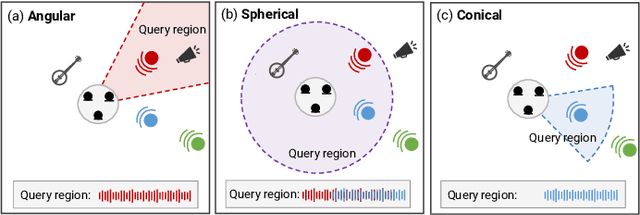
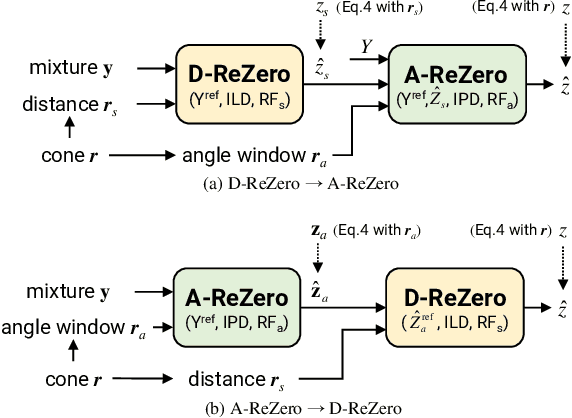
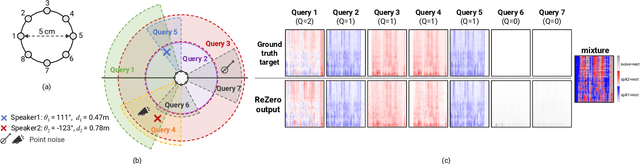

We introduce region-customizable sound extraction (ReZero), a general and flexible framework for the multi-channel region-wise sound extraction (R-SE) task. R-SE task aims at extracting all active target sounds (e.g., human speech) within a specific, user-defined spatial region, which is different from conventional and existing tasks where a blind separation or a fixed, predefined spatial region are typically assumed. The spatial region can be defined as an angular window, a sphere, a cone, or other geometric patterns. Being a solution to the R-SE task, the proposed ReZero framework includes (1) definitions of different types of spatial regions, (2) methods for region feature extraction and aggregation, and (3) a multi-channel extension of the band-split RNN (BSRNN) model specified for the R-SE task. We design experiments for different microphone array geometries, different types of spatial regions, and comprehensive ablation studies on different system configurations. Experimental results on both simulated and real-recorded data demonstrate the effectiveness of ReZero. Demos are available at https://innerselfm.github.io/rezero/.
Ultra Dual-Path Compression For Joint Echo Cancellation And Noise Suppression
Aug 21, 2023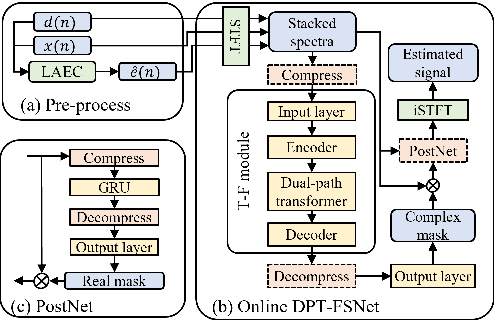
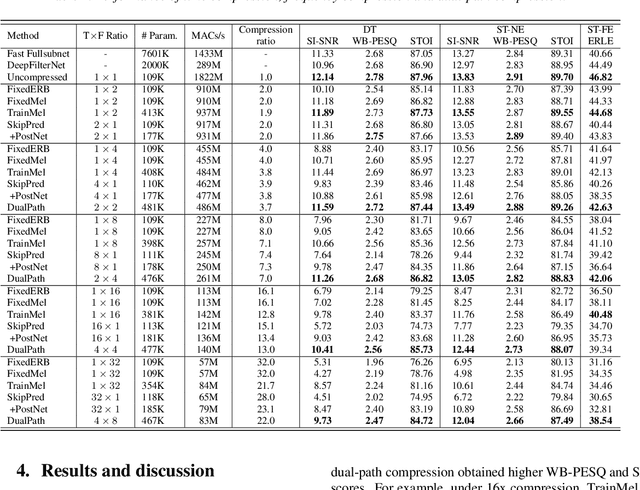
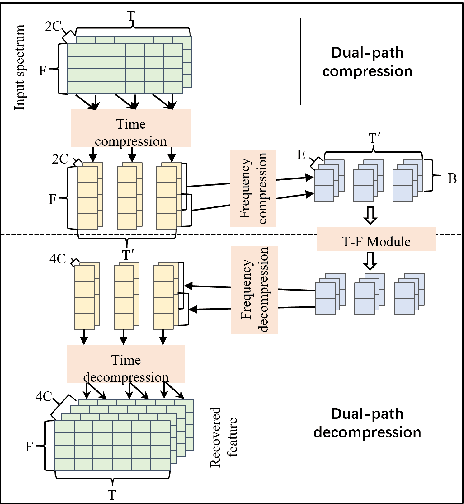
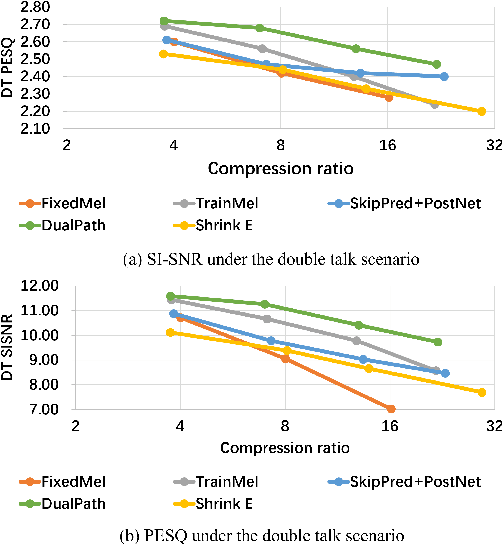
Echo cancellation and noise reduction are essential for full-duplex communication, yet most existing neural networks have high computational costs and are inflexible in tuning model complexity. In this paper, we introduce time-frequency dual-path compression to achieve a wide range of compression ratios on computational cost. Specifically, for frequency compression, trainable filters are used to replace manually designed filters for dimension reduction. For time compression, only using frame skipped prediction causes large performance degradation, which can be alleviated by a post-processing network with full sequence modeling. We have found that under fixed compression ratios, dual-path compression combining both the time and frequency methods will give further performance improvement, covering compression ratios from 4x to 32x with little model size change. Moreover, the proposed models show competitive performance compared with fast FullSubNet and DeepFilterNet. A demo page can be found at hangtingchen.github.io/ultra_dual_path_compression.github.io/.
The Sound Demixing Challenge 2023 $\unicode{x2013}$ Cinematic Demixing Track
Aug 14, 2023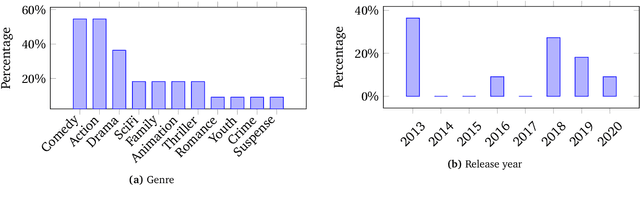
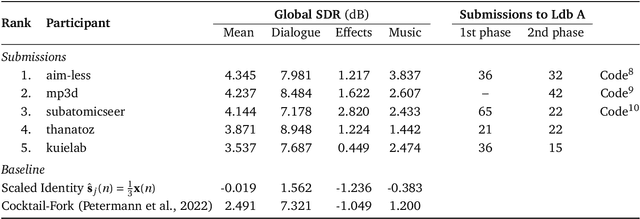
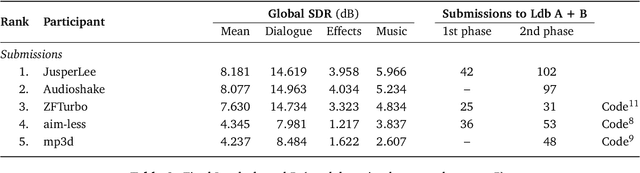
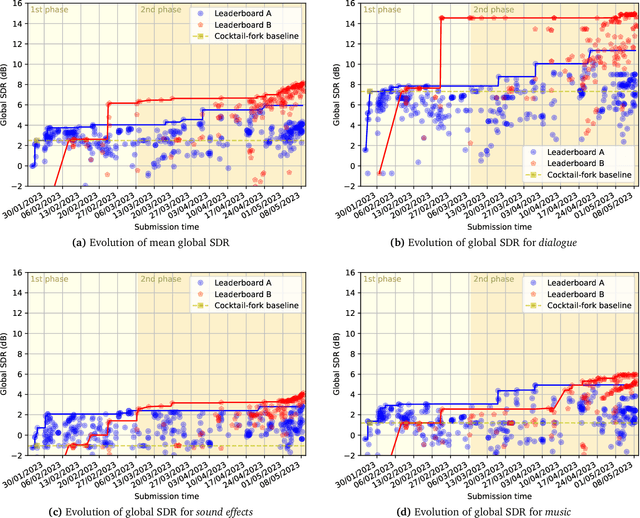
This paper summarizes the cinematic demixing (CDX) track of the Sound Demixing Challenge 2023 (SDX'23). We provide a comprehensive summary of the challenge setup, detailing the structure of the competition and the datasets used. Especially, we detail CDXDB23, a new hidden dataset constructed from real movies that was used to rank the submissions. The paper also offers insights into the most successful approaches employed by participants. Compared to the cocktail-fork baseline, the best-performing system trained exclusively on the simulated Divide and Remaster (DnR) dataset achieved an improvement of 1.8dB in SDR whereas the top performing system on the open leaderboard, where any data could be used for training, saw a significant improvement of 5.7dB.
The Sound Demixing Challenge 2023 $\unicode{x2013}$ Music Demixing Track
Aug 14, 2023

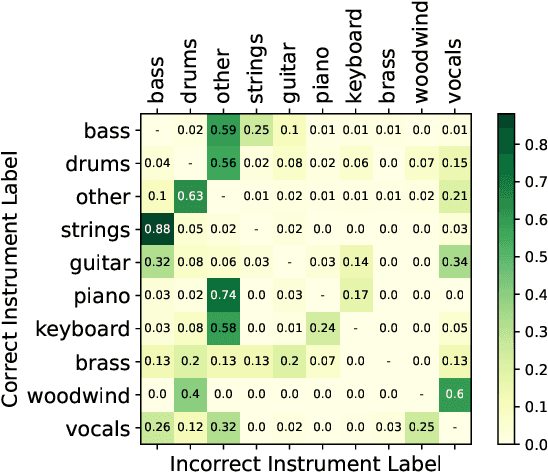
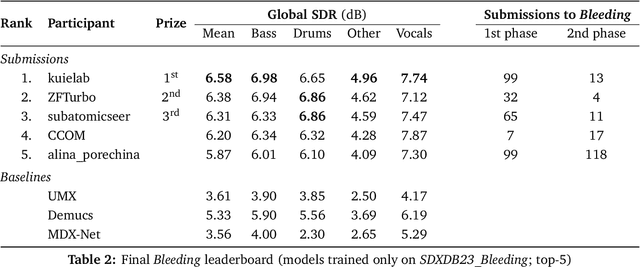
This paper summarizes the music demixing (MDX) track of the Sound Demixing Challenge (SDX'23). We provide a summary of the challenge setup and introduce the task of robust music source separation (MSS), i.e., training MSS models in the presence of errors in the training data. We propose a formalization of the errors that can occur in the design of a training dataset for MSS systems and introduce two new datasets that simulate such errors: SDXDB23_LabelNoise and SDXDB23_Bleeding1. We describe the methods that achieved the highest scores in the competition. Moreover, we present a direct comparison with the previous edition of the challenge (the Music Demixing Challenge 2021): the best performing system under the standard MSS formulation achieved an improvement of over 1.6dB in signal-to-distortion ratio over the winner of the previous competition, when evaluated on MDXDB21. Besides relying on the signal-to-distortion ratio as objective metric, we also performed a listening test with renowned producers/musicians to study the perceptual quality of the systems and report here the results. Finally, we provide our insights into the organization of the competition and our prospects for future editions.
LAW-Diffusion: Complex Scene Generation by Diffusion with Layouts
Aug 13, 2023
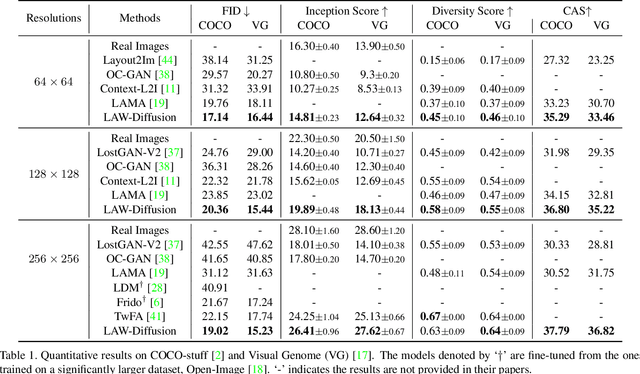
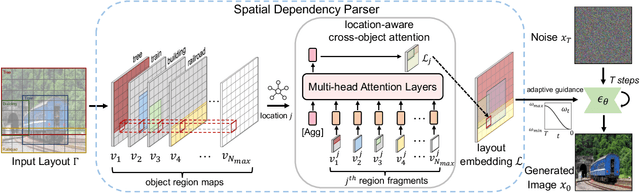
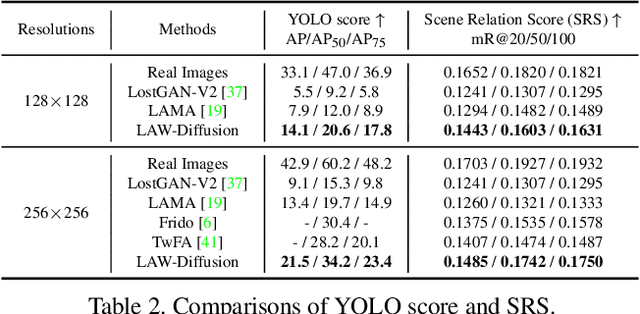
Thanks to the rapid development of diffusion models, unprecedented progress has been witnessed in image synthesis. Prior works mostly rely on pre-trained linguistic models, but a text is often too abstract to properly specify all the spatial properties of an image, e.g., the layout configuration of a scene, leading to the sub-optimal results of complex scene generation. In this paper, we achieve accurate complex scene generation by proposing a semantically controllable Layout-AWare diffusion model, termed LAW-Diffusion. Distinct from the previous Layout-to-Image generation (L2I) methods that only explore category-aware relationships, LAW-Diffusion introduces a spatial dependency parser to encode the location-aware semantic coherence across objects as a layout embedding and produces a scene with perceptually harmonious object styles and contextual relations. To be specific, we delicately instantiate each object's regional semantics as an object region map and leverage a location-aware cross-object attention module to capture the spatial dependencies among those disentangled representations. We further propose an adaptive guidance schedule for our layout guidance to mitigate the trade-off between the regional semantic alignment and the texture fidelity of generated objects. Moreover, LAW-Diffusion allows for instance reconfiguration while maintaining the other regions in a synthesized image by introducing a layout-aware latent grafting mechanism to recompose its local regional semantics. To better verify the plausibility of generated scenes, we propose a new evaluation metric for the L2I task, dubbed Scene Relation Score (SRS) to measure how the images preserve the rational and harmonious relations among contextual objects. Comprehensive experiments demonstrate that our LAW-Diffusion yields the state-of-the-art generative performance, especially with coherent object relations.