 Add to Chrome
 Add to Firefox
 Add to Edge
Fusion Matters: Learning Fusion in Deep Click-through Rate Prediction Models
Nov 24, 2024
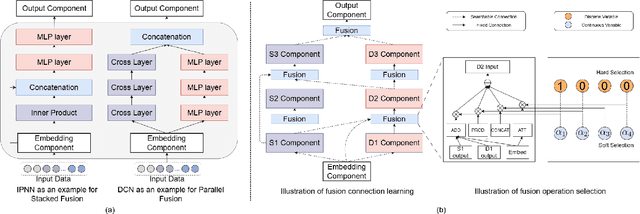
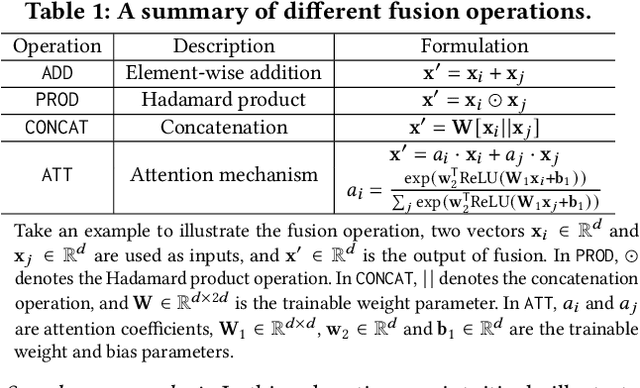
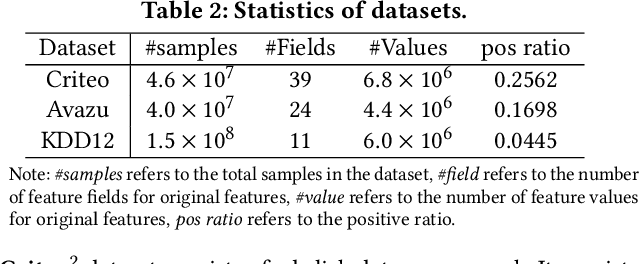
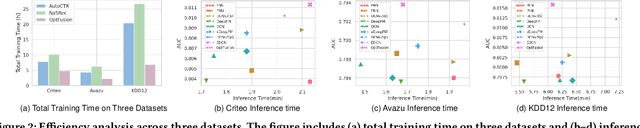
The evolution of previous Click-Through Rate (CTR) models has mainly been driven by proposing complex components, whether shallow or deep, that are adept at modeling feature interactions. However, there has been less focus on improving fusion design. Instead, two naive solutions, stacked and parallel fusion, are commonly used. Both solutions rely on pre-determined fusion connections and fixed fusion operations. It has been repetitively observed that changes in fusion design may result in different performances, highlighting the critical role that fusion plays in CTR models. While there have been attempts to refine these basic fusion strategies, these efforts have often been constrained to specific settings or dependent on specific components. Neural architecture search has also been introduced to partially deal with fusion design, but it comes with limitations. The complexity of the search space can lead to inefficient and ineffective results. To bridge this gap, we introduce OptFusion, a method that automates the learning of fusion, encompassing both the connection learning and the operation selection. We have proposed a one-shot learning algorithm tackling these tasks concurrently. Our experiments are conducted over three large-scale datasets. Extensive experiments prove both the effectiveness and efficiency of OptFusion in improving CTR model performance. Our code implementation is available here\url{https://github.com/kexin-kxzhang/OptFusion}.

Modeling Multivariable High-resolution 3D Urban Microclimate Using Localized Fourier Neural Operator
Nov 18, 2024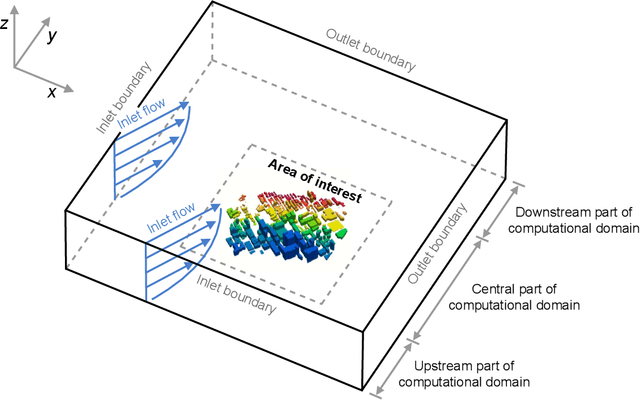

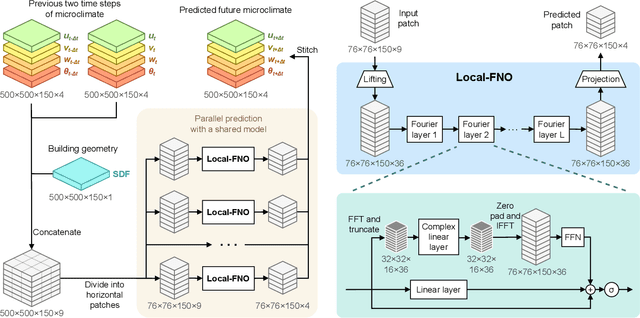

Accurate urban microclimate analysis with wind velocity and temperature is vital for energy-efficient urban planning, supporting carbon reduction, enhancing public health and comfort, and advancing the low-altitude economy. However, traditional computational fluid dynamics (CFD) simulations that couple velocity and temperature are computationally expensive. Recent machine learning advancements offer promising alternatives for accelerating urban microclimate simulations. The Fourier neural operator (FNO) has shown efficiency and accuracy in predicting single-variable velocity magnitudes in urban wind fields. Yet, for multivariable high-resolution 3D urban microclimate prediction, FNO faces three key limitations: blurry output quality, high GPU memory demand, and substantial data requirements. To address these issues, we propose a novel localized Fourier neural operator (Local-FNO) model that employs local training, geometry encoding, and patch overlapping. Local-FNO provides accurate predictions for rapidly changing turbulence in urban microclimate over 60 seconds, four times the average turbulence integral time scale, with an average error of 0.35 m/s in velocity and 0.30 {\deg}C in temperature. It also accurately captures turbulent heat flux represented by the velocity-temperature correlation. In a 2 km by 2 km domain, Local-FNO resolves turbulence patterns down to a 10 m resolution. It provides high-resolution predictions with 150 million feature dimensions on a single 32 GB GPU at nearly 50 times the speed of a CFD solver. Compared to FNO, Local-FNO achieves a 23.9% reduction in prediction error and a 47.3% improvement in turbulent fluctuation correlation.
Towards Edge General Intelligence via Large Language Models: Opportunities and Challenges
Oct 16, 2024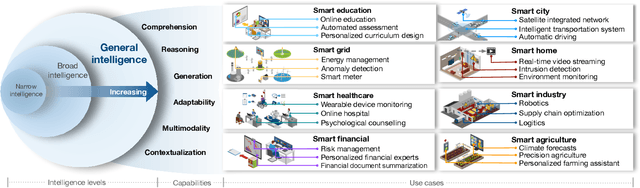


Edge Intelligence (EI) has been instrumental in delivering real-time, localized services by leveraging the computational capabilities of edge networks. The integration of Large Language Models (LLMs) empowers EI to evolve into the next stage: Edge General Intelligence (EGI), enabling more adaptive and versatile applications that require advanced understanding and reasoning capabilities. However, systematic exploration in this area remains insufficient. This survey delineates the distinctions between EGI and traditional EI, categorizing LLM-empowered EGI into three conceptual systems: centralized, hybrid, and decentralized. For each system, we detail the framework designs and review existing implementations. Furthermore, we evaluate the performance and throughput of various Small Language Models (SLMs) that are more suitable for development on edge devices. This survey provides researchers with a comprehensive vision of EGI, offering insights into its vast potential and establishing a foundation for future advancements in this rapidly evolving field.
Hybrid LLM-DDQN based Joint Optimization of V2I Communication and Autonomous Driving
Oct 11, 2024Large language models (LLMs) have received considerable interest recently due to their outstanding reasoning and comprehension capabilities. This work explores applying LLMs to vehicular networks, aiming to jointly optimize vehicle-to-infrastructure (V2I) communications and autonomous driving (AD) policies. We deploy LLMs for AD decision-making to maximize traffic flow and avoid collisions for road safety, and a double deep Q-learning algorithm (DDQN) is used for V2I optimization to maximize the received data rate and reduce frequent handovers. In particular, for LLM-enabled AD, we employ the Euclidean distance to identify previously explored AD experiences, and then LLMs can learn from past good and bad decisions for further improvement. Then, LLM-based AD decisions will become part of states in V2I problems, and DDQN will optimize the V2I decisions accordingly. After that, the AD and V2I decisions are iteratively optimized until convergence. Such an iterative optimization approach can better explore the interactions between LLMs and conventional reinforcement learning techniques, revealing the potential of using LLMs for network optimization and management. Finally, the simulations demonstrate that our proposed hybrid LLM-DDQN approach outperforms the conventional DDQN algorithm, showing faster convergence and higher average rewards.
Robust Guided Diffusion for Offline Black-Box Optimization
Oct 01, 2024
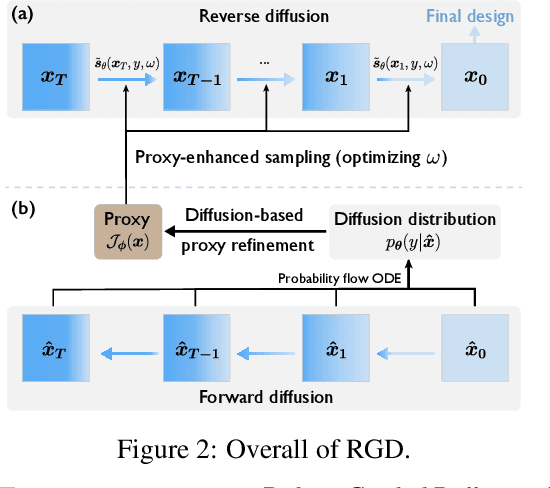


Offline black-box optimization aims to maximize a black-box function using an offline dataset of designs and their measured properties. Two main approaches have emerged: the forward approach, which learns a mapping from input to its value, thereby acting as a proxy to guide optimization, and the inverse approach, which learns a mapping from value to input for conditional generation. (a) Although proxy-free~(classifier-free) diffusion shows promise in robustly modeling the inverse mapping, it lacks explicit guidance from proxies, essential for generating high-performance samples beyond the training distribution. Therefore, we propose \textit{proxy-enhanced sampling} which utilizes the explicit guidance from a trained proxy to bolster proxy-free diffusion with enhanced sampling control. (b) Yet, the trained proxy is susceptible to out-of-distribution issues. To address this, we devise the module \textit{diffusion-based proxy refinement}, which seamlessly integrates insights from proxy-free diffusion back into the proxy for refinement. To sum up, we propose \textit{\textbf{R}obust \textbf{G}uided \textbf{D}iffusion for Offline Black-box Optimization}~(\textbf{RGD}), combining the advantages of proxy~(explicit guidance) and proxy-free diffusion~(robustness) for effective conditional generation. RGD achieves state-of-the-art results on various design-bench tasks, underscoring its efficacy. Our code is at https://anonymous.4open.science/r/RGD-27A5/README.md.
Mixed-Precision Embeddings for Large-Scale Recommendation Models
Sep 30, 2024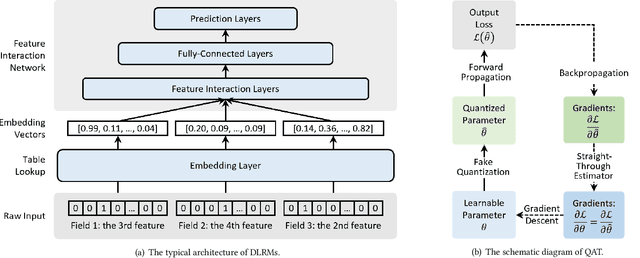
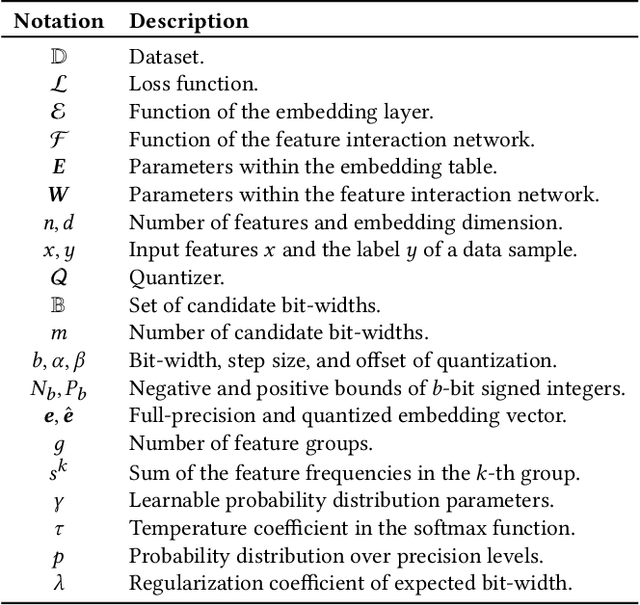
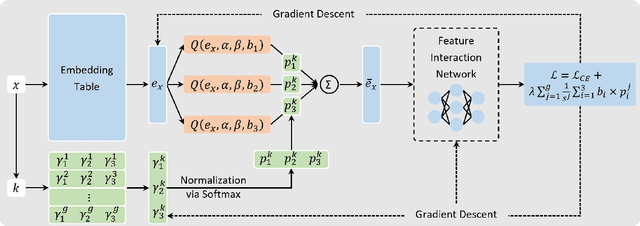

Embedding techniques have become essential components of large databases in the deep learning era. By encoding discrete entities, such as words, items, or graph nodes, into continuous vector spaces, embeddings facilitate more efficient storage, retrieval, and processing in large databases. Especially in the domain of recommender systems, millions of categorical features are encoded as unique embedding vectors, which facilitates the modeling of similarities and interactions among features. However, numerous embedding vectors can result in significant storage overhead. In this paper, we aim to compress the embedding table through quantization techniques. Given that features vary in importance levels, we seek to identify an appropriate precision for each feature to balance model accuracy and memory usage. To this end, we propose a novel embedding compression method, termed Mixed-Precision Embeddings (MPE). Specifically, to reduce the size of the search space, we first group features by frequency and then search precision for each feature group. MPE further learns the probability distribution over precision levels for each feature group, which can be used to identify the most suitable precision with a specially designed sampling strategy. Extensive experiments on three public datasets demonstrate that MPE significantly outperforms existing embedding compression methods. Remarkably, MPE achieves about 200x compression on the Criteo dataset without comprising the prediction accuracy.
Transtreaming: Adaptive Delay-aware Transformer for Real-time Streaming Perception
Sep 10, 2024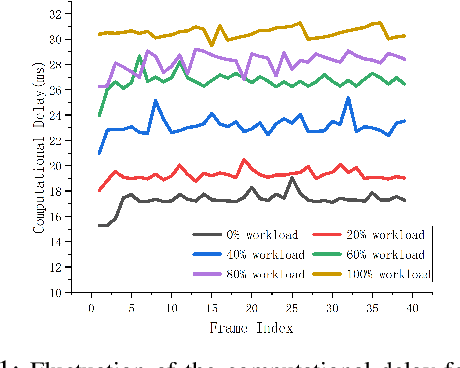


Real-time object detection is critical for the decision-making process for many real-world applications, such as collision avoidance and path planning in autonomous driving. This work presents an innovative real-time streaming perception method, Transtreaming, which addresses the challenge of real-time object detection with dynamic computational delay. The core innovation of Transtreaming lies in its adaptive delay-aware transformer, which can concurrently predict multiple future frames and select the output that best matches the real-world present time, compensating for any system-induced computation delays. The proposed model outperforms the existing state-of-the-art methods, even in single-frame detection scenarios, by leveraging a transformer-based methodology. It demonstrates robust performance across a range of devices, from powerful V100 to modest 2080Ti, achieving the highest level of perceptual accuracy on all platforms. Unlike most state-of-the-art methods that struggle to complete computation within a single frame on less powerful devices, Transtreaming meets the stringent real-time processing requirements on all kinds of devices. The experimental results emphasize the system's adaptability and its potential to significantly improve the safety and reliability for many real-world systems, such as autonomous driving.
Decoding SEC Actions: Enforcement Trends through Analyzing Blockchain litigation using LLM-based Thematic Factor Mapping
Aug 21, 2024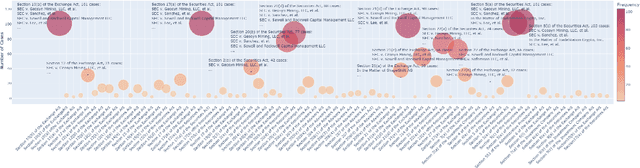

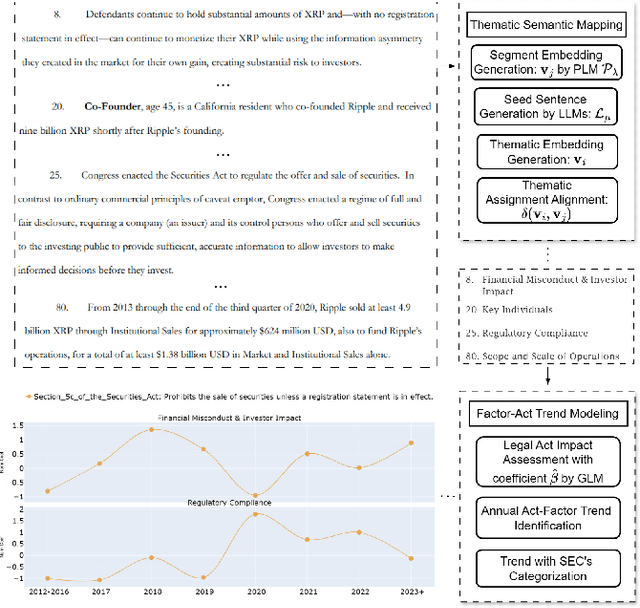

The proliferation of blockchain entities (persons or enterprises) exposes them to potential regulatory actions (e.g., being litigated) by regulatory authorities. Regulatory frameworks for crypto assets are actively being developed and refined, increasing the likelihood of such actions. The lack of systematic analysis of the factors driving litigation against blockchain entities leaves companies in need of clarity to navigate compliance risks. This absence of insight also deprives investors of the information for informed decision-making. This study focuses on U.S. litigation against blockchain entities, particularly by the U.S. Securities and Exchange Commission (SEC) given its influence on global crypto regulation. Utilizing frontier pretrained language models and large language models, we systematically map all SEC complaints against blockchain companies from 2012 to 2024 to thematic factors conceptualized by our study to delineate the factors driving SEC actions. We quantify the thematic factors and assess their influence on specific legal Acts cited within the complaints on an annual basis, allowing us to discern the regulatory emphasis, patterns and conduct trend analysis.
Retrieval-Augmented Generation for Natural Language Processing: A Survey
Jul 19, 2024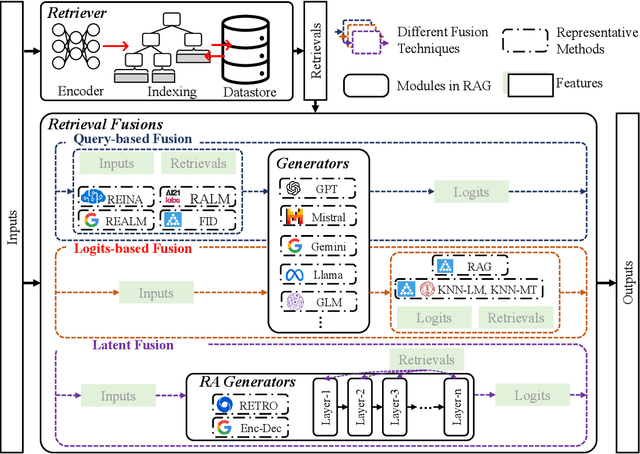
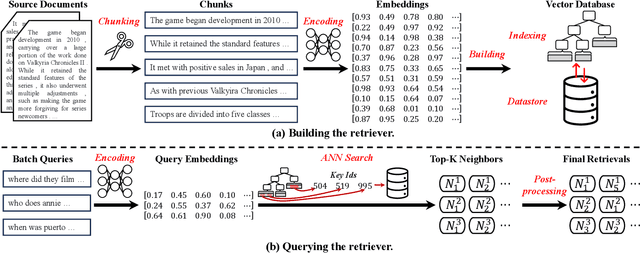
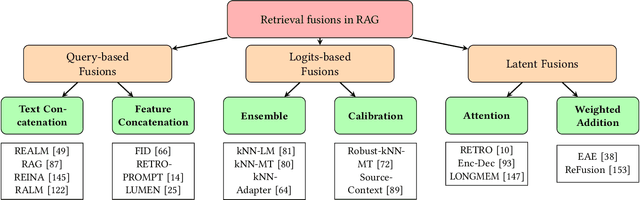
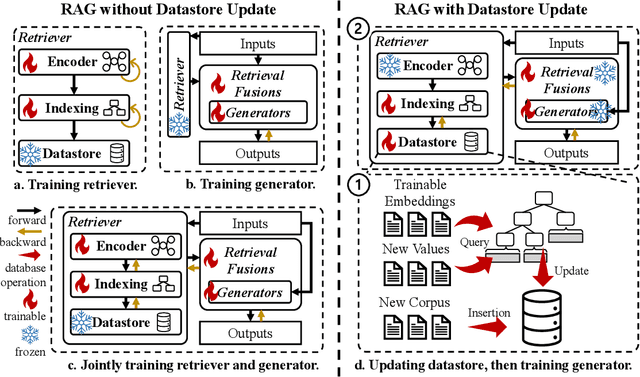
Large language models (LLMs) have demonstrated great success in various fields, benefiting from their huge amount of parameters that store knowledge. However, LLMs still suffer from several key issues, such as hallucination problems, knowledge update issues, and lacking domain-specific expertise. The appearance of retrieval-augmented generation (RAG), which leverages an external knowledge database to augment LLMs, makes up those drawbacks of LLMs. This paper reviews all significant techniques of RAG, especially in the retriever and the retrieval fusions. Besides, tutorial codes are provided for implementing the representative techniques in RAG. This paper further discusses the RAG training, including RAG with/without datastore update. Then, we introduce the application of RAG in representative natural language processing tasks and industrial scenarios. Finally, this paper discusses the future directions and challenges of RAG for promoting its development.
Collaborative Performance Prediction for Large Language Models
Jul 01, 2024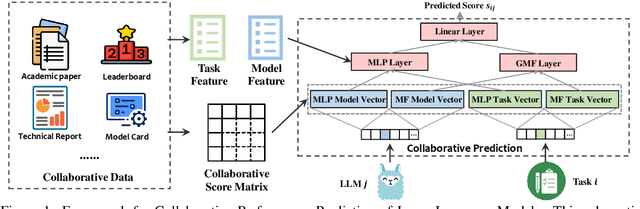


Comprehensively understanding and accurately predicting the performance of large language models across diverse downstream tasks has emerged as a pivotal challenge in NLP research. The pioneering scaling law on downstream works demonstrated intrinsic similarities within model families and utilized such similarities for performance prediction. However, they tend to overlook the similarities between model families and only consider design factors listed in the original scaling law. To overcome these limitations, we introduce a novel framework, Collaborative Performance Prediction (CPP), which significantly enhances prediction accuracy by leveraging the historical performance of various models on downstream tasks and other design factors for both model and task. We also collect a collaborative data sourced from online platforms containing both historical performance and additional design factors. With the support of the collaborative data, CPP not only surpasses traditional scaling laws in predicting the performance of scaled LLMs but also facilitates a detailed analysis of factor importance, an area previously overlooked.