 Add to Chrome
 Add to Firefox
 Add to Edge
Binaural Selective Attention Model for Target Speaker Extraction
Jun 18, 2024

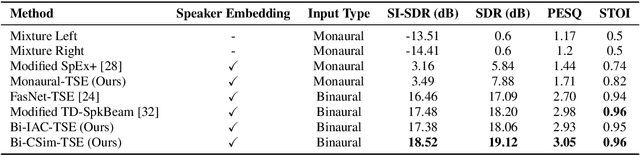
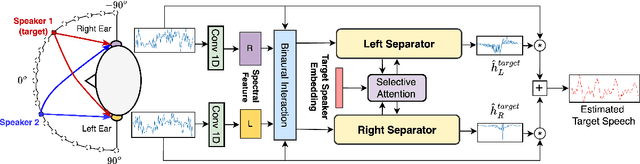
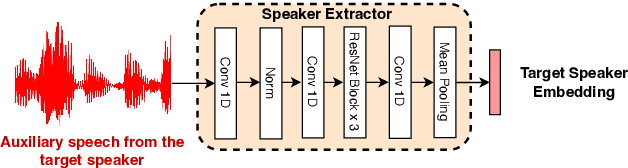
The remarkable ability of humans to selectively focus on a target speaker in cocktail party scenarios is facilitated by binaural audio processing. In this paper, we present a binaural time-domain Target Speaker Extraction model based on the Filter-and-Sum Network (FaSNet). Inspired by human selective hearing, our proposed model introduces target speaker embedding into separators using a multi-head attention-based selective attention block. We also compared two binaural interaction approaches -- the cosine similarity of time-domain signals and inter-channel correlation in learned spectral representations. Our experimental results show that our proposed model outperforms monaural configurations and state-of-the-art multi-channel target speaker extraction models, achieving best-in-class performance with 18.52 dB SI-SDR, 19.12 dB SDR, and 3.05 PESQ scores under anechoic two-speaker test configurations.

Self-supervised Adversarial Training of Monocular Depth Estimation against Physical-World Attacks
Jun 09, 2024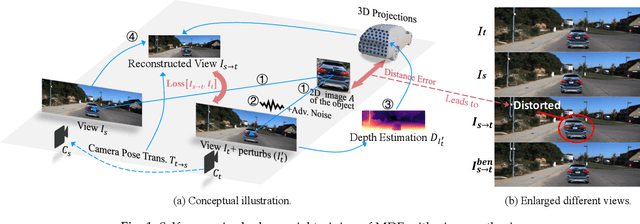
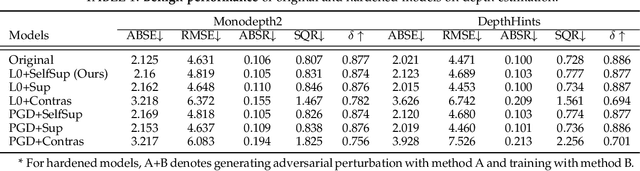
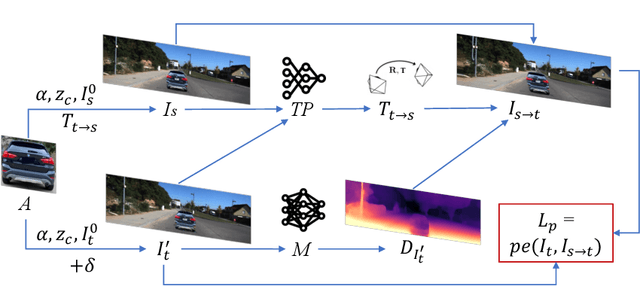
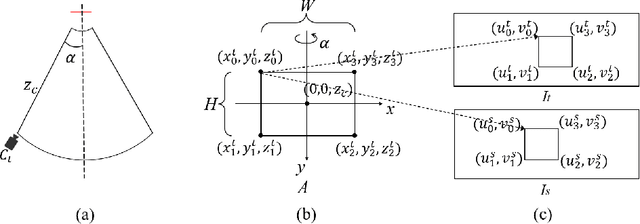
Monocular Depth Estimation (MDE) plays a vital role in applications such as autonomous driving. However, various attacks target MDE models, with physical attacks posing significant threats to system security. Traditional adversarial training methods, which require ground-truth labels, are not directly applicable to MDE models that lack ground-truth depth. Some self-supervised model hardening techniques (e.g., contrastive learning) overlook the domain knowledge of MDE, resulting in suboptimal performance. In this work, we introduce a novel self-supervised adversarial training approach for MDE models, leveraging view synthesis without the need for ground-truth depth. We enhance adversarial robustness against real-world attacks by incorporating L_0-norm-bounded perturbation during training. We evaluate our method against supervised learning-based and contrastive learning-based approaches specifically designed for MDE. Our experiments with two representative MDE networks demonstrate improved robustness against various adversarial attacks, with minimal impact on benign performance.
Mutual Information Guided Backdoor Mitigation for Pre-trained Encoders
Jun 05, 2024

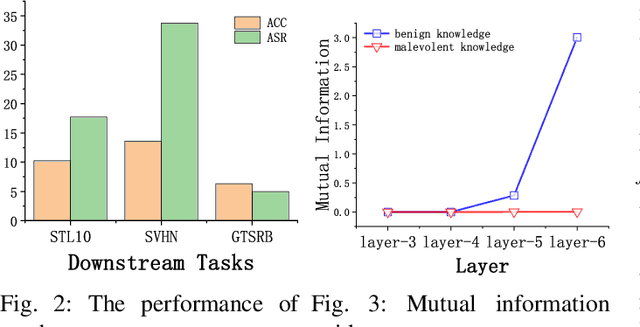

Self-supervised learning (SSL) is increasingly attractive for pre-training encoders without requiring labeled data. Downstream tasks built on top of those pre-trained encoders can achieve nearly state-of-the-art performance. The pre-trained encoders by SSL, however, are vulnerable to backdoor attacks as demonstrated by existing studies. Numerous backdoor mitigation techniques are designed for downstream task models. However, their effectiveness is impaired and limited when adapted to pre-trained encoders, due to the lack of label information when pre-training. To address backdoor attacks against pre-trained encoders, in this paper, we innovatively propose a mutual information guided backdoor mitigation technique, named MIMIC. MIMIC treats the potentially backdoored encoder as the teacher net and employs knowledge distillation to distill a clean student encoder from the teacher net. Different from existing knowledge distillation approaches, MIMIC initializes the student with random weights, inheriting no backdoors from teacher nets. Then MIMIC leverages mutual information between each layer and extracted features to locate where benign knowledge lies in the teacher net, with which distillation is deployed to clone clean features from teacher to student. We craft the distillation loss with two aspects, including clone loss and attention loss, aiming to mitigate backdoors and maintain encoder performance at the same time. Our evaluation conducted on two backdoor attacks in SSL demonstrates that MIMIC can significantly reduce the attack success rate by only utilizing <5% of clean data, surpassing seven state-of-the-art backdoor mitigation techniques.
Source Code Foundation Models are Transferable Binary Analysis Knowledge Bases
May 30, 2024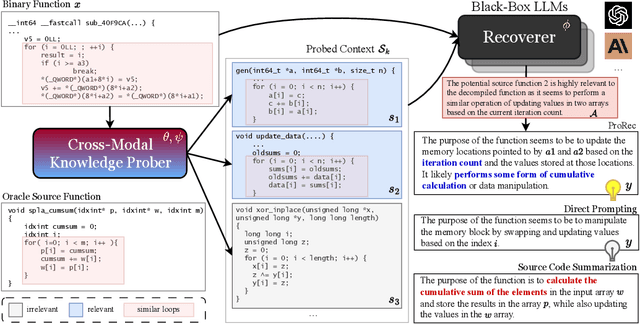
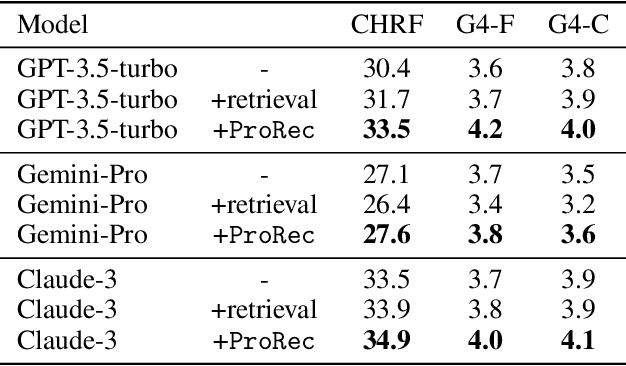
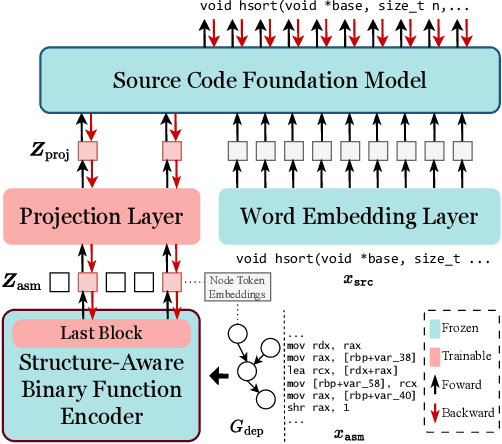
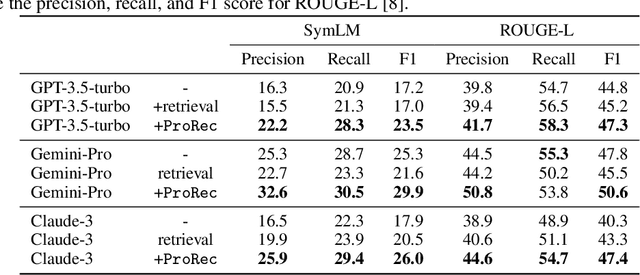
Human-Oriented Binary Reverse Engineering (HOBRE) lies at the intersection of binary and source code, aiming to lift binary code to human-readable content relevant to source code, thereby bridging the binary-source semantic gap. Recent advancements in uni-modal code model pre-training, particularly in generative Source Code Foundation Models (SCFMs) and binary understanding models, have laid the groundwork for transfer learning applicable to HOBRE. However, existing approaches for HOBRE rely heavily on uni-modal models like SCFMs for supervised fine-tuning or general LLMs for prompting, resulting in sub-optimal performance. Inspired by recent progress in large multi-modal models, we propose that it is possible to harness the strengths of uni-modal code models from both sides to bridge the semantic gap effectively. In this paper, we introduce a novel probe-and-recover framework that incorporates a binary-source encoder-decoder model and black-box LLMs for binary analysis. Our approach leverages the pre-trained knowledge within SCFMs to synthesize relevant, symbol-rich code fragments as context. This additional context enables black-box LLMs to enhance recovery accuracy. We demonstrate significant improvements in zero-shot binary summarization and binary function name recovery, with a 10.3% relative gain in CHRF and a 16.7% relative gain in a GPT4-based metric for summarization, as well as a 6.7% and 7.4% absolute increase in token-level precision and recall for name recovery, respectively. These results highlight the effectiveness of our approach in automating and improving binary code analysis.
Is a 3D-Tokenized LLM the Key to Reliable Autonomous Driving?
May 28, 2024Rapid advancements in Autonomous Driving (AD) tasks turned a significant shift toward end-to-end fashion, particularly in the utilization of vision-language models (VLMs) that integrate robust logical reasoning and cognitive abilities to enable comprehensive end-to-end planning. However, these VLM-based approaches tend to integrate 2D vision tokenizers and a large language model (LLM) for ego-car planning, which lack 3D geometric priors as a cornerstone of reliable planning. Naturally, this observation raises a critical concern: Can a 2D-tokenized LLM accurately perceive the 3D environment? Our evaluation of current VLM-based methods across 3D object detection, vectorized map construction, and environmental caption suggests that the answer is, unfortunately, NO. In other words, 2D-tokenized LLM fails to provide reliable autonomous driving. In response, we introduce DETR-style 3D perceptrons as 3D tokenizers, which connect LLM with a one-layer linear projector. This simple yet elegant strategy, termed Atlas, harnesses the inherent priors of the 3D physical world, enabling it to simultaneously process high-resolution multi-view images and employ spatiotemporal modeling. Despite its simplicity, Atlas demonstrates superior performance in both 3D detection and ego planning tasks on nuScenes dataset, proving that 3D-tokenized LLM is the key to reliable autonomous driving. The code and datasets will be released.
Reflected Flow Matching
May 26, 2024Continuous normalizing flows (CNFs) learn an ordinary differential equation to transform prior samples into data. Flow matching (FM) has recently emerged as a simulation-free approach for training CNFs by regressing a velocity model towards the conditional velocity field. However, on constrained domains, the learned velocity model may lead to undesirable flows that result in highly unnatural samples, e.g., oversaturated images, due to both flow matching error and simulation error. To address this, we add a boundary constraint term to CNFs, which leads to reflected CNFs that keep trajectories within the constrained domains. We propose reflected flow matching (RFM) to train the velocity model in reflected CNFs by matching the conditional velocity fields in a simulation-free manner, similar to the vanilla FM. Moreover, the analytical form of conditional velocity fields in RFM avoids potentially biased approximations, making it superior to existing score-based generative models on constrained domains. We demonstrate that RFM achieves comparable or better results on standard image benchmarks and produces high-quality class-conditioned samples under high guidance weight.
Focus Anywhere for Fine-grained Multi-page Document Understanding
May 23, 2024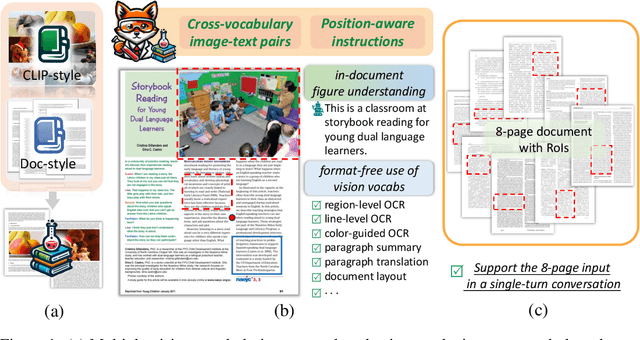
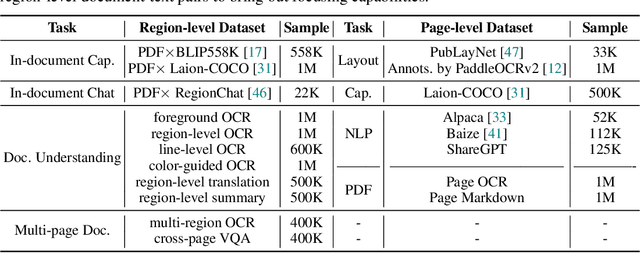
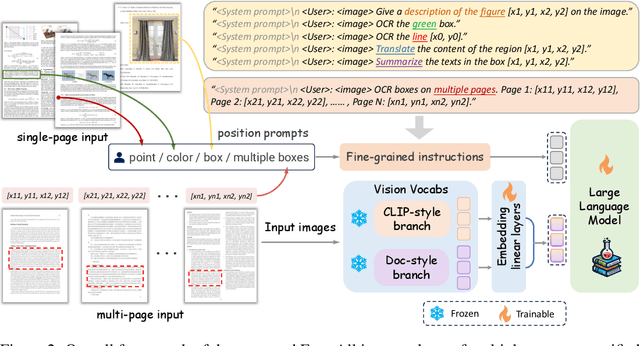
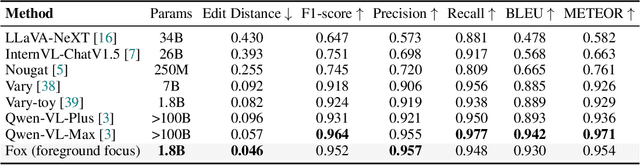
Modern LVLMs still struggle to achieve fine-grained document understanding, such as OCR/translation/caption for regions of interest to the user, tasks that require the context of the entire page, or even multiple pages. Accordingly, this paper proposes Fox, an effective pipeline, hybrid data, and tuning strategy, that catalyzes LVLMs to focus anywhere on single/multi-page documents. We introduce a novel task to boost the document understanding by making LVLMs focus attention on the document-level region, such as redefining full-page OCR as foreground focus. We employ multiple vision vocabularies to extract visual hybrid knowledge for interleaved document pages (e.g., a page containing a photo). Meanwhile, we render cross-vocabulary vision data as the catalyzer to achieve a full reaction of multiple visual vocabularies and in-document figure understanding. Further, without modifying the weights of multiple vision vocabularies, the above catalyzed fine-grained understanding capabilities can be efficiently tuned to multi-page documents, enabling the model to focus anywhere in both format-free and page-free manners. Besides, we build a benchmark including 9 fine-grained sub-tasks (e.g., region-level OCR/summary, color-guided OCR) to promote document analysis in the community. The experimental results verify the superiority of our model.
Mamba in Speech: Towards an Alternative to Self-Attention
May 22, 2024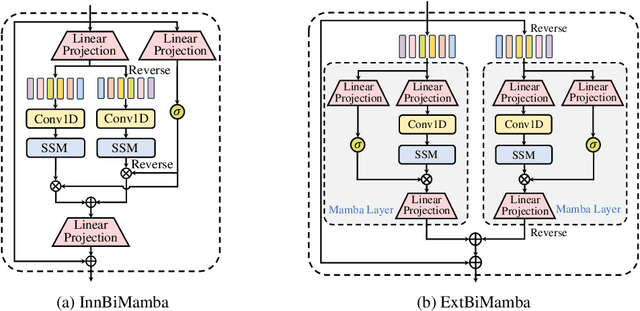
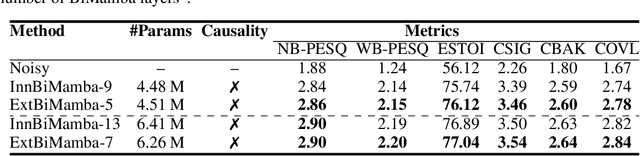
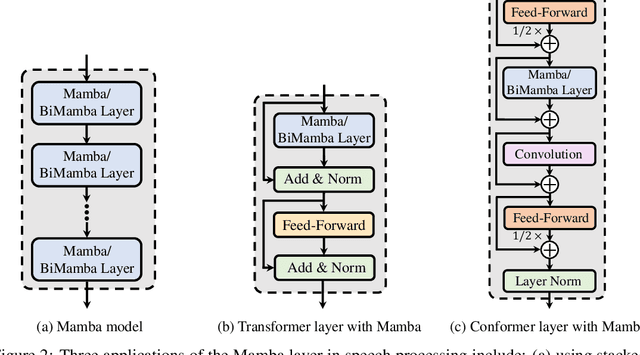

Transformer and its derivatives have achieved success in diverse tasks across computer vision, natural language processing, and speech processing. To reduce the complexity of computations within the multi-head self-attention mechanism in Transformer, Selective State Space Models (i.e., Mamba) were proposed as an alternative. Mamba exhibited its effectiveness in natural language processing and computer vision tasks, but its superiority has rarely been investigated in speech signal processing. This paper explores solutions for applying Mamba to speech processing using two typical speech processing tasks: speech recognition, which requires semantic and sequential information, and speech enhancement, which focuses primarily on sequential patterns. The results exhibit the superiority of bidirectional Mamba (BiMamba) for speech processing to vanilla Mamba. Moreover, experiments demonstrate the effectiveness of BiMamba as an alternative to the self-attention module in Transformer and its derivates, particularly for the semantic-aware task. The crucial technologies for transferring Mamba to speech are then summarized in ablation studies and the discussion section to offer insights for future research.
On the relevance of pre-neural approaches in natural language processing pedagogy
May 16, 2024
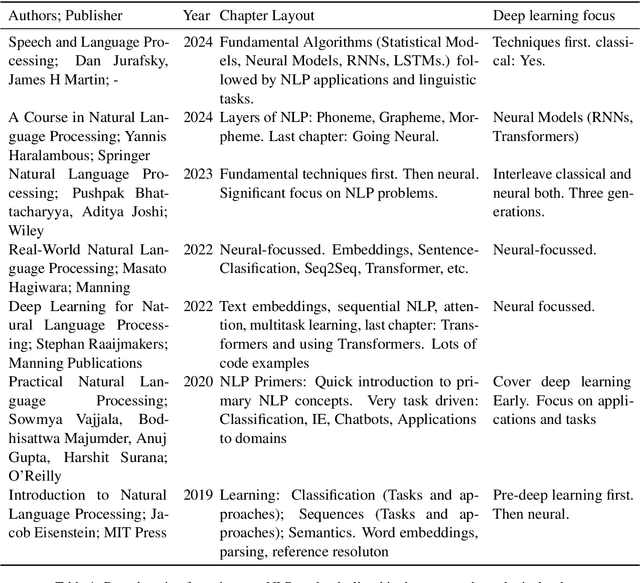
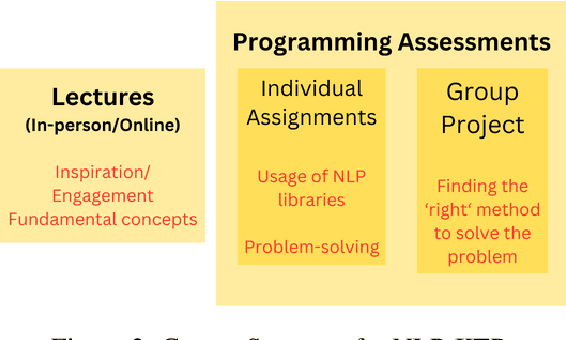

While neural approaches using deep learning are the state-of-the-art for natural language processing (NLP) today, pre-neural algorithms and approaches still find a place in NLP textbooks and courses of recent years. In this paper, we compare two introductory NLP courses taught in Australia and India, and examine how Transformer and pre-neural approaches are balanced within the lecture plan and assessments of the courses. We also draw parallels with the objects-first and objects-later debate in CS1 education. We observe that pre-neural approaches add value to student learning by building an intuitive understanding of NLP problems, potential solutions and even Transformer-based models themselves. Despite pre-neural approaches not being state-of-the-art, the paper makes a case for their inclusion in NLP courses today.
Music Emotion Prediction Using Recurrent Neural Networks
May 10, 2024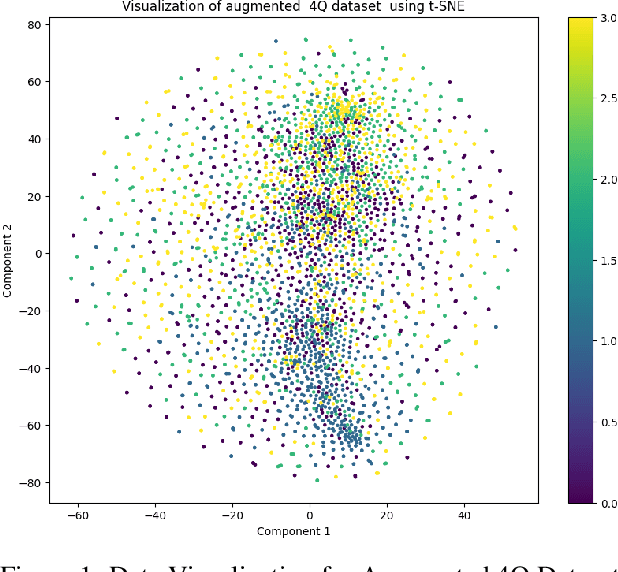
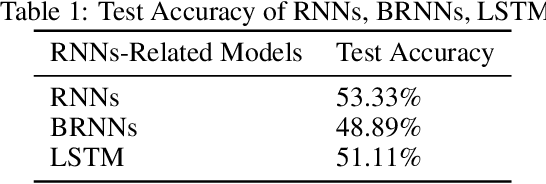
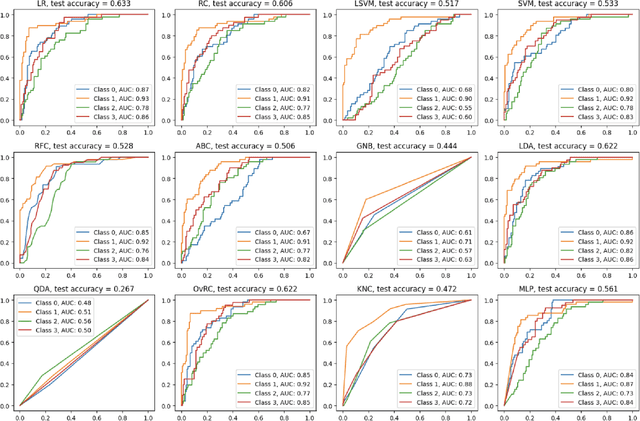

This study explores the application of recurrent neural networks to recognize emotions conveyed in music, aiming to enhance music recommendation systems and support therapeutic interventions by tailoring music to fit listeners' emotional states. We utilize Russell's Emotion Quadrant to categorize music into four distinct emotional regions and develop models capable of accurately predicting these categories. Our approach involves extracting a comprehensive set of audio features using Librosa and applying various recurrent neural network architectures, including standard RNNs, Bidirectional RNNs, and Long Short-Term Memory (LSTM) networks. Initial experiments are conducted using a dataset of 900 audio clips, labeled according to the emotional quadrants. We compare the performance of our neural network models against a set of baseline classifiers and analyze their effectiveness in capturing the temporal dynamics inherent in musical expression. The results indicate that simpler RNN architectures may perform comparably or even superiorly to more complex models, particularly in smaller datasets. We've also applied the following experiments on larger datasets: one is augmented based on our original dataset, and the other is from other sources. This research not only enhances our understanding of the emotional impact of music but also demonstrates the potential of neural networks in creating more personalized and emotionally resonant music recommendation and therapy systems.