 Add to Chrome
 Add to Firefox
 Add to Edge
Defending against Patch-Based and Texture-Based Adversarial Attacks with Spectral Decomposition
Apr 12, 2026
Adversarial examples present significant challenges to the security of Deep Neural Network (DNN) applications. Specifically, there are patch-based and texture-based attacks that are usually used to craft physical-world adversarial examples, posing real threats to security-critical applications such as person detection in surveillance and autonomous systems, because those attacks are physically realizable. Existing defense mechanisms face challenges in the adaptive attack setting, i.e., the attacks are specifically designed against them. In this paper, we propose Adversarial Spectrum Defense (ASD), a defense mechanism that leverages spectral decomposition via Discrete Wavelet Transform (DWT) to analyze adversarial patterns across multiple frequency scales. The multi-resolution and localization capability of DWT enables ASD to capture both high-frequency (fine-grained) and low-frequency (spatially pervasive) perturbations. By integrating this spectral analysis with the off-the-shelf Adversarial Training (AT) model, ASD provides a comprehensive defense strategy against both patch-based and texture-based adversarial attacks. Extensive experiments demonstrate that ASD+AT achieved state-of-the-art (SOTA) performance against various attacks, outperforming the APs of previous defense methods by 21.73%, in the face of strong adaptive adversaries specifically designed against ASD. Code available at https://github.com/weiz0823/adv-spectral-defense .

Music Emotion Prediction Using Recurrent Neural Networks
May 10, 2024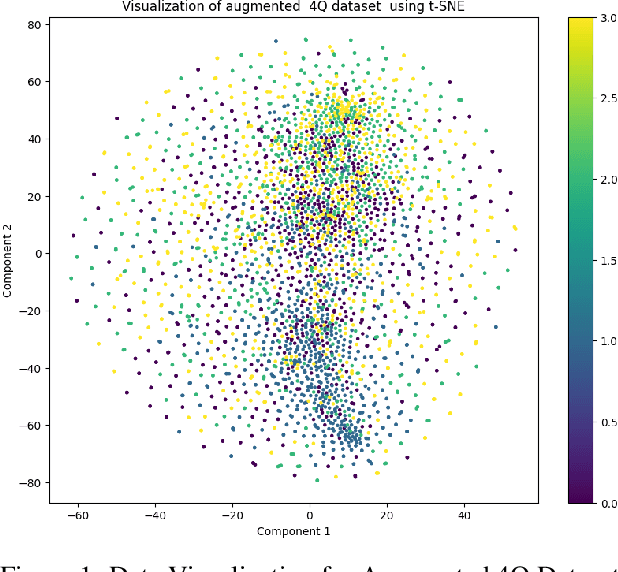
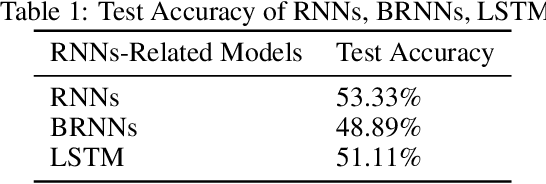
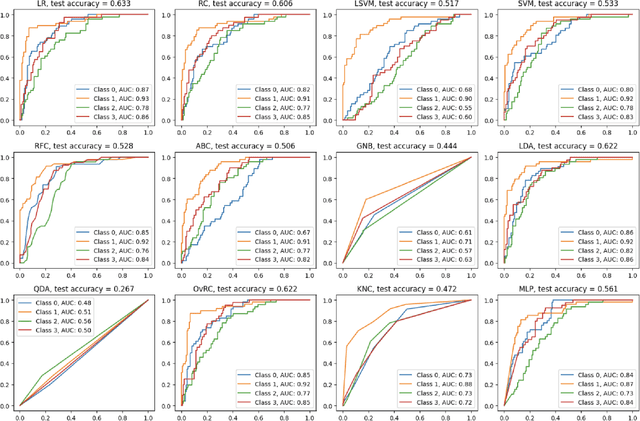

This study explores the application of recurrent neural networks to recognize emotions conveyed in music, aiming to enhance music recommendation systems and support therapeutic interventions by tailoring music to fit listeners' emotional states. We utilize Russell's Emotion Quadrant to categorize music into four distinct emotional regions and develop models capable of accurately predicting these categories. Our approach involves extracting a comprehensive set of audio features using Librosa and applying various recurrent neural network architectures, including standard RNNs, Bidirectional RNNs, and Long Short-Term Memory (LSTM) networks. Initial experiments are conducted using a dataset of 900 audio clips, labeled according to the emotional quadrants. We compare the performance of our neural network models against a set of baseline classifiers and analyze their effectiveness in capturing the temporal dynamics inherent in musical expression. The results indicate that simpler RNN architectures may perform comparably or even superiorly to more complex models, particularly in smaller datasets. We've also applied the following experiments on larger datasets: one is augmented based on our original dataset, and the other is from other sources. This research not only enhances our understanding of the emotional impact of music but also demonstrates the potential of neural networks in creating more personalized and emotionally resonant music recommendation and therapy systems.