 Add to Chrome
 Add to Firefox
 Add to Edge
Enhancing SignSGD: Small-Batch Convergence Analysis and a Hybrid Switching Strategy
Apr 28, 2026
SignSGD compresses each stochastic gradient coordinate to a single bit, offering substantial memory and communication savings, but its 1-bit quantization removes magnitude information and is known to leave a generalization gap relative to well-tuned SGD. We revisit SignSGD from a 1-bit quantization and dithering perspective and contribute three improvements. First, we derive a small-batch convergence rate for SignSGD under unimodal symmetric gradient noise using a signal-to-noise weighted stationarity measure, removing the large-batch assumption of prior analyses. Second, we inject annealed Gaussian noise before the sign operator, which acts as a classical dithering mechanism and probabilistically restores magnitude information lost to hard thresholding. Third, we adapt the SWATS strategy to sign-based updates with a projection-based learning-rate calibration that smoothly transitions from SignSGD to SGD. Single-worker experiments on ResNet-18 isolate optimizer effects from communication aspects: pre-sign dithering surpasses Adam on CIFAR-100, and the calibrated switch reaches 92.18% test accuracy on CIFAR-10, outperforming both pure SGD 91.38% and pure SignSGD with momentum 90.82%.

Bridging the Know-Act Gap via Task-Level Autoregressive Reasoning
Mar 23, 2026LLMs often generate seemingly valid answers to flawed or ill-posed inputs. This is not due to missing knowledge: under discriminative prompting, the same models can mostly identify such issues, yet fail to reflect this in standard generative responses. This reveals a fundamental know-act gap between discriminative recognition and generative behavior. Prior work largely characterizes this issue in narrow settings, such as math word problems or question answering, with limited focus on how to integrate these two modes. In this work, we present a comprehensive analysis using FaultyScience, a newly constructed large-scale, cross-disciplinary benchmark of faulty scientific questions. We show that the gap is pervasive and stems from token-level autoregression, which entangles task selection (validate vs. answer) with content generation, preventing discriminative knowledge from being utilized. To address this, we propose DeIllusionLLM, a task-level autoregressive framework that explicitly models this decision. Through self-distillation, the model unifies discriminative judgment and generative reasoning within a single backbone. Empirically, DeIllusionLLM substantially reduces answer-despite-error failures under natural prompting while maintaining general reasoning performance, demonstrating that self-distillation is an effective and scalable solution for bridging the discriminative-generative know-act gap
Cluster-Aware Attention-Based Deep Reinforcement Learning for Pickup and Delivery Problems
Mar 09, 2026The Pickup and Delivery Problem (PDP) is a fundamental and challenging variant of the Vehicle Routing Problem, characterized by tightly coupled pickup--delivery pairs, precedence constraints, and spatial layouts that often exhibit clustering. Existing deep reinforcement learning (DRL) approaches either model all nodes on a flat graph, relying on implicit learning to enforce constraints, or achieve strong performance through inference-time collaborative search at the cost of substantial latency. In this paper, we propose \emph{CAADRL} (Cluster-Aware Attention-based Deep Reinforcement Learning), a DRL framework that explicitly exploits the multi-scale structure of PDP instances via cluster-aware encoding and hierarchical decoding. The encoder builds on a Transformer and combines global self-attention with intra-cluster attention over depot, pickup, and delivery nodes, producing embeddings that are both globally informative and locally role-aware. Based on these embeddings, we introduce a Dynamic Dual-Decoder with a learnable gate that balances intra-cluster routing and inter-cluster transitions at each step. The policy is trained end-to-end with a POMO-style policy gradient scheme using multiple symmetric rollouts per instance. Experiments on synthetic clustered and uniform PDP benchmarks show that CAADRL matches or improves upon strong state-of-the-art baselines on clustered instances and remains highly competitive on uniform instances, particularly as problem size increases. Crucially, our method achieves these results with substantially lower inference time than neural collaborative-search baselines, suggesting that explicitly modeling cluster structure provides an effective and efficient inductive bias for neural PDP solvers.
RELIC: Evaluating Compositional Instruction Following via Language Recognition
Jun 05, 2025Large language models (LLMs) are increasingly expected to perform tasks based only on a specification of the task provided in context, without examples of inputs and outputs; this ability is referred to as instruction following. We introduce the Recognition of Languages In-Context (RELIC) framework to evaluate instruction following using language recognition: the task of determining if a string is generated by formal grammar. Unlike many standard evaluations of LLMs' ability to use their context, this task requires composing together a large number of instructions (grammar productions) retrieved from the context. Because the languages are synthetic, the task can be increased in complexity as LLMs' skills improve, and new instances can be automatically generated, mitigating data contamination. We evaluate state-of-the-art LLMs on RELIC and find that their accuracy can be reliably predicted from the complexity of the grammar and the individual example strings, and that even the most advanced LLMs currently available show near-chance performance on more complex grammars and samples, in line with theoretical expectations. We also use RELIC to diagnose how LLMs attempt to solve increasingly difficult reasoning tasks, finding that as the complexity of the language recognition task increases, models switch to relying on shallow heuristics instead of following complex instructions.
High-Quality 3D Head Reconstruction from Any Single Portrait Image
Mar 11, 2025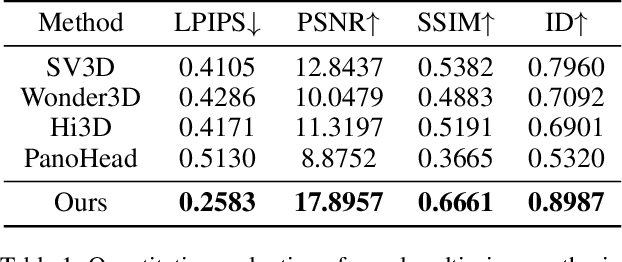
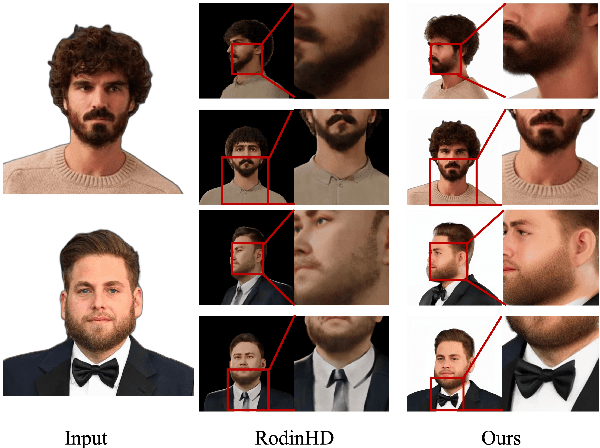
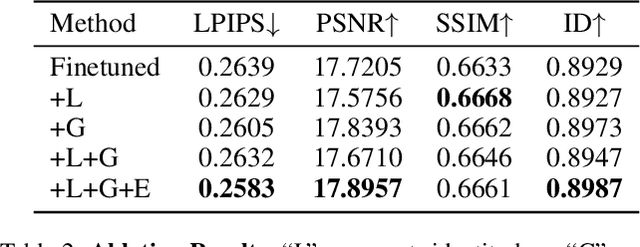
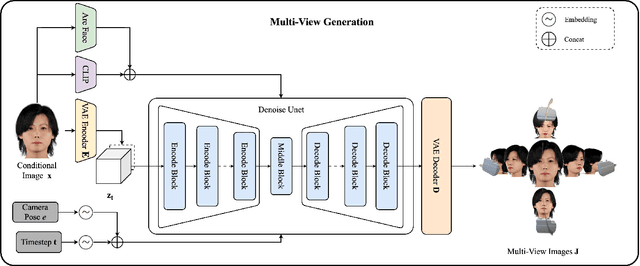
In this work, we introduce a novel high-fidelity 3D head reconstruction method from a single portrait image, regardless of perspective, expression, or accessories. Despite significant efforts in adapting 2D generative models for novel view synthesis and 3D optimization, most methods struggle to produce high-quality 3D portraits. The lack of crucial information, such as identity, expression, hair, and accessories, limits these approaches in generating realistic 3D head models. To address these challenges, we construct a new high-quality dataset containing 227 sequences of digital human portraits captured from 96 different perspectives, totalling 21,792 frames, featuring diverse expressions and accessories. To further improve performance, we integrate identity and expression information into the multi-view diffusion process to enhance facial consistency across views. Specifically, we apply identity- and expression-aware guidance and supervision to extract accurate facial representations, which guide the model and enforce objective functions to ensure high identity and expression consistency during generation. Finally, we generate an orbital video around the portrait consisting of 96 multi-view frames, which can be used for 3D portrait model reconstruction. Our method demonstrates robust performance across challenging scenarios, including side-face angles and complex accessories
Rapid Word Learning Through Meta In-Context Learning
Feb 20, 2025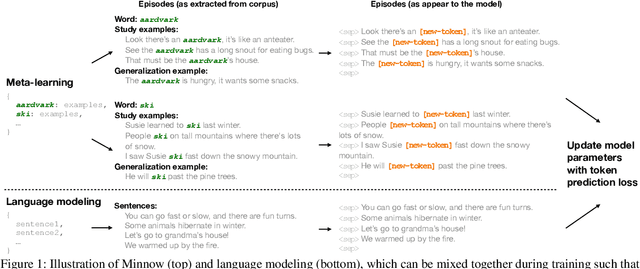
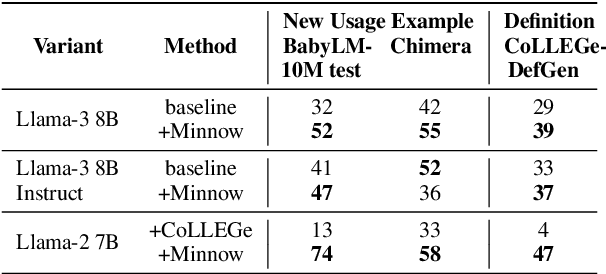
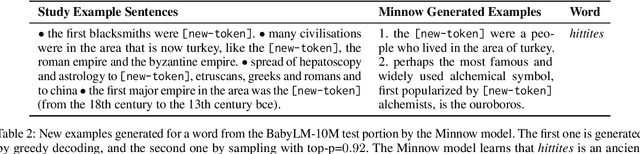
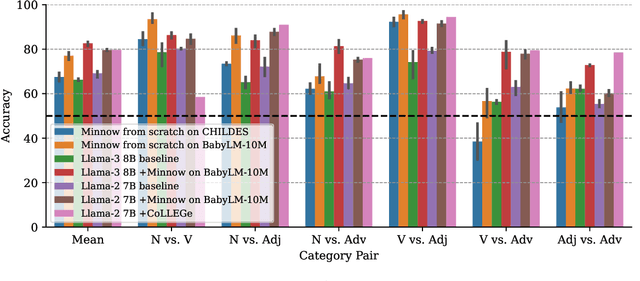
Humans can quickly learn a new word from a few illustrative examples, and then systematically and flexibly use it in novel contexts. Yet the abilities of current language models for few-shot word learning, and methods for improving these abilities, are underexplored. In this study, we introduce a novel method, Meta-training for IN-context learNing Of Words (Minnow). This method trains language models to generate new examples of a word's usage given a few in-context examples, using a special placeholder token to represent the new word. This training is repeated on many new words to develop a general word-learning ability. We find that training models from scratch with Minnow on human-scale child-directed language enables strong few-shot word learning, comparable to a large language model (LLM) pre-trained on orders of magnitude more data. Furthermore, through discriminative and generative evaluations, we demonstrate that finetuning pre-trained LLMs with Minnow improves their ability to discriminate between new words, identify syntactic categories of new words, and generate reasonable new usages and definitions for new words, based on one or a few in-context examples. These findings highlight the data efficiency of Minnow and its potential to improve language model performance in word learning tasks.
TD-RD: A Top-Down Benchmark with Real-Time Framework for Road Damage Detection
Jan 24, 2025


Object detection has witnessed remarkable advancements over the past decade, largely driven by breakthroughs in deep learning and the proliferation of large scale datasets. However, the domain of road damage detection remains relatively under explored, despite its critical significance for applications such as infrastructure maintenance and road safety. This paper addresses this gap by introducing a novel top down benchmark that offers a complementary perspective to existing datasets, specifically tailored for road damage detection. Our proposed Top Down Road Damage Detection Dataset (TDRD) includes three primary categories of road damage cracks, potholes, and patches captured from a top down viewpoint. The dataset consists of 7,088 high resolution images, encompassing 12,882 annotated instances of road damage. Additionally, we present a novel real time object detection framework, TDYOLOV10, designed to handle the unique challenges posed by the TDRD dataset. Comparative studies with state of the art models demonstrate competitive baseline results. By releasing TDRD, we aim to accelerate research in this crucial area. A sample of the dataset will be made publicly available upon the paper's acceptance.
GeneMAN: Generalizable Single-Image 3D Human Reconstruction from Multi-Source Human Data
Nov 27, 2024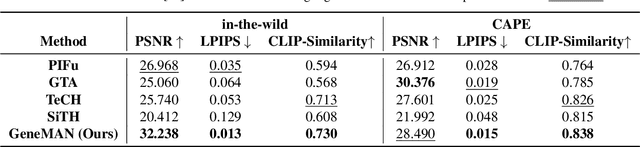

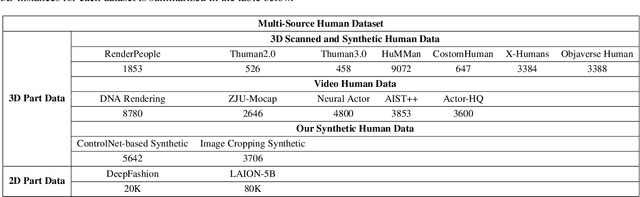
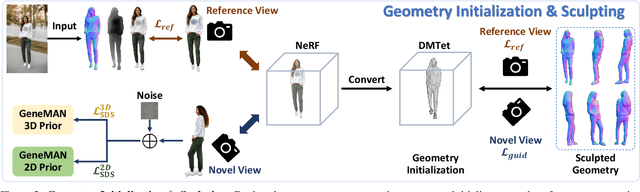
Given a single in-the-wild human photo, it remains a challenging task to reconstruct a high-fidelity 3D human model. Existing methods face difficulties including a) the varying body proportions captured by in-the-wild human images; b) diverse personal belongings within the shot; and c) ambiguities in human postures and inconsistency in human textures. In addition, the scarcity of high-quality human data intensifies the challenge. To address these problems, we propose a Generalizable image-to-3D huMAN reconstruction framework, dubbed GeneMAN, building upon a comprehensive multi-source collection of high-quality human data, including 3D scans, multi-view videos, single photos, and our generated synthetic human data. GeneMAN encompasses three key modules. 1) Without relying on parametric human models (e.g., SMPL), GeneMAN first trains a human-specific text-to-image diffusion model and a view-conditioned diffusion model, serving as GeneMAN 2D human prior and 3D human prior for reconstruction, respectively. 2) With the help of the pretrained human prior models, the Geometry Initialization-&-Sculpting pipeline is leveraged to recover high-quality 3D human geometry given a single image. 3) To achieve high-fidelity 3D human textures, GeneMAN employs the Multi-Space Texture Refinement pipeline, consecutively refining textures in the latent and the pixel spaces. Extensive experimental results demonstrate that GeneMAN could generate high-quality 3D human models from a single image input, outperforming prior state-of-the-art methods. Notably, GeneMAN could reveal much better generalizability in dealing with in-the-wild images, often yielding high-quality 3D human models in natural poses with common items, regardless of the body proportions in the input images.
Towards Efficient Moion Planning for UAVs: Lazy A* Search with Motion Primitives
Oct 02, 2024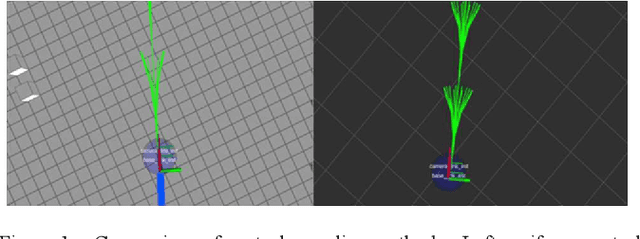
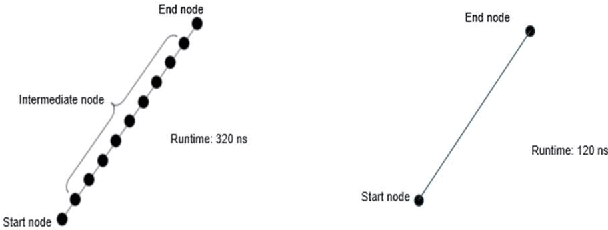
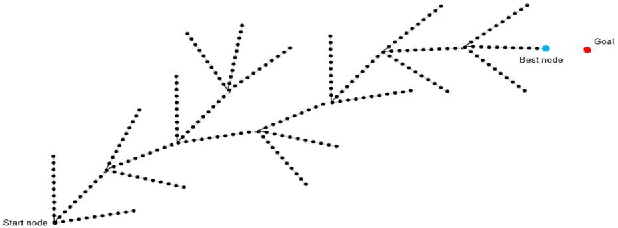
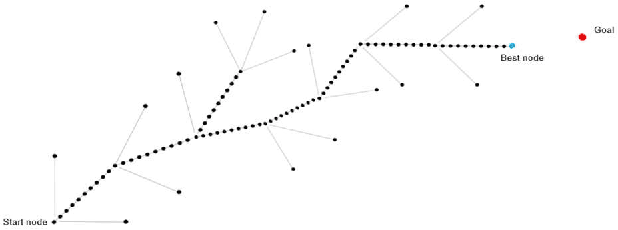
Search-based motion planning algorithms have been widely utilized for unmanned aerial vehicles (UAVs). However, deploying these algorithms on real UAVs faces challenges due to limited onboard computational resources. The algorithms struggle to find solutions in high-dimensional search spaces and require considerable time to ensure that the trajectories are dynamically feasible. This paper incorporates the lazy search concept into search-based planning algorithms to address the critical issue of real-time planning for collision-free and dynamically feasible trajectories on UAVs. We demonstrate that the lazy search motion planning algorithm can efficiently find optimal trajectories and significantly improve computational efficiency.
LaDTalk: Latent Denoising for Synthesizing Talking Head Videos with High Frequency Details
Oct 01, 2024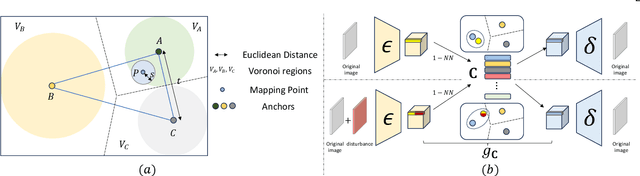

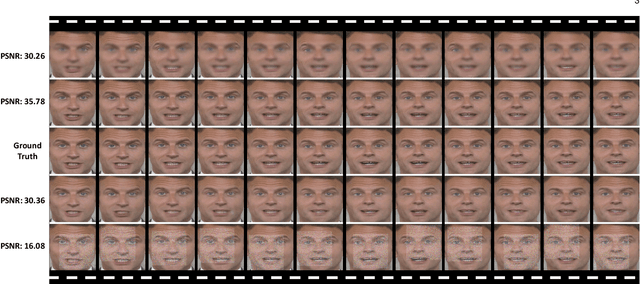

Audio-driven talking head generation is a pivotal area within film-making and Virtual Reality. Although existing methods have made significant strides following the end-to-end paradigm, they still encounter challenges in producing videos with high-frequency details due to their limited expressivity in this domain. This limitation has prompted us to explore an effective post-processing approach to synthesize photo-realistic talking head videos. Specifically, we employ a pretrained Wav2Lip model as our foundation model, leveraging its robust audio-lip alignment capabilities. Drawing on the theory of Lipschitz Continuity, we have theoretically established the noise robustness of Vector Quantised Auto Encoders (VQAEs). Our experiments further demonstrate that the high-frequency texture deficiency of the foundation model can be temporally consistently recovered by the Space-Optimised Vector Quantised Auto Encoder (SOVQAE) we introduced, thereby facilitating the creation of realistic talking head videos. We conduct experiments on both the conventional dataset and the High-Frequency TalKing head (HFTK) dataset that we curated. The results indicate that our method, LaDTalk, achieves new state-of-the-art video quality and out-of-domain lip synchronization performance.