 Add to Chrome
 Add to Firefox
 Add to Edge
SSPO: Structure-Aware Similarity-Weighted Preference Optimization for Neural Combinatorial Optimization
Aug 12, 2026
Neural combinatorial optimization (NCO) relies on parallel solution sampling for training, yet existing methods fail to fully exploit the rich information latent in a co-sampled solution group. Preference-optimization methods anchor on the single best solution and discard fine-grained quality and structural signal from all other peers-a failure we term gradient signal polarization. Mean-based baselines instead weight peers uniformly, so structurally near-identical peers flood the baseline with redundant information and keep gradient variance high-a failure we term baseline redundancy. We propose SSPO (Structure-Aware Similarity-Weighted Preference Optimization), which scores all $B$ sampled solutions jointly through a dissimilarity-weighted leave-one-out baseline: structurally distinct peers receive higher weight, resolving both failures in a single mechanism. The baseline uses zero-parameter, problem-adaptive solution embeddings built from the encoder's existing node representations. Experiments on TSP, EFL, and JSP benchmarks show consistent gains over prior best-anchor and uniform-weight baselines. A direct comparison against uniform RLOO on TSP and EFL confirms that structure-aware weighting is the primary driver of improvement. The SSPO-trained EFL policy has been deployed in a production facility-location system at JD$\mathord{.}$com, confirming practical viability at scale.

DualCert: A Solver for the Traveling Salesman Problem with Constraint-Coupled Learning
Aug 10, 2026Large traveling salesman problem (TSP) instances require a solver to allocate limited computation while preserving the validity of its outputs. Existing neural--operations-research (OR) hybrids predict guidance without requiring learned transitions to satisfy constraints discovered during search. DualCert introduces \emph{constraint-coupled learning}, in which current degree equations and dynamically separated subtour-elimination constraints (SECs) define each learned transition. At each refinement, the degree equations and selected, strictly satisfied SEC equations, with positive slacks, define an iterate-dependent primal-slack Karush--Kuhn--Tucker (KKT) manifold. Repaired dual variables and violated SEC rows define a local cost field. An exact constrained mirror-descent step maps each finite state to a positive state on the same manifold. Where selected rows and deterministic ties remain fixed, implicit differentiation maps parameter perturbations into the manifold tangent space and reuses the forward constraint operator for the local-cost-field derivative. The terminal edge state allocates computation across Held--Karp ascent, candidate-graph edge tests, and tour construction under a fixed budget. Deterministic verification recomputes original costs and accepts only verified candidate-graph lower bounds and edge decisions. On 1,000 held-out TSP1000 instances, DualCert attains a mean tour-cost gap of \(0.0573\%\) from Lin--Kernighan--Helsgaun version 3 (LKH-3) reference tours in \(9.55\) batch-amortized seconds per instance. It returns a verified candidate-graph lower bound for every instance and achieves \(81.46\%\) edge-decision coverage. The mean gap is \(67.1\%\) smaller than the reported NeuroLKH mean gap. Thus, optimization constraints govern learning, while deterministic verification preserves output validity.
Scores Are Not Decisions: Cost-Aware Stopping for Tool Acquisition in LLM Agents
Jul 29, 2026As LLM agents increasingly depend on diverse external services such as search engines, databases, and connectors, agent harnesses face a fundamental tool-selection challenge: acquiring too few tools leaves the task under-informed, while too many adds cost, context load, and privacy exposure. Routers and retrievers can rank candidate tools by relevance, but a ranking alone does not determine how many are worth selecting. Existing approaches leave acquisition under heterogeneous costs unaddressed. We formulate this decision as cost-aware marginal decision-focused stopping (CAM-DF) over ranked tool prefixes, with CAM-DF-lite as a compact interpretable variant. We train directly on the offline gap between stopping now and the best continuation: its sign labels the decision, its magnitude weights each error by the payoff at stake. We prove this objective is Bayes-aligned with the stopping target and that score-only rules are suboptimal under heterogeneous costs. We evaluate on 1,343 tasks across five tool-use domains. On $τ$-bench Retail, CAM-DF attains the highest payoff among deployable methods, with gains over a predict-then-threshold baseline across all five ranking sources and two cost regimes. Our approach is state-of-the-art under heterogeneous costs and high cost pressure, with larger gains under weaker rankings. In live execution, CAM-DF exposes the agent to 37\% fewer tools than full access while maintaining comparable task success. The CAM-DF family is a lightweight pre-execution plugin that turns existing tool rankings into lower-cost acquisition decisions without fine-tuning the underlying LLM.
SPORD: A Simulation-Propose-then-OR-Dispose Approach for Supply Chain Planning
Jul 23, 2026For years, supply chain planning at e-commerce firms has operated as a collection of isolated projects. Each planning task from static network planning to dynamic warehouse assortment planning requires analysts to spend weeks building models from scratch, calibrating and persuading executives to act on outputs they cannot verify. Three barriers drive this: bespoke models proliferate because standardization is difficult (operational fragmentation); once unified, the combinatorial scale of millions of SKUs, thousands of nodes, and intricate routing logic exceeds what solvers can handle within a tight window (computational intractability); and a mathematically optimal solution still fails to be implemented if the executives do not trust it (implementation hurdle). To bridge this gap, we propose and implement the Simulation-Propose-then-OR-Dispose method, deployed as JD.com's NetSim platform. The central insight is decoupling: simulation proposes by generating and evaluating the full set of operationally valid candidate paths-absorbing all idiosyncratic business logic, while an integer program disposes by selecting the globally optimal subset. Computationally, matrix-vectorized CPU/GPU accelerated simulation achieves a 10-100 times speedup over serial methods, and a list scheduling algorithm reduces coupled-order processing from hours to minutes. Operationally, we establish a closed loop via an intelligent diagnosis engine. Since 2025, NetSim has optimized end to-end services for over 20,000 suppliers, the cross-regional fulfillment rate dropped from 6.1% to 4.9%, and the average monthly carbon reduction is approximately 5,745 tCO2e. SPORD moves simulation from monitoring to active planning. The transparent outputs turn skeptical executives into engaged collaborators, and the modular architecture ensures that the next planning requires just configuration, not reconstruction.
EHR-MPC: Inference-Time Control for Sepsis Treatment with Generative Patient Digital Twins
Jul 13, 2026Sepsis is a leading cause of mortality, yet optimal treatment policies remain contested. Existing reinforcement learning (RL) approaches learn fixed strategies for sepsis treatment, limiting adaptability to changing clinical objectives during inference. We propose EHRMPC, a framework that decouples learning patient dynamics from optimizing treatment by training a patient digital twin in the form of a generative electronic health record (EHR) model. The digital twin predicts clinical trajectories under interventions and enables model predictive control (MPC) to optimize treatments via inference-time planning over simulations. We evaluate EHR-MPC on a multicenter ICU sepsis cohort spanning 8 hospitals in the Mass General Brigham health system using both off-policy importance sampling and on-policy simulation-based evaluation. Relative to RL baselines, EHR-MPC achieves comparable off-policy performance and improved simulation performance. Unlike RL, this work frames sepsis treatment optimization as inference-time control over learned patient dynamics, establishing a general framework for decision making with generative clinical models.
ActivityEditor: Learning to Synthesize Physically Valid Human Mobility
Apr 07, 2026Human mobility modeling is indispensable for diverse urban applications. However, existing data-driven methods often suffer from data scarcity, limiting their applicability in regions where historical trajectories are unavailable or restricted. To bridge this gap, we propose \textbf{ActivityEditor}, a novel dual-LLM-agent framework designed for zero-shot cross-regional trajectory generation. Our framework decomposes the complex synthesis task into two collaborative stages. Specifically, an intention-based agent, which leverages demographic-driven priors to generate structured human intentions and coarse activity chains to ensure high-level socio-semantic coherence. These outputs are then refined by editor agent to obtain mobility trajectories through iteratively revisions that enforces human mobility law. This capability is acquired through reinforcement learning with multiple rewards grounded in real-world physical constraints, allowing the agent to internalize mobility regularities and ensure high-fidelity trajectory generation. Extensive experiments demonstrate that \textbf{ActivityEditor} achieves superior zero-shot performance when transferred across diverse urban contexts. It maintains high statistical fidelity and physical validity, providing a robust and highly generalizable solution for mobility simulation in data-scarce scenarios. Our code is available at: https://anonymous.4open.science/r/ActivityEditor-066B.
PolyFormer: learning efficient reformulations for scalable optimization under complex physical constraints
Mar 09, 2026Real-world optimization problems are often constrained by complex physical laws that limit computational scalability. These constraints are inherently tied to complex regions, and thus learning models that incorporate physical and geometric knowledge, i.e., physics-informed machine learning (PIML), offer a promising pathway for efficient solution. Here, we introduce PolyFormer, which opens a new direction for PIML in prescriptive optimization tasks, where physical and geometric knowledge is not merely used to regularize learning models, but to simplify the problems themselves. PolyFormer captures geometric structures behind constraints and transforms them into efficient polytopic reformulations, thereby decoupling problem complexity from solution difficulty and enabling off-the-shelf optimization solvers to efficiently produce feasible solutions with acceptable optimality loss. Through evaluations across three important problems (large-scale resource aggregation, network-constrained optimization, and optimization under uncertainty), PolyFormer achieves computational speedups up to 6,400-fold and memory reductions up to 99.87%, while maintaining solution quality competitive with or superior to state-of-the-art methods. These results demonstrate that PolyFormer provides an efficient and reliable solution for scalable constrained optimization, expanding the scope of PIML to prescriptive tasks in scientific discovery and engineering applications.
A Dual-TransUNet Deep Learning Framework for Multi-Source Precipitation Merging and Improving Seasonal and Extreme Estimates
Feb 04, 2026Multi-source precipitation products (MSPs) from satellite retrievals and reanalysis are widely used for hydroclimatic monitoring, yet spatially heterogeneous biases and limited skill for extremes still constrain their hydrologic utility. Here we develop a dual-stage TransUNet-based multi-source precipitation merging framework (DDL-MSPMF) that integrates six MSPs with four ERA5 near-surface physical predictors. A first-stage classifier estimates daily precipitation occurrence probability, and a second-stage regressor fuses the classifier outputs together with all predictors to estimate daily precipitation amount at 0.25 degree resolution over China for 2001-2020. Benchmarking against multiple deep learning and hybrid baselines shows that the TransUNet - TransUNet configuration yields the best seasonal performance (R = 0.75; RMSE = 2.70 mm/day) and improves robustness relative to a single-regressor setting. For heavy precipitation (>25 mm/day), DDL-MSPMF increases equitable threat scores across most regions of eastern China and better reproduces the spatial pattern of the July 2021 Zhengzhou rainstorm, indicating enhanced extreme-event detection beyond seasonal-mean corrections. Independent evaluation over the Qinghai-Tibet Plateau using TPHiPr further supports its applicability in data-scarce regions. SHAP analysis highlights the importance of precipitation occurrence probabilities and surface pressure, providing physically interpretable diagnostics. The proposed framework offers a scalable and explainable approach for precipitation fusion and extreme-event assessment.
ORPR: An OR-Guided Pretrain-then-Reinforce Learning Model for Inventory Management
Dec 22, 2025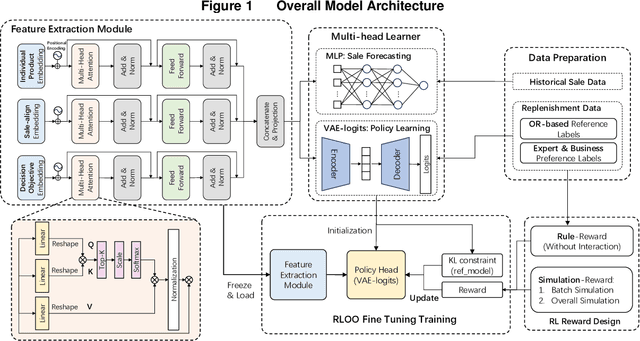
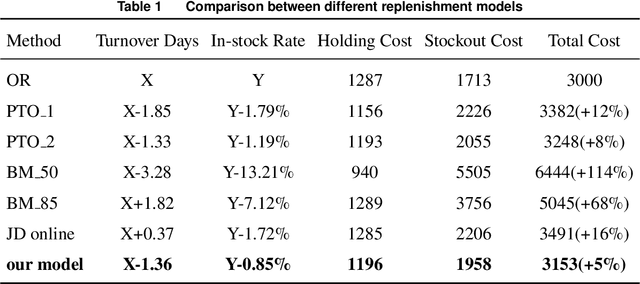
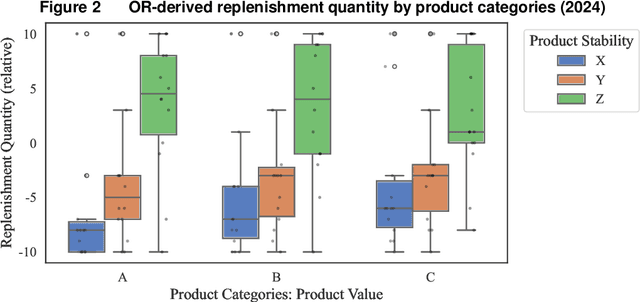
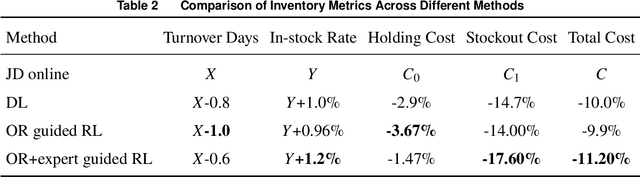
As the pursuit of synergy between Artificial Intelligence (AI) and Operations Research (OR) gains momentum in handling complex inventory systems, a critical challenge persists: how to effectively reconcile AI's adaptive perception with OR's structural rigor. To bridge this gap, we propose a novel OR-Guided "Pretrain-then-Reinforce" framework. To provide structured guidance, we propose a simulation-augmented OR model that generates high-quality reference decisions, implicitly capturing complex business constraints and managerial preferences. Leveraging these OR-derived decisions as foundational training labels, we design a domain-informed deep learning foundation model to establish foundational decision-making capabilities, followed by a reinforcement learning (RL) fine-tuning stage. Uniquely, we position RL as a deep alignment mechanism that enables the AI agent to internalize the optimality principles of OR, while simultaneously leveraging exploration for general policy refinement and allowing expert guidance for scenario-specific adaptation (e.g., promotional events). Validated through extensive numerical experiments and a field deployment at JD.com augmented by a Difference-in-Differences (DiD) analysis, our model significantly outperforms incumbent industrial practices, delivering real-world gains of a 5.27-day reduction in turnover and a 2.29% increase in in-stock rates, alongside a 29.95% decrease in holding costs. Contrary to the prevailing trend of brute-force model scaling, our study demonstrates that a lightweight, domain-informed model can deliver state-of-the-art performance and robust transferability when guided by structured OR logic. This approach offers a scalable and cost-effective paradigm for intelligent supply chain management, highlighting the value of deeply aligning AI with OR.
Learn to Relax with Large Language Models: Solving Nonlinear Combinatorial Optimization Problems via Bidirectional Coevolution
Sep 16, 2025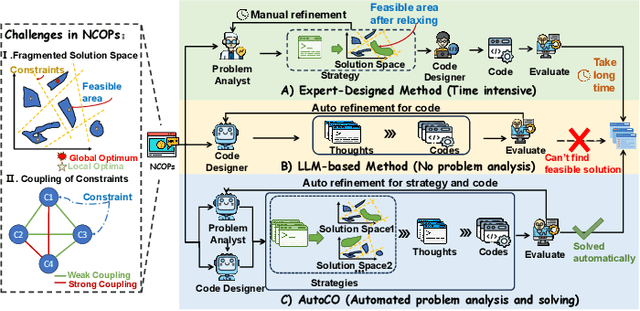
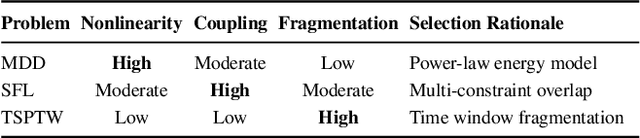
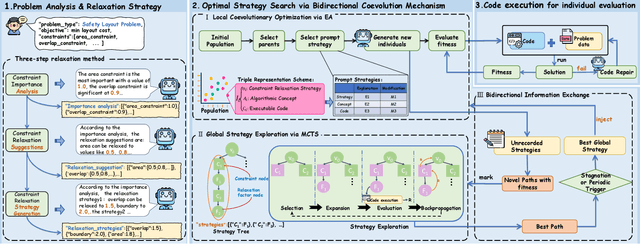
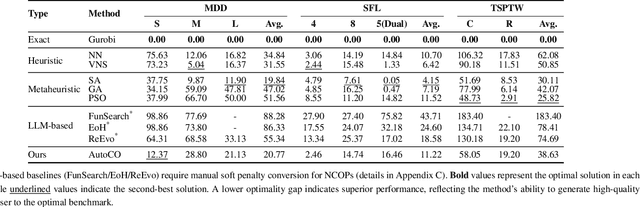
Nonlinear Combinatorial Optimization Problems (NCOPs) present a formidable computational hurdle in practice, as their nonconvex nature gives rise to multi-modal solution spaces that defy efficient optimization. Traditional constraint relaxation approaches rely heavily on expert-driven, iterative design processes that lack systematic automation and scalable adaptability. While recent Large Language Model (LLM)-based optimization methods show promise for autonomous problem-solving, they predominantly function as passive constraint validators rather than proactive strategy architects, failing to handle the sophisticated constraint interactions inherent to NCOPs.To address these limitations, we introduce the first end-to-end \textbf{Auto}mated \textbf{C}onstraint \textbf{O}ptimization (AutoCO) method, which revolutionizes NCOPs resolution through learning to relax with LLMs.Specifically, we leverage structured LLM reasoning to generate constraint relaxation strategies, which are dynamically evolving with algorithmic principles and executable code through a unified triple-representation scheme. We further establish a novel bidirectional (global-local) coevolution mechanism that synergistically integrates Evolutionary Algorithms for intensive local refinement with Monte Carlo Tree Search for systematic global strategy space exploration, ensuring optimal balance between intensification and diversification in fragmented solution spaces. Finally, comprehensive experiments on three challenging NCOP benchmarks validate AutoCO's consistent effectiveness and superior performance over the baselines.