 Add to Chrome
 Add to Firefox
 Add to Edge
Evidence-Unit Fairness and the Limits of Query-Adaptive Sparse-Dense Fusion in Financial Document Retrieval
Jul 31, 2026
Retrieval over financial filings is difficult because queries are short and acronym-heavy while the answer-bearing evidence sits inside long, table-dense documents. We study sparse-dense hybrid retrieval on FinDER, a benchmark of expert-annotated questions over corporate 10-K filings. Our first finding is methodological: if the retrieval unit is larger than the dense encoder's input window, the dense model never sees a large share of the labeled evidence, confounding comparison against a full-text sparse baseline. We measure this directly and remove it by segmenting the corpus into encoder-sized windows. On the corrected corpus, fusing BM25 and a compact dense encoder improves reference-level Hit@10 by roughly 28 percent over either component, and training-free, untuned reciprocal rank fusion exceeds the equal-weight blend in an exploratory comparison. We then ask whether choosing the fusion weight per query helps: an oracle over the interpolation-weight grid shows headroom of 21.8 percent, yet none of the three lightweight adaptive routers (a score-confidence heuristic, a random forest over query features, and a ridge regressor over query embeddings) establishes a statistically reliable improvement over the fixed blend under company-grouped cross-validation with cluster-robust inference. Simple fusion is a strong baseline here, and we discuss why per-query weighting does not capture the available headroom.

Interpretable vs Learned Encoders for High-Cardinality Fraud Detection
Jul 01, 2026A total of seven categorical encoding methods were tested on the IEEE-CIS fraud benchmark dataset (590,540 records, 3.5% positives, 8 high-cardinality columns). The encoders were evaluated using a stratified 5-fold cross-validation (CV) with three repetitions. Five of the encoders had identical frozen LightGBM learners in the downstream phase, allowing for controlled comparisons of their performance to each other. CatBoost and TabNet were included as comparisons across paradigms using different learners. The entity embeddings produced the highest AUC-ROC (0.9612), with a statistically significant tie with that of CatBoost (0.9602) and statistically superior to tier group encoding (0.9548), whereas target encoding was only 0.0023 worse than tier group encoding and the auditor-friendly tier boundaries were maintained. Off-the-shelf TabNet did not outperform tree-based pipelines and collapsed under data scarcity. On AUC-PR, CatBoost leads (0.822 vs. 0.793); no encoder dominated both metrics. Per-column analysis confirmed the embedding advantage arises from joint multi-column representation.
How Early Is Early Enough? Design-Dependent Observation-Window Sufficiency in Subscription Churn Prediction
Jul 01, 2026How many days of early behavior suffice for subscription churn prediction? In the public KKBox dataset, the early indicator of churn is typically an indicator of someone's contract status; however, when looking in the heavily churned manual-renewal segment, having access to early behavior creates a substantial increase in prediction for that specific segment (PR +0.10 at 120 days). A nine-window sufficiency curve shows a diminishing-returns knee in a 45-90 day band. However, stress-testing over three cohort/task designs shows that this curve is singular to the design being tested; for example, in our test with a moving target, the curve inverts and can shift depending on the feature set used. Therefore, any window-sufficiency claim should state its cohort construction, target definition, and feature families. All evidence is from one music-streaming dataset; the mechanism should generalize but the magnitudes may not.
Validation-Stage Combinatorial Fusion Analysis for Imbalanced Credit-Card Fraud Detection
Jun 09, 2026Credit-card fraud detection is difficult because fraudulent transactions are rare, costly, and unevenly distributed. Strong gradient-boosted tree models already perform well on structured transaction data, so the value of another fusion method is not obvious. This paper examines whether Combinatorial Fusion Analysis (CFA), which searches over model subsets and rank-score fusion rules, can still add value on the IEEE-CIS Fraud Detection benchmark. Using a leakage-free 60/20/20 train/validation/test protocol, we evaluate 480 fusion configurations built from seven base classifiers. The best test-set result comes from diversity-weighted score fusion of Random Forest, XGBoost, and LightGBM (DEF WtScore), with AUC-ROC = 0.9405, AUPRC = 0.6699, and F1 = 0.6373. Bootstrap confidence intervals from 1,000 resamples show that the gains over the strongest single model exclude zero for all three metrics. CFA matches soft voting on AUC-ROC, improves AUPRC and F1, and outperforms stacking in this setting. A CTGAN augmentation experiment gives a negative result: synthetic fraud samples degrade both individual models and CFA. Overall, CFA is most useful here not as a way to combine every classifier, but as a validation-stage method for choosing a small, complementary subset and assigning diversity-aware weights.
RiGS: Rigid-aware 4D Gaussian Splatting from a Single Monocular Video
May 22, 2026Reconstructing dynamic 3D scenes from monocular videos is a fundamental yet highly challenging task, as real-world motions often involve both long-term smooth transformations and short-term complex deformations. Existing methods either struggle to maintain temporal consistency or fail to capture high-frequency dynamics due to limited motion modeling capacity. In this work, we present Rigid-aware 4D Gaussian Splatting (RiGS), which simultaneously captures motions across multiple temporal scales. Specifically, RiGS introduces three types of Gaussian primitives: static, rigid, and transient, which represent static backgrounds, long-term low-frequency motions, and short-term high-frequency dynamics, respectively. An object-wise dynamic mask is proposed to aggregate long-range spatiotemporal motion information and guide the decomposition of static and dynamic regions. To jointly model motion across scales, rigid Gaussians are allowed to transition into transient Gaussians based on their temporal duration, and both are optimized under scene flow guidance, providing dense 3D motion supervision. Extensive experiments demonstrate that RiGS achieves state-of-the-art performance on novel view synthesis benchmarks. Code is available at \hyperlink{https://github.com/ladvu/RiGS}{https://github.com/ladvu/RiGS}.
Skill-Conditioned Visual Geolocation for Vision-Language
Apr 10, 2026Vision-language models (VLMs) have shown a promising ability in image geolocation, but they still lack structured geographic reasoning and the capacity for autonomous self-evolution. Existing methods predominantly rely on implicit parametric memory, which often exploits outdated knowledge and generates hallucinated reasoning. Furthermore, current inference is a "one-off" process, lacking the feedback loops necessary for self-evolution based on reasoning outcomes. To address these issues, we propose GeoSkill, a training-free framework based on an evolving Skill-Graph. We first initialize the graph by refining human expert trajectories into atomic, natural-language skills. For execution, GeoSkill employs an inference model to perform direct reasoning guided by the current Skill-Graph. For continuous growth, an Autonomous Evolution mechanism leverages a larger model to conduct multiple reasoning rollouts on image-coordinate pairs sourced from web-scale data and verified real-world reasoning. By analyzing both successful and failed trajectories from these rollouts, the mechanism iteratively synthesizes and prunes skills, effectively expanding the Skill-Graph and correcting geographic biases without any parameter updates. Experiments demonstrate that GeoSkill achieves promising performance in both geolocation accuracy and reasoning faithfulness on GeoRC, while maintaining superior generalization across diverse external datasets. Furthermore, our autonomous evolution fosters the emergence of novel, verifiable skills, significantly enhancing the system's cognition of real-world geographic knowledge beyond isolated case studies.
ActivityEditor: Learning to Synthesize Physically Valid Human Mobility
Apr 07, 2026Human mobility modeling is indispensable for diverse urban applications. However, existing data-driven methods often suffer from data scarcity, limiting their applicability in regions where historical trajectories are unavailable or restricted. To bridge this gap, we propose \textbf{ActivityEditor}, a novel dual-LLM-agent framework designed for zero-shot cross-regional trajectory generation. Our framework decomposes the complex synthesis task into two collaborative stages. Specifically, an intention-based agent, which leverages demographic-driven priors to generate structured human intentions and coarse activity chains to ensure high-level socio-semantic coherence. These outputs are then refined by editor agent to obtain mobility trajectories through iteratively revisions that enforces human mobility law. This capability is acquired through reinforcement learning with multiple rewards grounded in real-world physical constraints, allowing the agent to internalize mobility regularities and ensure high-fidelity trajectory generation. Extensive experiments demonstrate that \textbf{ActivityEditor} achieves superior zero-shot performance when transferred across diverse urban contexts. It maintains high statistical fidelity and physical validity, providing a robust and highly generalizable solution for mobility simulation in data-scarce scenarios. Our code is available at: https://anonymous.4open.science/r/ActivityEditor-066B.
Exploiting Self-Sustainable Information-Bearing RIS in Underlay CR-NOMA Networks
Mar 22, 2026Information-bearing reconfigurable intelligent surfaces (IB-RIS) provide a promising solution to self-sustainable and green communications by harvesting ambient radio frequency energy while embedding information via passive reflection. This paper investigates a self-sustainable IB-RIS (SIB-RIS)-assisted non-orthogonal multiple access (NOMA) network operating in an underlay cognitive radio (CR) system. Specifically, a multi-antenna primary transmitter (PT) serves a primary user (PU) and concurrently illuminates the secondary nodes, which enables each SIB-RIS to perform simultaneous energy harvesting and backscatter-based information embedding at each RIS. Based on this model, a weighted sum spectral efficiency (WSSE) maximization problem is formulated for the secondary network by jointly optimizing the PT transmit beamforming vector, the SIB-RIS reflection coefficients, and the power-splitting ratios. To tackle the intricately-coupled non-convex problem, an efficient block coordinate descent (BCD) optimization framework is developed, which leverages fractional programming via Lagrangian dual and quadratic transforms together with a difference-of-convex programming approach. Numerical results demonstrate that the proposed SIB-RIS-assisted NOMA CR system yields substantial WSSE gains over both orthogonal multiple access (OMA)-based and active antenna schemes. Moreover, a 2-bit discrete-phase SIB-RIS implementation achieves competitive to which WSSE performance, confirming the practicality of the low-resolution architecture.
Cartesian-nj: Extending e3nn to Irreducible Cartesian Tensor Product and Contracion
Dec 18, 2025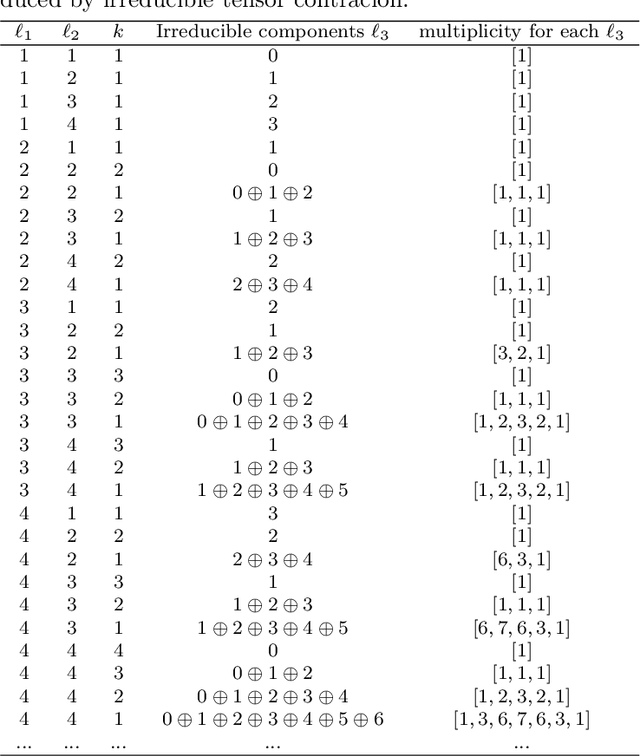
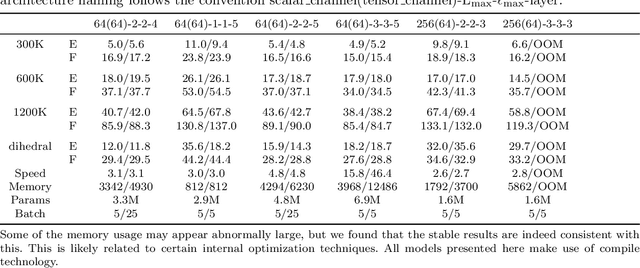
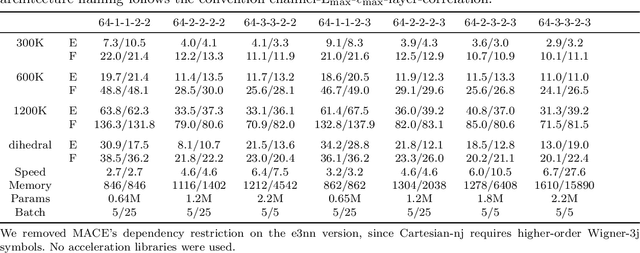
Equivariant atomistic machine learning models have brought substantial gains in both extrapolation capability and predictive accuracy. Depending on the basis of the space, two distinct types of irreducible representations are utilized. From architectures built upon spherical tensors (STs) to more recent formulations employing irreducible Cartesian tensors (ICTs), STs have remained dominant owing to their compactness, elegance, and theoretical completeness. Nevertheless, questions have persisted regarding whether ST constructions are the only viable design principle, motivating continued development of Cartesian networks. In this work, we introduce the Cartesian-3j and Cartesian-nj symbol, which serve as direct analogues of the Wigner-3j and Wigner-nj symbol defined for tensor coupling. These coefficients enable the combination of any two ICTs into a new ICT. Building on this foundation, we extend e3nn to support irreducible Cartesian tensor product, and we release the resulting Python package as cartnn. Within this framework, we implement Cartesian counterparts of MACE, NequIP, and Allegro, allowing the first systematic comparison of Cartesian and spherical models to assess whether Cartesian formulations may offer advantages under specific conditions. Using TACE as a representative example, we further examine whether architectures constructed from irreducible Cartesian tensor product and contraction(ICTP and ICTC) are conceptually well-founded in Cartesian space and whether opportunities remain for improving their design.
Super-resolution Wideband Beam Training for Near-field Communications with Ultra-low Overhead
Apr 27, 2025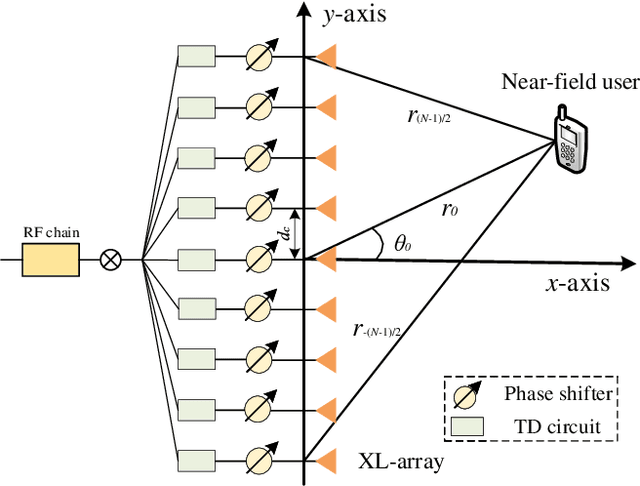
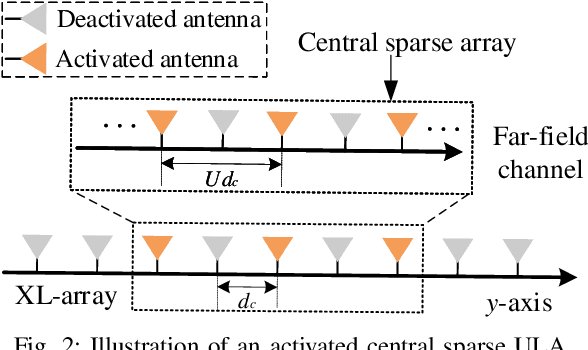
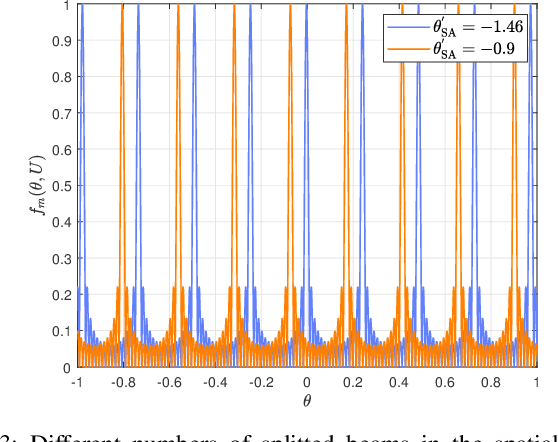
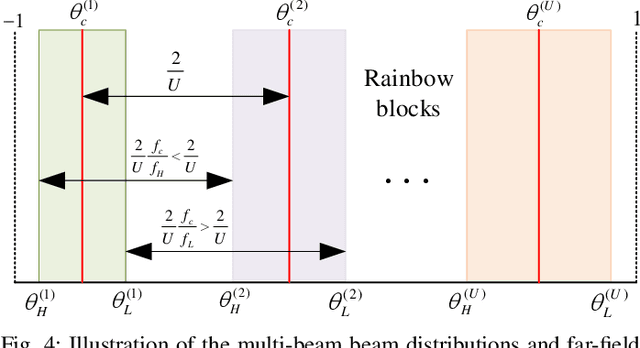
In this paper, we propose a super-resolution wideband beam training method for near-field communications, which is able to achieve ultra-low overhead. To this end, we first study the multi-beam characteristic of a sparse uniform linear array (S-ULA) in the wideband. Interestingly, we show that this leads to a new beam pattern property, called rainbow blocks, where the S-ULA generates multiple grating lobes and each grating lobe is further splitted into multiple versions in the wideband due to the well-known beam-split effect. As such, one directional beamformer based on S-ULA is capable of generating multiple rainbow blocks in the wideband, hence significantly extending the beam coverage. Then, by exploiting the beam-split effect in both the frequency and spatial domains, we propose a new three-stage wideband beam training method for extremely large-scale array (XL-array) systems. Specifically, we first sparsely activate a set of antennas at the central of the XL-array and judiciously design the time-delay (TD) parameters to estimate candidate user angles by comparing the received signal powers at the user over subcarriers. Next, to resolve the angular ambiguity introduced by the S-ULA, we activate all antennas in the central subarray and design an efficient subcarrier selection scheme to estimate the true user angle. In the third stage, we resolve the user range at the estimated user angle with high resolution by controlling the splitted beams over subcarriers to simultaneously cover the range domain. Finally, numerical results are provided to demonstrate the effectiveness of proposed wideband beam training scheme, which only needs three pilots in near-field beam training, while achieving near-optimal rate performance.