 Add to Chrome
 Add to Firefox
 Add to Edge
World Tokens: Enhancing Embodied Policies with Training-Time World Modeling
Aug 10, 2026
Vision-language-action (VLA) models are a widely adopted paradigm for embodied policies. They excel at efficient closed-loop control but do not explicitly model how physical scenes evolve as a task unfolds. Recently emerging world-action models (WAMs) leverage pretrained video world models to capture spatiotemporal evolution, yet retaining future generation or a large video backbone in the control loop substantially increases inference cost. We introduce World Tokens, an embodied policy architecture built around a World Adapter that bridges visual-language understanding, world-dynamics modeling, and action generation. It uses world modeling during training to enhance the action policy while preserving efficient deployment. Specifically, the World Adapter transforms VLM features into a fixed set of world tokens, which condition a jointly fine-tuned future-video denoiser and simultaneously serve as the action expert's sole visual-language context. This shared conditioning allows gradients from future-video denoising to directly shape the representation used for action prediction, while exclusive routing prevents the policy from bypassing that representation. At deployment, the world-model branch is removed, leaving only the VLM, World Adapter, and action expert, with no online video-model inference. With a 2B backbone and no embodied action pretraining, World Tokens is highly competitive on LIBERO, attains the best reported averages on SIMPLER, substantially improves real-world R1 Pro success over a matched action-only baseline, and generates each action chunk at VLA-level latency.

SeerGuard: A Safety Framework for Mobile GUI Agents via World Model Prediction
Jul 17, 2026Mobile graphical user interface (GUI) agents have demonstrated remarkable capabilities in automating complex tasks, yet they introduce critical safety risks where a single erroneous action can lead to irreversible consequences. Existing safety mechanisms are primarily reactive, lacking the ability to assess risks before execution. In this paper, we introduce SeerGuard, a consequence-aware safety framework designed to mitigate these risks through pre-execution instruction-level screening and action-level risk assessment. Specifically, the action-level assessment analyzes agent-proposed actions within current GUI states, anticipating likely outcomes to identify risks before they are executed. To enable these capabilities, we construct a unified safety-augmented world model (SAWM) via multi-task learning, integrating semantic next-state prediction with safety risk assessment. Extensive experiments demonstrate that SeerGuard generalizes effectively across diverse mobile GUI agents. On Qwen3-VL-8B-Instruct, it increases the safety-utility score from $0.191$ to $0.596$ at $ω=0.8$ and reduces the risk-cost score from $0.347$ to $0.130$ at $α=0.8$. Further analyses on our SAWM validate the effectiveness of the instruction-level screening, alongside the capability of action risk assessment and next-state prediction.
ORPR: An OR-Guided Pretrain-then-Reinforce Learning Model for Inventory Management
Dec 22, 2025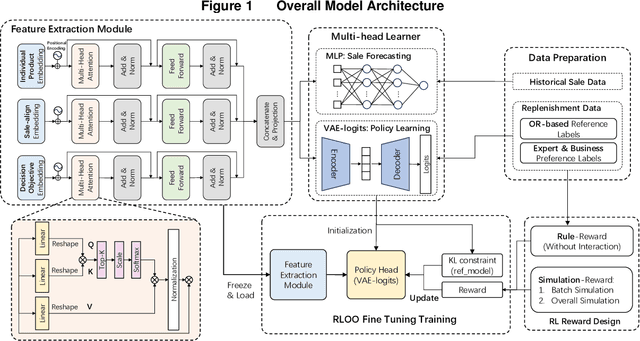
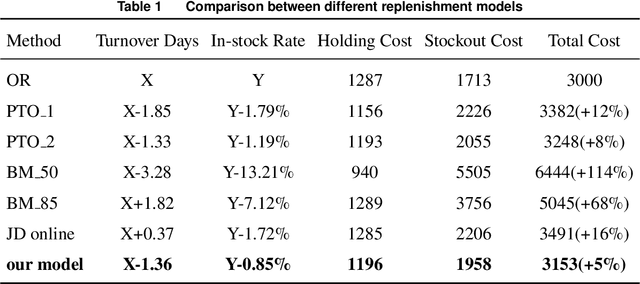
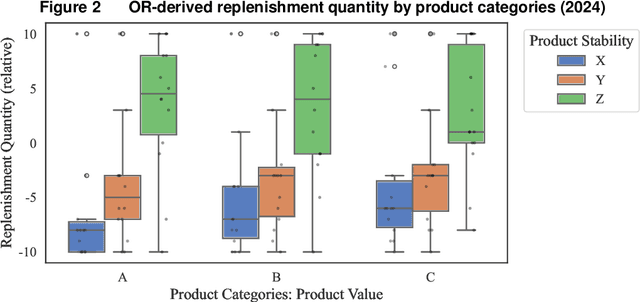
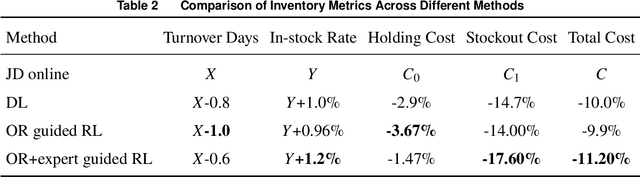
As the pursuit of synergy between Artificial Intelligence (AI) and Operations Research (OR) gains momentum in handling complex inventory systems, a critical challenge persists: how to effectively reconcile AI's adaptive perception with OR's structural rigor. To bridge this gap, we propose a novel OR-Guided "Pretrain-then-Reinforce" framework. To provide structured guidance, we propose a simulation-augmented OR model that generates high-quality reference decisions, implicitly capturing complex business constraints and managerial preferences. Leveraging these OR-derived decisions as foundational training labels, we design a domain-informed deep learning foundation model to establish foundational decision-making capabilities, followed by a reinforcement learning (RL) fine-tuning stage. Uniquely, we position RL as a deep alignment mechanism that enables the AI agent to internalize the optimality principles of OR, while simultaneously leveraging exploration for general policy refinement and allowing expert guidance for scenario-specific adaptation (e.g., promotional events). Validated through extensive numerical experiments and a field deployment at JD.com augmented by a Difference-in-Differences (DiD) analysis, our model significantly outperforms incumbent industrial practices, delivering real-world gains of a 5.27-day reduction in turnover and a 2.29% increase in in-stock rates, alongside a 29.95% decrease in holding costs. Contrary to the prevailing trend of brute-force model scaling, our study demonstrates that a lightweight, domain-informed model can deliver state-of-the-art performance and robust transferability when guided by structured OR logic. This approach offers a scalable and cost-effective paradigm for intelligent supply chain management, highlighting the value of deeply aligning AI with OR.
Enhancing stroke disease classification through machine learning models via a novel voting system by feature selection techniques
Apr 01, 2025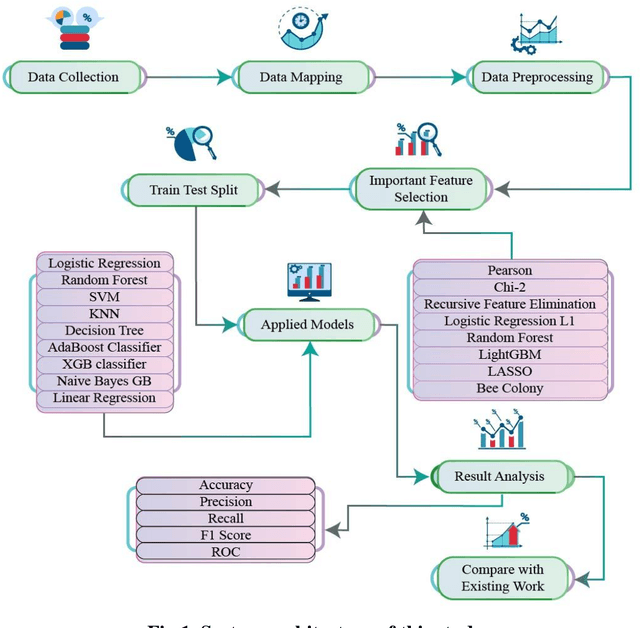
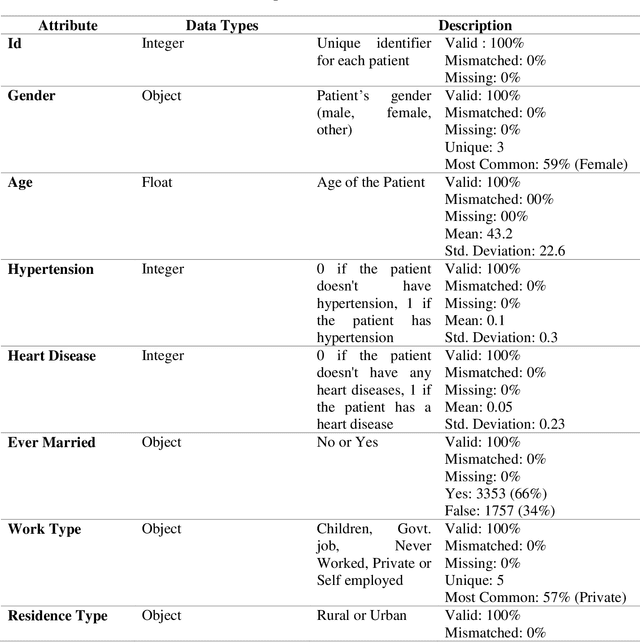
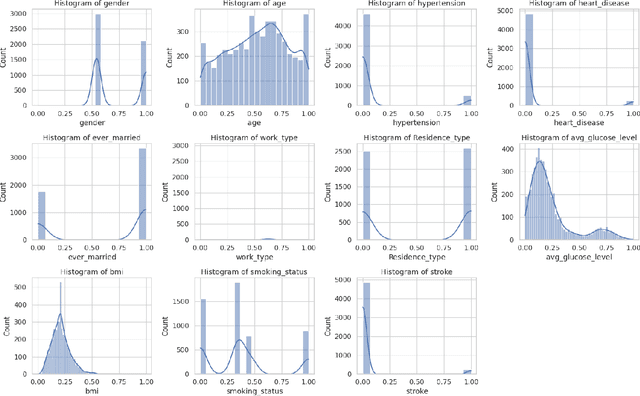
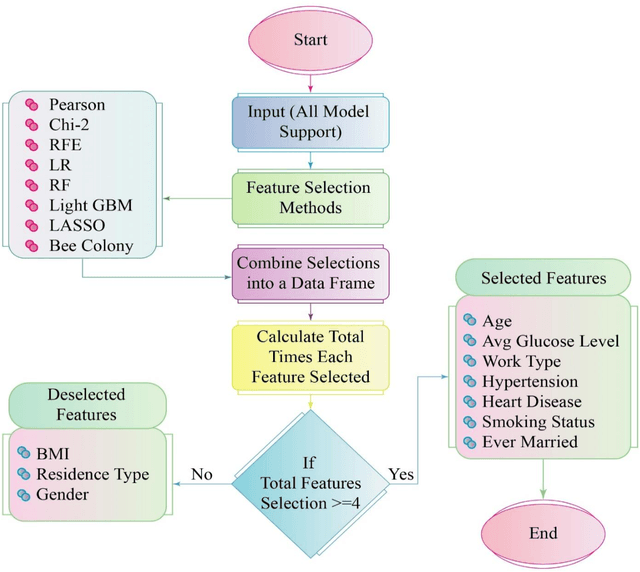
Heart disease remains a leading cause of mortality and morbidity worldwide, necessitating the development of accurate and reliable predictive models to facilitate early detection and intervention. While state of the art work has focused on various machine learning approaches for predicting heart disease, but they could not able to achieve remarkable accuracy. In response to this need, we applied nine machine learning algorithms XGBoost, logistic regression, decision tree, random forest, k-nearest neighbors (KNN), support vector machine (SVM), gaussian na\"ive bayes (NB gaussian), adaptive boosting, and linear regression to predict heart disease based on a range of physiological indicators. Our approach involved feature selection techniques to identify the most relevant predictors, aimed at refining the models to enhance both performance and interpretability. The models were trained, incorporating processes such as grid search hyperparameter tuning, and cross-validation to minimize overfitting. Additionally, we have developed a novel voting system with feature selection techniques to advance heart disease classification. Furthermore, we have evaluated the models using key performance metrics including accuracy, precision, recall, F1-score, and the area under the receiver operating characteristic curve (ROC AUC). Among the models, XGBoost demonstrated exceptional performance, achieving 99% accuracy, precision, F1-Score, 98% recall, and 100% ROC AUC. This study offers a promising approach to early heart disease diagnosis and preventive healthcare.
An adaptive shortest-solution guided decimation approach to sparse high-dimensional linear regression
Nov 28, 2022High-dimensional linear regression model is the most popular statistical model for high-dimensional data, but it is quite a challenging task to achieve a sparse set of regression coefficients. In this paper, we propose a simple heuristic algorithm to construct sparse high-dimensional linear regression models, which is adapted from the shortest solution-guided decimation algorithm and is referred to as ASSD. This algorithm constructs the support of regression coefficients under the guidance of the least-squares solution of the recursively decimated linear equations, and it applies an early-stopping criterion and a second-stage thresholding procedure to refine this support. Our extensive numerical results demonstrate that ASSD outperforms LASSO, vector approximate message passing, and two other representative greedy algorithms in solution accuracy and robustness. ASSD is especially suitable for linear regression problems with highly correlated measurement matrices encountered in real-world applications.
* 13 pages, 6 figures
Clustered Federated Learning based on Nonconvex Pairwise Fusion
Nov 08, 2022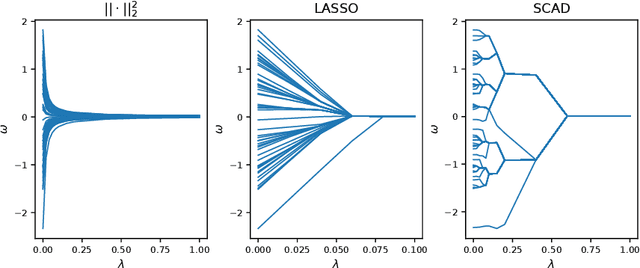
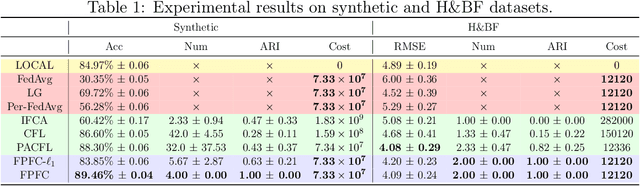
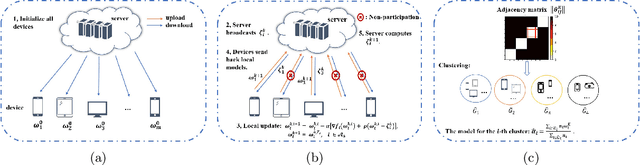
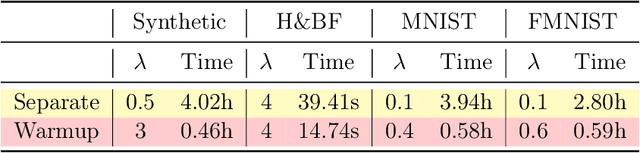
This study investigates clustered federated learning (FL), one of the formulations of FL with non-i.i.d. data, where the devices are partitioned into clusters and each cluster optimally fits its data with a localized model. We propose a novel clustered FL framework, which applies a nonconvex penalty to pairwise differences of parameters. This framework can automatically identify clusters without a priori knowledge of the number of clusters and the set of devices in each cluster. To implement the proposed framework, we develop a novel clustered FL method called FPFC. Advancing from the standard ADMM, our method is implemented in parallel, updates only a subset of devices at each communication round, and allows each participating device to perform a variable amount of work. This greatly reduces the communication cost while simultaneously preserving privacy, making it practical for FL. We also propose a new warmup strategy for hyperparameter tuning under FL settings and consider the asynchronous variant of FPFC (asyncFPFC). Theoretically, we provide convergence guarantees of FPFC for general nonconvex losses and establish the statistical convergence rate under a linear model with squared loss. Our extensive experiments demonstrate the advantages of FPFC over existing methods.