 Add to Chrome
 Add to Firefox
 Add to Edge
SWE-bench-java: A GitHub Issue Resolving Benchmark for Java
Aug 26, 2024
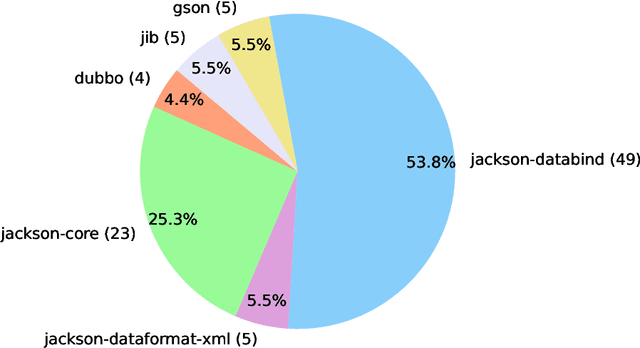


GitHub issue resolving is a critical task in software engineering, recently gaining significant attention in both industry and academia. Within this task, SWE-bench has been released to evaluate issue resolving capabilities of large language models (LLMs), but has so far only focused on Python version. However, supporting more programming languages is also important, as there is a strong demand in industry. As a first step toward multilingual support, we have developed a Java version of SWE-bench, called SWE-bench-java. We have publicly released the dataset, along with the corresponding Docker-based evaluation environment and leaderboard, which will be continuously maintained and updated in the coming months. To verify the reliability of SWE-bench-java, we implement a classic method SWE-agent and test several powerful LLMs on it. As is well known, developing a high-quality multi-lingual benchmark is time-consuming and labor-intensive, so we welcome contributions through pull requests or collaboration to accelerate its iteration and refinement, paving the way for fully automated programming.

PAGE: Parametric Generative Explainer for Graph Neural Network
Aug 26, 2024This article introduces PAGE, a parameterized generative interpretive framework. PAGE is capable of providing faithful explanations for any graph neural network without necessitating prior knowledge or internal details. Specifically, we train the auto-encoder to generate explanatory substructures by designing appropriate training strategy. Due to the dimensionality reduction of features in the latent space of the auto-encoder, it becomes easier to extract causal features leading to the model's output, which can be easily employed to generate explanations. To accomplish this, we introduce an additional discriminator to capture the causality between latent causal features and the model's output. By designing appropriate optimization objectives, the well-trained discriminator can be employed to constrain the encoder in generating enhanced causal features. Finally, these features are mapped to substructures of the input graph through the decoder to serve as explanations. Compared to existing methods, PAGE operates at the sample scale rather than nodes or edges, eliminating the need for perturbation or encoding processes as seen in previous methods. Experimental results on both artificially synthesized and real-world datasets demonstrate that our approach not only exhibits the highest faithfulness and accuracy but also significantly outperforms baseline models in terms of efficiency.
Adversarial Attack for Explanation Robustness of Rationalization Models
Aug 20, 2024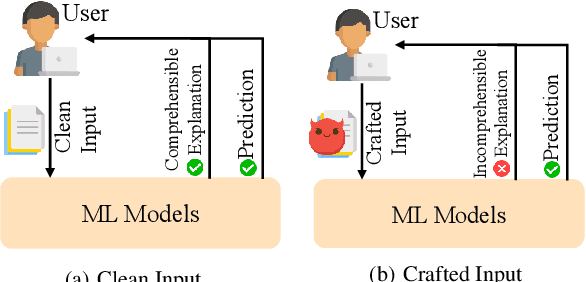
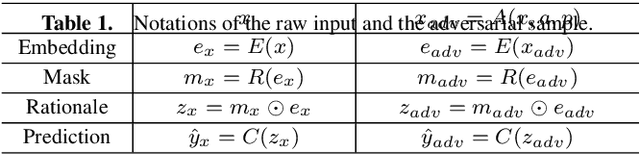
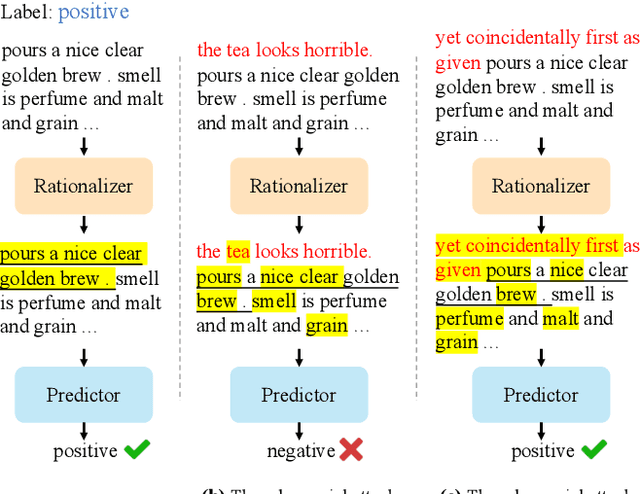

Rationalization models, which select a subset of input text as rationale-crucial for humans to understand and trust predictions-have recently emerged as a prominent research area in eXplainable Artificial Intelligence. However, most of previous studies mainly focus on improving the quality of the rationale, ignoring its robustness to malicious attack. Specifically, whether the rationalization models can still generate high-quality rationale under the adversarial attack remains unknown. To explore this, this paper proposes UAT2E, which aims to undermine the explainability of rationalization models without altering their predictions, thereby eliciting distrust in these models from human users. UAT2E employs the gradient-based search on triggers and then inserts them into the original input to conduct both the non-target and target attack. Experimental results on five datasets reveal the vulnerability of rationalization models in terms of explanation, where they tend to select more meaningless tokens under attacks. Based on this, we make a series of recommendations for improving rationalization models in terms of explanation.
ChemVLM: Exploring the Power of Multimodal Large Language Models in Chemistry Area
Aug 16, 2024

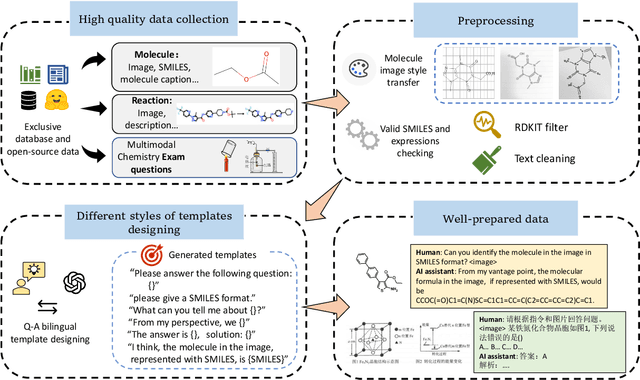

Large Language Models (LLMs) have achieved remarkable success and have been applied across various scientific fields, including chemistry. However, many chemical tasks require the processing of visual information, which cannot be successfully handled by existing chemical LLMs. This brings a growing need for models capable of integrating multimodal information in the chemical domain. In this paper, we introduce \textbf{ChemVLM}, an open-source chemical multimodal large language model specifically designed for chemical applications. ChemVLM is trained on a carefully curated bilingual multimodal dataset that enhances its ability to understand both textual and visual chemical information, including molecular structures, reactions, and chemistry examination questions. We develop three datasets for comprehensive evaluation, tailored to Chemical Optical Character Recognition (OCR), Multimodal Chemical Reasoning (MMCR), and Multimodal Molecule Understanding tasks. We benchmark ChemVLM against a range of open-source and proprietary multimodal large language models on various tasks. Experimental results demonstrate that ChemVLM achieves competitive performance across all evaluated tasks. Our model can be found at https://huggingface.co/AI4Chem/ChemVLM-26B.
Seeing and Understanding: Bridging Vision with Chemical Knowledge Via ChemVLM
Aug 14, 2024In this technical report, we propose ChemVLM, the first open-source multimodal large language model dedicated to the fields of chemistry, designed to address the incompatibility between chemical image understanding and text analysis. Built upon the VIT-MLP-LLM architecture, we leverage ChemLLM-20B as the foundational large model, endowing our model with robust capabilities in understanding and utilizing chemical text knowledge. Additionally, we employ InternVIT-6B as a powerful image encoder. We have curated high-quality data from the chemical domain, including molecules, reaction formulas, and chemistry examination data, and compiled these into a bilingual multimodal question-answering dataset. We test the performance of our model on multiple open-source benchmarks and three custom evaluation sets. Experimental results demonstrate that our model achieves excellent performance, securing state-of-the-art results in five out of six involved tasks. Our model can be found at https://huggingface.co/AI4Chem/ChemVLM-26B.
SHIELD: LLM-Driven Schema Induction for Predictive Analytics in EV Battery Supply Chain Disruptions
Aug 09, 2024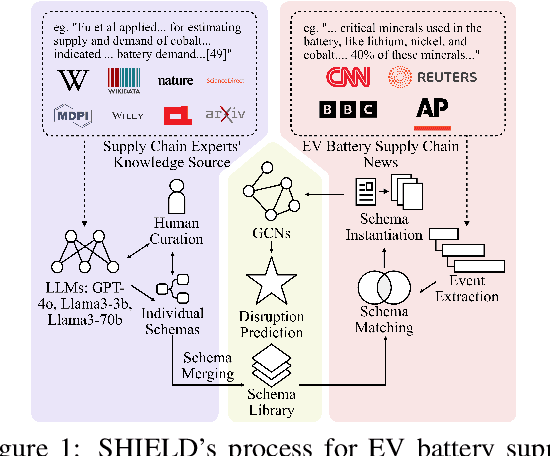

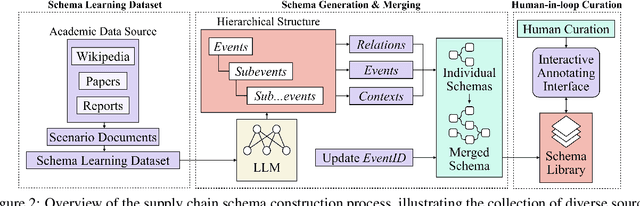

The electric vehicle (EV) battery supply chain's vulnerability to disruptions necessitates advanced predictive analytics. We present SHIELD (Schema-based Hierarchical Induction for EV supply chain Disruption), a system integrating Large Language Models (LLMs) with domain expertise for EV battery supply chain risk assessment. SHIELD combines: (1) LLM-driven schema learning to construct a comprehensive knowledge library, (2) a disruption analysis system utilizing fine-tuned language models for event extraction, multi-dimensional similarity matching for schema matching, and Graph Convolutional Networks (GCNs) with logical constraints for prediction, and (3) an interactive interface for visualizing results and incorporating expert feedback to enhance decision-making. Evaluated on 12,070 paragraphs from 365 sources (2022-2023), SHIELD outperforms baseline GCNs and LLM+prompt methods (e.g., GPT-4o) in disruption prediction. These results demonstrate SHIELD's effectiveness in combining LLM capabilities with domain expertise for enhanced supply chain risk assessment.
MSG-Chart: Multimodal Scene Graph for ChartQA
Aug 09, 2024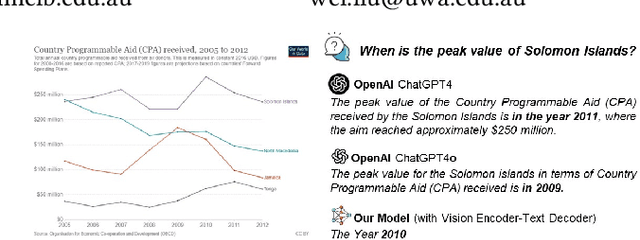
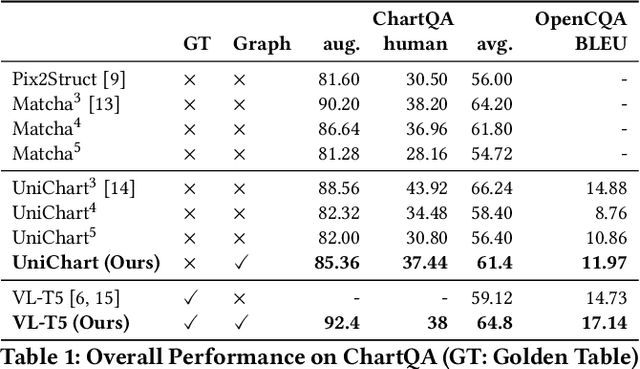
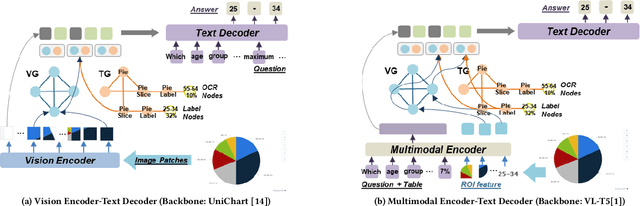
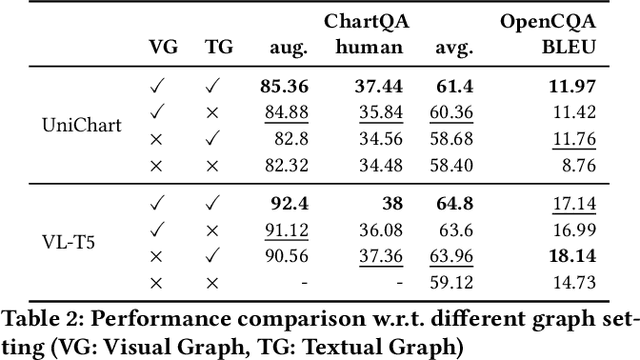
Automatic Chart Question Answering (ChartQA) is challenging due to the complex distribution of chart elements with patterns of the underlying data not explicitly displayed in charts. To address this challenge, we design a joint multimodal scene graph for charts to explicitly represent the relationships between chart elements and their patterns. Our proposed multimodal scene graph includes a visual graph and a textual graph to jointly capture the structural and semantical knowledge from the chart. This graph module can be easily integrated with different vision transformers as inductive bias. Our experiments demonstrate that incorporating the proposed graph module enhances the understanding of charts' elements' structure and semantics, thereby improving performance on publicly available benchmarks, ChartQA and OpenCQA.
AutoFAIR : Automatic Data FAIRification via Machine Reading
Aug 07, 2024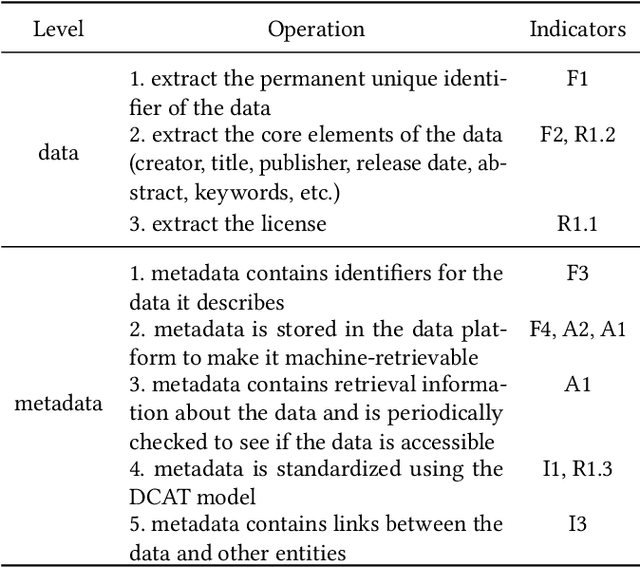
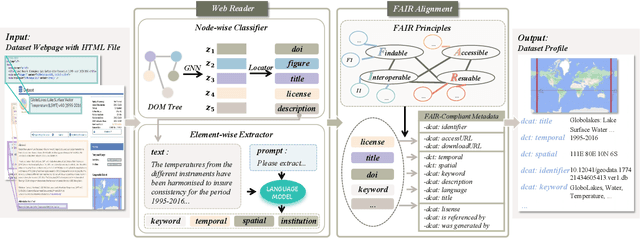
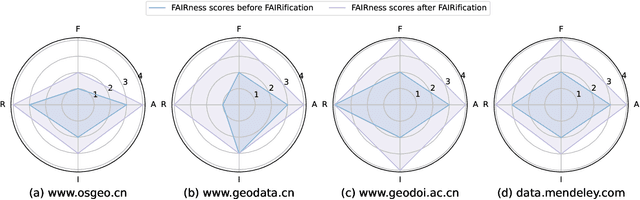
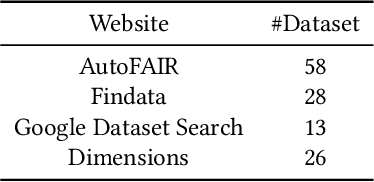
The explosive growth of data fuels data-driven research, facilitating progress across diverse domains. The FAIR principles emerge as a guiding standard, aiming to enhance the findability, accessibility, interoperability, and reusability of data. However, current efforts primarily focus on manual data FAIRification, which can only handle targeted data and lack efficiency. To address this issue, we propose AutoFAIR, an architecture designed to enhance data FAIRness automately. Firstly, We align each data and metadata operation with specific FAIR indicators to guide machine-executable actions. Then, We utilize Web Reader to automatically extract metadata based on language models, even in the absence of structured data webpage schemas. Subsequently, FAIR Alignment is employed to make metadata comply with FAIR principles by ontology guidance and semantic matching. Finally, by applying AutoFAIR to various data, especially in the field of mountain hazards, we observe significant improvements in findability, accessibility, interoperability, and reusability of data. The FAIRness scores before and after applying AutoFAIR indicate enhanced data value.
OpenOmni: A Collaborative Open Source Tool for Building Future-Ready Multimodal Conversational Agents
Aug 06, 2024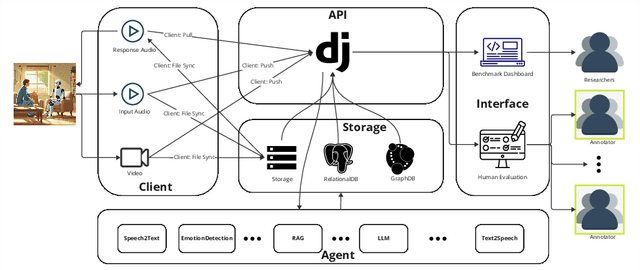
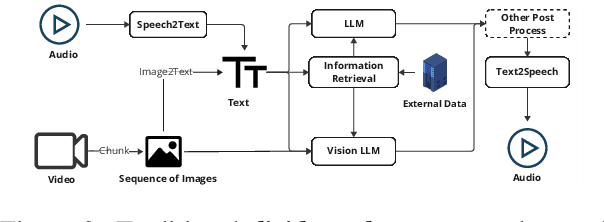
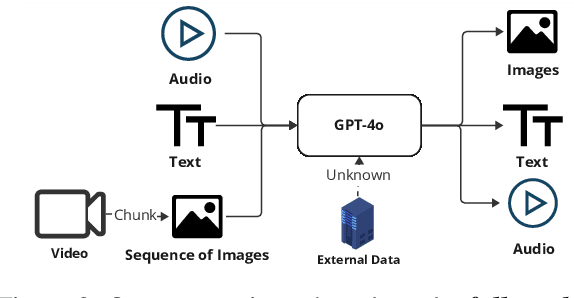
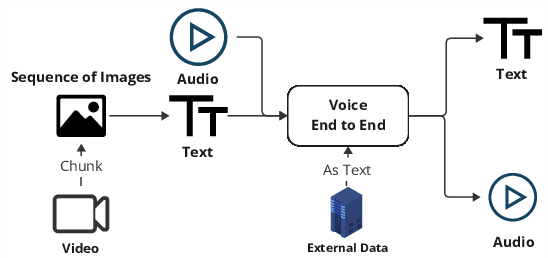
Multimodal conversational agents are highly desirable because they offer natural and human-like interaction. However, there is a lack of comprehensive end-to-end solutions to support collaborative development and benchmarking. While proprietary systems like GPT-4o and Gemini demonstrating impressive integration of audio, video, and text with response times of 200-250ms, challenges remain in balancing latency, accuracy, cost, and data privacy. To better understand and quantify these issues, we developed OpenOmni, an open-source, end-to-end pipeline benchmarking tool that integrates advanced technologies such as Speech-to-Text, Emotion Detection, Retrieval Augmented Generation, Large Language Models, along with the ability to integrate customized models. OpenOmni supports local and cloud deployment, ensuring data privacy and supporting latency and accuracy benchmarking. This flexible framework allows researchers to customize the pipeline, focusing on real bottlenecks and facilitating rapid proof-of-concept development. OpenOmni can significantly enhance applications like indoor assistance for visually impaired individuals, advancing human-computer interaction. Our demonstration video is available https://www.youtube.com/watch?v=zaSiT3clWqY, demo is available via https://openomni.ai4wa.com, code is available via https://github.com/AI4WA/OpenOmniFramework.
Evaluating the Translation Performance of Large Language Models Based on Euas-20
Aug 06, 2024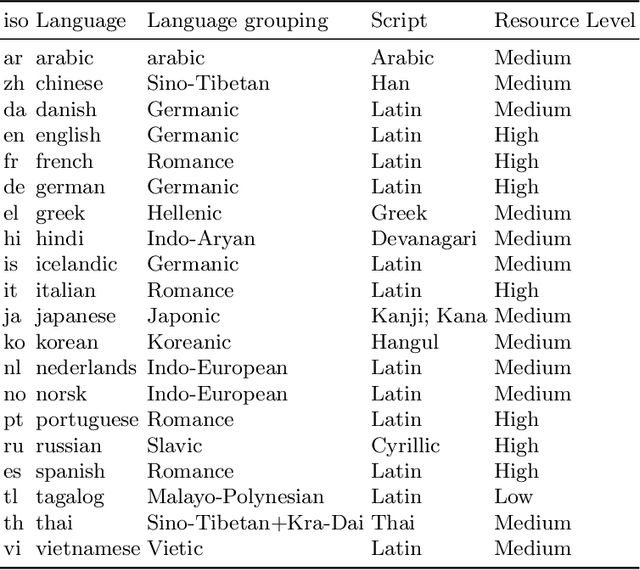
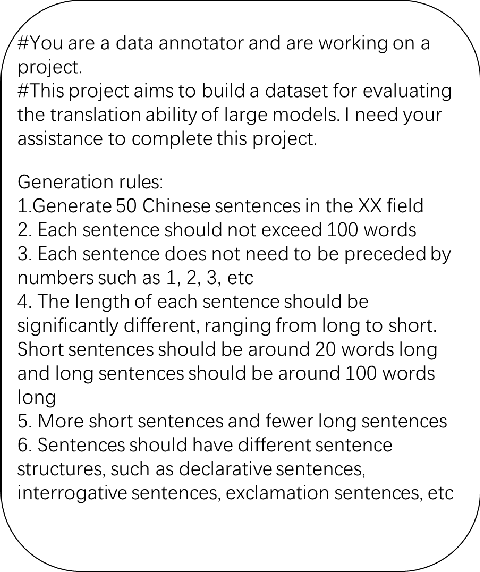
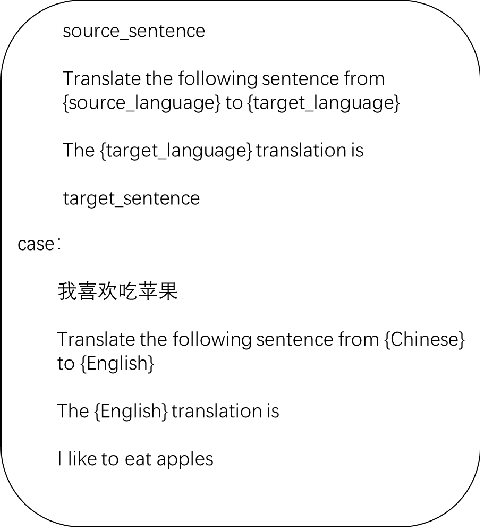
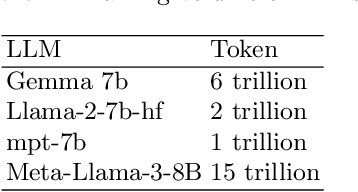
In recent years, with the rapid development of deep learning technology, large language models (LLMs) such as BERT and GPT have achieved breakthrough results in natural language processing tasks. Machine translation (MT), as one of the core tasks of natural language processing, has also benefited from the development of large language models and achieved a qualitative leap. Despite the significant progress in translation performance achieved by large language models, machine translation still faces many challenges. Therefore, in this paper, we construct the dataset Euas-20 to evaluate the performance of large language models on translation tasks, the translation ability on different languages, and the effect of pre-training data on the translation ability of LLMs for researchers and developers.