 Add to Chrome
 Add to Firefox
 Add to Edge
Active Layer-Contrastive Decoding Reduces Hallucination in Large Language Model Generation
May 29, 2025
Recent decoding methods improve the factuality of large language models~(LLMs) by refining how the next token is selected during generation. These methods typically operate at the token level, leveraging internal representations to suppress superficial patterns. Nevertheless, LLMs remain prone to hallucinations, especially over longer contexts. In this paper, we propose Active Layer-Contrastive Decoding (ActLCD), a novel decoding strategy that actively decides when to apply contrasting layers during generation. By casting decoding as a sequential decision-making problem, ActLCD employs a reinforcement learning policy guided by a reward-aware classifier to optimize factuality beyond the token level. Our experiments demonstrate that ActLCD surpasses state-of-the-art methods across five benchmarks, showcasing its effectiveness in mitigating hallucinations in diverse generation scenarios.

From Single Images to Motion Policies via Video-Generation Environment Representations
May 25, 2025Autonomous robots typically need to construct representations of their surroundings and adapt their motions to the geometry of their environment. Here, we tackle the problem of constructing a policy model for collision-free motion generation, consistent with the environment, from a single input RGB image. Extracting 3D structures from a single image often involves monocular depth estimation. Developments in depth estimation have given rise to large pre-trained models such as DepthAnything. However, using outputs of these models for downstream motion generation is challenging due to frustum-shaped errors that arise. Instead, we propose a framework known as Video-Generation Environment Representation (VGER), which leverages the advances of large-scale video generation models to generate a moving camera video conditioned on the input image. Frames of this video, which form a multiview dataset, are then input into a pre-trained 3D foundation model to produce a dense point cloud. We then introduce a multi-scale noise approach to train an implicit representation of the environment structure and build a motion generation model that complies with the geometry of the representation. We extensively evaluate VGER over a diverse set of indoor and outdoor environments. We demonstrate its ability to produce smooth motions that account for the captured geometry of a scene, all from a single RGB input image.
Enhancing Code Generation via Bidirectional Comment-Level Mutual Grounding
May 12, 2025Large Language Models (LLMs) have demonstrated unprecedented capability in code generation. However, LLM-generated code is still plagued with a wide range of functional errors, especially for complex programming tasks that LLMs have not seen before. Recent studies have shown that developers often struggle with inspecting and fixing incorrect code generated by LLMs, diminishing their productivity and trust in LLM-based code generation. Inspired by the mutual grounding theory in communication, we propose an interactive approach that leverages code comments as a medium for developers and LLMs to establish a shared understanding. Our approach facilitates iterative grounding by interleaving code generation, inline comment generation, and contextualized user feedback through editable comments to align generated code with developer intent. We evaluated our approach on two popular benchmarks and demonstrated that our approach significantly improved multiple state-of-the-art LLMs, e.g., 17.1% pass@1 improvement for code-davinci-002 on HumanEval. Furthermore, we conducted a user study with 12 participants in comparison to two baselines: (1) interacting with GitHub Copilot, and (2) interacting with a multi-step code generation paradigm called Multi-Turn Program Synthesis. Participants completed the given programming tasks 16.7% faster and with 10.5% improvement in task success rate when using our approach. Both results show that interactively refining code comments enables the collaborative establishment of mutual grounding, leading to more accurate code generation and higher developer confidence.
NANO-SLAM : Natural Gradient Gaussian Approximation for Vehicle SLAM
Apr 27, 2025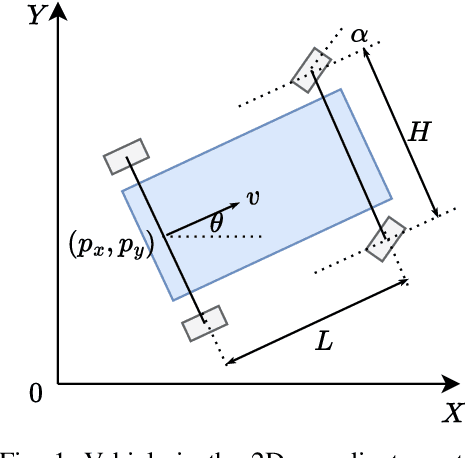
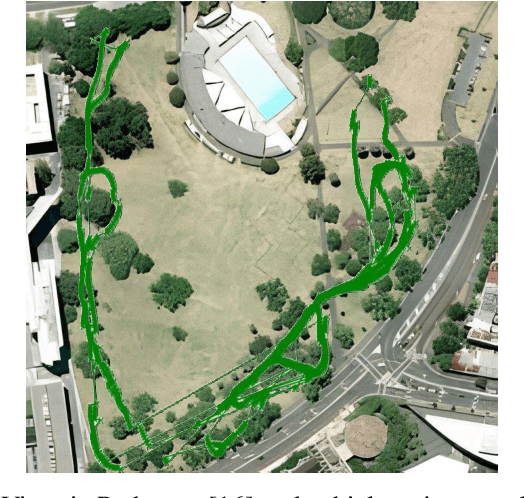
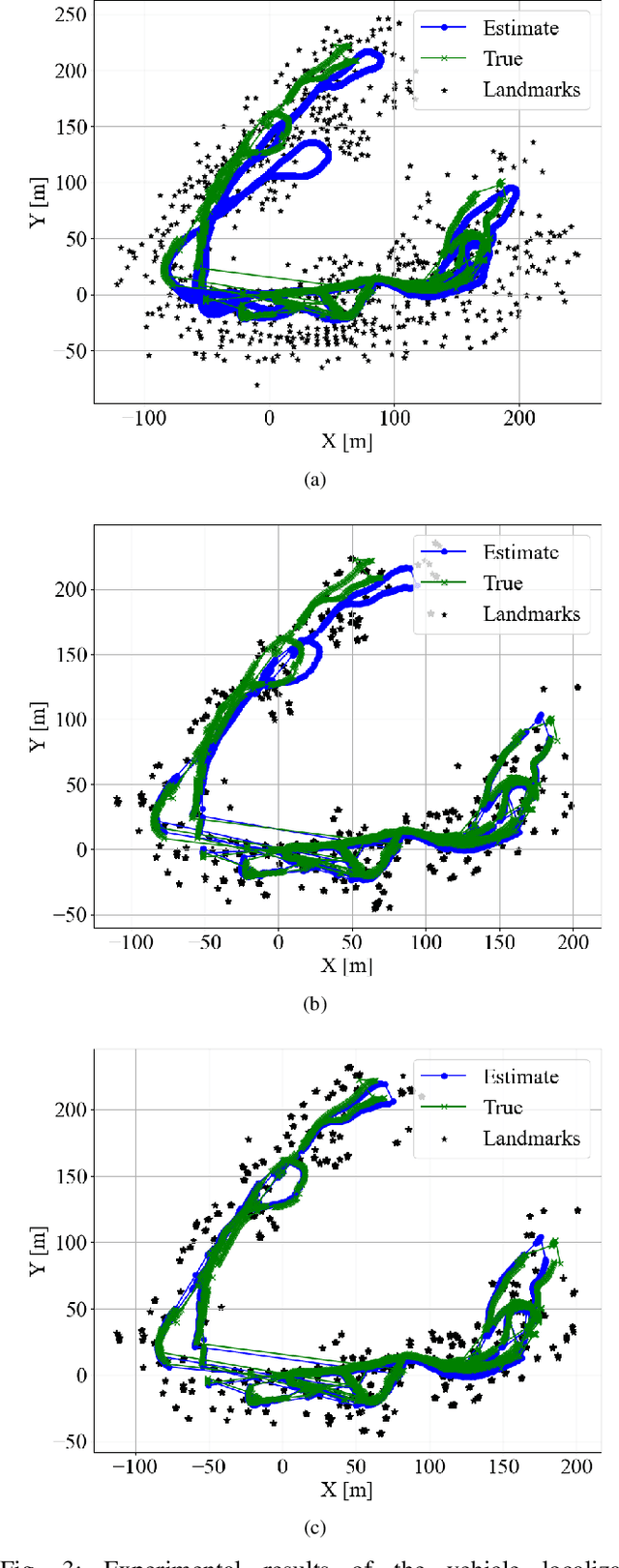
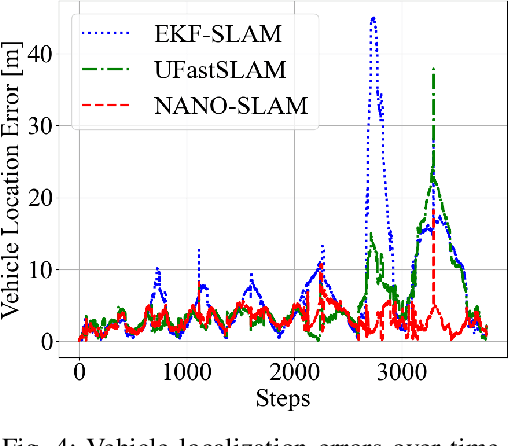
Accurate localization is a challenging task for autonomous vehicles, particularly in GPS-denied environments such as urban canyons and tunnels. In these scenarios, simultaneous localization and mapping (SLAM) offers a more robust alternative to GPS-based positioning, enabling vehicles to determine their position using onboard sensors and surrounding environment's landmarks. Among various vehicle SLAM approaches, Rao-Blackwellized particle filter (RBPF) stands out as one of the most widely adopted methods due to its efficient solution with logarithmic complexity relative to the map size. RBPF approximates the posterior distribution of the vehicle pose using a set of Monte Carlo particles through two main steps: sampling and importance weighting. The key to effective sampling lies in solving a distribution that closely approximates the posterior, known as the sampling distribution, to accelerate convergence. Existing methods typically derive this distribution via linearization, which introduces significant approximation errors due to the inherent nonlinearity of the system. To address this limitation, we propose a novel vehicle SLAM method called \textit{N}atural Gr\textit{a}dient Gaussia\textit{n} Appr\textit{o}ximation (NANO)-SLAM, which avoids linearization errors by modeling the sampling distribution as the solution to an optimization problem over Gaussian parameters and solving it using natural gradient descent. This approach improves the accuracy of the sampling distribution and consequently enhances localization performance. Experimental results on the long-distance Sydney Victoria Park vehicle SLAM dataset show that NANO-SLAM achieves over 50\% improvement in localization accuracy compared to the most widely used vehicle SLAM algorithms, with minimal additional computational cost.
Neighbor-Based Feature and Index Enhancement for Person Re-Identification
Apr 16, 2025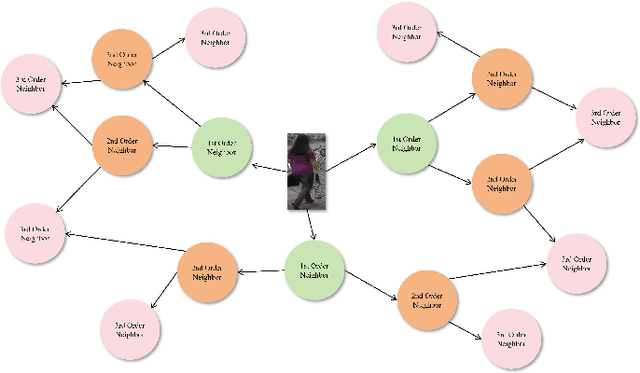
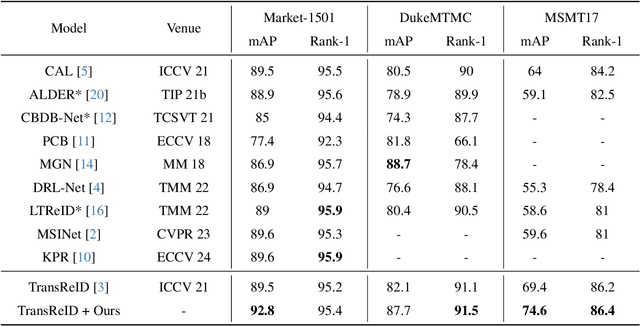
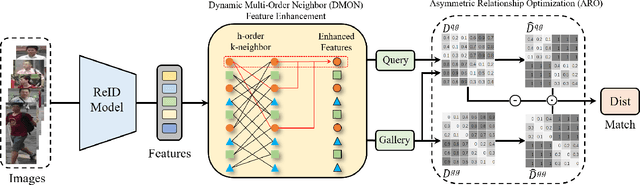
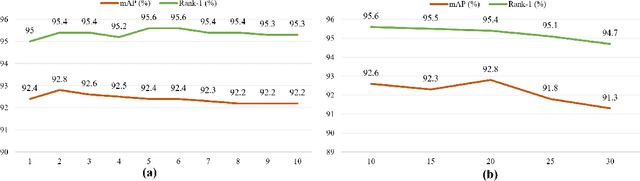
Person re-identification (Re-ID) aims to match the same pedestrian in a large gallery with different cameras and views. Enhancing the robustness of the extracted feature representations is a main challenge in Re-ID. Existing methods usually improve feature representation by improving model architecture, but most methods ignore the potential contextual information, which limits the effectiveness of feature representation and retrieval performance. Neighborhood information, especially the potential information of multi-order neighborhoods, can effectively enrich feature expression and improve retrieval accuracy, but this has not been fully explored in existing research. Therefore, we propose a novel model DMON-ARO that leverages latent neighborhood information to enhance both feature representation and index performance. Our approach is built on two complementary modules: Dynamic Multi-Order Neighbor Modeling (DMON) and Asymmetric Relationship Optimization (ARO). The DMON module dynamically aggregates multi-order neighbor relationships, allowing it to capture richer contextual information and enhance feature representation through adaptive neighborhood modeling. Meanwhile, ARO refines the distance matrix by optimizing query-to-gallery relationships, improving the index accuracy. Extensive experiments on three benchmark datasets demonstrate that our approach achieves performance improvements against baseline models, which illustrate the effectiveness of our model. Specifically, our model demonstrates improvements in Rank-1 accuracy and mAP. Moreover, this method can also be directly extended to other re-identification tasks.
70% Size, 100% Accuracy: Lossless LLM Compression for Efficient GPU Inference via Dynamic-Length Float
Apr 15, 2025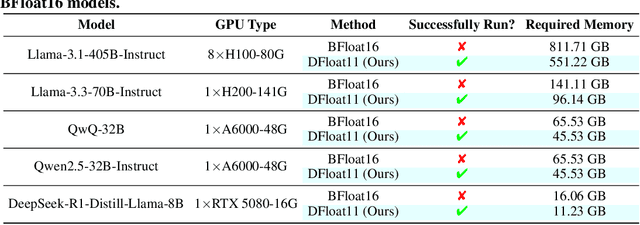
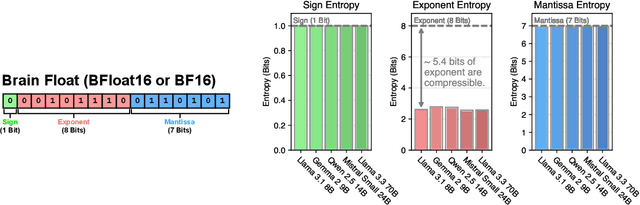
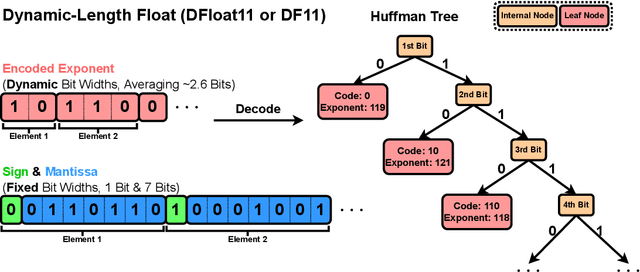
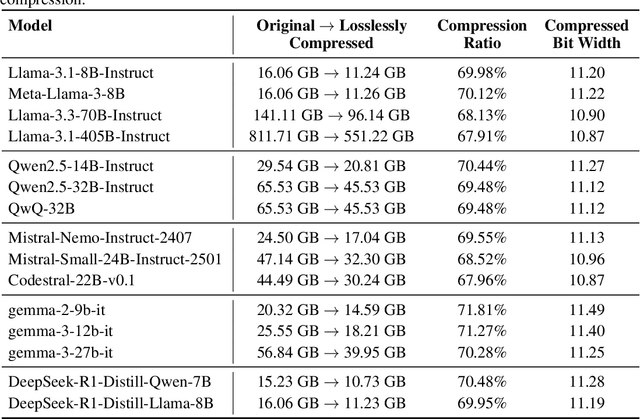
Large Language Models (LLMs) have grown rapidly in size, creating significant challenges for efficient deployment on resource-constrained hardware. In this paper, we introduce Dynamic-Length Float (DFloat11), a lossless compression framework that reduces LLM size by 30% while preserving outputs that are bit-for-bit identical to the original model. DFloat11 is motivated by the low entropy in the BFloat16 weight representation of LLMs, which reveals significant inefficiency in existing storage format. By applying entropy coding, DFloat11 assigns dynamic-length encodings to weights based on frequency, achieving near information-optimal compression without any loss of precision. To facilitate efficient inference with dynamic-length encodings, we develop a custom GPU kernel for fast online decompression. Our design incorporates the following: (i) decomposition of memory-intensive lookup tables (LUTs) into compact LUTs that fit in GPU SRAM, (ii) a two-phase kernel for coordinating thread read/write positions using lightweight auxiliary variables, and (iii) transformer-block-level decompression to minimize latency. Experiments on recent models, including Llama-3.1, Qwen-2.5, and Gemma-3, validates our hypothesis that DFloat11 achieves around 30% model size reduction while preserving bit-for-bit exact outputs. Compared to a potential alternative of offloading parts of an uncompressed model to the CPU to meet memory constraints, DFloat11 achieves 1.9-38.8x higher throughput in token generation. With a fixed GPU memory budget, DFloat11 enables 5.3-13.17x longer context lengths than uncompressed models. Notably, our method enables lossless inference of Llama-3.1-405B, an 810GB model, on a single node equipped with 8x80GB GPUs. Our code and models are available at https://github.com/LeanModels/DFloat11.
Zero-shot Autonomous Microscopy for Scalable and Intelligent Characterization of 2D Materials
Apr 14, 2025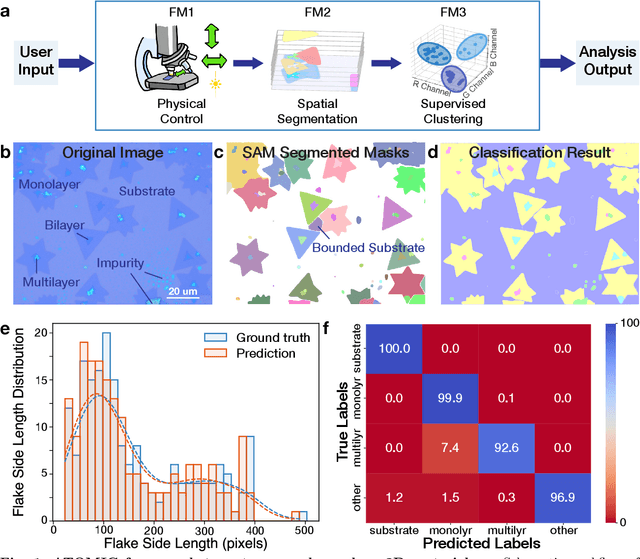
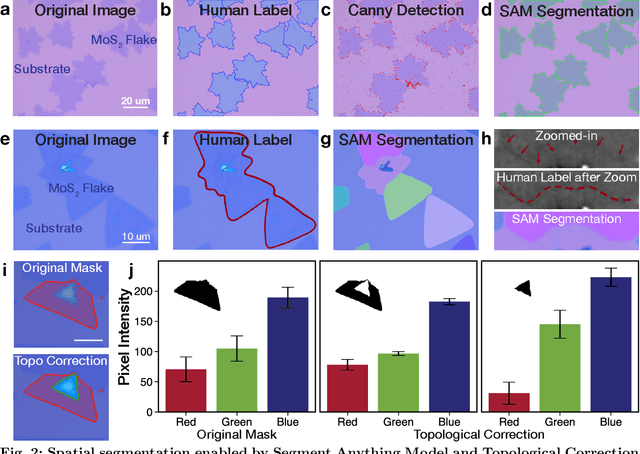
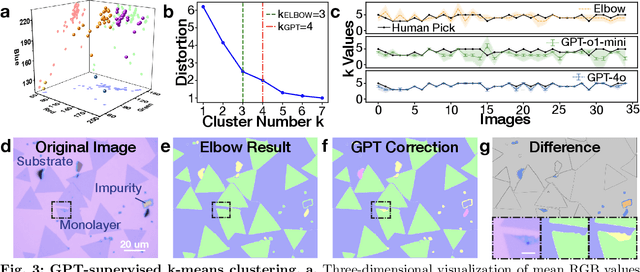
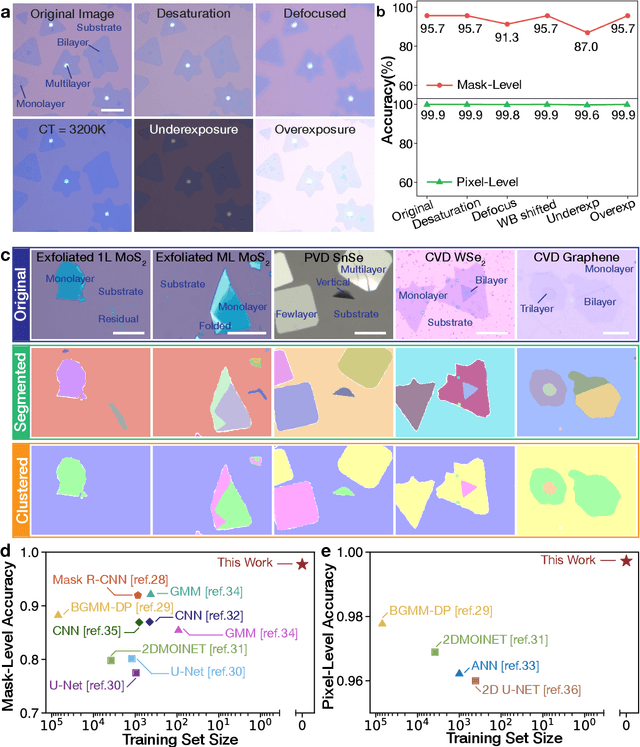
Characterization of atomic-scale materials traditionally requires human experts with months to years of specialized training. Even for trained human operators, accurate and reliable characterization remains challenging when examining newly discovered materials such as two-dimensional (2D) structures. This bottleneck drives demand for fully autonomous experimentation systems capable of comprehending research objectives without requiring large training datasets. In this work, we present ATOMIC (Autonomous Technology for Optical Microscopy & Intelligent Characterization), an end-to-end framework that integrates foundation models to enable fully autonomous, zero-shot characterization of 2D materials. Our system integrates the vision foundation model (i.e., Segment Anything Model), large language models (i.e., ChatGPT), unsupervised clustering, and topological analysis to automate microscope control, sample scanning, image segmentation, and intelligent analysis through prompt engineering, eliminating the need for additional training. When analyzing typical MoS2 samples, our approach achieves 99.7% segmentation accuracy for single layer identification, which is equivalent to that of human experts. In addition, the integrated model is able to detect grain boundary slits that are challenging to identify with human eyes. Furthermore, the system retains robust accuracy despite variable conditions including defocus, color temperature fluctuations, and exposure variations. It is applicable to a broad spectrum of common 2D materials-including graphene, MoS2, WSe2, SnSe-regardless of whether they were fabricated via chemical vapor deposition or mechanical exfoliation. This work represents the implementation of foundation models to achieve autonomous analysis, establishing a scalable and data-efficient characterization paradigm that fundamentally transforms the approach to nanoscale materials research.
GraphSeg: Segmented 3D Representations via Graph Edge Addition and Contraction
Apr 04, 2025Robots operating in unstructured environments often require accurate and consistent object-level representations. This typically requires segmenting individual objects from the robot's surroundings. While recent large models such as Segment Anything (SAM) offer strong performance in 2D image segmentation. These advances do not translate directly to performance in the physical 3D world, where they often over-segment objects and fail to produce consistent mask correspondences across views. In this paper, we present GraphSeg, a framework for generating consistent 3D object segmentations from a sparse set of 2D images of the environment without any depth information. GraphSeg adds edges to graphs and constructs dual correspondence graphs: one from 2D pixel-level similarities and one from inferred 3D structure. We formulate segmentation as a problem of edge addition, then subsequent graph contraction, which merges multiple 2D masks into unified object-level segmentations. We can then leverage \emph{3D foundation models} to produce segmented 3D representations. GraphSeg achieves robust segmentation with significantly fewer images and greater accuracy than prior methods. We demonstrate state-of-the-art performance on tabletop scenes and show that GraphSeg enables improved performance on downstream robotic manipulation tasks. Code available at https://github.com/tomtang502/graphseg.git.
Dita: Scaling Diffusion Transformer for Generalist Vision-Language-Action Policy
Mar 25, 2025While recent vision-language-action models trained on diverse robot datasets exhibit promising generalization capabilities with limited in-domain data, their reliance on compact action heads to predict discretized or continuous actions constrains adaptability to heterogeneous action spaces. We present Dita, a scalable framework that leverages Transformer architectures to directly denoise continuous action sequences through a unified multimodal diffusion process. Departing from prior methods that condition denoising on fused embeddings via shallow networks, Dita employs in-context conditioning -- enabling fine-grained alignment between denoised actions and raw visual tokens from historical observations. This design explicitly models action deltas and environmental nuances. By scaling the diffusion action denoiser alongside the Transformer's scalability, Dita effectively integrates cross-embodiment datasets across diverse camera perspectives, observation scenes, tasks, and action spaces. Such synergy enhances robustness against various variances and facilitates the successful execution of long-horizon tasks. Evaluations across extensive benchmarks demonstrate state-of-the-art or comparative performance in simulation. Notably, Dita achieves robust real-world adaptation to environmental variances and complex long-horizon tasks through 10-shot finetuning, using only third-person camera inputs. The architecture establishes a versatile, lightweight and open-source baseline for generalist robot policy learning. Project Page: https://robodita.github.io.
Stop Overthinking: A Survey on Efficient Reasoning for Large Language Models
Mar 20, 2025Large Language Models (LLMs) have demonstrated remarkable capabilities in complex tasks. Recent advancements in Large Reasoning Models (LRMs), such as OpenAI o1 and DeepSeek-R1, have further improved performance in System-2 reasoning domains like mathematics and programming by harnessing supervised fine-tuning (SFT) and reinforcement learning (RL) techniques to enhance the Chain-of-Thought (CoT) reasoning. However, while longer CoT reasoning sequences improve performance, they also introduce significant computational overhead due to verbose and redundant outputs, known as the "overthinking phenomenon". In this paper, we provide the first structured survey to systematically investigate and explore the current progress toward achieving efficient reasoning in LLMs. Overall, relying on the inherent mechanism of LLMs, we categorize existing works into several key directions: (1) model-based efficient reasoning, which considers optimizing full-length reasoning models into more concise reasoning models or directly training efficient reasoning models; (2) reasoning output-based efficient reasoning, which aims to dynamically reduce reasoning steps and length during inference; (3) input prompts-based efficient reasoning, which seeks to enhance reasoning efficiency based on input prompt properties such as difficulty or length control. Additionally, we introduce the use of efficient data for training reasoning models, explore the reasoning capabilities of small language models, and discuss evaluation methods and benchmarking.