 Add to Chrome
 Add to Firefox
 Add to Edge
RePair: Automated Program Repair with Process-based Feedback
Aug 21, 2024
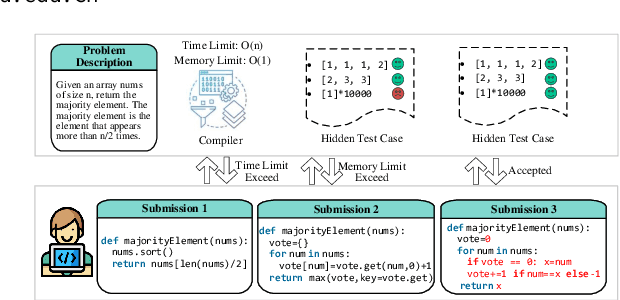


The gap between the trepidation of program reliability and the expense of repairs underscores the indispensability of Automated Program Repair (APR). APR is instrumental in transforming vulnerable programs into more robust ones, bolstering program reliability while simultaneously diminishing the financial burden of manual repairs. Commercial-scale language models (LM) have taken APR to unprecedented levels. However, the emergence reveals that for models fewer than 100B parameters, making single-step modifications may be difficult to achieve the desired effect. Moreover, humans interact with the LM through explicit prompts, which hinders the LM from receiving feedback from compiler and test cases to automatically optimize its repair policies. In this literature, we explore how small-scale LM (less than 20B) achieve excellent performance through process supervision and feedback. We start by constructing a dataset named CodeNet4Repair, replete with multiple repair records, which supervises the fine-tuning of a foundational model. Building upon the encouraging outcomes of reinforcement learning, we develop a reward model that serves as a critic, providing feedback for the fine-tuned LM's action, progressively optimizing its policy. During inference, we require the LM to generate solutions iteratively until the repair effect no longer improves or hits the maximum step limit. The results show that process-based not only outperforms larger outcome-based generation methods, but also nearly matches the performance of closed-source commercial large-scale LMs.
* 15 pages, 13 figures

Semantic Successive Refinement: A Generative AI-aided Semantic Communication Framework
Jul 31, 2024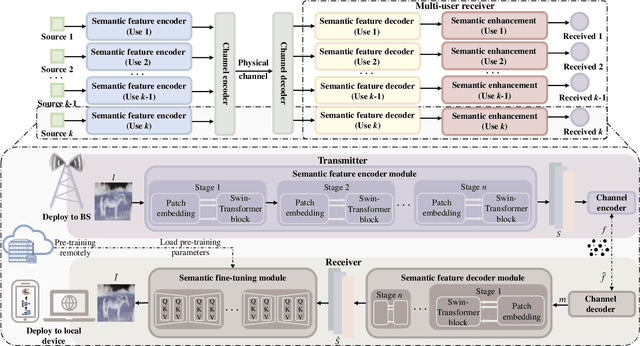


Semantic Communication (SC) is an emerging technology aiming to surpass the Shannon limit. Traditional SC strategies often minimize signal distortion between the original and reconstructed data, neglecting perceptual quality, especially in low Signal-to-Noise Ratio (SNR) environments. To address this issue, we introduce a novel Generative AI Semantic Communication (GSC) system for single-user scenarios. This system leverages deep generative models to establish a new paradigm in SC. Specifically, At the transmitter end, it employs a joint source-channel coding mechanism based on the Swin Transformer for efficient semantic feature extraction and compression. At the receiver end, an advanced Diffusion Model (DM) reconstructs high-quality images from degraded signals, enhancing perceptual details. Additionally, we present a Multi-User Generative Semantic Communication (MU-GSC) system utilizing an asynchronous processing model. This model effectively manages multiple user requests and optimally utilizes system resources for parallel processing. Simulation results on public datasets demonstrate that our generative AI semantic communication systems achieve superior transmission efficiency and enhanced communication content quality across various channel conditions. Compared to CNN-based DeepJSCC, our methods improve the Peak Signal-to-Noise Ratio (PSNR) by 17.75% in Additive White Gaussian Noise (AWGN) channels and by 20.86% in Rayleigh channels.
FSSC: Federated Learning of Transformer Neural Networks for Semantic Image Communication
Jul 31, 2024
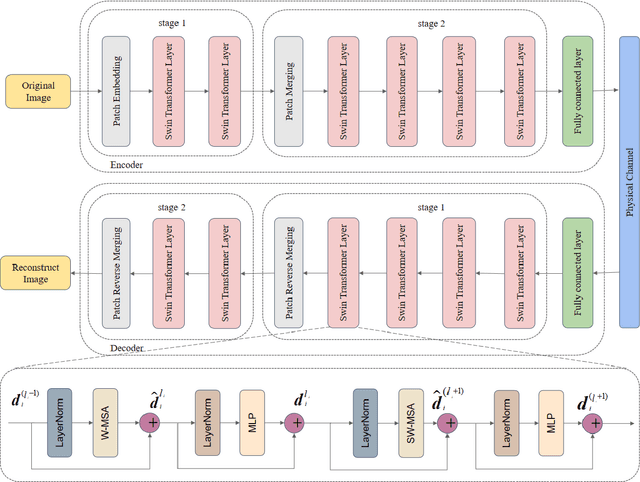
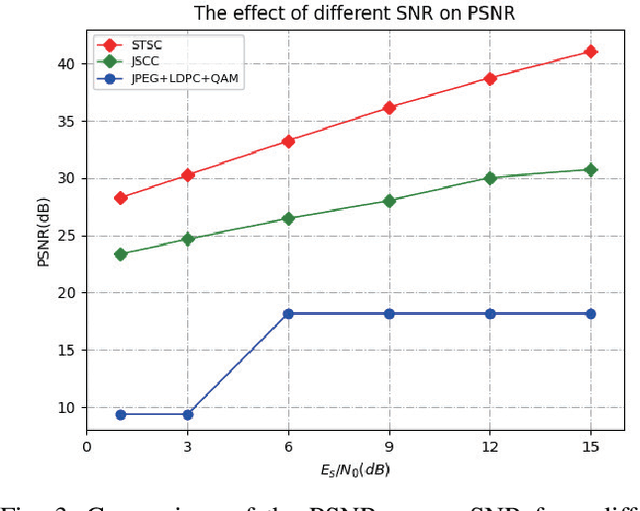
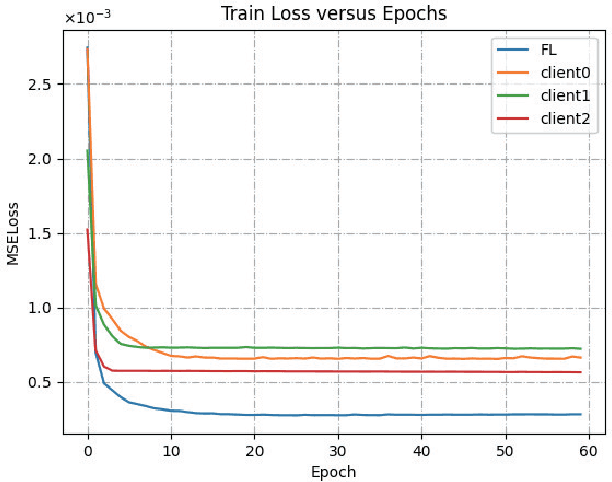
In this paper, we address the problem of image semantic communication in a multi-user deployment scenario and propose a federated learning (FL) strategy for a Swin Transformer-based semantic communication system (FSSC). Firstly, we demonstrate that the adoption of a Swin Transformer for joint source-channel coding (JSCC) effectively extracts semantic information in the communication system. Next, the FL framework is introduced to collaboratively learn a global model by aggregating local model parameters, rather than directly sharing clients' data. This approach enhances user privacy protection and reduces the workload on the server or mobile edge. Simulation evaluations indicate that our method outperforms the typical JSCC algorithm and traditional separate-based communication algorithms. Particularly after integrating local semantics, the global aggregation model has further increased the Peak Signal-to-Noise Ratio (PSNR) by more than 2dB, thoroughly proving the effectiveness of our algorithm.
Enhancing CTR Prediction through Sequential Recommendation Pre-training: Introducing the SRP4CTR Framework
Jul 29, 2024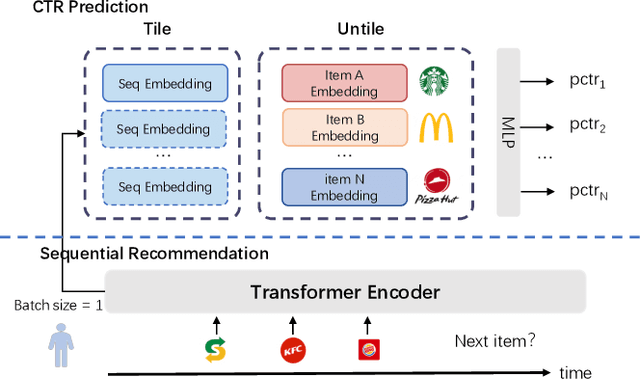
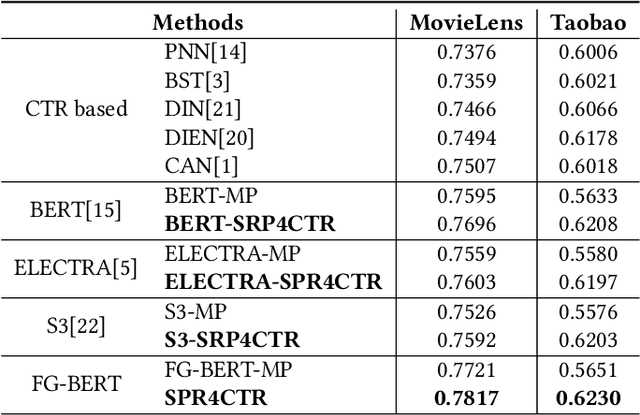
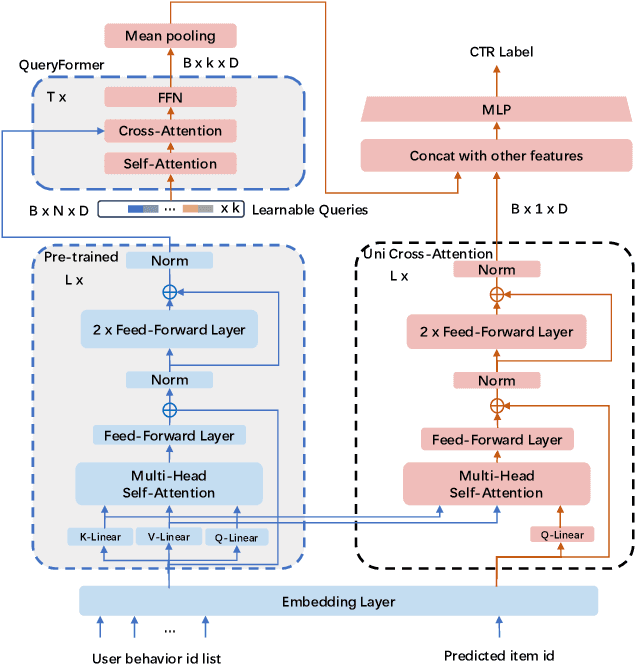
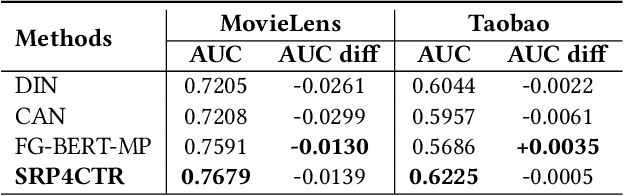
Understanding user interests is crucial for Click-Through Rate (CTR) prediction tasks. In sequential recommendation, pre-training from user historical behaviors through self-supervised learning can better comprehend user dynamic preferences, presenting the potential for direct integration with CTR tasks. Previous methods have integrated pre-trained models into downstream tasks with the sole purpose of extracting semantic information or well-represented user features, which are then incorporated as new features. However, these approaches tend to ignore the additional inference costs to the downstream tasks, and they do not consider how to transfer the effective information from the pre-trained models for specific estimated items in CTR prediction. In this paper, we propose a Sequential Recommendation Pre-training framework for CTR prediction (SRP4CTR) to tackle the above problems. Initially, we discuss the impact of introducing pre-trained models on inference costs. Subsequently, we introduced a pre-trained method to encode sequence side information concurrently.During the fine-tuning process, we incorporate a cross-attention block to establish a bridge between estimated items and the pre-trained model at a low cost. Moreover, we develop a querying transformer technique to facilitate the knowledge transfer from the pre-trained model to industrial CTR models. Offline and online experiments show that our method outperforms previous baseline models.
Training-Free Large Model Priors for Multiple-in-One Image Restoration
Jul 18, 2024Image restoration aims to reconstruct the latent clear images from their degraded versions. Despite the notable achievement, existing methods predominantly focus on handling specific degradation types and thus require specialized models, impeding real-world applications in dynamic degradation scenarios. To address this issue, we propose Large Model Driven Image Restoration framework (LMDIR), a novel multiple-in-one image restoration paradigm that leverages the generic priors from large multi-modal language models (MMLMs) and the pretrained diffusion models. In detail, LMDIR integrates three key prior knowledges: 1) global degradation knowledge from MMLMs, 2) scene-aware contextual descriptions generated by MMLMs, and 3) fine-grained high-quality reference images synthesized by diffusion models guided by MMLM descriptions. Standing on above priors, our architecture comprises a query-based prompt encoder, degradation-aware transformer block injecting global degradation knowledge, content-aware transformer block incorporating scene description, and reference-based transformer block incorporating fine-grained image priors. This design facilitates single-stage training paradigm to address various degradations while supporting both automatic and user-guided restoration. Extensive experiments demonstrate that our designed method outperforms state-of-the-art competitors on multiple evaluation benchmarks.
Decomposition Betters Tracking Everything Everywhere
Jul 09, 2024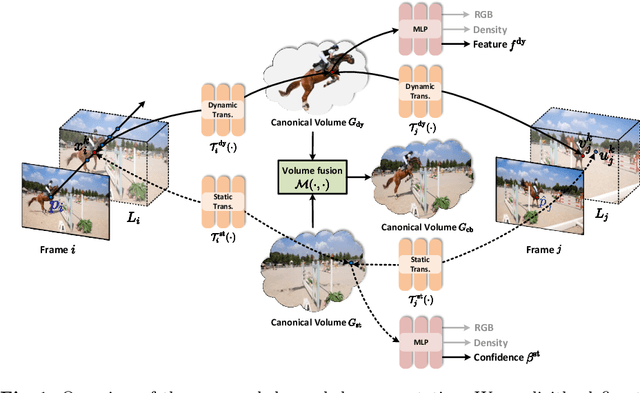
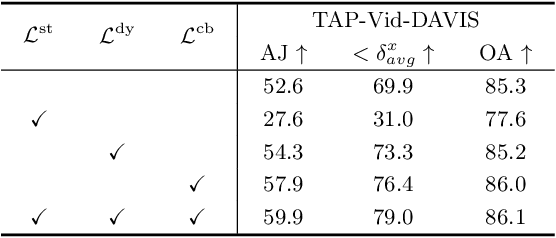
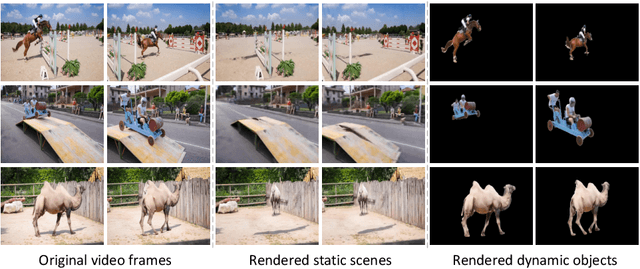
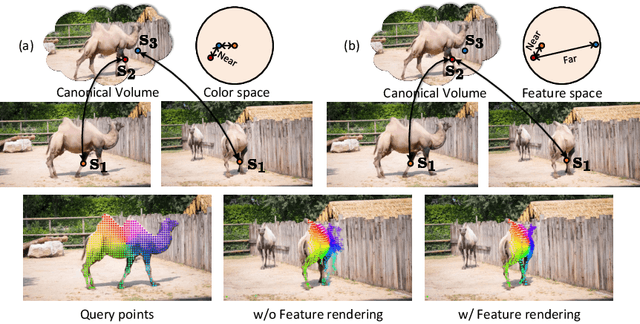
Recent studies on motion estimation have advocated an optimized motion representation that is globally consistent across the entire video, preferably for every pixel. This is challenging as a uniform representation may not account for the complex and diverse motion and appearance of natural videos. We address this problem and propose a new test-time optimization method, named DecoMotion, for estimating per-pixel and long-range motion. DecoMotion explicitly decomposes video content into static scenes and dynamic objects, either of which uses a quasi-3D canonical volume to represent. DecoMotion separately coordinates the transformations between local and canonical spaces, facilitating an affine transformation for the static scene that corresponds to camera motion. For the dynamic volume, DecoMotion leverages discriminative and temporally consistent features to rectify the non-rigid transformation. The two volumes are finally fused to fully represent motion and appearance. This divide-and-conquer strategy leads to more robust tracking through occlusions and deformations and meanwhile obtains decomposed appearances. We conduct evaluations on the TAP-Vid benchmark. The results demonstrate our method boosts the point-tracking accuracy by a large margin and performs on par with some state-of-the-art dedicated point-tracking solutions.
Solving the inverse problem of microscopy deconvolution with a residual Beylkin-Coifman-Rokhlin neural network
Jul 03, 2024
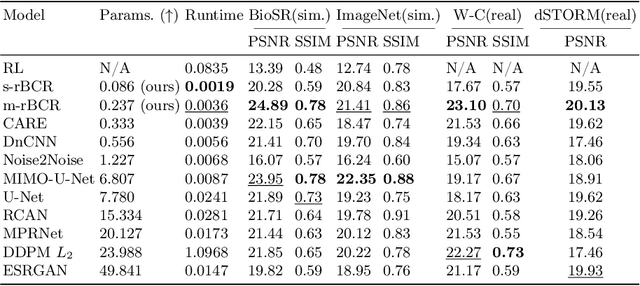
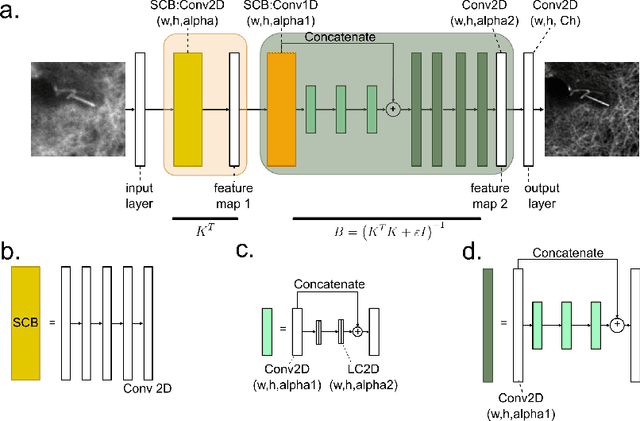
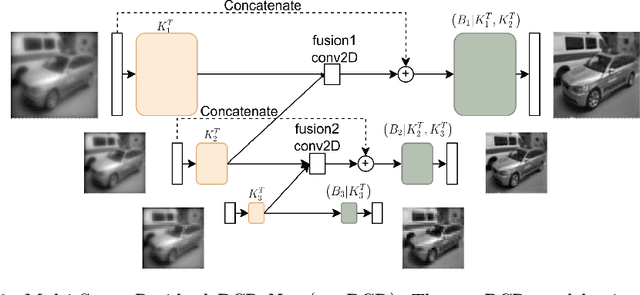
Optic deconvolution in light microscopy (LM) refers to recovering the object details from images, revealing the ground truth of samples. Traditional explicit methods in LM rely on the point spread function (PSF) during image acquisition. Yet, these approaches often fall short due to inaccurate PSF models and noise artifacts, hampering the overall restoration quality. In this paper, we approached the optic deconvolution as an inverse problem. Motivated by the nonstandard-form compression scheme introduced by Beylkin, Coifman, and Rokhlin (BCR), we proposed an innovative physics-informed neural network Multi-Stage Residual-BCR Net (m-rBCR) to approximate the optic deconvolution. We validated the m-rBCR model on four microscopy datasets - two simulated microscopy datasets from ImageNet and BioSR, real dSTORM microscopy images, and real widefield microscopy images. In contrast to the explicit deconvolution methods (e.g. Richardson-Lucy) and other state-of-the-art NN models (U-Net, DDPM, CARE, DnCNN, ESRGAN, RCAN, Noise2Noise, MPRNet, and MIMO-U-Net), the m-rBCR model demonstrates superior performance to other candidates by PSNR and SSIM in two real microscopy datasets and the simulated BioSR dataset. In the simulated ImageNet dataset, m-rBCR ranks the second-best place (right after MIMO-U-Net). With the backbone from the optical physics, m-rBCR exploits the trainable parameters with better performances (from ~30 times fewer than the benchmark MIMO-U-Net to ~210 times than ESRGAN). This enables m-rBCR to achieve a shorter runtime (from ~3 times faster than MIMO-U-Net to ~300 times faster than DDPM). To summarize, by leveraging physics constraints our model reduced potentially redundant parameters significantly in expertise-oriented NN candidates and achieved high efficiency with superior performance.
Large Language Models Struggle in Token-Level Clinical Named Entity Recognition
Jun 30, 2024Large Language Models (LLMs) have revolutionized various sectors, including healthcare where they are employed in diverse applications. Their utility is particularly significant in the context of rare diseases, where data scarcity, complexity, and specificity pose considerable challenges. In the clinical domain, Named Entity Recognition (NER) stands out as an essential task and it plays a crucial role in extracting relevant information from clinical texts. Despite the promise of LLMs, current research mostly concentrates on document-level NER, identifying entities in a more general context across entire documents, without extracting their precise location. Additionally, efforts have been directed towards adapting ChatGPT for token-level NER. However, there is a significant research gap when it comes to employing token-level NER for clinical texts, especially with the use of local open-source LLMs. This study aims to bridge this gap by investigating the effectiveness of both proprietary and local LLMs in token-level clinical NER. Essentially, we delve into the capabilities of these models through a series of experiments involving zero-shot prompting, few-shot prompting, retrieval-augmented generation (RAG), and instruction-fine-tuning. Our exploration reveals the inherent challenges LLMs face in token-level NER, particularly in the context of rare diseases, and suggests possible improvements for their application in healthcare. This research contributes to narrowing a significant gap in healthcare informatics and offers insights that could lead to a more refined application of LLMs in the healthcare sector.
Automated Clinical Data Extraction with Knowledge Conditioned LLMs
Jun 26, 2024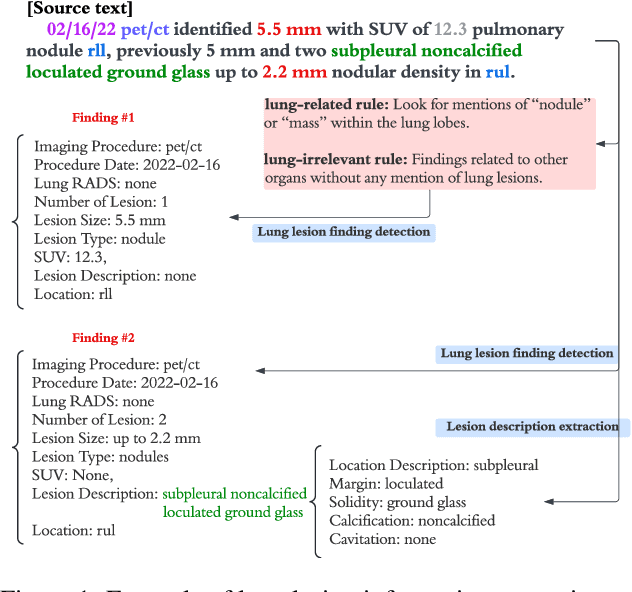
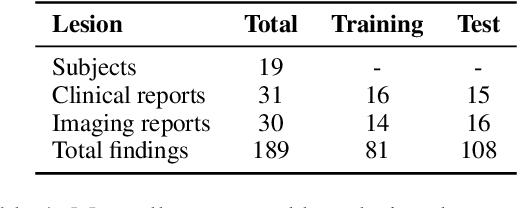
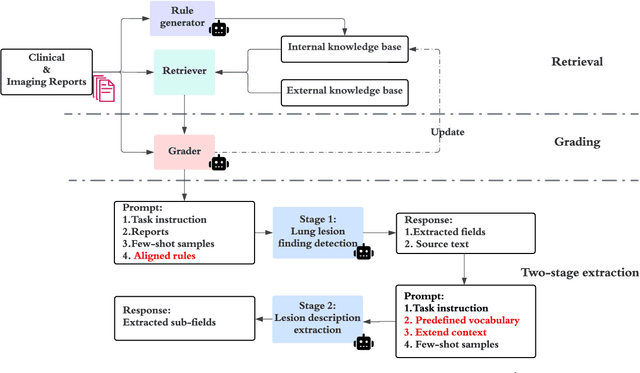
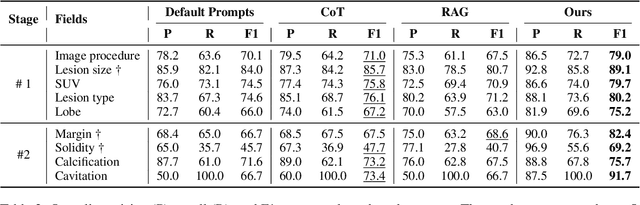
The extraction of lung lesion information from clinical and medical imaging reports is crucial for research on and clinical care of lung-related diseases. Large language models (LLMs) can be effective at interpreting unstructured text in reports, but they often hallucinate due to a lack of domain-specific knowledge, leading to reduced accuracy and posing challenges for use in clinical settings. To address this, we propose a novel framework that aligns generated internal knowledge with external knowledge through in-context learning (ICL). Our framework employs a retriever to identify relevant units of internal or external knowledge and a grader to evaluate the truthfulness and helpfulness of the retrieved internal-knowledge rules, to align and update the knowledge bases. Our knowledge-conditioned approach also improves the accuracy and reliability of LLM outputs by addressing the extraction task in two stages: (i) lung lesion finding detection and primary structured field parsing, followed by (ii) further parsing of lesion description text into additional structured fields. Experiments with expert-curated test datasets demonstrate that this ICL approach can increase the F1 score for key fields (lesion size, margin and solidity) by an average of 12.9% over existing ICL methods.
Gait-Adaptive Navigation and Human Searching in field with Cyborg Insect
Jun 06, 2024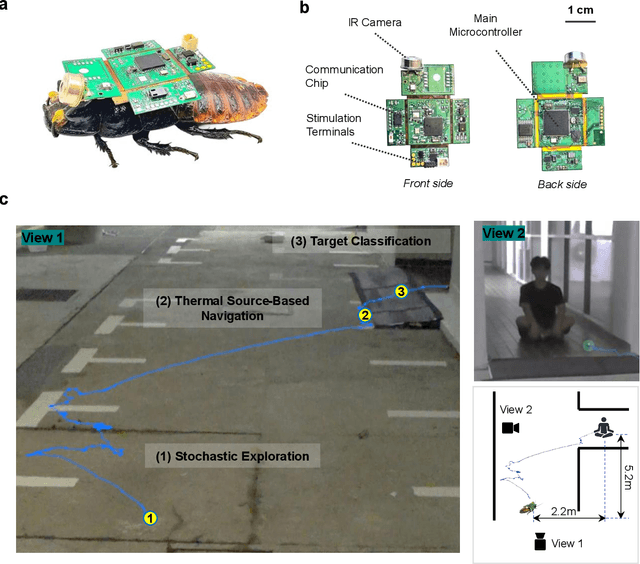
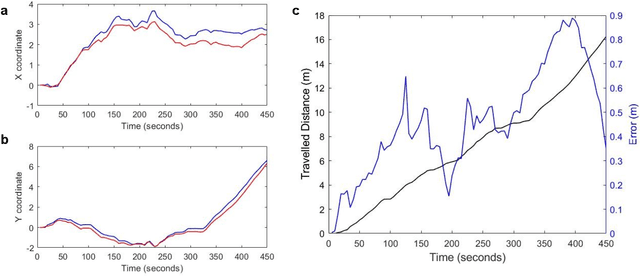
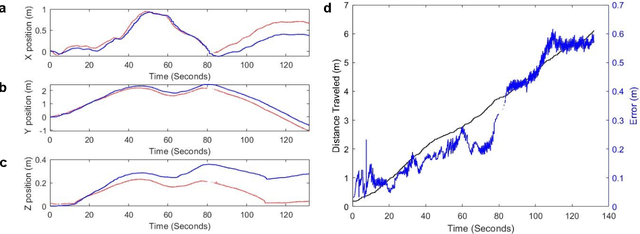
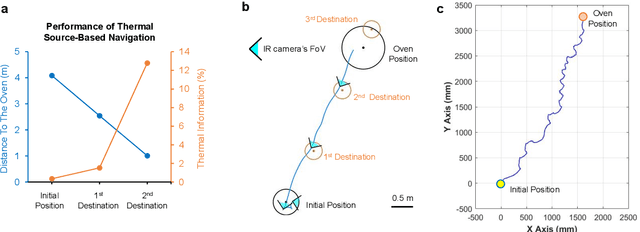
This study focuses on improving the ability of cyborg insects to navigate autonomously during search and rescue missions in outdoor environments. We propose an algorithm that leverages data from an IMU to calculate orientation and position based on the insect's walking gait. These computed factors serve as essential feedback channels across 3 phases of our exploration. Our method functions without relying on external systems. The results of our trials, carried out in both indoor (4.8 x 6.6 m^2) and outdoor (3.5 x 6.0 m^2) settings, show that the cyborg insect is capable of seeking a human without knowing the human's position. This exploration strategy would help to bring terrestrial cyborg insects closer to practical application in real-life search and rescue (SAR) missions.