 Add to Chrome
 Add to Firefox
 Add to Edge
Prune Spatio-temporal Tokens by Semantic-aware Temporal Accumulation
Aug 08, 2023
Transformers have become the primary backbone of the computer vision community due to their impressive performance. However, the unfriendly computation cost impedes their potential in the video recognition domain. To optimize the speed-accuracy trade-off, we propose Semantic-aware Temporal Accumulation score (STA) to prune spatio-temporal tokens integrally. STA score considers two critical factors: temporal redundancy and semantic importance. The former depicts a specific region based on whether it is a new occurrence or a seen entity by aggregating token-to-token similarity in consecutive frames while the latter evaluates each token based on its contribution to the overall prediction. As a result, tokens with higher scores of STA carry more temporal redundancy as well as lower semantics thus being pruned. Based on the STA score, we are able to progressively prune the tokens without introducing any additional parameters or requiring further re-training. We directly apply the STA module to off-the-shelf ViT and VideoSwin backbones, and the empirical results on Kinetics-400 and Something-Something V2 achieve over 30% computation reduction with a negligible ~0.2% accuracy drop. The code is released at https://github.com/Mark12Ding/STA.

SDDM: Score-Decomposed Diffusion Models on Manifolds for Unpaired Image-to-Image Translation
Aug 04, 2023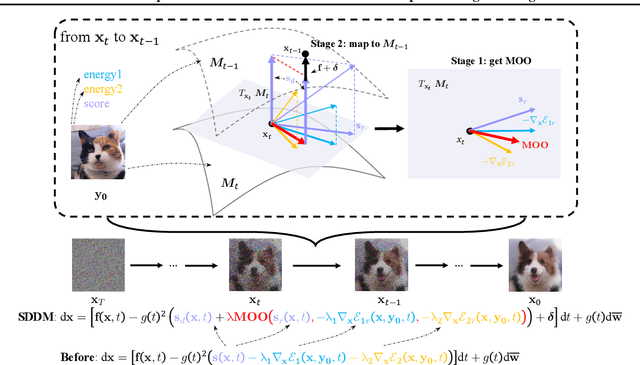
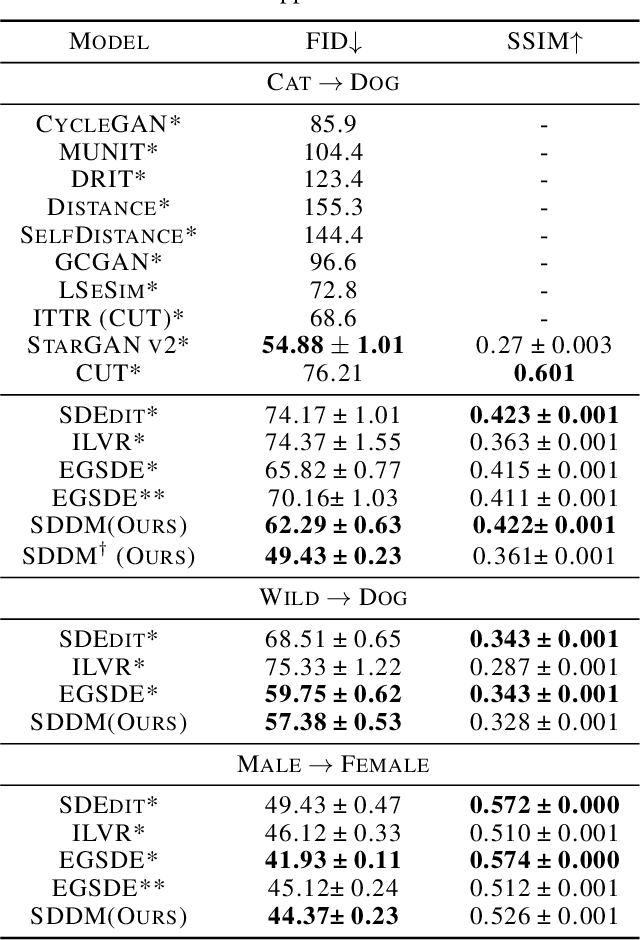
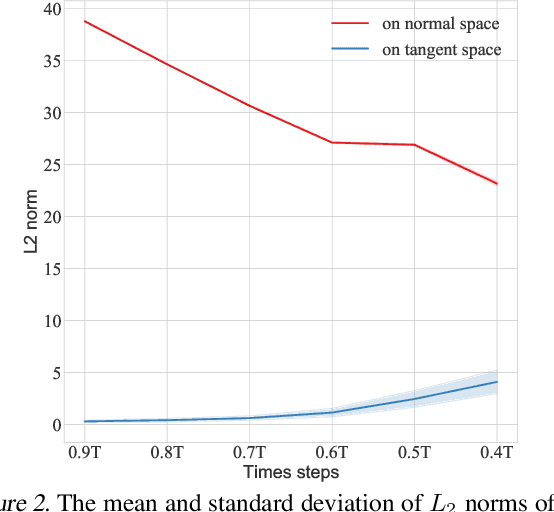

Recent score-based diffusion models (SBDMs) show promising results in unpaired image-to-image translation (I2I). However, existing methods, either energy-based or statistically-based, provide no explicit form of the interfered intermediate generative distributions. This work presents a new score-decomposed diffusion model (SDDM) on manifolds to explicitly optimize the tangled distributions during image generation. SDDM derives manifolds to make the distributions of adjacent time steps separable and decompose the score function or energy guidance into an image ``denoising" part and a content ``refinement" part. To refine the image in the same noise level, we equalize the refinement parts of the score function and energy guidance, which permits multi-objective optimization on the manifold. We also leverage the block adaptive instance normalization module to construct manifolds with lower dimensions but still concentrated with the perturbed reference image. SDDM outperforms existing SBDM-based methods with much fewer diffusion steps on several I2I benchmarks.
Human Motion Generation: A Survey
Jul 20, 2023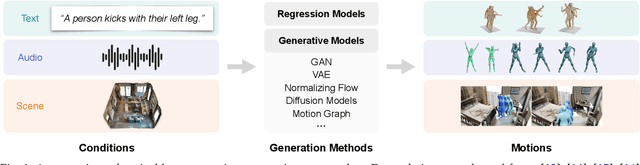
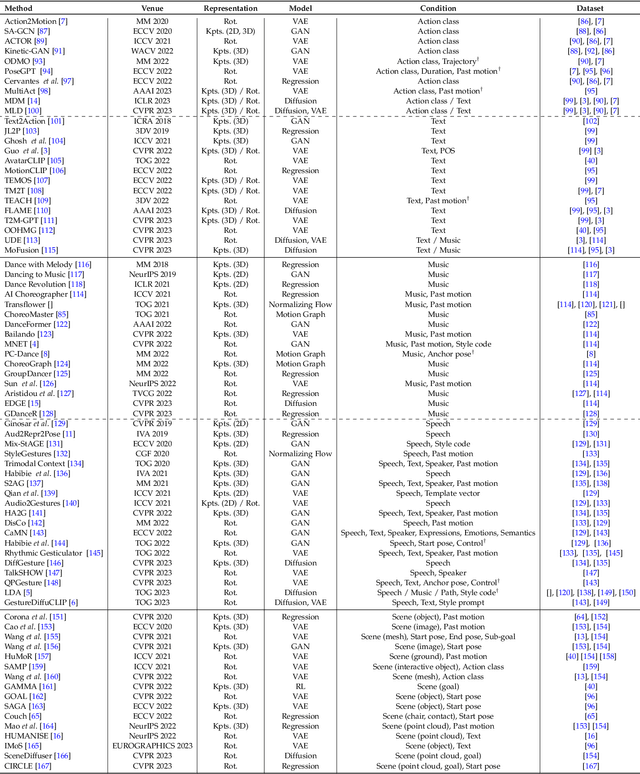
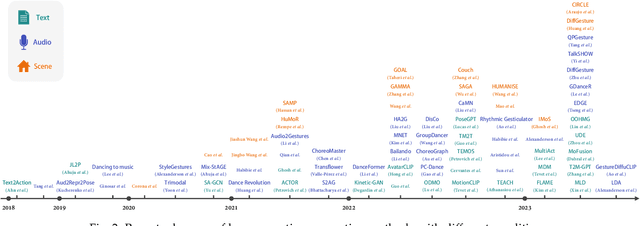
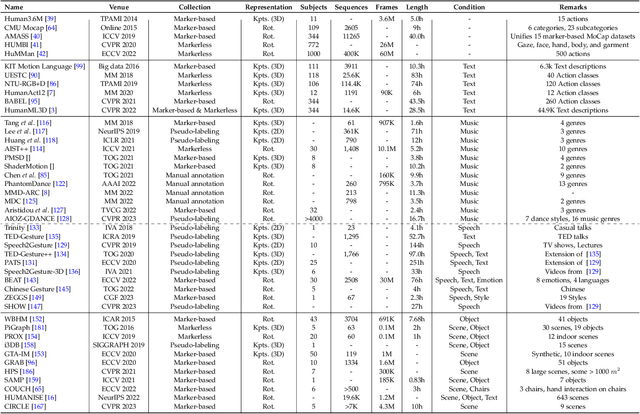
Human motion generation aims to generate natural human pose sequences and shows immense potential for real-world applications. Substantial progress has been made recently in motion data collection technologies and generation methods, laying the foundation for increasing interest in human motion generation. Most research within this field focuses on generating human motions based on conditional signals, such as text, audio, and scene contexts. While significant advancements have been made in recent years, the task continues to pose challenges due to the intricate nature of human motion and its implicit relationship with conditional signals. In this survey, we present a comprehensive literature review of human motion generation, which, to the best of our knowledge, is the first of its kind in this field. We begin by introducing the background of human motion and generative models, followed by an examination of representative methods for three mainstream sub-tasks: text-conditioned, audio-conditioned, and scene-conditioned human motion generation. Additionally, we provide an overview of common datasets and evaluation metrics. Lastly, we discuss open problems and outline potential future research directions. We hope that this survey could provide the community with a comprehensive glimpse of this rapidly evolving field and inspire novel ideas that address the outstanding challenges.
Hybrid Distillation: Connecting Masked Autoencoders with Contrastive Learners
Jun 28, 2023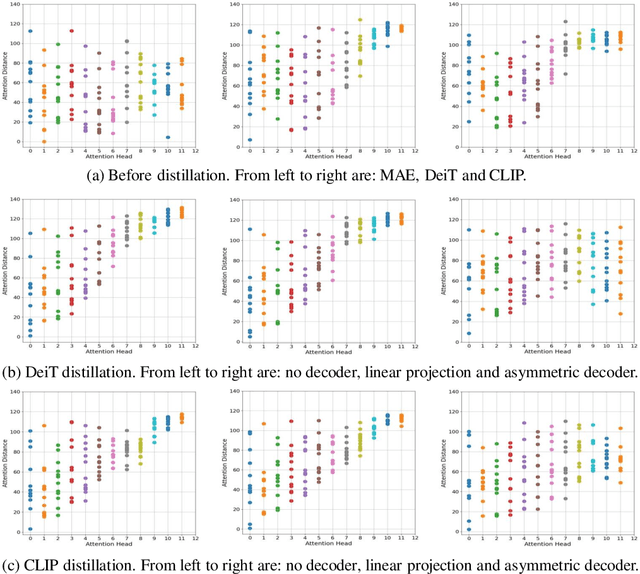

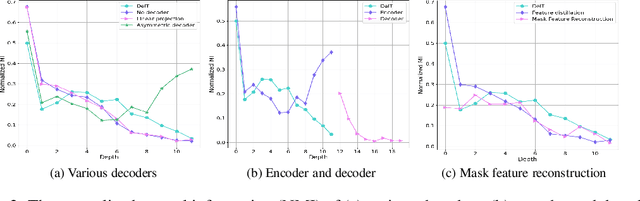
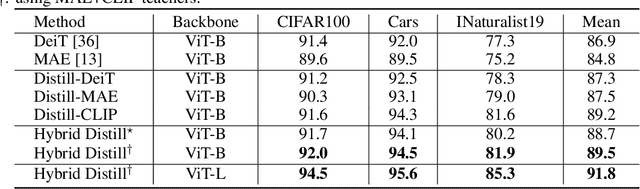
Representation learning has been evolving from traditional supervised training to Contrastive Learning (CL) and Masked Image Modeling (MIM). Previous works have demonstrated their pros and cons in specific scenarios, i.e., CL and supervised pre-training excel at capturing longer-range global patterns and enabling better feature discrimination, while MIM can introduce more local and diverse attention across all transformer layers. In this paper, we explore how to obtain a model that combines their strengths. We start by examining previous feature distillation and mask feature reconstruction methods and identify their limitations. We find that their increasing diversity mainly derives from the asymmetric designs, but these designs may in turn compromise the discrimination ability. In order to better obtain both discrimination and diversity, we propose a simple but effective Hybrid Distillation strategy, which utilizes both the supervised/CL teacher and the MIM teacher to jointly guide the student model. Hybrid Distill imitates the token relations of the MIM teacher to alleviate attention collapse, as well as distills the feature maps of the supervised/CL teacher to enable discrimination. Furthermore, a progressive redundant token masking strategy is also utilized to reduce the distilling costs and avoid falling into local optima. Experiment results prove that Hybrid Distill can achieve superior performance on different benchmarks.
Towards AGI in Computer Vision: Lessons Learned from GPT and Large Language Models
Jun 14, 2023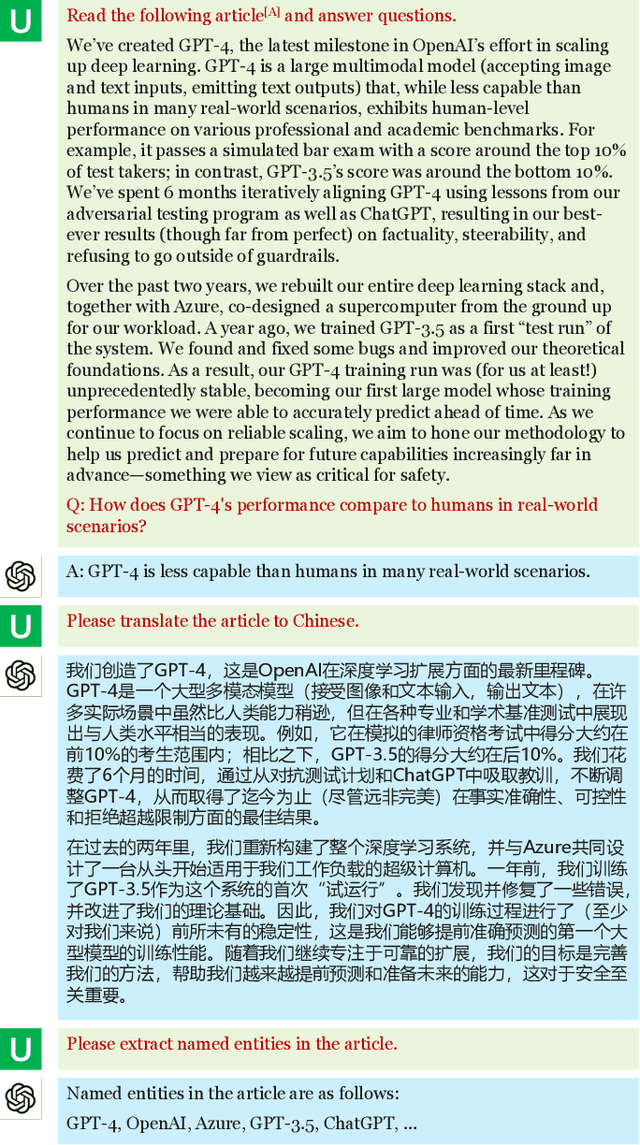
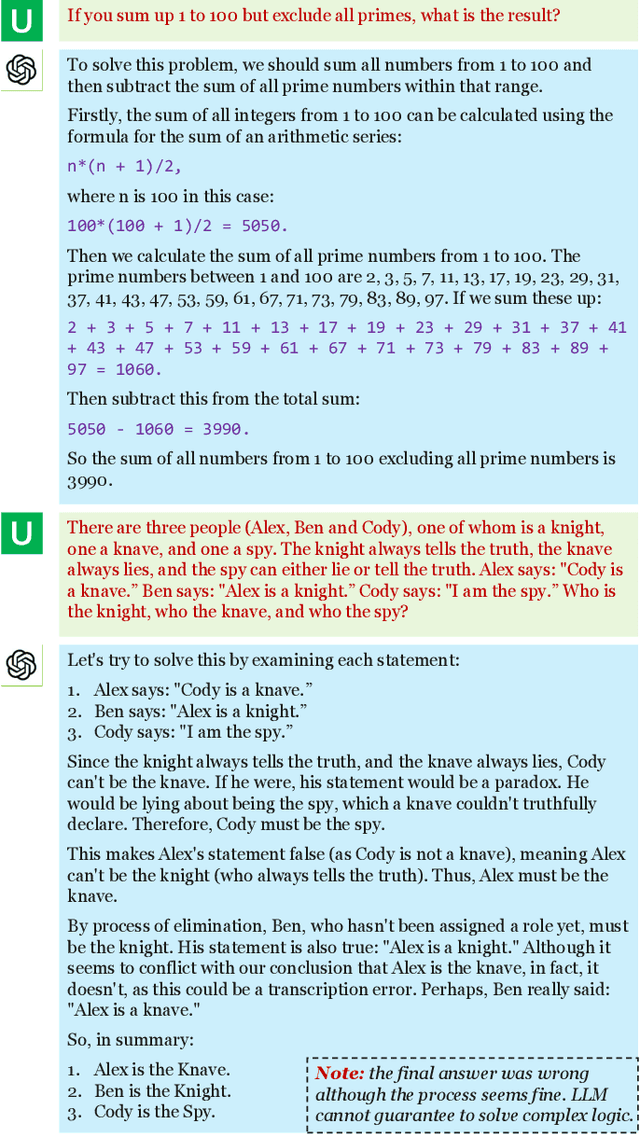
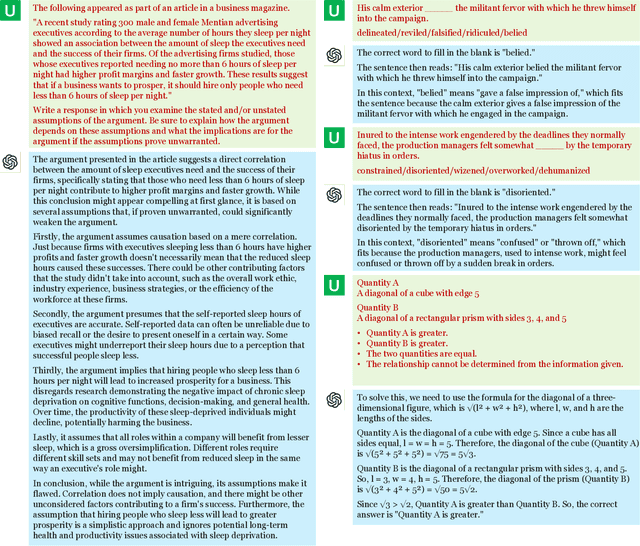
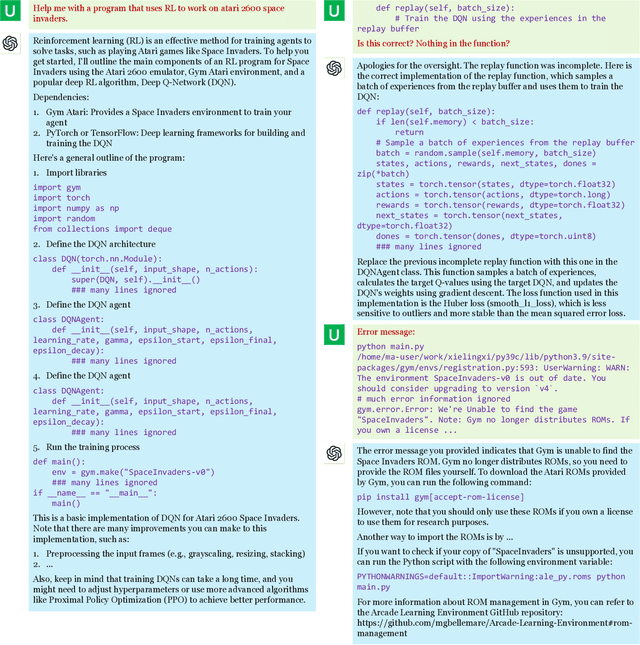
The AI community has been pursuing algorithms known as artificial general intelligence (AGI) that apply to any kind of real-world problem. Recently, chat systems powered by large language models (LLMs) emerge and rapidly become a promising direction to achieve AGI in natural language processing (NLP), but the path towards AGI in computer vision (CV) remains unclear. One may owe the dilemma to the fact that visual signals are more complex than language signals, yet we are interested in finding concrete reasons, as well as absorbing experiences from GPT and LLMs to solve the problem. In this paper, we start with a conceptual definition of AGI and briefly review how NLP solves a wide range of tasks via a chat system. The analysis inspires us that unification is the next important goal of CV. But, despite various efforts in this direction, CV is still far from a system like GPT that naturally integrates all tasks. We point out that the essential weakness of CV lies in lacking a paradigm to learn from environments, yet NLP has accomplished the task in the text world. We then imagine a pipeline that puts a CV algorithm (i.e., an agent) in world-scale, interactable environments, pre-trains it to predict future frames with respect to its action, and then fine-tunes it with instruction to accomplish various tasks. We expect substantial research and engineering efforts to push the idea forward and scale it up, for which we share our perspectives on future research directions.
Exploring Effective Mask Sampling Modeling for Neural Image Compression
Jun 09, 2023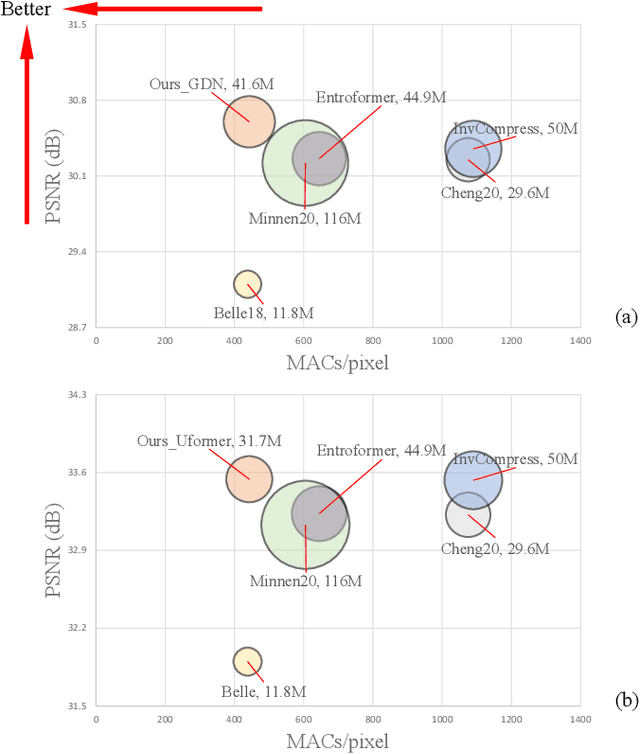
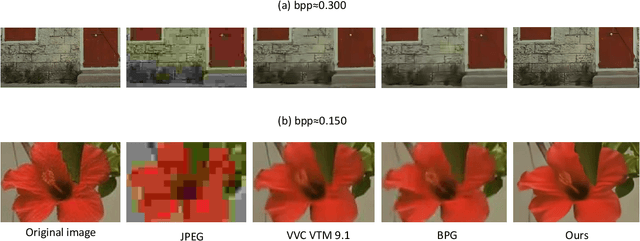

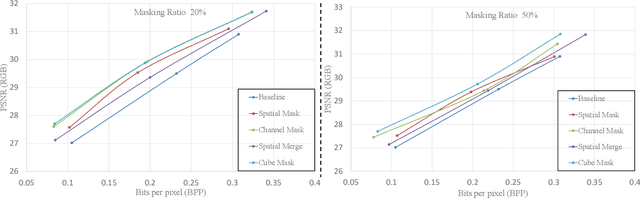
Image compression aims to reduce the information redundancy in images. Most existing neural image compression methods rely on side information from hyperprior or context models to eliminate spatial redundancy, but rarely address the channel redundancy. Inspired by the mask sampling modeling in recent self-supervised learning methods for natural language processing and high-level vision, we propose a novel pretraining strategy for neural image compression. Specifically, Cube Mask Sampling Module (CMSM) is proposed to apply both spatial and channel mask sampling modeling to image compression in the pre-training stage. Moreover, to further reduce channel redundancy, we propose the Learnable Channel Mask Module (LCMM) and the Learnable Channel Completion Module (LCCM). Our plug-and-play CMSM, LCMM, LCCM modules can apply to both CNN-based and Transformer-based architectures, significantly reduce the computational cost, and improve the quality of images. Experiments on the public Kodak and Tecnick datasets demonstrate that our method achieves competitive performance with lower computational complexity compared to state-of-the-art image compression methods.
Joint Channel Estimation and Feedback with Masked Token Transformers in Massive MIMO Systems
Jun 08, 2023When the base station has downlink channel status information (CSI), the huge potential of large-scale multiple input multiple output (MIMO) in frequency division duplex (FDD) mode can be fully exploited. In this paper, we propose a deep-learning-based joint channel estimation and feedback framework to realize channel estimation and feedback in massive MIMO systems. Specifically, we use traditional channel design rather than end-to-end methods. Our model contains two networks. The first network is a channel estimation network, which adopts a double loss design, and can accurately estimate the full channel information while removing channel noises. The second network is a compression and feedback network. Inspired by the masked token transformer, we propose a learnable mask token method to obtain excellent estimation and compression performance. The extensive simulation results and ablation studies show that our method outperforms state-of-the-art channel estimation and feedback methods in both separate and joint tasks.
Reasoning over Hierarchical Question Decomposition Tree for Explainable Question Answering
May 24, 2023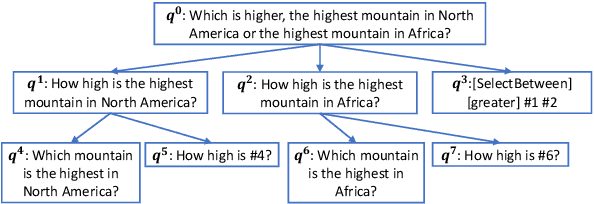
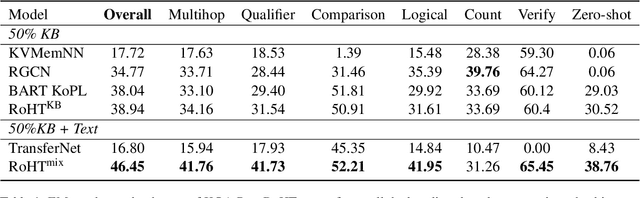
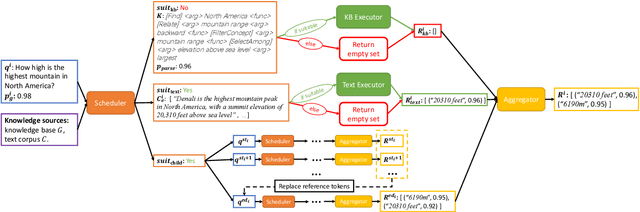
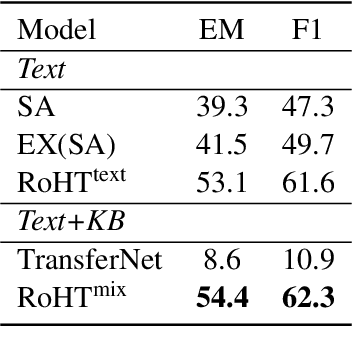
Explainable question answering (XQA) aims to answer a given question and provide an explanation why the answer is selected. Existing XQA methods focus on reasoning on a single knowledge source, e.g., structured knowledge bases, unstructured corpora, etc. However, integrating information from heterogeneous knowledge sources is essential to answer complex questions. In this paper, we propose to leverage question decomposing for heterogeneous knowledge integration, by breaking down a complex question into simpler ones, and selecting the appropriate knowledge source for each sub-question. To facilitate reasoning, we propose a novel two-stage XQA framework, Reasoning over Hierarchical Question Decomposition Tree (RoHT). First, we build the Hierarchical Question Decomposition Tree (HQDT) to understand the semantics of a complex question; then, we conduct probabilistic reasoning over HQDT from root to leaves recursively, to aggregate heterogeneous knowledge at different tree levels and search for a best solution considering the decomposing and answering probabilities. The experiments on complex QA datasets KQA Pro and Musique show that our framework outperforms SOTA methods significantly, demonstrating the effectiveness of leveraging question decomposing for knowledge integration and our RoHT framework.
Mode Approximation Makes Good Multimodal Prompts
May 23, 2023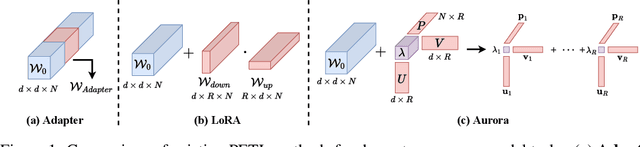
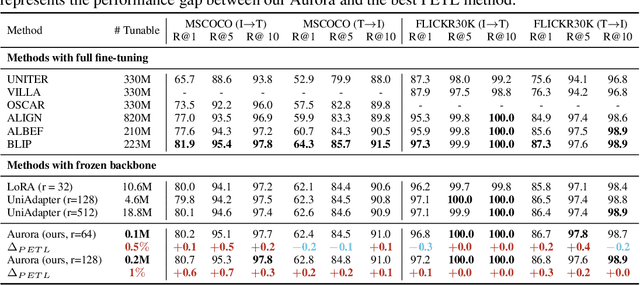
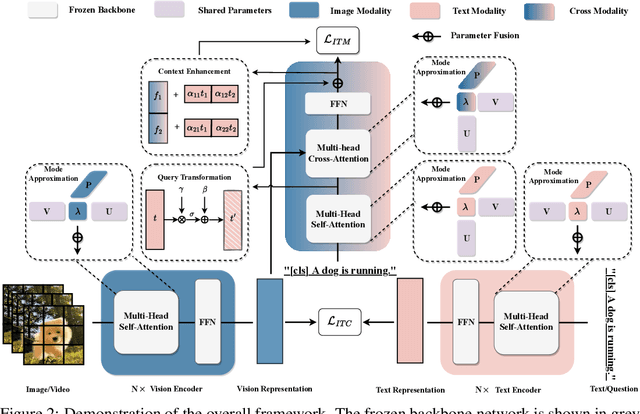
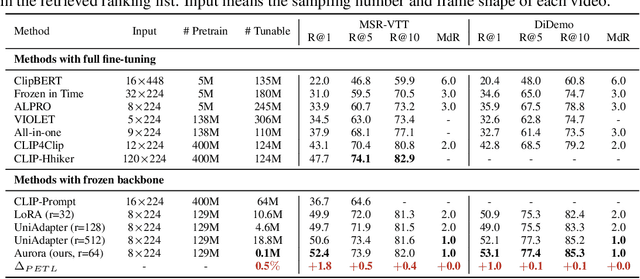
Driven by the progress of large-scale pre-training, parameter-efficient transfer learning has gained immense popularity across different subfields of Artificial Intelligence. The core is to adapt the model to downstream tasks with only a small set of parameters. Recently, researchers have leveraged such proven techniques in multimodal tasks and achieve promising results. However, two critical issues remain unresolved: how to further reduce the complexity with lightweight design and how to boost alignment between modalities under extremely low parameters. In this paper, we propose A graceful prompt framework for cross-modal transfer (Aurora) to overcome these challenges. Considering the redundancy in existing architectures, we first utilize the mode approximation to generate 0.1M trainable parameters to implement the multimodal prompt tuning, which explores the low intrinsic dimension with only 0.04% parameters of the pre-trained model. Then, for better modality alignment, we propose the Informative Context Enhancement and Gated Query Transformation module under extremely few parameters scenes. A thorough evaluation on six cross-modal benchmarks shows that it not only outperforms the state-of-the-art but even outperforms the full fine-tuning approach. Our code is available at: https://github.com/WillDreamer/Aurora.
ControlVideo: Training-free Controllable Text-to-Video Generation
May 22, 2023Text-driven diffusion models have unlocked unprecedented abilities in image generation, whereas their video counterpart still lags behind due to the excessive training cost of temporal modeling. Besides the training burden, the generated videos also suffer from appearance inconsistency and structural flickers, especially in long video synthesis. To address these challenges, we design a \emph{training-free} framework called \textbf{ControlVideo} to enable natural and efficient text-to-video generation. ControlVideo, adapted from ControlNet, leverages coarsely structural consistency from input motion sequences, and introduces three modules to improve video generation. Firstly, to ensure appearance coherence between frames, ControlVideo adds fully cross-frame interaction in self-attention modules. Secondly, to mitigate the flicker effect, it introduces an interleaved-frame smoother that employs frame interpolation on alternated frames. Finally, to produce long videos efficiently, it utilizes a hierarchical sampler that separately synthesizes each short clip with holistic coherency. Empowered with these modules, ControlVideo outperforms the state-of-the-arts on extensive motion-prompt pairs quantitatively and qualitatively. Notably, thanks to the efficient designs, it generates both short and long videos within several minutes using one NVIDIA 2080Ti. Code is available at https://github.com/YBYBZhang/ControlVideo.