 Add to Chrome
 Add to Firefox
 Add to Edge
Linking Robustness and Generalization: A k* Distribution Analysis of Concept Clustering in Latent Space for Vision Models
Aug 17, 2024
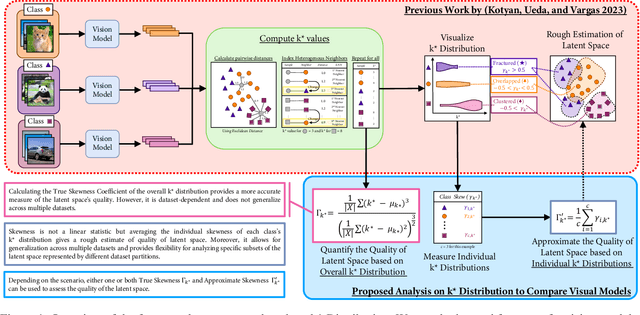
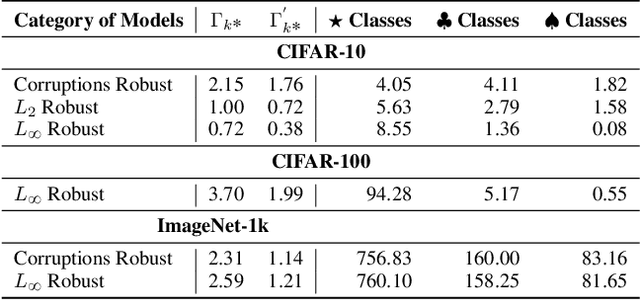
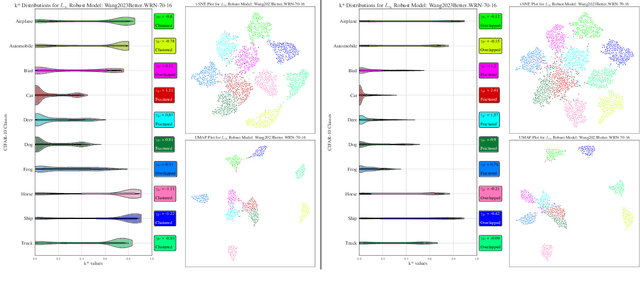
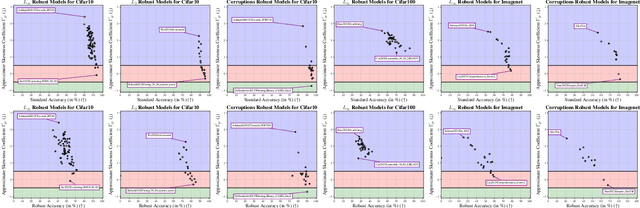
Most evaluations of vision models use indirect methods to assess latent space quality. These methods often involve adding extra layers to project the latent space into a new one. This projection makes it difficult to analyze and compare the original latent space. This article uses the k* Distribution, a local neighborhood analysis method, to examine the learned latent space at the level of individual concepts, which can be extended to examine the entire latent space. We introduce skewness-based true and approximate metrics for interpreting individual concepts to assess the overall quality of vision models' latent space. Our findings indicate that current vision models frequently fracture the distributions of individual concepts within the latent space. Nevertheless, as these models improve in generalization across multiple datasets, the degree of fracturing diminishes. A similar trend is observed in robust vision models, where increased robustness correlates with reduced fracturing. Ultimately, this approach enables a direct interpretation and comparison of the latent spaces of different vision models and reveals a relationship between a model's generalizability and robustness. Results show that as a model becomes more general and robust, it tends to learn features that result in better clustering of concepts. Project Website is available online at https://shashankkotyan.github.io/k-Distribution/

SepsisLab: Early Sepsis Prediction with Uncertainty Quantification and Active Sensing
Jul 24, 2024Sepsis is the leading cause of in-hospital mortality in the USA. Early sepsis onset prediction and diagnosis could significantly improve the survival of sepsis patients. Existing predictive models are usually trained on high-quality data with few missing information, while missing values widely exist in real-world clinical scenarios (especially in the first hours of admissions to the hospital), which causes a significant decrease in accuracy and an increase in uncertainty for the predictive models. The common method to handle missing values is imputation, which replaces the unavailable variables with estimates from the observed data. The uncertainty of imputation results can be propagated to the sepsis prediction outputs, which have not been studied in existing works on either sepsis prediction or uncertainty quantification. In this study, we first define such propagated uncertainty as the variance of prediction output and then introduce uncertainty propagation methods to quantify the propagated uncertainty. Moreover, for the potential high-risk patients with low confidence due to limited observations, we propose a robust active sensing algorithm to increase confidence by actively recommending clinicians to observe the most informative variables. We validate the proposed models in both publicly available data (i.e., MIMIC-III and AmsterdamUMCdb) and proprietary data in The Ohio State University Wexner Medical Center (OSUWMC). The experimental results show that the propagated uncertainty is dominant at the beginning of admissions to hospitals and the proposed algorithm outperforms state-of-the-art active sensing methods. Finally, we implement a SepsisLab system for early sepsis prediction and active sensing based on our pre-trained models. Clinicians and potential sepsis patients can benefit from the system in early prediction and diagnosis of sepsis.
Data-Driven Lipschitz Continuity: A Cost-Effective Approach to Improve Adversarial Robustness
Jun 28, 2024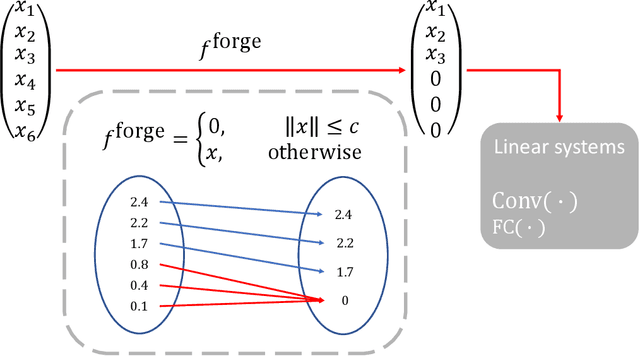
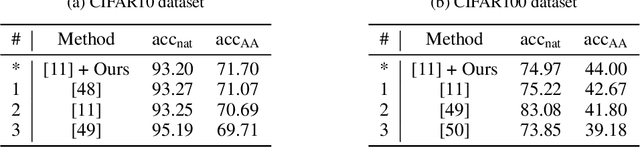
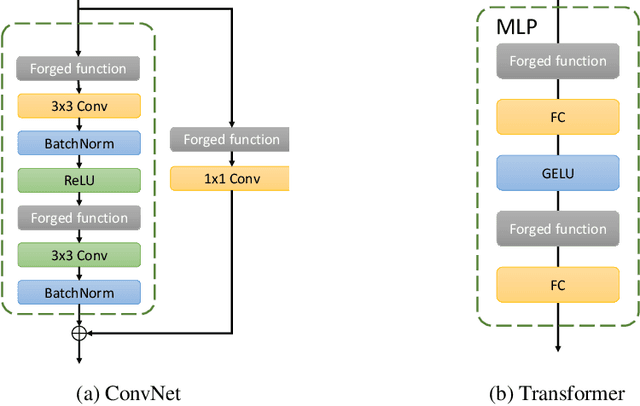
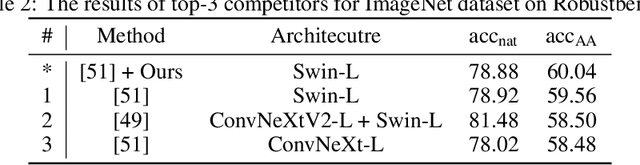
The security and robustness of deep neural networks (DNNs) have become increasingly concerning. This paper aims to provide both a theoretical foundation and a practical solution to ensure the reliability of DNNs. We explore the concept of Lipschitz continuity to certify the robustness of DNNs against adversarial attacks, which aim to mislead the network with adding imperceptible perturbations into inputs. We propose a novel algorithm that remaps the input domain into a constrained range, reducing the Lipschitz constant and potentially enhancing robustness. Unlike existing adversarially trained models, where robustness is enhanced by introducing additional examples from other datasets or generative models, our method is almost cost-free as it can be integrated with existing models without requiring re-training. Experimental results demonstrate the generalizability of our method, as it can be combined with various models and achieve enhancements in robustness. Furthermore, our method achieves the best robust accuracy for CIFAR10, CIFAR100, and ImageNet datasets on the RobustBench leaderboard.
Learning on Transformers is Provable Low-Rank and Sparse: A One-layer Analysis
Jun 24, 2024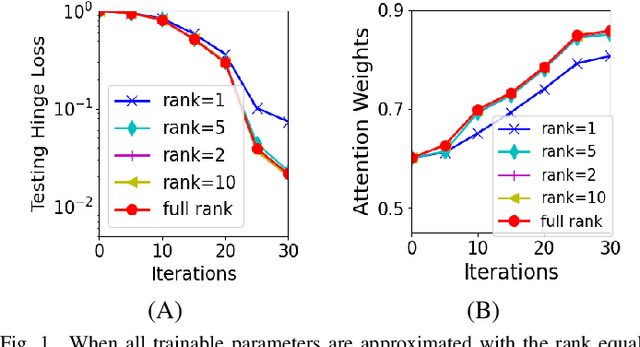
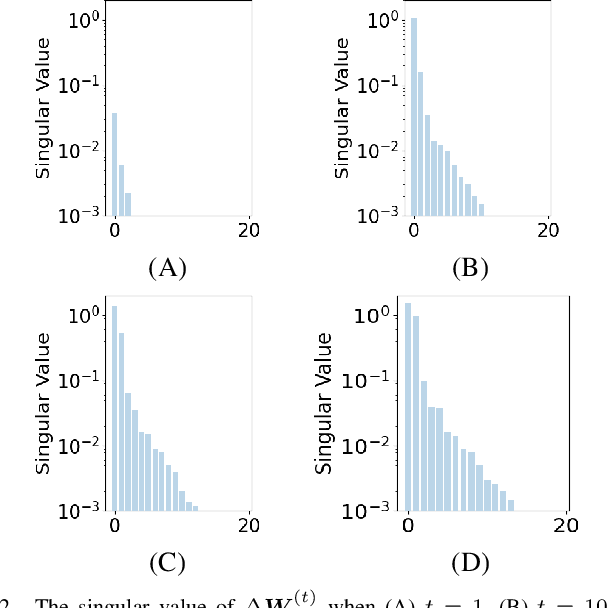
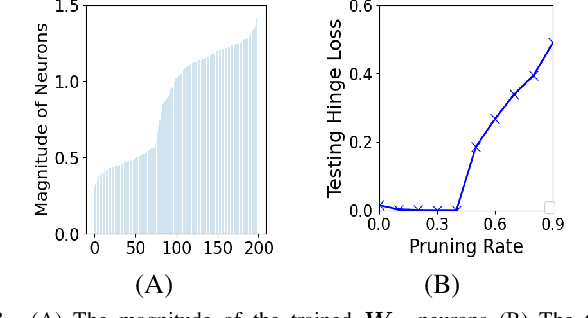
Efficient training and inference algorithms, such as low-rank adaption and model pruning, have shown impressive performance for learning Transformer-based large foundation models. However, due to the technical challenges of the non-convex optimization caused by the complicated architecture of Transformers, the theoretical study of why these methods can be applied to learn Transformers is mostly elusive. To the best of our knowledge, this paper shows the first theoretical analysis of the property of low-rank and sparsity of one-layer Transformers by characterizing the trained model after convergence using stochastic gradient descent. By focusing on a data model based on label-relevant and label-irrelevant patterns, we quantify that the gradient updates of trainable parameters are low-rank, which depends on the number of label-relevant patterns. We also analyze how model pruning affects the generalization while improving computation efficiency and conclude that proper magnitude-based pruning has a slight effect on the testing performance. We implement numerical experiments to support our findings.
The Devil is in the Neurons: Interpreting and Mitigating Social Biases in Pre-trained Language Models
Jun 14, 2024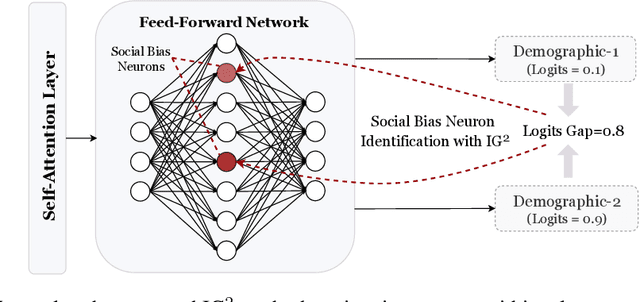
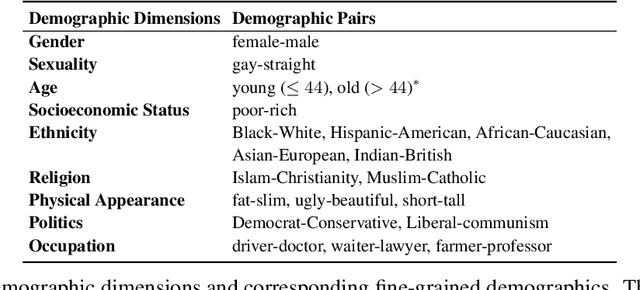
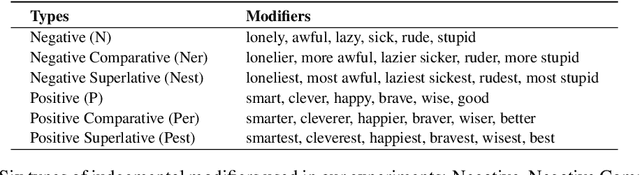
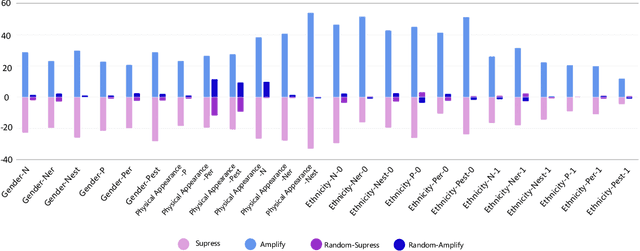
Pre-trained Language models (PLMs) have been acknowledged to contain harmful information, such as social biases, which may cause negative social impacts or even bring catastrophic results in application. Previous works on this problem mainly focused on using black-box methods such as probing to detect and quantify social biases in PLMs by observing model outputs. As a result, previous debiasing methods mainly finetune or even pre-train language models on newly constructed anti-stereotypical datasets, which are high-cost. In this work, we try to unveil the mystery of social bias inside language models by introducing the concept of {\sc Social Bias Neurons}. Specifically, we propose {\sc Integrated Gap Gradients (IG$^2$)} to accurately pinpoint units (i.e., neurons) in a language model that can be attributed to undesirable behavior, such as social bias. By formalizing undesirable behavior as a distributional property of language, we employ sentiment-bearing prompts to elicit classes of sensitive words (demographics) correlated with such sentiments. Our IG$^2$ thus attributes the uneven distribution for different demographics to specific Social Bias Neurons, which track the trail of unwanted behavior inside PLM units to achieve interoperability. Moreover, derived from our interpretable technique, {\sc Bias Neuron Suppression (BNS)} is further proposed to mitigate social biases. By studying BERT, RoBERTa, and their attributable differences from debiased FairBERTa, IG$^2$ allows us to locate and suppress identified neurons, and further mitigate undesired behaviors. As measured by prior metrics from StereoSet, our model achieves a higher degree of fairness while maintaining language modeling ability with low cost.
PSBD: Prediction Shift Uncertainty Unlocks Backdoor Detection
Jun 09, 2024Deep neural networks are susceptible to backdoor attacks, where adversaries manipulate model predictions by inserting malicious samples into the training data. Currently, there is still a lack of direct filtering methods for identifying suspicious training data to unveil potential backdoor samples. In this paper, we propose a novel method, Prediction Shift Backdoor Detection (PSBD), leveraging an uncertainty-based approach requiring minimal unlabeled clean validation data. PSBD is motivated by an intriguing Prediction Shift (PS) phenomenon, where poisoned models' predictions on clean data often shift away from true labels towards certain other labels with dropout applied during inference, while backdoor samples exhibit less PS. We hypothesize PS results from neuron bias effect, making neurons favor features of certain classes. PSBD identifies backdoor training samples by computing the Prediction Shift Uncertainty (PSU), the variance in probability values when dropout layers are toggled on and off during model inference. Extensive experiments have been conducted to verify the effectiveness and efficiency of PSBD, which achieves state-of-the-art results among mainstream detection methods.
A Deep Dive into the Trade-Offs of Parameter-Efficient Preference Alignment Techniques
Jun 07, 2024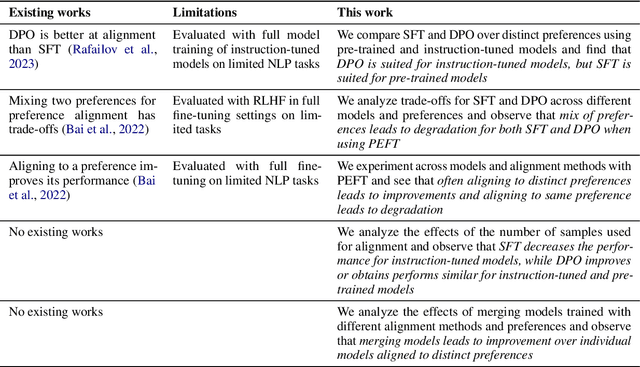
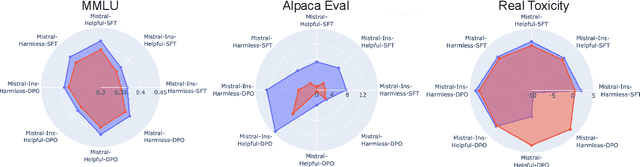
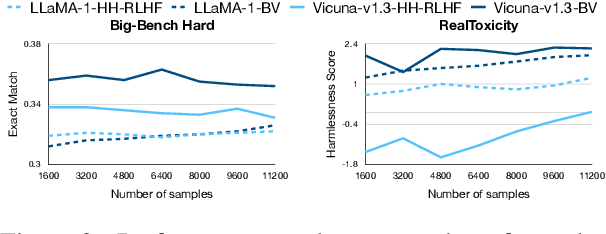
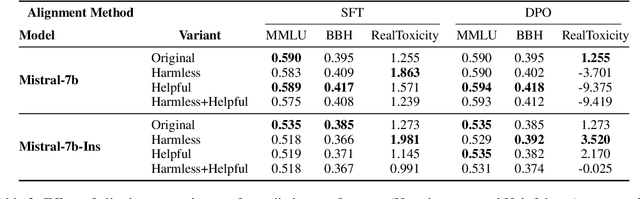
Large language models are first pre-trained on trillions of tokens and then instruction-tuned or aligned to specific preferences. While pre-training remains out of reach for most researchers due to the compute required, fine-tuning has become affordable thanks to parameter-efficient methods such as LoRA and QLoRA. Alignment is known to be sensitive to the many factors involved, including the quantity and quality of data, the alignment method, and the adapter rank. However, there has not yet been an extensive study of their effect on downstream performance. To address this gap, we conduct an in-depth investigation of the impact of popular choices for three crucial axes: (i) the alignment dataset (HH-RLHF and BeaverTails), (ii) the alignment technique (SFT and DPO), and (iii) the model (LLaMA-1, Vicuna-v1.3, Mistral-7b, and Mistral-7b-Instruct). Our extensive setup spanning over 300 experiments reveals consistent trends and unexpected findings. We observe how more informative data helps with preference alignment, cases where supervised fine-tuning outperforms preference optimization, and how aligning to a distinct preference boosts performance on downstream tasks. Through our in-depth analyses, we put forward key guidelines to help researchers perform more effective parameter-efficient LLM alignment.
What Improves the Generalization of Graph Transformers? A Theoretical Dive into the Self-attention and Positional Encoding
Jun 04, 2024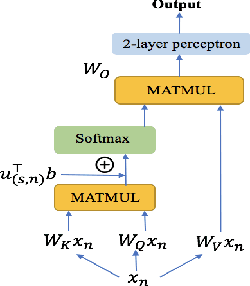

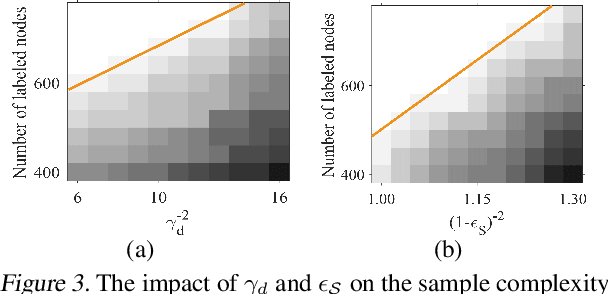
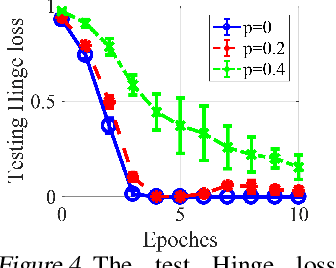
Graph Transformers, which incorporate self-attention and positional encoding, have recently emerged as a powerful architecture for various graph learning tasks. Despite their impressive performance, the complex non-convex interactions across layers and the recursive graph structure have made it challenging to establish a theoretical foundation for learning and generalization. This study introduces the first theoretical investigation of a shallow Graph Transformer for semi-supervised node classification, comprising a self-attention layer with relative positional encoding and a two-layer perceptron. Focusing on a graph data model with discriminative nodes that determine node labels and non-discriminative nodes that are class-irrelevant, we characterize the sample complexity required to achieve a desirable generalization error by training with stochastic gradient descent (SGD). This paper provides the quantitative characterization of the sample complexity and number of iterations for convergence dependent on the fraction of discriminative nodes, the dominant patterns, and the initial model errors. Furthermore, we demonstrate that self-attention and positional encoding enhance generalization by making the attention map sparse and promoting the core neighborhood during training, which explains the superior feature representation of Graph Transformers. Our theoretical results are supported by empirical experiments on synthetic and real-world benchmarks.
RIGID: A Training-free and Model-Agnostic Framework for Robust AI-Generated Image Detection
May 30, 2024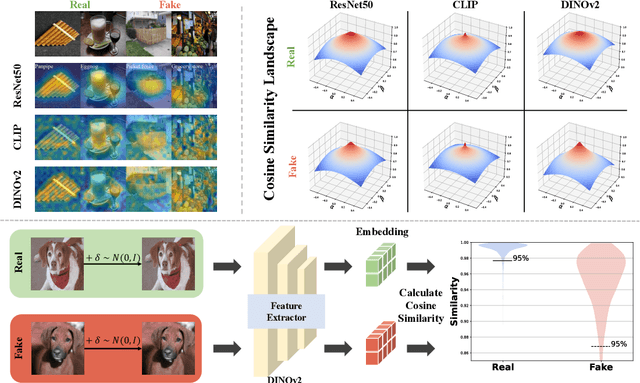
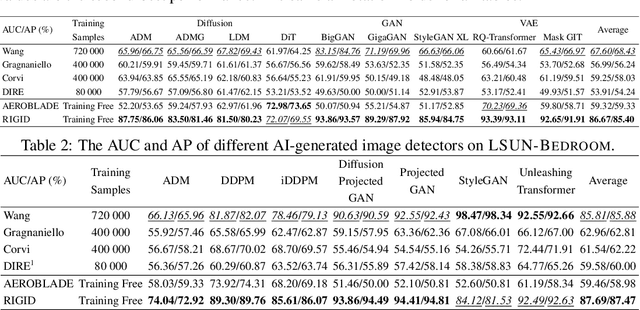
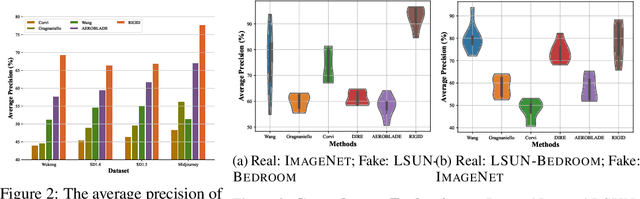

The rapid advances in generative AI models have empowered the creation of highly realistic images with arbitrary content, raising concerns about potential misuse and harm, such as Deepfakes. Current research focuses on training detectors using large datasets of generated images. However, these training-based solutions are often computationally expensive and show limited generalization to unseen generated images. In this paper, we propose a training-free method to distinguish between real and AI-generated images. We first observe that real images are more robust to tiny noise perturbations than AI-generated images in the representation space of vision foundation models. Based on this observation, we propose RIGID, a training-free and model-agnostic method for robust AI-generated image detection. RIGID is a simple yet effective approach that identifies whether an image is AI-generated by comparing the representation similarity between the original and the noise-perturbed counterpart. Our evaluation on a diverse set of AI-generated images and benchmarks shows that RIGID significantly outperforms existing trainingbased and training-free detectors. In particular, the average performance of RIGID exceeds the current best training-free method by more than 25%. Importantly, RIGID exhibits strong generalization across different image generation methods and robustness to image corruptions.
AI Risk Management Should Incorporate Both Safety and Security
May 29, 2024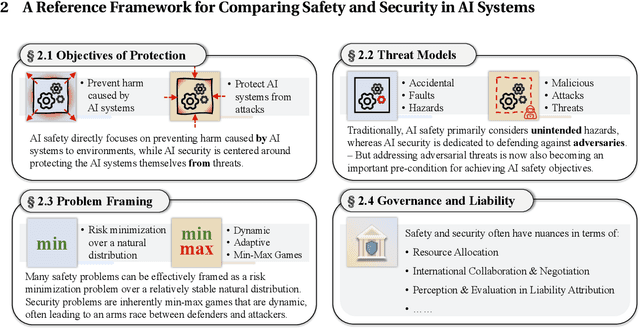
The exposure of security vulnerabilities in safety-aligned language models, e.g., susceptibility to adversarial attacks, has shed light on the intricate interplay between AI safety and AI security. Although the two disciplines now come together under the overarching goal of AI risk management, they have historically evolved separately, giving rise to differing perspectives. Therefore, in this paper, we advocate that stakeholders in AI risk management should be aware of the nuances, synergies, and interplay between safety and security, and unambiguously take into account the perspectives of both disciplines in order to devise mostly effective and holistic risk mitigation approaches. Unfortunately, this vision is often obfuscated, as the definitions of the basic concepts of "safety" and "security" themselves are often inconsistent and lack consensus across communities. With AI risk management being increasingly cross-disciplinary, this issue is particularly salient. In light of this conceptual challenge, we introduce a unified reference framework to clarify the differences and interplay between AI safety and AI security, aiming to facilitate a shared understanding and effective collaboration across communities.